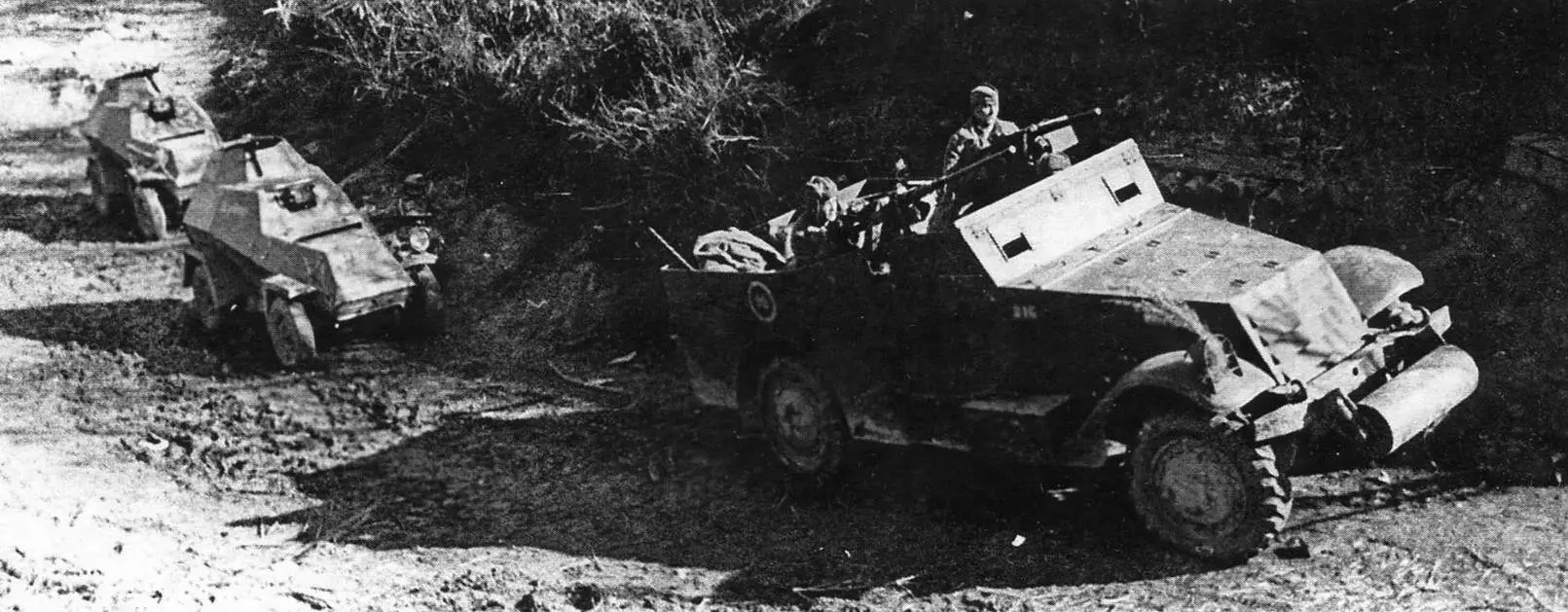
In the period between the two world wars, in all countries that possessed armored forces, reconnaissance in their interests was assigned to light armored cars. However, the real performance of this task was far from simple. An armored car crew consisted of 2–3 men, each of whom had his own functional duties inside the vehicle, so conducting reconnaissance away from it was practically impossible. Indeed, how much can you see without getting out? And you cannot get close to the enemy unnoticed…
The Americans were the first to understand that a combat vehicle should be only a means of delivering and evacuating a reconnaissance group, while also being able, if necessary, to cover it with fire. The U.S. War Department set quite stringent requirements for such an armored car by the standards of the early 1930s, including, among other things, all-wheel drive. In documentation the armored car was called a Scout Car. In everyday use, both then and later, it was simply called a “scout,” omitting the official alphanumeric U.S. Army index.
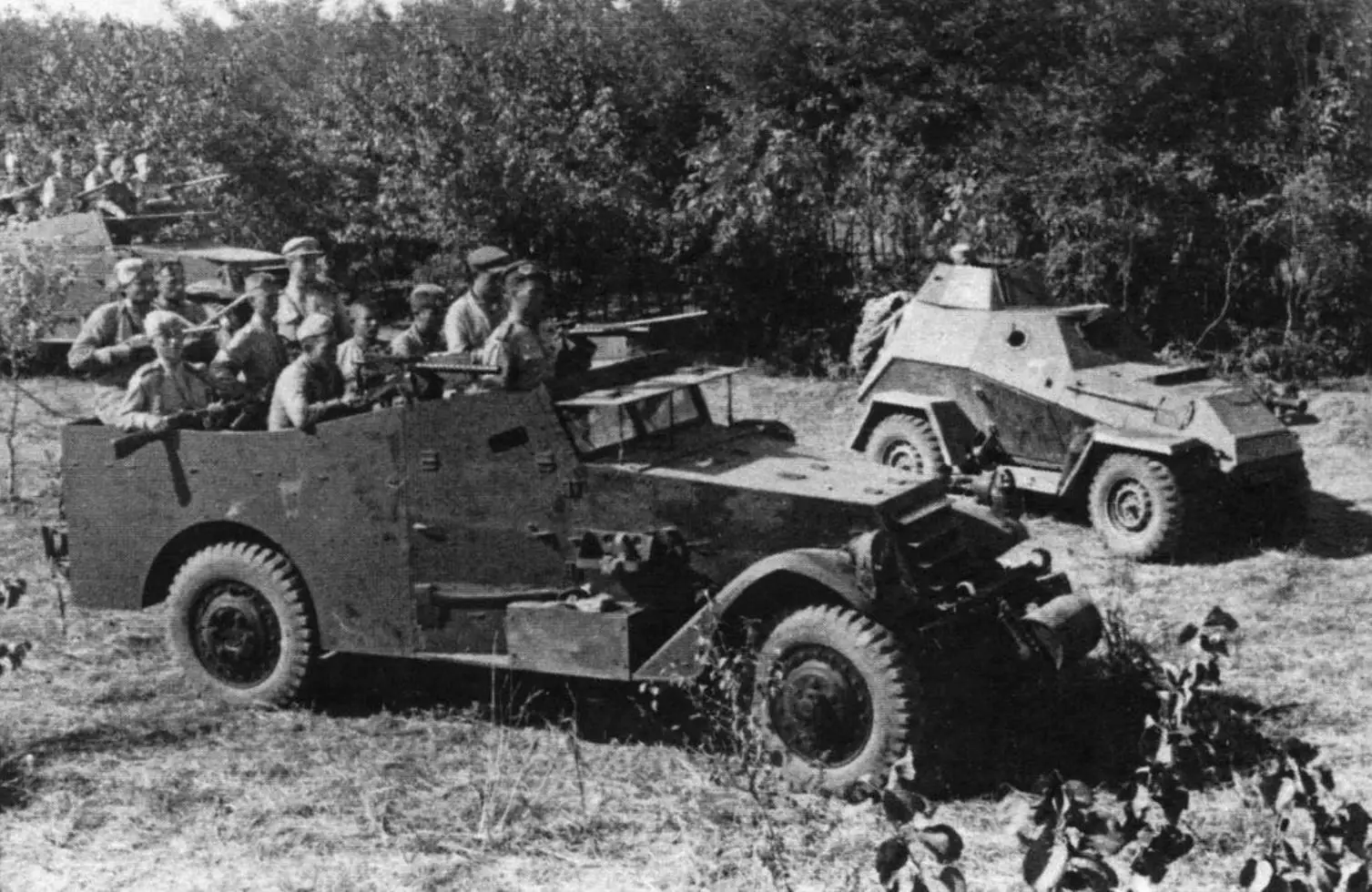
The “scout” made its debut in 1933, when the White Motor Company built a prototype of the T7 reconnaissance armored car (essentially a light armored personnel carrier) using the chassis of a 1.5-ton White-Indiana 4×4 commercial truck. After trials it was decided to produce a small batch of the new vehicles, designated Scout Car M1. In 1934, 76 M1s entered service with the 1st and 13th Armored Cavalry Battalions stationed at Fort Knox, Kentucky.
The M1 was fitted with a carbureted 6-cylinder Hercules L engine of 4.6 liters displacement and 75 hp. The vehicle’s open-topped hull had armor that provided protection against bullets and small shell fragments. The scout’s armament was very powerful: two 12.7 mm Browning M2 heavy machine guns at the front of the hull and two 7.62 mm Browning M1919A4 guns along its sides.
The next “scout” modification accepted, like the previous one, in limited numbers into U.S. Army service was the M2. The prototype of this vehicle, the T9, was developed in 1935 by Corbitt & Co, which tried to displace White. As before, a commercial truck chassis was used as the base, but an 8-cylinder Lycoming New Corbitt Eight engine of 95 hp was installed on it. The vehicle’s layout underwent no major changes, while the armament was reduced to two M1919A4 machine guns mounted along the sides of the hull.
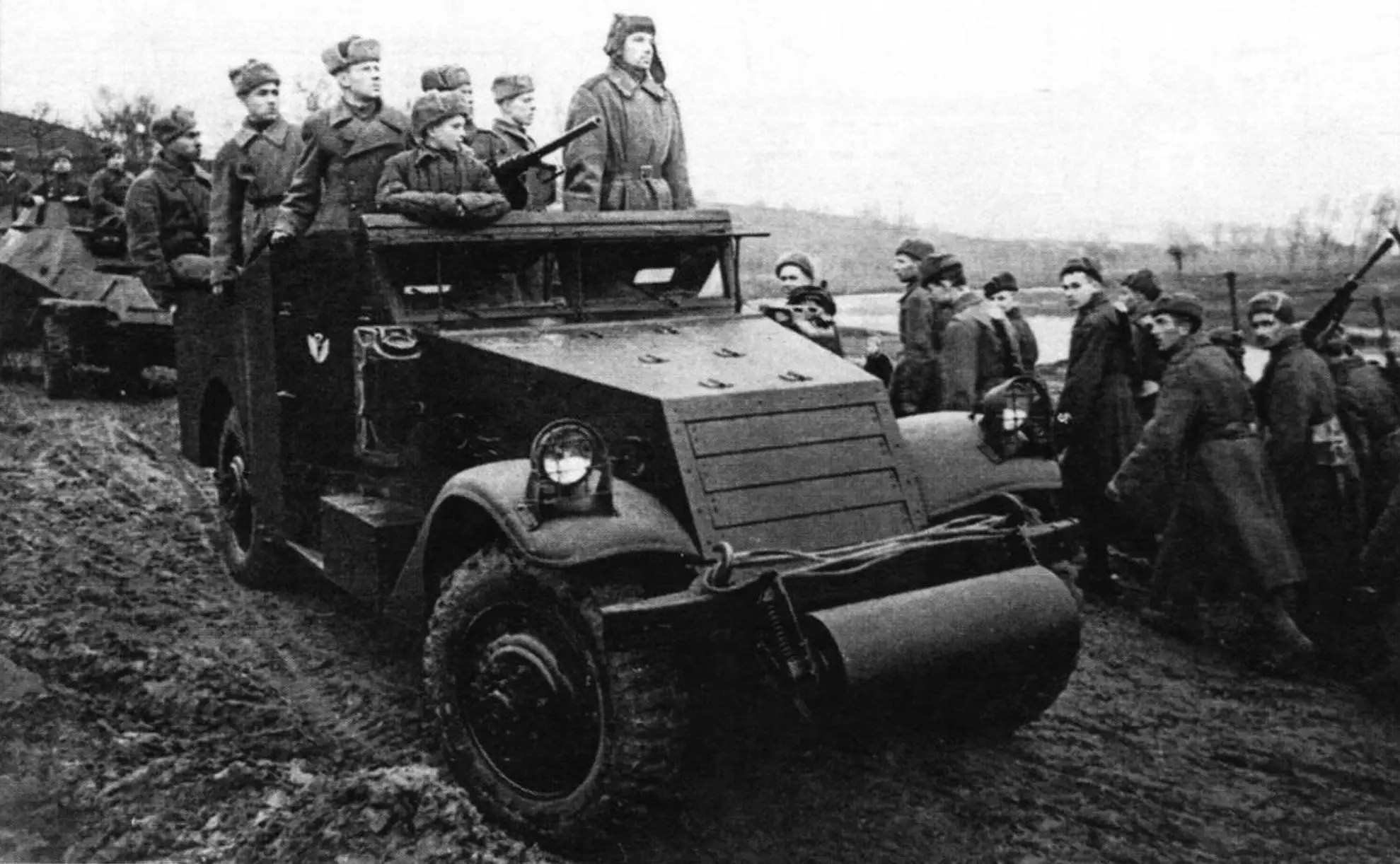
The main distinctive feature of the M2A1 variant was a rail that ran around the entire perimeter of the armored body. Machine guns were mounted on this rail by means of special movable clamps and could be moved along it.
Another version of the M2 “scout” was the T5E1 self-propelled mortar. A 4.2-inch mortar was carried horizontally in the vehicle body. For firing it was set on the ground behind the armored personnel carrier by means of a special folding mechanism.
In 1935, Marmon-Herrington of Indianapolis also began designing “scouts.” The A7SCA reconnaissance armored personnel carrier, similar in performance to the M2, was presented to the military. The vehicle was fitted with an 8-cylinder Ford V8 engine of 85 hp and reached speeds of up to 120 km/h. However, it did not interest the U.S. Army. The T13, built on the chassis of a commercial 1-ton Ford-Marmon-Herrington truck, fared somewhat better — the National Guard ordered 38 units in 1937.
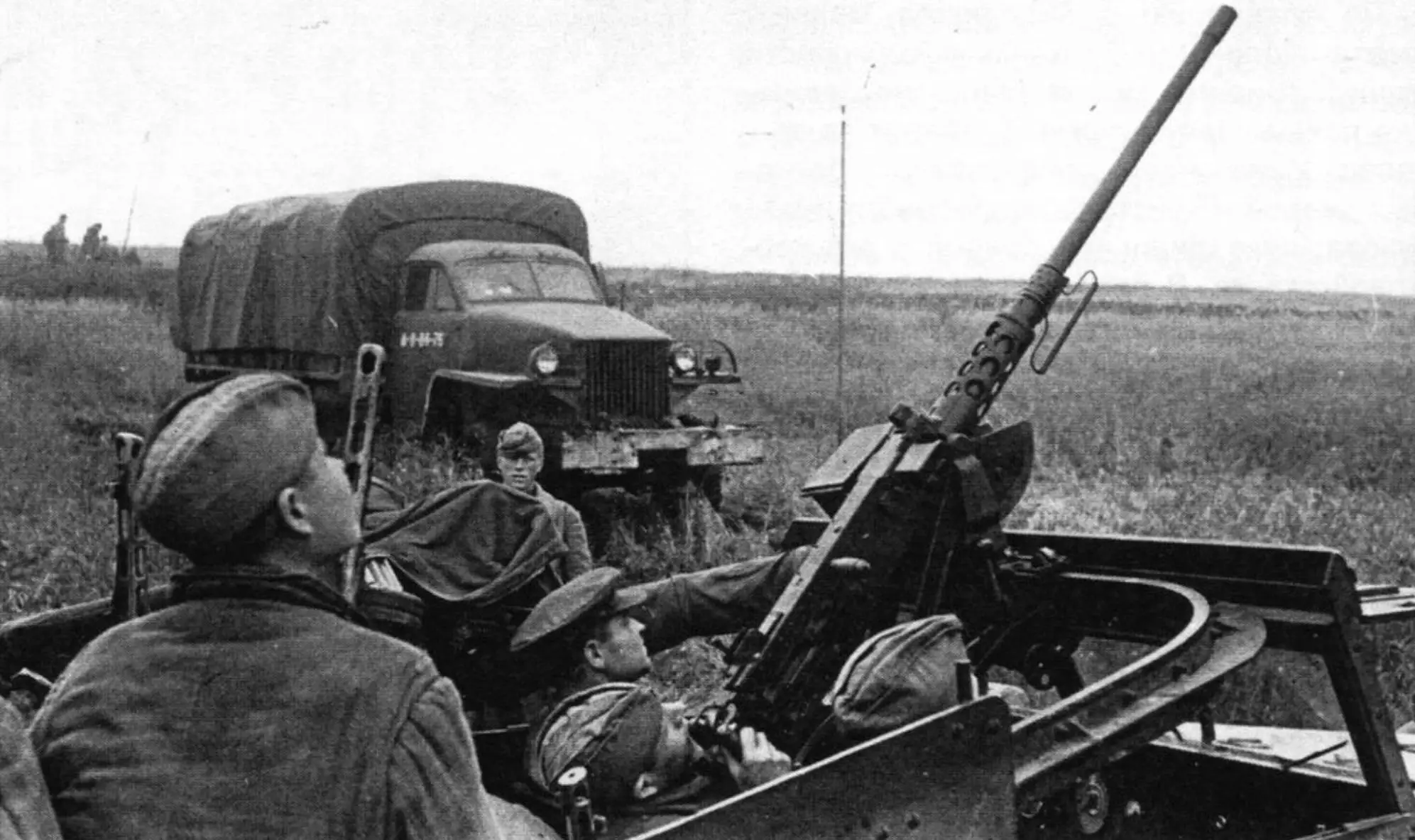
While the two firms mentioned above competed with each other, White was modernizing the M2A1. The armored personnel carrier received a new 5-liter Hercules JXD engine of 110 hp. The hull shape was also changed. In particular, the armored plate in front of the radiator was set at an angle, which improved its bullet resistance. In 1938 this vehicle was standardized by the U.S. War Department as the M3, but it was again produced only in small numbers — over two years only 64 examples left the factory. All of them entered service with the 13th Cavalry Regiment of the 7th Mechanized Cavalry Brigade. Based on the positive experience of their operation, the U.S. Army command decided to equip all cavalry units with vehicles of this type. White proposed an improved M3A1 armored personnel carrier for this purpose. It was put into large-scale production.
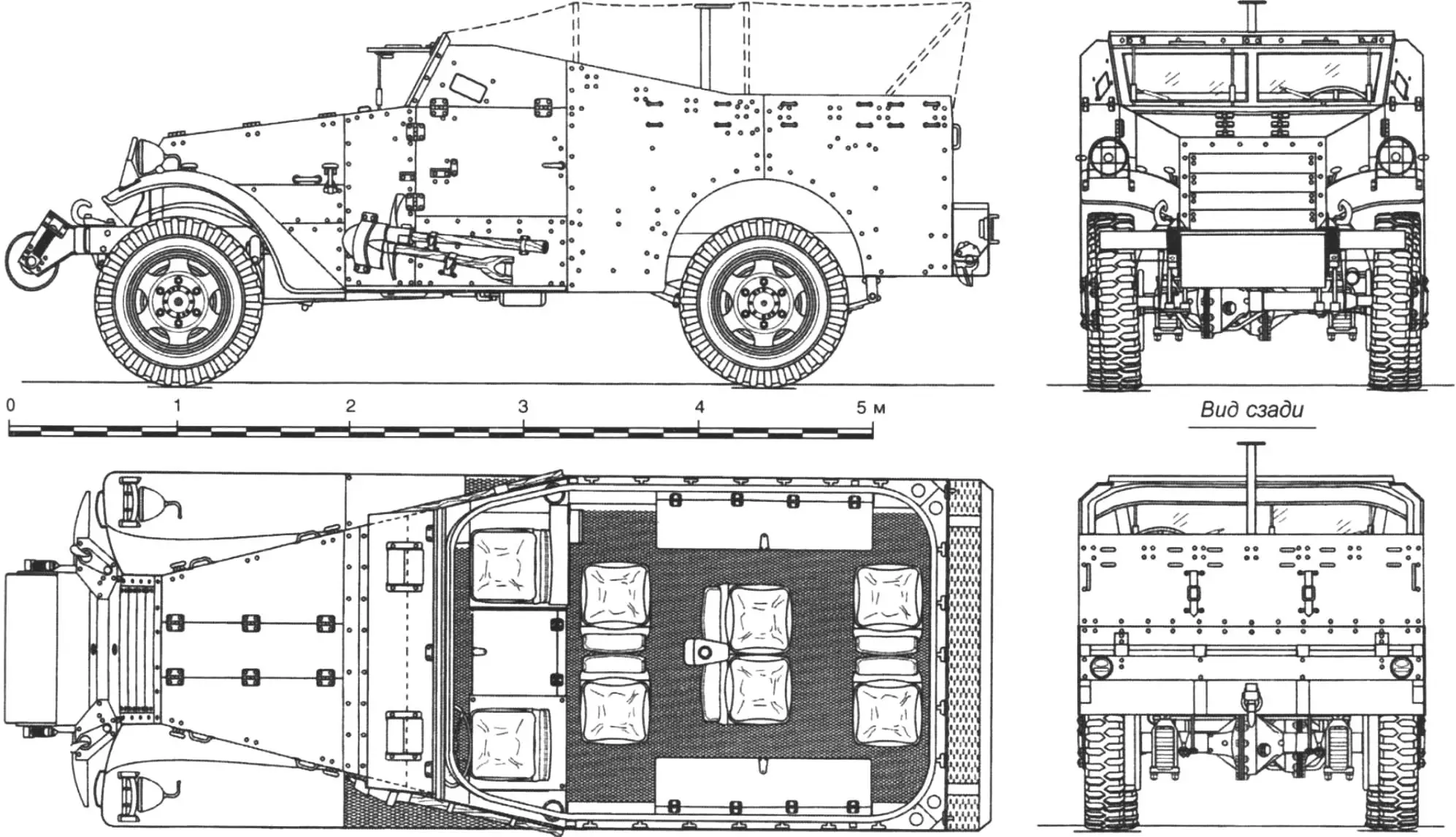
Compared with the M3, the new vehicle had a hull lengthened at the rear. The body width was increased so that it exceeded the outer dimensions of the rear wheels. The configuration of the side doors and the design of the front body plate were changed, and the door in the rear wall was eliminated. At the front of the hull — or rather, ahead of it — a rotating buffer roller appeared, which became a characteristic feature of American armored personnel carriers of the Second World War period.
As on the M3, the M3A1 was fitted with a carbureted 110 hp Hercules JXD engine that allowed the 5.624-ton combat vehicle to accelerate on roads to a maximum speed of 88 km/h. The fuel range (two 57-liter tanks each under the driver’s and commander’s seats) was 360 km.
Attempts were also made to fit other types of engines to the M3A1. In particular, Buda-Lanova and Hercules diesels of 81 and 103 hp respectively were installed. The diesel version received the designation M3A2. Foreign literature sometimes claims that these vehicles were developed for Lend-Lease deliveries to the USSR. That is not so. As early as 1939 the U.S. military department set a course for dieselization of the army, which it soon abandoned. It was then that 100 M3A2s were built; they were operated in U.S. Army units until the spring of 1942, after which they were written off.
The armor thickness of the M3A1 hull ranged from 12.7 mm (front body plate) to 6.35 mm (all other plates).
Two machine guns — a 12.7 mm M2 and a 7.62 mm M1919A4 — were mounted on a special rail by means of movable M22 mounts that allowed the guns to be moved around the entire perimeter of the body. The ammunition load consisted of 8,000 rounds of 7.62 mm and 600–750 rounds of 12.7 mm. Boxes with belts were stowed in two chests located along the sides of the body. Instead of the M1919A4, a water-cooled 7.62 mm Browning M1917A1 could be fitted. In the USSR a Maxim machine gun was sometimes mounted on the M22 mount.
In 1941 the first M3A1s left White’s factory, and by the end of 1944, when production ceased, 20,918 units had been built. From 1942 the “scouts” became standard equipment of reconnaissance battalions and armored cavalry squadrons of U.S. Army tank and later infantry divisions. In addition, they were used as tractors for 37 mm anti-tank guns and as ambulance and command vehicles. An ambulance “scout” could carry two stretcher cases and three sitting wounded.
The most famous passenger of the command version of the M3A1, who preferred it to the Willys, was General George S. Patton. It is also known that, sitting in a “scout” in front of the royal palace in Palermo, General Geoffrey Keyes, commanding the U.S. Seventh Army, accepted the surrender of the Italian garrison of Sicily, and General Leclerc entered liberated Paris.
“Scouts” were supplied to almost all of the United States’ allies in the anti-Hitler coalition. They served with the British, Canadian and Australian armies, the Free French forces, the Polish Armed Forces in the West, and Belgian and Czechoslovak units.
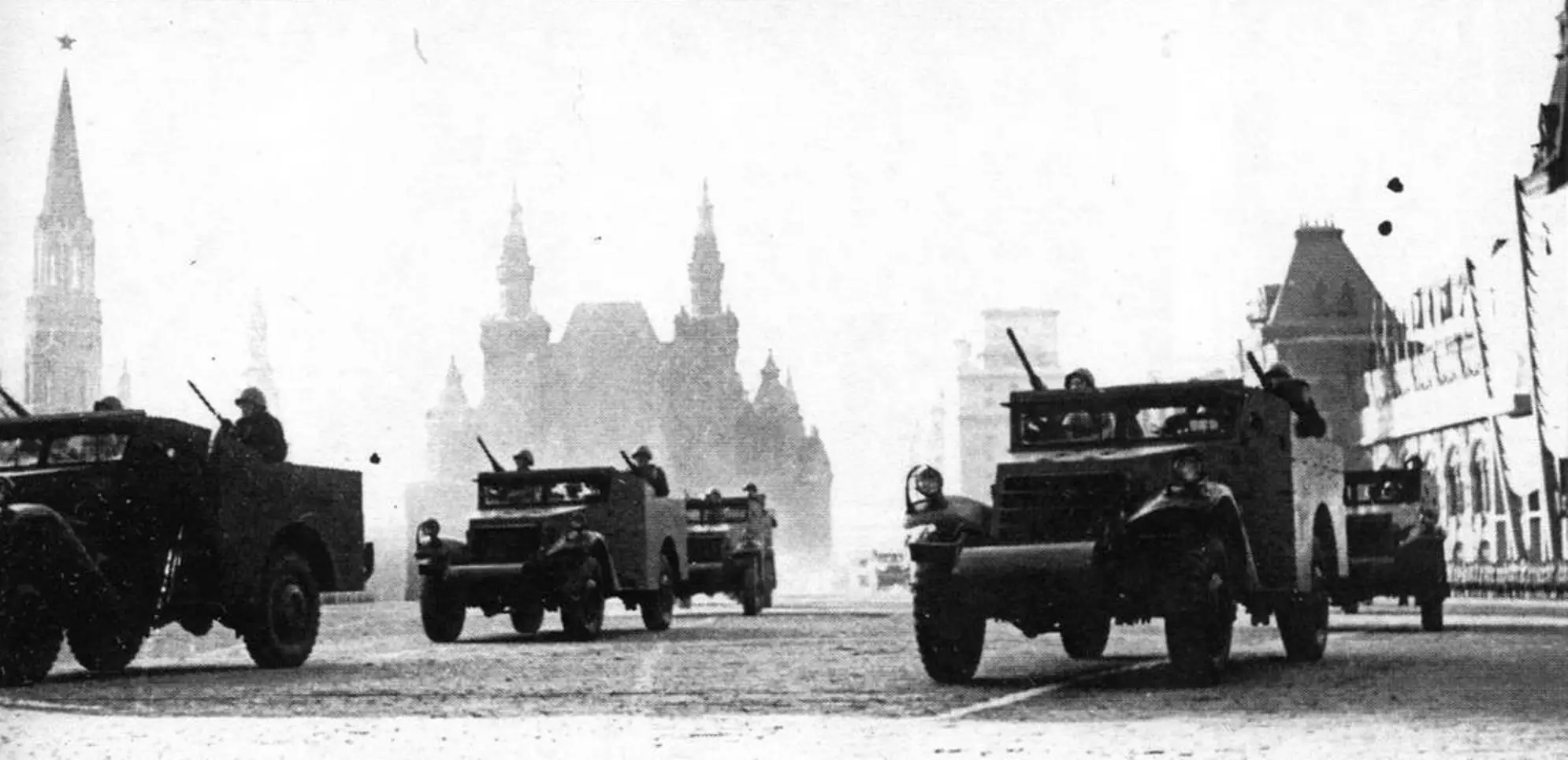
The USSR received (deliveries began in 1942) 3,034 M3A1s, which in Soviet documents of those years were referred to as armored personnel carriers, armored cars or semi-armored cars. Crew training for them was assigned to the 20th Tank Regiment, stationed in Uryupinsk and later in Ryazan, which from 1 March 1942 was reorganized as a training tank regiment. Command and technical cadres for units equipped with “scouts” were trained at the 3rd Saratov School of Armored Cars and Armored Personnel Carriers.
“Scouts” became the most numerous and most popular armored personnel carriers in the Red Army. They were used, as in the Allied forces, mainly as reconnaissance and command vehicles. A reconnaissance company of a tank or mechanized brigade had 3–4 M3A1s, a corps reconnaissance battalion 6–8, and an army motorcycle regiment 13–16. The only shortcomings mentioned in combat employment reports were, perhaps, the unreliable towing gear (in reconnaissance units “scouts” served as tractors for batteries of 76 mm ZiS-3 guns) and the reduced dynamic performance when towing artillery systems.
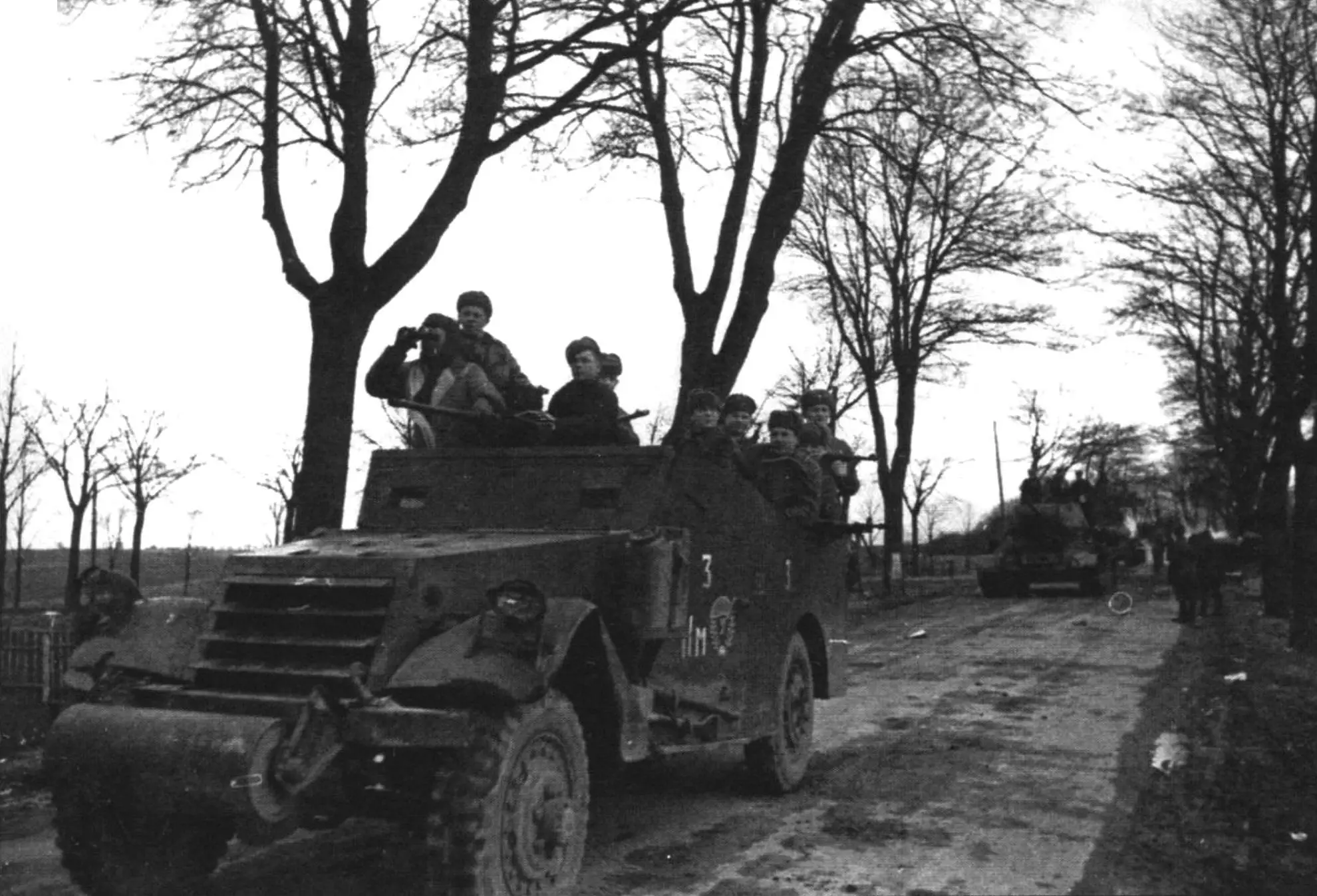
As an example illustrating the combat work of Red Army reconnaissance units, one may cite the actions of the advance guard of the 7th Guards Mechanized Brigade of the 3rd Guards Mechanized Corps during the offensive in early September 1943 in Ukraine.
The forward detachments of the corps brigades were tasked with seizing a crossing over the Psel River and cutting the roads east of Hadiach and in the Velbivka area. The advance guard of the 7th Mechanized Brigade, consisting of 30 men on three M3A1 APCs, cut the enemy’s withdrawal route at the southern edge of Velbivka. The Germans did not expect a blow from that side and, meeting the machine-gun fire of the armored personnel carriers, were thrown into confusion. The ensuing fight ended in the enemy’s defeat: the arriving units of the 7th and 9th Guards Mechanized Brigades took the village of Velbivka.
An example of active maneuver by reconnaissance troops was the engagement of the 28th Guards Mechanized Brigade of the 8th Guards Tank Corps during the liberation of Poland in August 1944.
South of the settlement of Łęczna, in a ravine, the enemy set up an ambush. After entering the ravine, the column of command vehicles of the 28th Guards Mechanized Brigade was suddenly fired on from the left flank and frontally from factory buildings in Łęczna. Two reconnaissance sections under Lieutenant Alekseychuk that moved out to the left drew the ambush’s attention. Meanwhile four M3A1 APCs of the separate reconnaissance company under Guards Major Tifonov, the brigade deputy chief of staff for intelligence, opened intense submachine-gun and machine-gun fire. As a result, 30 Hitlerites, seeing their hopeless position, threw down their weapons and surrendered; the remainder in the ravine (up to 60 soldiers and officers) were destroyed.
At the same time a separate enemy group of up to 30 men, entrenched in a factory building in Łęczna, continued to fire with submachine guns and machine guns, sweeping the road along which the vehicle column was to move. Two M3A1s under Senior Sergeant Starostin and Sergeant Liberman, sent forward, closed right up to the factory and opened a hurricane of fire through the building’s windows, forcing the enemy to cease resistance. Two anti-tank guns of the 2nd Motor Rifle Battalion that arrived completed the destruction of the ambush.
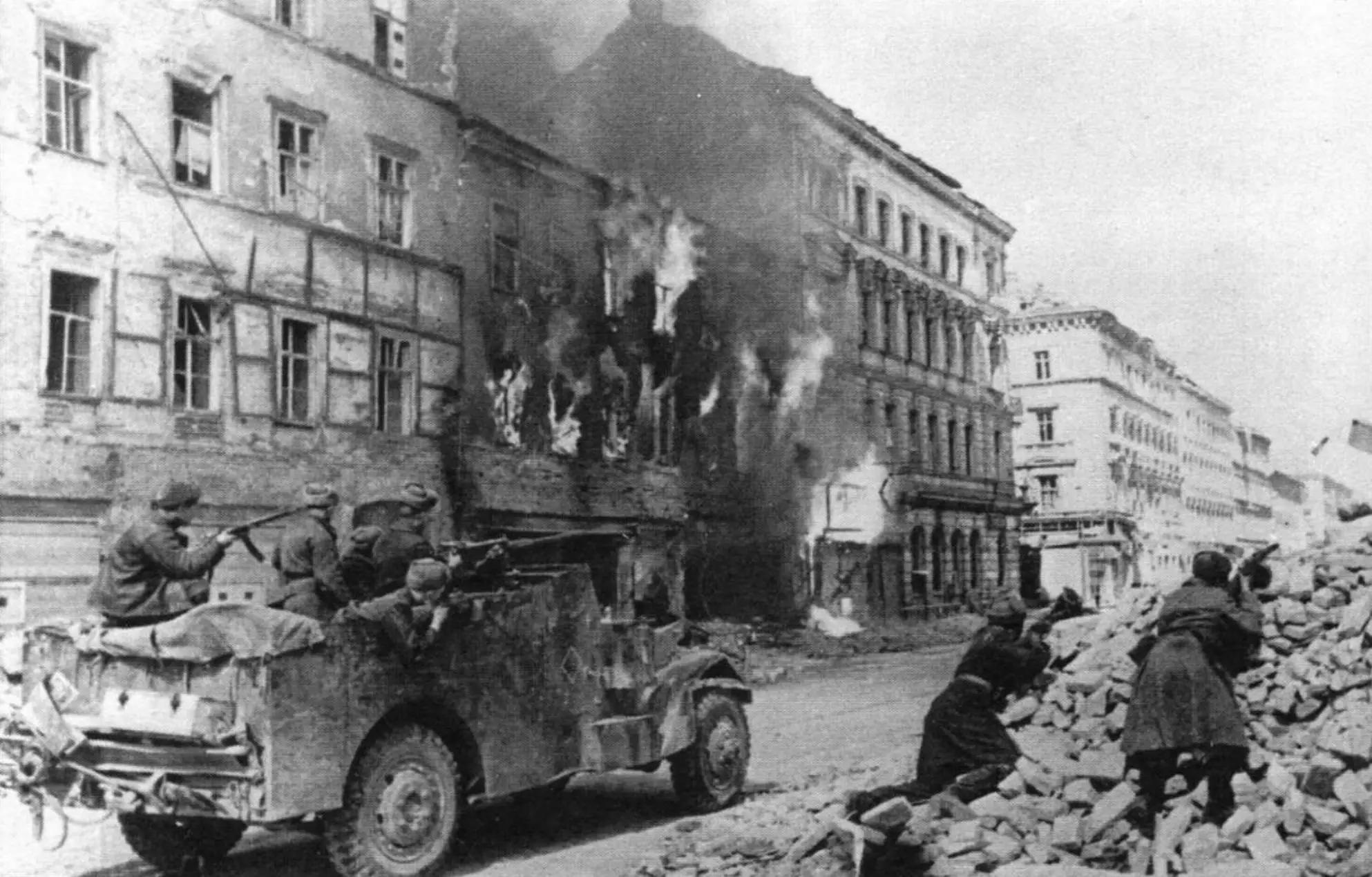
Powerful armament and a good field of view also made it possible to use the armored personnel carriers effectively in street fighting.
On 25 April 1945 the first to break into the eastern outskirts of the Czech city of Brno were men of Senior Lieutenant I. Matushkin’s reconnaissance company from the 4th Guards Mechanized Brigade of the 2nd Guards Mechanized Corps. Overcoming obstacles and heavy machine-gun and submachine-gun fire, Sergeant B. Bayaziev’s M3A1 surged far ahead. The driver noticed that German artillerymen were hastily turning a gun to destroy the armored personnel carrier, but they failed to do so. Bayaziev increased speed, and Private S. Ivanov, with a well-aimed burst from the heavy machine gun, shot up the enemy gun crew. Following the scouts, motor rifle units of the 4th Guards Mechanized Brigade entered Brno.
Six combat vehicles of this type were transferred during the war to the Polish People’s Army. They were used at the headquarters of large formations. After the war the four APCs remaining in service were for a time operated by Poland’s state security troops.
The M3A1 remained in service with the Soviet Army at least until 1947. And there is no doubt that the “scout” served as a direct prototype in the creation of the Soviet BTR-40 light armored personnel carrier.
TACTICAL AND TECHNICAL CHARACTERISTICS OF THE M3A1 RECONNAISSANCE VEHICLE
COMBAT WEIGHT, t: 5.624
CREW, men: 8
OVERALL DIMENSIONS, mm: length — 5619, width — 1962, height — 2111, ground clearance — 301, wheelbase — 3327
ARMAMENT: 1 Browning M2HB machine gun of 12.7 mm caliber; 1 Browning M1919A4 machine gun of 7.62 mm caliber
AMMUNITION: 600 rounds of 12.7 mm, 8,000 rounds of 7.62 mm.
ARMOR, mm: front — 12.7, sides and rear — 6.35
ENGINE: Hercules JXD, 6-cylinder, carbureted, in-line, liquid-cooled; power 110 hp (81 kW) at 3,000 rpm, displacement 5,236 cm3
TRANSMISSION: 4-speed gearbox, two-speed transfer case, dual differential, hydraulic shoe brakes with vacuum booster RUNNING GEAR: wheel arrangement 4×4, tire size 8.25-20″, suspension on semi-elliptic leaf springs with hydraulic shock absorbers
MAX. SPEED, km/h: 88
RANGE, km: 360
OBSTACLES CLEARED: gradient, deg. — 30; vertical wall height, m — 0.36; fording depth, m — 0.7
“Modelist-Konstruktor” No. 10’2025, Mikhail BARYATINSKY, illustrations provided by the author
Recommend to read
 HANGER FOR THE TOOTH
Even with natural bristles, although synthetic toothbrushes are updated by us frequently. But the various wall holders with holes for them to live long and do not always correspond to... GUIDED ANTI-AIRCRAFT MISSILE “WASSERFALL”
In the development of controlled anti-aircraft weapons of Germany during the Second world war, of course, surpassed all other countries. Work in this direction started there quite early...
