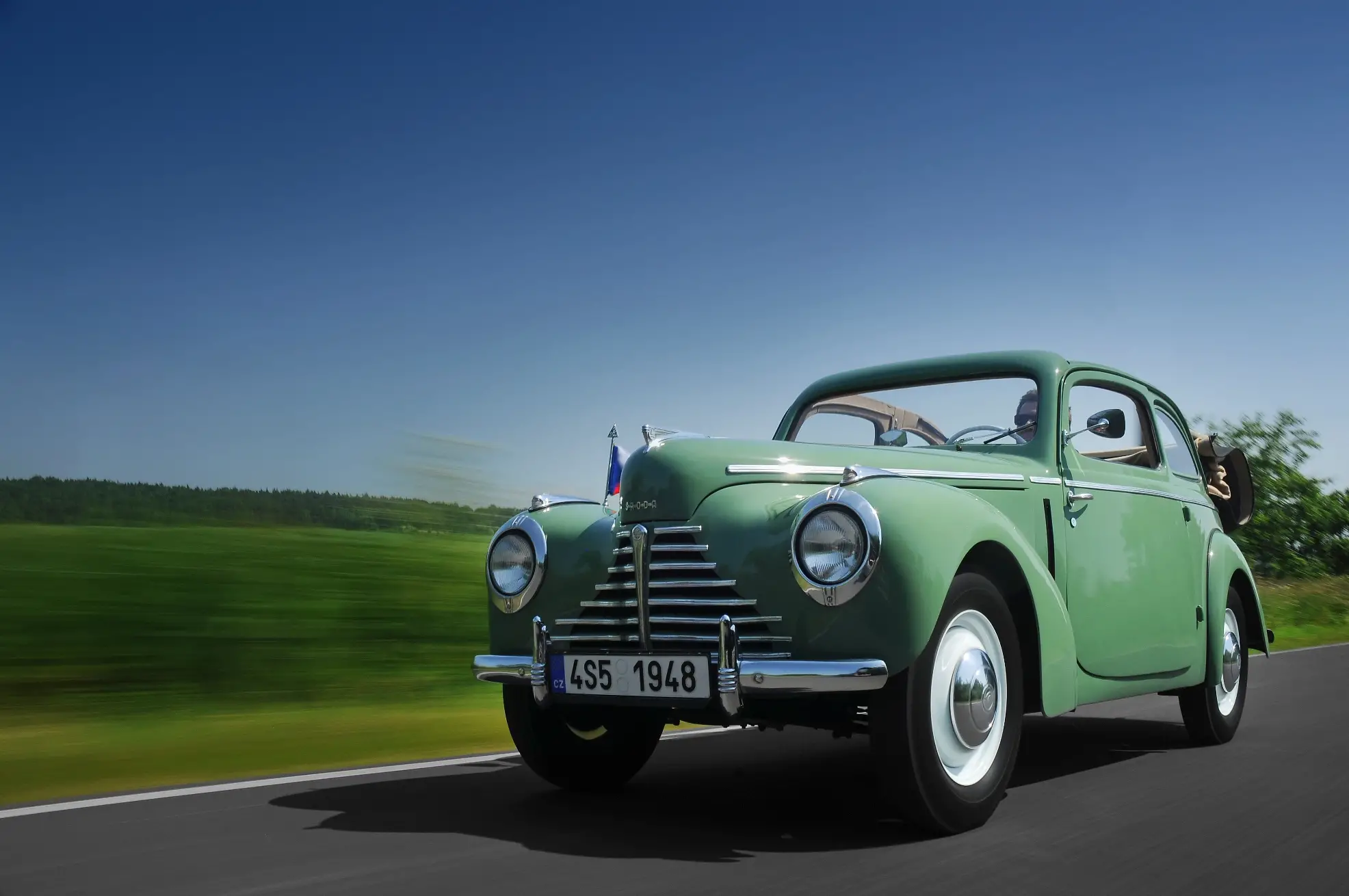
The first Škoda model put into series production after the end of World War II was the Skoda 1101. These cars began to be assembled on a new production line at the main plant in Mladá Boleslav in the spring of 1946. Since the family’s most mass-produced version had a closed two-door sedan body, it received the unofficial name Tudor (“Two doors”).
The car was a slightly restyled Skoda Popular 1101 of 1940; they even shared the same factory designation — Type 938. The Tudor retained the traditional backbone tube frame with the propeller shaft inside it, and a suspension with swinging half-axles on transverse leaf springs. That layout had been patented back in the early 1920s by Tatra designer Hans Ledwinka. The body had a wooden frame with metal outer panels. A 32 hp engine of 1,089 cc could reach speeds of up to 100 km/h.
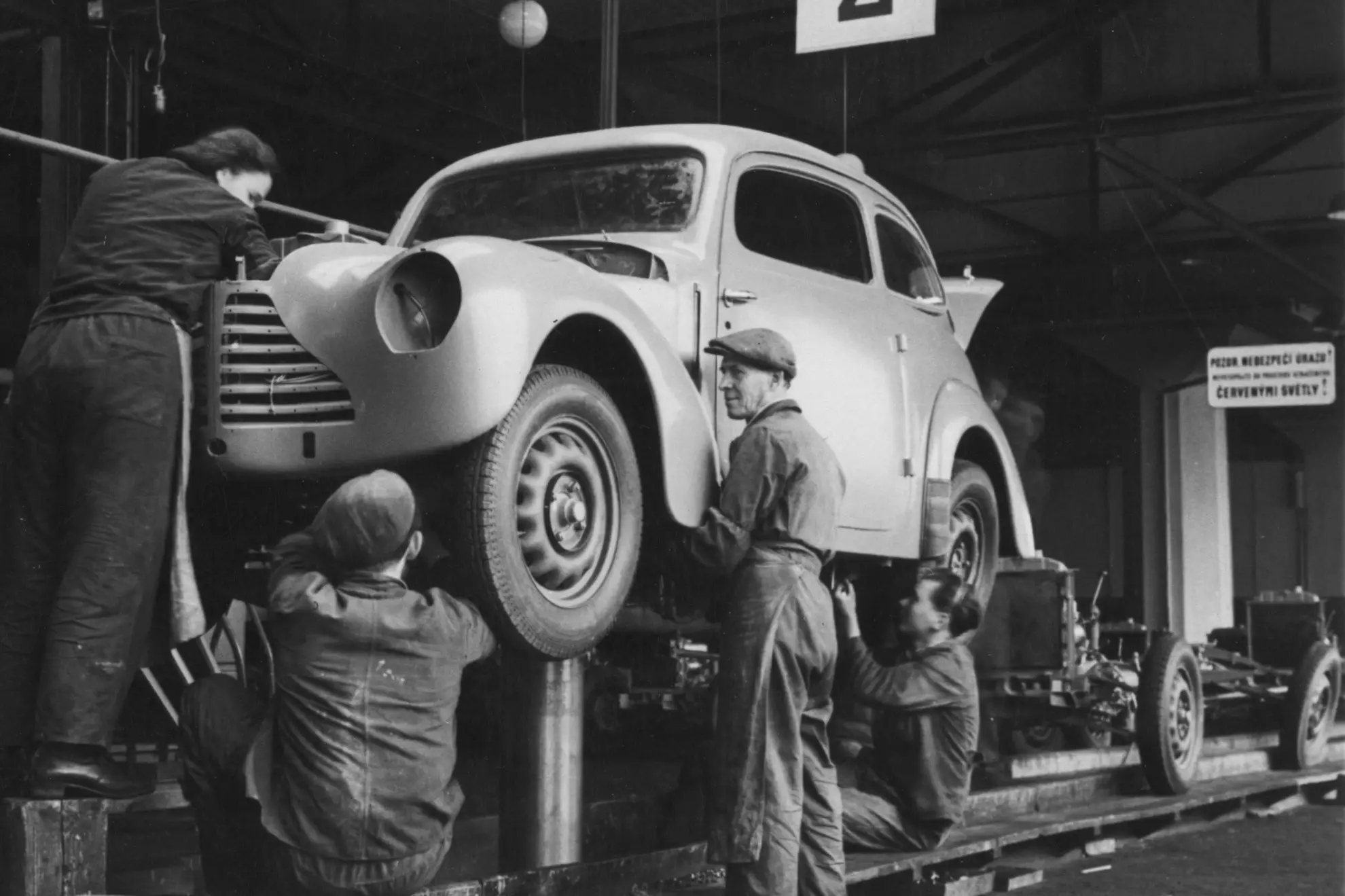
Besides sedans, sedan-cabriolet, roadster, estate, van and ambulance versions were also produced. The bodybuilder Sodomka built estates with wooden cladding of the rear body section and cabriolets of its own design on the Skoda 1101 chassis. Original wooden-bodied estates were also made by the Brozik factory in Plzeň.
In 1948, parallel with the 1101, production of the Skoda 1102 began on the same mechanical base. The main difference of the newcomer was a four-door sedan body version. The gear lever was moved to the steering column. Assembly of the Skoda 1101 and 1102 continued until 1952. In total, 66,904 such cars left the factory gates.
Despite their outdated design, thanks to the reputation earned in the prewar years the Tudors were in demand abroad: they were supplied to countries of Western Europe, South America, Africa and Asia.
“Babeta” does not go to war
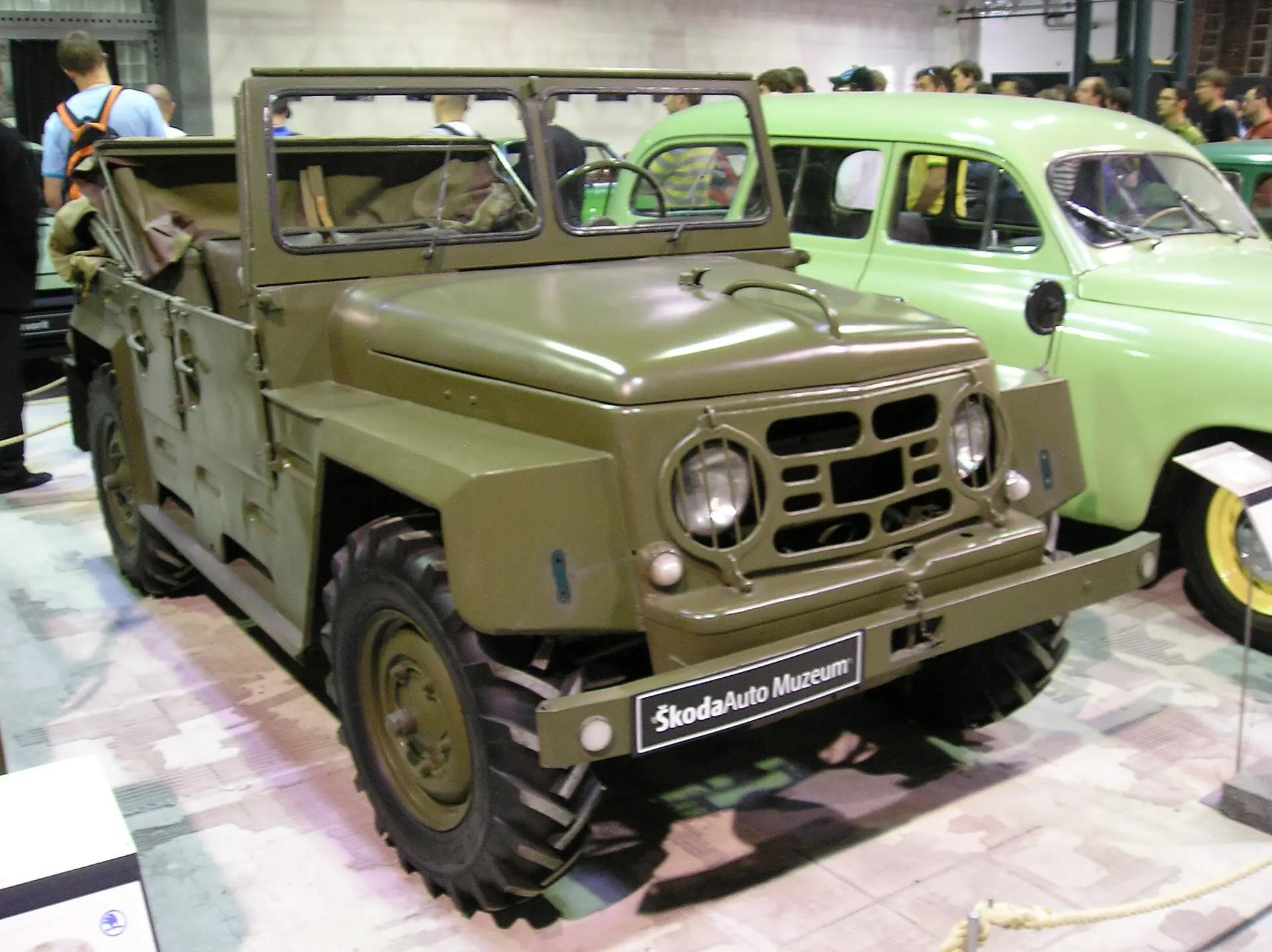
In 1948, production of army vehicles with open simplified bodies began on the Skoda 1101 base: the 1101-P and 1101 VO. In the troops they were nicknamed “Bojovy Tudor” (“Combat Tudor”). In total, 4,237 such vehicles were built by 1951.
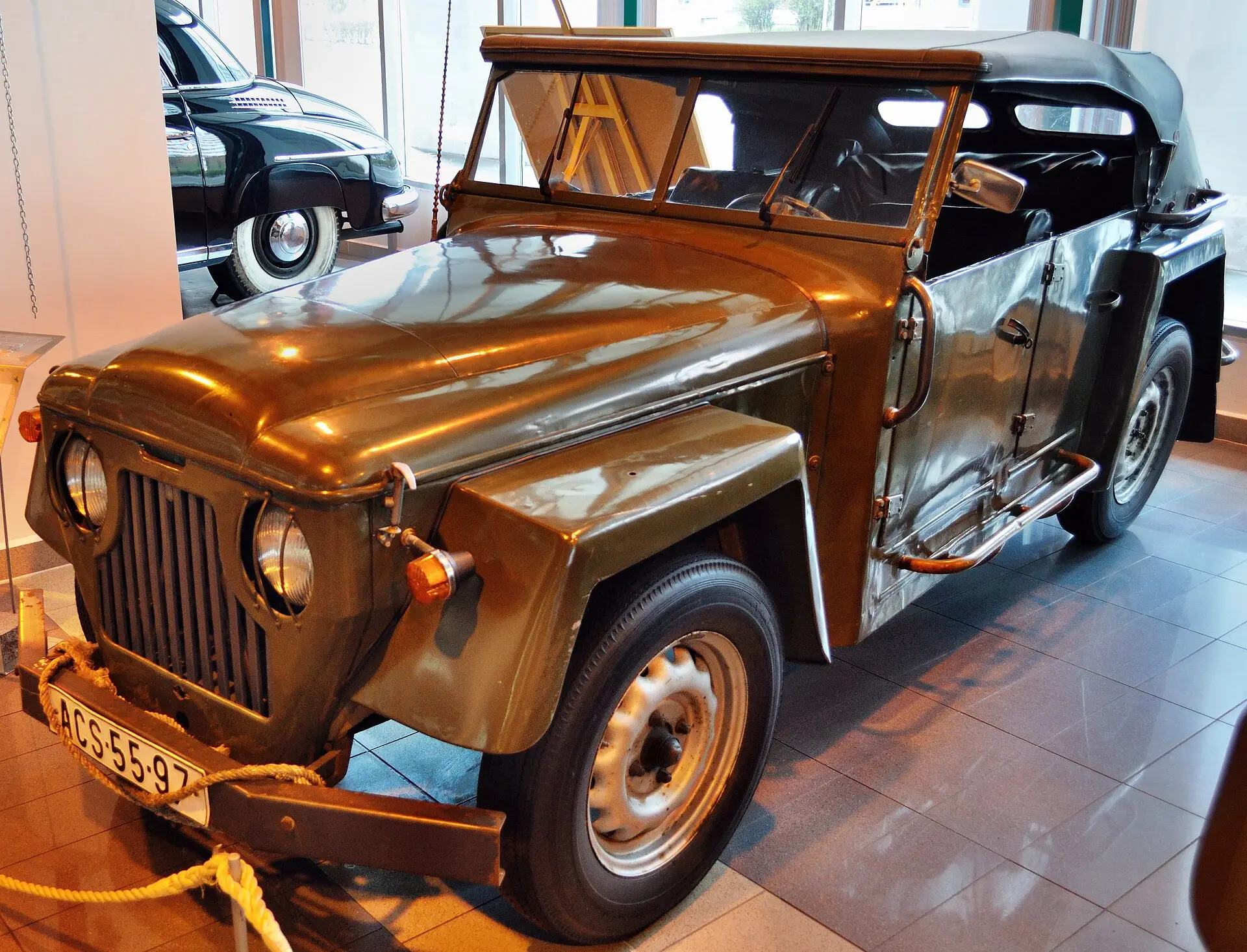
Also in 1950 three four-wheel-drive prototypes Type 965 appeared, and in 1951–1952 — five Skoda MOZ-2 amphibians (Type 972). Their further development was the Skoda Babeta off-roader (Type 973) with a monocoque body and independent torsion-bar suspension. From 1952 to 1956, 30 such vehicles were assembled, but mass production never began, because it was more advantageous to buy Soviet GAZ-69s. Later Škoda abandoned military vehicles. At the same time, the documentation and one Babeta example were transferred to UAZ.
In the early 1960s the Babeta took part in comparative trials with the first UAZ-469 prototypes. Once the Czechoslovak off-roader caught its front suspension on a pipe sticking out of the asphalt, and the torsion bar was ripped out “by the roots.” The Ulyanovsk designers and military customers delivered their verdict: this option will not do for us; we need a car with a reliable dependent leaf-spring suspension and portal axles.
The Czech “chubby”
By the late 1940s it became clear to the company’s management that the prewar legacy would not take them far. Building cars with wooden body frames was already embarrassing, and also costly — production was too labor-intensive. A true flagship model was needed. The economy was gradually recovering, and the country needed delivery vehicles that were more load-capable and roomy than vans based on the Skoda 1101. In 1948 Škoda designers were given the task of designing a new multipurpose model with various bodies.
A classic frame layout suited these goals best, so the traditional backbone tube was retained. The fuel tank location ahead of the bulkhead also remained unchanged. Engine displacement was increased to 1,221 cc and power to 36 hp. But the body became all-steel. Compared with the previous model, the wheelbase grew from 2,485 to 2,685 mm, length from 4,050 to 4,500 mm, and width from 1,500 to 1,680 mm. The car was named Skoda 1200 (factory designation Type 955).
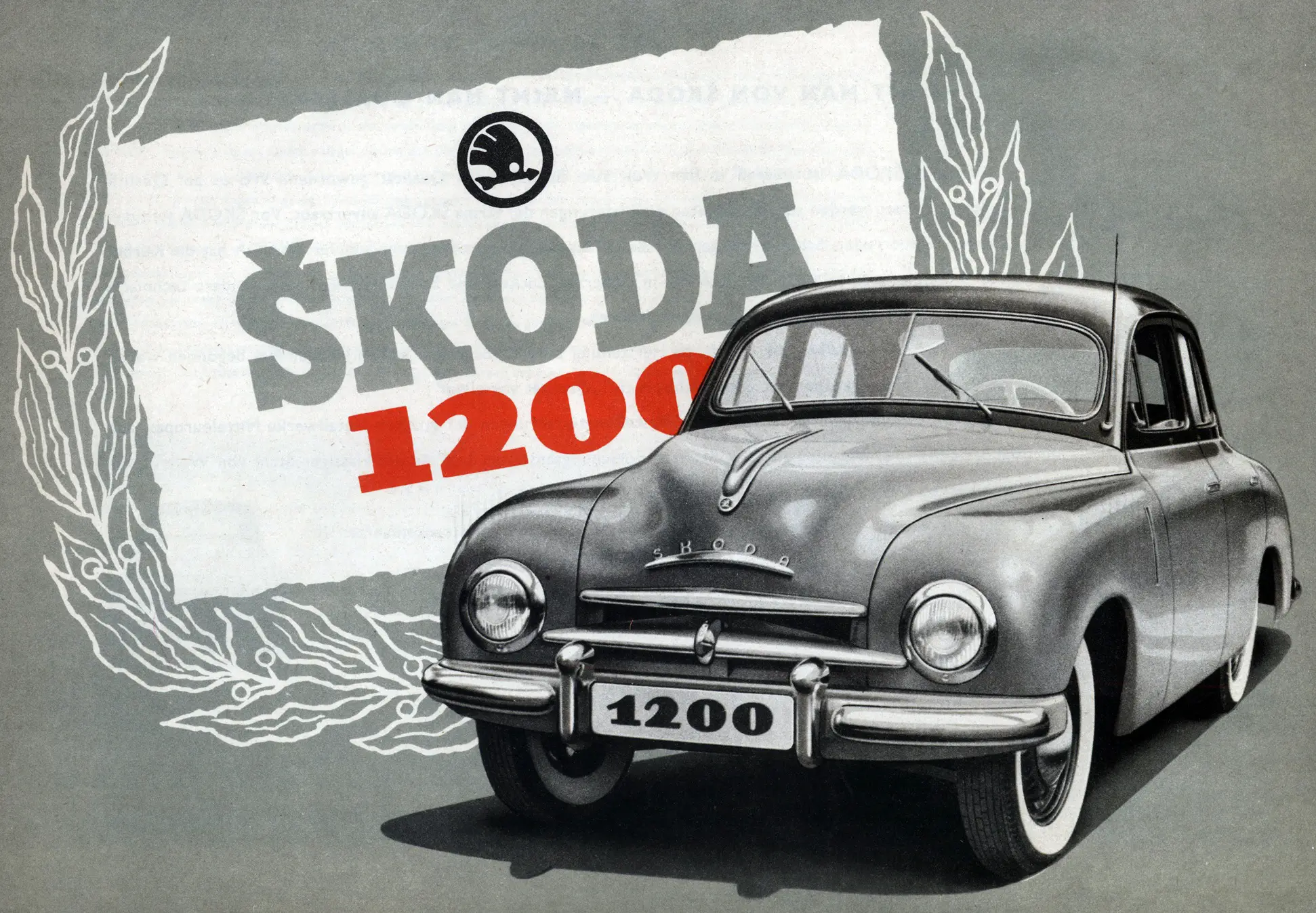
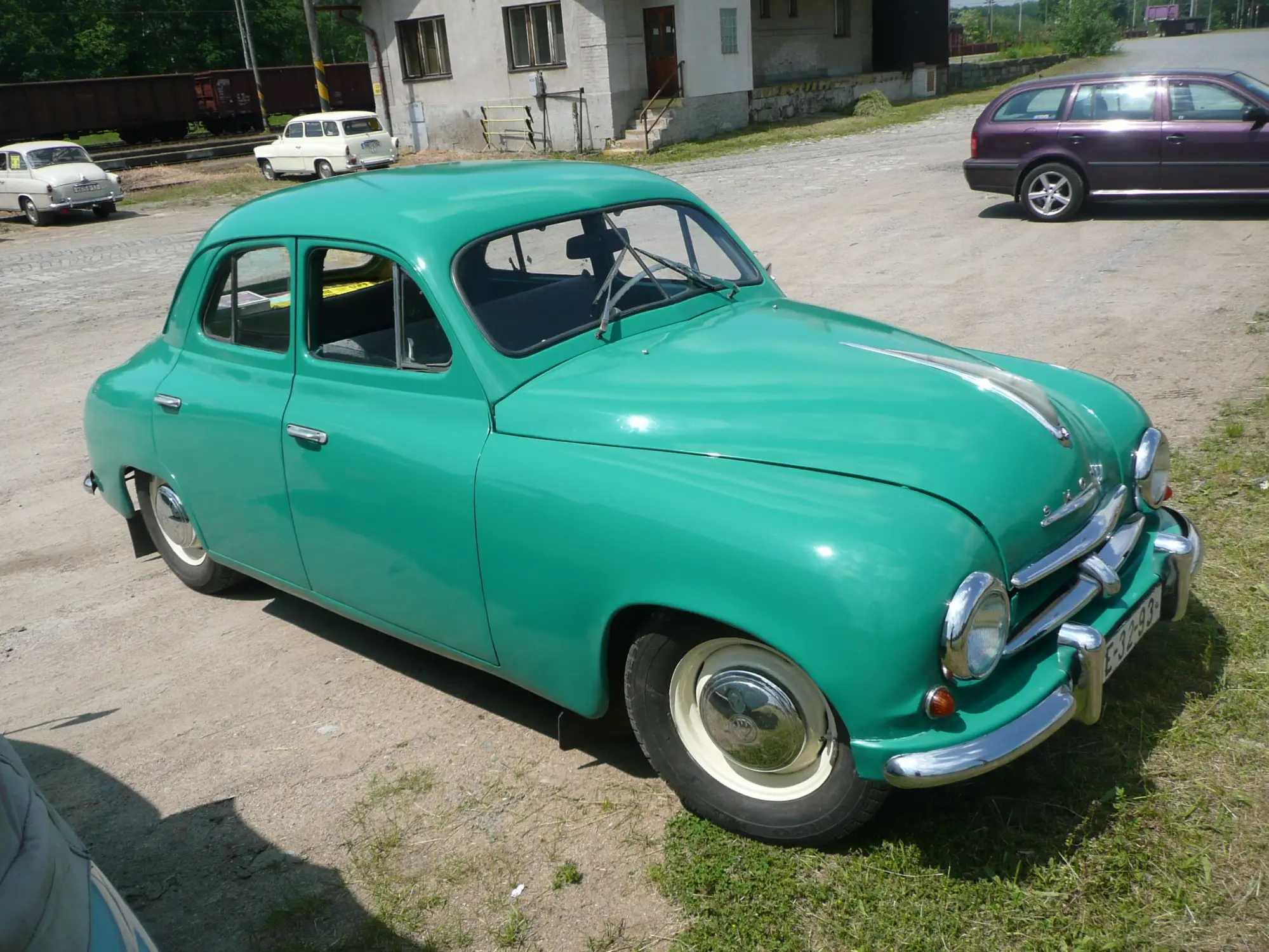
The sedan debuted first in the spring of 1952. Few could then have predicted that this car, in various modernizations, would be produced for 20 years, and that its successors would remain on the assembly line until the beginning of the 21st century!
Early cars were fitted with flip-out mechanical semaphore-type turn indicators in the wings and a transparent plastic “teardrop” on the bonnet — it lit up when the headlights were on. Soon, however, these excesses were abandoned. The car was equipped with modern electric turn indicators on the front wings (their size and shape later changed several times).
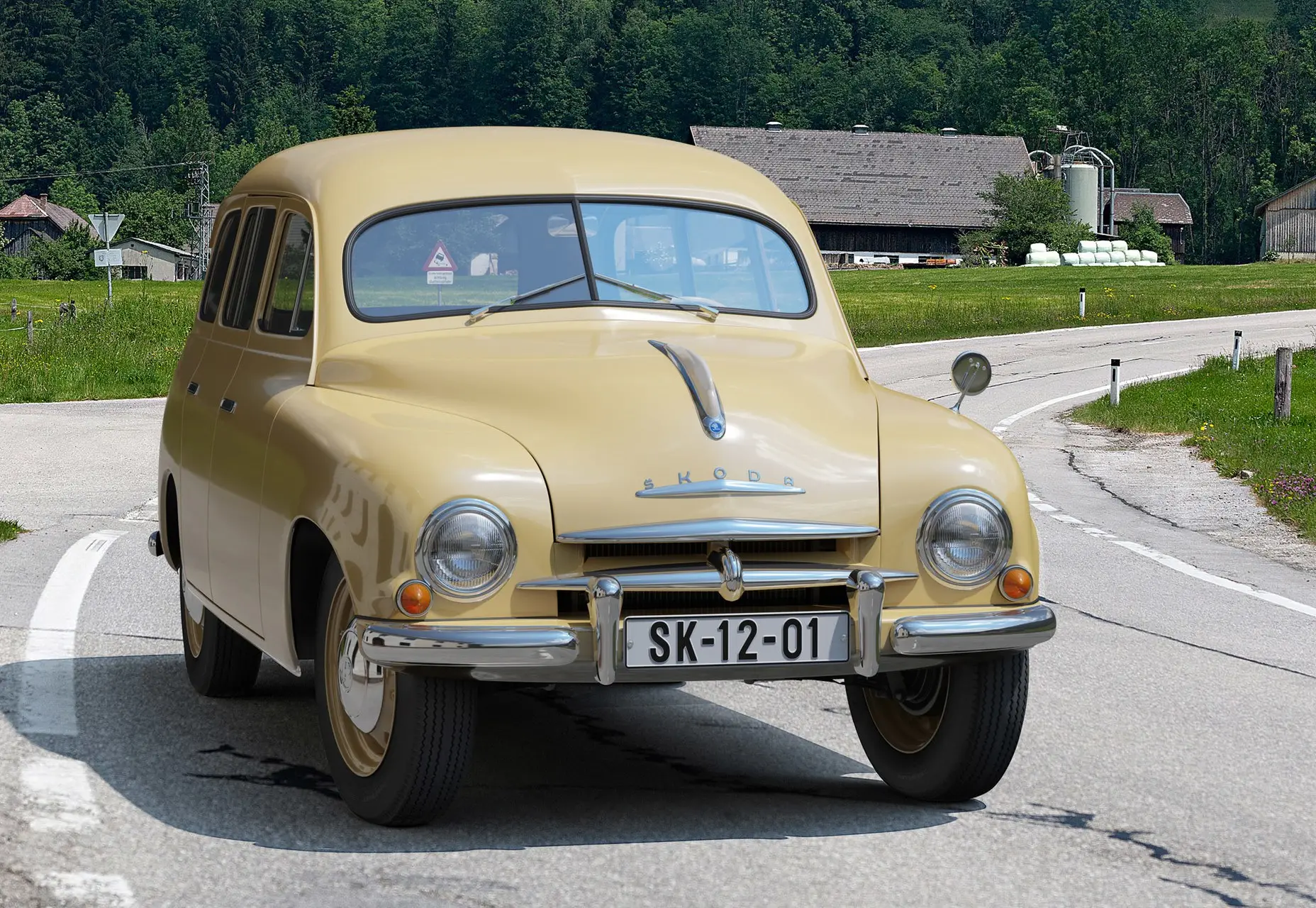
The sedan was followed by an estate and a van. An interesting feature of the estate was that it had one side door on the driver’s side and two on the opposite side. Ambulances and hearses with a rear section lengthened by 120 mm were also assembled at the plant’s branch in Kvasiny. In 1952 a roadster prototype was built, but it was not produced in series.
Users appreciated the Skoda 1200’s spacious, comfortable cabin and strong body. Its performance, however, was poor even by 1950s standards. Because of the weak engine, the claimed top speed was 105 km/h, while the real operating speed was no more than 90 km/h. Accelerating to 80 km/h took half a minute! Many criticized the gearbox — only third and fourth gears were synchronized. In response to critics, the designers prepared a Skoda 1500 version (Type 975) with a more powerful 1.5-liter engine. For economic reasons it did not go into series; only 20 prototypes were built.
Still, for commercial vehicles performance is not the most important measure. Škoda vans and estates were valued for capacity and durability, were in demand worldwide, and in Brazil assembly from Czechoslovak components was even organized. In Middle Eastern and African countries two extra seats were installed in the estate’s luggage compartment, increasing capacity to seven people and allowing them to be used as shared taxis. In total, 33,599 cars of the Skoda 1200 family were produced by 1956.
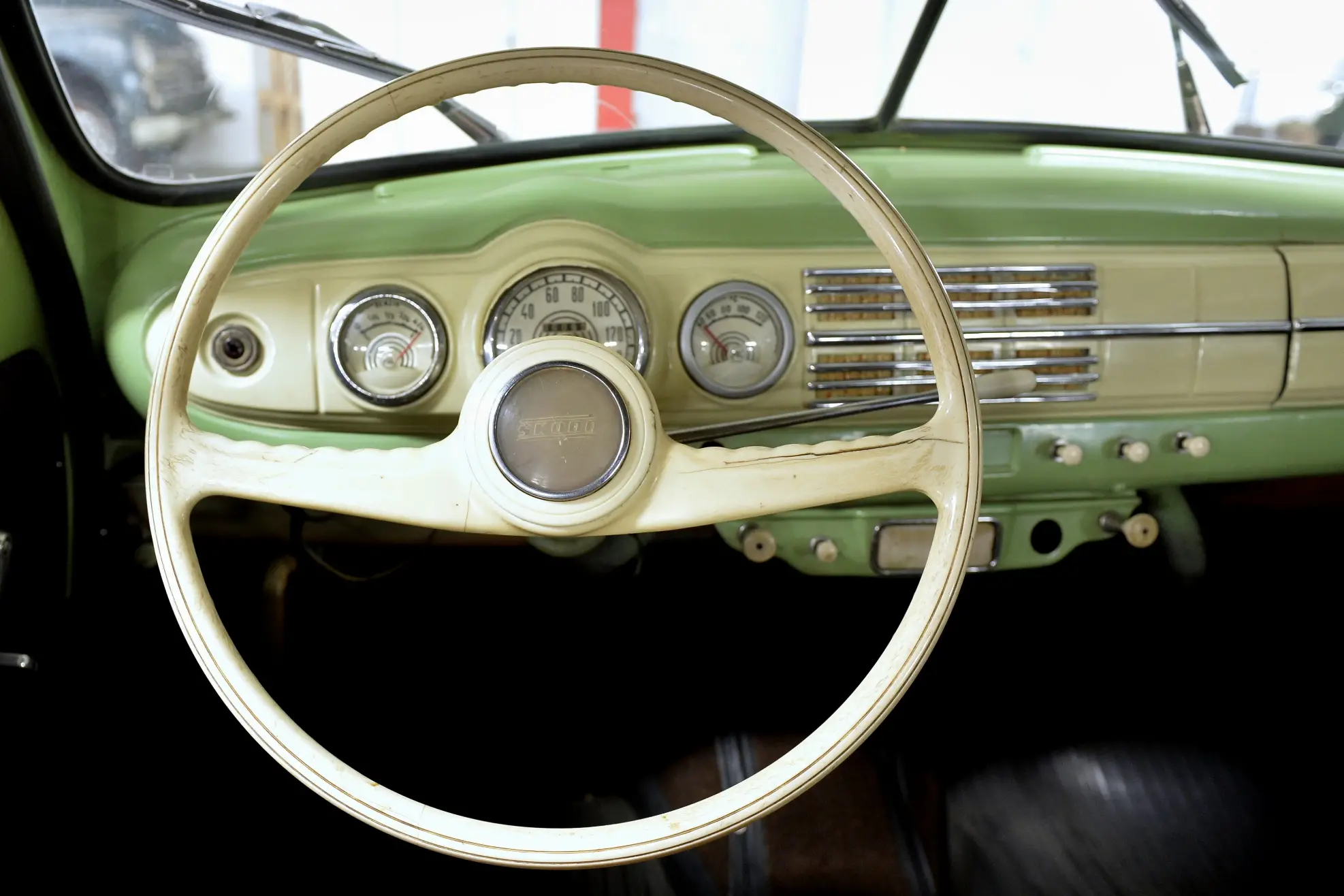
In 1955 production of the modernized 1201 model (Type 980) began. It was built with the same body types as the Skoda 1200. Whereas on the previous car the doors covered the sills, on the new one the sills were left exposed. An export de Luxe sedan version appeared with fog lamps, improved trim, and decorative moldings on the body sides and sills. By raising the compression ratio and fitting a new carburetor, engine power was increased to 45 hp. All gears except first and reverse became synchronized.
Demand for commercial versions kept growing. A pickup and a chassis-cab for bodies by outside builders appeared in the lineup. Sedans, meanwhile, were losing popularity. In 1956 prototype Skoda 1201 Rapid cars with updated design and a roof hatch were shown. The fuel tank was moved to the rear of the car. But because of lack of buyer interest, the new version was not even put into series production.
Production of Skoda 1200 sedans ended in 1959. Commercial vehicle production, however, continued in Kvasiny and Vrchlabí until 1961. In total, 33,472 cars of the Skoda 1201 family were built. The most popular among them were the estates. They were supplied to 64 countries around the world! And the main sales market was the USSR.
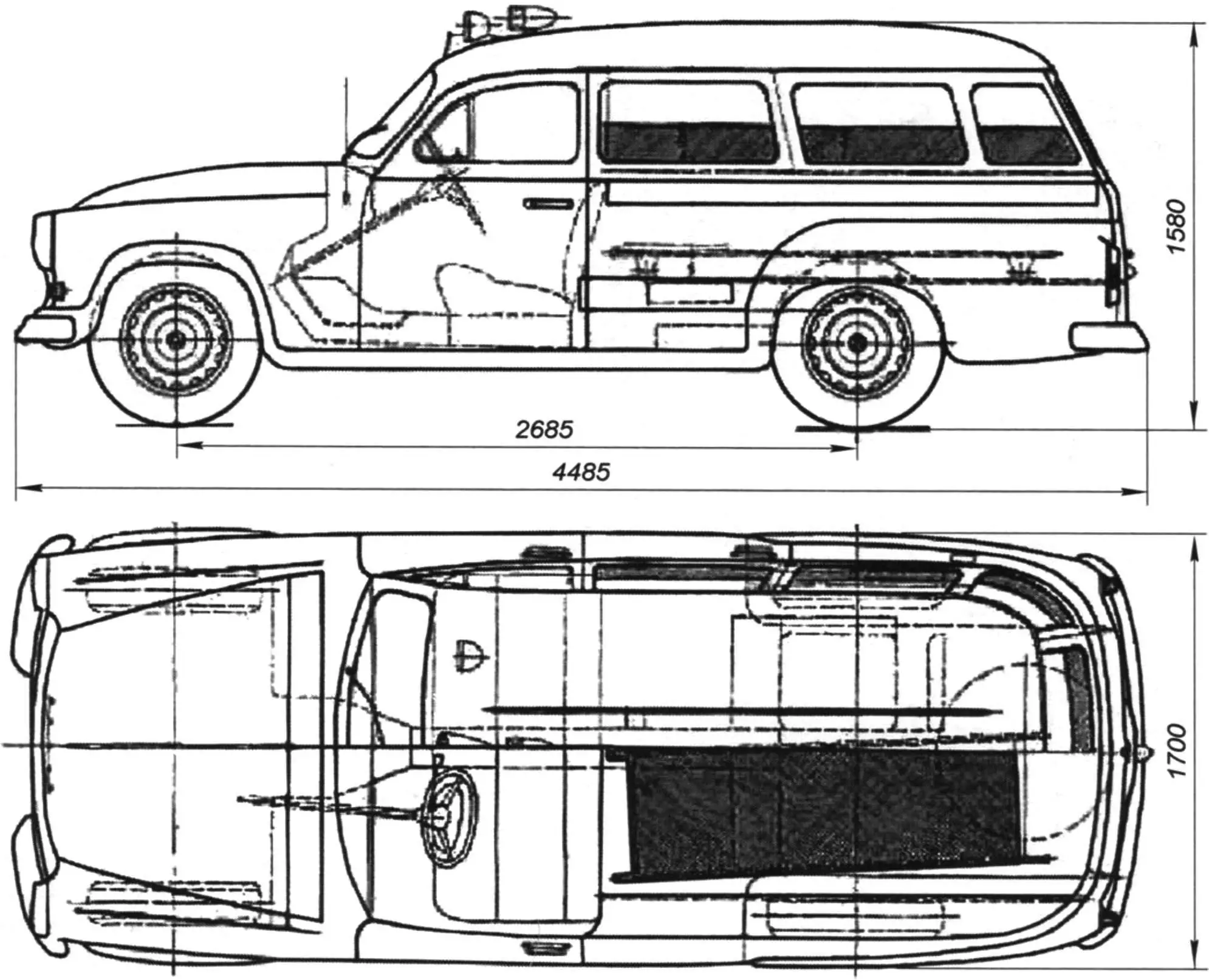
From 1957 to 1968, 15,806 Skoda 1201 and 1202 cars were delivered to the Soviet Union. Estates, vans and medical vehicles were purchased as passenger cars but were not sold into private hands. They could be found in the most varied corners of the country. Because of their bulky bodies, our drivers nicknamed them “chubby ones.” They even appeared in Soviet cinema — for example, in the film Amphibian Man (Lenfilm studio, 1961). Unfortunately, no more than ten Skoda 1201 cars survive in Russia today.
In a new dress
The logical continuation of the 1201 model was the Skoda 1202 (Type 981). Launched into series production in 1961, the car gained a new stylish body with a panoramic windscreen and a radiator grille in the style of the Skoda Octavia. Only estate and van versions remained in the lineup (assembled in Vrchlabí), plus medical vehicles produced at the plant in Kvasiny. On the estates the tailgate now opened upward rather than sideways as on the previous generation. The chassis remained the same. By raising the compression ratio, engine power was increased to 47 hp (from 1969 — 51.5 hp). In 1966 a pickup body version reappeared.
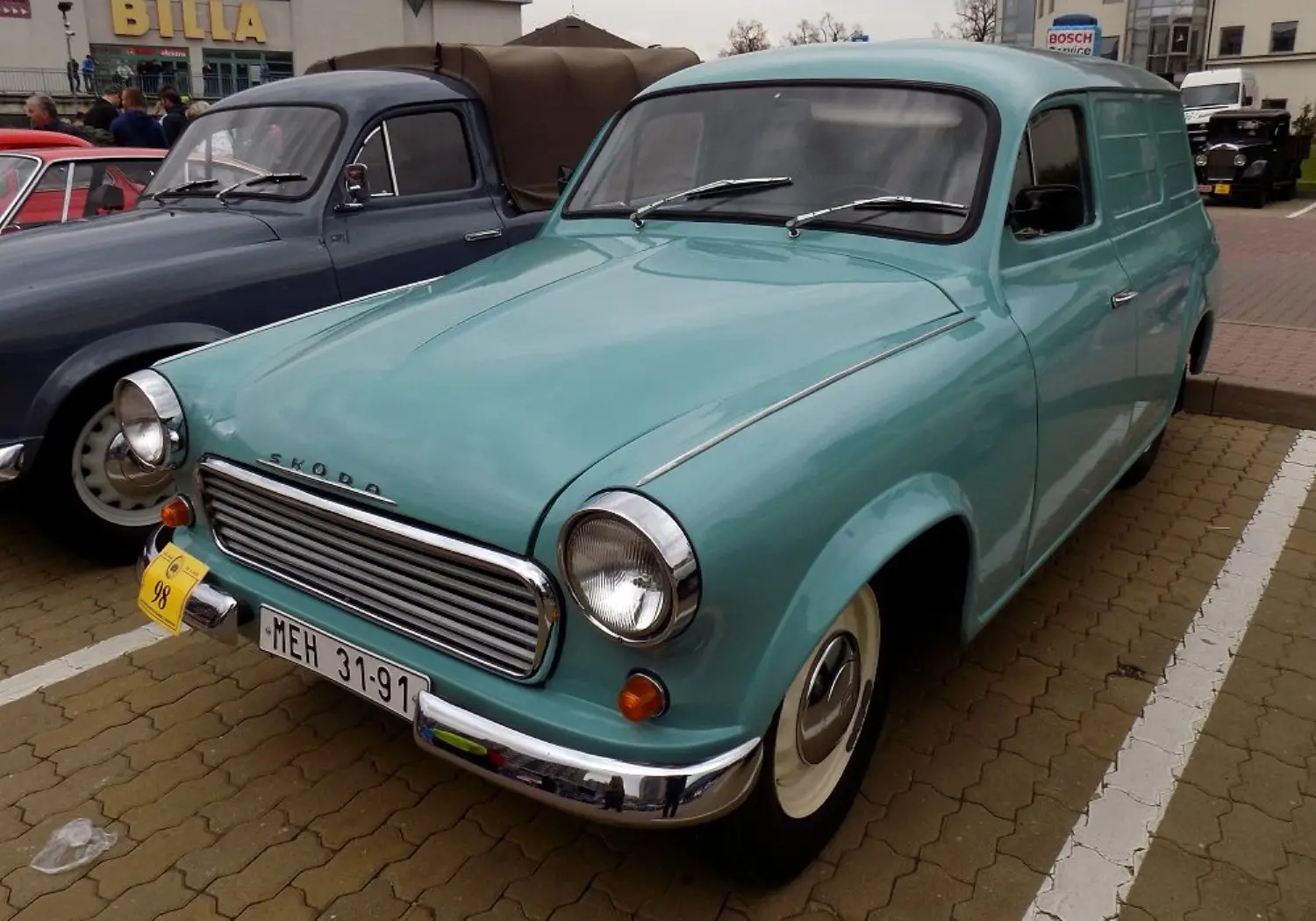
Production of the Skoda 1202 family continued until 1973. The total was 60,141 examples of all versions. They were also assembled under license in Turkey and Pakistan.
After building 10,000 licensed Skoda 1202 pickups, the Turkish firm Celik Montaj (later Anadolu Otomotiv Sanayi) began producing light trucks called Skoda Kamyonetlery on the previous mechanical base and with original styling. By 1982, 32,700 such vehicles had been assembled.
The long-liver
Back in 1956 three cab-forward Type 979 minibus prototypes were built on the Skoda 1200 chassis. And in the early 1960s a small series of minibuses, vans and pickups with the factory index Type 997 already appeared on Skoda 1201 components. The car was named Skoda 1203, but because of a lack of free production capacity it could not be launched into mass production for a long time. The opportunity came only in 1968, when demand for the Skoda 1202 began to fall. Both vehicles then began to be built in parallel — fortunately they shared the same engine.
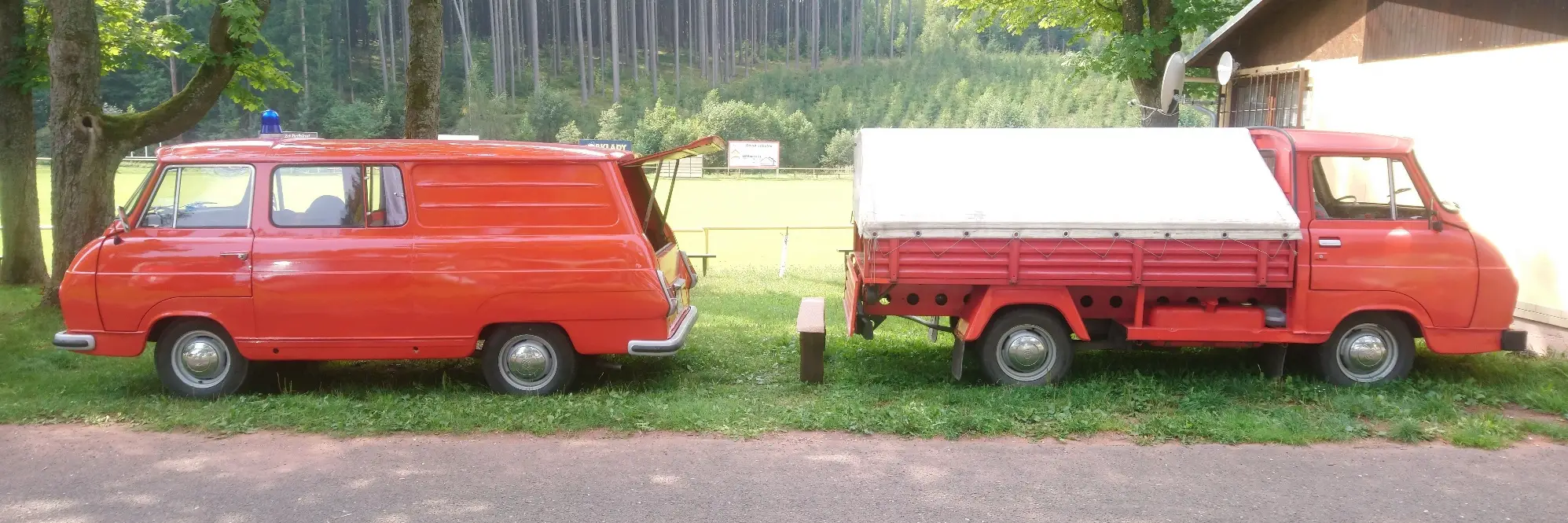
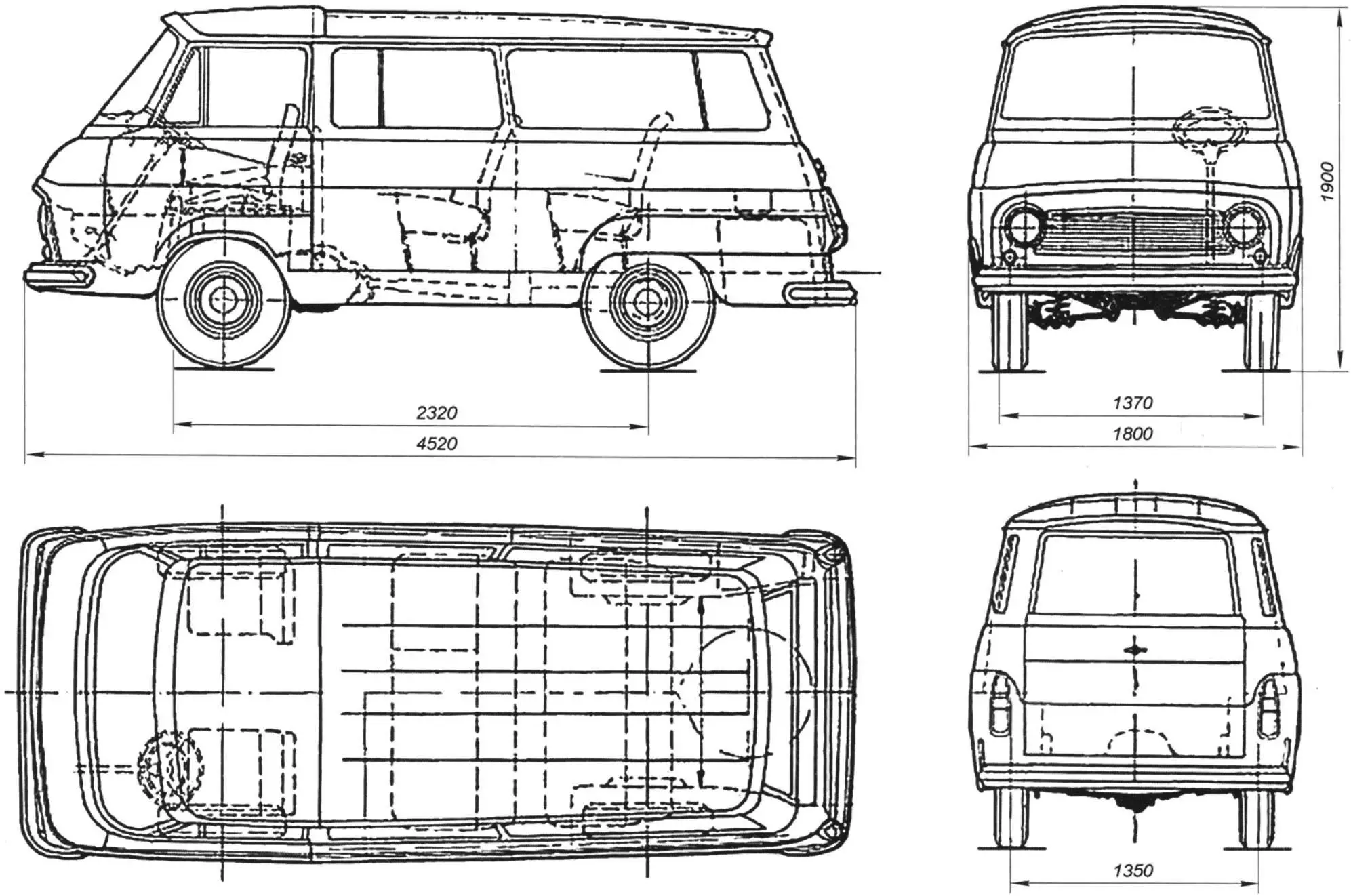
The Skoda 1203 designers abandoned the backbone frame. It has a frameless body with a load-bearing floor pan. Today such designs are commonly called a “monocoque body with an integrated rectangular frame.” Compared with its predecessor the overall dimensions grew slightly, while the wheelbase was reduced from 2,685 to 2,320 mm, which substantially improved maneuverability. The body came out strong and light. Curb weight depending on version was 1,120–1,340 kg, payload from 840 to 1,000 kg. The engine is located in the cab between the driver and the passenger. Suspension is fully independent: coil springs and wishbones with dampers at the front, longitudinal torsion bars with trailing arms at the rear.
The Skoda 1203 family included many versions. The base and most common was a minibus with three rows of seats. In practice it was a minivan, since it had eight seats and could be driven with a category B license. They were produced in two trim levels: standard and de Luxe with improved finish.
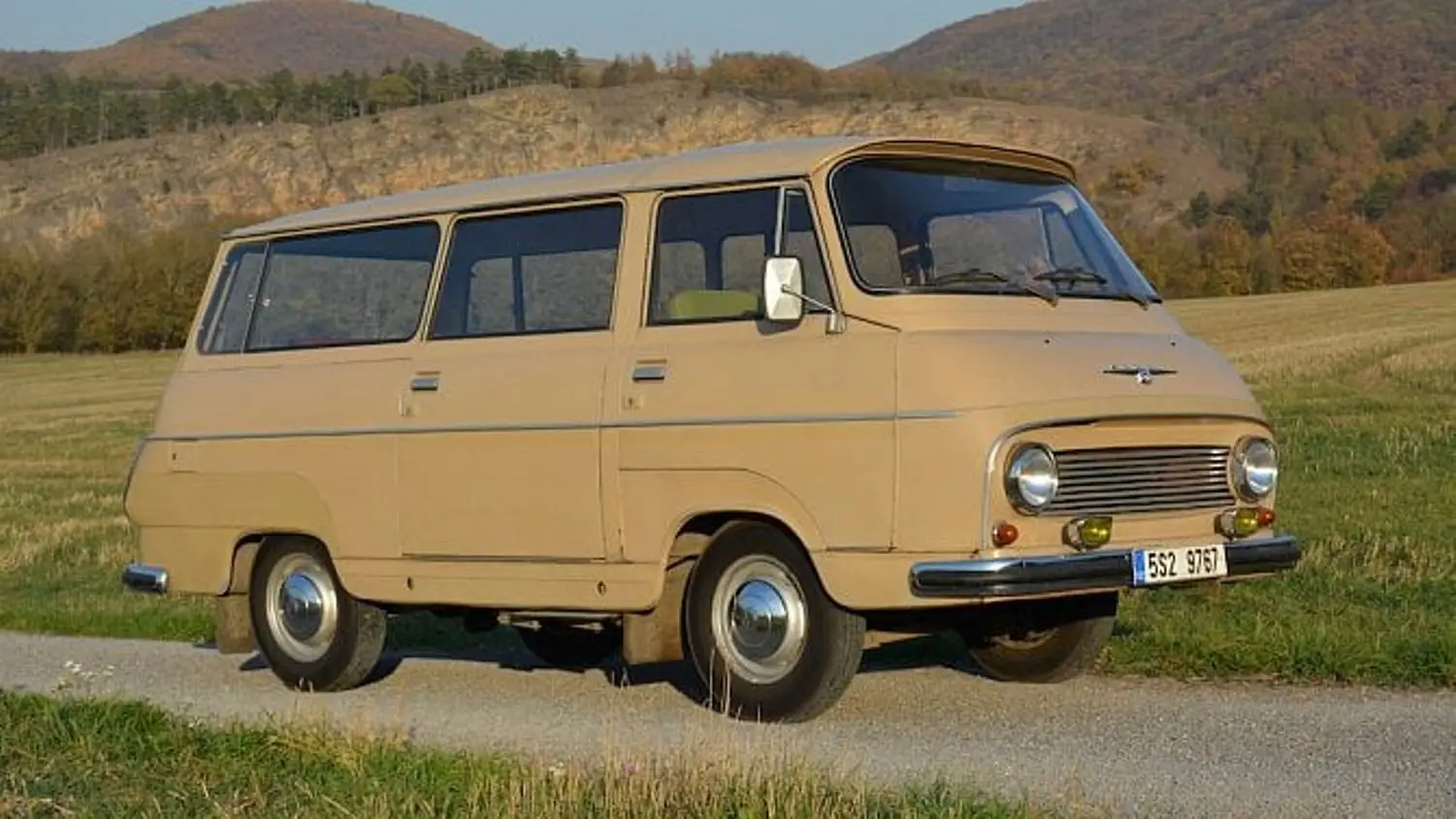
The lineup also included: a van, a pickup, a COM dual-purpose version with two rows of seats, an ambulance, a hearse, a bare chassis, and the ROL truck with an additional frame and a drop-side platform measuring 2,800 × 1,750 mm.
In 1974 the Skoda 1203 (factory index Type 776) appeared. Externally it differed by more massive angular black bumpers and recessed door handles. This model remained on the Vrchlabí line until 1981 (69,727 examples). But the car’s career did not end there!
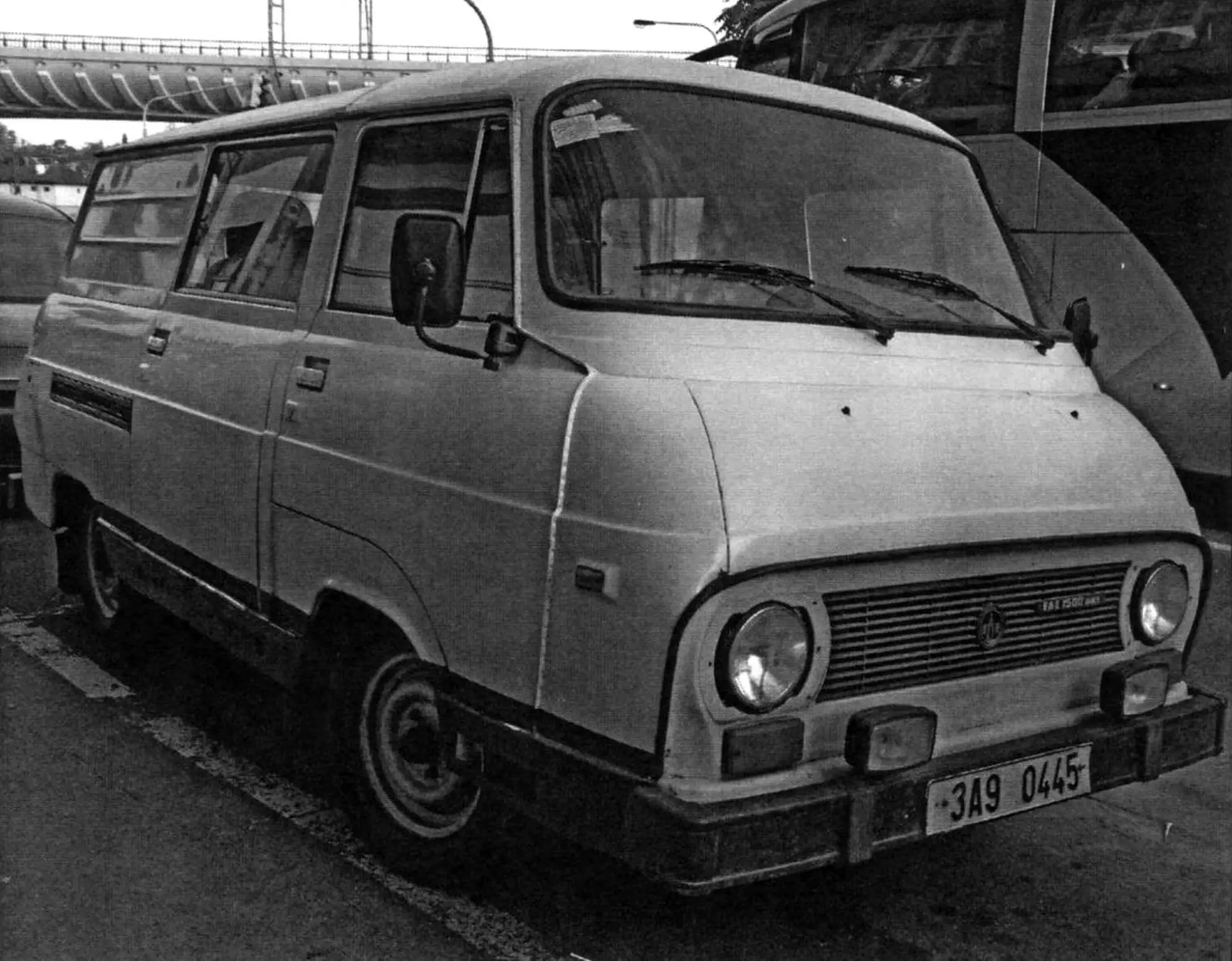
As early as 1973, part of component production and some versions began to be gradually transferred to the TAZ plant in the Slovak town of Trnava. In particular, Skoda 1203 ROL trucks were assembled there. In 1981 production of the entire model range continued in Trnava under the TAZ-Skoda badge.
In 1985 the car received rectangular headlights, new indicators and bumpers, and a black plastic grille, but lost the roof visor and wheel covers. That version was called TAZ S-1203 M.
In the late 1980s some cars began to be fitted with 57 hp engines of 1,433 cc. The engine had been developed back in the 1950s but was not then put into mass production. From 1993 this power unit became the base engine, and the car was renamed TAZ 1500.
In 1992 assembly of Slovak minibuses and vans was also organized in Germany under the Pelucar brand, but only a few were built.
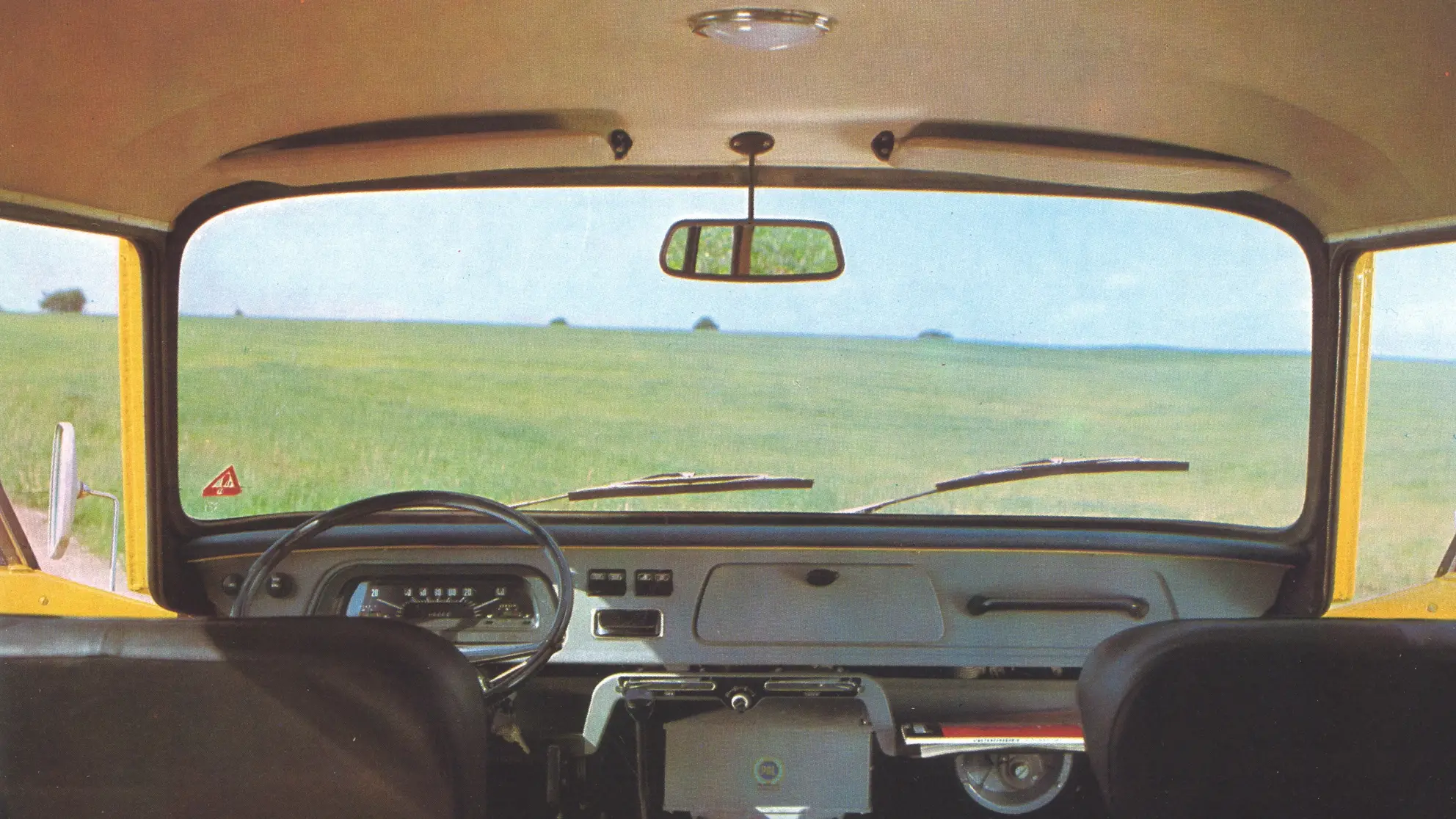
The 1994 changes affected the interior and the headlights, which became round again. Some petrol-engined cars were fitted with catalytic converters; in addition, a TAZ 1900 version appeared with a Volkswagen diesel of 1,896 cc. From 1997 the convex front body mask was painted in the body color.
In 1999 TAZ went bankrupt, but the minibus survived anyway! The point is that as early as 1986 TAZ’s stamping operations had been spun off into a separate enterprise; in 1996 it was privatized, so the collapse of the parent company did not affect it. There, body parts for the Skoda 1203/TAZ 1500 continued to be produced for several more years — until in 2000 the rights to produce the car were bought by Roman Jirous – Ocelot.
Assembly was organized in Czech Žacléř. From remaining components they built S1203 cars with 1,221 cc engines styled in the 1970s manner. About half of all output was exported to Germany, where for 7–8 thousand euros one could buy a brand-new retro car.
Technical specifications of postwar Skoda cars
| Model | Skoda 1101 | Skoda 1200 | Skoda 1201 | Skoda 1202 | Skoda 1203 |
|---|---|---|---|---|---|
| Year of production | 1946 | 1952 | 1955 | 1961 | 1969 |
| Body type | sedan | sedan | sedan | estate | minivan |
| Number of doors | 2 | 4 | 4 | 4 | 4 |
| Number of seats | 4 | 5 | 5 | 5 | 7-8 |
| Length, mm | 4050 | 4500 | 4500 | 4485 | 4520 |
| Width, mm | 1500 | 1680 | 1680 | 1700 | 1800 |
| Height, mm | 1520 | 1520 | 1520 | 1580 | 1900 |
| Wheelbase, mm | 2485 | 2685 | 2685 | 2685 | 2320 |
| Curb weight, kg | 940 | 1050 | 1050 | 1160 | 1120 |
| Engine displacement, cc | 1089 | 1221 | 1221 | 1221 | 1221 |
| Power, hp | 32 | 36 | 45 | 47 | 51.5 |
| Compression ratio | — | 6.5:1 | 6.8:1 | 7.5:1 | 7.9:1 |
| Top speed, km/h | 100 | 105 | 105 | 100 | 95 |
| Average fuel consumption, l/100 km | 8–8.5 | 9.5–10 | 9.5–10 | 9.4 | 11 |
The second base model was the TAZ 1500 with a 1997-style body and a 1,433 cc engine — these were mainly bought by local small-income entrepreneurs. In the early 2000s Ocelot assembled about 100 cars a year. The last eight cars were built in 2009. Since then the company has been producing and selling spare parts and repairing and restoring previously built Skoda 1203/TAZ 1500 vehicles.
The 60-year evolution of the Skoda 1200 model has ended, although many of its heirs — Skoda 1203s — are still actively used. After the breakup of Czechoslovakia the Škoda plants came under Volkswagen control, and minibuses and light trucks are no longer produced there.
TECHNOLOGY IN MINIATURE
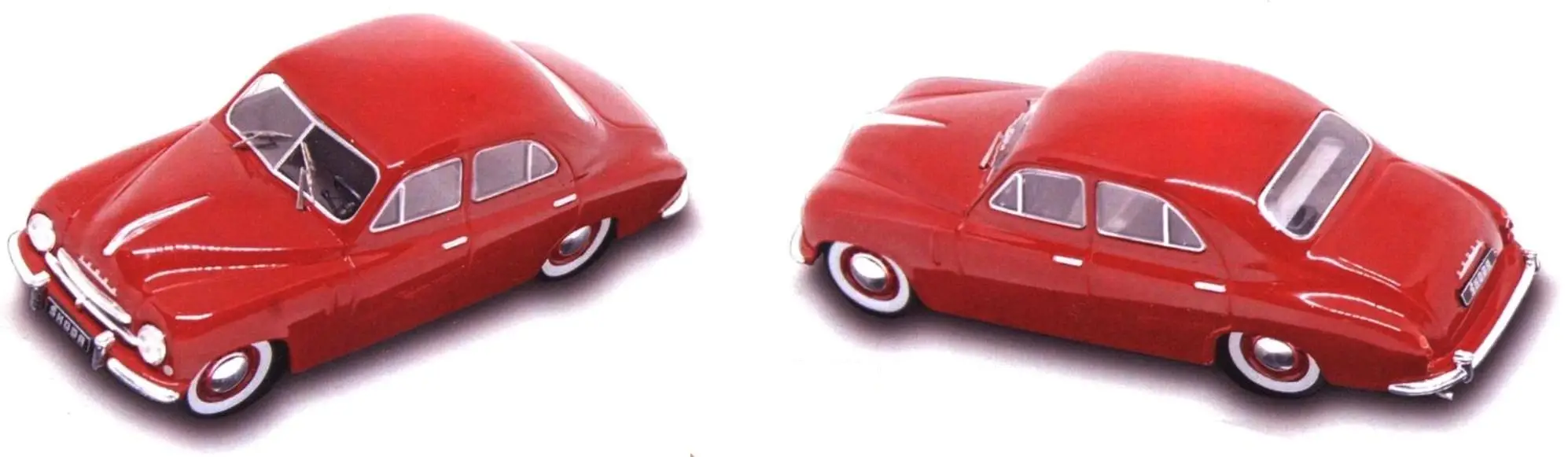
Three years ago a model of the early Skoda 1200 sedan in export trim appeared in a Czech magazine series. It has striking paintwork: the main body color is beige, the roof cherry. Since no maker had previously released copies of this car in 1:43 scale, the entire run sold out instantly. A year ago, using the same dies, ixo tried to make a restyled Skoda 1200 sedan in two colors — cherry or dark blue. It turned out poorly! The early flip-out indicators were simply painted over, and a silver imitation of later-style indicators was daubed onto the front. Still, enthusiasts can try to fix this by carefully working with a brush and highlighting the original indicators with chrome paint.
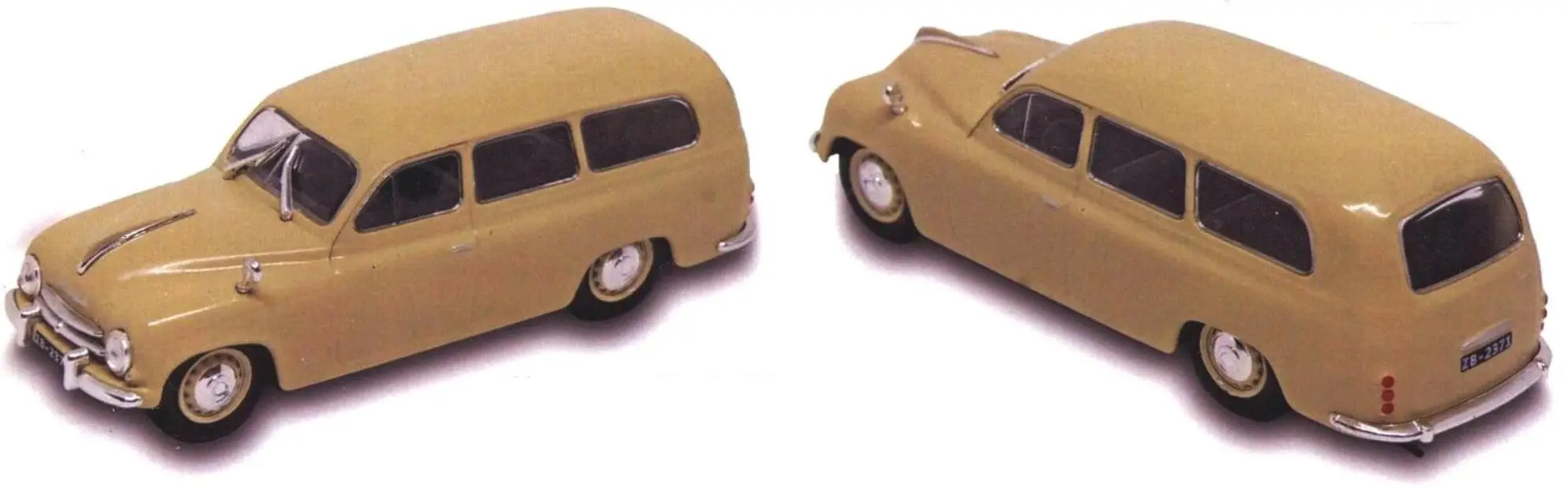
The Skoda 1201 estate model appeared in many magazine series, including ours — issue No. 192 of “Auto Legends of the USSR and Socialist Countries.” Unfortunately, the accuracy of reproduction proved catastrophically low. The windows are too narrow, and the body is as long as the ambulance version; on the estate the rear section should be shorter. Nor can a medical vehicle be made from this pseudo-copy, because it has original glazing and a rear door.
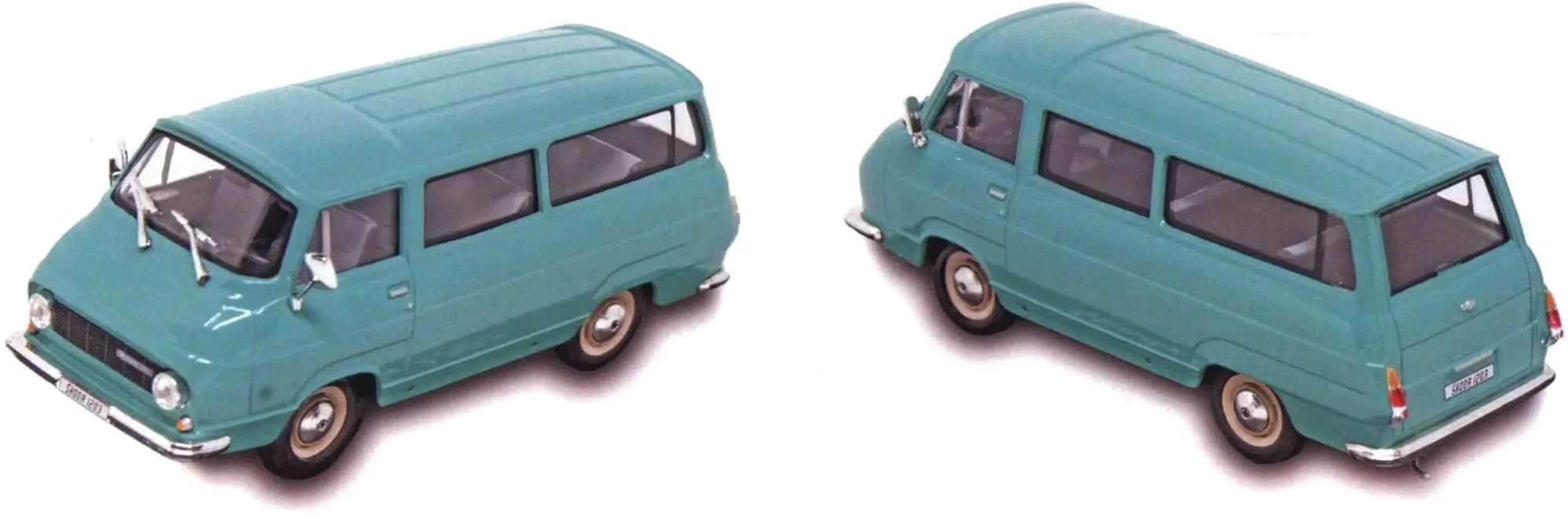
Abrex produces models of the Skoda 1203 in various versions. The photo shows a copy of a transitional minivan with a late-style grille and door handles and an early chrome bumper. The interior is painted, and there is a dashboard decal. Overall the look of the real car is conveyed reasonably well, despite some shortcomings in the lighting treatment and overly narrow side windows. Another inaccuracy: the second- and third-row seats are identical, although in reality they differ.
“Modelist-Konstruktor” No. 10’2025, Sergey DYAKONOV, illustrations provided by the author
Recommend to read
 RIVALS CRUISERS
By the end of the First world war the British Navy had a fair amount of patrol type "flower", but at the end of the 1920-ies it became clear that these hastily built ships will be... M1117 replaced HMMWY
In the mid-1980s, the famous "jeep", many years in service with the us army, had to be substituted. Then the military picked the car М1025/М1026 (HMMWV - Hammer "Hummer") produced by AM...
