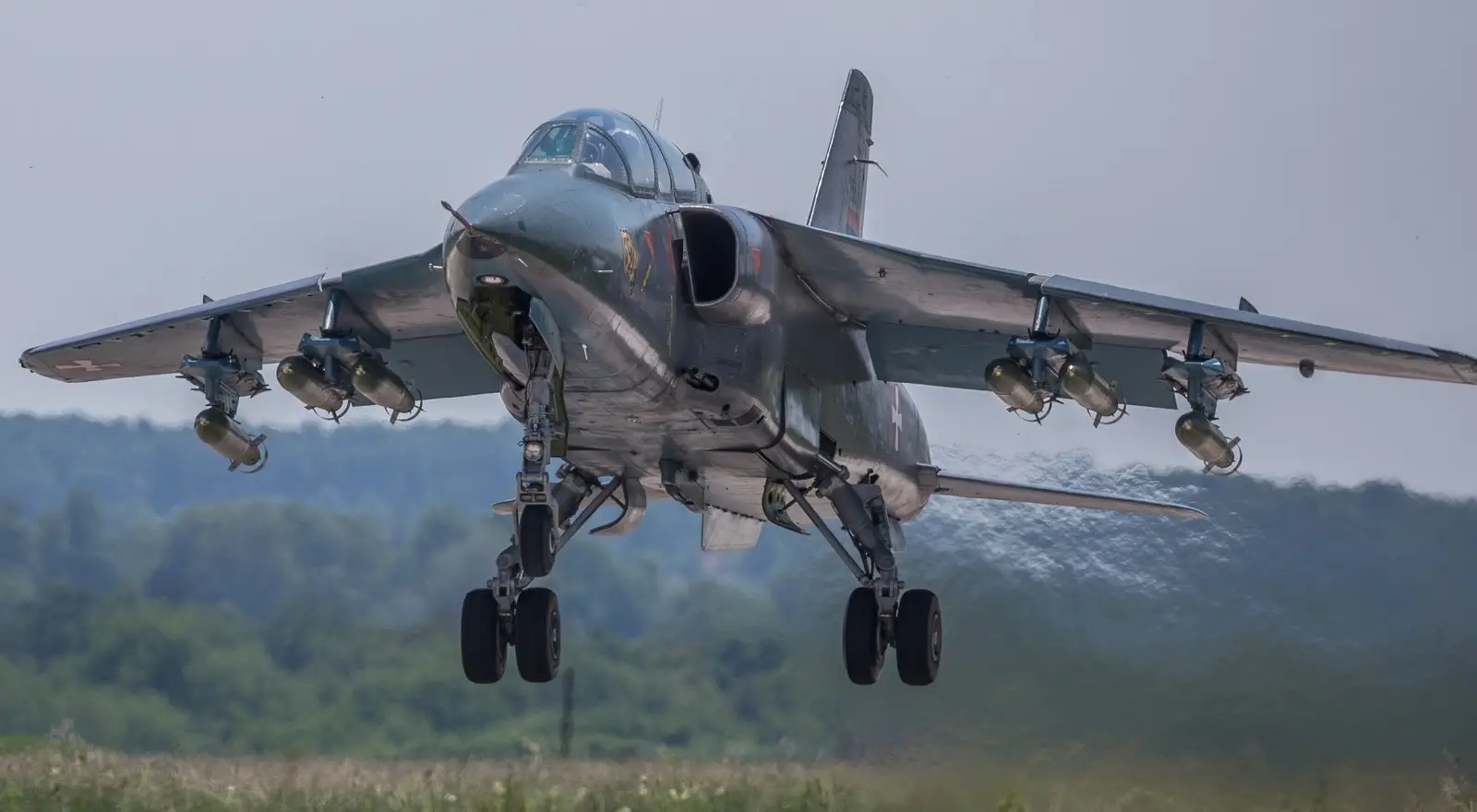
Throughout most of the Cold War, the Socialist Federal Republic of Yugoslavia (SFRY) and the Socialist Republic of Romania (SRR) were the most “rebellious children” in the family of socialist countries. Yugoslavia, under the leadership of Marshal Tito, not only did not join the Eastern Bloc but was one of the key countries of the Non-Aligned Movement. Romania, led by Nicolae Ceaușescu, although a member of the Warsaw Pact, in 1968 opposed the invasion of Warsaw Pact troops into Czechoslovakia and flirted with “Chinese comrades.” At the same time, the armies of both countries were armed mainly with Soviet weapons, although they tried to reduce their dependence on the USSR. One example of the pursuit of independence was the Yugoslav-Romanian program to create a light fighter-bomber, known as YuRom.
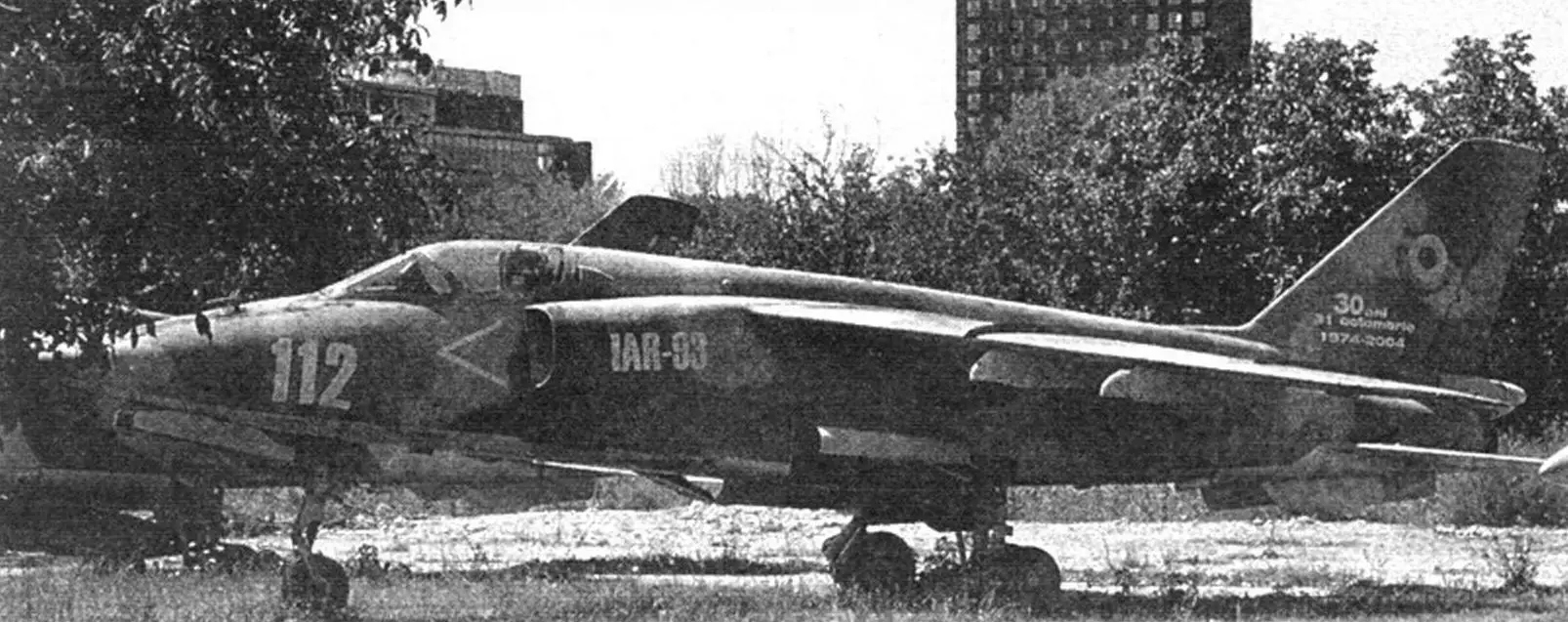
The new aircraft was intended to replace fighter-bombers F-84G and J-21 “Hawk” in Yugoslavia and MiG-15/MiG-17 in Romania. The agreement to start work was signed by representatives of both governments on May 20, 1971. The execution of the YuRom program was entrusted to the Aviation-Technical Institute (in Serbian – Aeronautical-Technical Institute) in Žarkovo (a suburb of Belgrade) and the Institute for Aerospace Research and Design (INCREST) in Bucharest. The plan provided that the wings and tail would be designed and manufactured by the Yugoslav partner, and the fuselage by the Romanian side. From Yugoslavia, the project was led by Colonel Vidoje Knežević (Видоjе Кнежевиh), from Romania – engineer Teodor Zamfirescu. Since Romania had no experience in independently creating jet aircraft, the preliminary design of the J-22/IAR-93 fighter-bomber was based on earlier Yugoslav developments.
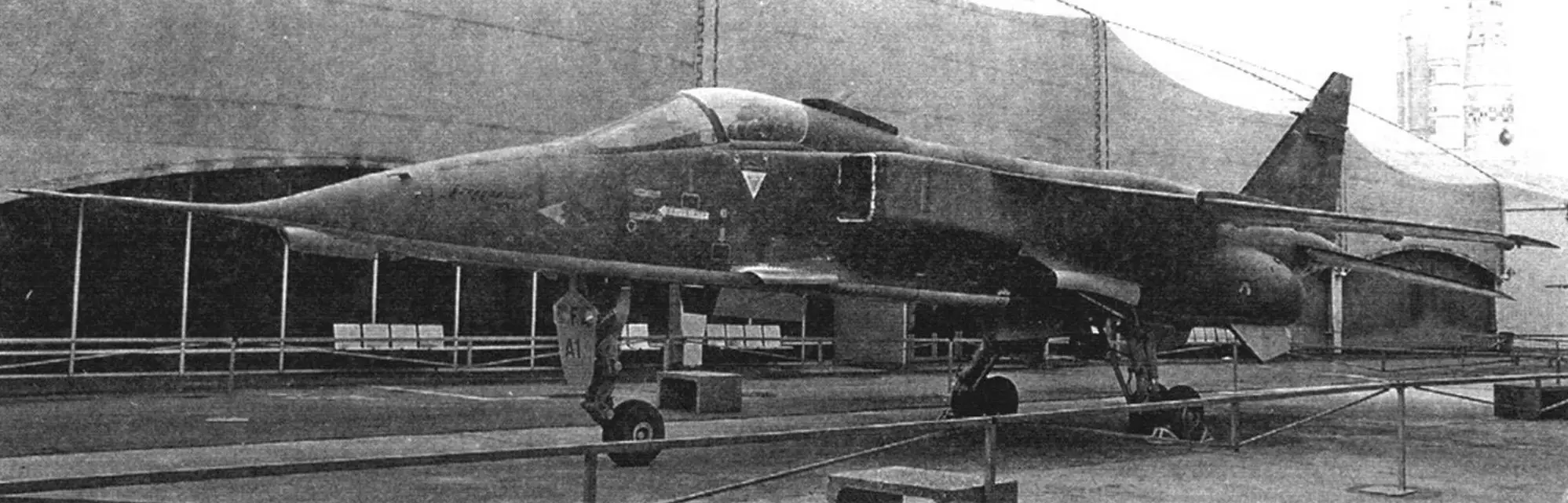
As a prototype, the Anglo-French supersonic fighter-bomber Jaguar A with two Turbomeca Adour Mk.102 engines with afterburner thrust of 3630 kgf was adopted. The conceptual similarity of the “Jaguar” and the “Orao” project is obvious: both aircraft are twin-engine high-wing aircraft with reinforced landing gear in fuselage nacelles and similar weapon arrangement. Historically, Yugoslav aircraft manufacturers had good connections with the French company Turbomeca and its president Józef Szydłowski. However, Adour was developed and produced jointly with Rolls-Royce, and England banned export on the pretext that Romania was a member of the Warsaw Pact. Only the long-established licensed low-power Viper 632-41 engine with half the thrust – only 1814 kgf – remained. The designers counted on a new version of this engine with an afterburner chamber, but its development and testing were delayed. As a result, the “Orao” project resembled a subsonic version of the “Jaguar” reduced in mass by approximately half.
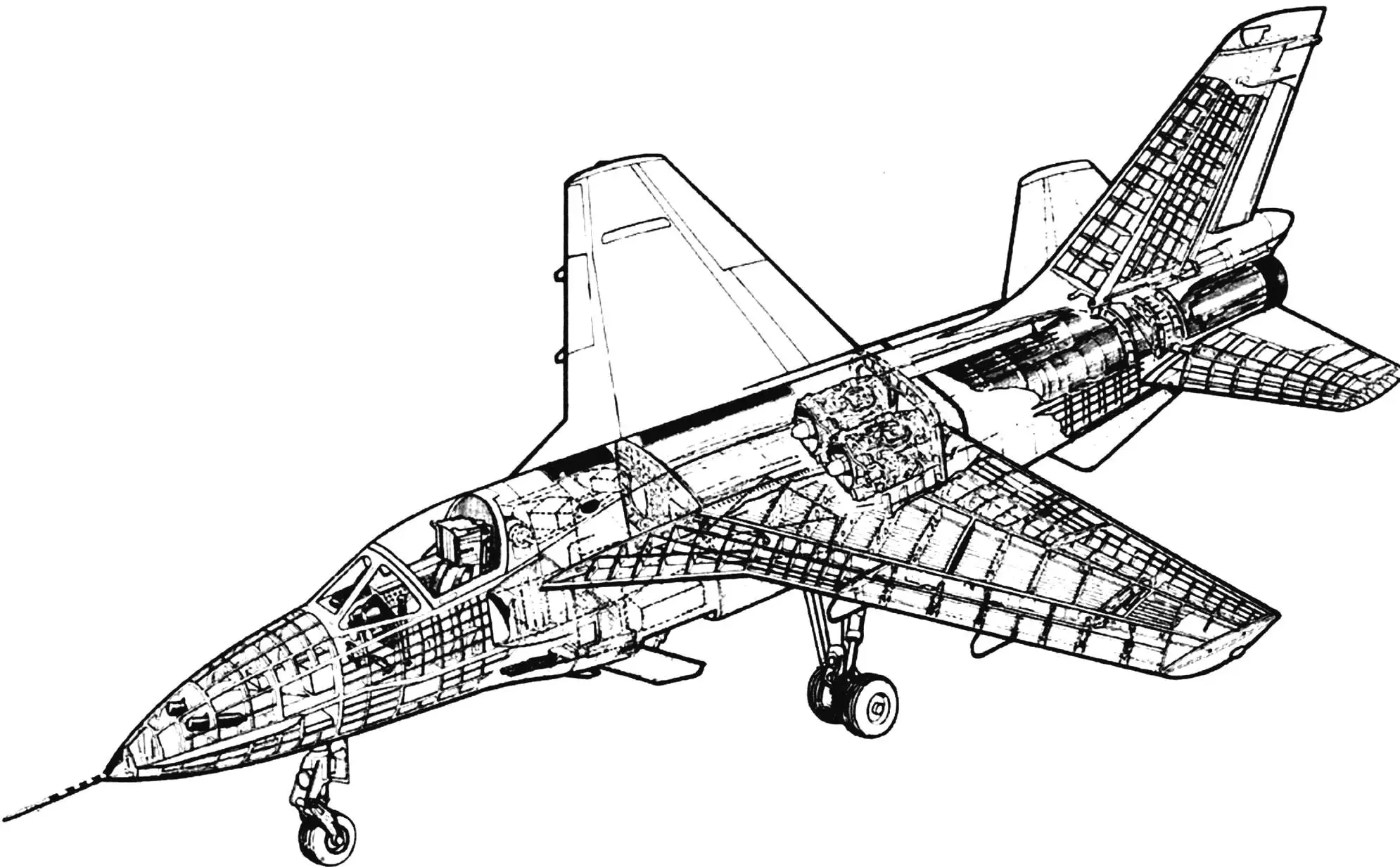
The new aircraft had quite a few technical solutions not previously used on Yugoslav and Romanian aircraft: thin swept wing, pressurized pilot cockpit with Martin-Baker Mk.10 “0-0” class ejection seat, extensive use of integrally machined panels in the wing structure, all-moving stabilizer, navigation-aiming system with gyro-stabilized platform, control with irreversible hydraulic boosters and electronic stability augmentation system for all three axes, armament with guided missiles of “air-to-air” and “air-to-surface” classes.
Assembly of prototype aircraft was performed simultaneously in Yugoslavia at the “SOKO” plant in Mostar (Bosnia and Herzegovina) and in Romania at the URA plant (now – Aerostar company) in Bacău. Serial Romanian “Eagles” were assembled at the new large Avioane plant in Craiova. Under the cooperation, Romania produced the forward fuselage, fin, and additional tanks, while Yugoslavia – the wings and other parts of the fuselage. Licensed Viper engines in Yugoslavia were produced by the plant in Rajlovac (a suburb of Sarajevo), and in Romania – by Turbomecanica enterprise in Bucharest. In Yugoslavia, the aircraft were built, one might say, by the entire country: the rear fuselage was supplied by “UTVA” from Pančevo, landing gear and hydraulics – “Prva Petoletka” (“First Five-Year Plan”) in Trstenik, navigation-aiming equipment – “Teleoptik-Giroskop” in Zemun (a suburb of Belgrade), electronics – “Rudi Čajavec” in Banja Luka and IRCA Energoinvest in Sarajevo.
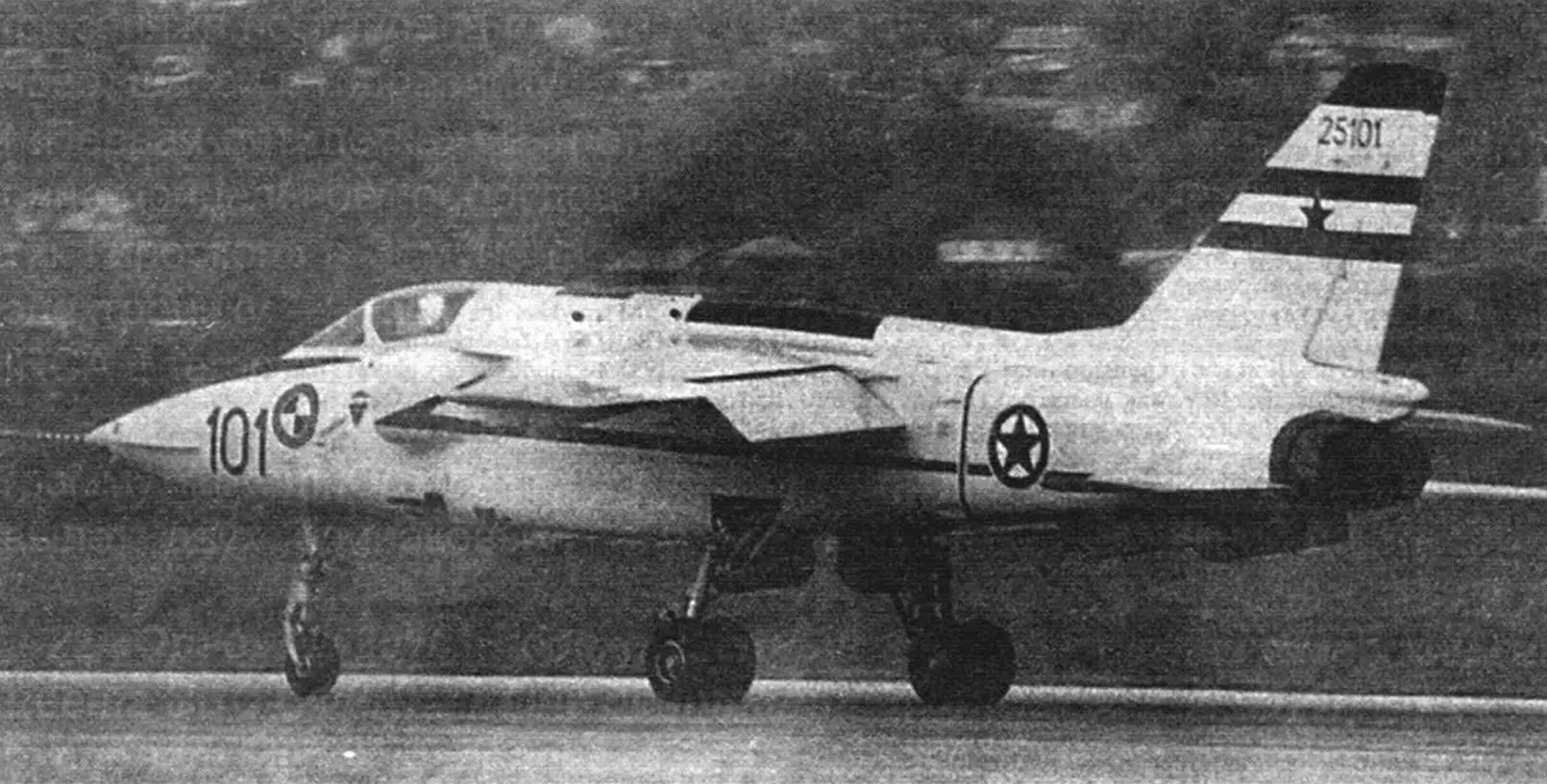
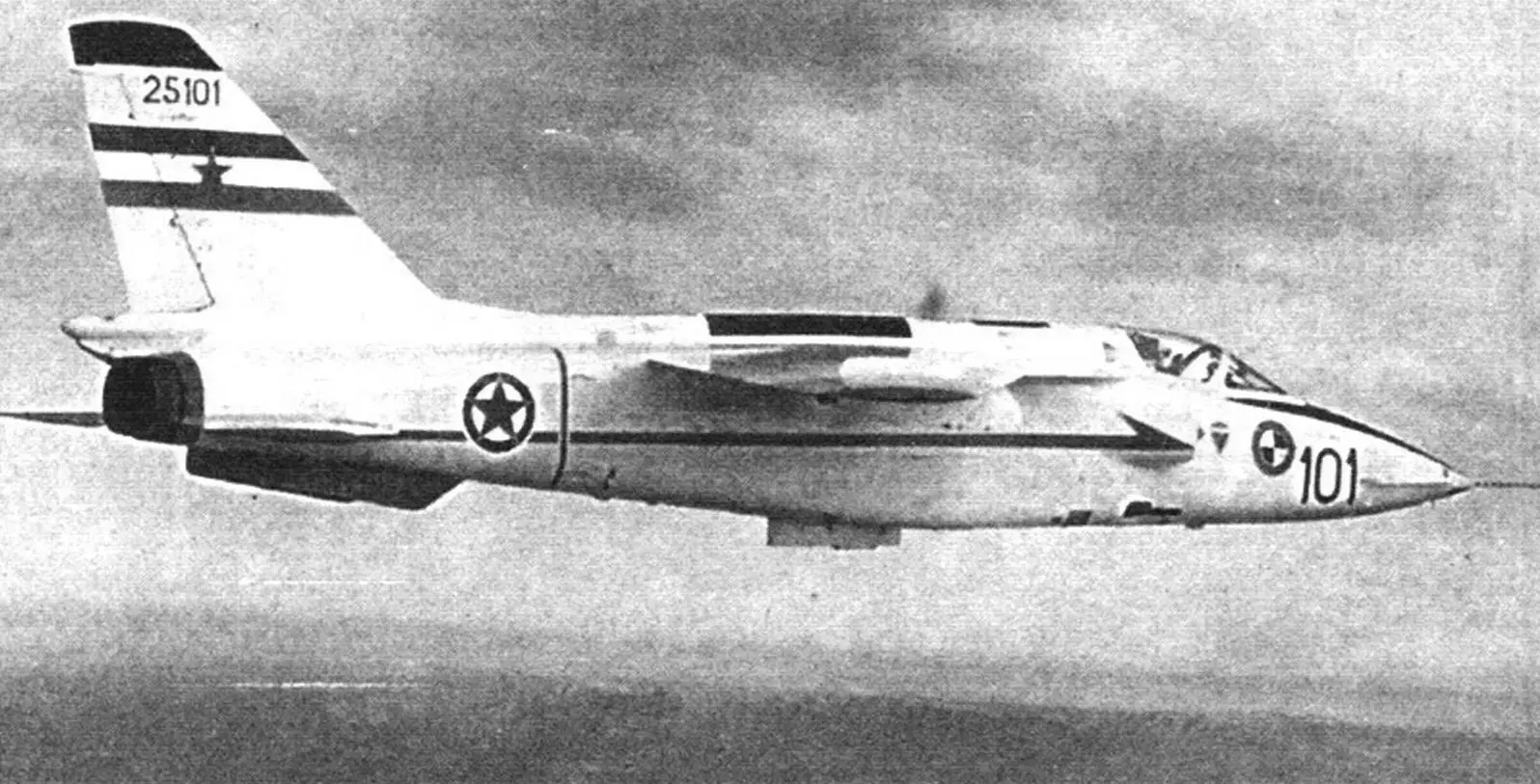
To emphasize the equal contribution of Yugoslavia and Romania to the YuRom program, the first flight of two identical prototypes of J-22 and IAR-93 aircraft took place on the same day – October 31, 1974. The Yugoslav aircraft made its first flight from Batajnica airbase near Belgrade under the control of test pilot Captain (after this flight – Major) Vladimir Slavujević. In Romania, the first IAR-93 was flown in Bacău by Colonel Gheorghe Stanică. Romanians still pride themselves on the fact that their “Eagle” took off 10 minutes earlier than the Yugoslav one.
Flight tests went generally successfully, but not without problems. In Yugoslavia, the third prototype J-22 was lost in 1978 due to tail flutter. For the same reason, in the same year, the two-seat variant of the Romanian IAR-93 crashed. Both pilots successfully ejected. On September 20, 1979, in Romania, the first prototype IAR-93 was lost when during a test flight both engines stopped, and the pilot ejected. This required refinement of the powerplant (including already built aircraft of the first series). The fourth prototype IAR-93 crashed at Craiova airbase on February 20, 1979, during a demonstration flight. The pilot, Captain Dobre Stan, died.
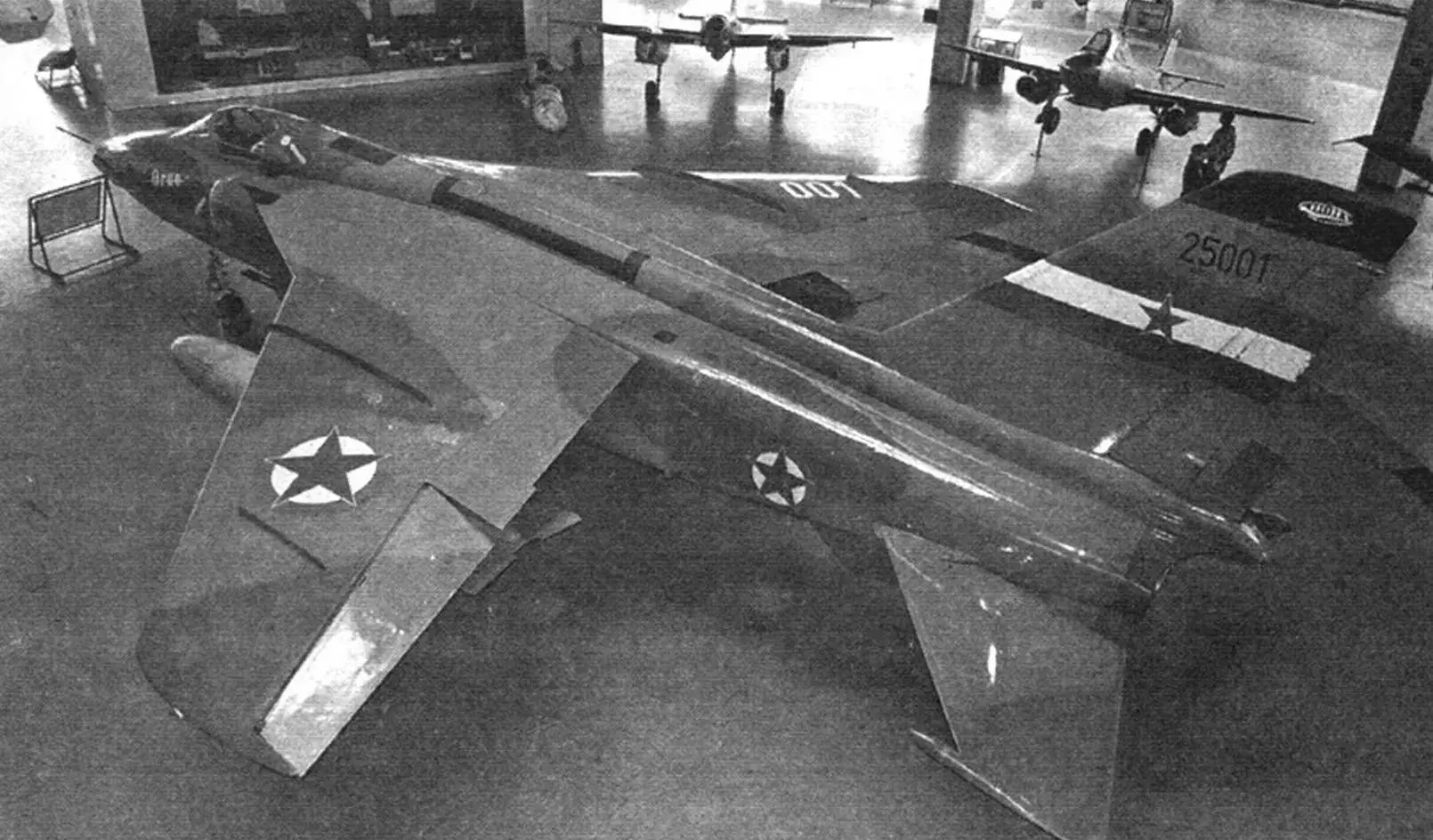
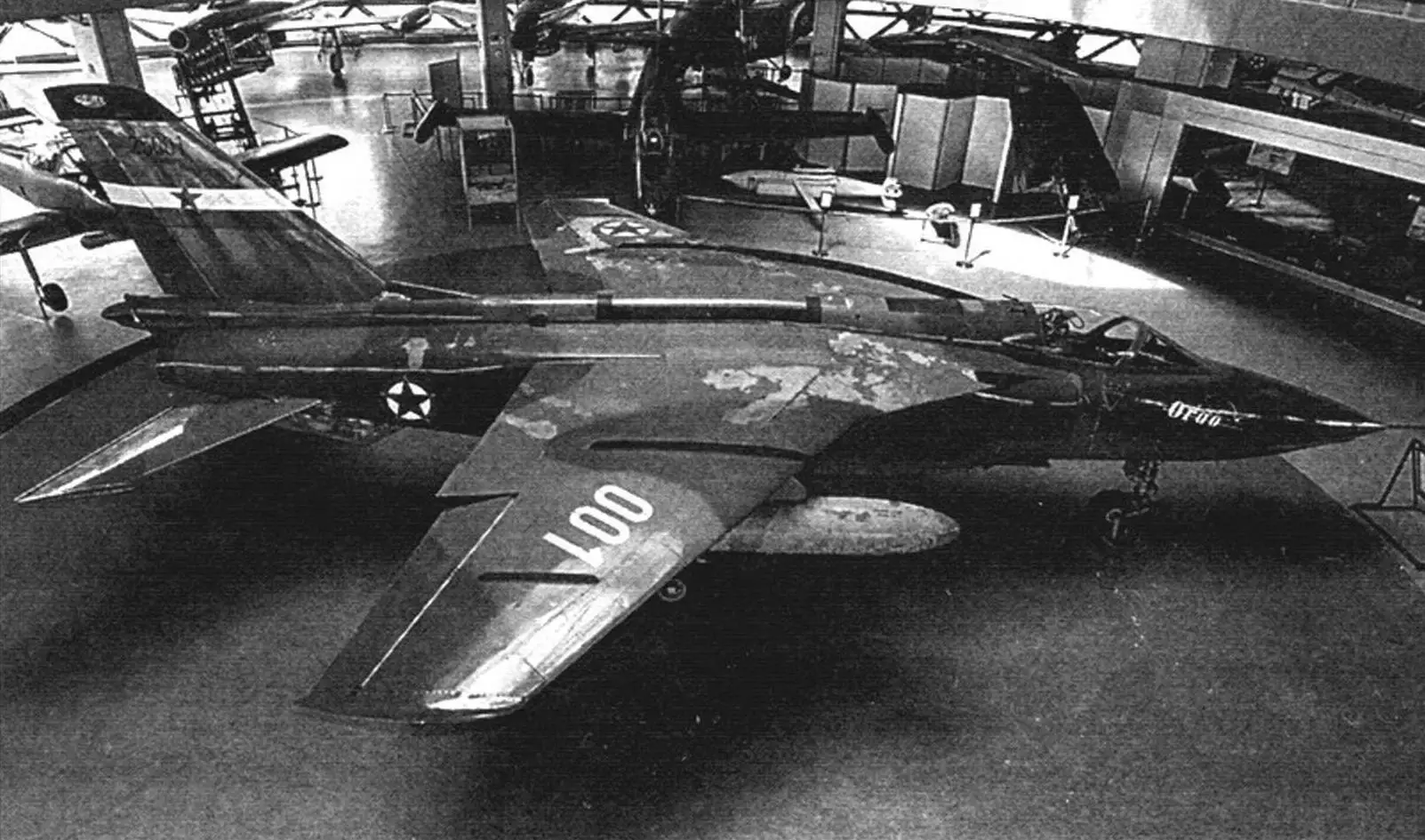
First series aircraft J-22 “Orao 1″/IAR-93A differed not only in non-afterburning Viper 632-41 engines but also in a heavier riveted wing skin construction instead of milled panels not yet mastered in production. Therefore, the thrust-to-weight ratio of the first “Eagles” left much to be desired. To this standard, 26 aircraft were built in both Yugoslavia and Romania. In Yugoslavia, guns were removed from them and they were reclassified as naval reconnaissance aircraft IJ-22. In addition, nine two-seat combat trainer aircraft INJ-22/IAR-93A DC were built in each country.
Design of J-22/IAR-93
The J-22/IAR-93 aircraft is a twin-engine high-wing aircraft designed to deliver rocket-bomb strikes on ground targets with the ability to intercept subsonic air targets, as well as for reconnaissance. In literature, it is often called an attack aircraft, but due to the lack of armor, J-22/IAR-93 cannot operate on the front line under enemy fire, so it would be more correct to classify it as a light fighter-bomber.
The wing is a caisson, two-spar, with a leading edge sweep of 43° and a negative dihedral angle V=3.5°. Wing profile NACA 65-008. Root wing strakes have a sweep angle of 70°. Leading-edge slats with hydraulic drive are installed on the wing leading edge, and large-area Fowler flaps on the trailing edge.
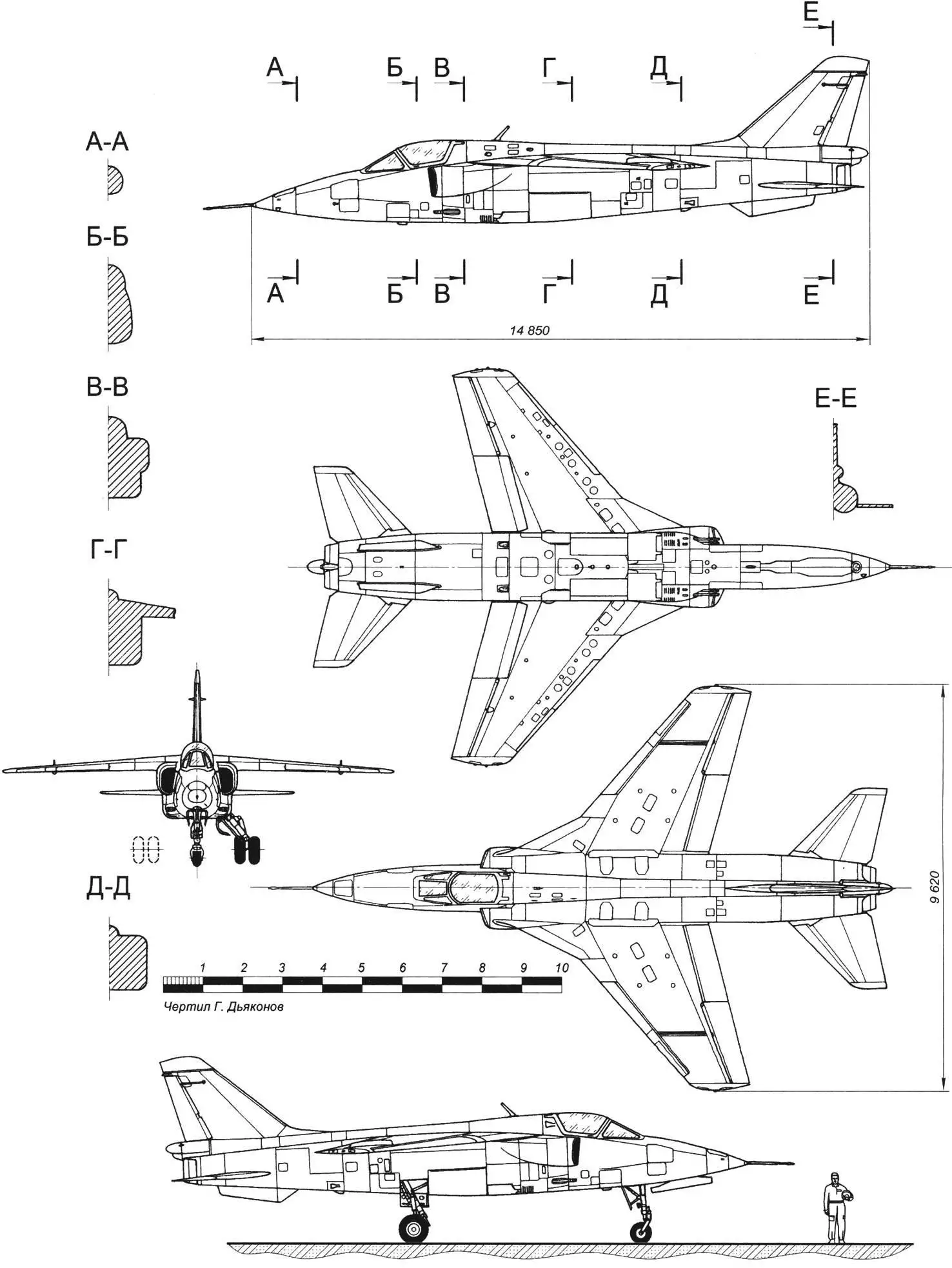
In the forward fuselage, in front of the pilot’s cockpit, navigation and control electronics units are located. Radar equipment is absent, so the aircraft can only engage targets in good visibility conditions. Cockpit armor is also absent. Below the central fuselage, two perforated air brake panels are installed. Traces of two independent hydraulic systems and control system cables are laid in the dorsal fairing between the pilot’s cockpit and the fin. Fuel is located in five fuselage and two wing fuel tanks with a total capacity of 3120 liters. Suspension of three external fuel tanks with a capacity of 540 liters each is possible.
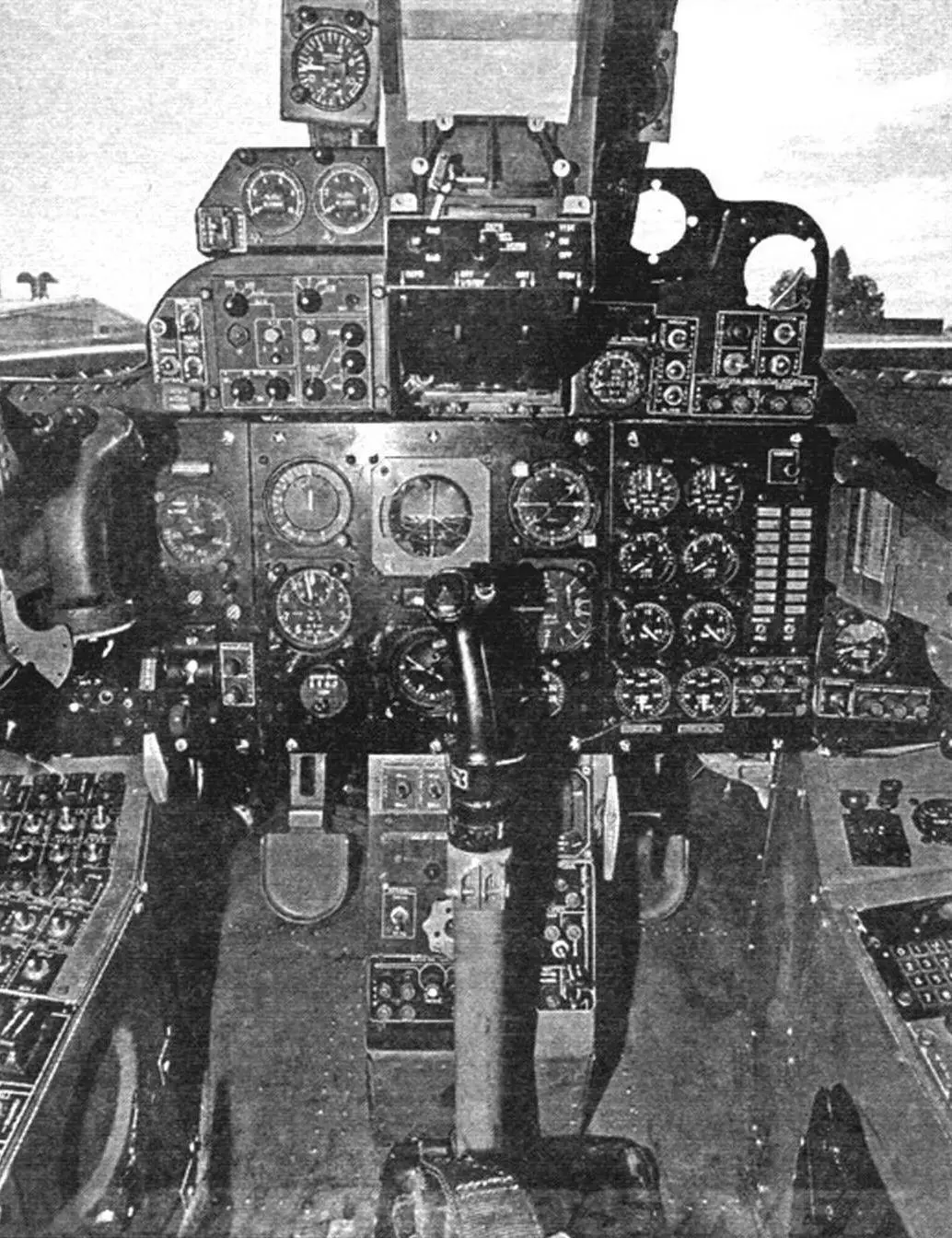
The rear fuselage together with the tail is detachable to facilitate maintenance and engine removal. The tail is swept, of classical type, with an all-moving stabilizer. At the base of the rudder, a braking parachute with a diameter of 4.2 m is located in a container.
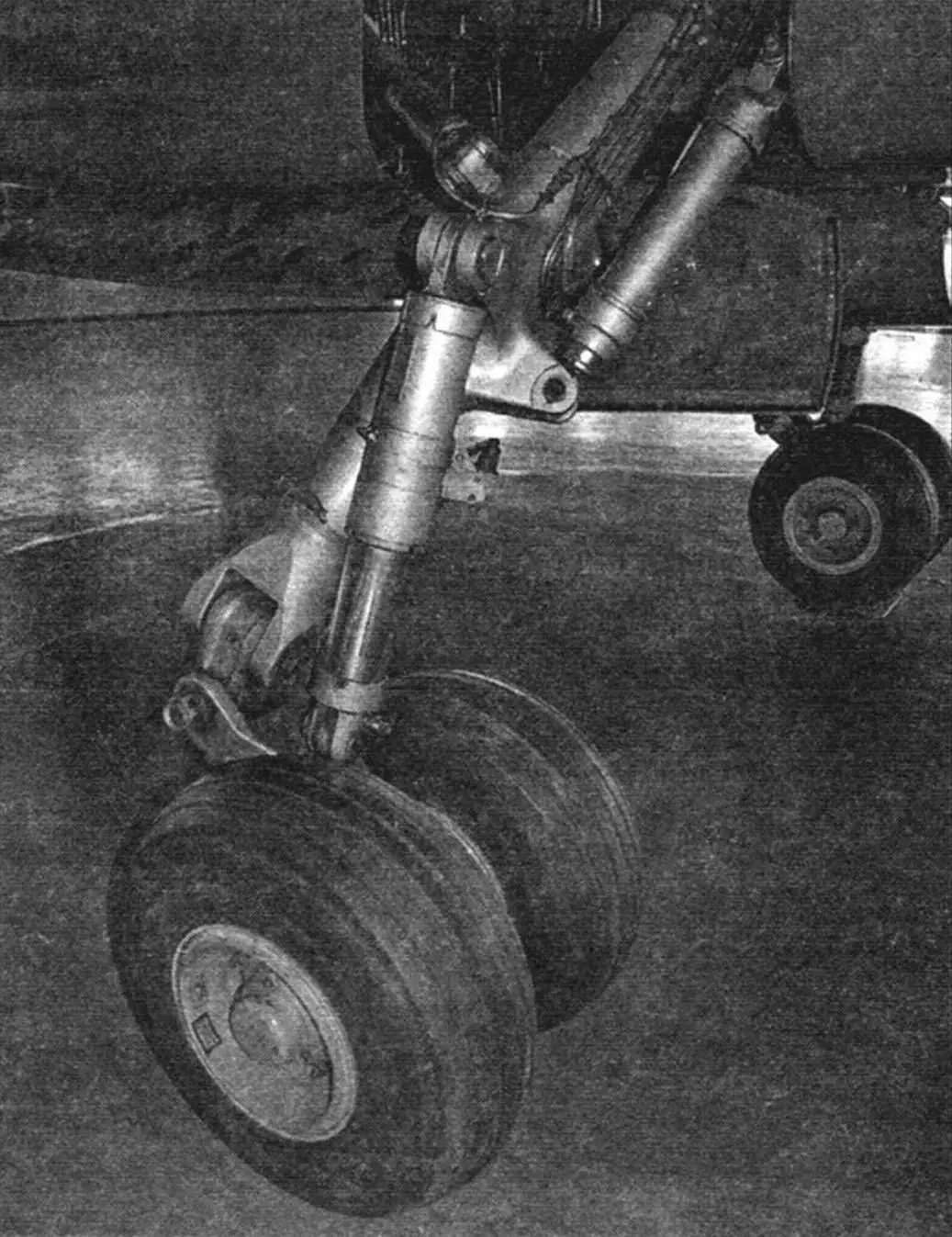
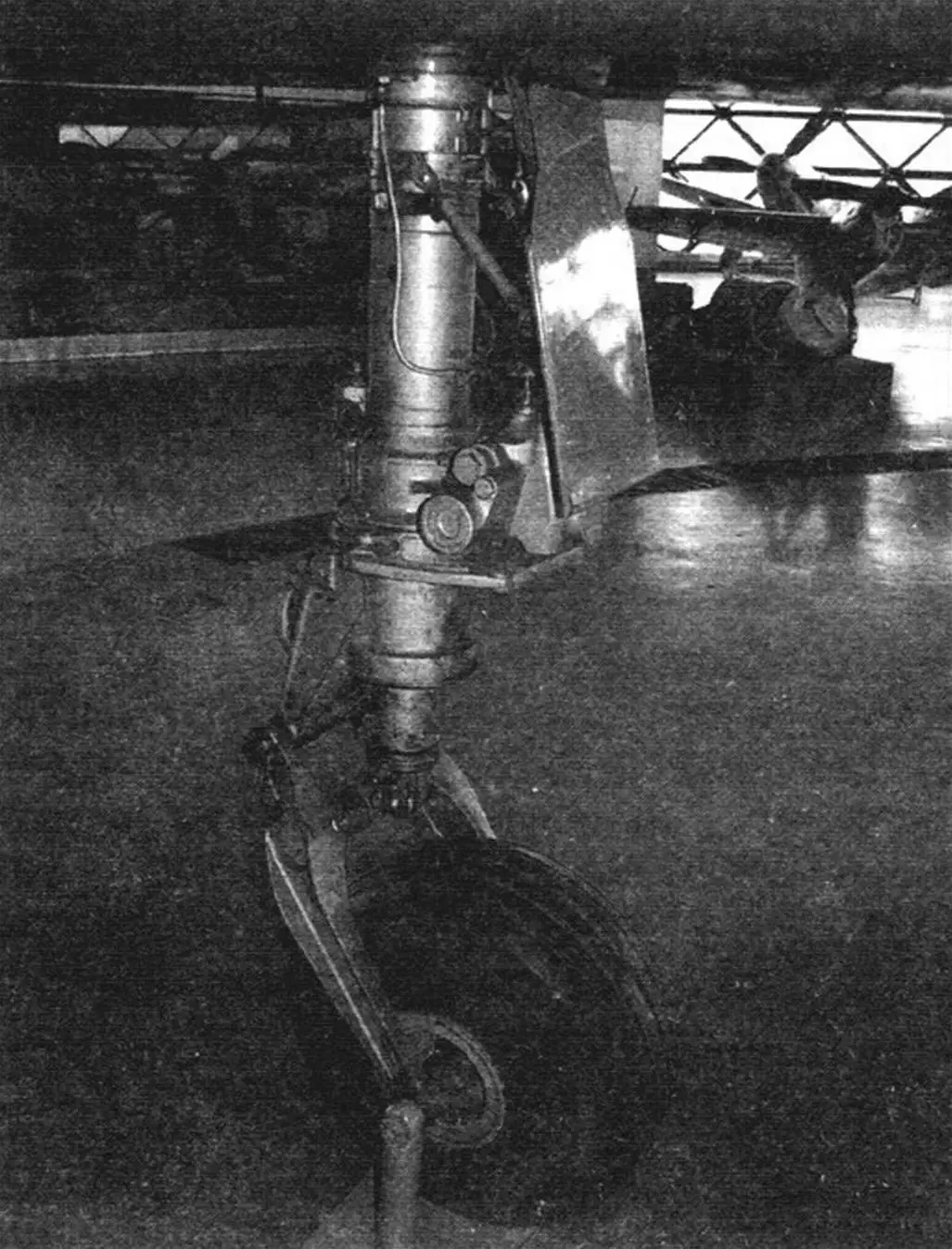
The landing gear is tricycle, with a nose wheel, by Messier-Hispano-Bugatti, the same company that designed the Jaguar’s landing gear. Main gear legs are two-wheeled, retract into the fuselage, the nose gear is single-wheeled, retracts into the forward fuselage by rotating forward.
The aircraft has very powerful cannon armament for its weight. Along the sides of the lower fuselage, two Soviet twin-barrel GSh-23L guns of 23 mm caliber with a rate of fire of 3000-4000 rounds per minute and an ammunition load of 200 rounds per gun are installed. Soviet fighters MiG-21 and MiG-23 were armed with only one such gun.
Rocket-bomb armament, mounted on one under-fuselage and four under-wing pylons, includes two to three free-fall bombs of 500 kg caliber, four to five bombs weighing 250 kg each. Unguided rocket armament may include four L-57-16DM launchers with 16 57 mm caliber rockets, four to eight rockets of 122 or 128 mm caliber, or four 240 mm rockets.
Modernized Versions
In 1980, Romania managed to acquire a license for a non-afterburning variant of the modern twin-spool turbojet Rolls-Royce RB 168 Spey with a thrust of 5000 kgf. These engines, produced at the Turbomecanica plant in Bucharest, were used to equip licensed passenger aircraft RomBAC-111. From Romania’s side, a proposal was made to replace two “Vipers” with one such engine, which in particular was used on the new Italian-Brazilian AMX fighter-bomber. Yugoslavia did not go for this, not wanting to possibly become dependent on Romanian supplies, and limited itself to upgrading the old engine.
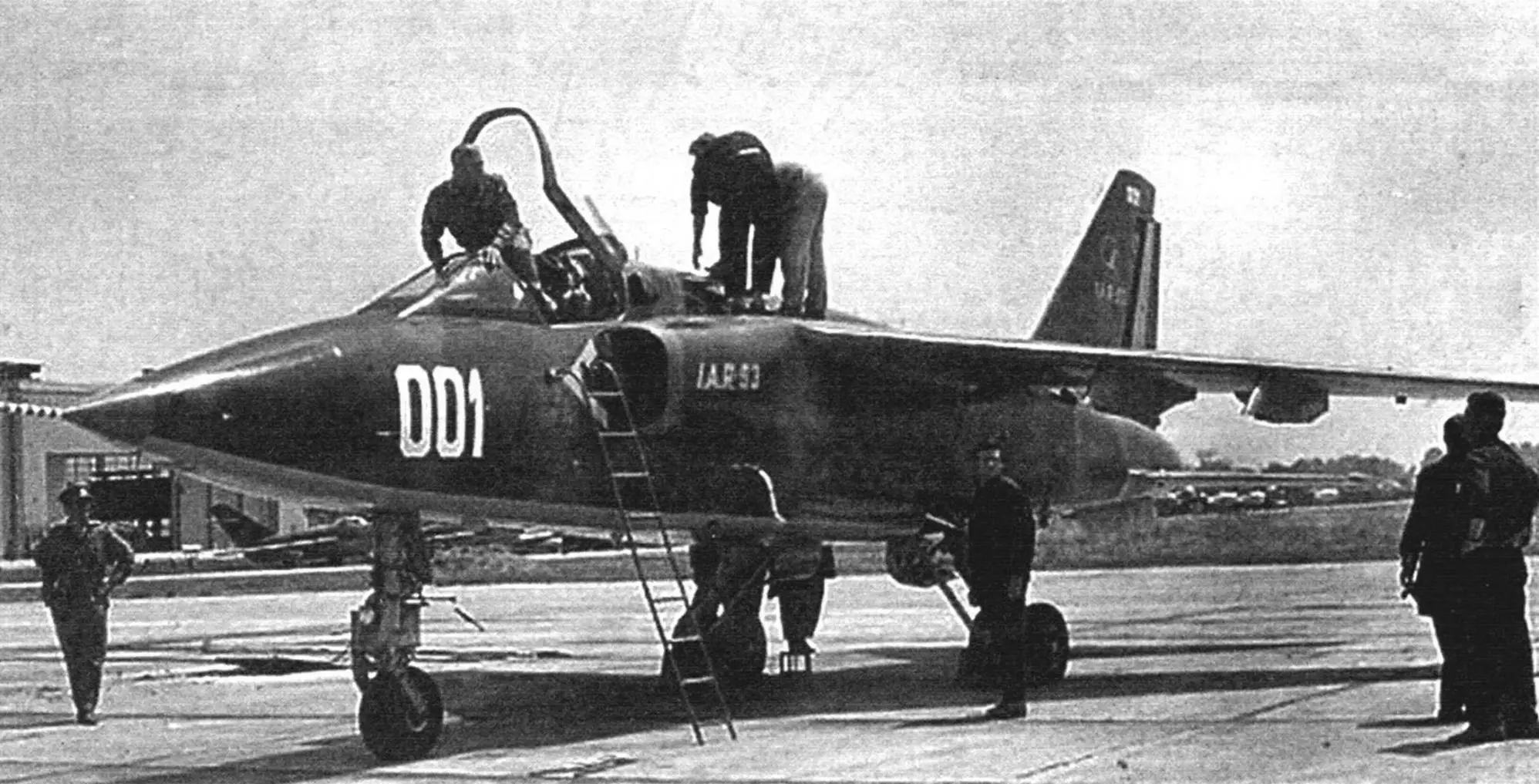
On October 20, 1983, in Yugoslavia, the modernized J-22 “Orao 2″/IAR-93B made its first flight with a new afterburning modification of the Viper 633-47 engine, developing 2270 kgf thrust, and a lightweight structure with milled wing panels. The aircraft’s flight characteristics noticeably improved. Hope appeared to break the sound barrier. However, in level flight, only a speed of 1060 km/h (M=0.97) was achieved. The sound barrier was overcome on November 22, 1984, in a flight with a 25° descent over Batajnica airbase. The aircraft was piloted by test pilot Marjan Jelen.
For a fighter-bomber, what mattered was not so much the improvement in flight characteristics as the ability to use afterburner mode on takeoff. As a result, the aircraft’s combat load increased by more than a ton. Thanks to this, the armament composition was significantly strengthened. On five external pylons, up to 2800 kg of combat load was now mounted in total, which included Soviet R-73 “air-to-air” missiles (four missiles mounted on two twin under-wing pylons), American AGM-65B Maverick “air-to-surface” missiles with television guidance, Yugoslav “Grom” missiles with radio guidance (range about 10 km), as well as Yugoslav-produced precision-guided bombs with laser semi-active homing.
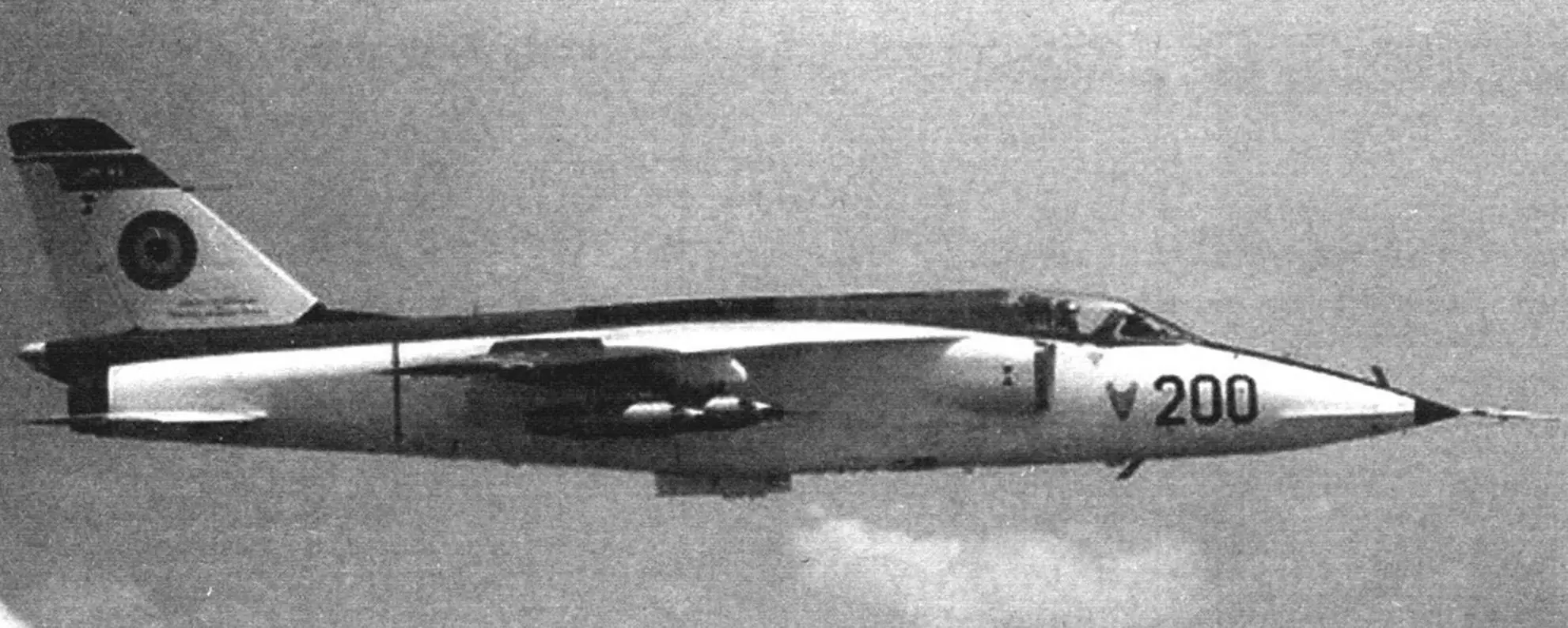
The Yugoslav Air Force ordered 165 modernized aircraft, 74 of which were delivered from 1986 until early 1992, when the “SOKO” plant, located in Bosnia, ceased production. A total of 78 “Orao 2” fighter-bombers were built, 21 of them in the two-seat HJ-22 variant. In Yugoslavia, before the start of the series of civil wars in 1991, there were only three squadrons fully armed with single-seat combat J-22 aircraft and two-seat combat trainer HJ-22 – the 238th Fighter-Bomber Squadron of the 82nd Aviation Brigade, the 241st Squadron of the 98th Aviation Brigade, and the 242nd Squadron of the 127th Fighter-Bomber Regiment. There were also at least three squadrons partially armed with J-22.
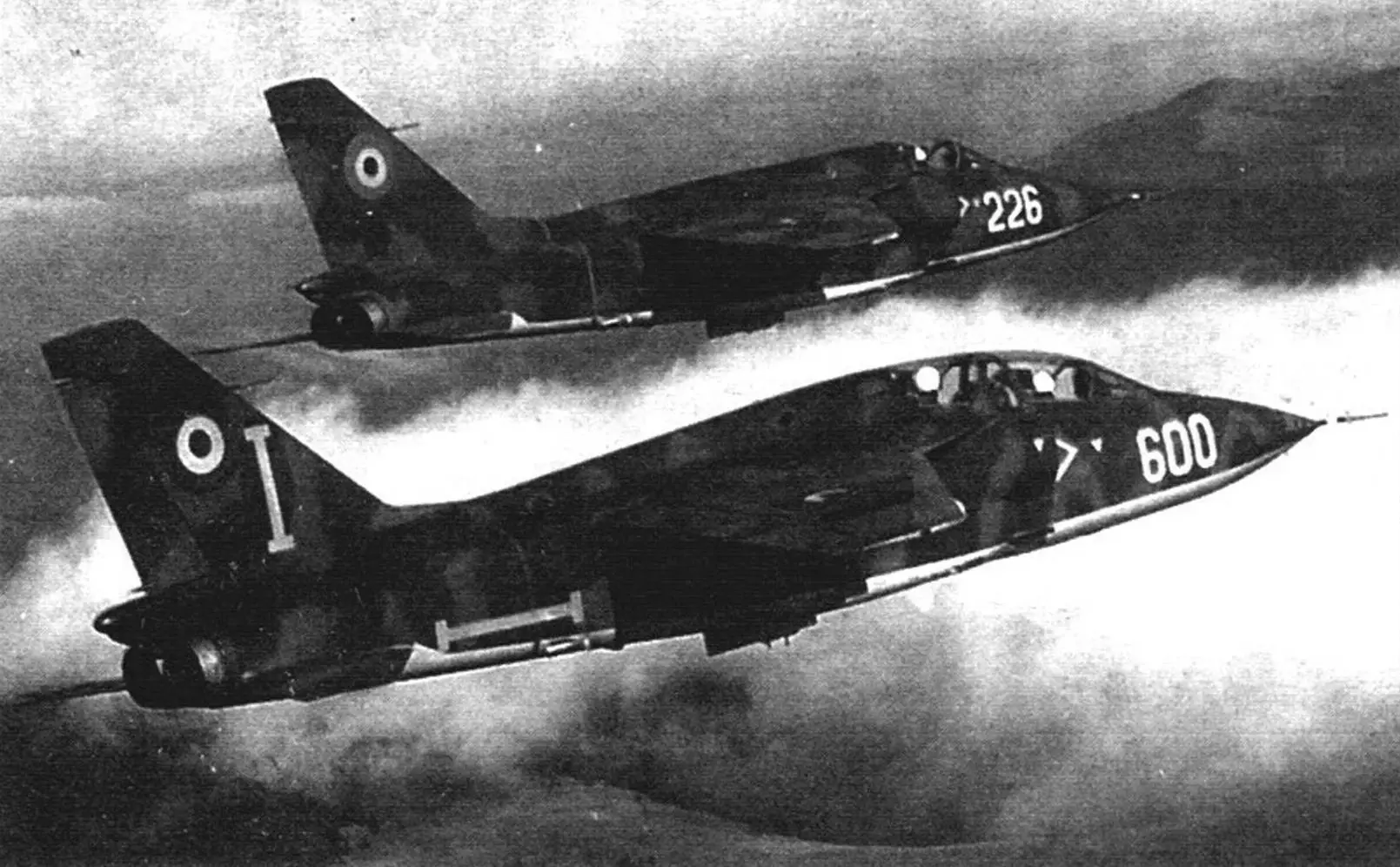
In 1985, with some delay relative to Yugoslavia, flight tests of the Romanian “Orao 2” counterpart – the IAR-93B fighter-bomber with the same Viper 633-47 afterburning turbofans produced by Bucharest’s “Turbomecanica” – began. Externally, IAR-93B differed from IAR-93A and from Yugoslav “Orao” by the absence of under-fuselage aerodynamic strakes. Like the Yugoslavs, the Romanian Air Force also ordered 165 of these aircraft (in two-seat and single-seat variants), however deliveries were not completed in full due to the complete collapse that befell Romania’s aviation industry after the anti-communist revolution of 1989. Only 49 aircraft of various modifications were built: IAR-93B (single-seat) – 27, IAR-93B DC (two-seat) – 7, IAR-93MB (single-seat with non-afterburning engines from IAR-93A) – 15. They were delivered to the 67th and 49th Fighter-Bomber Aviation Regiments.
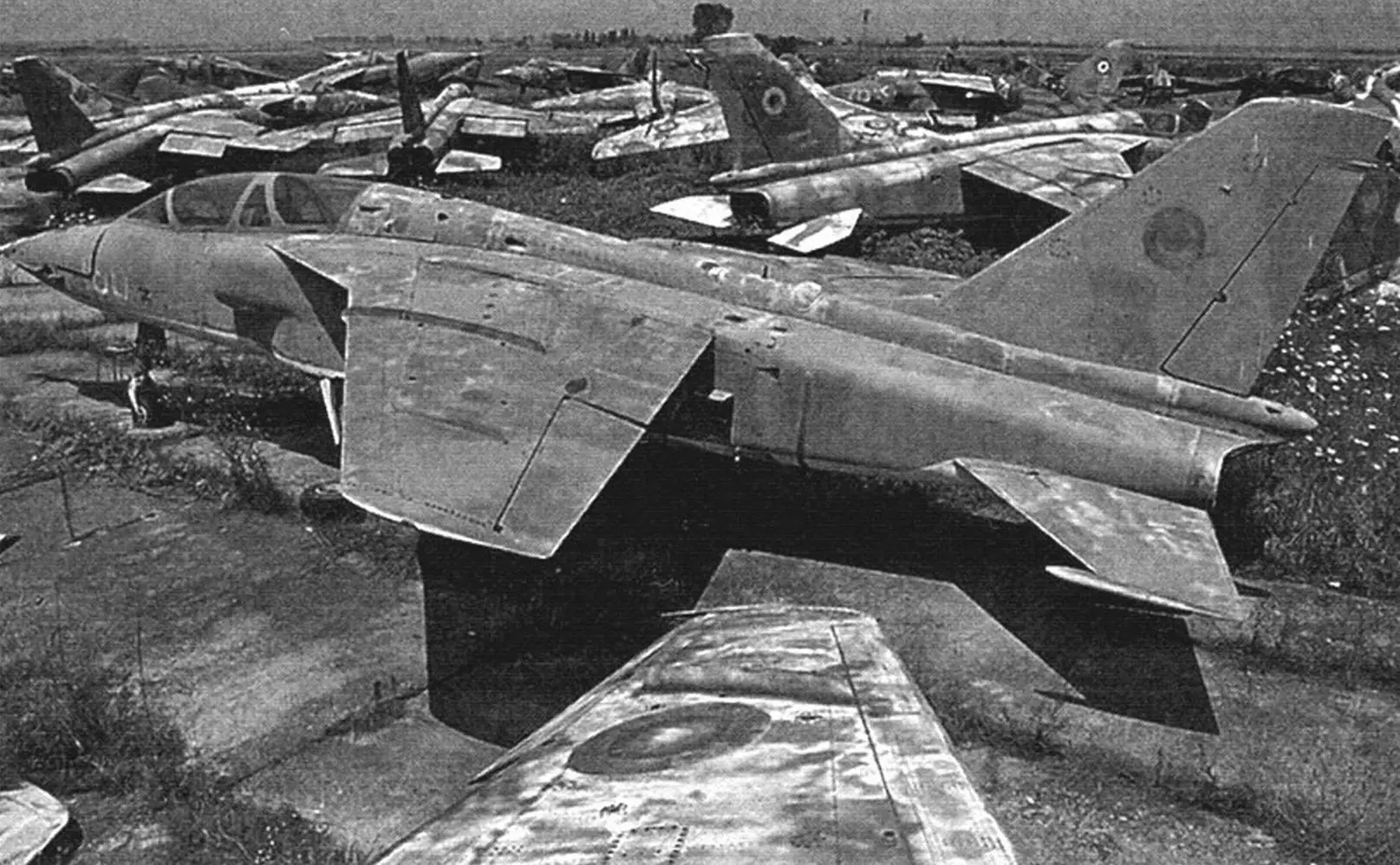
In the late 1980s, work began in Yugoslavia and Romania on further modernization of the Balkan “Eagles.” It was planned to equip them with modern avionics and new navigation-aiming equipment, including an onboard radar, which would have made these fighter-bombers all-weather capable. But the revolutionary events of 1989-91 put an end to these plans. In Romania, the last IAR-93s were sent to storage in 1998, which consisted of simply towing them to remote corners of airbases. There they remain in a looted state to this day, although they were officially written off in 2006-2007. 20 aircraft, which were not so long ago the pride of Romania, were “lucky”: they were painted and assigned to permanent displays at various points in the country. But the Yugoslav “Eagles” had to fly and fight a lot.
Combat Use
A series of fratricidal civil wars “all against all” continued on the territory of the former Yugoslavia for almost 10 years: from 1991 to 1999. On June 25, 1991, Slovenia – the most economically developed republic – declared its independence from Yugoslavia under the well-known slogan “Enough feeding the center!” Almost immediately, Germany recognized Slovenia’s independence, followed by other EU countries. The separation of Slovenia and its recognition by Europe opened Pandora’s box for all nationalists: on September 8, 1991, Macedonia seceded, on October 8 of the same year, the decision of the local parliament on Croatia’s independence came into effect, and in 1992, Bosnia and Herzegovina declared its independence. In 1998, the process of disintegration came to the historical territory of Serbia: in the Autonomous Province of Kosovo, armed clashes began between the so-called Kosovo Liberation Army (KLA) and government forces. In March 1999, NATO, led by the United States, intervened in the Kosovo conflict, starting massive bombing of Serbian territory.
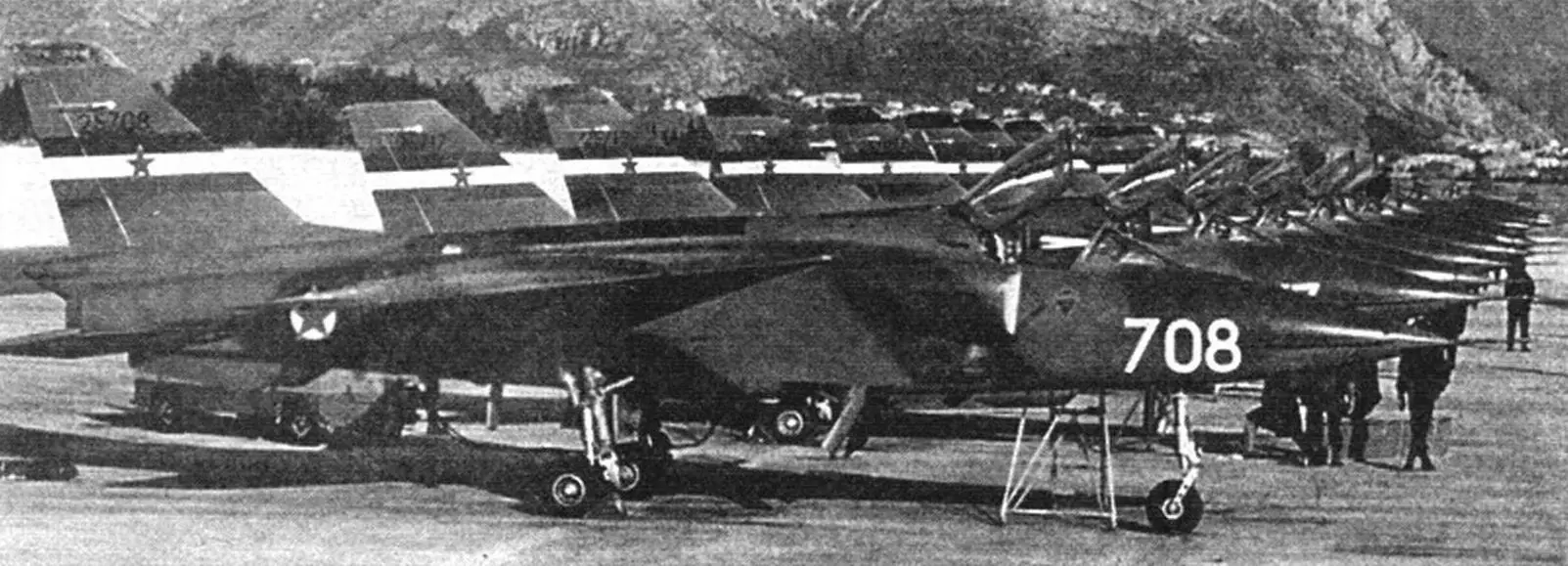
Credit must be given to the Yugoslav People’s Army: its units, by an overwhelming majority, remained loyal to the federal government. All Yugoslav People’s Army aviation was redeployed to the territory of Serbia and Montenegro. Initially, the process of Yugoslavia’s disintegration was quite peaceful: the military were morally unprepared to shell and bomb their former compatriots, often friends and relatives. During the period of tension that followed Slovenia’s separation, the “Orao” squadron flew over its capital, Ljubljana, but did not drop a single bomb. However, events in Croatia and Bosnia developed according to a different, bloody scenario. A significant number of Serbs lived compactly in these republics, categorically rejecting the nationalism of local authorities. Intense fighting broke out, including with the use of fighter-bomber aviation. “Orao” aircraft were actively used. So, on May 2-8, 1992, the Yugoslav People’s Army Air Force conducted a major air operation to destroy the bridge and pontoon crossings across the Sava River in the area of Slavonski Brod. Among the dropped munitions were 29 precision-guided bombs, carried by “Orao” fighter-bombers.
During the fighting in Bosnia in 1993-1994, NATO aviation, operating under the flag of UN peacekeeping forces and based at airfields in Italy, as well as on American, British, and French aircraft carriers deployed in the Adriatic Sea, sided with the “rebels.” A so-called “no-fly zone” was declared over Bosnia, but NATO could not completely “close the sky” to the Yugoslav People’s Army Air Force. So, on November 18, 1993, two Yugoslav J-22 “Orao” fighter-bombers attacked Bosnian positions in the area of Bihać. The aircraft, taking off from Udbina airfield, made a 48-kilometer dash at extremely low altitude, remaining unnoticed by NATO E-3 Sentry AWACS aircraft, and attacked targets with one-time bomb clusters and napalm tanks. The next day, November 19, two Serbian “Orao” aircraft struck an ammunition plant in the city of Kakanj.
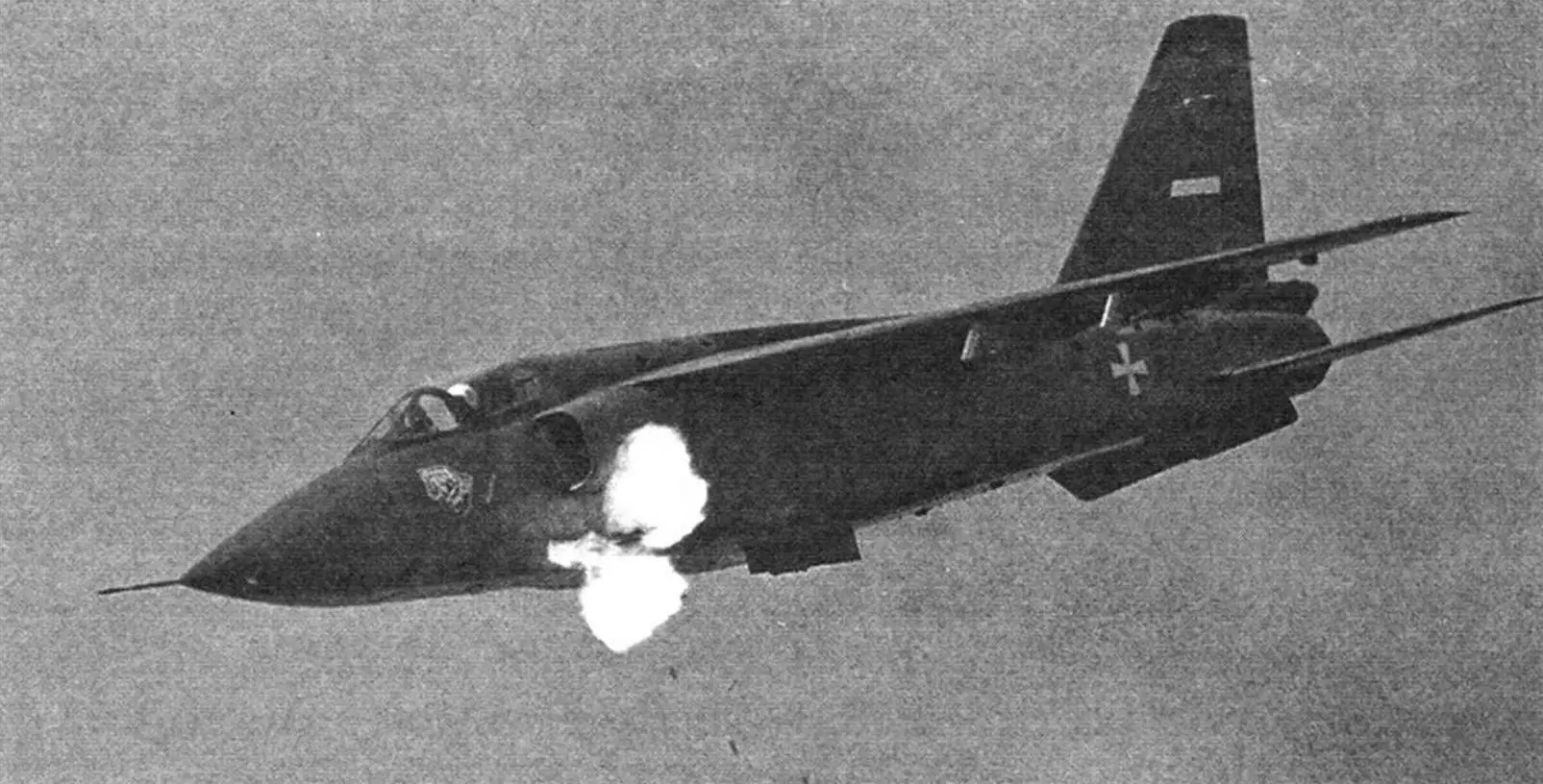
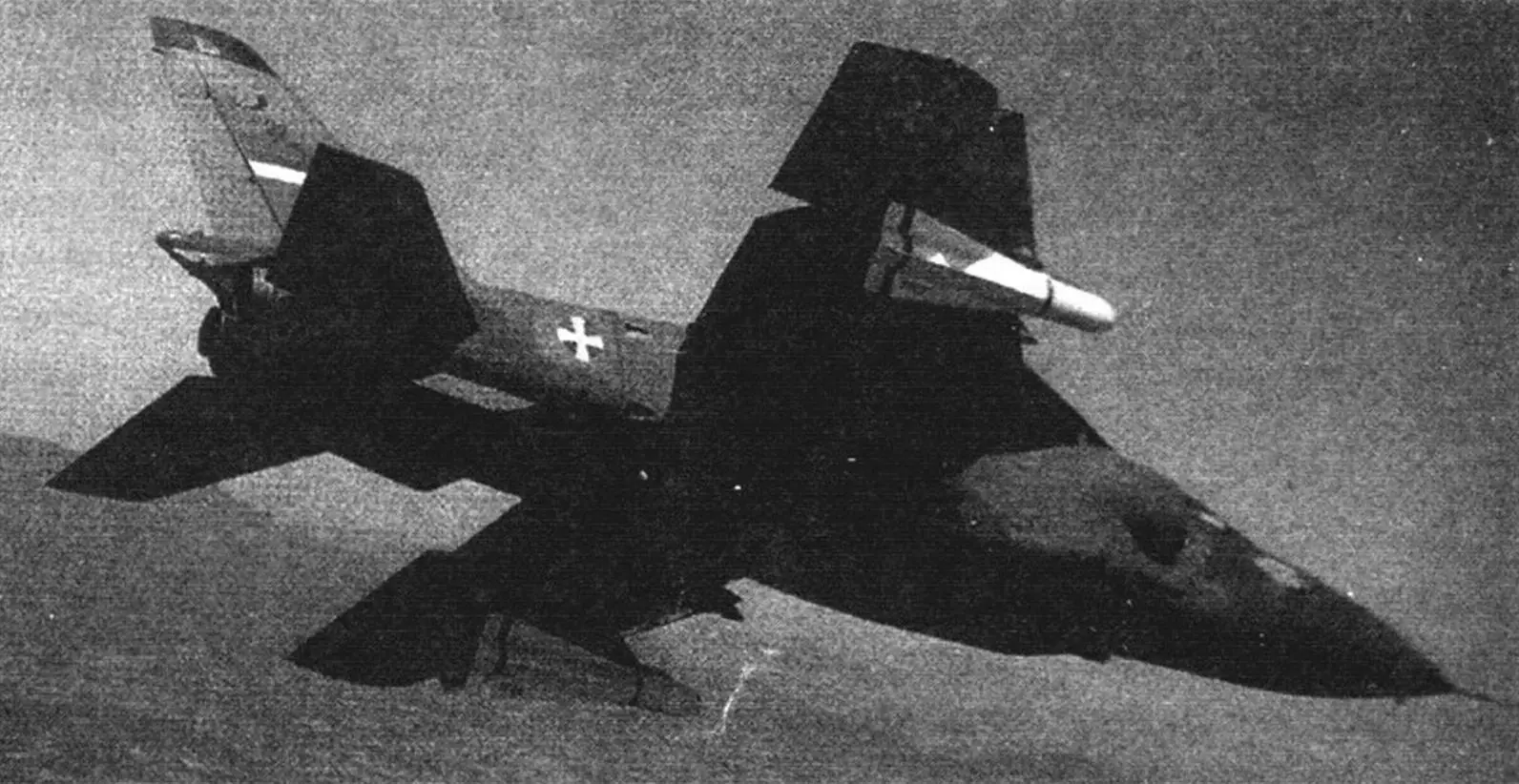
In 1999, Yugoslav J-22s participated in combat operations against the Kosovo Liberation Army (KLA). If at the beginning of the year the use of Yugoslav People’s Army aviation was quite rare, then after the entry into the war of NATO countries, the Yugoslavs considered this an open declaration of war and removed all restrictions. Despite the enormous superiority of NATO aviation, the Air Force of the Federal Republic of Yugoslavia, which by that time included only Serbia and Montenegro, still managed to conduct several successful operations against KLA militants. In total, about 20 combat sorties of “Orao” aircraft were made during these days.
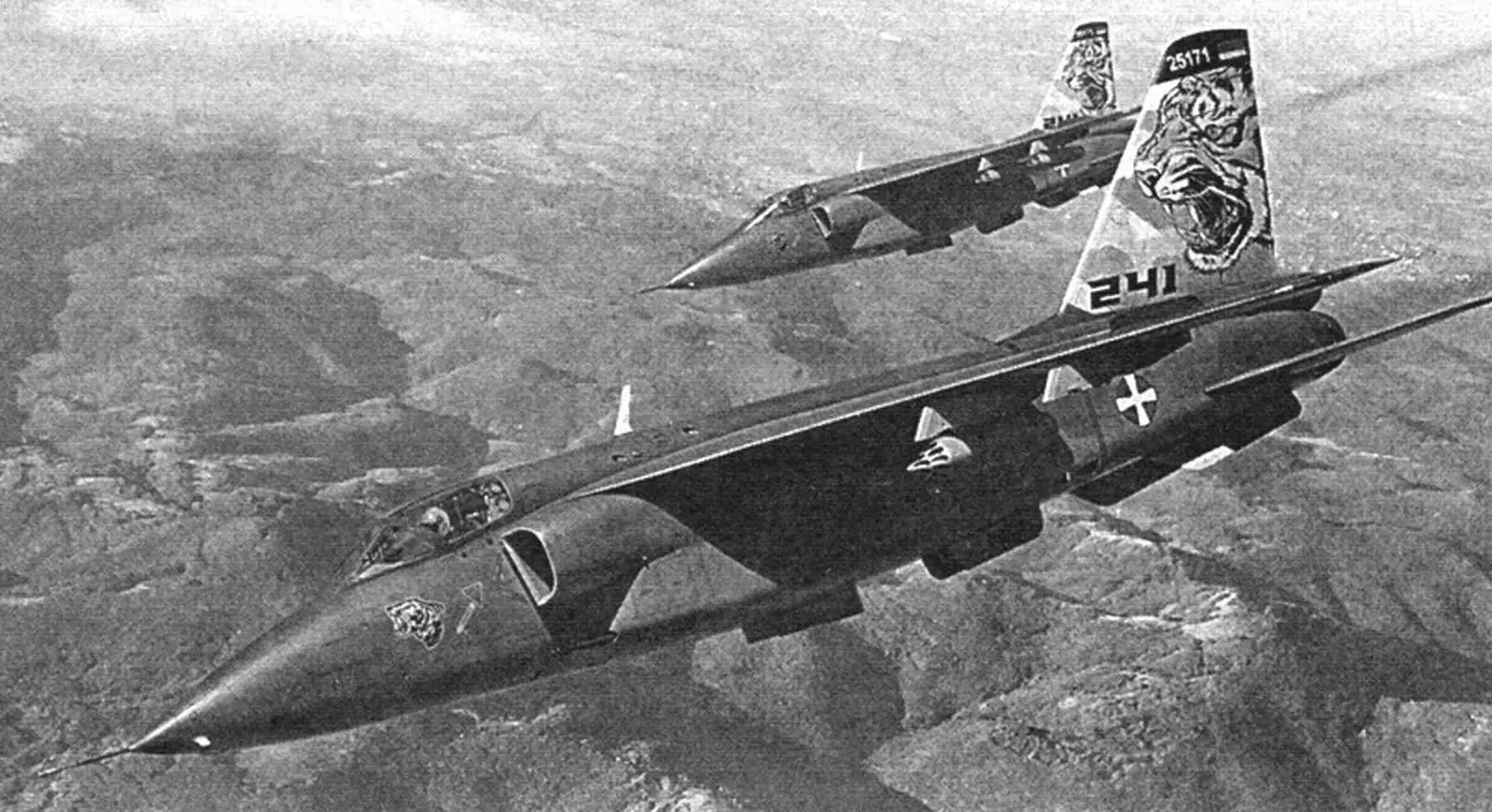
As a rule, “Orao” fighter-bombers flew to the target at dusk at a speed of 800-900 km/h in radio silence mode, following the terrain. A group of two to four “Eagles” was usually led by the two-seat variant of this aircraft with a navigator, whose task was to guide the aircraft precisely to the target. Flights, which represented a great physical load for pilots, lasted about half an hour, or even 50 minutes, when it came to the most remote KLA positions toward Albania. As a result of the actions of the Yugoslav People’s Army, supported by aviation, KLA units were pushed back to the Albanian border, but the continuing NATO bombings of Serbian territory forced agreement to withdraw federal troops from Kosovo. According to Serbian data, during the NATO aggression, 11 “Orao” aircraft were destroyed on the ground, most of them at Ponikve airbase.
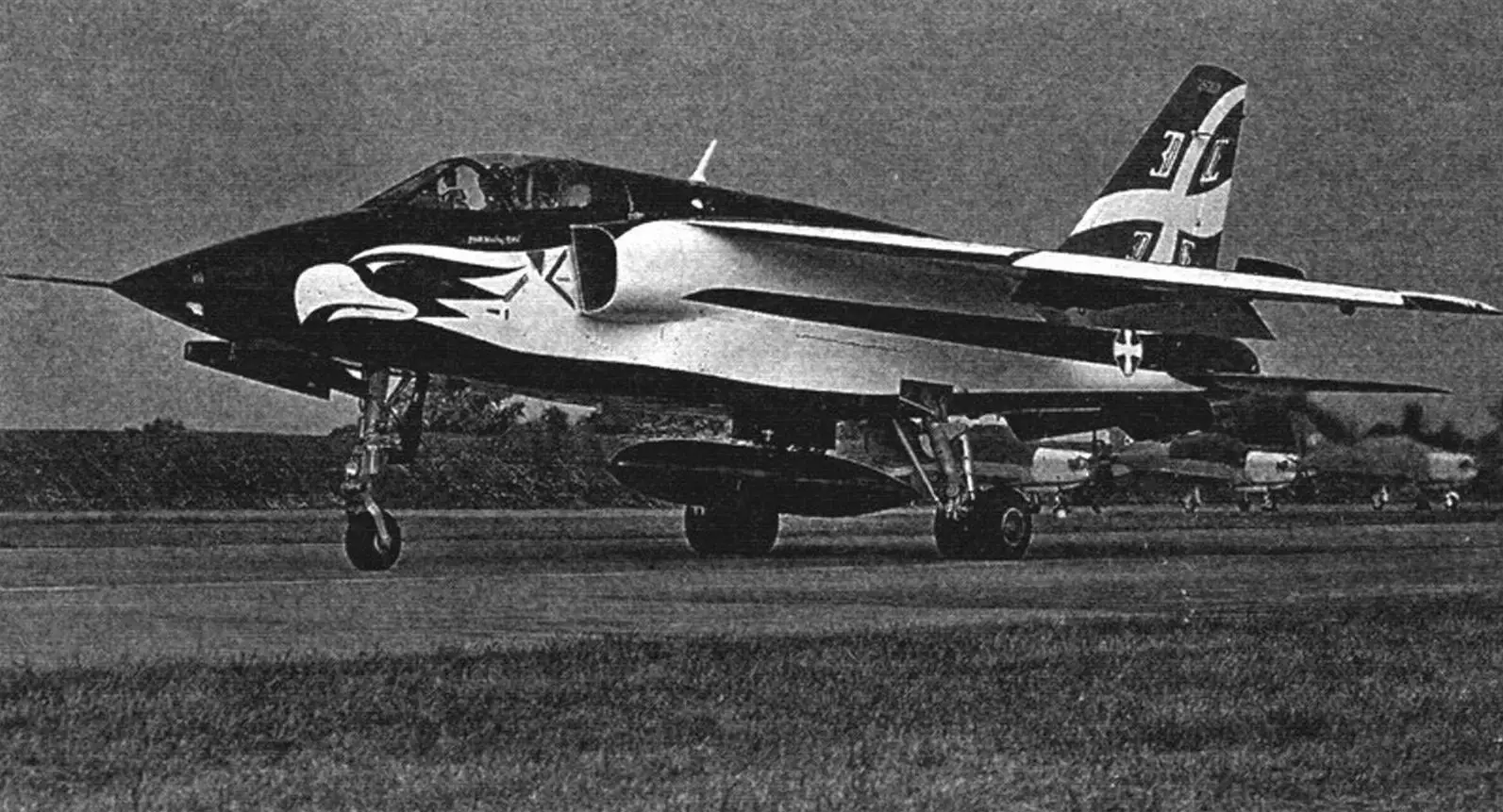
During the air war over Yugoslavia, there is even a known case of a fire ram. The commander of the 241st Fighter-Bomber Squadron “Tigers,” Lieutenant Colonel Života Đurić, was killed on March 25, 1999, during an attack on a KLA training camp on Mount Čičavica in the area of the village of Likovac. At the moment of death, he was piloting J-22 “Orao” № 25104. According to the report of his wingman Slobodan Dimovski, confirmed by Serbian police, the lieutenant colonel’s aircraft, flying at an altitude of only 50 meters, had already dropped its bombs, but when withdrawing from the target, was shot down by ground fire. Not wanting to be captured, Života Đurić directed the burning aircraft into a concentration of Albanian militants. In his homeland, at the aeroclub in the town of Paraćin, a monument was erected to Đurić, representing the fin of a J-22 aircraft.
Comparative characteristics of light fighter-bombers
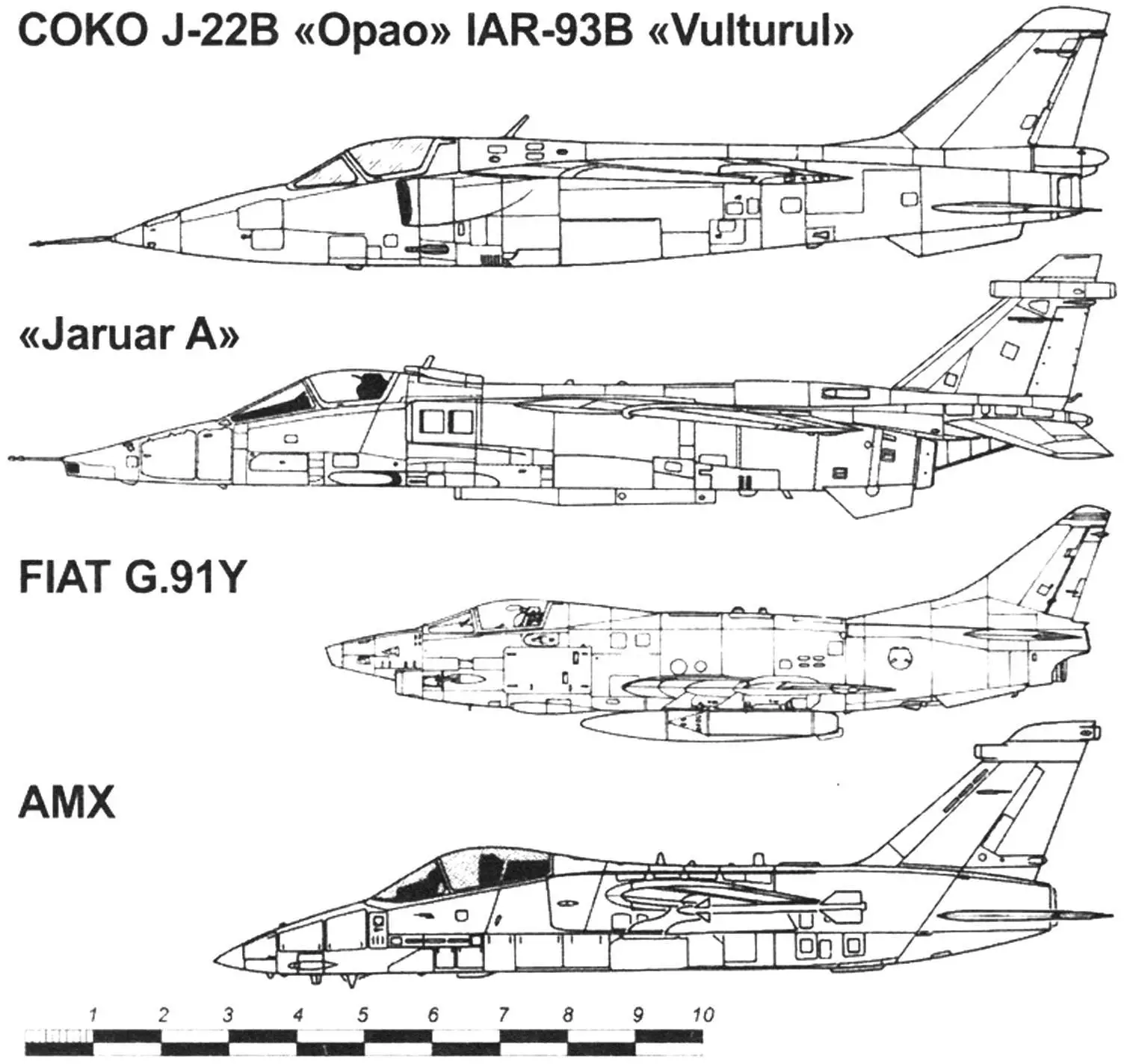
| Model | J-22 Orao 1 / IAR-93A | J-22 Orao 2 / IAR-93B | Jaguar A | FIAT G.91Y | AMX |
|---|---|---|---|---|---|
| First flight year | 1974 | 1983 | 1968 | 1966 | 1984 |
| Powerplant | 2 x turbojet Viper 632-41 | 2 x afterburning turbojet Viper 633-47 | 2 x afterburning turbofan Adour Mk.102 | 2 x afterburning turbojet J-85-GE-13A | 1 x turbofan RB 168 Spey Mk.807 |
| Engine thrust, kgf | 2 x 1814 | 2 x 2270 | 2 x 3630 | 2 x 1850 | 1 x 5000 |
| Wingspan, m | 9.62 | 9.62 | 8.69 | 9.01 | 8.875 |
| Length without pitot, m | 14.85 | 14.85 | 15.52 | 11.67 | 13.23 |
| Height, m | 4.45 | 4.45 | 4.92 | 4.43 | 4.55 |
| Wing area, m² | 26.0 | 26.0 | 24.0 | 18.13 | 21.0 |
| Empty weight, kg | 5420 | 5750 | 7000 | 3900 | 7000 |
| Takeoff weight, kg normal | 8500 | 8800 | 11000 | 7800 | 10750 |
| Takeoff weight, kg maximum | 9500 | 11200 | 15500 | 8700 | 13000 |
| Wing loading, kg/m² | 327 | 338 | 458 | 429 | 512 |
| Thrust-to-weight ratio | 0.43 | 0.52 | 0.47 | 0.47 | 0.47 |
| Maximum speed, km/h at sea level | 950 (0.78M) | 1160 (0.95M) | 1350 (1.1M) | 1110 (0.91M) | 1010 (0.83M) |
| Maximum speed, km/h at altitude 3000-9000 m | 900 (0.92M) | 1060 (0.97M) | 1600 (1.5M) | 1040 (0.95M) | 1053 (0.86M) |
| Landing speed | 274 | 274 | 213 | – | – |
| Rate of climb at sea level, m/s | 44 | 70 | 100 | 86 | 52 |
| Service ceiling, m | 12500 | 13600 | 12800 | 12500 | 12800 |
| Maximum range with external tanks, km | 1320 | 1337 | 1900 | 3400 | 3333 |
| Takeoff run, m | – | 595 | 940 | – | 1442 |
| Landing run, m | – | 670 | 860 | – | 753 |
| Armament | 2 twin-barrel GSh-23L guns cal. 23 mm; 1500 kg rocket-bomb load | 2 twin-barrel GSh-23L guns cal. 23 mm; 2800 kg rocket-bomb load | 2 single-barrel DEFA 553 guns cal. 30 mm; 4800 kg rocket-bomb load | 2 single-barrel DEFA 553 guns cal. 30 mm; 2465 kg rocket-bomb load | Six-barrel M61A1 gun cal. 20 mm or 2 single-barrel DEFA 553 guns cal. 30 mm; 3800 kg rocket-bomb load |
Currently, according to Serbian sources, 26 aircraft of the “Orao” type remain in service with the Serbian Air Force and Air Defense in the following modifications: J-22 fighter-bombers (9 units), “sparky” HJ-22 (7), IJ-22 reconnaissance aircraft (8), two-seat reconnaissance INJ-22 (2). All operational J-22 and HJ-22 aircraft are at Kraljevo-Laćevci airbase as part of the 241st Fighter-Bomber Aviation Squadron “Tigers.” The other “Eagles” that survived the war were decommissioned at NATO’s request and placed in storage at Batajnica airbase. Since 2017, work has been underway on their repair and modernization into the “Orao 2.0” aircraft with new avionics.
Assessment of the Eagle against its counterparts
As already noted, the prototype in the design of “Orao” was the Anglo-French fighter-bomber “Jaguar.” However, due to the lack of a jet engine with the necessary thrust, the characteristics of the supersonic “Jaguar” – a nuclear weapons carrier – remained unattainable. The Yugoslav-Romanian “Eagle” is a subsonic aircraft with a combat load almost half that of the “Jaguar.”
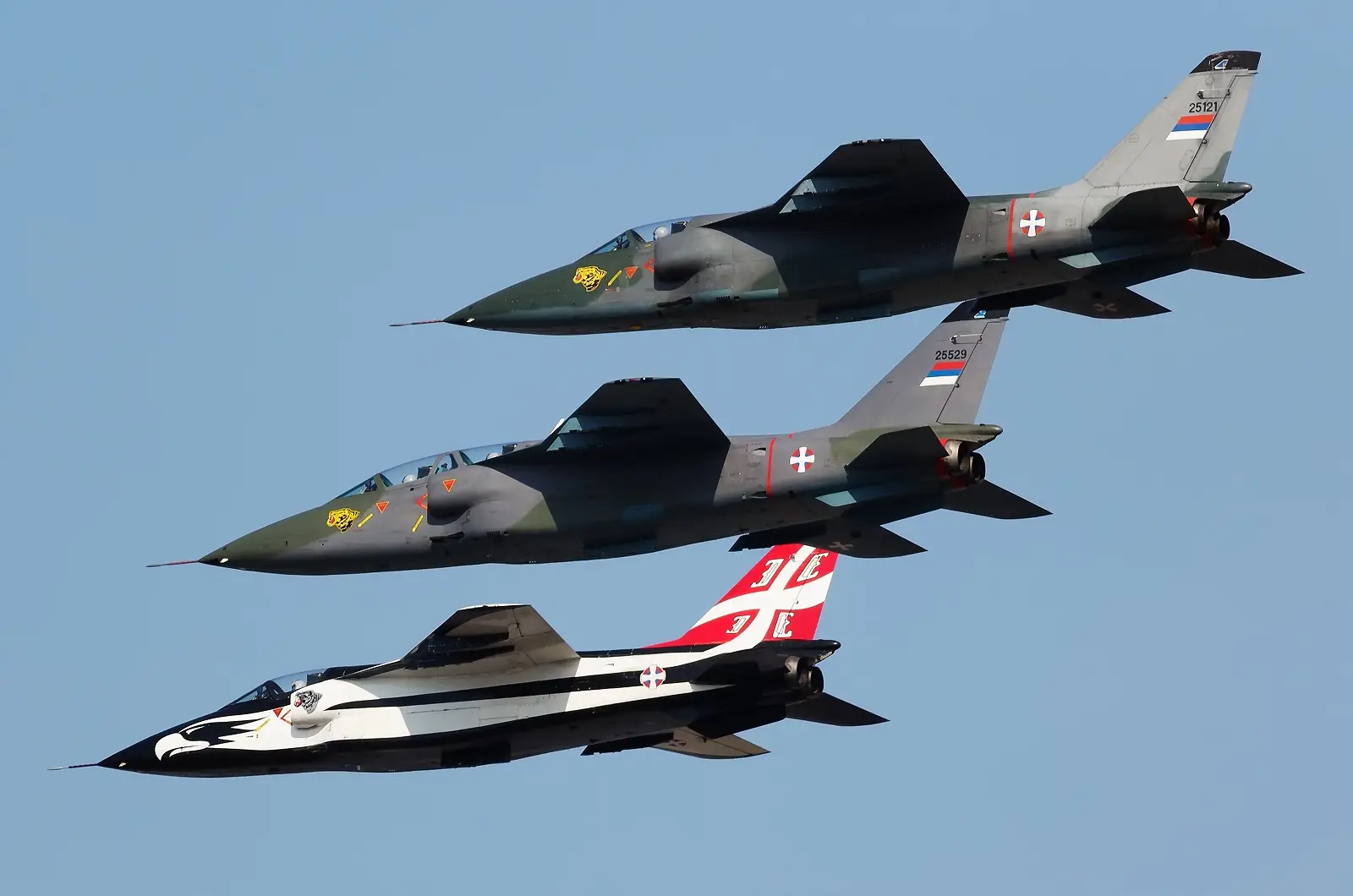
In terms of characteristics, the closest to the “Eagle” is the Italian subsonic light fighter-bomber FIAT G.91Y of 1966 and its successor – the Italian-Brazilian AMX aircraft, which made its first flight only a year later than “Orao 2” – in 1984. Both of these aircraft, with similar mass and bomb load, are noticeably smaller in size than “Orao.” The aerodynamic scheme of the “Eagle” with a thin wing of large sweep is characteristic rather of a supersonic aircraft. This suggests that when designing it, Yugoslav designers probably counted on engines of greater thrust. For example, replacing two “Vipers” with one “Spey” turbofan, as Romania proposed, would have allowed increasing the combat load from 2800 kg (“Orao 2”) to approximately 3800 kg. In any case, independent development, construction, testing, and operation of a fairly modern combat jet aircraft is hardly possible for such small and not very rich countries as Yugoslavia and Romania.
“Modelist-Konstruktor” № 4’2025, Grigory DIAKONOV
Recommend to read
 THE COMPRESSOR IS ALWAYS HANDY
The compressor unit can be, and is not so necessary equipment in the home workshop craftsman or car enthusiast the garage like a drill or vise. But when such a unit is available, it... SINGING PENCIL CASE
I propose an extremely simple structure of the electronic musical instrument. Its structure is clear from the drawing and the concept. The musical range of 2-3 octaves. The...
