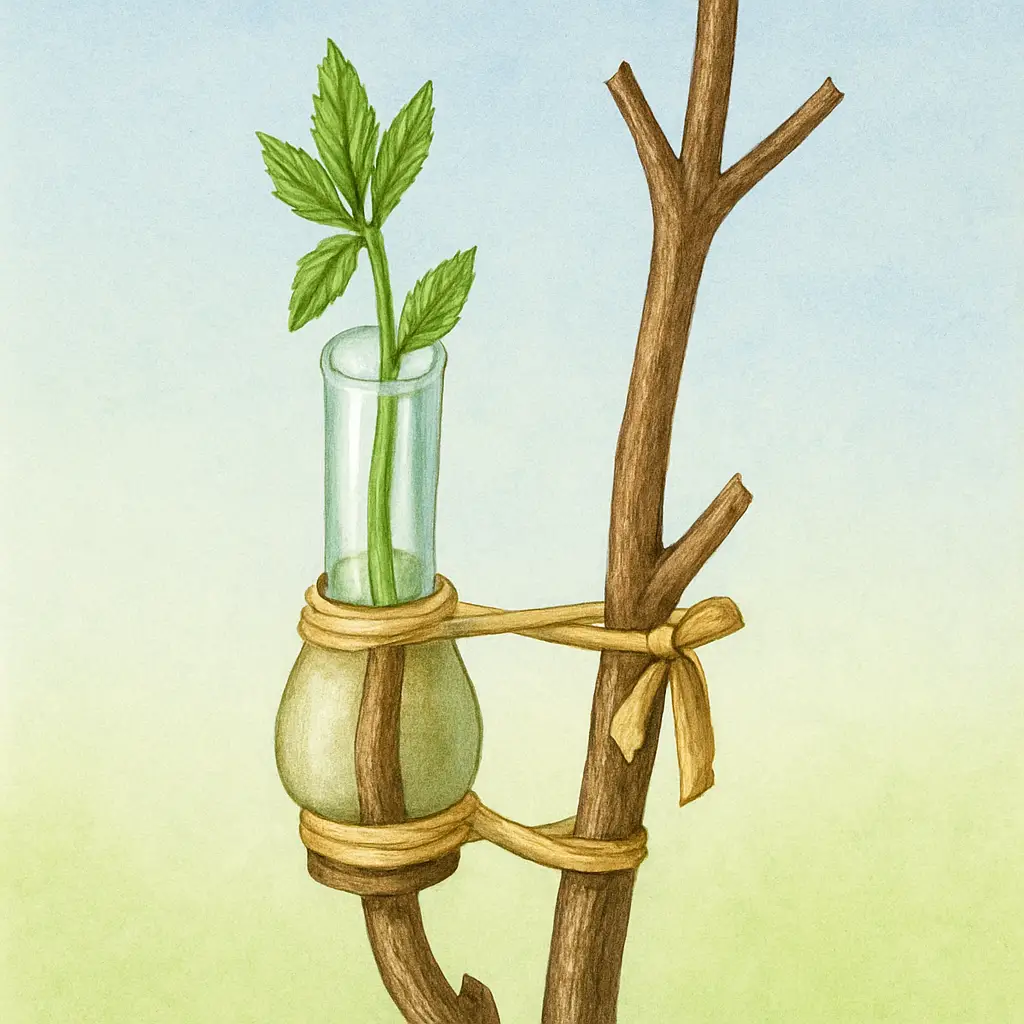
An unusual tree grafting technology was proposed by I.V. Michurin, and in N. Verzilin’s book “Journeys with Houseplants” this original method of obtaining a cutting from a living branch directly on the tree is described.
He “surrounded” the branch with a vessel of water — and roots appeared on old branches of pears and apple trees, cuttings from which do not take root in the usual way.
This experiment is most clearly demonstrated with oleander: its cuttings take root especially well in water (approximately after a month).
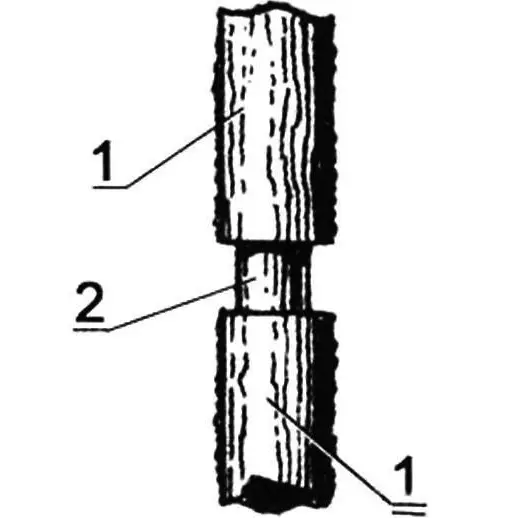
1 — bark; 2 — ring section after bark removal
To reproduce the experiment, you can use an old lamp glass. A cork or, better, rubber stopper is selected for its lower opening. We will drill a hole in the middle of the stopper equal to the thickness of the oleander branch. We will cut the stopper in half. On the branch, we will make two circular cuts and remove a ring of bark 3 millimeters wide. Then we will put the glass on the branch. Under the cut, we will secure two halves of the stopper and tightly slide the lamp glass onto them. We will coat the stopper at the junction with the stem with wax. We will attach the glass with the branch using ties: wire or cord. Now we will pour water into the lamp glass so that its level is above the cut bark ring. When roots appear, we will cut and plant the layer in a pot with soil.
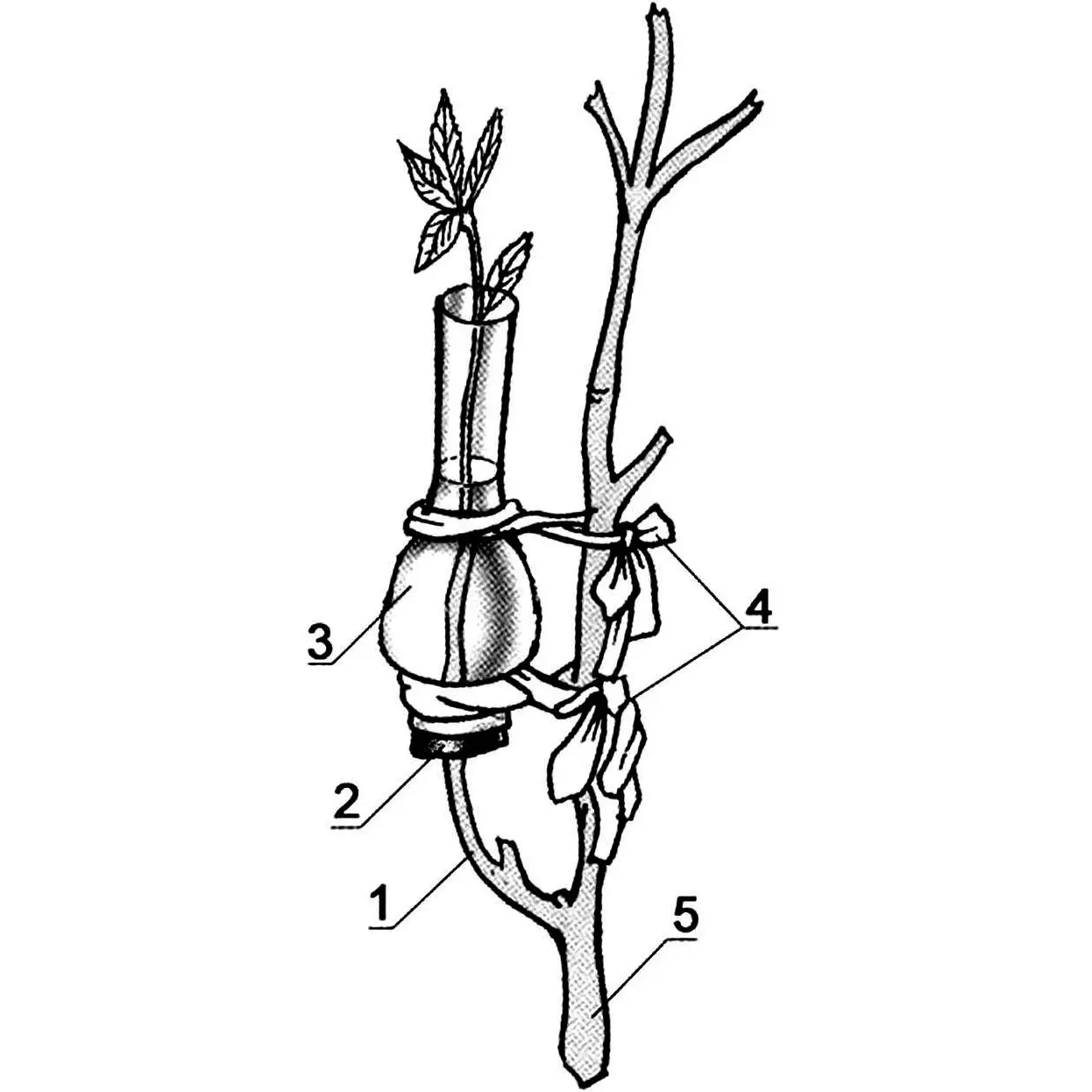
1 — branch; 2 — composite stopper, insulated with wax; 3 — lamp glass with water; 4 — ties; 5 — tree trunk
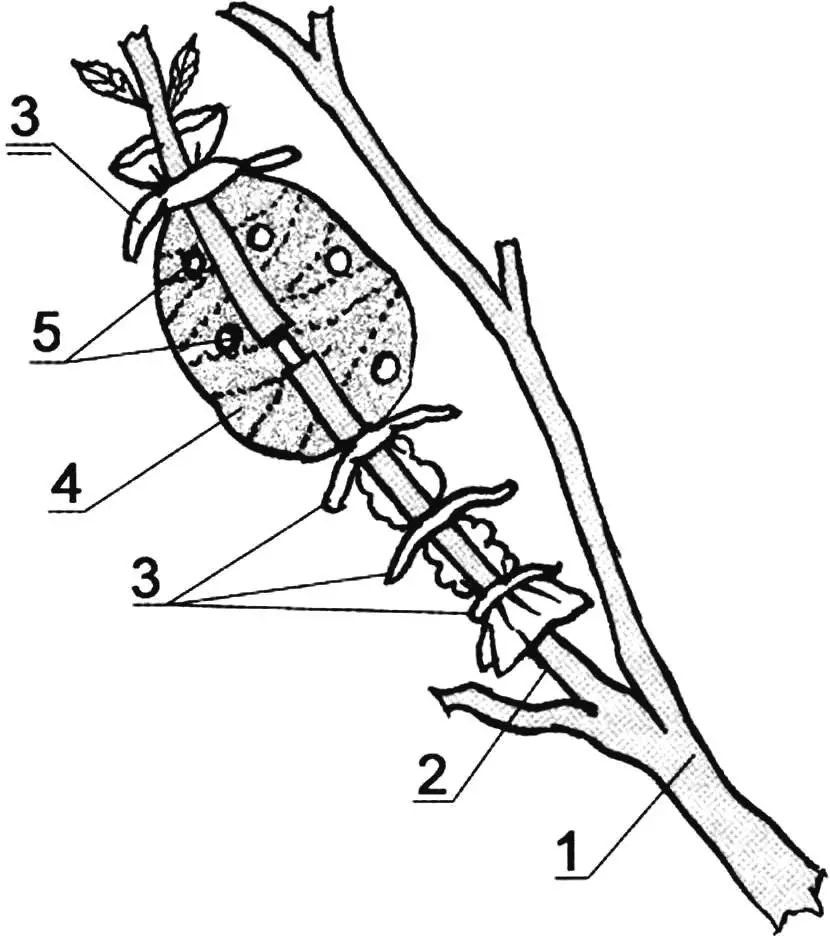
1 — tree trunk; 2 — branch; 3 — ties; 4 — multi-layer bag with soil on the rooting section of the branch; 5 — holes
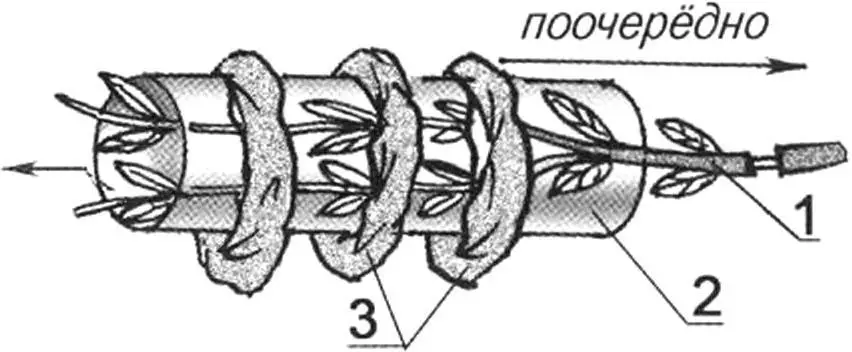
1 — branch; 2 — tube from a plastic bottle; 3 — polyethylene bags
But lamp glass is now inconvenient to use. It’s easier to use polyethylene bags. Take 3 — 4 bags without a bottom, insert one into the other and put them on the branch. At the bottom, you need to tie three knots one after another. Regular knots will let water through. A special “clamping” knot is needed. We will use the knot tying options shown in the figures. The neck of the resulting “vessel” is tied with the same knot after filling it with water.
However, for plants in the garden, it is better (except for the described case with apple trees) to take not water, but moist soil. Then such airtight knots are not needed: the soil is dense and won’t leak like water.
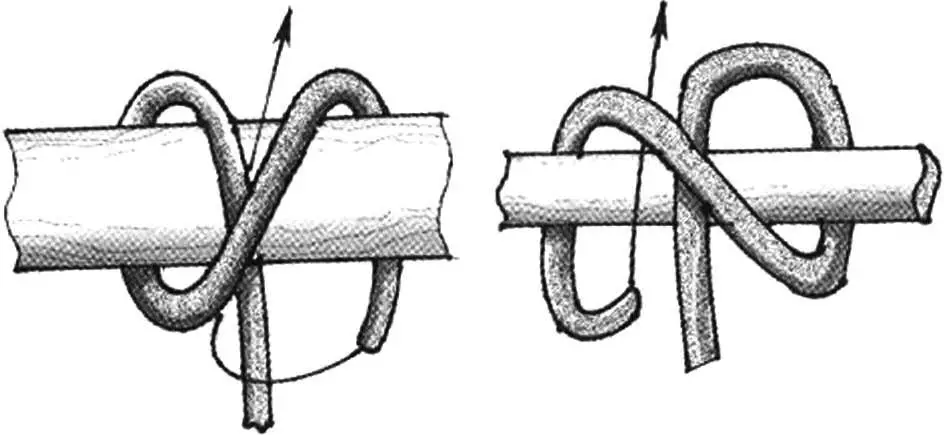
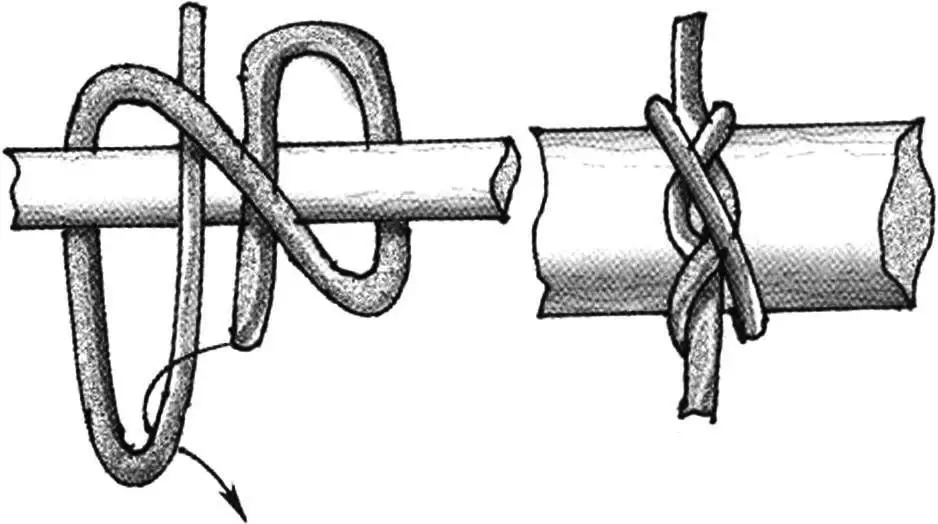
For convenience of “threading” bags onto the branch, you should use a wide tube (from a plastic bottle): it’s easier to slide and move along the branch, and bags put on it when moving (one on top of the other) won’t catch on branches and tear. It’s inconvenient to tie three bags at once, it’s better to attach them one by one. First, put on one bag, wrap it at the bottom with thread folded in half, and tie it. Then slide another one on top of it the same way, then a third, fourth. Then the tube is removed, and the soil-filled container made from bags is tied at the top with a cord, having first remembered to properly moisten the soil in the specified package. So that the soil can breathe, several holes should be made in the polyethylene. It is necessary to control its moisture and periodically maintain it with additional wetting. Soon the soil-wrapped section of the branch will produce roots: the cutting-seedling is ready for separation and planting.
«Modelist-Konstruktor» № 3’2010, V. IVANOV
Recommend to read
 ATV FOR ALL SEASONS
Is not just our magazine led descriptions for the original designs mikrovisatos built as enterprises and companies and Amateur designers. Permanent interest motonarty — individual... IRON WILL BE EASIER
The iron cord when Ironing linen constantly thwarted, trying to get his hot soles. However, if you make a special extension cord, the socket of which to attach under the Ironing Board,...
