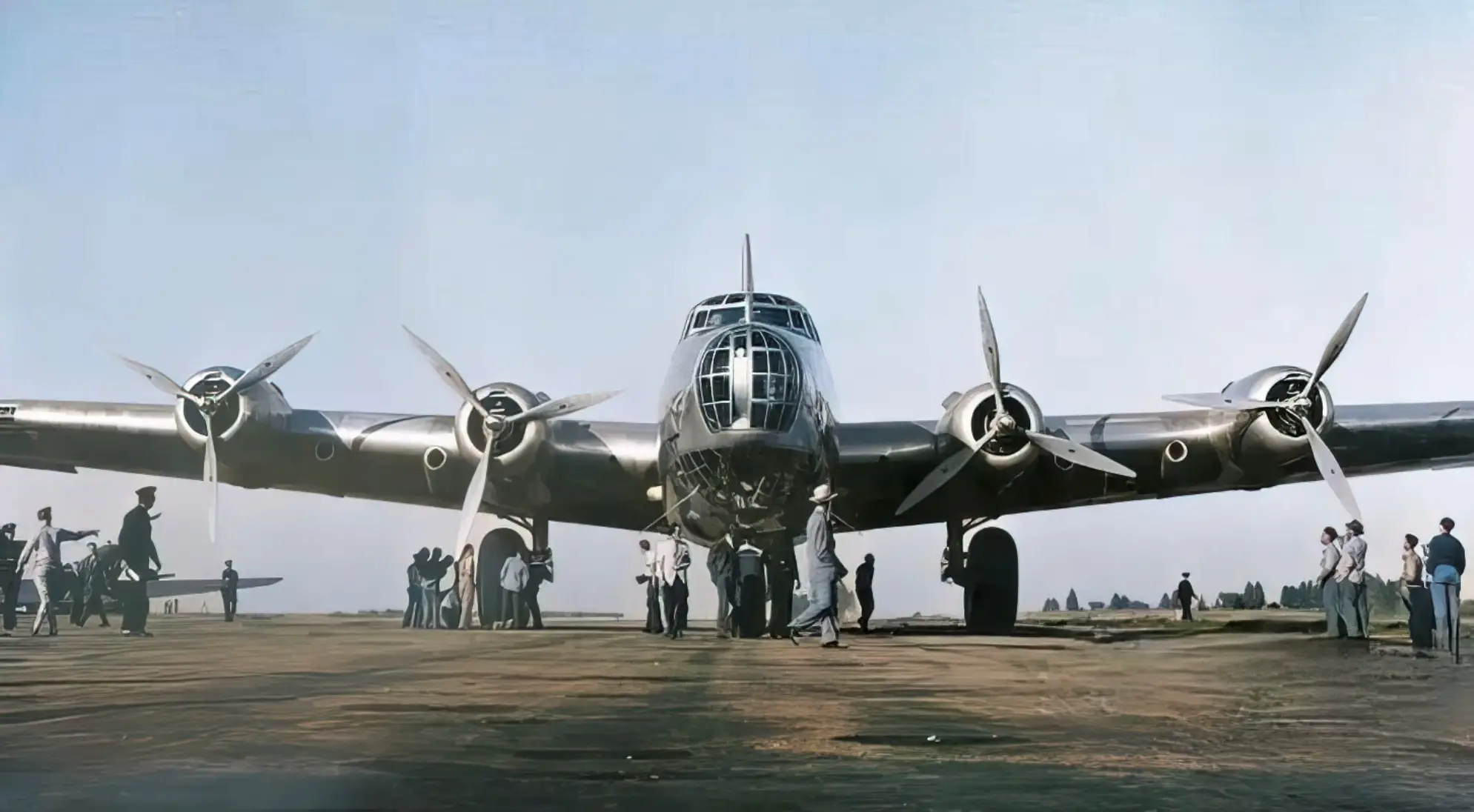
The nuclear arms race between the United States and the Soviet Union in the second half of the 20th century is regarded as one of the defining chapters of modern history. A central episode of that era was the emergence of strategic bombers. To cross the Atlantic or Arctic Ocean carrying a 5,000 kg bomb and return requires an aircraft with a range of at least 12,000 km. Only such an airplane qualifies as intercontinental. Advances in aeronautical science and engineering—above all in powerplants, materials, and aerodynamics—made it possible to approach that goal in the late 1930s, even before nuclear weapons existed.
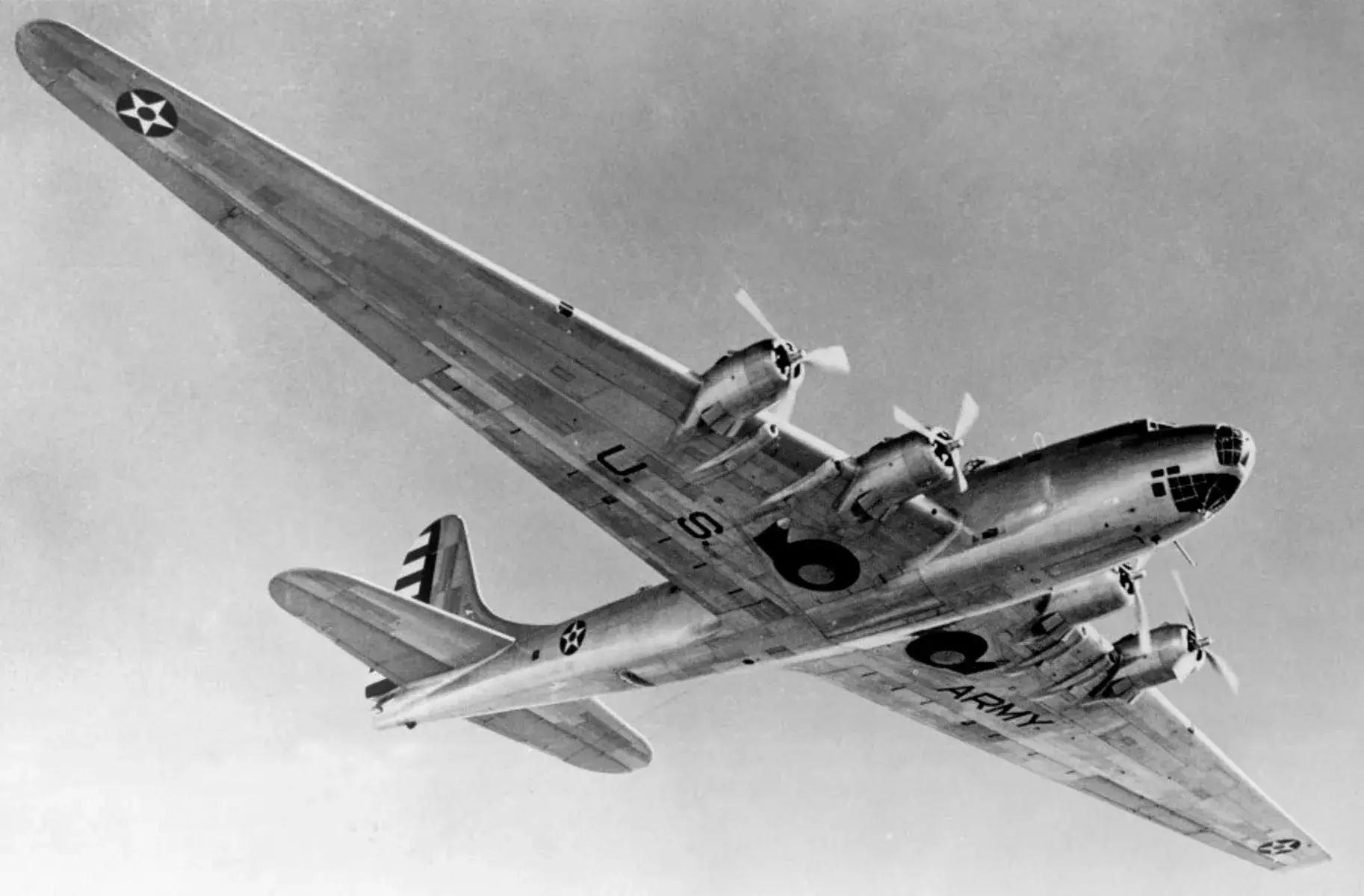
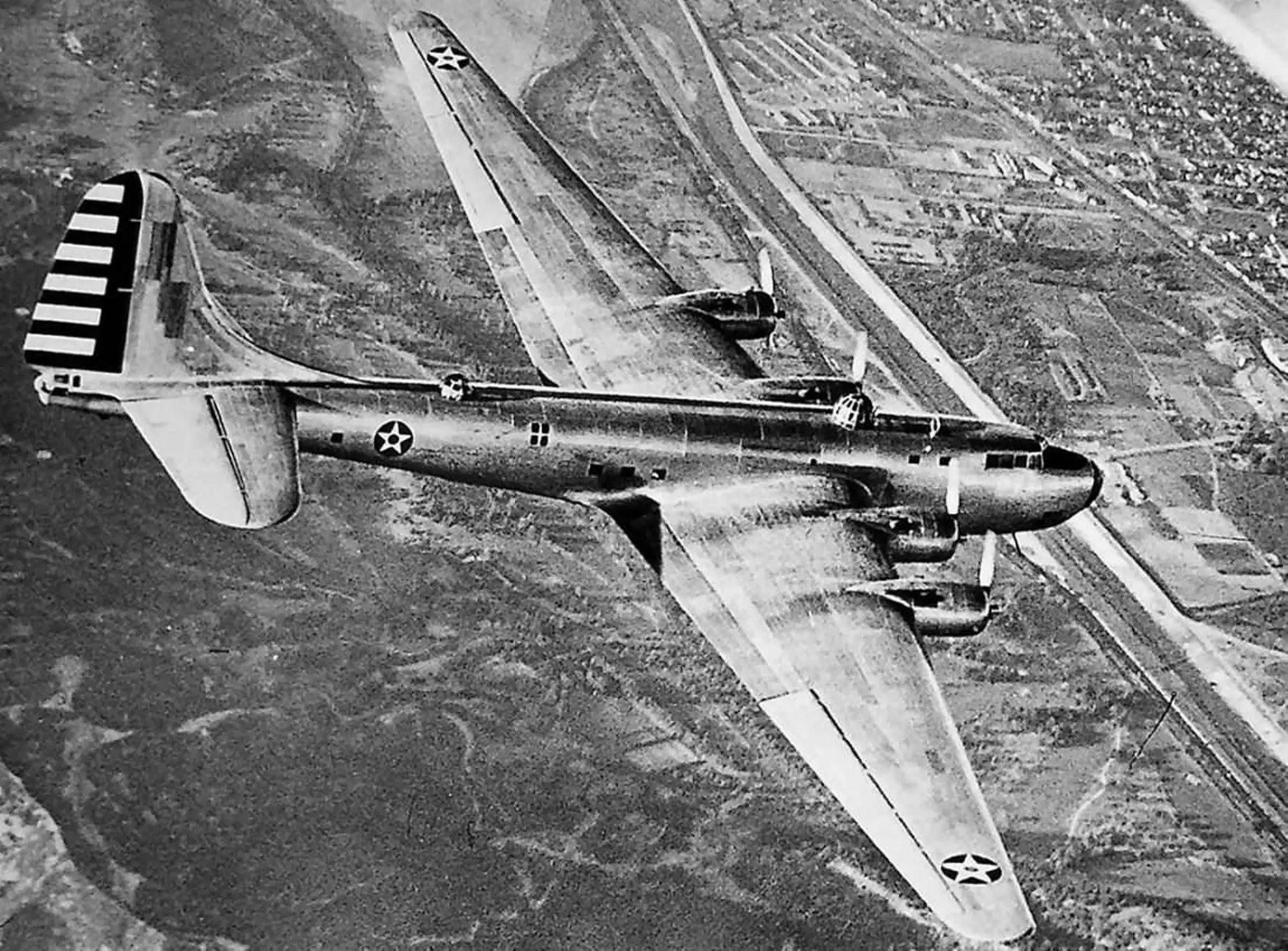
The world’s first intercontinental heavy bomber was the enormous Douglas XB-19, which flew in the anxious yet still peacetime summer of 1941 for America. Its origins go back to 1935, when the U.S. Army Air Corps’ logistics directorate issued a specification for an experimental long-range bomber (XBLR). The sponsor of this costly program was USAAC commander Major General Henry H. Arnold, who believed the nation needed long-range aviation capable of operating beyond the North American continent—and that it should be built in peacetime.
“Project A” called for an aircraft able to carry 2,000 lb (907 kg) of bombs 5,000 miles (8,045 km) at a maximum speed of 200 mph (320 km/h). Boeing and Martin submitted designs. The USAAC chose Boeing. In June 1935 it contracted for a prototype designated Model 294 and officially XBLR-1 (later XB-15). That experimental bomber first flew on 15 October 1937. It was a very large aircraft with a 45.44 m wingspan.
The plan was to fit XB-15 with four 2,000 hp engines, but none existed yet, so 1,000 hp Pratt & Whitney R-1830-11 Twin Wasp Seniors were used instead. With them XB-15 achieved 8,260 km range and 317 km/h top speed in testing. Range requirements were formally met, but the Boeing machine was still not intercontinental. In 1943 it was converted to the military transport XC-105 and operated until late 1944.
The first intercontinental bomber
The more ambitious “Project D” specification, drawn up the same year, envisioned the world’s first truly intercontinental bomber: 7,750 miles (12,400 km) range, 210 mph (340 km/h) maximum speed, and 18,700 lb (8,480 kg) bomb load. Calculations indicated the need for a giant aircraft with takeoff weight above 60 tonnes. (For comparison: the largest landplane of the day, the ANT-20 “Maxim Gorky,” weighed 42 tonnes with a top speed of 220 km/h.)
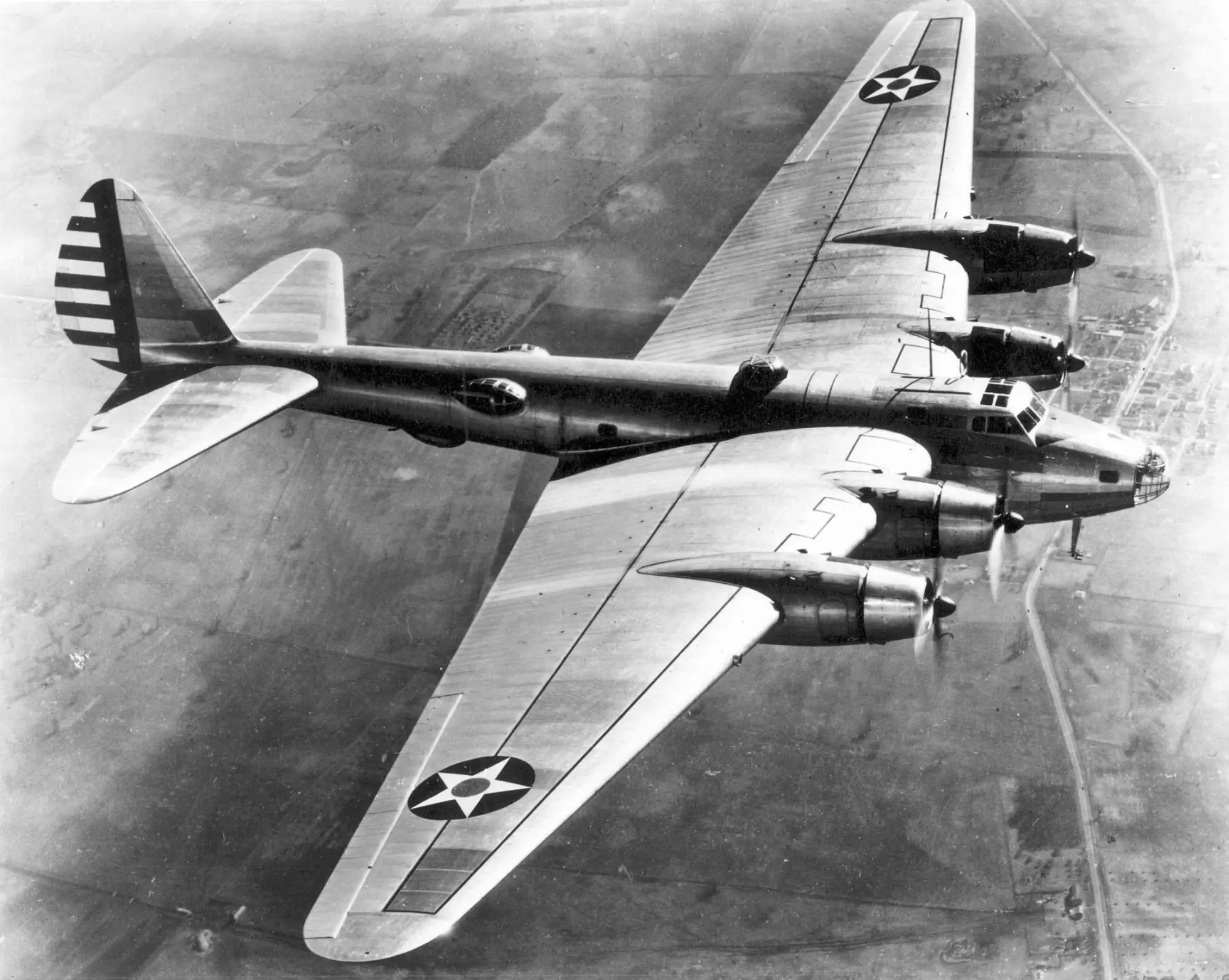
Douglas (aircraft XBLR-2) and Sikorsky (XBLR-3) took up the challenge. The USAAC order was confirmed in October 1935, and both firms prepared final designs and mock-ups. Soon it became clear that costs would exceed all expectations, so work continued only on XBLR-2, renamed the experimental bomber XB-19.
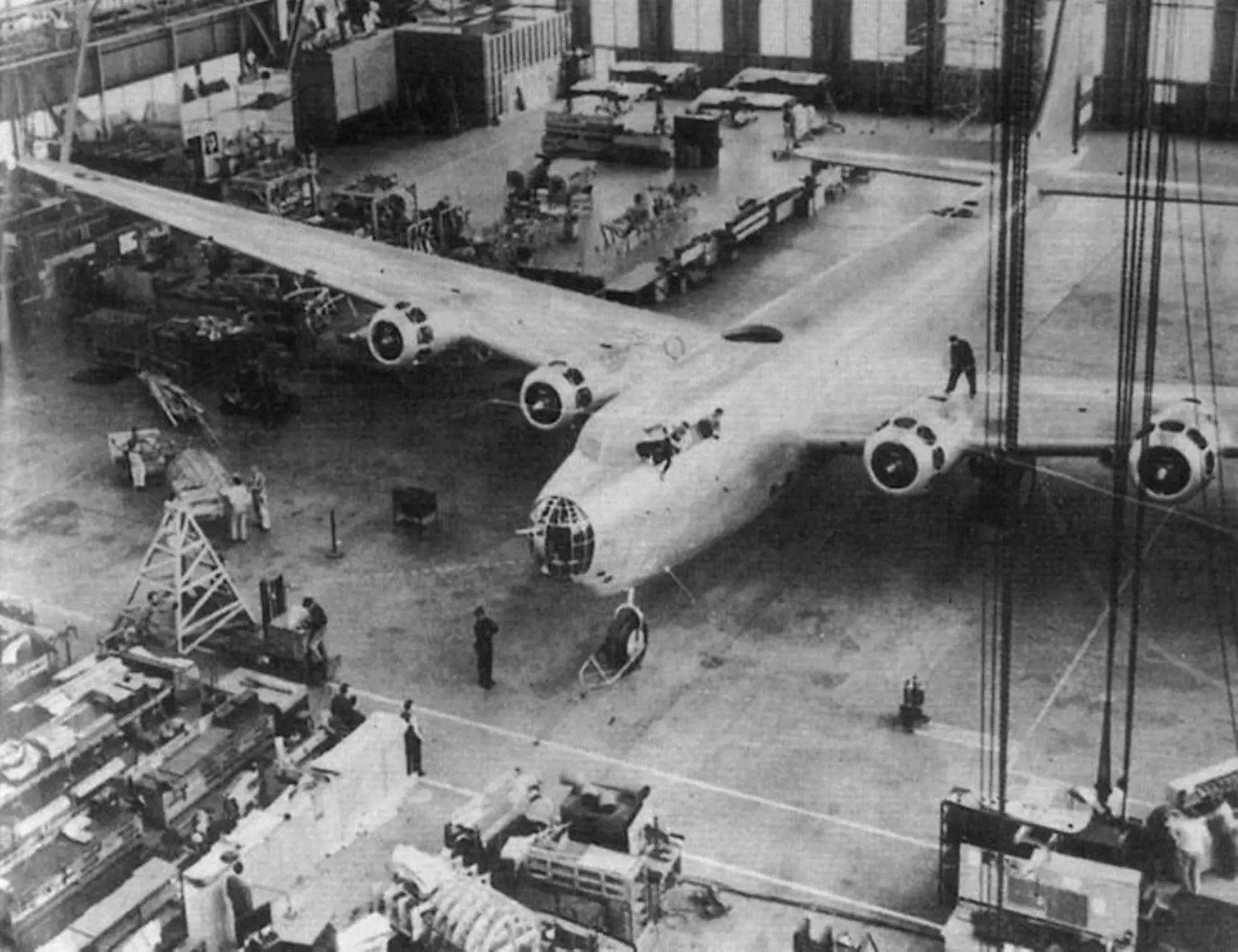
Completing XB-19 required 500 engineers, technicians, and mechanics. Nine thousand drawings—“covering four acres” (1.62 hectares)—were produced; 42,000 hours went to research and testing, 700,000 to design, and 1,250,000 to shop labor. Most notably, $4 million (roughly $80 million in 2025 dollars) was spent, of which the government paid only $1.4 million under contract. Douglas built a new assembly hall in Santa Monica, California, large enough for the giant XB-19 with its ~65 m wingspan. That record stood until 1946, when the new intercontinental bomber Convair B-36 flew with a 70.1 m span.
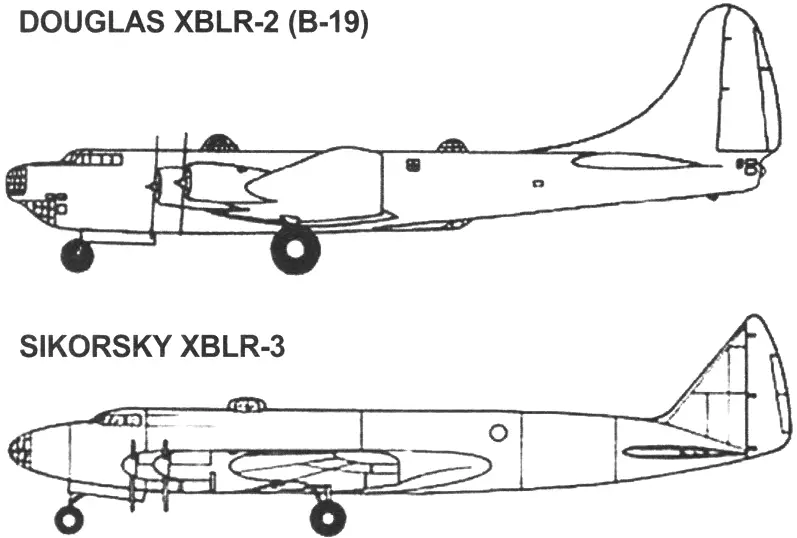
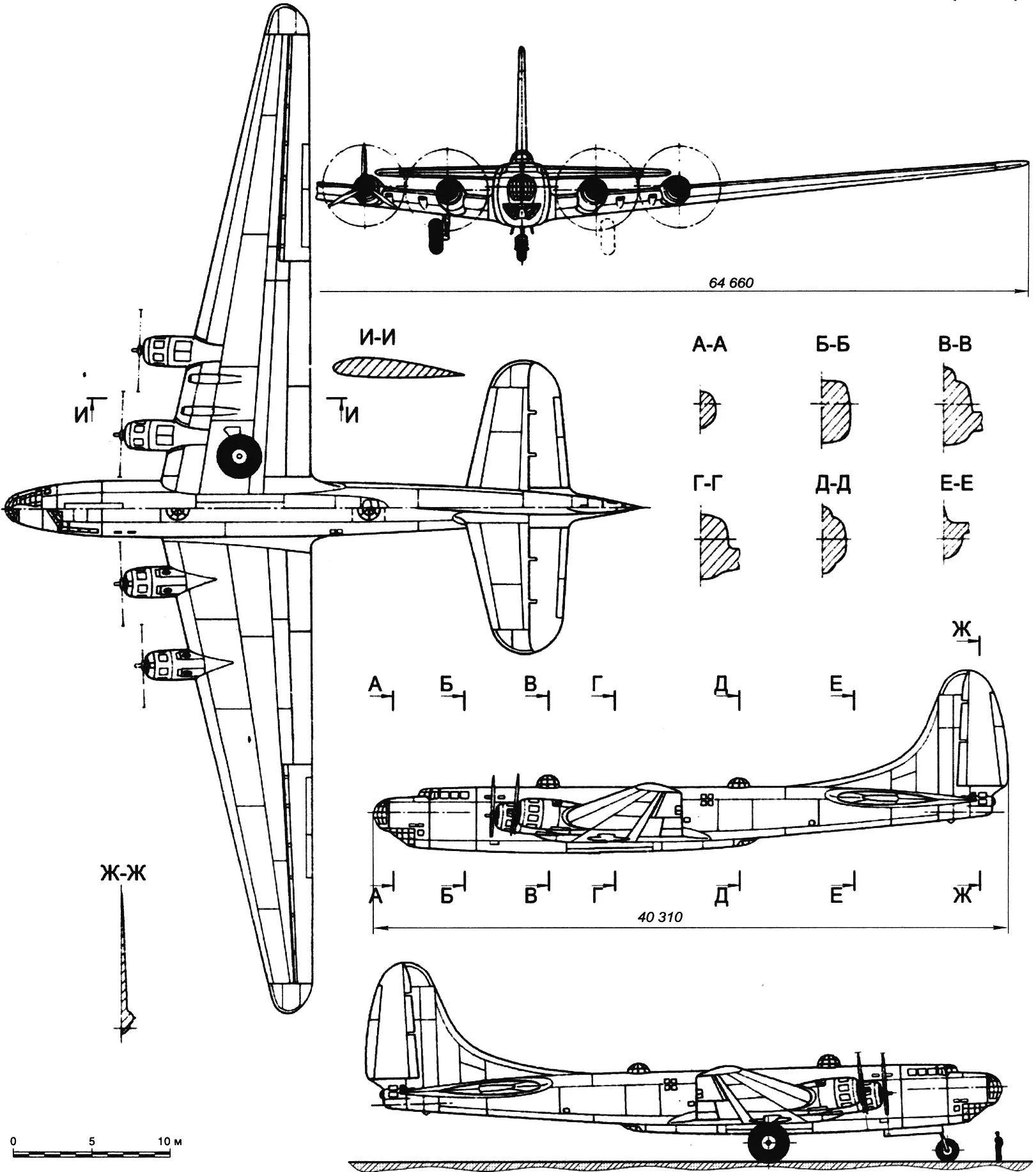
Looking at drawings of the XB-19, one immediately notices only four engine installations. Aircraft of similar size (B-36, ANT-20bis, Ju 390) used six engines. In fact the Douglas and Sikorsky giants were meant to have effectively eight! The XBLR-2 and XBLR-3 designs specified four liquid-cooled Allison V-3420 engines rated at 2,600 hp—paired V-12 blocks based on the V-1710. In the V-3420 installation two V-1710 units sat side by side with a 30° angle between neighboring cylinder banks, driving a common gearbox with a single propeller on its output shaft.
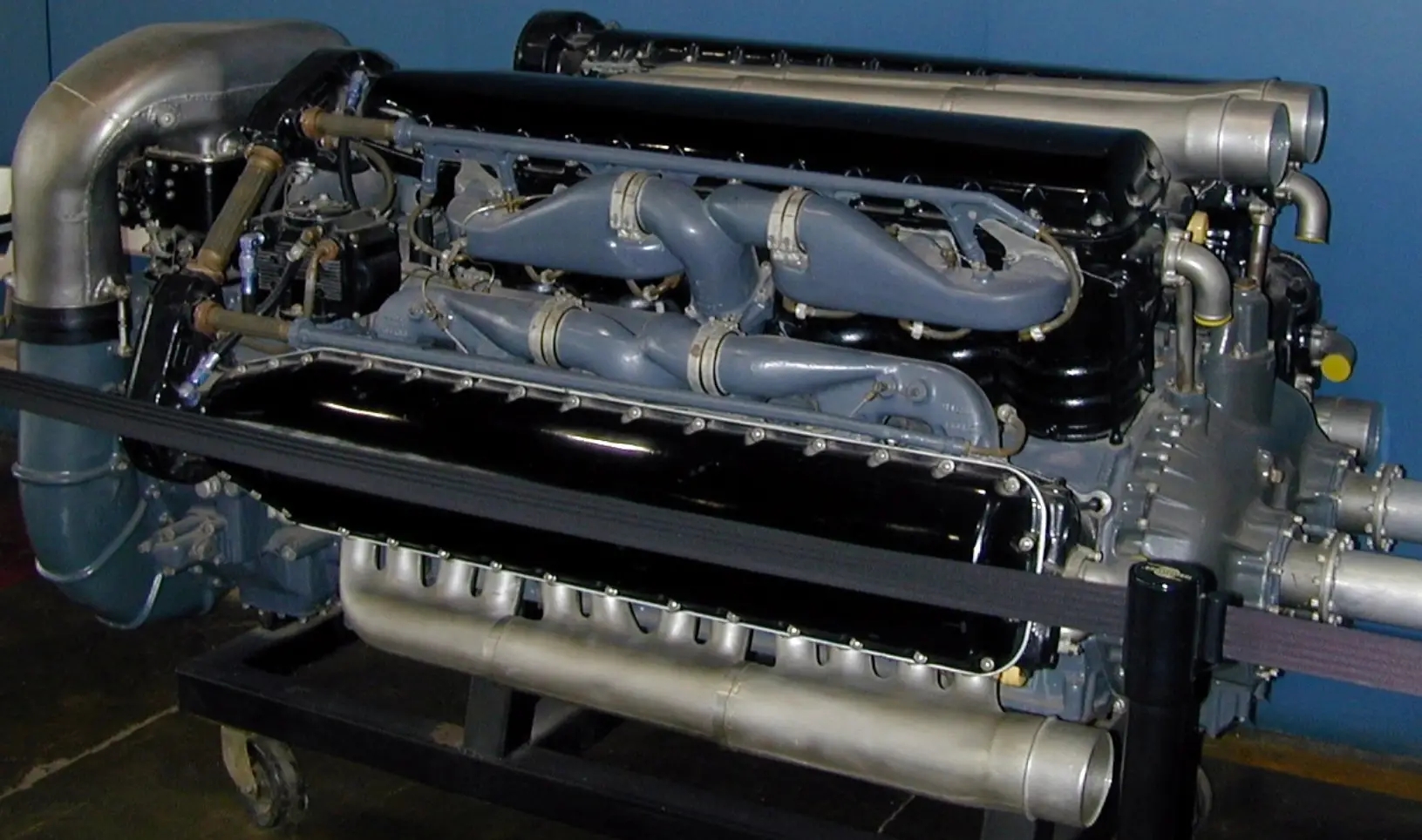
The V-3420 was first run on a test stand in 1937, but bringing it to flight readiness dragged on—so the XB-19’s first flight was postponed indefinitely.
In 1938 Donald Douglas pressed to cancel the money-losing, obsolescent program. Henry Arnold insisted it continue, proposing four Wright R-3350-5 Duplex-Cyclone radials at 2,000 hp each instead of the V-3420 “pairs.” With them XB-19 was clearly underpowered (power loading at normal takeoff weight of 63,560 kg was about 8 kg/hp), but that was deemed acceptable for an experimental aircraft.
In the spring of 1941 XB-19 was finished and, after ground tests, cleared for its maiden flight. Santa Monica’s factory airfield runway had to be lengthened and taxiways reinforced because the giant’s wheels cut ruts.
The first flight came on 27 June 1941. Shortly before, the aircraft was partly declassified so 45,000 people—Douglas workers and families—could watch the takeoff. The crew included: chief pilot, veteran USAAC test pilot Major Stanley Umstead (a WWI flyer); co-pilot Major Howard Bunker; aircraft commander, civilian test pilot from Wright Field Mark Kugler; three flight-test engineers—Jack Grant, Merle Steel, Raoul Escalier; Lieutenant Colonel James Taylor, leading the fighter escort and acting as USAAC observer and flight chronicler.
The huge, thrust-limited aircraft accelerated reluctantly. At roughly 120 km/h takeoff speed Major Umstead pulled back on the yoke—but felt nothing happen. He pulled harder. The airplane lifted off easily, then rapidly pitched up toward stall-critical angles of attack. A firm forward input checked the pitch, but the nose dropped sharply. After a few damped oscillations Umstead stabilized the ship and, gear still down, headed for nearby March Field, designated for flight testing.
Five aircraft escorted XB-19 while filming: one company DC-3, three airline DC-3s, and a military Douglas B-23 Dragon. Two Douglas C-39s (military DC-2s) orbited with paratroopers ready to cordon the site if the secret aircraft crashed. It was pure Hollywood pageantry, complete with a six-plane Curtiss P-40C Warhawk escort.
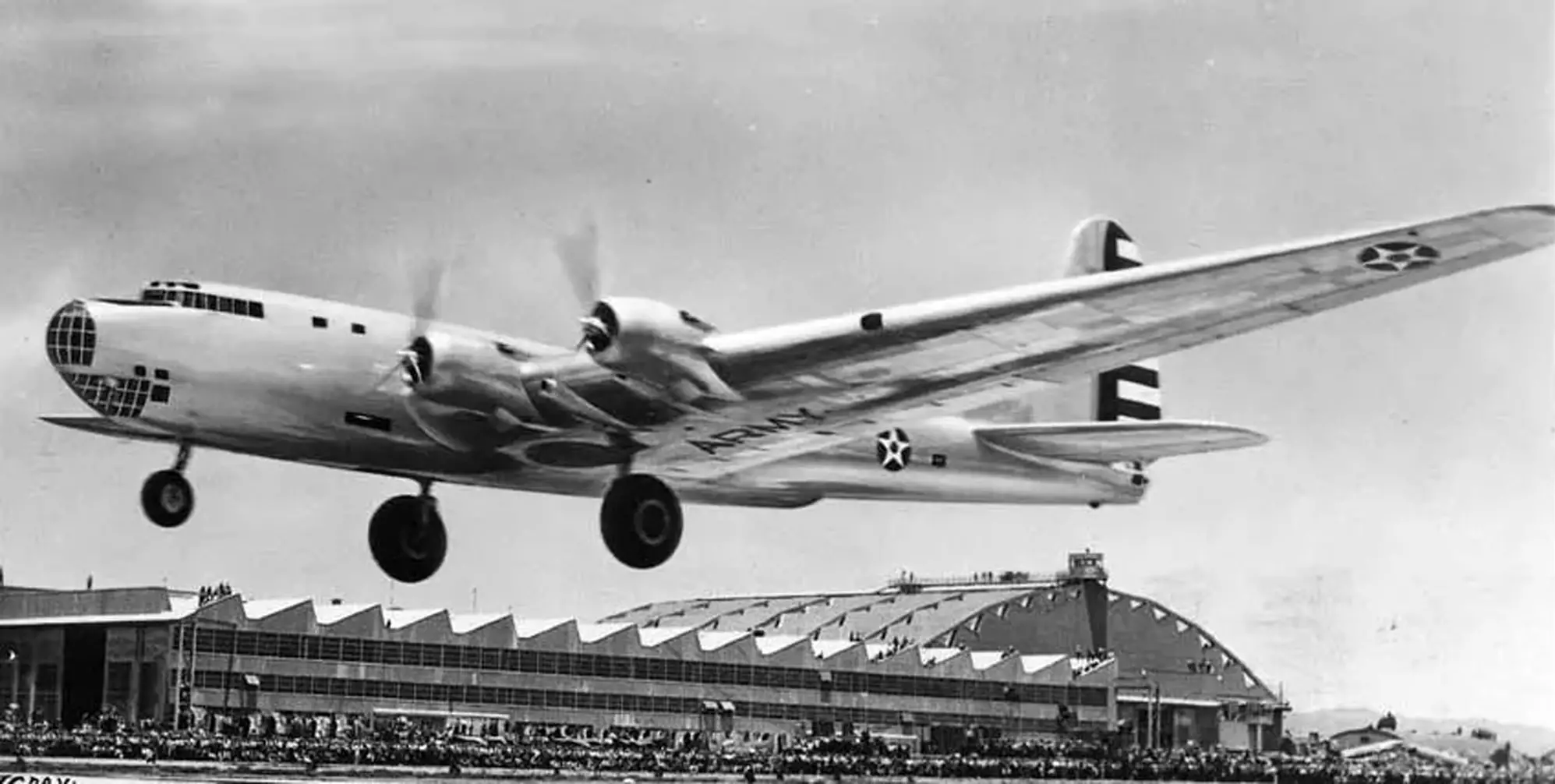
Fifty-five minutes later XB-19 landed. Lieutenant Colonel Taylor told the press: “We touched down surprisingly gently—no bump was felt; it was hard to tell when we actually landed.” In reality the landing was dramatic. On final, clearly visible on film, the giant porpoised in pitch and roll. Once settled it slammed all three gear legs onto the runway, bounced several meters, touched the nose gear, and bounced again. Only Umstead’s skill kept the hopping from diverging.
Pitch and bounce on takeoff and landing stemmed from great mass and inertia combined with powerful elevator and aileron moments. Reducing hydraulic boost sensitivity resolved stability and control complaints.
The giant bomber’s flight drew wide attention. The press dubbed it the “Sentinel of the Western Hemisphere,” heaping patriotic praise. President Franklin Roosevelt wired Donald Douglas: “The flight of the B-19 is indeed an outstanding achievement, and your part in this great achievement is sincerely appreciated in these days of extreme peril.”
General Arnold wrote in “B-19—A Dream Come True”: “We of the U.S. Army Air Corps think of the B-19 as a flying laboratory for developing and testing the aircraft of the future… There will be—and already are—other dreams. They will come true. This ‘flying hippopotamus’ B-19 is the Air Corps dream made real.”
Bomber XB-19: technical details
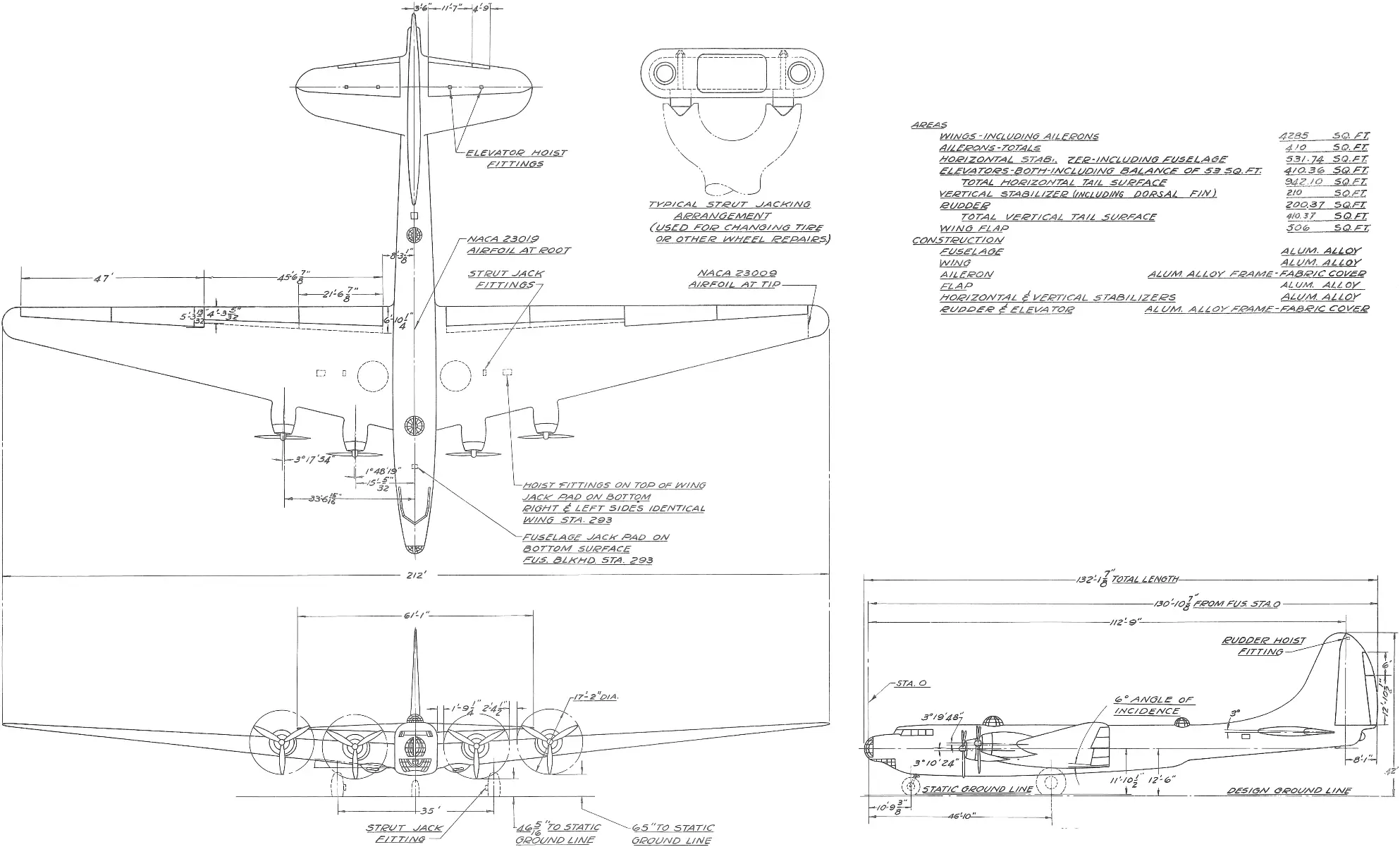
XB-19 was a four-engine cantilever monoplane of conventional layout with an unpressurized fuselage and a wing of very high aspect ratio—10.5. Airfoil: NACA 23019. High-lift devices: two-section Fowler flaps and two-section (spanwise) ailerons. The all-metal structure used smooth stressed skin like heavy aircraft today; it was polished to reduce skin friction.
Power came from four twin-row 18-cylinder Wright R-3350-5 Duplex-Cyclone radials rated at 2,000 hp each in standard NACA cowlings. Propellers were three-blade, variable-pitch, feathering Hamilton-Standard units 5.2 m in diameter. The thick wing contained crawl tunnels so mechanics could reach any of the four engines. Fuel (100-octane aviation gasoline minimum) was carried in sealed wing tanks totaling about 40,000 L. For maximum-range missions (calculated up to 7,750 miles / 12,450 km), two removable 1,560 L tanks could be installed in the bomb bay instead of part of the bomb load. Maximum fuel reached 32,300 kg—44% of the 73,550 kg maximum takeoff weight.
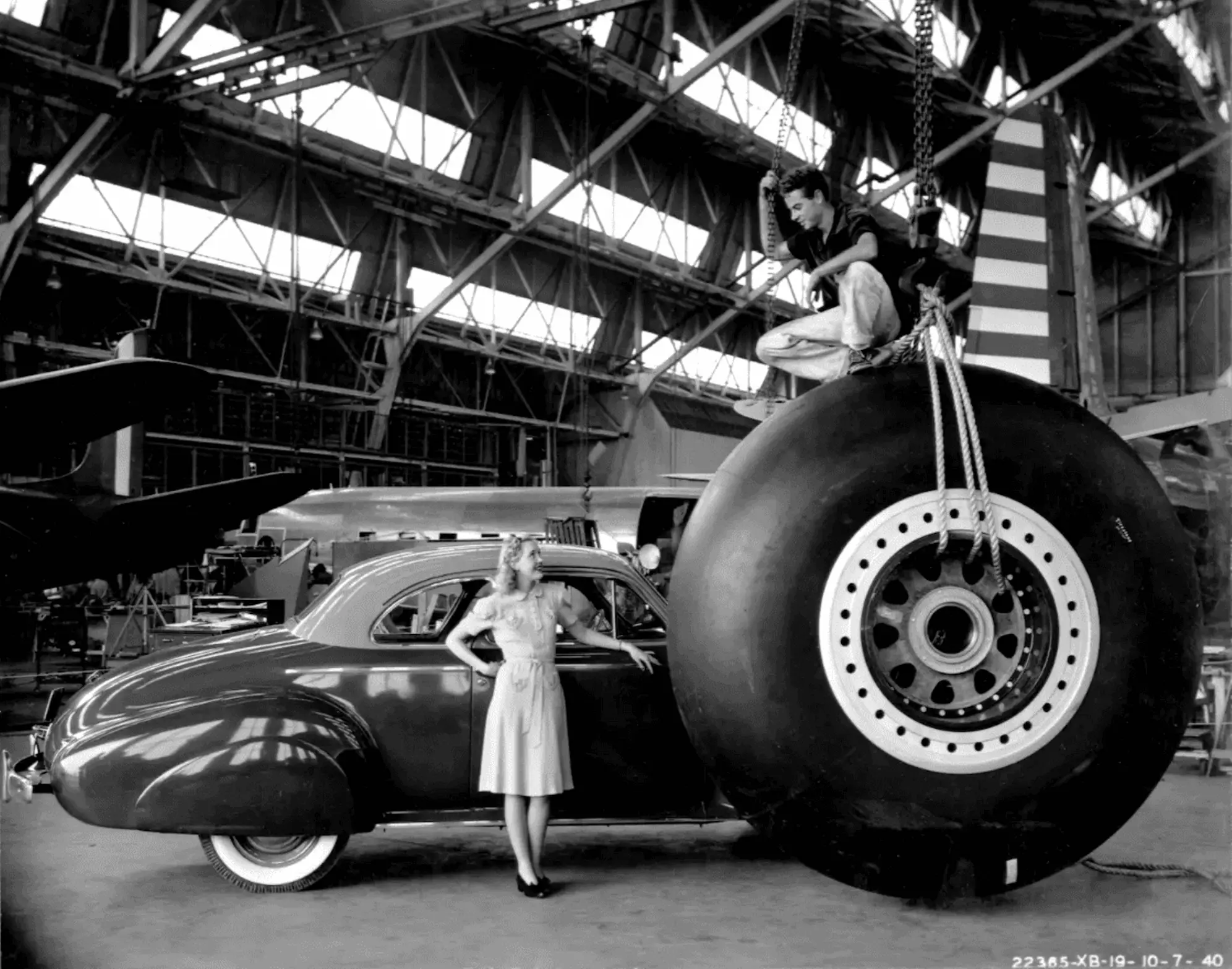
XB-19 had retractable tricycle gear with a nose leg. All three legs were single-wheel. Main-wheel diameter with Firestone tires reached 2.440 m; each wheel weighed 1,225 kg. At maximum takeoff weight each tire carried more than 30 tonnes—a serious limitation for most airfields.
The bomber had two independent electrical systems: a then-novel 120 V, 400 Hz AC system and a traditional 12 V DC system with batteries. Engine starters ran off the 120 V bus, so starting required one of two 15 kW auxiliary gasoline AC generators.
The bomb bay, between wing spars near the aircraft CG, held up to 8,490 kg of bombs up to 2,000 lb (908 kg) each. An equal load could be carried on external racks. XB-19 mounted heavy gun armament. None was fitted on the first flight. Full flight testing began in early 1942 when, after Pearl Harbor, a Japanese carrier strike on the U.S. West Coast seemed plausible; during that tense period XB-19 flew with full defensive guns and gunners.
Above the bombardier’s station a powered turret carried an automatic 37 mm M4 cannon and a coaxial 7.62 mm Browning M1919. Two fuselage turrets had 360° coverage. The forward turret, like the nose, had 37 mm and 7.62 mm guns; the aft turret had a single Browning M2 in .50 caliber. Later critics noted the cannon’s low rate of fire made fast fighters hard to hit, while twin .30 calibers did little damage.
The .50 caliber Browning M2 became the long-term U.S. standard. One sat in the tail turret beneath the rudder. The military customer thought it unnecessary, but Douglas insisted. Another .50 fired from a ventral position. Two more heavy machine guns fired through waist windows aft of the wing, as on late-model B-17 “Flying Fortresses.” Finally, two 7.62 mm guns on ball mounts were mounted along the fuselage ahead of the horizontal tail.
Maximum-range missions exceeded 40 hours, so the crew worked in shifts. The standard complement was 16: two pilots; a non-flying senior aircraft commander; navigator; flight engineer; radio operator; bombardier; turret mechanic; and eight gunners. Long missions provided berths for two extra flight mechanics (one per engine pair) and six relief crew—up to 24 officers and NCOs. Cabin heat used radiators warmed by exhaust heat exchangers.
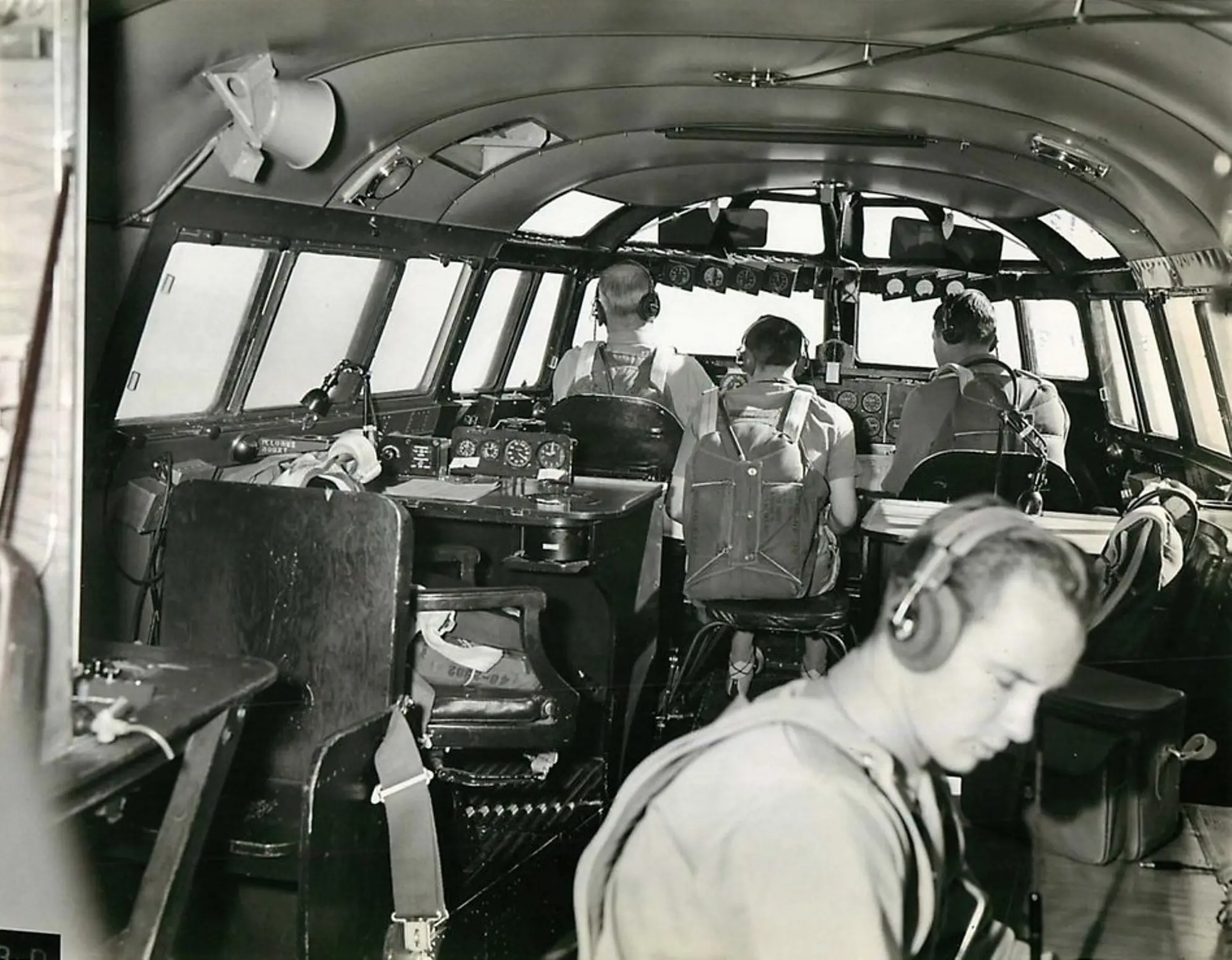
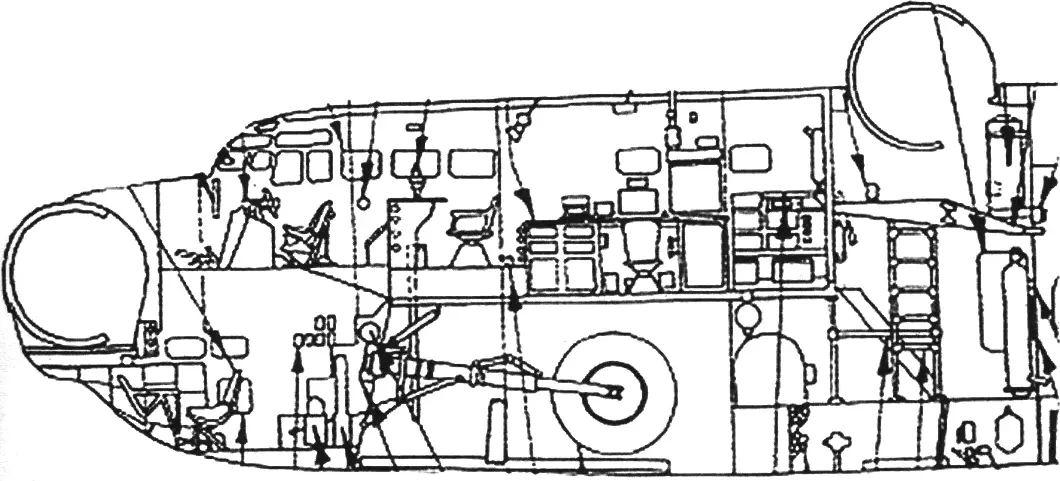
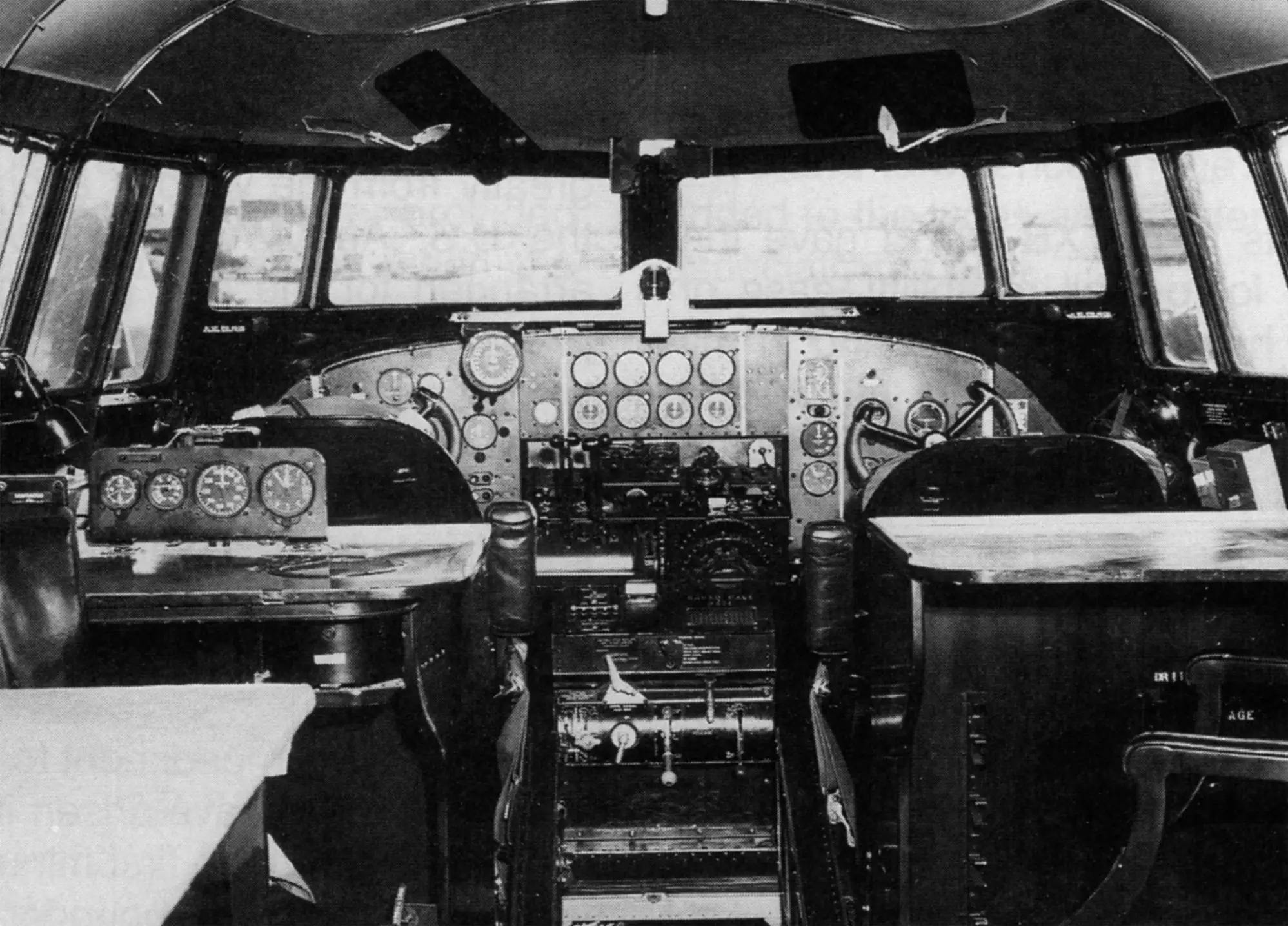
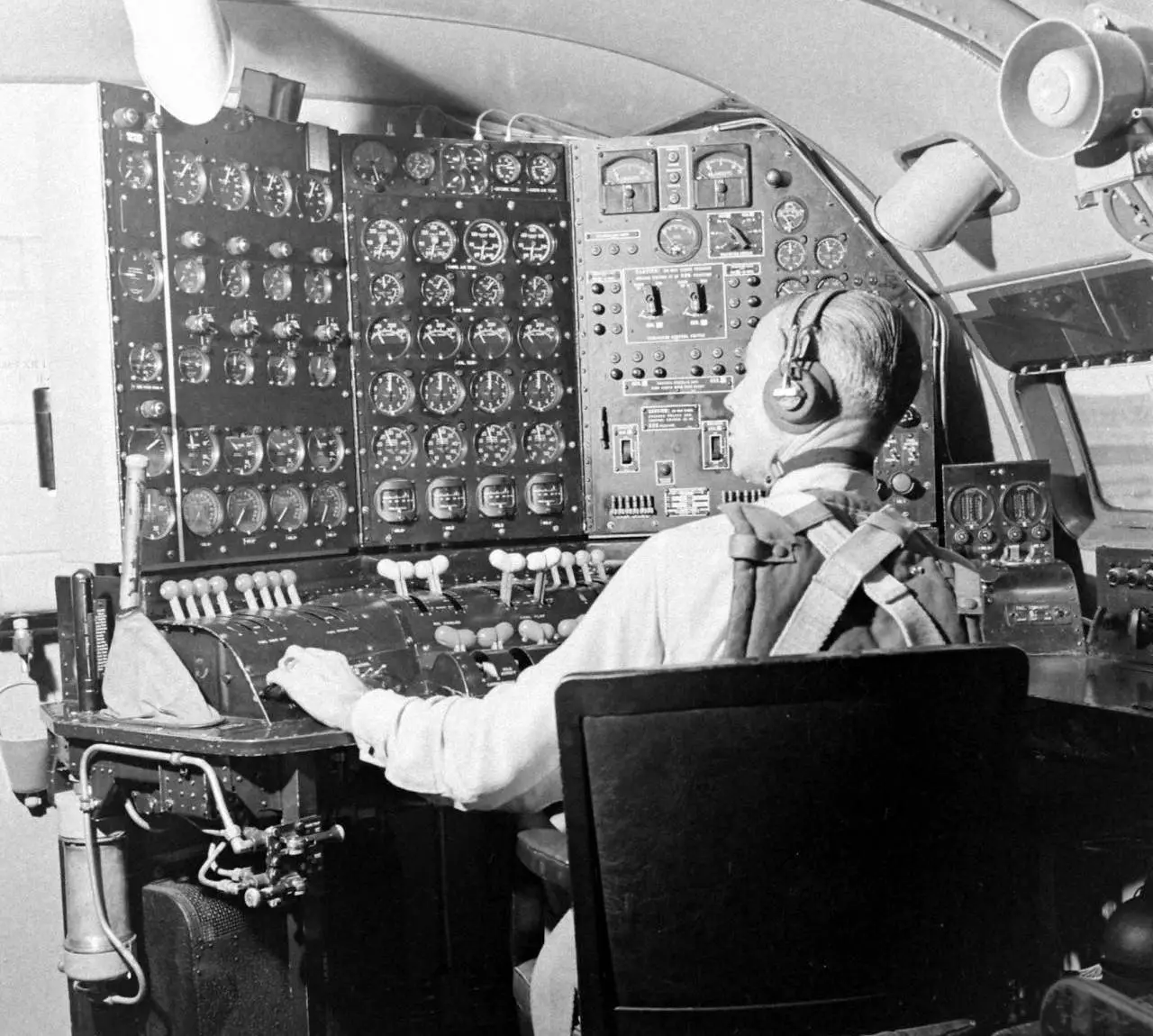
Crew layout: the bombardier sat in the lower nose under the cannon turret with bombsight and release gear. Above the huge nose-wheel well was the well-glazed command deck (“Bridge Deck”), housing the senior crew. The two pilots sat side by side well apart. Behind the left pilot was the navigator with instrument panel and table covering nearly half the left side of the deck. Aft of the navigator began the flight engineer’s station with a large corner desk and vertical engine-instrument panel. On takeoff and landing the engineer sat on a folding seat between the pilots, working engine controls. The aircraft commander sat behind the right pilot; aft of him sat the radio operator, managing three short- and long-range radios and an intercom with 24 jacks throughout the aircraft. A ship-style PA system was also installed.
Behind the command deck lay the forward gun turret bay with a storeroom beneath. From there a walkway through the bomb bay led to a sound-insulated, heated cabin with six bunks and a dining table for four—convertible to two more berths. Aft of that “crew room” bulkhead was a galley with an electric stove.
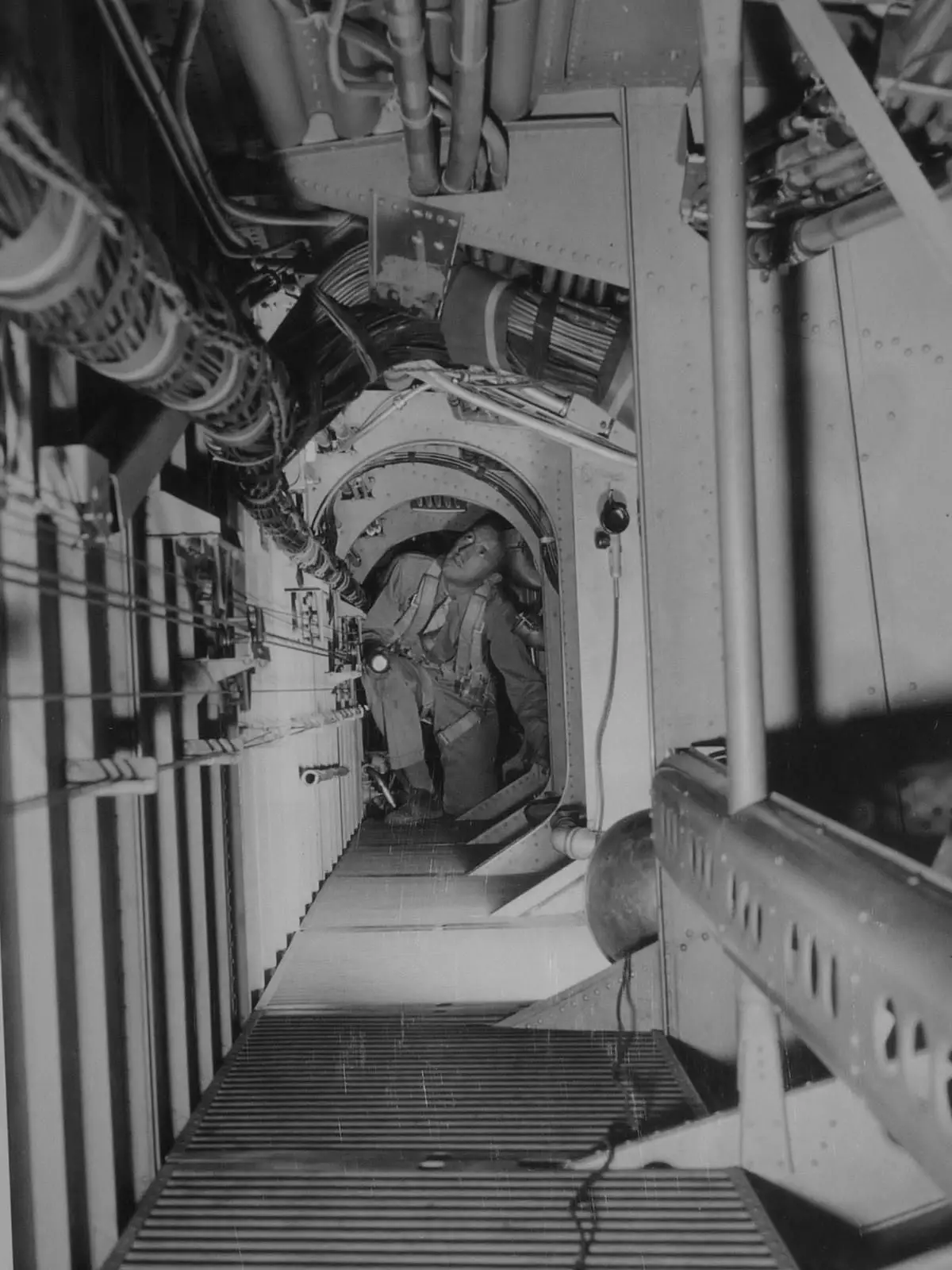
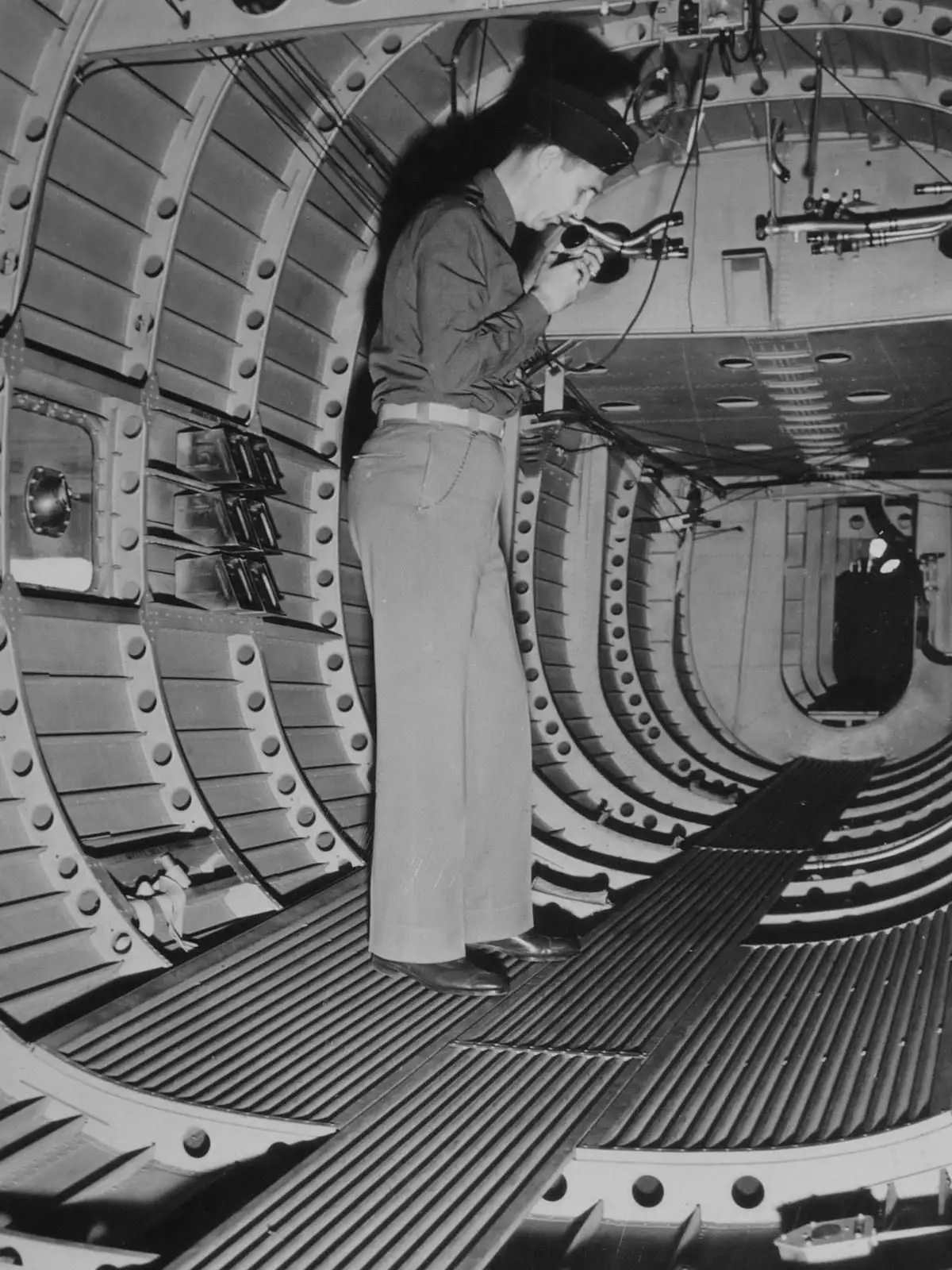
Farther aft were compartments for aerial cameras and a lower gun station with waist windows for heavy machine guns, followed by the rear upper turret bay. The fuselage tapered sharply toward the tail, yet crawl paths still reached auxiliary waist guns and the tail gunner’s position.
Testing and service
Full-scale flight testing of the XB-19 began almost at the same time as the Japanese attack on Pearl Harbor. The aircraft was repainted in the olive drab standard for U.S. Army Air Forces aircraft. In those days it was often seen over Los Angeles—evoking a sense of protection and air superiority, but also unease: why was the aerial giant circling Los Angeles instead of Tokyo? USAAF command had to issue a special statement that the machine was not operational but an experimental flying laboratory, and it asked the press to call it not B-19 but only XB-19.
On 23 January 1942 the XB-19 flew from the West Coast to the primary USAAF flight-test base, Wright Field, in the central United States. By then it had logged more than 70 flight hours. In June 1942, after factory trials and minor modifications, the U.S. Army Air Forces officially accepted the bomber. Over the next 18 months the Air Forces continued testing to evaluate the intercontinental bomber’s performance and gain operating experience. That mattered greatly because from 1940 a new generation of high-altitude heavy bombers with pressurized cabins, radar, and remotely aimed guns was in development: the medium-range Boeing B-29 and the intercontinental Convair B-36—roughly the same size as the XB-19.
The main problem that surfaced in testing was overheating of the rear cylinder row on the new Wright R-3350-5 engines. NACA cowl flaps had to be left wide open, cutting maximum speed from 360 to 330 km/h and range from 12,405 to 11,010 km. Test results showed the XB-19’s engines needed further development.
Technical data: Douglas intercontinental bombers
| Aircraft | Douglas XB-19 | Douglas XB-19A |
| Year of first flight | 1941 | 1943 |
| Crew, persons | 16–24 | 16 |
| Powerplant | 4 × Wright R-3350-5 | 4 × Allison V-3420-11 |
| Engine power, hp | 2000 | 2600 |
| Wingspan, m | 64.66 | 64.66 |
| Length, m | 40.31 | 40.31 |
| Height, m | 13.04 | 13.04 |
| Wing area, m² | 398.61 | 398.61 |
| Wing aspect ratio | 10.5 | 10.5 |
| Empty weight, kg | 38,330 | 41,950 |
| Takeoff weight | ||
| — normal, kg | 63,560 | 65,017 |
| — maximum, kg | 73,550 | 74,460 |
| Useful load fraction (normal TOW) | 0.40 | 0.35 |
| Wing loading, kg/m² | 159.5 | 163.1 |
| Power loading, kg/hp | 7.95 | 6.25 |
| Maximum speed (at altitude h), km/h | 360/330* (h = 4800 m) | 426 (h = 6100 m) |
| Cruise speed (at altitude h), km/h | 217/195* (h = 0) | 297 (h = 0) |
| Rate of climb at sea level, m/s | 3.3 | no data |
| Service ceiling, m | 7015 | 11,900 |
| Range | ||
| — with bomb load m, km | 11,745/8,400* (m = 2724 kg) | 6,758 (m = 1135 kg) |
| — maximum, km | 12,405/11,010* | — |
| Bomb load | ||
| — normal, kg | 8480 | 8480 |
| — maximum, kg | 16,980 | 16,980 |
| Defensive armament | 2 × 37 mm cannon; 5 × 12.7 mm machine guns; 4 × 7.62 mm machine guns | 8 × 12.7 mm machine guns |
* with engine cooling cowl flaps fully open
In 1943 paired liquid-cooled 24-cylinder Allison V-3420-11 engines rated at 2,600 hp each reached flight-ready status. The experimental aircraft also received other upgrades. Upper gun turrets were replaced with USAF-standard twin .50 cal mounts, though they were probably never actually fitted—no photos show the new armament. The hybrid electrical system gave way to a standard 24 V DC supply. Drum wheel brakes were replaced with discs.
The upgraded aircraft was designated XB-19A. Its powerplant was studied closely because the new high-altitude Allison V-3420-11s were planned for the B-39 bomber (a more powerful B-29 derivative) and the long-range P-75 fighter. With these engines XB-19A maximum speed rose from 360 to 426 km/h and service ceiling from 7,015 to 11,900 m—but fuel consumption also increased, cutting mission range with a bomb load to 6,758 km.
After the test program ended, XB-19A was converted to a transport; solid bulkheads aft of the cockpit were removed. For the next two and a half years it hauled various cargoes between Wright Field and several airfields in Ohio.
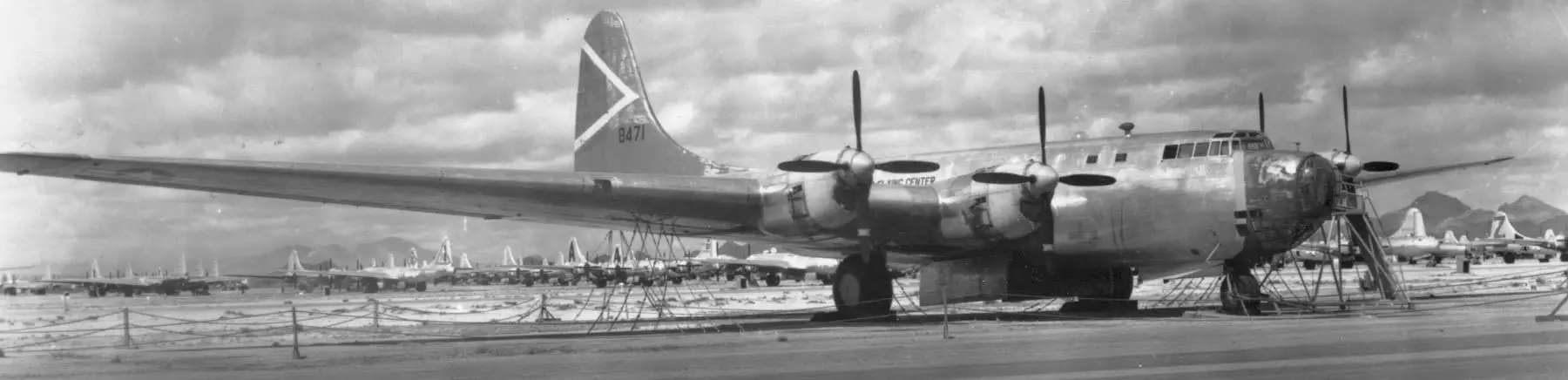
The world’s first intercontinental bomber made its last flight on 17 August 1946, flying from Wright Field to Davis–Monthan Field, Arizona, for storage.
It remained there three years. In 1949 it was scrapped. All that survived were two unique main landing-gear wheels: one is on display at the Hill Aerospace Museum, Utah; the other at the National Museum of the United States Air Force, Dayton, Ohio.
Modelist-Konstruktor No. 6/2025, Grigory Dyakonov, Cand. Sc., MAI
Recommend to read
 The Golden Collection
According to the “table of ranks,” the Gran Turismo class covers comfortable, high-speed cars in a sporting style, intended for long-distance travel on motorways. Soviet industry never... FIXTURE AUSTERE
The picture is not changing over the centuries: two sitting opposite each other, in the hands of one — tangle with pregen, at arm's length other — carefully straightened coil. Is it...
