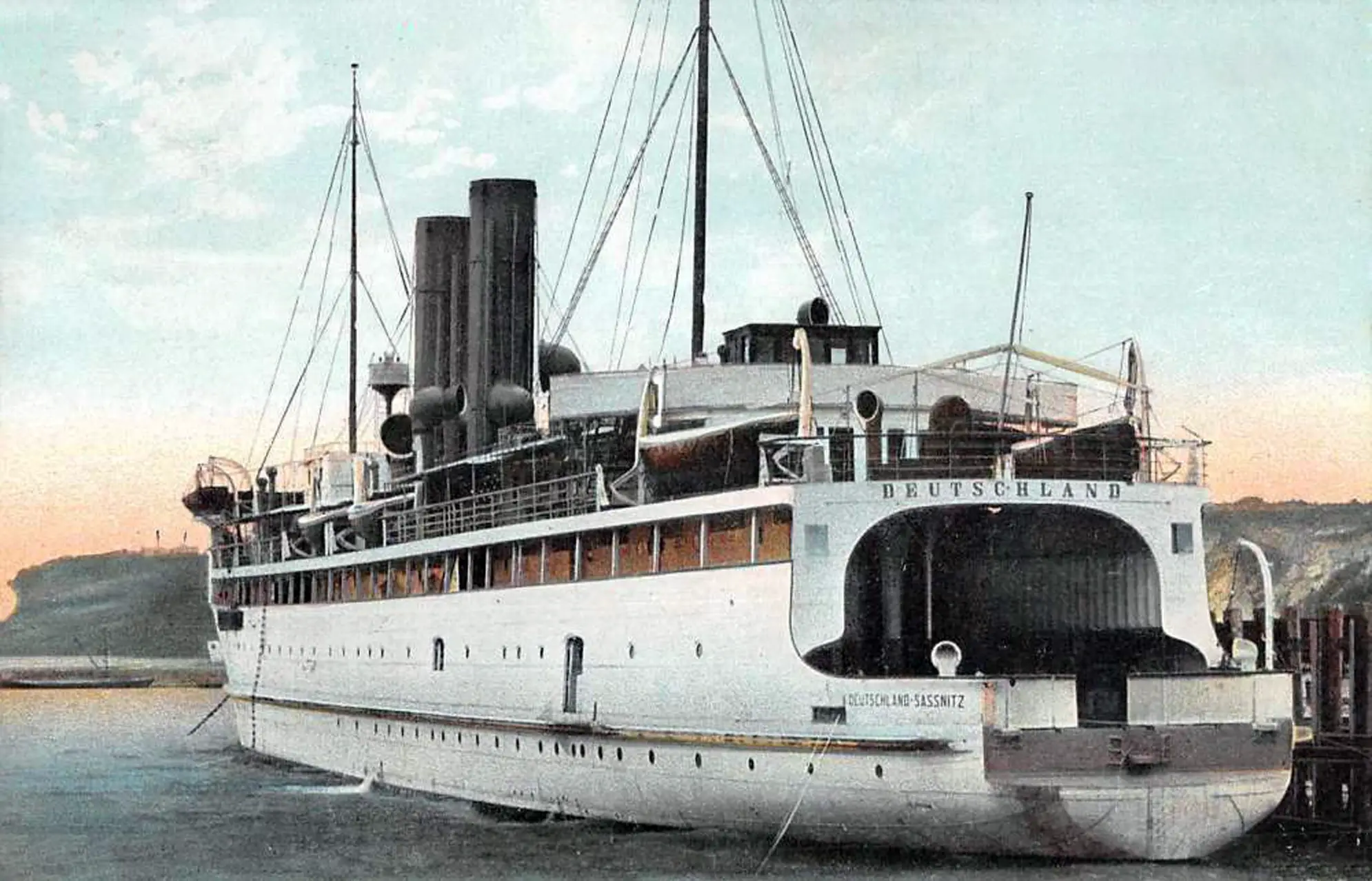
As a result of defeats in two world wars, Germany suffered not only human losses but also enormous economic damage. The German merchant fleet was not spared either. But if after World War I only its best part was divided among the victorious countries, then after World War II almost everything was taken from the defeated Third Reich. Many ships that had previously belonged both to Germany itself and to its allies replenished the merchant, fishing, and auxiliary fleets of the Soviet Union. Some had to be raised from the seabed and thoroughly repaired (for example, the same “Berlin,” which became “Admiral Nakhimov” in the USSR). Others arrived in our country in quite decent condition. Among them were two far from new railway ferries – the sister ships “Deutschland” and “Preussen.”
A small remark. In domestic literature, the names of these ships were written in different ways. “Deutschland,” for example, can be found as “Doychland,” “Deychland,” or “Doytshland,” and sometimes even translated as “Germany.” In this article, original names are used in all cases (except quotations, of course).
Ferries of the “Royal Line”
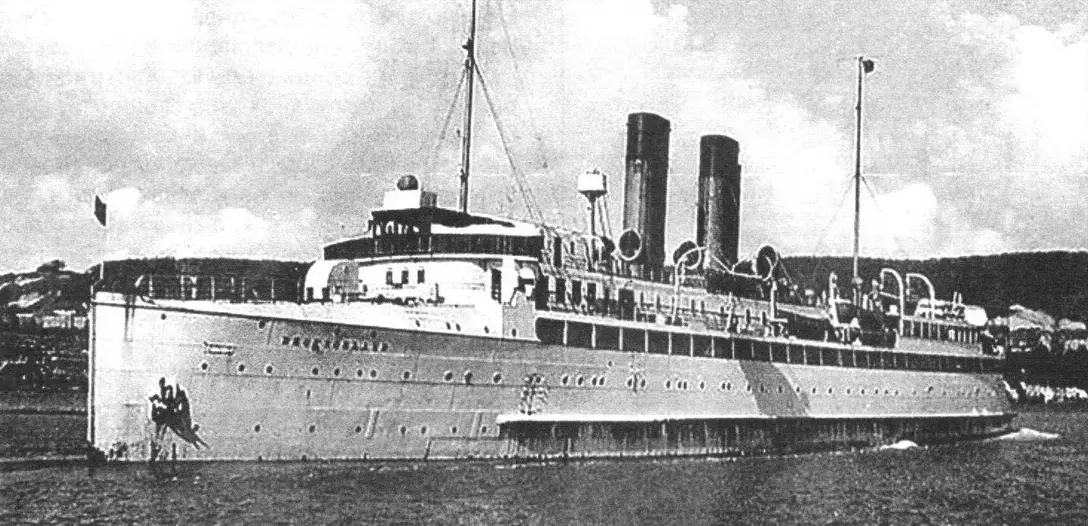
Regular sea service between German and Swedish ports began in the 19th century. On November 15, 1907, the two countries signed an agreement to establish railway-ferry communication. Under the agreement, each side had to build two ferries. The first of them was “Deutschland,” laid down in 1908 at the “Vulcan” shipyard in Stettin (yard number 292). The vessel was launched on February 17, 1909, and by July 7 it had already entered service on the Sassnitz-Trelleborg line. In honor of Wilhelm II, who was not only the German emperor but also the king of Prussia, and of Swedish monarch Gustav V, the route was named the “Royal Line” (“Konigslinie”). The crowned heads attended the celebrations marking the opening of the new ferry crossing. Wilhelm II arrived on the imperial yacht “Hohenzollern,” and Gustav V on the coastal defense ship “Oscar II.”
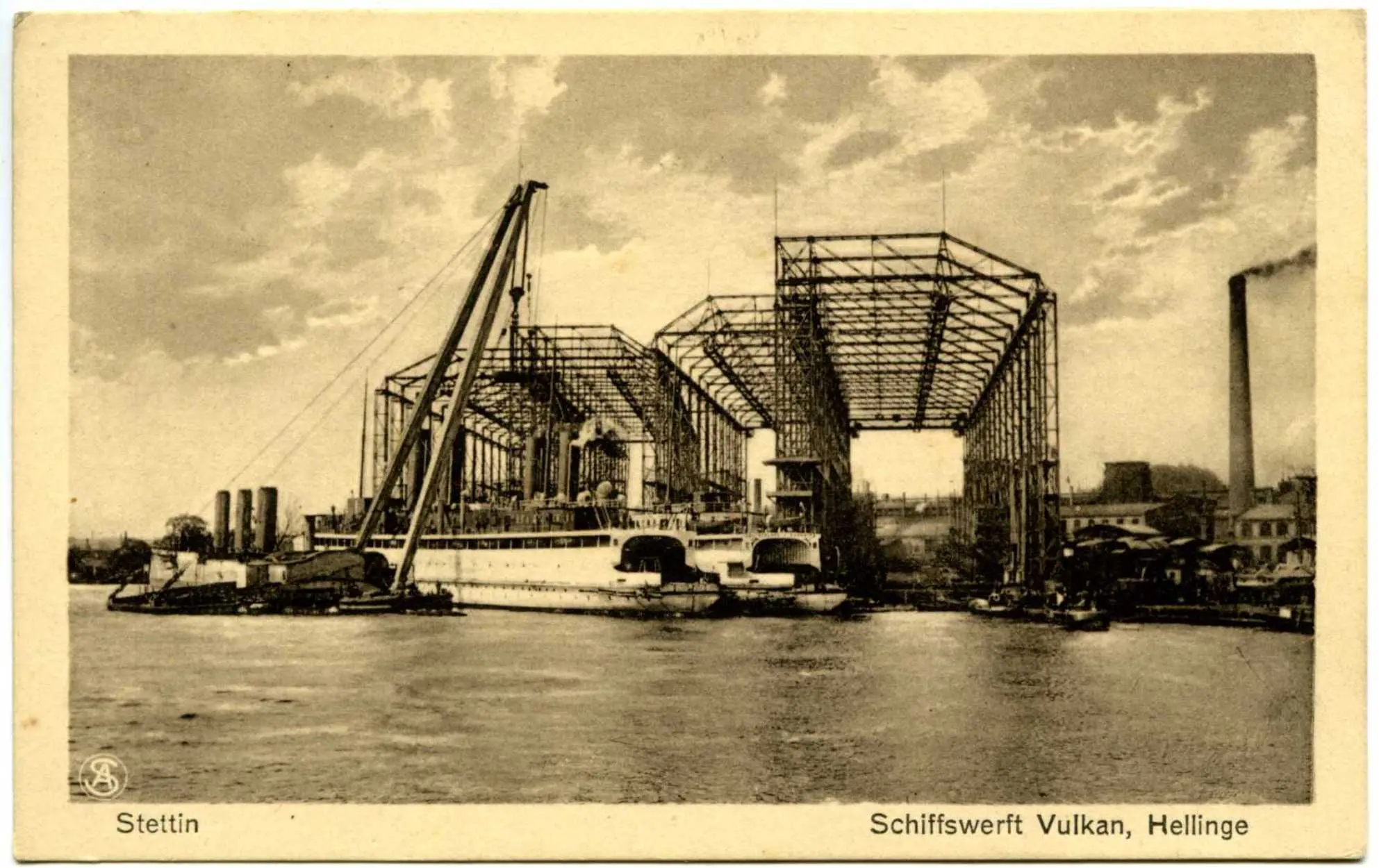
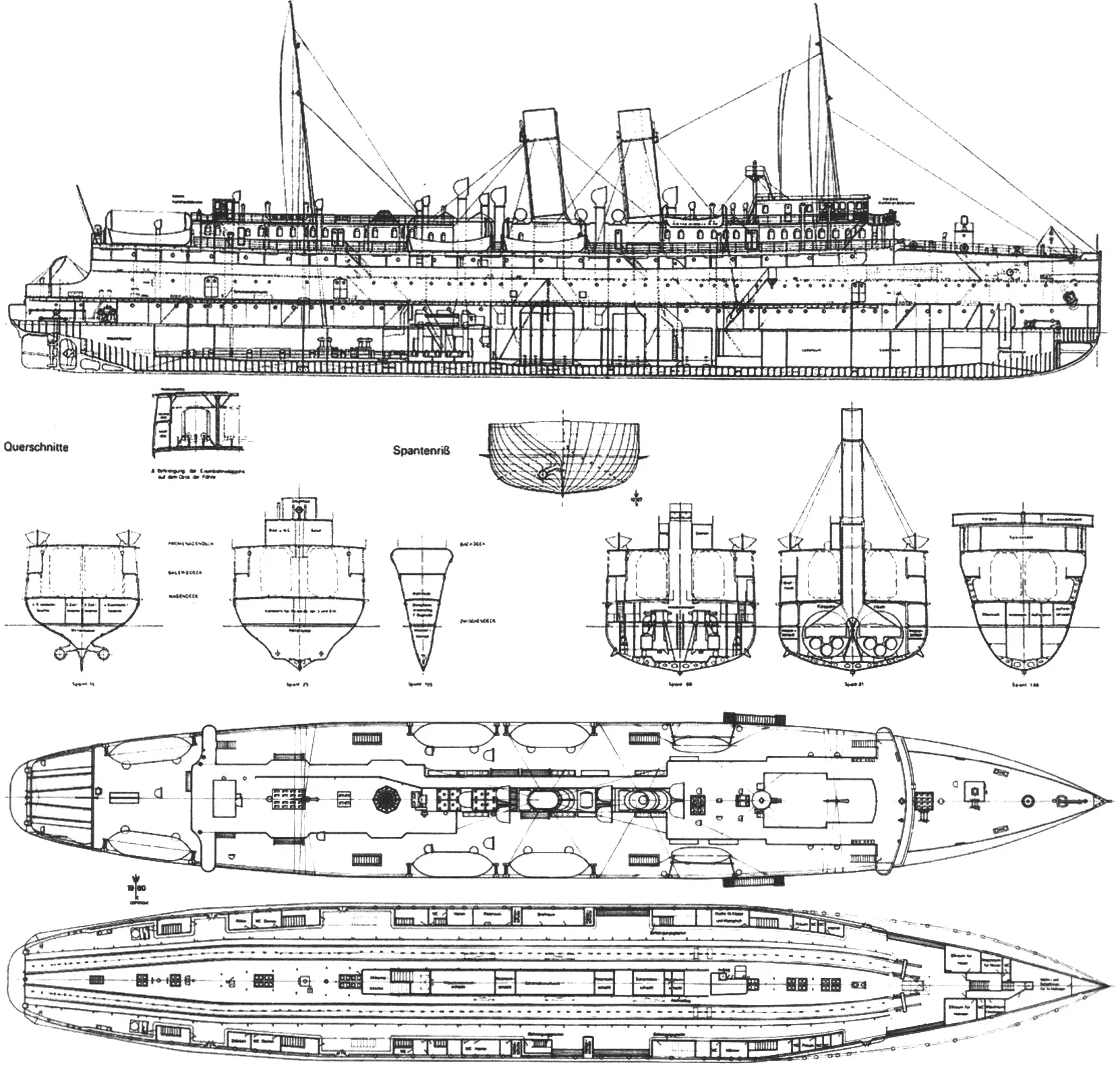
The two-deck “Deutschland” had the following characteristics: displacement 4,200 t, tonnage 2,847 GRT, overall length 113.8 m, beam 16.26 m, draft 4.9 m. Two triple-expansion steam engines with total output of 5,000 hp were supplied with steam from four cylindrical boilers with a working pressure of 12 atm. The engines drove two propellers, each 3.6 m in diameter. The normal coal supply was 210 t (with the possibility of taking another 160 t), maximum speed was 16.5 knots.
Since a railway ferry is not a transatlantic liner competing for the Blue Riband, in normal conditions its speed did not exceed 15 knots. The distance between Sassnitz port on the island of Rugen and Swedish Trelleborg is only 58 miles, and if the weather did not cause unpleasant surprises, travel time was about 4 hours.
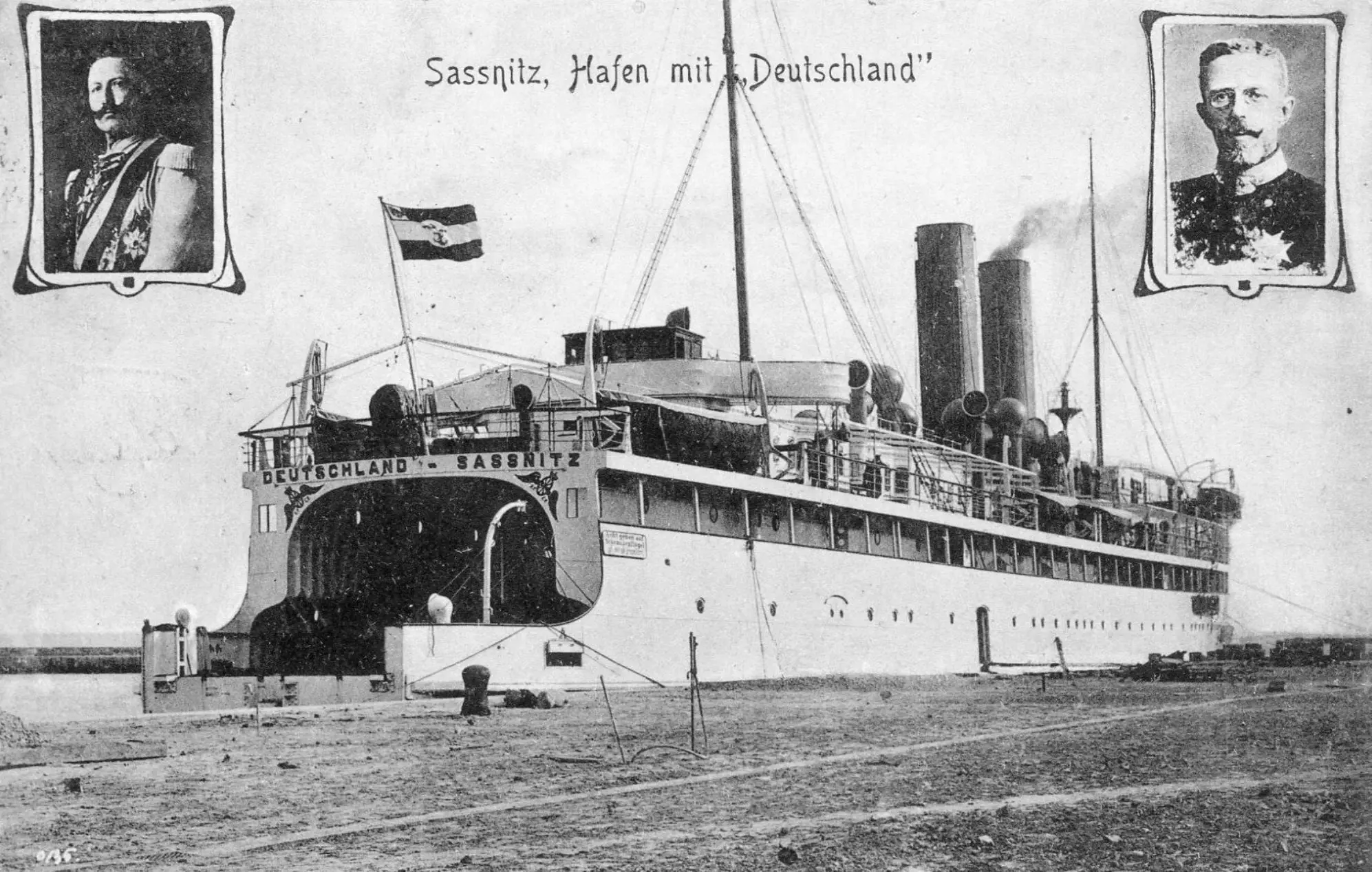
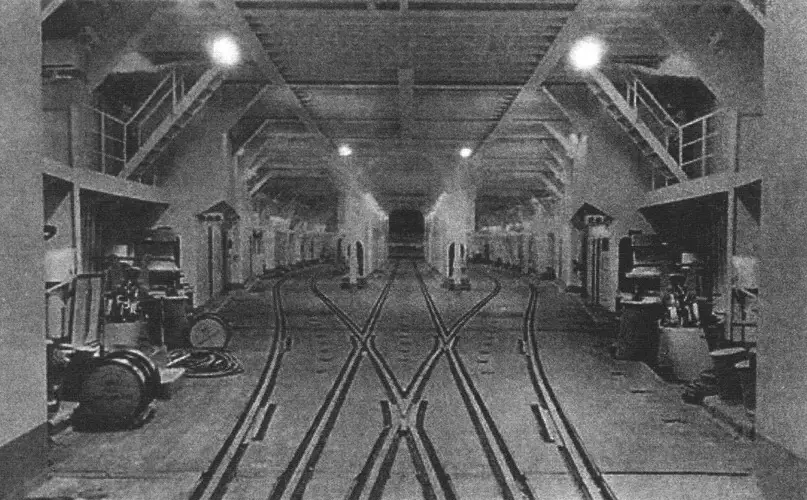
The ferry could carry 975 passengers. Length of railway tracks on deck: two tracks, about 80 m each. Number of freight railcars accepted: 18 (passenger coaches: only 6). A special railcar securing system was developed for safety. Loading and unloading were done only from the stern, which required a stern bridge from which the vessel was controlled during mooring. By the way, to ensure precise alignment of rail tracks on ship and shore, specially equipped berths had to be built.
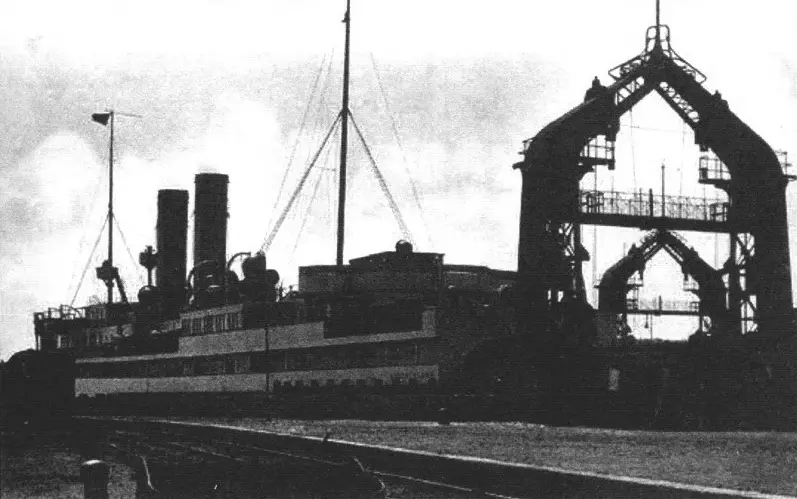
The second German ferry of the “Royal Line” was the sister ship “Preussen” (before German spelling reform, its name was written as “Preußen”), built at the same yard under No. 293. The Swedish vessels were named “Konung Gustaf V” and “Drottning Victoria,” and their characteristics did not differ much from the “Germans.”
In 1911, radio equipment was installed on both “Deutschland” and “Preussen.”
In the Kaiserliche Marine
In early August 1914, immediately after war was declared on Russia (but still before war was declared on Great Britain), German shipyards began converting civilian vessels into auxiliary minelayers. Some were intended for operations in the Baltic Sea. Among those armed in Kiel were “Prinz Valdemar,” “Prinz Adalbert,” “Deutschland,” and “Prinz Sigismund.” “Preussen” was also listed for mobilization, but its use as a minelayer was later abandoned, and it continued transport service.
As a warship, “Deutschland,” which retained its original name (one of the most common in the German fleet), received artillery armament of four 8.8 cm and two 5 cm guns. Mine capacity was 420. But at the beginning of the war, its mine stock was 200, intended for possible “blocking” of the Belt. That was not required, and in mid-August the former ferry was sent to lay an offensive minefield in the Gulf of Finland (for details see “M-K” No. 4-2025). Sending a relatively slow ship into enemy waters should frankly be considered an adventure, but the Germans were lucky: Russian cruisers, which had a significant artillery advantage over the escorting force, did not engage in battle. The result was the loss of two “merchantmen” under Dutch flag, and then three Russian minesweepers.
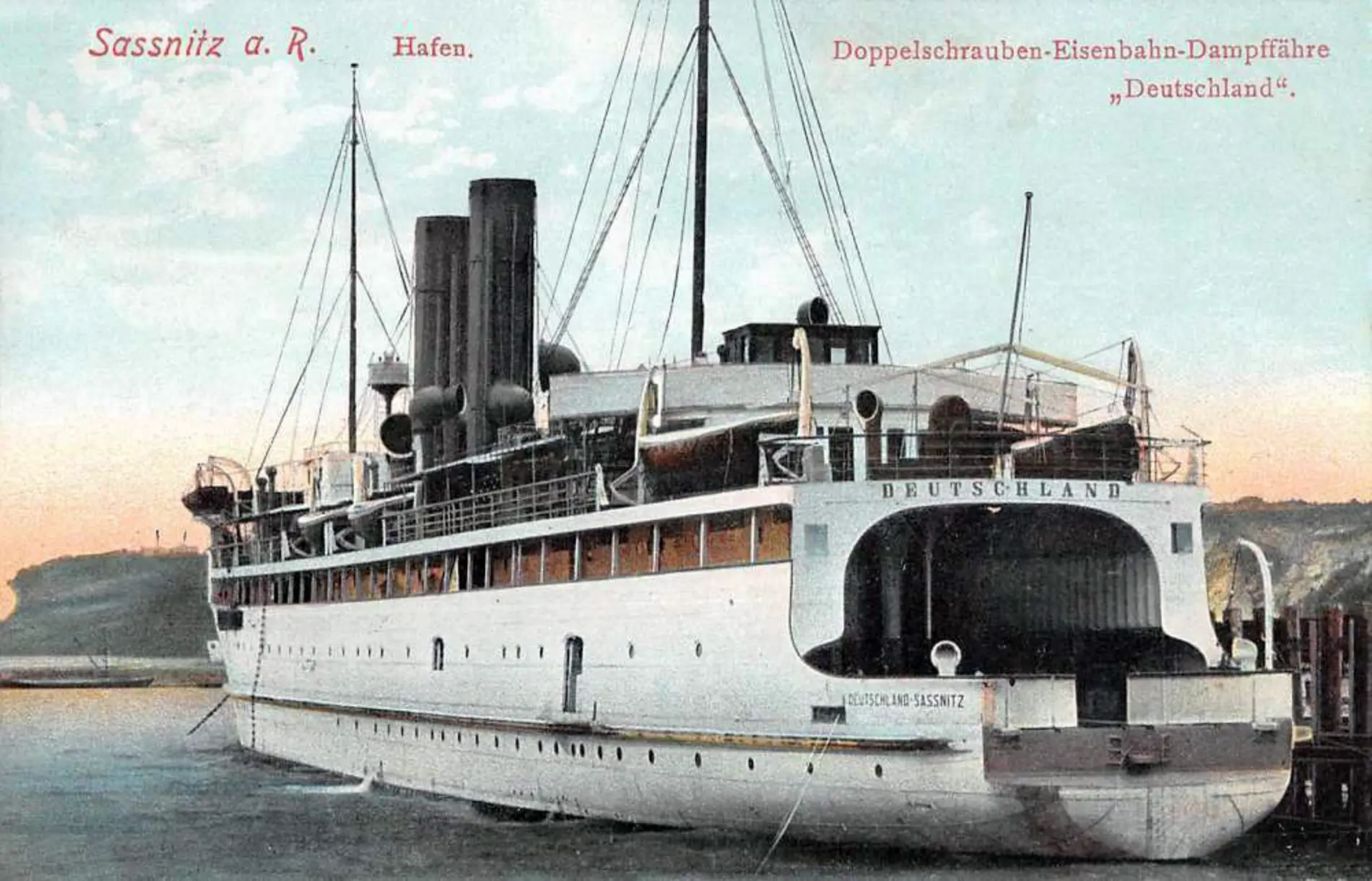
In late autumn 1914, German high command became seriously concerned about military supplies to Russia through Finnish ports. To stop (or at least reduce) the cargo flow coming from Sweden, the Germans decided to lay a large minefield in the Gulf of Bothnia, blocking Raumo and Mantyluoto (the harbor of Bjorneborg). The mission was assigned to “Deutschland.”
In I.A. Kireev’s book “Minesweeping in the Baltic Sea During the War of 1914-1917,” interesting details are given about preparation and execution of this mine operation: “The commander of ‘Deutschland’ was considered an experienced navigator, but still, through admiralty staff, three pilots familiar with local conditions were provided to assist him, and they indeed brought great benefit during the operation. It must be assumed these could only have been Finnish pilots recruited by German intelligence. Indications of assistance provided by Finnish pilots to the Germans are also found elsewhere and in other sources…
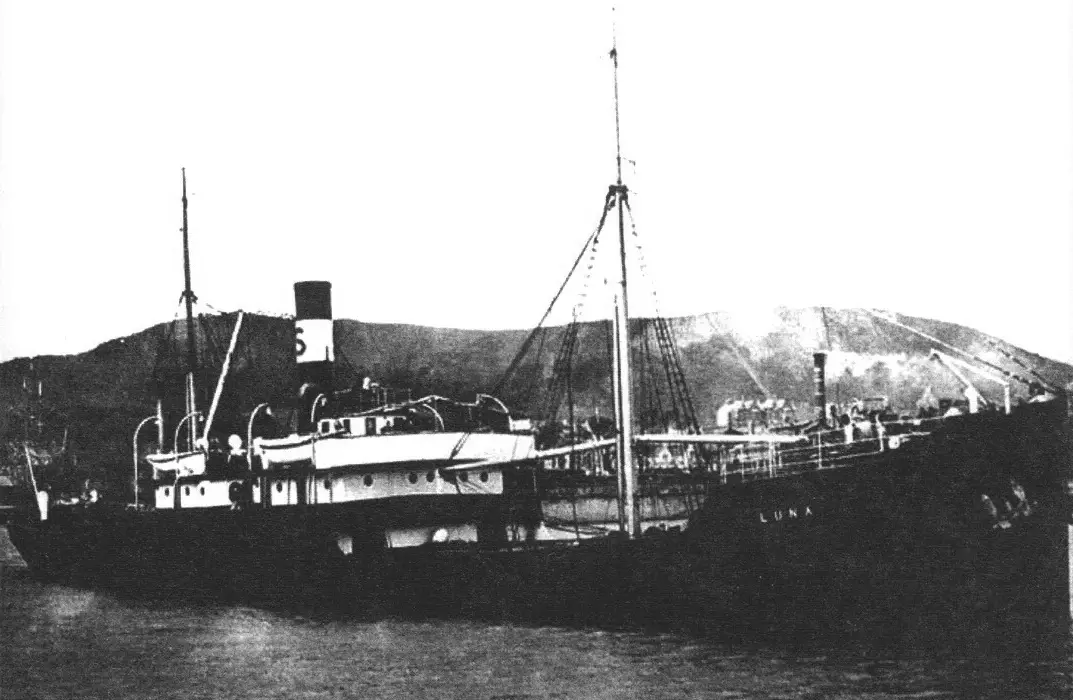
The barrage was laid on December 6 before dawn, and a few hours later Swedish steamers ‘Luna’ and ‘Everilda’ exploded at the entrance to Mantyluoto. From one vessel the entire crew escaped in boats, while from the other only one person was rescued. The next day a third steamer, ‘Nora-Sverige,’ exploded there as well; it ignored energetic warning signals from the lighthouse and port motor boats that came out to meet it, stubbornly proceeded into the minefield, exploded, and sank within 2 minutes with all hands. The boats did not risk approaching to rescue people because the mines were set almost at the surface.”
Unfortunately, in this case “Deutschland” acted very effectively. The barrage it laid not only caused serious losses, but also actually led to suspension of steamship communication with Sweden: “The ‘Deutschland’ laying in Bothnia in December resulted in loss of three Swedish steamers, which affected communication maintained with Sweden.” This caused “strong concern in Petrograd” and forced Russian command to send significant forces to the Gulf of Bothnia to eliminate the mine threat. Although minesweepers avoided losses during extremely difficult winter operations in Bothnia, among covering ships the gunboat “Grozyashchiy” and destroyer “General Kondratenko” were damaged in navigation accidents.
In spring and early summer 1915, the auxiliary minelayer again laid mines in various Baltic areas. In particular: April 15 – 180 mines near Dago Island; May 24 – 214 mines at the entrance to the Gulf of Finland; on the night of June 13-14 – 580 mines together with minelayer “Albatros” at the entrance to Irben Strait. In late June and early July, the ferry briefly returned to “its specialty work”: delivering locomotives and railcars to German-occupied Libau. On one voyage, June 28, it ran aground not far from Sassnitz, but after 3 hours got free on its own without damage. At the end of July, when another batch of locomotives and railcars had to be transported, “Preussen” was used – it was temporarily transferred from the Sassnitz-Trelleborg ferry line.
In August 1915, “Deutschland” took part in one of the largest German fleet operations in the Baltic during World War I – the Battle of Irben. It should be noted that the initial breakthrough plan looked fairly modest. It was planned to involve armored cruiser “Roon,” two light (small) cruisers, two newest destroyers V-99 and V-100, a half-flotilla of older torpedo boats, and our “main hero” with a mine stock. It was to lay a barrage near Moon Sound.
In the end, however, everything turned into a multi-day large-scale battle in which both sides suffered considerable losses, while the breakthrough of German ships into the Gulf of Riga proved completely useless (the only significant result was the loss of Russian gunboats “Sivuch” and “Koreets,” since blocking Pernov port with blockships made no sense). “Deutschland” entered the gulf but did not lay mines.
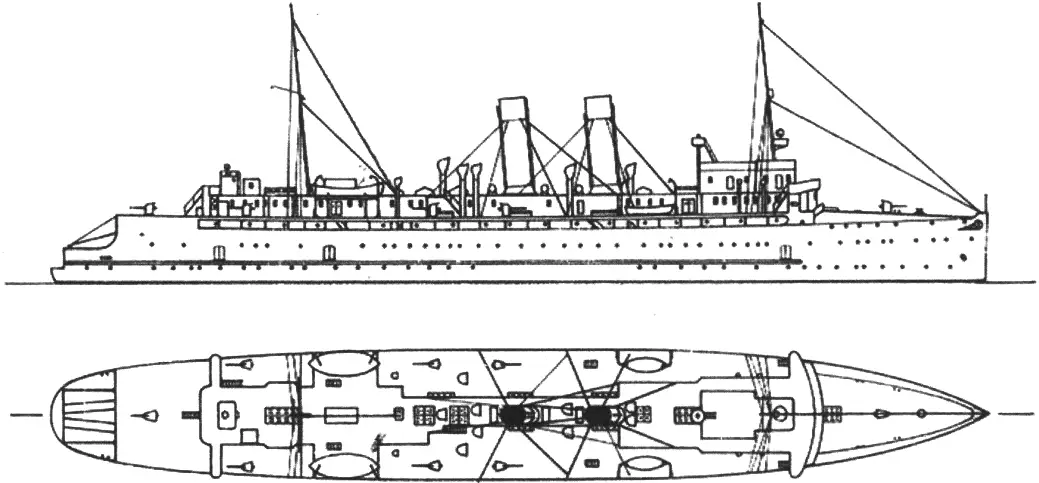
In D.Yu. Kozlov’s book “Battle for the Gulf of Riga. Summer 1915,” German fleet actions are assessed as follows: “According to Rear Admiral G. Hebbinghaus’s plan, two torpedo boats were to block the exit from Small Sound, a third to lay mines off Kuivast, and commander of ‘Deutschland,’ Fregattenkapitan Rosenberg, was ordered to lay a barrage south of the Paternoster-Verder line, with a total of three hundred mines available. However, the commander of the ‘breakthrough forces’ abandoned sealing off Moon Sound after only half an hour, once German minelaying group was detected by Russian destroyer patrols and after their short exchange of fire with cruiser ‘Pillau.’ Obviously, E. Schmidt quite rightly concluded that appearance of auxiliary minelayer ‘Deutschland’ (converted from a cargo-passenger ferry) with its very distinctive silhouette in sight of Russian patrol ships would reveal Hebbinghaus’s plan, making active mine-laying pointless. It is very strange that this obvious circumstance was not considered by German command at the planning stage.”
On August 20, an attempt was made to block Moon Sound after all. Early in the morning, the formation that included “Deutschland” moved toward the strait, but the operation was soon canceled. The main reasons cited are presence of a Russian submarine (apparently, German torpedo boats spotted “Minoga”) and mine danger. The same day, German ships began leaving the Gulf of Riga. Accompanied by torpedo boats, the ex-ferry also headed for Lyserort. On the 21st, it went to Libau.
In fact, this was the end of the auxiliary minelayer’s combat service. In October, due to repair of sister ferry “Preussen,” it was “detached” for 8 weeks to serve the Sassnitz-Trelleborg line. Thereafter, until the end of the war, it did not participate in active operations.
Two interwar decades
In mid-January 1919, demobilized “Deutschland” returned to “civilian life.” After thorough repairs, the vessel was used for some time on various routes, including Stettin-Pillau and Stettin-Stralsund, and then returned to the “Royal Line.”
Among notable events of this period were repeated problems caused by cold weather and persistent ice cover in the western Baltic. In 1924, “Deutschland” and “Preussen” became stuck in ice for a long time. To assist them, the Weimar Republic navy sent old battleship (pre-dreadnought) “Braunschweig” as an icebreaker, but it failed. The Swedish icebreaker “Isbrytaren II” had to free the “Germans” from ice captivity (renamed “Sankt Erik” in the late 1950s, now a museum ship in Stockholm). During forced ice standstill, ferry hulls received some damage.
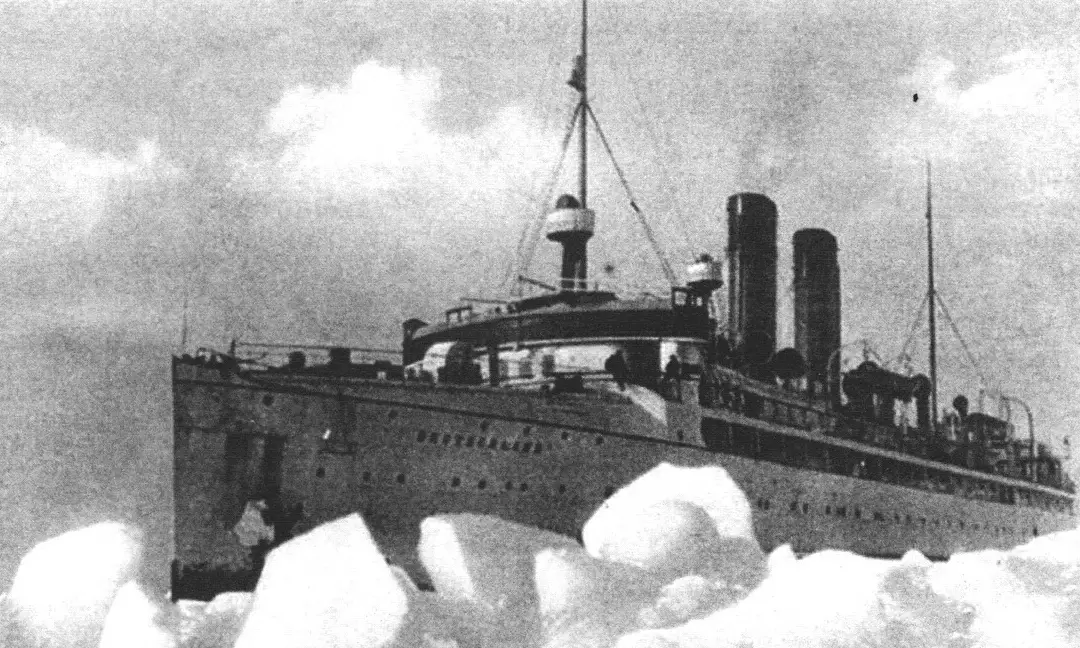
“Deutschland” did not avoid navigation accidents either: on January 18, 1929, the vessel ran aground near Trelleborg. But it ended relatively well. The next day Swedish rescuers refloated the ferry, after which it went to Kiel for repairs. In the same 1929, ferries – this time “Preussen” and Swedish “Drottning Victoria” – again had to force their way through ice with great difficulty; their crossing took about ten times longer than usual. This prompted administration of the “Royal Line” to consider need for an icebreaking ferry. In 1931, such a vessel entered service – “Starke,” built in Germany and outfitted in Sweden (its history deserves separate coverage).
Historians also noted another interesting fact related to 1931. That was when automobiles began to be carried on Baltic ferries – before that they could only be transported loaded onto railway platforms.
Besides its “main job” on “Konigslinie,” ferry “Deutschland” was sometimes used on other routes as well. In particular, in 1933-1938 it repeatedly sailed on Kiel-Swinemunde-Pillau route, linking main Germany with East Prussia, which had been cut off by the Polish Danzig Corridor.
During World War II
During the war, “Deutschland” again became part of the German navy. It was mobilized on August 18, 1940, and a few days later renamed “Stralsund.” In early September it went to Wilhelmshaven for conversion – the ex-ferry was prepared for Operation “Seelowe” (“Sea Lion” – codename for planned invasion of England). But on September 25, “Stralsund” was damaged by a British aerial bomb, and after repairs in early November it was disarmed, transferred to railway administration (Deutsche Reichsbahn), and returned under its former name to Sassnitz-Trelleborg line.
October 1942 almost became fatal for ferry “Deutschland.” On the 19th it was attacked by submarine D-2 “Narodovolets” under command of Captain 3rd Rank R.V. Lindenberg. In official publication (classified “Secret” until 1989) “Chronicle of the Great Patriotic War of the Soviet Union in the Baltic Sea and Lake Ladoga. Issue III. Part 2 (September 1-December 31, 1942),” attack circumstances are described without extra emotion: “Submarine ‘D-2,’ while on station west of Bornholm on approaches to port of Trelleborg, at 17:28 on bearing 189 degrees detected a convoy consisting of two railway ferries, an auxiliary cruiser, and five patrol ships moving toward Swedish coast. The boat began attack, broke through escort, and at 17:55 at lat 55°11.9′, long 19°15.1′ (10 miles southwest of Smygehuk lighthouse) fired a two-torpedo salvo at the lead ferry, then dived. One minute later, two explosions were heard aboard ‘D-2.’ Shortly afterward escort ships began dropping depth charges. The boat continued withdrawing at depth from attack area, and all 16 depth charges dropped by the enemy fell aside. Movement at depth did not allow the submarine commander to observe attack results. Later our intelligence established that ‘D-2’ attacked German railway ferry ‘Deutschland,’ one torpedo hit it; Swedish ferry following in ‘Deutschland’s wake turned away from second torpedo. Both ferries were carrying units of Norwegian Legion from Eastern Front for rest. ‘Deutschland,’ heavily damaged, was towed to Swedish port of Trelleborg and put there for repairs.”
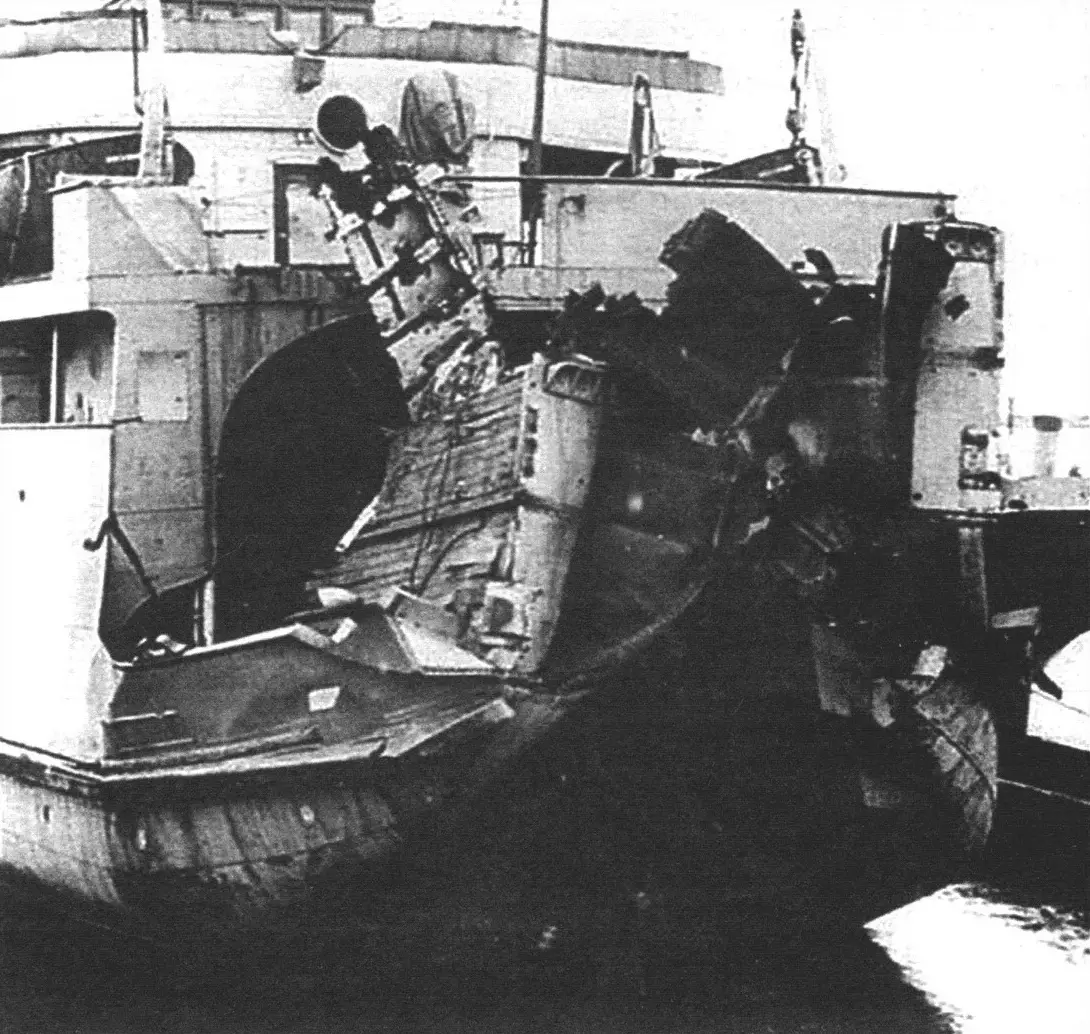
The Soviet torpedo hit the stern, which was heavily damaged by the explosion (including propellers and rudder). Damaged “Deutschland” was towed to Trelleborg and then moved to Malmo, where at Aktiebolag Kockums Mekaniske Verkstad AB shipyard it underwent repairs and modernization – not only was damage repaired, but new boilers were installed. Work proceeded quickly, and by late February (or mid-March) 1943, “Deutschland” returned to German merchant fleet service. It remains to add that the Swedish ferry that avoided torpedo hit on October 19 was “Konung Gustaf V,” commissioned in 1910. By silhouette, by the way, the “Swede” resembled “Deutschland” and “Preussen.”
Losses on the attacked vessel were 24 killed and 29 wounded. In M.E. Morozov and K.L. Kulagin’s work “The First Submarines of the USSR,” somewhat different numbers are given: “…five soldiers were killed, 20 soldiers and two civilians went missing, most likely jumping overboard during panic, and 27 servicemen and six civilians were wounded.” But Swedish press greatly exaggerated military losses, and as a result of uncritical approach by Soviet historians and propagandists, domestic literature entrenched a “legend” about death of huge numbers of “enemies.” A typical example reads: “On October 19 west of Bornholm Island she [D-2 – author’s note] attacked a convoy and damaged railway ferry ‘Deutschland’ with a torpedo; troops were aboard, being sent from Eastern Front for rest. On torpedo impact, a powerful explosion occurred. A column of fire, smoke and water shot high into the air, debris of superstructures scattered far and wide. About 900 fascists were killed, including one of the traitors of Norwegian people, Quisling’s deputy prime minister. This daring attack caused such panic among Germans that naval command transmitted in plain text to all transports in southern Baltic an order to immediately shelter in nearest ports and prohibited movement west of Bornholm for several days.”
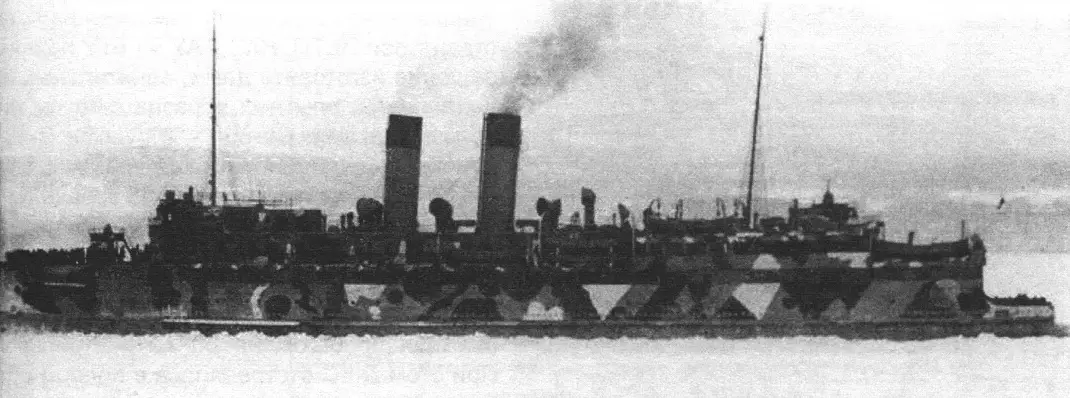
As far as can be understood, the person presented as “Quisling’s deputy prime minister” was prominent Norwegian collaborator and minister of culture and public education in the pro-German government – Gulbrand Oscar Johan Lunde. However, this man’s fate is well known: on October 25, 1942, he died when his car fell into the sea from the quay of ferry pier Vage on the shore of Romsdalsfjord (Lunde’s wife and personal driver died with him).
At the end of the war, “Deutschland” took part in evacuation transport from East Prussia, and after Germany’s capitulation it came under British control in Danish port of Sonderborg. Then the ship was placed under Reichsbahndirektion management, and until March 1946 it participated in repatriation of Germans from Norway and Sweden (to Travemunde), and also Poles – from Lubeck to Gdynia.
There are mentions that the “unfavorable” name Deutschland (“Germany”) was at some point changed to “Orion,” but reliability of this event is questionable.
Liner “Aniva”
On March 12, 1946, “Deutschland” was handed over to the Soviet Union as reparations; the transfer took place in Lubeck. The next day the red flag was raised on the ferry, and it was renamed. It now became “Aniva” – after a city on Sakhalin.
After repairs and preparation for voyage around Eurasia, “Aniva” departed for the Far East. Modern authors especially note: “During the passage, several Soviet scientists were aboard; after passing the Suez Canal, they conducted regular meteorological and actinometric observations in the active layer of the Indian Ocean to depths of 500 m. They collected very valuable material from the little-studied northern part of the ocean.”
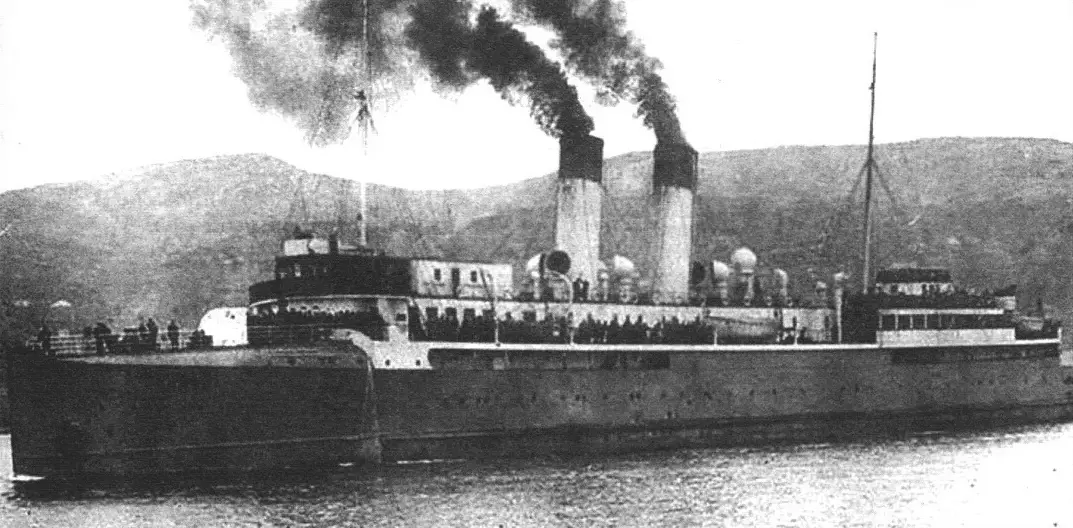
In the Far East, the former “German” was first used as dormitory for cadets of Vladivostok Higher Maritime School, then included in Sakhalin Shipping Company. As a cargo-passenger vessel, “Aniva” operated on Vladivostok-Kholmsk line, and in 1950-1951 underwent major overhaul in Vladivostok. After completion, the ferry, with passenger capacity up to 100 people, was transferred to Far Eastern Shipping Company. The ship’s service (its boilers were never converted to liquid fuel) continued until the end of the decade.
Unfortunately, reliable information about how passenger vessel “Aniva” sank is scarce. Even such a serious author as Yu.N. Trifonov in reference book “Merchant Fleet Vessels of Germany, Finland and Romania Transferred to the Soviet Union After World War II” gave a “romantic” but inaccurate version: “In 1959, on one voyage ‘Aniva’ struck reefs and sank. Underwater the vessel lay on port side with list up to 40 degrees. The shipping company’s salvage and underwater technical works unit had first to level the vessel on the seabed, then raise and keep it afloat. In May 1960 these works were successfully completed and ‘Aniva’ was towed to Nakhodka ship repair yard.”
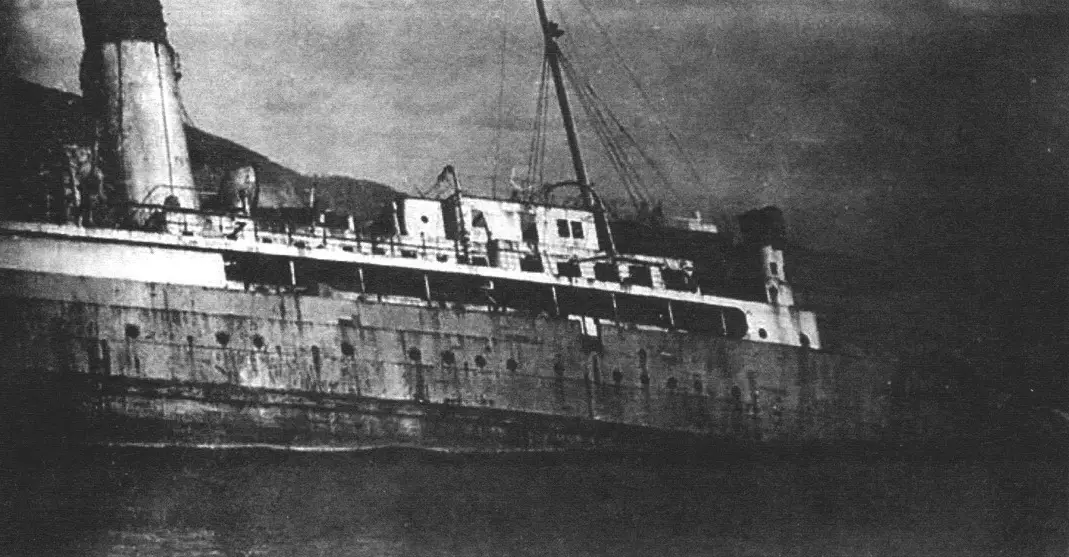
In fact, the former German ferry was sent for repair in 1959 – exactly to Nakhodka, to the local ship repair yard. In the yard waters, the vessel sank. According to the most plausible version – because of negligence of the watch service. In June 1984 in Vladivostok, one of the authors of this article heard about “Aniva’s” sinking from a “real old sea wolf” (a merchant fleet veteran who had sailed on Far Eastern Shipping Company vessels). His story cannot be printed in a magazine for censorship reasons – it was Fisherman’s Day, and the recollections were full of obscenities. But overall they can be reduced to a clear statement: the steamship was sunk “in a drunken mess.”
Rescuers did indeed right “Aniva” and refloat her, but no one pursued serious repairs afterward. The vessel was used for some time “for economic needs of Nakhodka ship repair yard” (as a dormitory-hotel for workers and dockers), and in 1963 it was scrapped.
“Modelist-Konstruktor” No. 6’2025, Boris SOLOMONOV, Pavel SOLOMONOV
Recommend to read
 BOAT-SAMOLETY
The student design Bureau of our universities and colleges had a lot of interesting technical innovations. Most of them are audacious alloy of thought and rigorous scientific analysis.... NAILS IN “REVOLVER”
Small glass jars with screw-caps will be useful not only to the host for storage of spices, but also the house master — for small fasteners. On racks stand will strengthen the rotating...
