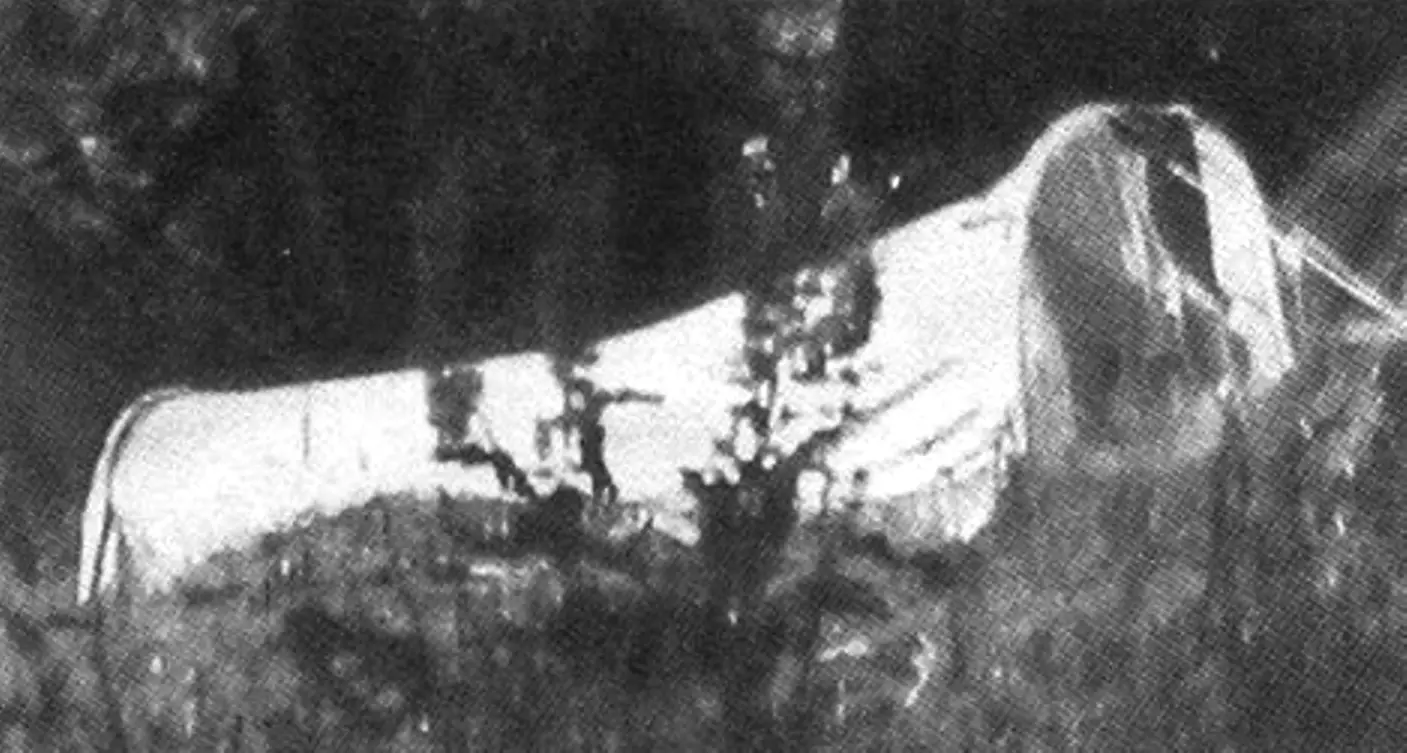
Dedicated to friends of my student years. I was lucky in my youth — I joined the flow of student hiking life.
On the wave of rapid growth among teachers of mountain sports hiking at our Kurgan machine-building institute, among students there also formed groups for the more accessible pedestrian “lowland” tourism.
Inside these new teams — one of which I was part — its own pre-trip social life began to bubble up. Everyone found a role matching their interests and skills. The leader planned the route. The quartermaster drew up the food list and estimated the cost. The sports officer ran training sessions and weekend hikes. The girls wrote songs and brightened up camp life. And I, a hobbyist tinkerer, came up with designs: tents, storm shells, backpacks, and covers for camping gear. I sewed them myself and involved other group members in the work.
In those years (in the early 1980s), in addition to “pamyorka” and “soldier” tents, frame tents of the “freight-wagon” type appeared. Such tent designs were especially valued — for their larger interior volume and simpler setup — by both ordinary hikers and rock climbers.
But buying such a hiking tent back then was not easy — they were very rarely on sale! On the other hand, getting khaki canvas for the floor and even thin capron fabric for the walls and roof was not a big problem. So people sewed the tents themselves.
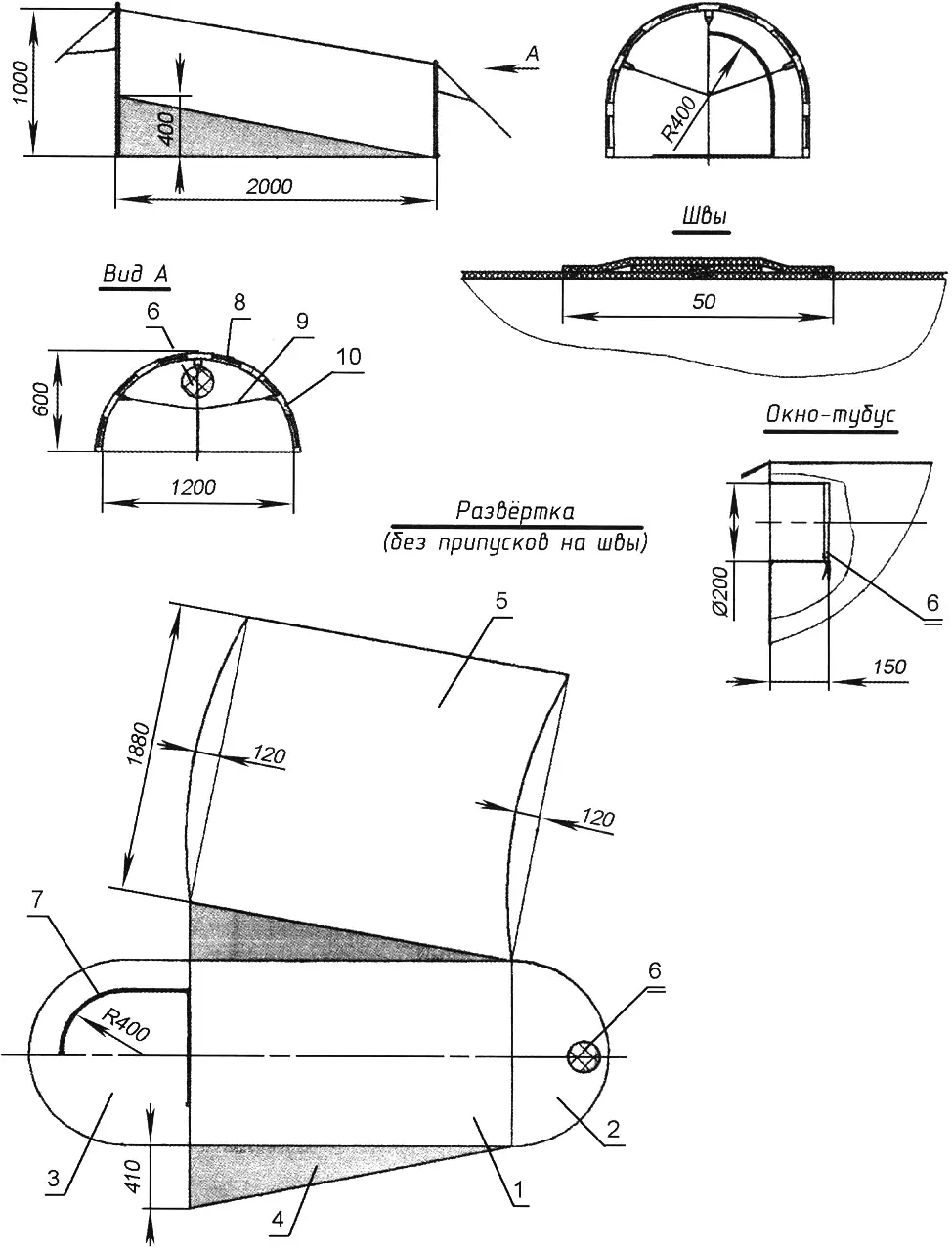
1 — floor (waterproof fabric — canvas); 2 — rear wall (waterproof capron material); 3 — front wall (waterproof capron material); 4 — side panel (waterproof capron material, 2 pcs.); 5 — roof (waterproof capron material); 6 — window (fine-mesh capron netting); 7 — entrance zipper; 8 — rear frame member; 9 — guy line with branches (capron cord, 2 pcs.); 10 — peg point (2 pcs.)
“Furgon-1” was designed and sewn as a birthday gift for my friend Nikolai. He was single and a great lover of nature. He lived almost the whole summer in a tent: sometimes at an apiary, sometimes by a river, sometimes on hikes in the Ural Mountains.
The “Furgon-2” version is heavier than the first model, which is not great: as A. V. Suvorov said, in hikes even a needle has weight! But it is easier to make.
Main parts: floor, front wall, rear wall, roof with side panels, and tubular frame arcs (elements).
Tent materials: thin capron for the walls and dense waterproof canvas for the floor.
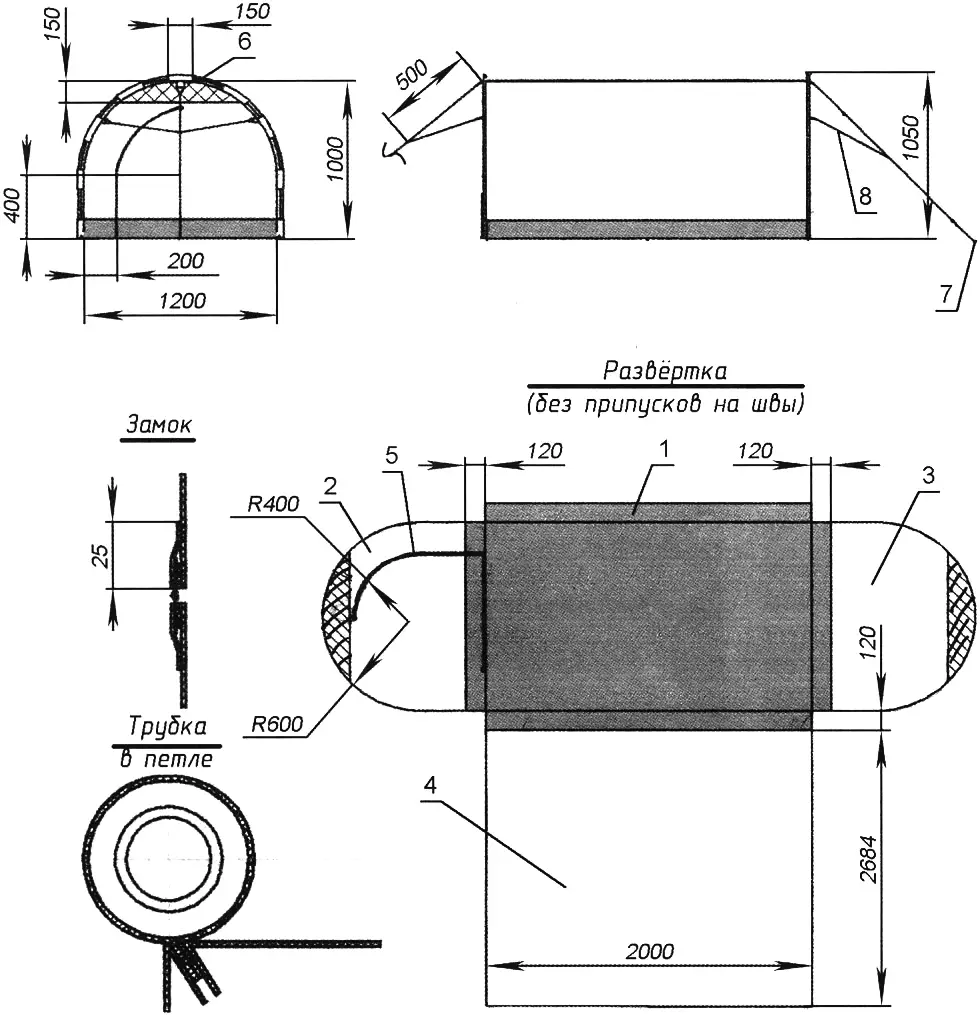
1 — floor (waterproof fabric — canvas); 2 — front wall with window (waterproof capron material); 3 — rear wall (waterproof capron material); 4 — roof (waterproof capron material); 5 — large-tooth capron zipper; 6 — frame element (2 pcs.); 7 — peg (2 pcs.); 8 — guy line with branches (capron cord)
Assembly order:
– cut out all parts;
– sew the floor;
– install the zipper in the front wall;
– sew the window netting into the rear wall;
– attach the floor to the side walls, and the side walls to the roof;
– sew the front and rear walls to the side walls and roof, inserting loops in the seam for the frame tubes and for the guy cords.
On the trail, pegs can be replaced with stones.
Low weight, easy setup, and a polyethylene cover created relative comfort in camp life.
The floor area of 1200×2000 mm is sized for roomy solo use or cozy quarters for two.
In that layout, a vestibule for gear and footwear sat under the polyethylene cover.
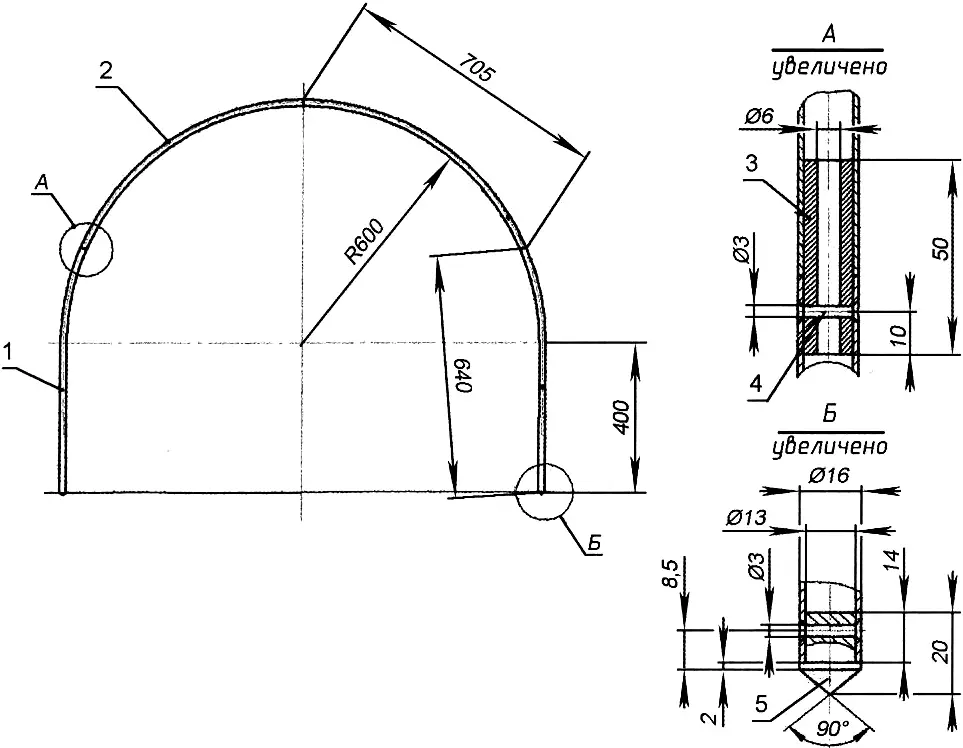
1 — upright (duralumin tube Ø16×2, 2 pcs.); 2 — arch (duralumin tube Ø16×2, 2 pcs.); 3 — insert (duralumin, round bar 14, 3 pcs.); 4 — rivet (duralumin, Ø3, 5 pcs.); 5 — conical tip (duralumin, round bar 14, 2 pcs.)
With a basic drawing, anyone can adjust the dimensions to their height and shoulder width.
The design’s economy is guaranteed by the fact that it came from penniless student years, while its practicality was tested long ago by nomadic Roma.
After graduation, young tourism specialists spread sport and recreation tourism across different cities of the USSR.
Today there is no shortage of materials, hardware, or sewing machines. So I advise people with skilled hands to sew a homemade tent tailored to themselves. You will have something to be proud of among friends and remember for a lifetime.
Modelist-Konstruktor No. 9’2011, A. MATVEYCHUK
Recommend to read
 THE PUMP WILL NOT BE LOST
I am fond of Cycling. Repeatedly convinced of the unreliability of fastening of the pump on the frame. Making a simple revision, I solved this problem once and for all. Perhaps my... COLLET — FOR APPLES
There are many strippers in order to make a simple, common operation is to move the Apple from the branch to the basket. Here's another one. To do so is not difficult: you need only a...
