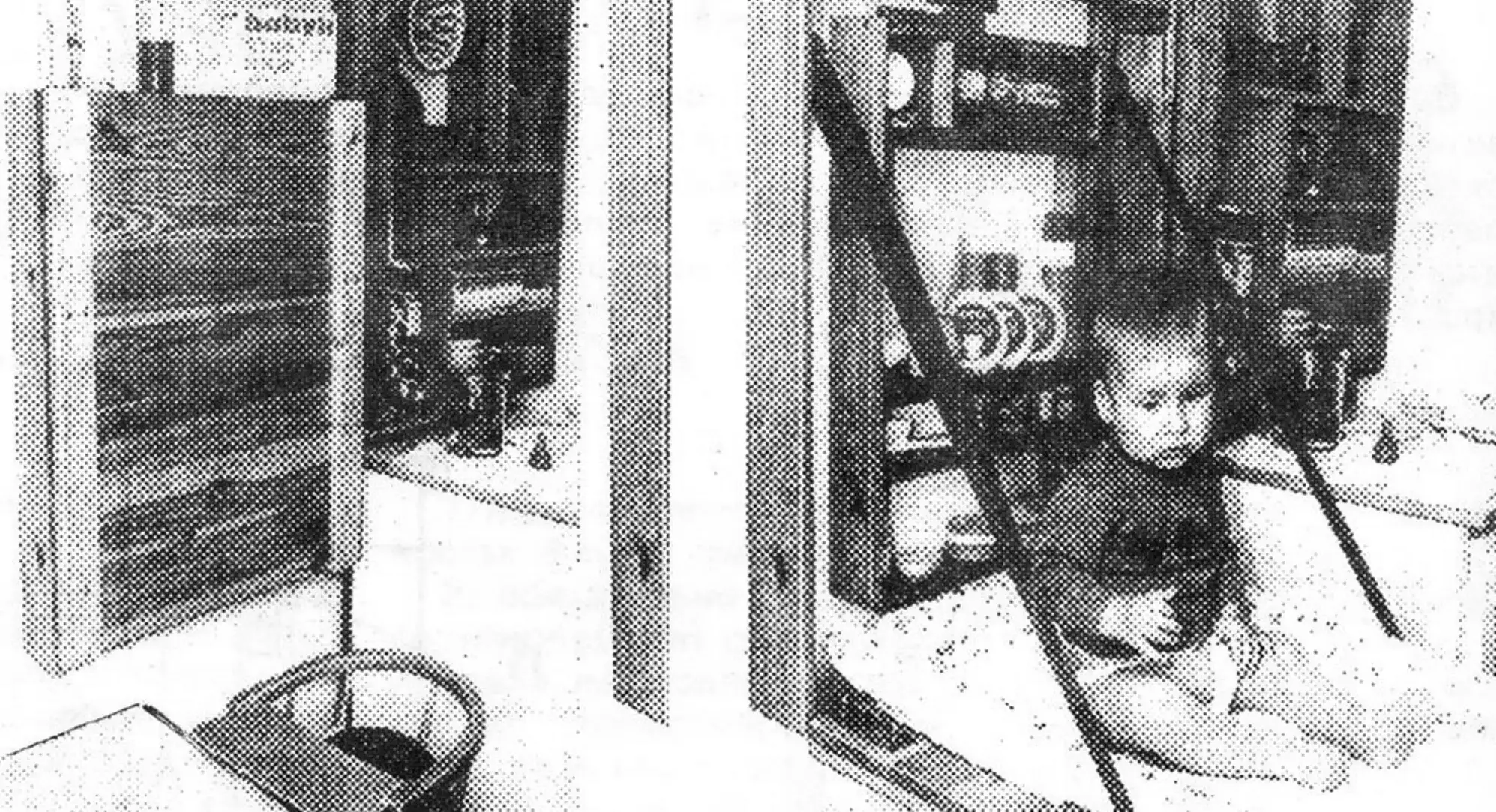
As soon as a child has learned to crawl, they are overcome by the desire to explore the surrounding space, where there are all sorts of curious things. And here parents are often helped by a well-known invention — a baby playpen. Its wooden lattice or rope netting limits the baby’s movement within this fenced area with toys. This allows the mother to step away, for example into the kitchen, without fear of leaving her little one for a short time. But most often the mother’s departure is immediately followed by crying — the child does not like being left alone. What to do? You can’t drag the playpen into the kitchen every time, and there is no room for it there anyway.
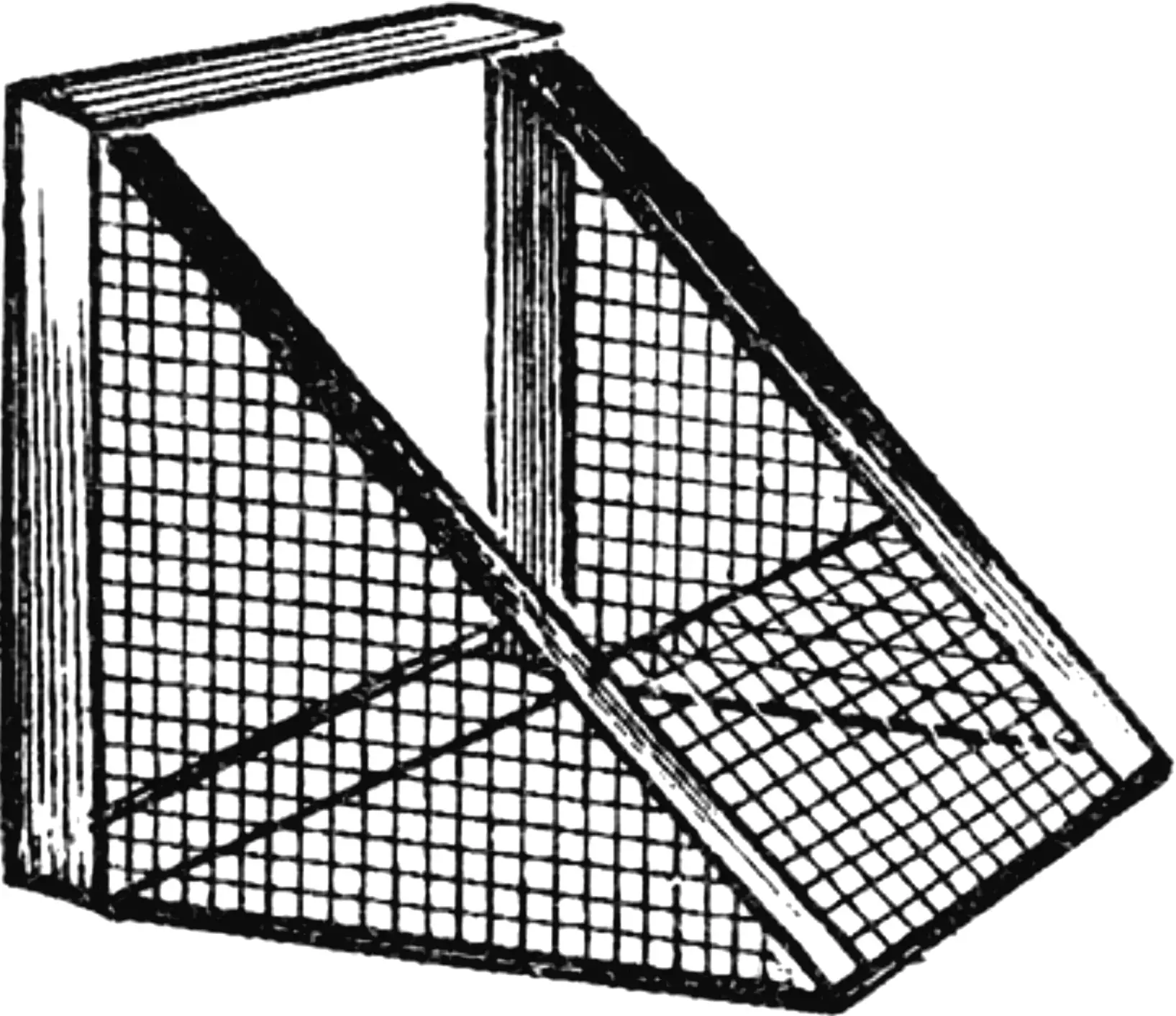
But for a fold-down, wall-mounted playpen of “temporary holding,” there will be room in any kitchen. While the mother cooks porridge or warms milk, glancing at the baby, the child calmly plays with toys, because mom is nearby. For extra safety, the fold-down platform can be enclosed with rope netting.
The design of the wall-mounted playpen is simple and easy to make. Directly on the wall, like shelves, a board frame is hung. To it, on any furniture hinges, a board or plywood panel (s10–12 mm) is attached; in the raised position it covers the frame and is held by a magnetic latch. When folded down, it is supported by two reliable straps, for example car seat belts. If the straps are fastened near the front edge of the platform, a surrounding safety net can conveniently be passed through them. On the sides the net can be high, fastened to the panel ends and the straps, and at the front — lower, so that the child can be seated and picked up.
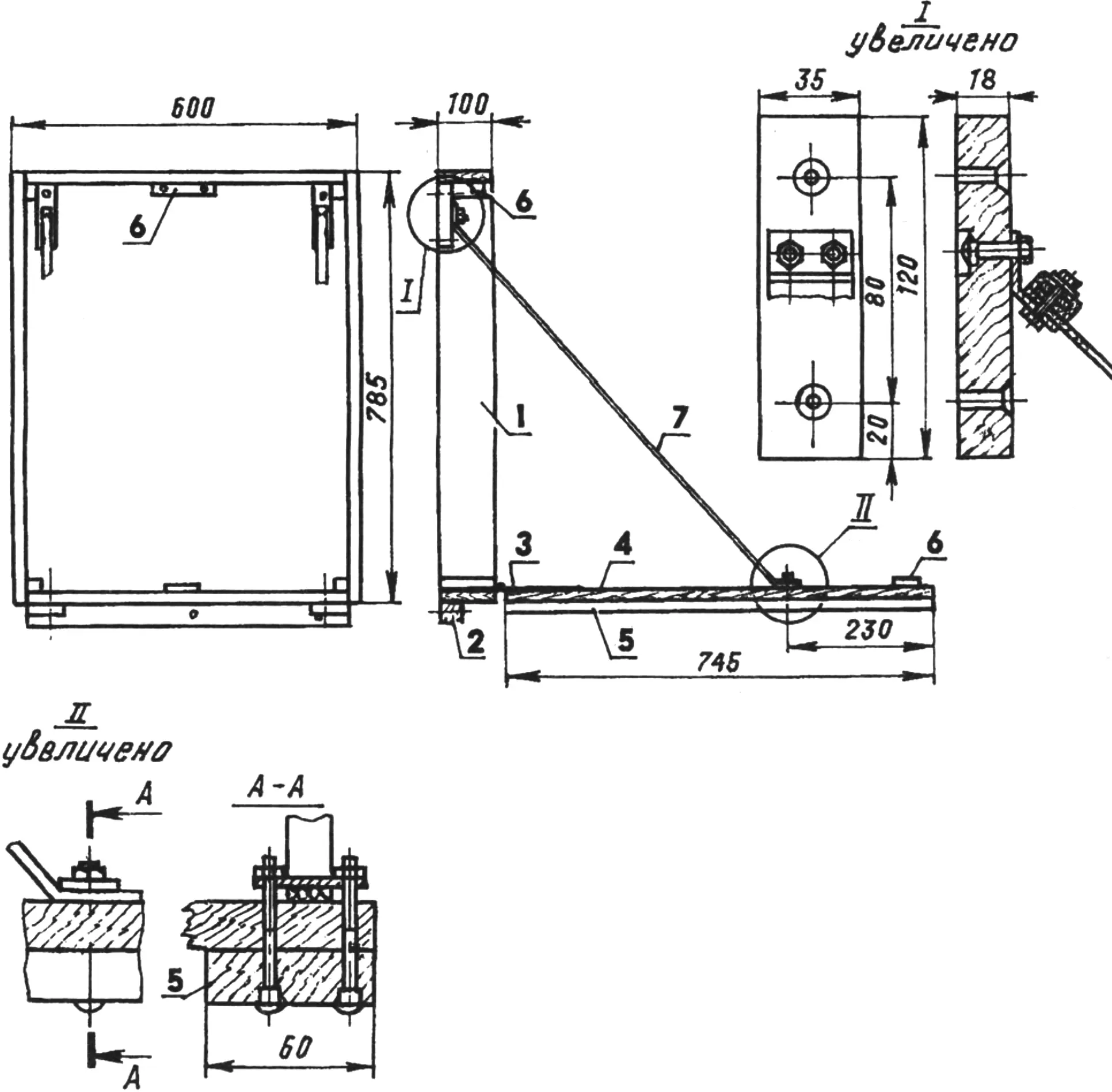
1 — frame (board 100×18); 2 — auxiliary support (timber 40×40); 3 — hinge (2 pcs.); 4—fold-down platform; 5 — crosspiece (board 60×18, 2 pcs.); 6 — magnetic latch; 7 — limiting strap (2 pcs.).
If the wall frame has a back panel, the straps can be fastened to it; if not, then to the side panels. To give greater rigidity to a frame without a back panel, the panel joints (corners) are reinforced with timber blocks.
Making the horizontal platform panel is not difficult. If it is assembled from separate boards, they are joined on two cross boards, to which they are nailed or fastened with screws.
For greater reliability, fastening of the straps and hinges is better done not with screws, but with through furniture bolts and nuts, carefully cutting off the protruding ends and filing them so that there is no risk of scratches.
After the playpen is assembled, it is finally sanded with sandpaper and coated with several layers of furniture varnish or enamel paints.
Interestingly, the panel can serve not only as a playpen, but also as a standalone piece of equipment for a cramped kitchen — for example, a cutting board table. This is very convenient: while dinner is being prepared it folds down, and when the work is done it is “put away” against the wall again and does not get in the way. For such a purpose, it is easy to install auxiliary shelves inside the wall frame for food supplies, spices, a meat grinder, or small kitchen utensils.
“Modelist-Konstruktor” No. 11–12’98, Based on materials from the magazine “Kultur und Heim” (Germany)
Recommend to read
 AND AGAIN THE MOTOR
To drive in many modern pneumatic machines and tools required compressed air pressure of 3-4 ATM. Is it possible to build a mechanism which effectively would have used a pressure... ALL-TERRAIN COMBI VEHICLE
Unfortunately, it's not very often that the pages of the magazine feature descriptions of homemade constructions that surpass the current level of serial Russian, let alone Western...
