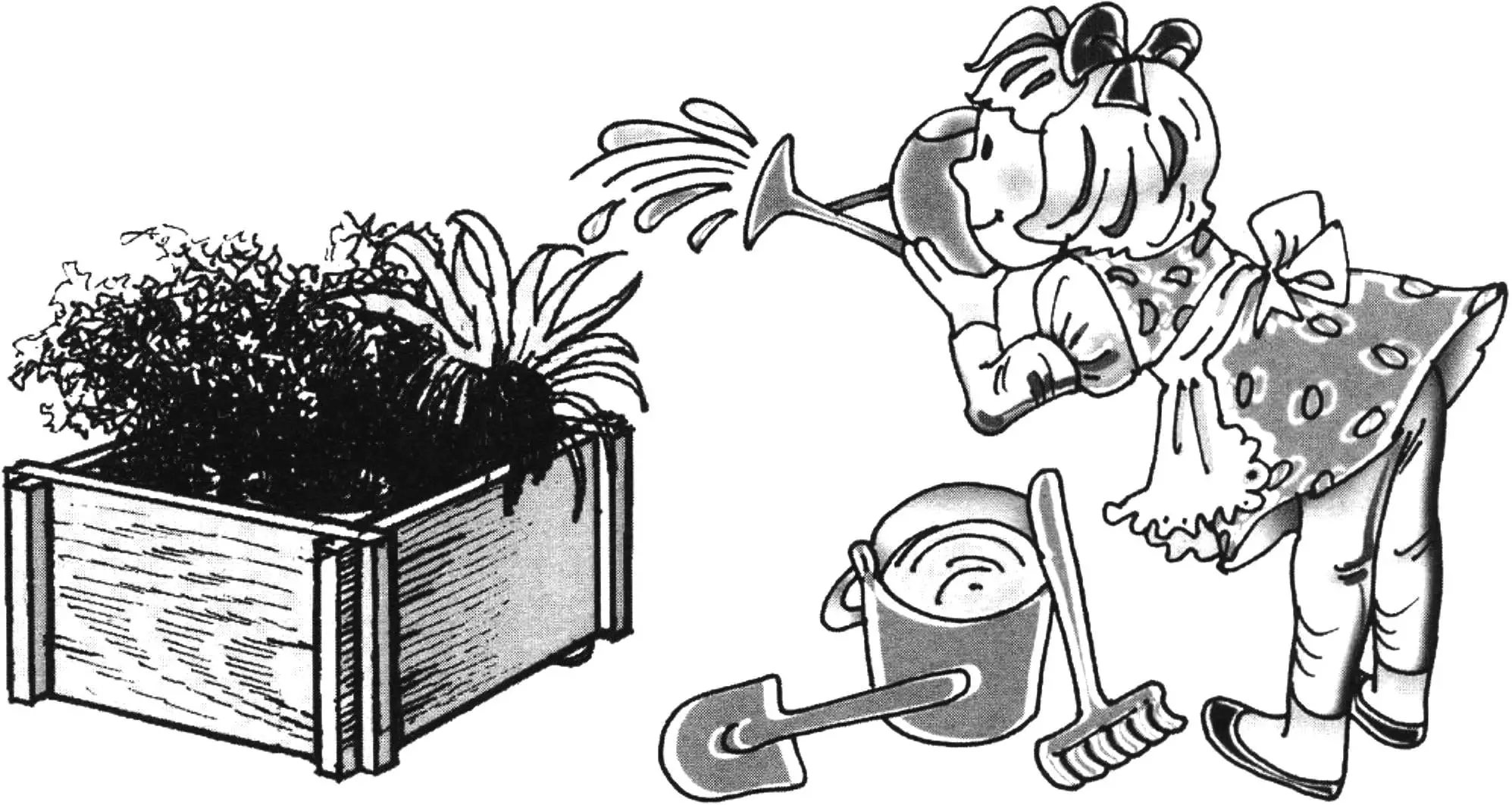
In addition to traditional flower beds on suburban plots, mobile flower gardens that can be moved or relocated when needed are becoming increasingly popular. The designs of such flower gardens can vary widely.
An interesting and highly versatile option, and at the same time extremely simple to make, was proposed by the French magazine “Systeme D”. This flower box is modular and demountable, so it can be taken apart for winter storage, while in its working, loaded state it is easy to move around the plot thanks to the wheels fitted on the bottom.
Its box-like design is convenient because it can serve both as a container completely filled with soil and as a kind of bunker into which individual pots with flowers or ornamental plants are placed, all together creating the impression of a single flower bed.
The structure is a wooden box with side and end panels and a bottom, made of particle board. Its distinctive feature is that the flower box is assembled without a single nail, yet when finished it is a strong and reliable structure.
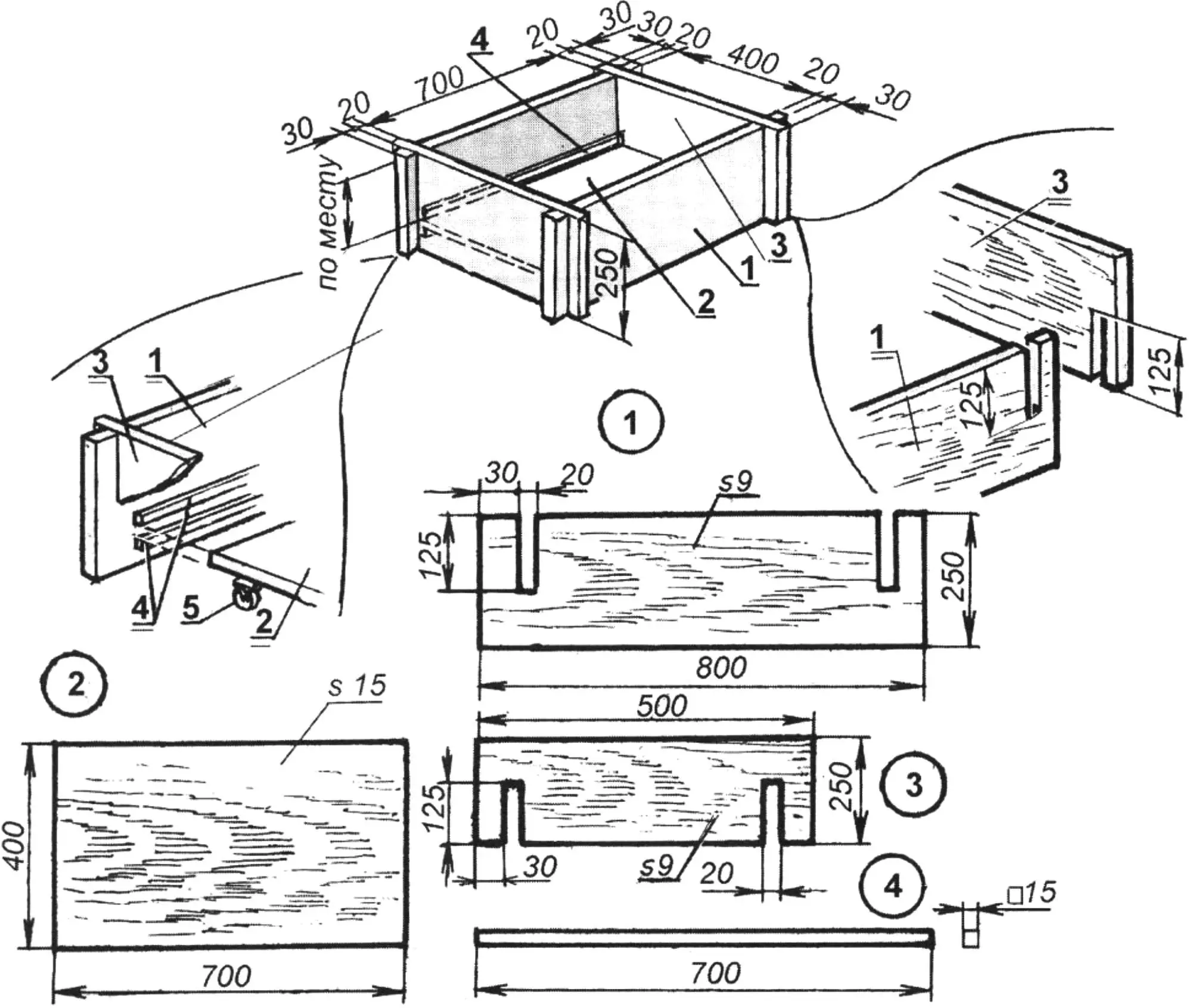
1 — side panel (2 pcs.); 2 — bottom panel; 3 — end panel (2 pcs.); 4 — battens (4 pcs.); 5 — wheels (4 pcs.)
This result is achieved because the panels that make up the box have opposing grooves that, when assembled, fit tightly into each other and form a kind of lock that successfully replaces other known joining methods.
The bottom panel is also installed without direct fastening. For it, two battens are nailed to the lower part of each of the box’s longitudinal side panels, spaced apart by the thickness of the bottom panel, which during assembly simply slides between them as into a special groove and is securely held there.
Given that the flower box will inevitably be used in damp conditions, all panels must be carefully painted before assembly in several coats of oil paint or any moisture-resistant paint. In addition, it is advisable to line the inside of the box with film or oilcloth to further protect the panels from moisture.
When making the flower box, it is advisable to assemble it in the following sequence. Two battens are nailed to each of the properly prepared longitudinal side panels. Four furniture casters are fitted to the underside of the bottom panel. Then the bottom is slid into the batten grooves of the side panels, and the end panels are slid onto them from above with their opposing grooves, finally locking the entire structure.
“Modelist-Konstruktor” No. 3’2011, B. VLADIMIROV
Recommend to read
 “FLEET” FROM ELEMENTARY PLATES
Wooden boxes for transportation of fruits or vegetables are mostly one-time use and then are disposed of. Boards, of which they are made, can be a good building material for the... LOOP — GLIDER
Immediately after his return from Moscow to Koktebel in the fall of 1929 Sergei asked me to do a new airframe for aerobatics, — says the aircraft designer S. N. The lyushin.— There were...
