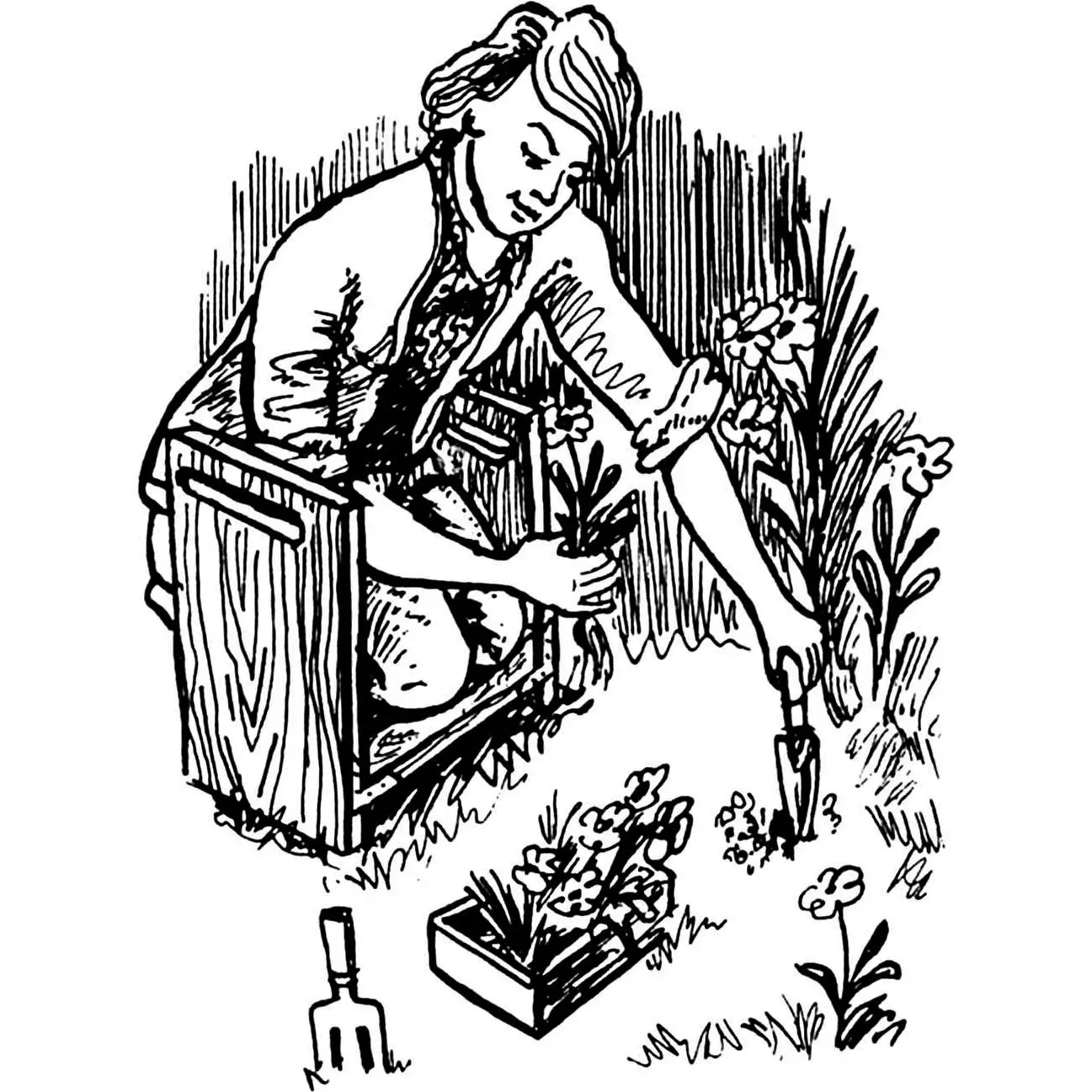
No matter how small a rural plot may be, cultivating it takes a fair amount of work and daily chores. One moment you need to plant something, the next you need to loosen the soil or hill plants up. And all of this usually has to be done bent over or squatting, which makes your back ache or your legs go numb.
The work of a home vegetable gardener or flower grower will be much easier with the universal bench proposed by the Hungarian magazine “Ezermester”. Its versatility lies in the fact that almost all of its parts prove useful when working on beds—you only need to change their positions. This was taken into account when developing the straightforward seat design. Judge for yourself.
At first glance, the bench has a fairly simple traditional shape. It consists of only three panels: a seat and two side panels that serve as legs. However, turn the bench upside down—and you can see that the side panels also serve as carrying handles, not only for the bench itself but also for any load placed on it. Between the panels, a soft cushion made of foam rubber, batting, or a blanket folded in several layers is attached, upholstered with faux leather (so it can be washed easily). Resting your knees on such a cushion, you can fuss over plants for hours without hurting your feet. Of course, if you overdo it, your legs will still go numb and getting up from your knees won’t be easy. But here the side panels help again: brace yourself with your hands—it will be easier to stand up. And when placed on one of its side panels, the bench turns into a nightstand—until it is needed again for work on the beds.
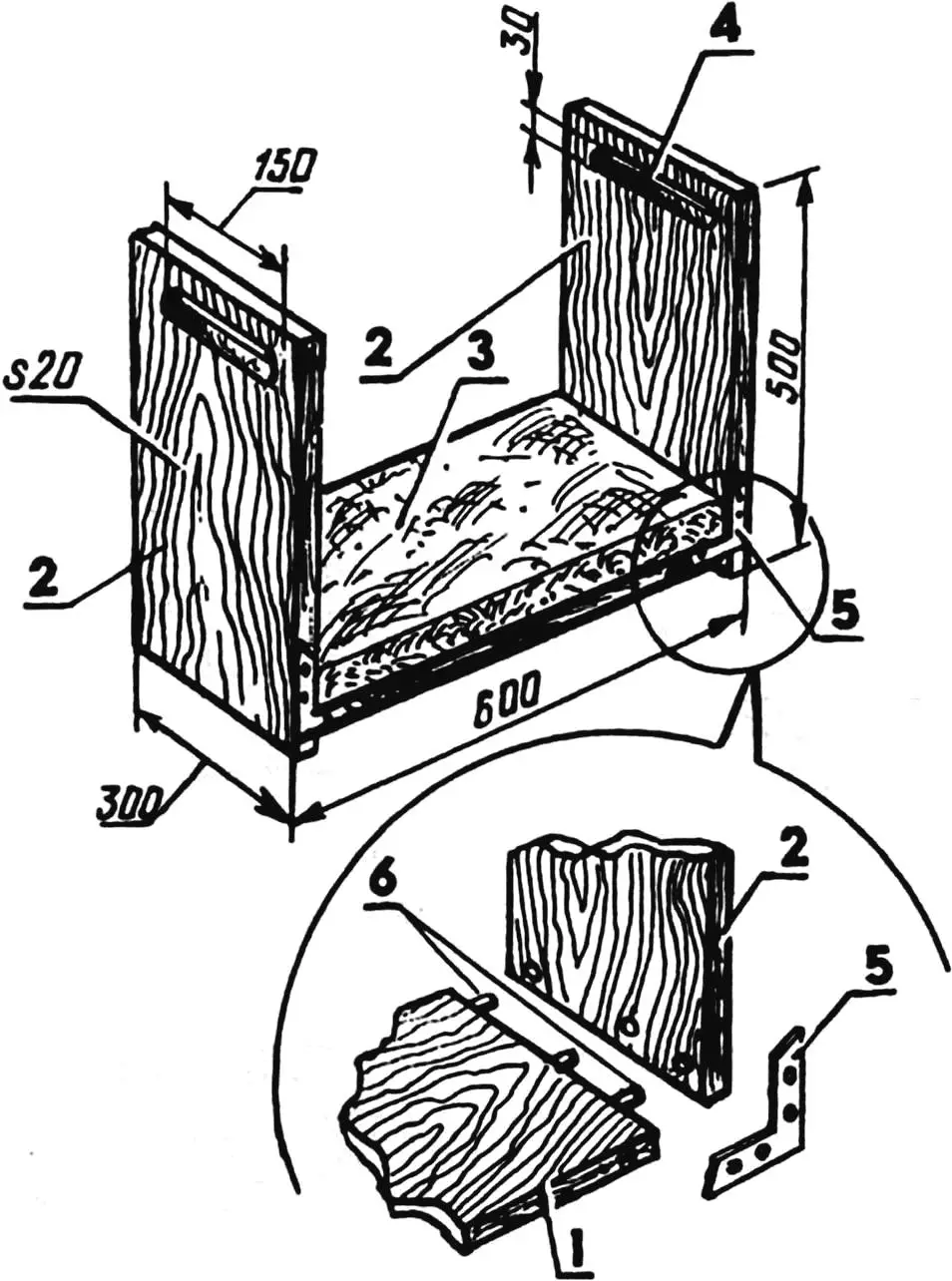
1 — seat; 2 — side-leg panels; 3 — cushion; 4 — hand grip slot; 5 — metal angle bracket; 6 — dowels
Thick plywood, wide boards, or pieces of particleboard can be used to make the universal bench. The panels can be joined with round glued dowels, screws (with pilot holes drilled first using a thinner bit), or simply nails—depending on the panel material. For greater strength, it is advisable to reinforce the corners with metal (window) angle brackets.
Before assembly, blanks carefully sanded with sandpaper should be painted with oil paint in several coats, allowing each coat to dry in between. The paint color can be any unobtrusive one (green, blue, brown) or, conversely, bright and easy to spot from a distance among the greenery—for example yellow, orange, or red.
“Modelist-Konstruktor” No. 5’2003
Recommend to read
 ATV “THE VAGABOND”
The ATV is made of that which was in the garage. Generally in the construction tried to use as many parts from domestic cars. Yes, and that turning was smaller. Engines with gearbox... IN THE CLOUDLESS SKY OF SPAIN
Fights over Zaragoza and Wescoe. With the aim of weakening the Franco offensive on the Northern front, the Republican command has taken a series of diversionary strikes in the region of...
