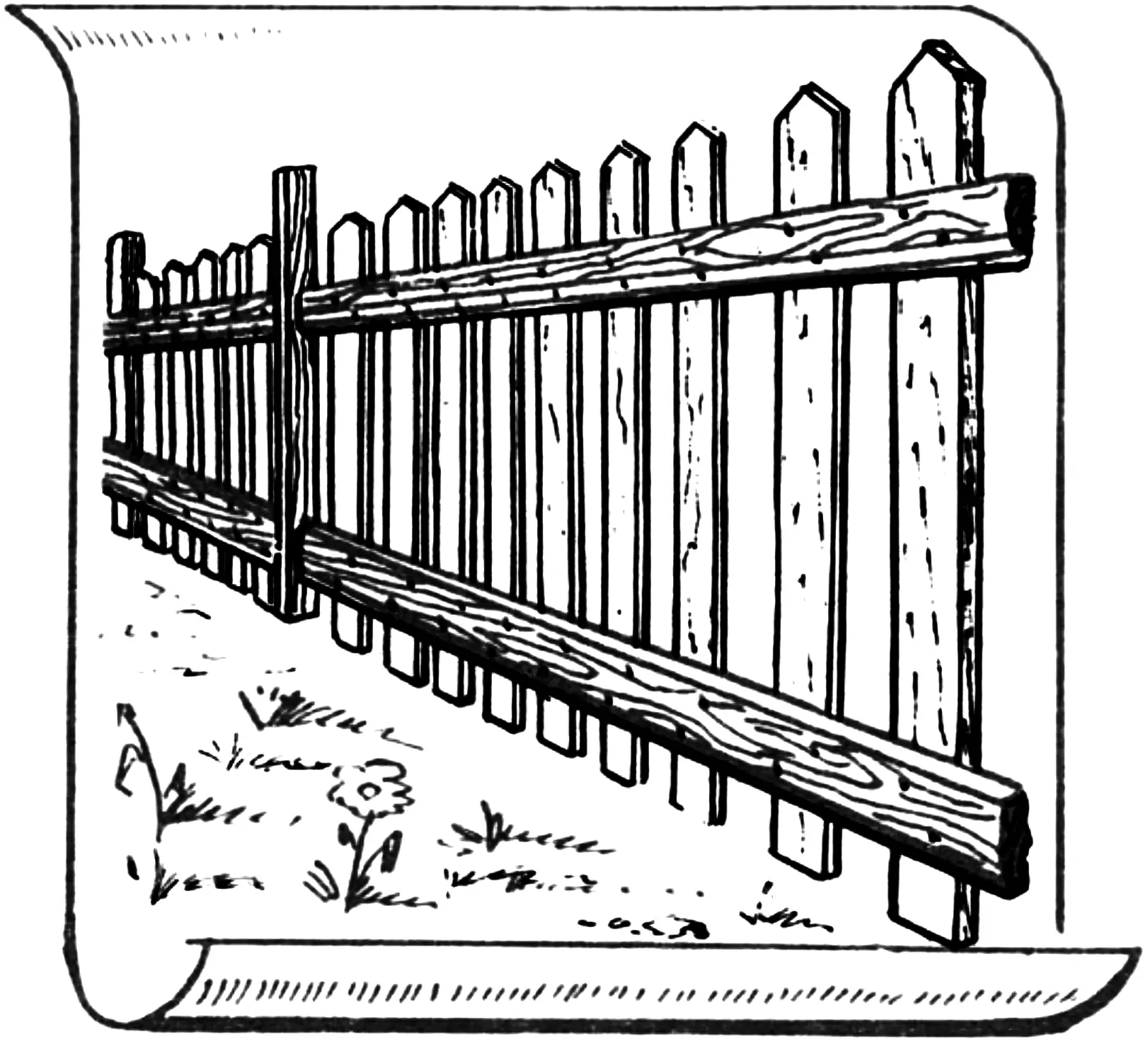
Not only the house itself, but also the fence around it can say a lot about the owner: for one it is a light enclosure, for another a hedge, and for a third a solid fence. But whatever the fencing may be, it needs to be kept in good order — then it looks completely different. Here are several practical tips suggested to readers by the Hungarian magazine Ezermester.
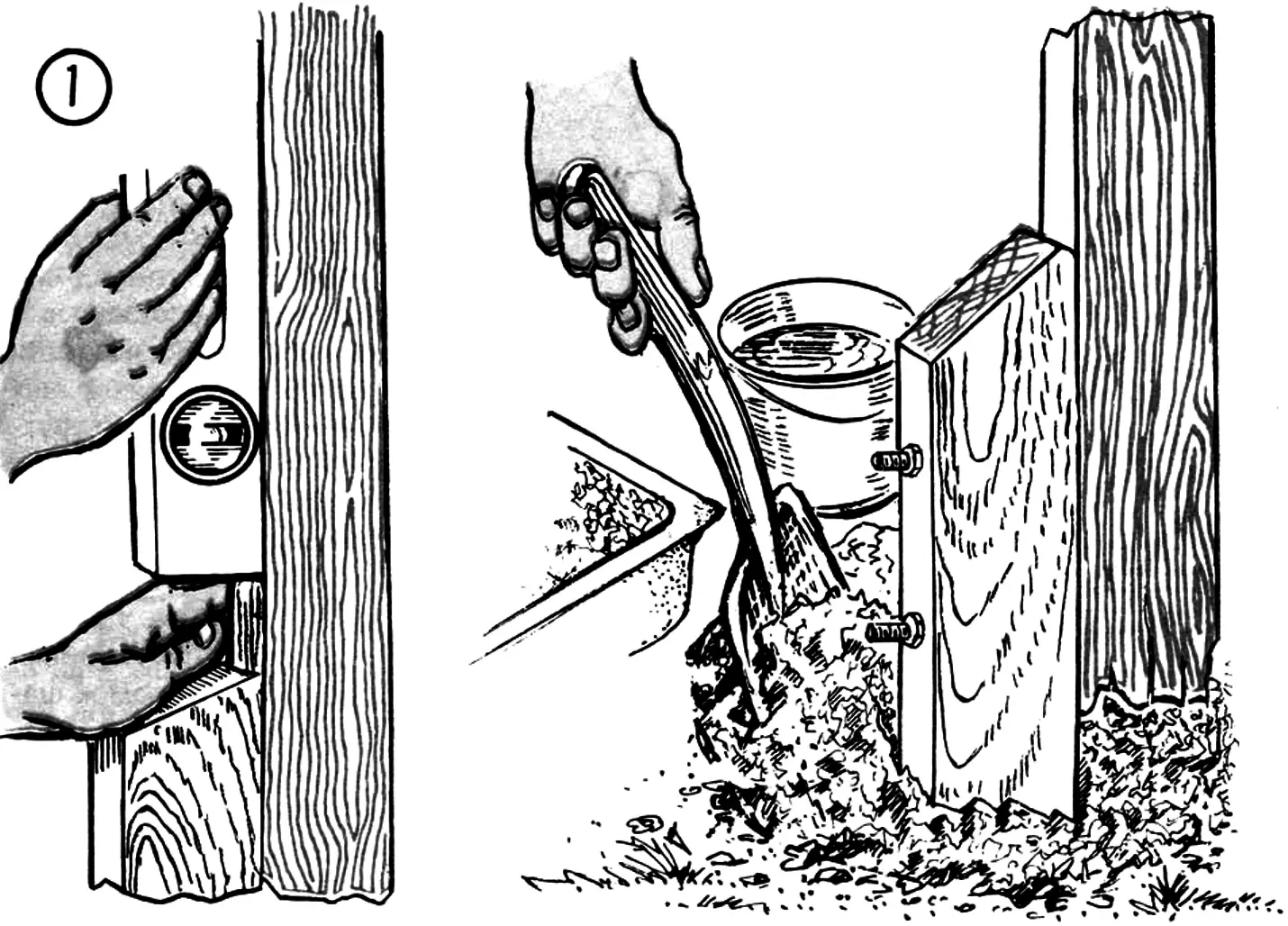
1. A leaning, rotted fence post can be reinforced with a beam driven or set into the ground nearby, checking vertical alignment with a level. For greater stability, it is best to nail the beam to the post or join them with bolts, drilling holes for them with a brace, and after tightening the nuts — cutting off the excess bolt length with a hacksaw.
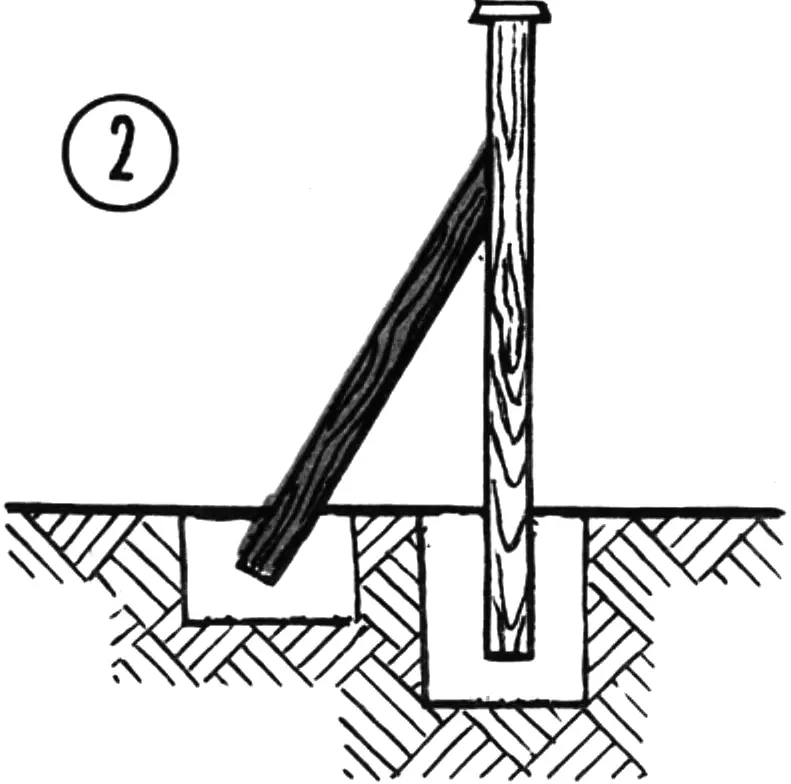
2. A leaning fence can be straightened even more reliably if a supporting brace beam is installed.
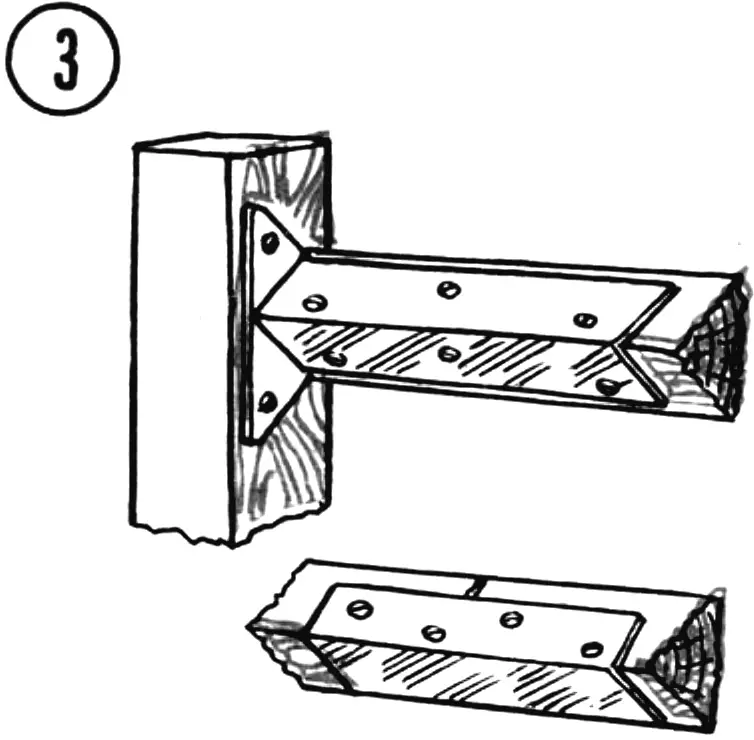
3. A metal angle bracket is a handy aid in fence repair: it helps attach rails to a post or splice them at a break.
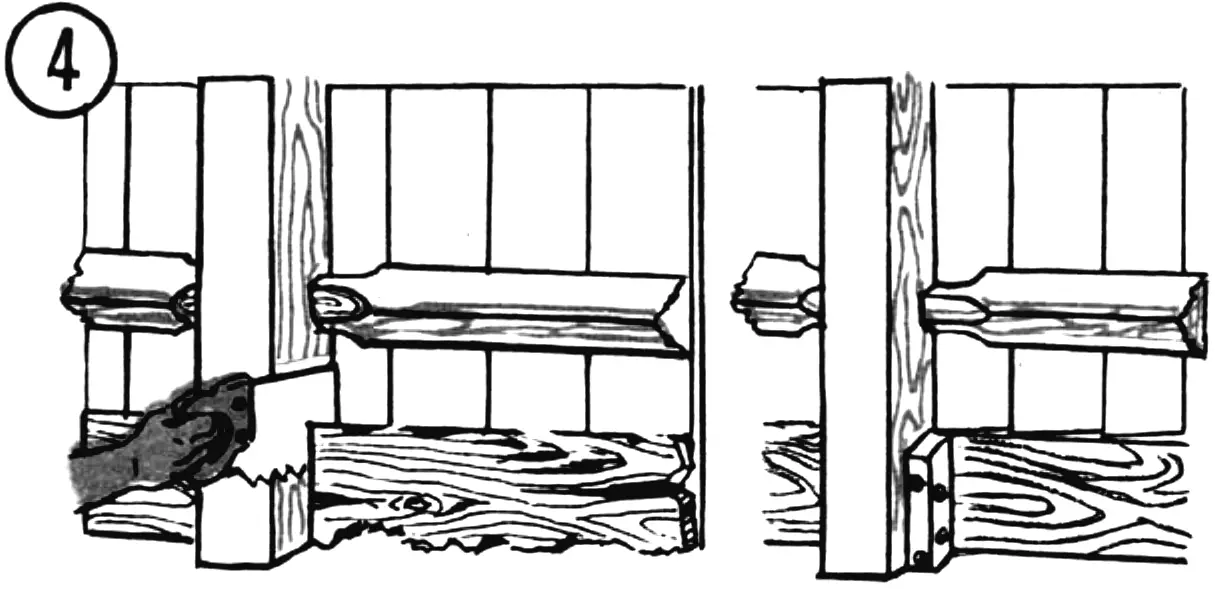
4. After cutting off a rotted lower fence board, a new one can be attached to a batten nailed to the post.
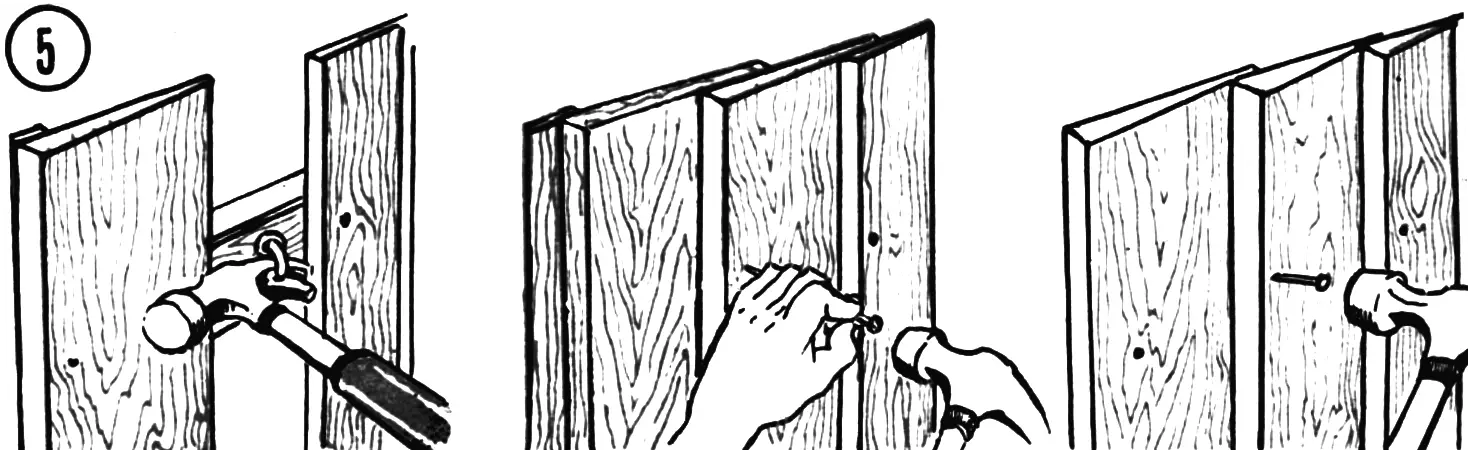
5. When restoring a board fence, try to remove the old nails: their rust harms the wood. It is also advisable not to disturb the previous structure of the enclosure: if the boards were nailed overlapping, the patch should be placed the same way.
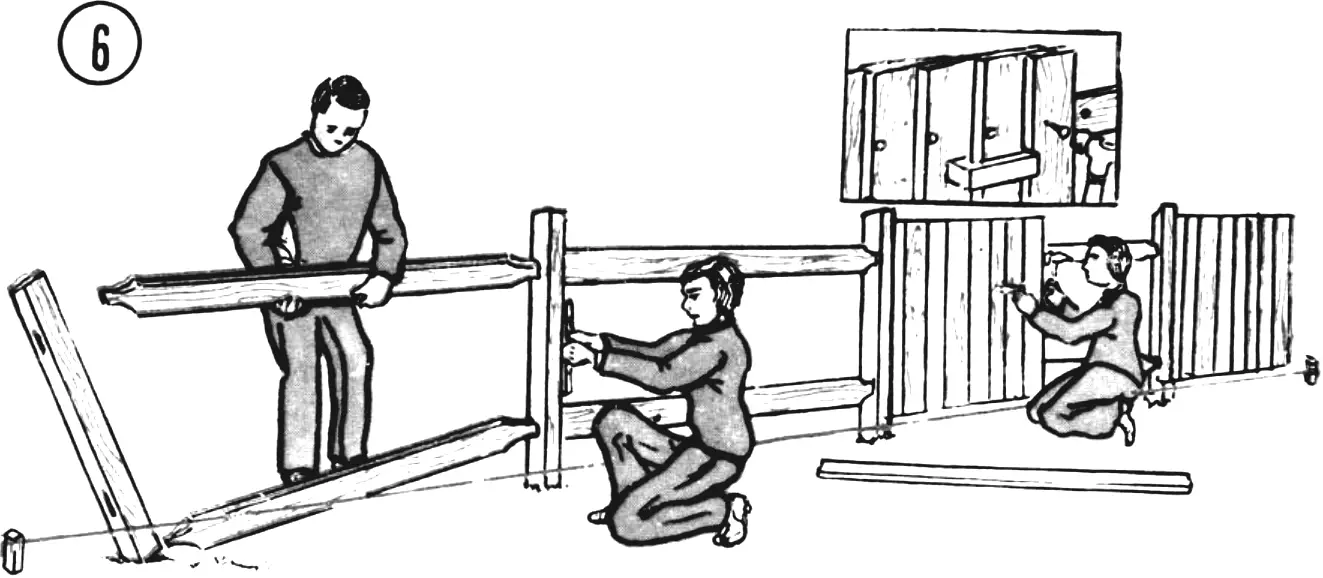
6. When replacing large sections, it is better to mark the fence line with twine stretched between stakes; fit the rails “to a pencil line” and insert them with pointed ends into grooves in the posts; when fastening boards, it is best to use a measuring strip to achieve uniform spacing in the pattern.
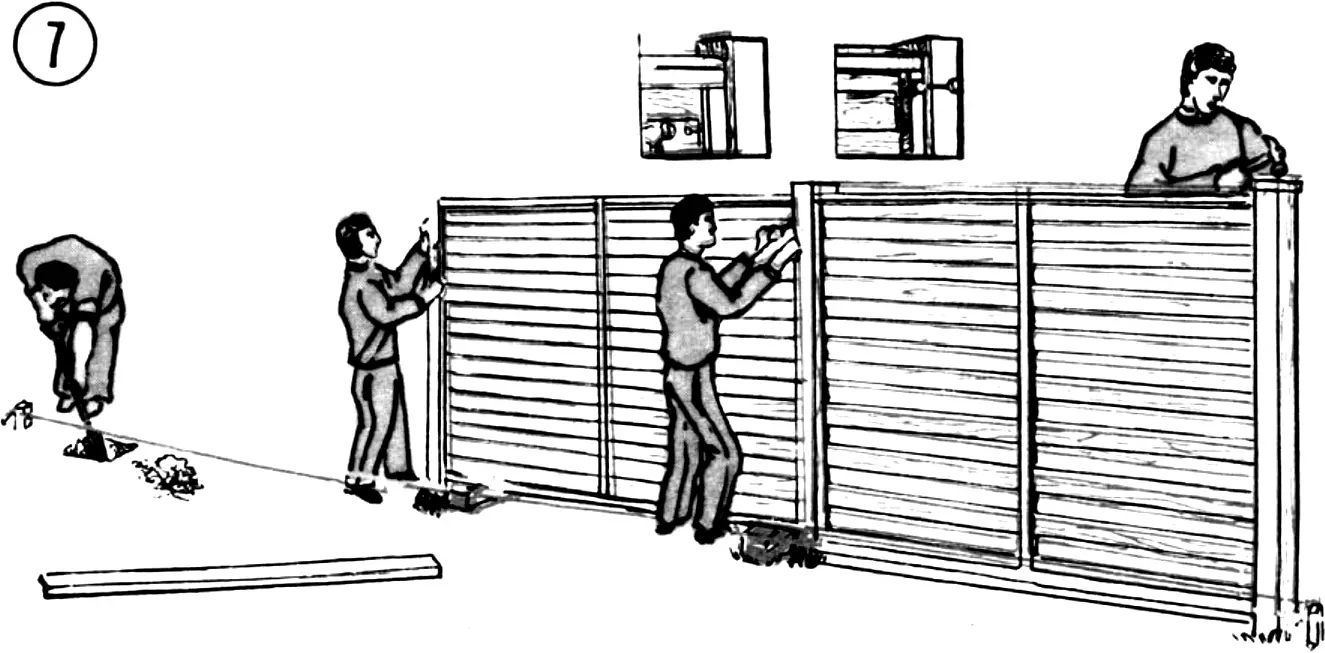
7. A substantial fence can also be assembled from separate pre-built panels, fastening them to the posts with nails or using metal brackets.
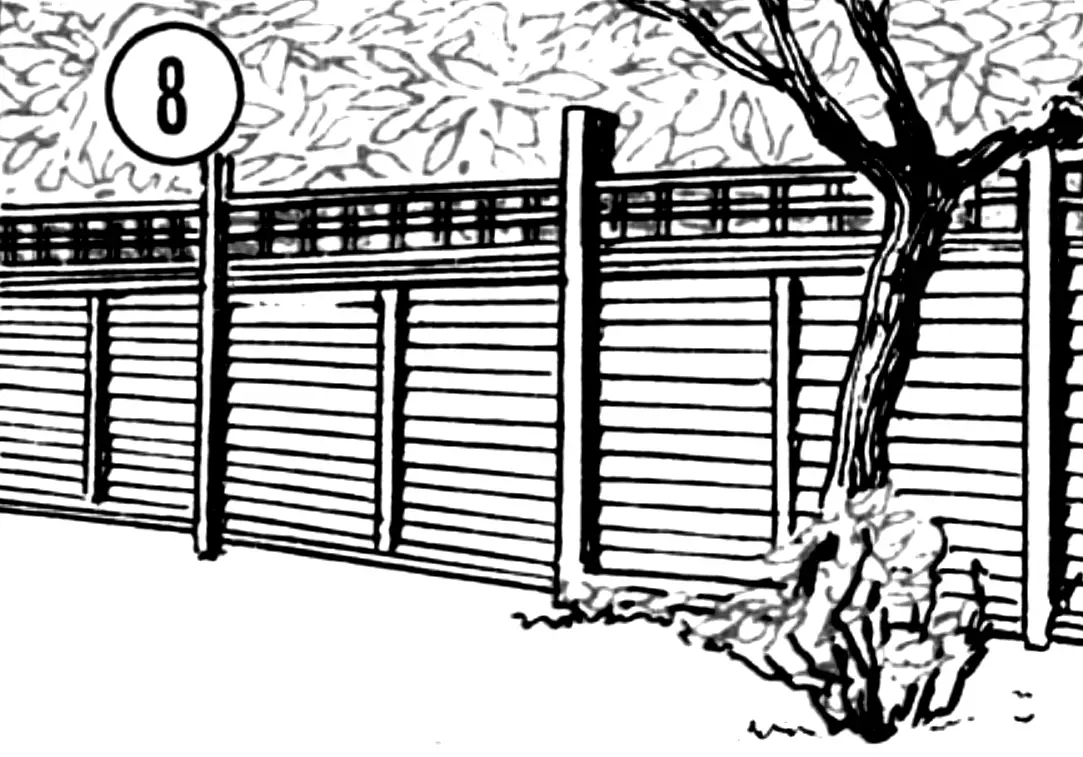
8. A decorative lattice can be built on top of the fence, which also increases its height.
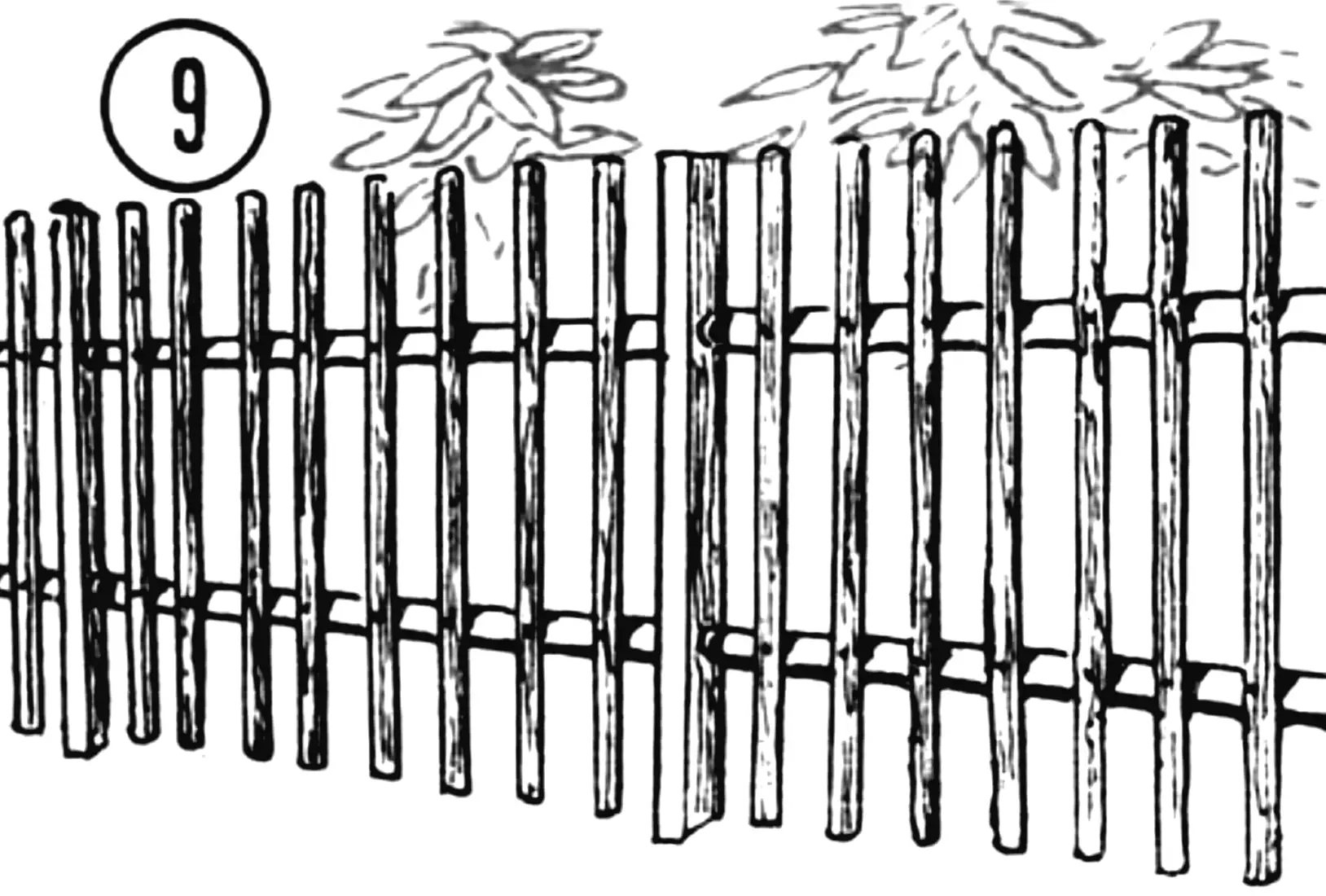
9. A light enclosure made of thin poles nailed at equal intervals from each other looks attractive.
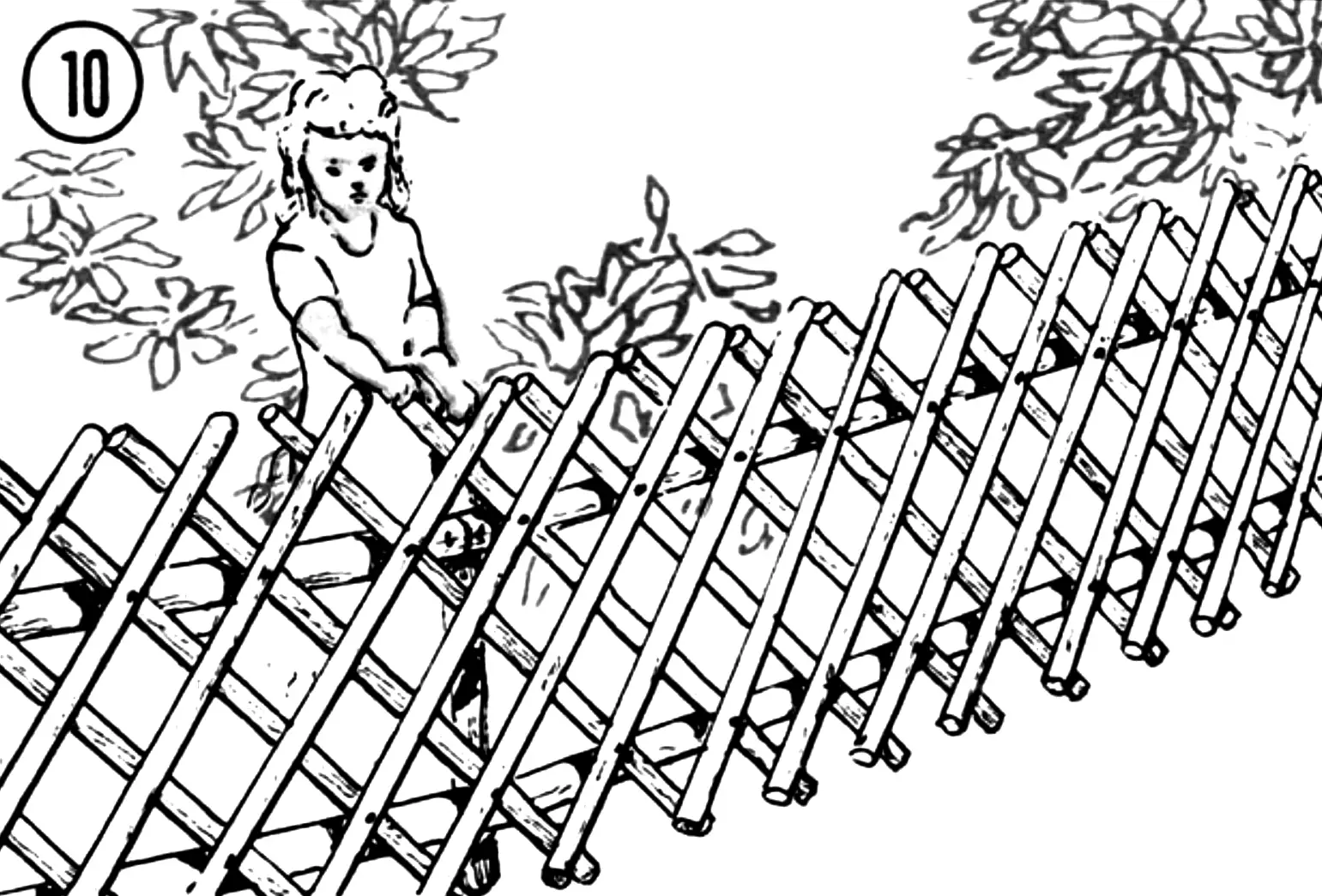
10. An interesting decorative fence variant is easy to obtain by nailing poles or pickets in a slanted position.
Recommend to read
 DUMP CART
To make this light and convenient cart — an indispensable helper for gardeners and farmers — you will only need what can be found in any dacha or farm. But it will serve on any auxiliary... Portable Power Station
I propose a design for a gasoline-electric unit (GEU) "Firefly", designed for charging batteries, powering lighting lamps and other DC consumers at 12 V. I developed this unit three...
