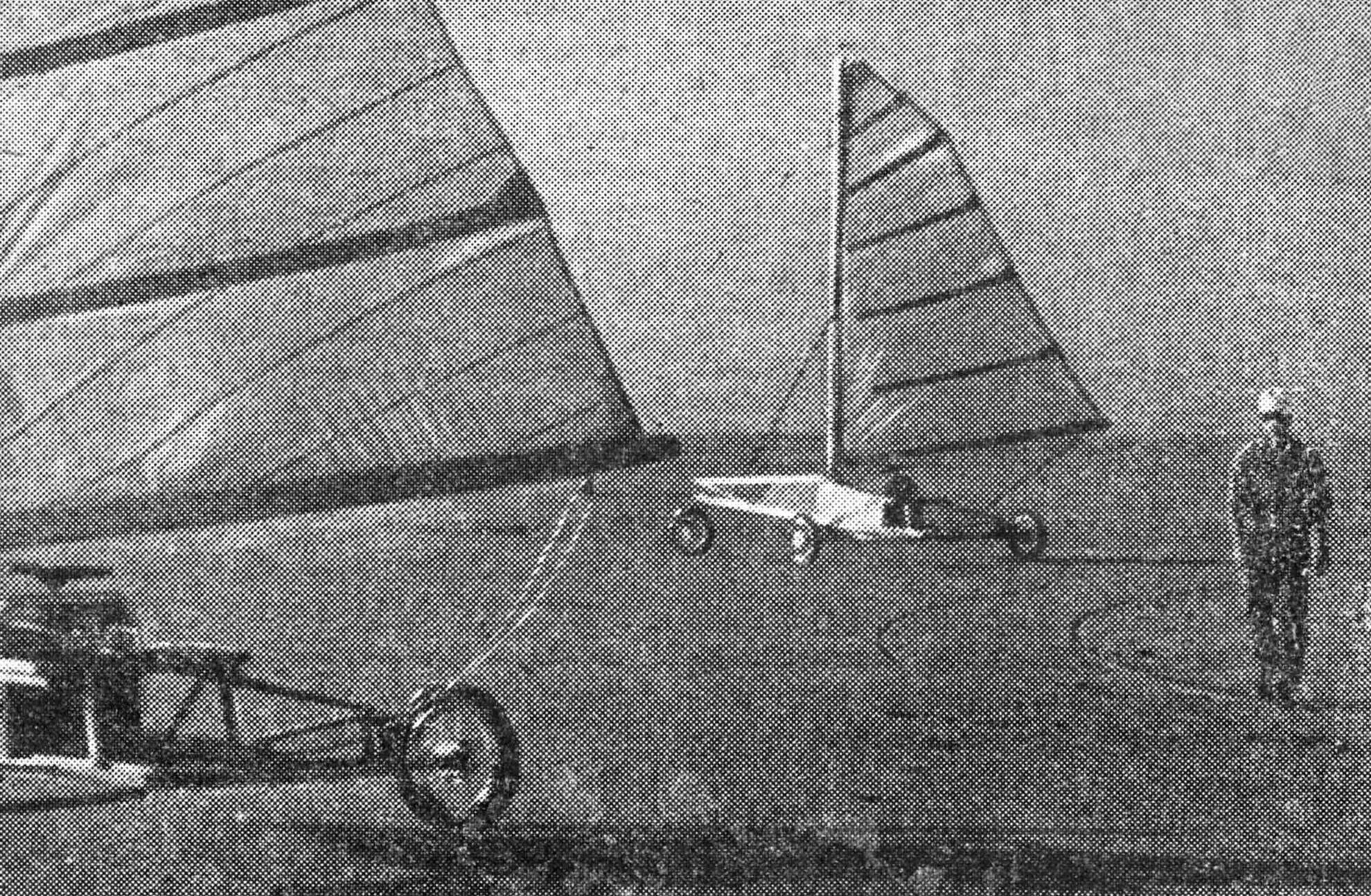
We heard about this unusual journey in the summer of 1968. Three amateur athletes from the Kuibyshev District Tourist Club of the capital traveled 1000 kilometers across the sands of the Aral Sea region on homemade wheeled yachts.
Let us introduce the participants of the expedition. Vladimir Talanov and Eduard Nazarov — initiators and inspirers of the journey on land yachts. Both are design engineers. Vladimir is a master of sports in regular, water yachts. Eduard is an avid tourist and yachtsman, or, as he says about himself, “a wanderer by vocation.” Given the seriousness of his main job, we would say: “a wanderer by avocation.” Their third companion — Gennady Galiullin — is an instructor at the Kuibyshev District Tourism Club, where this whole story began. V. Talanov and E. Nazarov told our correspondent T. Merenkova about “how it all was.”
We are yachtsmen. When we became interested in land yachts, we were even reproached for “betraying” water. But we are not going to give up sailing. You simply cannot pass indifferently by a new endeavor! And one more thing: high speeds are impossible on a regular yacht. On a wheeled one, with a good wind, you go “under eighty.” Above your head — a sail full of wind, under the wheels the ground flashes by. It seems like you’re taking off. A real athlete would give a lot for such a feeling! Each of us had long been thinking about land yachts. One fine day we talked about it with Galiullin. The opinion was unanimous: it’s time to start.
Let us clarify right away: we were not driven by just a desire for new sensations. The tour through the Karakum and Kyzylkum — is only part of what we planned. The ultimate goal — is to give impetus to the development of a new sport for our country, which will expand the territorial and temporal boundaries of sailing races. Unlike regular yachts, wheeled ones can compete anywhere, on any more or less flat space. Water sailing is practiced for at most 4 — 5 months a year. Land yachts double this period. They can easily be put on skates: they will turn into iceboats.
However, the main destination for wheeled sailboats — is deserts, where strong and constant winds blow, where the terrain is not too rugged, where there is plenty of space. Mass tourist trips will remove from the desert the aura of mystery and constant danger in the form of heat, scorpions, and snakes. Having been to the desert once, you will never forget it; it attracts, captivates. Desert expeditions will prepare strong, brave, “heat-resistant” athletes. Their hardening will be useful both during service on the borders of our Motherland and for work in difficult conditions.
Our small group formed in March 1967. We wanted to show the possibilities of the new sport. But for this we needed yachts. We had a fairly clear idea of what kind. One made calculations and developed the scheme. The other “reviewed.” Over each new variant, real battles were fought. Galiullin calmed us down: how long can we argue? We don’t remember which variant by count was accepted for action. Besides our picky tastes and desires, there was another factor that influenced the yacht’s design. You’ve guessed, of course? Yes, yes, materials. Often we got not what we wanted: we had to change components on the fly. The hull was a duralumin structure on which a mast with a sail was mounted. Three wheels, of which the front one is steering, had adjustable independent suspension. The weight of our yacht — 140 kg, mast height — 5 m, length — 4.2 m, track — 3.5 m.
We set up a workshop in the basement of the tourist club. The Komsomol members of the Kuibyshev District took us under their patronage. So we were no longer loners, but an initiative group behind which stood a great force. Everyone who could helped us. Under patronage, district enterprises gave non-ferrous scrap metal, which we managed to exchange for profile rolling at an aluminum alloy plant. At district enterprises, Komsomol members made parts after their shifts according to our sketches that required machine processing. About fifty people helped us. These were those whom we managed to captivate with the romance of the new sport, on whom we very much count in the future.
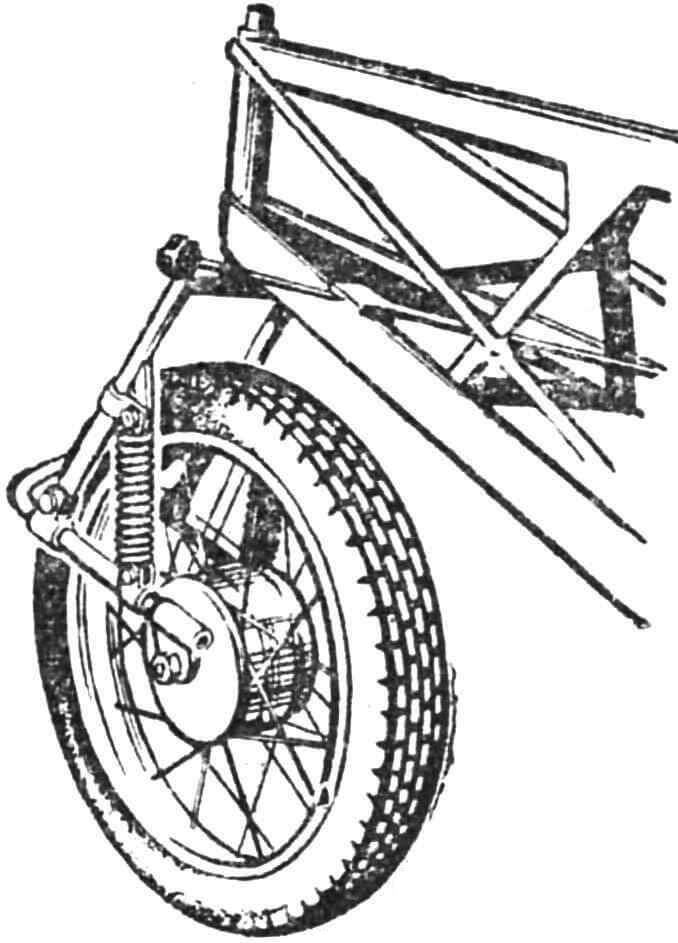
We assembled the yachts in threes. Our tools were the most ordinary. Vises, drills, saws, hammers — the entire arsenal of our workshop. It took about seven months to build three yachts. To everyone’s regret, they seriously deviated from the intended scheme. We failed to get aircraft wheels in time (decommissioned from Yak-18). We had to buy motorcycle ones in Kovrov, which, as we suspected, handled the task poorly. The tread interfered, the wheels at the slightest thing — buried themselves in the sand. Suitable material for masts was not found: they turned out too heavy.
We took sails from a Finn dinghy, slightly modifying them.
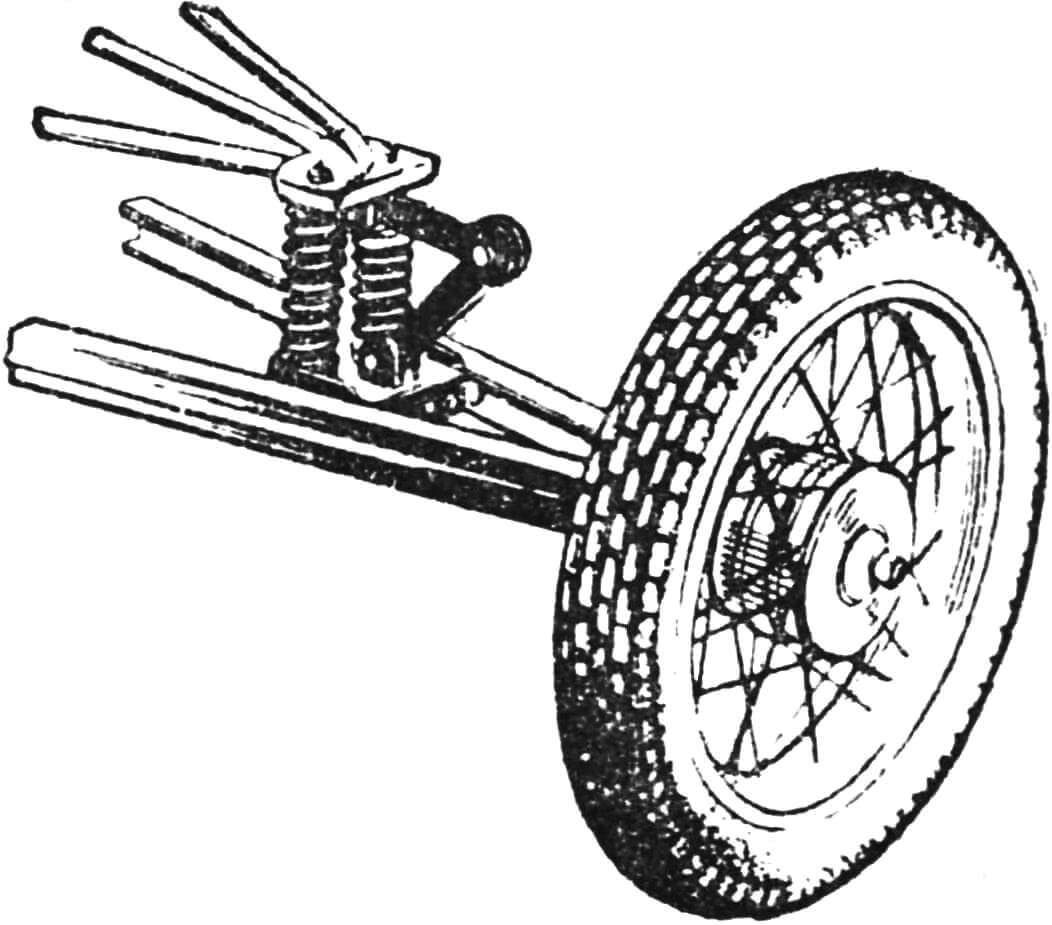
Despite such shortcomings, the yachts, in our opinion, successfully coped with the difficult journey along the route Aralsk — Kyzyl-Orda. And those difficulties we encountered in the desert only did us good. After all, our goal was exactly to test the yachts in desert conditions, on long difficult journeys. In Aralsk we sailed for the first time. And immediately the first breakdown from overload occurred — the front suspension torsion bars could not withstand it. We had to leave the third yacht at the start. The other two went easily both on dunes, and on grass, and even through bushes. No noise, no smell of gasoline, only tires barely audibly rustling on the sand. And speed, speed! Everything depended on the wind. And if we had long delays, it was only because of it.
Each yacht carried over a hundred kilograms of cargo, not counting the driver. Three forty-liter water tanks provided the expedition participants with quite tolerable stay in the scorching sands. However, in the desert as in the desert! We handled water carefully and in the mornings preferred to wash with fresh wind.
The endurance and speed of our yachts confirmed our calculations. After all, we developed our scheme without looking at ready-made drawings of proven wheeled yachts. We did not want to follow someone else’s path. Only when the design was ready did we read about Jean du Bouchet’s expedition. His yacht is very cheap and simple. But it is designed for one athlete without cargo and manufactured at a factory. It was difficult to borrow something from the participants of the trans-Saharan expedition. And the goals before us were different. We did not plan any “trans-race,” although we traveled 1000 km. The tasks were much more modest. Dynamic testing of yachts — that’s what we mainly did. Most of the time was spent on this. The movement itself took very little, with a good wind the yacht went at a speed of 70—80 km/h.
Searching for a test site, laying it out, and then carefully checking the behavior of the structures, their capabilities — that’s what we did. But now we know that on such yachts as ours, you can travel on any “desert” route.
You can ride on them, you can organize real sailing races. But that’s still not close… To train athletes, we need factory-built yachts. We need the support of the Sailing Federation. We need approval for yacht production. And of course, we need enthusiasts of the new sport. To interest as many adults and teenagers as possible, our group developed a simplified design of a wheeled yacht that can be made mainly from wood. We hope that many will want to make it. And we responsibly assure that they will not regret it, because sailing on land — is an exceptional pleasure.
Land Yachts
This will not be about a new design, since even before the First World War, Louis Blériot built sailboats that raced along the beaches of the English Channel, namely in Fort-Mahon, Berck, etc., where the sand is very hard and strong winds blow. The speed of the “beach” sailboat reached 100 km/h.
A year ago, fans of the “beach” sailboat again drew attention to themselves by making a run across the Sahara. Their yachts were called “sand sailboats” or “aeroglisseurs.” In fact, these were land yachts using, like sea ones, the power of wind.
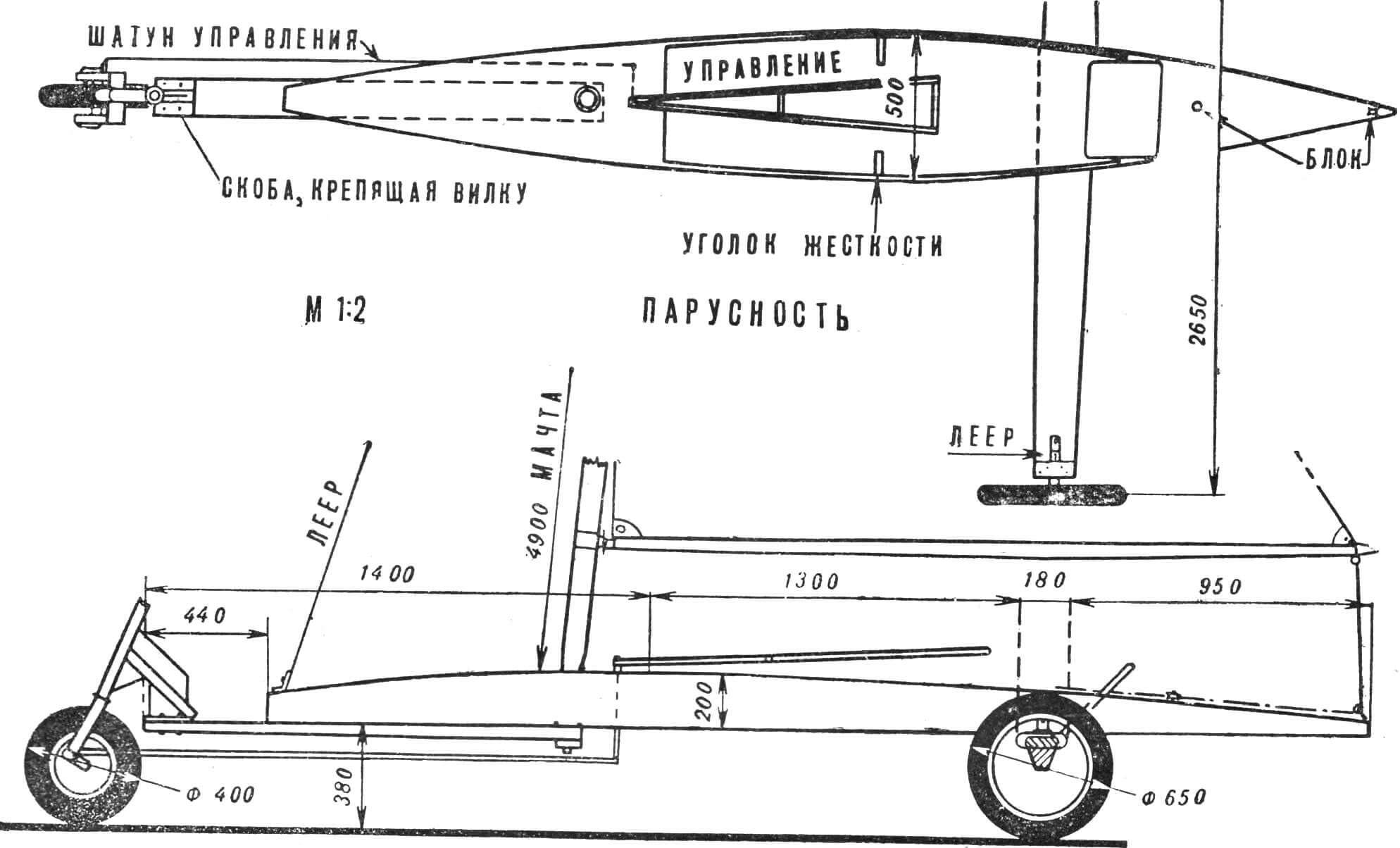
Readers, especially those encountering such a sailboat for the first time, will probably be interested in getting acquainted with its drawings (Fig. 1). The length of the land sailboat is 420 cm, width — 265 cm, mast height — 490 cm; sail area equals approximately 6 m2. The yacht has three wheels. The front, steering one — from a scooter; its diameter is 400 mm. The rear wheels are equipped with motorcycle-type tires (Fig. 2).
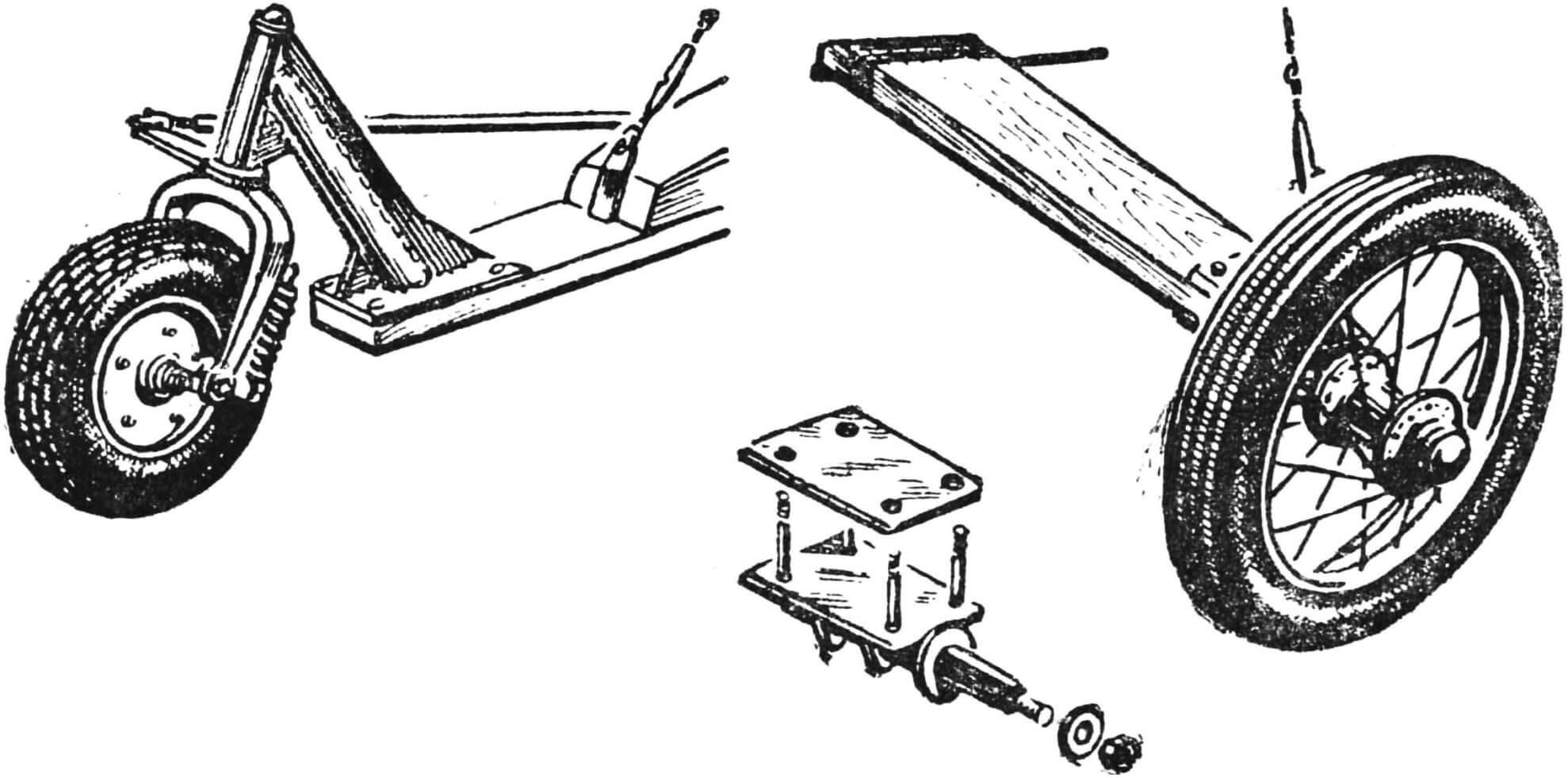
From the nose to the base of the mast runs a board 14 mm thick. Another one is attached to it, forming the bottom of the hull, which is framed by two sides. The front and rear parts (behind the steering seat back) of the sailboat are sheathed with plywood. Under the body runs the rear suspension, representing a wooden board 50 mm thick, attached to the hull with plates and bolts (as, by the way, are all connections) and ending with brackets to which wheels are attached using welded bearings.
As you can see, this is about a simple design that anyone can build. The only difficulty may be mounting (using a wide bracket) the wheel fork from a scooter. The bracket consists of a pipe to which three iron cheeks are welded.
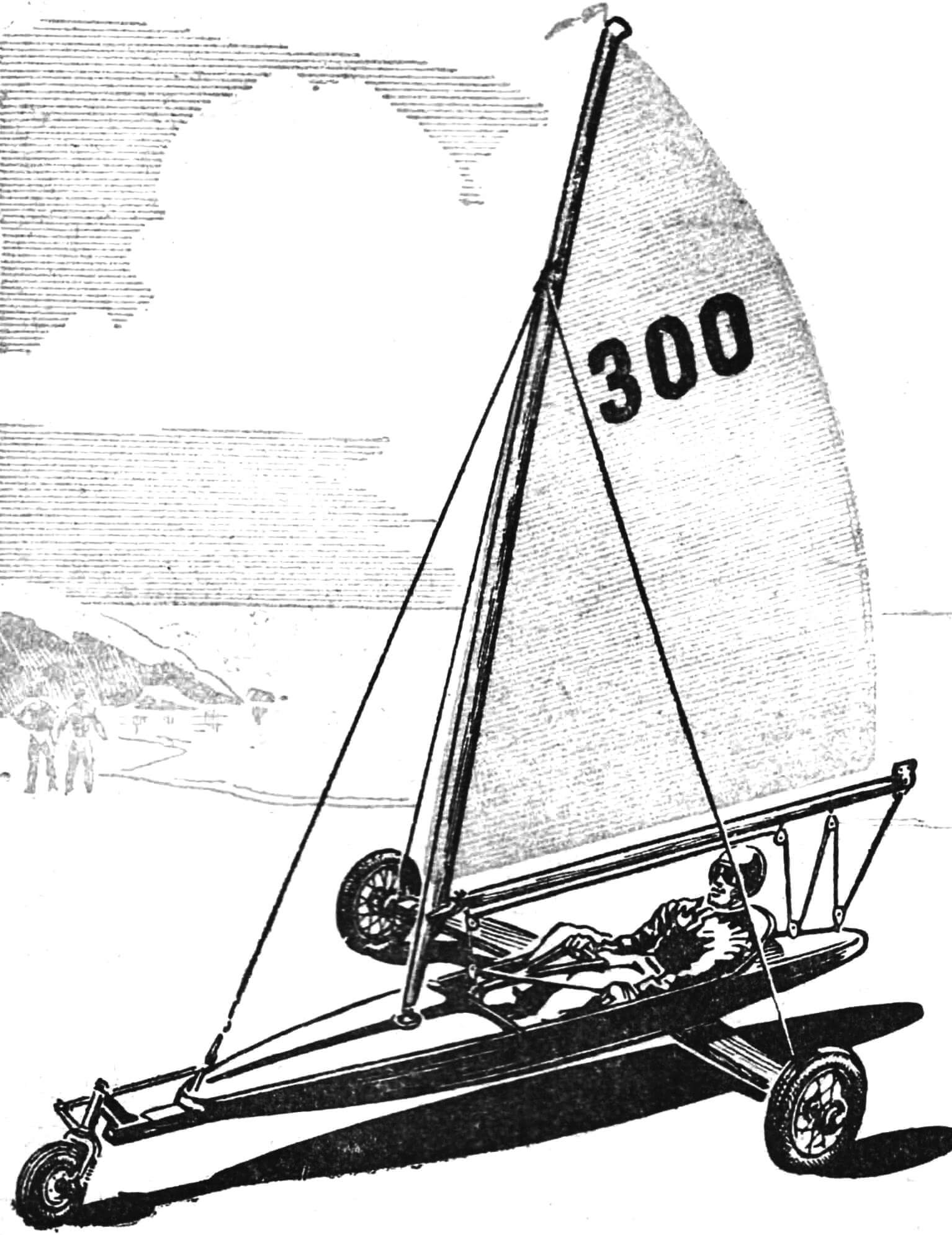
The steering has the appearance of a wooden “crutch” (if viewed in plan), which the yachtsman holds with one hand and which turns the front wheel using a connecting rod. The rear wheels are freely mounted on an axle. Other controls are the sail boom sheet and a brake-hoop, consisting of an iron, slightly bent pipe ending in a flattened lower end and attached to the yachtsman’s seat at arm’s length of the left hand. If you pull the brake, the flattened end of the pipe begins to scrape on the sand or ground and brakes the sailboat.
A land yacht is steered like a regular sailboat.
G. Malinovsky, R. Strelnikov, E. Nazarov
Recommend to read
 The MiG-at
Latest military aircraft, developed in OKB Mikoyan. Developed on a competitive basis with the Yak-130. Designed to prepare pilots for the fighters of the fourth generation type MiG-29... AND THE TRACK, AND DRAINAGE
Our journal has several articles dedicated to the subject of the application with the use of such waste material, as various bottles. We return to this theme, offering our readers the...
