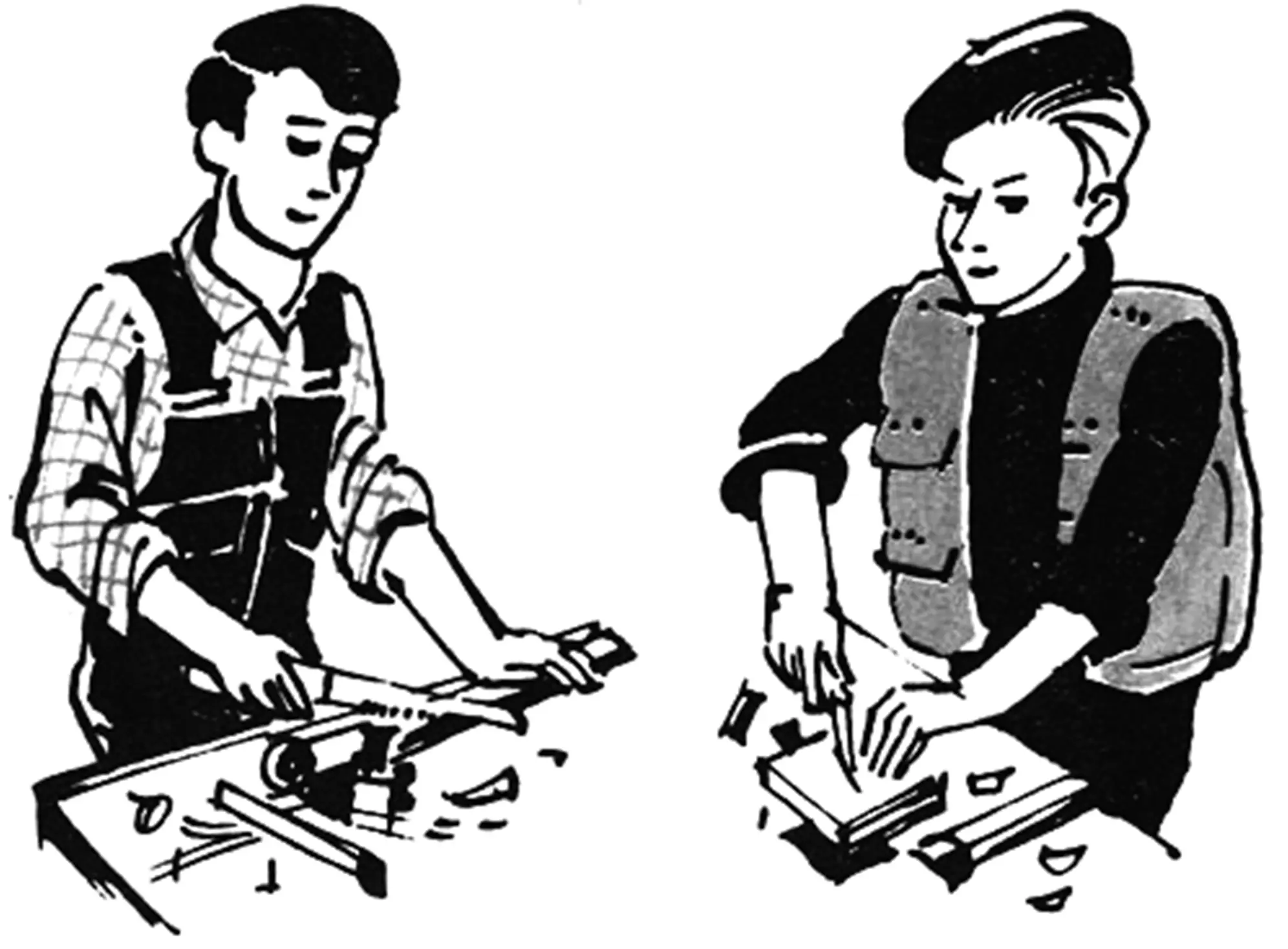
It is well known that metal hacksaw blades are made of excellent steel, so any fragment, even a small one, can be considered a starting blank for a wide variety of cutting tools. The options given here are far from exhausting the variety of devices that can be made from broken saw blades.
First of all, you need to make a handle for the future set of cutters. Use, for example, a tube 20–25 mm in diameter made of any non-ferrous metal. It is convenient because one end can easily be turned into a holder for the cutters, and the other into a case for storing them, plugged with a suitable stopper.
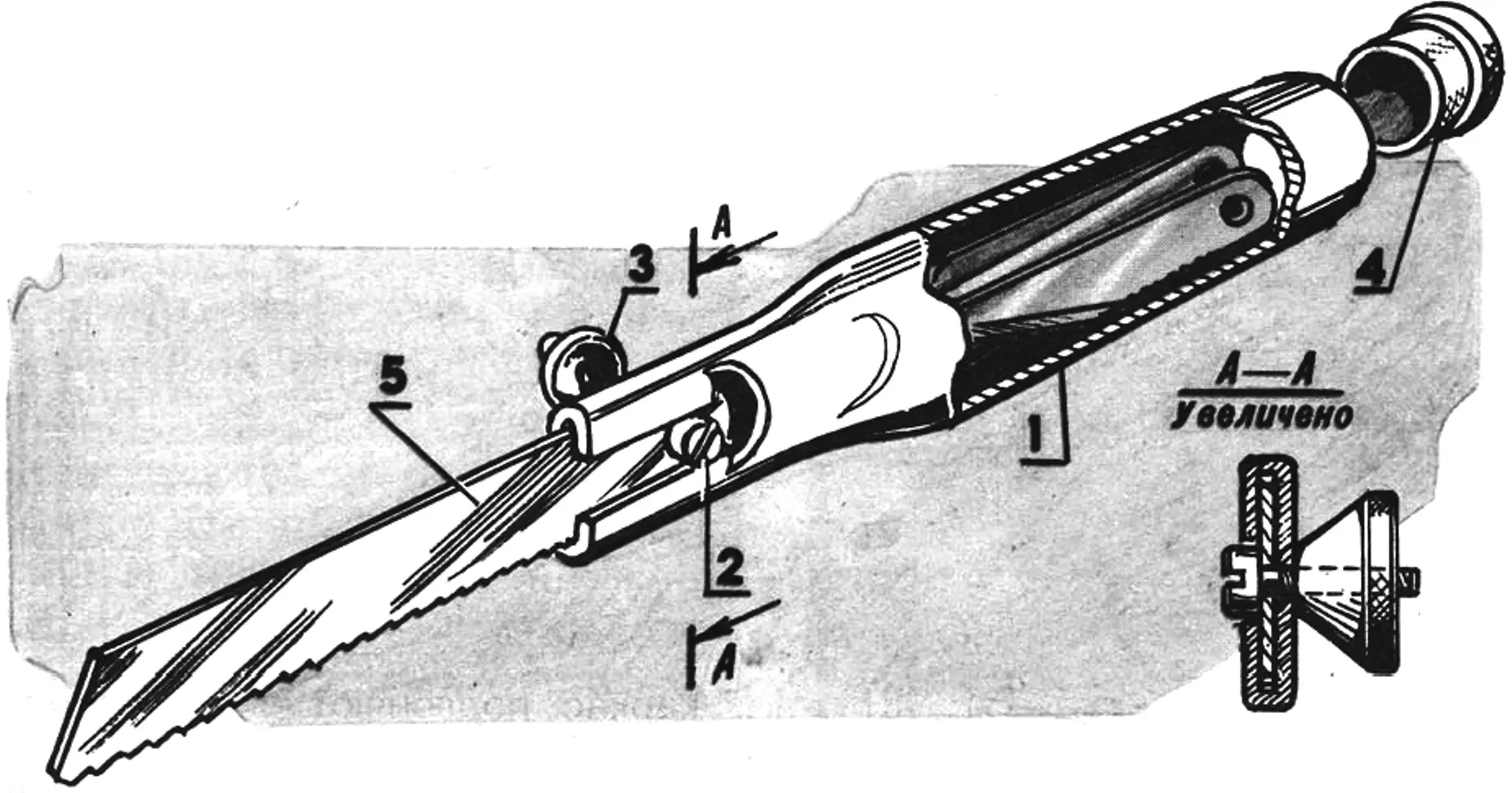
1 — tube case, 2 — clamping screw, 3 — nut, 4 — case stopper, 5 — saw blade.
To make the holder, it is enough to file down one side until a longitudinal groove is formed, then flatten this end after inserting a plate slightly thicker than a hacksaw blade. All that remains is to drill a hole for a clamping screw with a round knurled nut. The same hole is drilled at the end of each saw-blade fragment, previously annealed over a fire (heat to red heat and allow to cool in air).
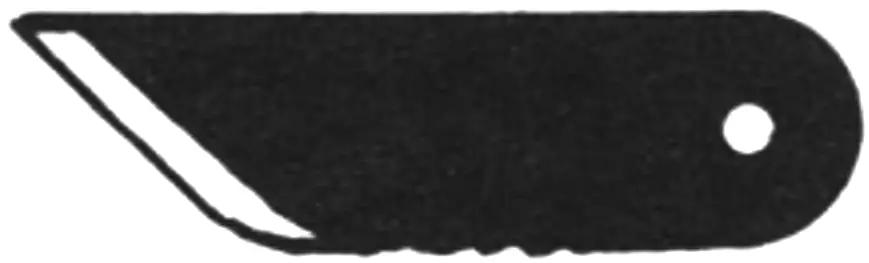
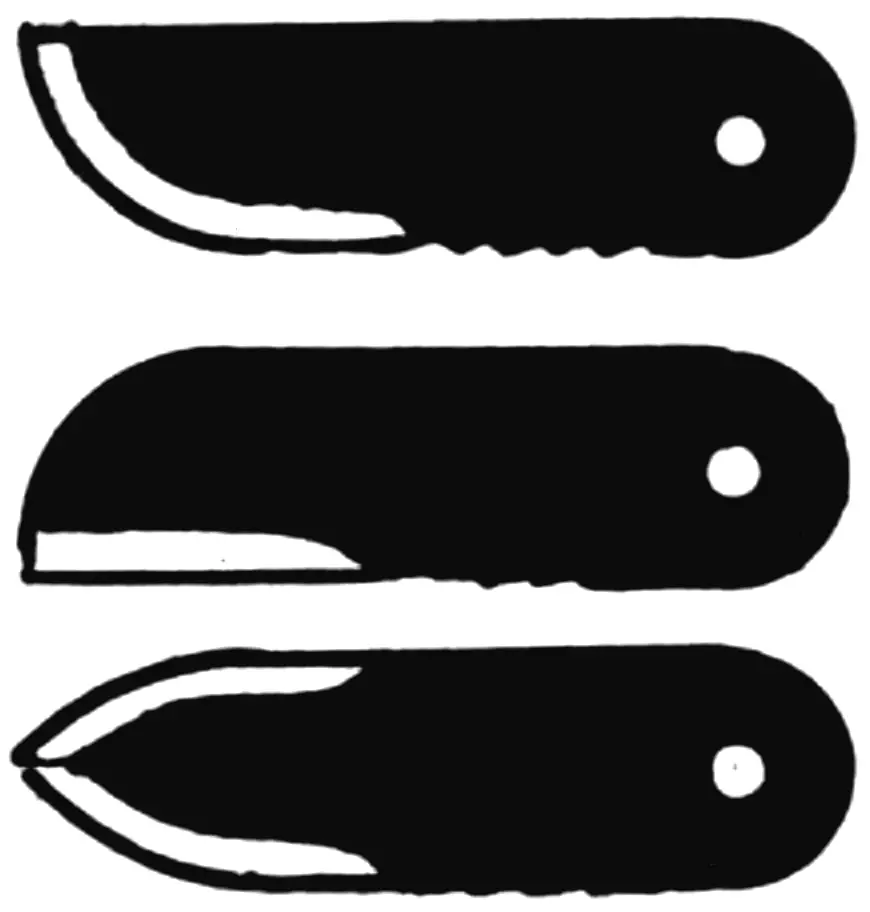




Then start forming the set of cutters. From the longest fragment, make a saw-knife by simply sharpening the toothless edge. From short fragments you can get a whole range of cutters for a wide variety of jobs. For cutting leather, rubber, and cardboard, for example, the so-called skew knife is indispensable: its blade is ground at an angle and on one side only. Similar to it, but with their own grinding profiles, are cutters for woodwork, for example for decorative carving. A small chisel is obtained by sharpening the end edge of a fragment. On a grinding stone it is easy to give the blade a hook shape — this will be a claw for cutting acrylic glass, textolite, getinaks, and other hard sheet materials. And such a claw sharpened from the inside is a handy cutter for splitting electrical cables and stripping rubber or plastic insulation from wires. A sharp beak is a scriber or an awl.
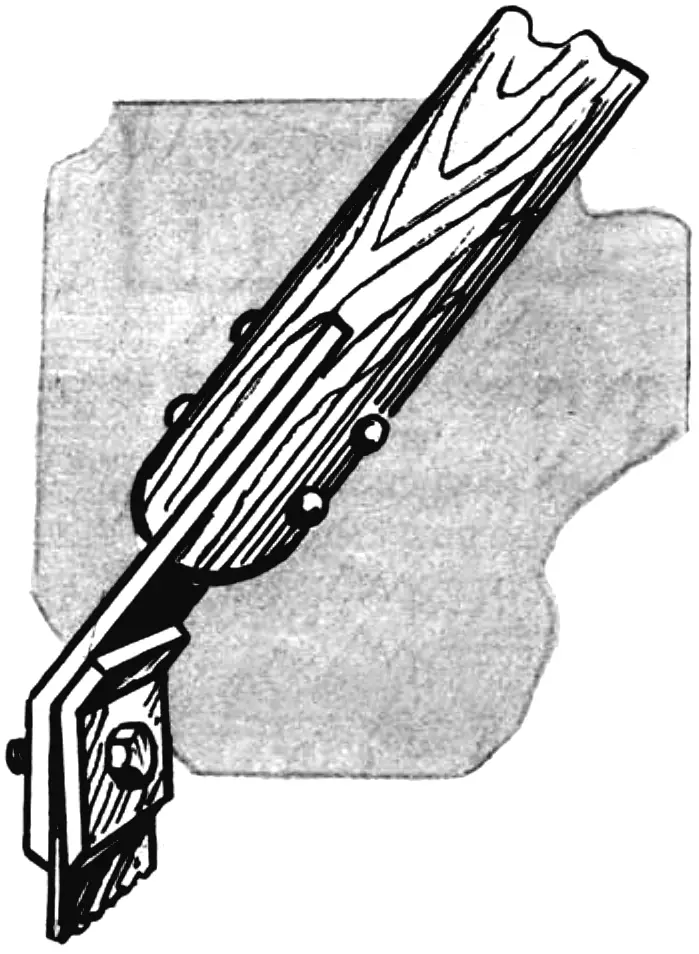
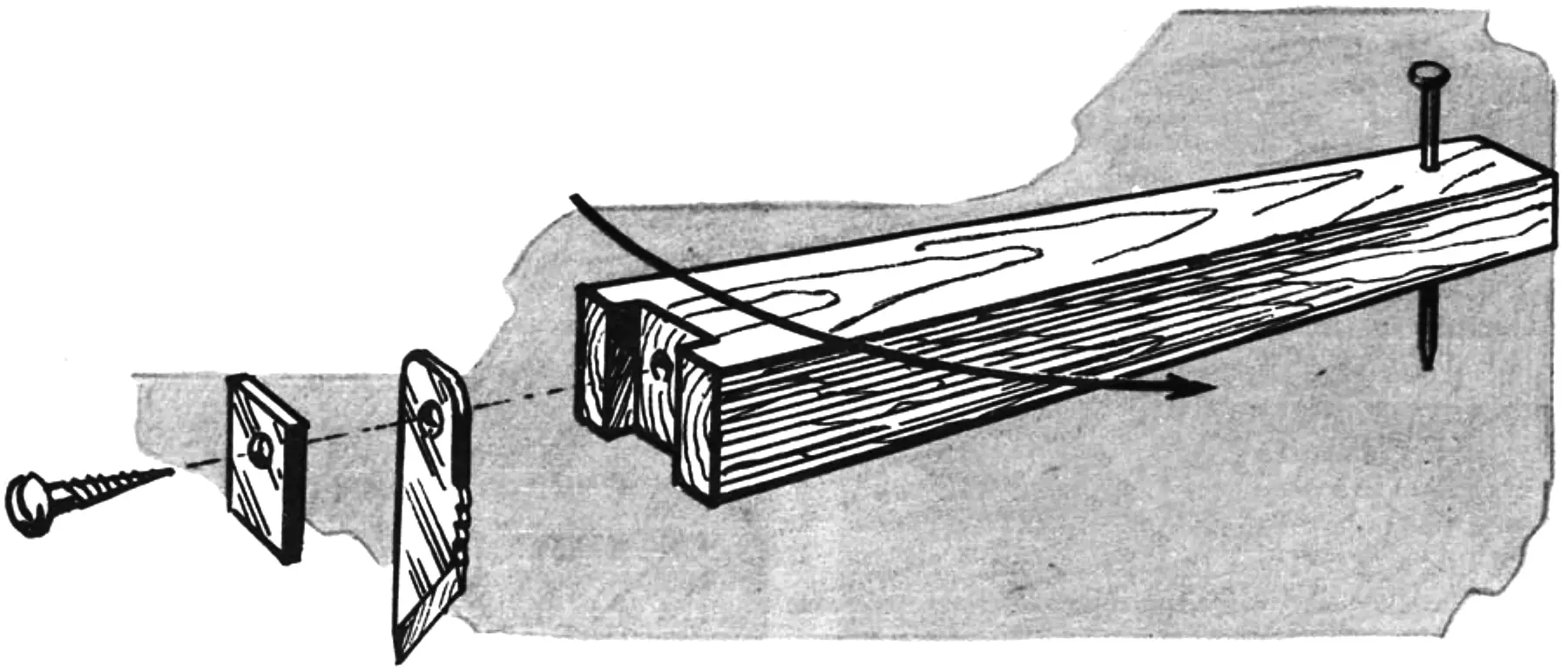
We have given only a brief list of tools made from hacksaw blades, and the variations are truly endless. Take a wooden strip, drive a nail into one end, and cut a groove for the skew knife already mentioned at the other end, fastening it with a screw — you get a compass knife: it is convenient for cutting circular blanks or holes of different diameters; you only need to change the position of the nail.
And even an unfinished saw-blade fragment fixed in a scraper will make it easier to remove rust and clean puttied surfaces, plastic, wood, and non-ferrous metal. No, do not throw away hacksaw-blade fragments: they can find a second working life.
“Modelist-Konstruktor” No. 3’98, M. MALYSHEV
Recommend to read
 AND THE SWARM — IN A BAG
Everyone who decides to engage in beekeeping must prepare themselves for many things. Including the fact that they will have to "remove" swarms alone. This task, I know from experience, is... TRACTOR-UNIVERSAL
This tractor for almost 20 years, and all these years he not only regularly serves his Creator A. A. Safenano from the village of Alexandrov, the Tambov region, but also constantly...
