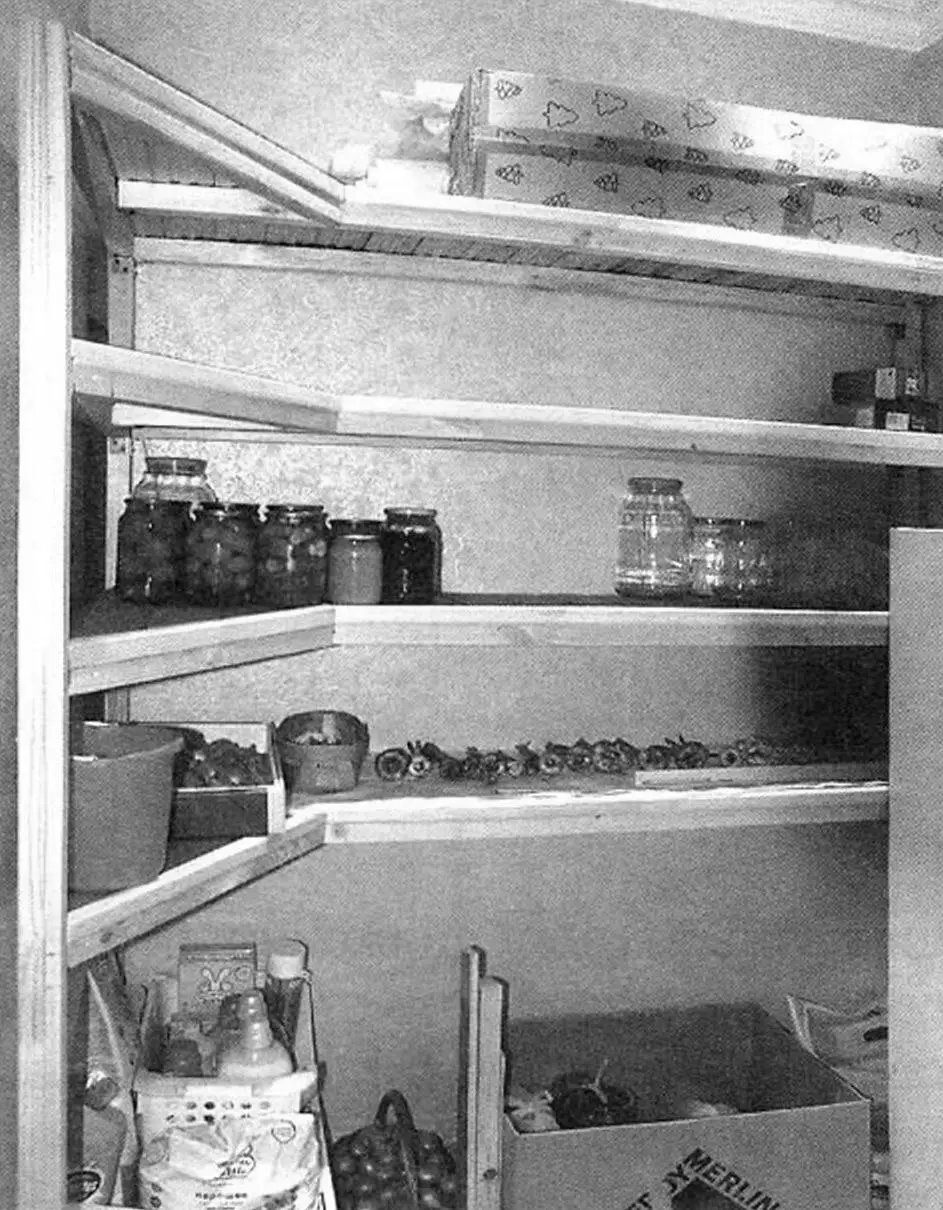
Around the house you often have to make non-standard furniture, especially when bought pieces don’t fit the room. The author ran into this when it came to a shelf unit in the utility room of an apartment.
If you took the traditional route, you could put up the shelf quickly and cheaply. But on a closer look at the planned design, he realized the result would be clumsy and awkward. Worse, people coming in would keep catching on one of its corners (near the door). That led to the idea of a corner shelf unit, and work began in earnest.
After sketching a design and agreeing it with his wife, he went to the shop for 40×40 mm timber. A warning: shop-bought timber is often quite green; if you don’t press it flat for a while in a warm room, it can warp badly and spoil the look of the shelf.
From the timber he made not only four uprights but all the shelf rails as well.
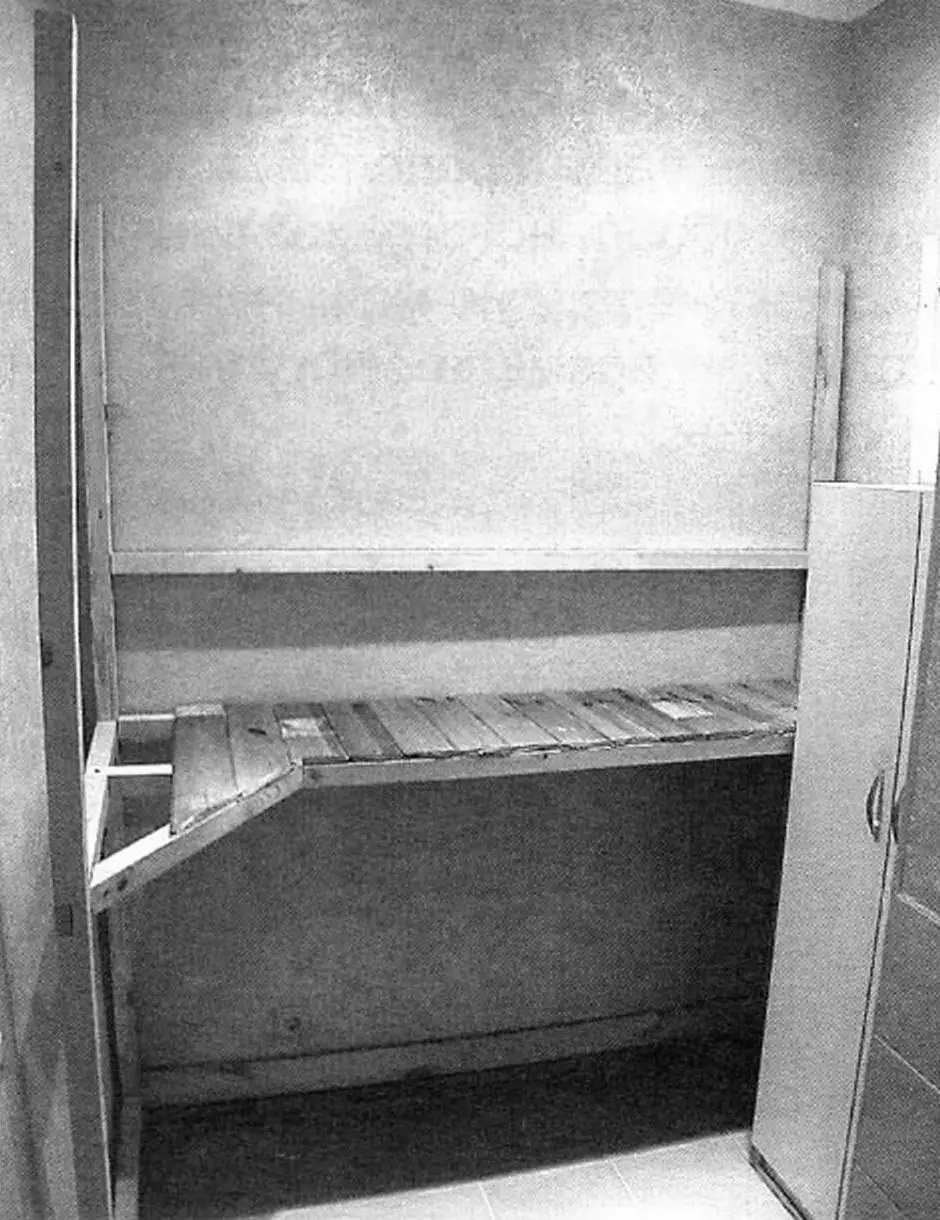
He had meant to join everything with half-lap joints and screws, but that would have required uprights of at least 40×60 mm, assembly in a larger room, then moving the empty unit into the utility space. That was impossible because of a cupboard already there, full of stores.
He had to build the unit in the utility room, so he fixed the rails to the uprights in different ways: both half-lap joints and 20×20 mm metal angle brackets.
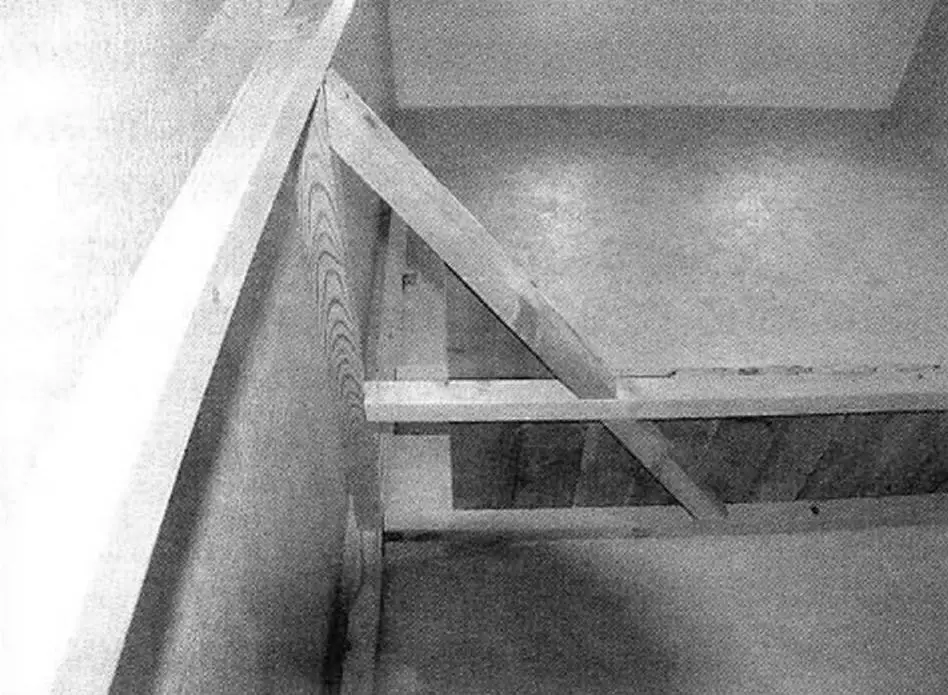
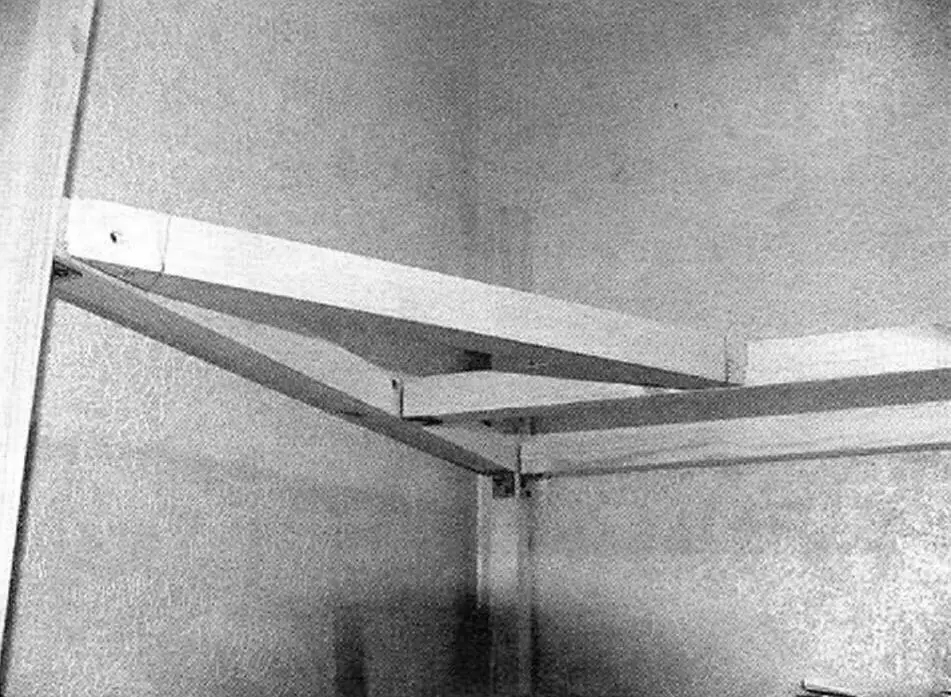
The design was unusual not only for the corner shelves but also for the lower shelf height of about one metre. Under it they planned to put a chest freezer, with room left for other bulky items (e.g. a sack of potatoes if the room stays cool).
Even though he tied the bottom of the uprights with timber and a board, the structure was still rather wobbly—as expected. It should be fixed to the wall with metal angles (two points are enough). You can also add stiffness with a rail forming a rigid “triangle”.
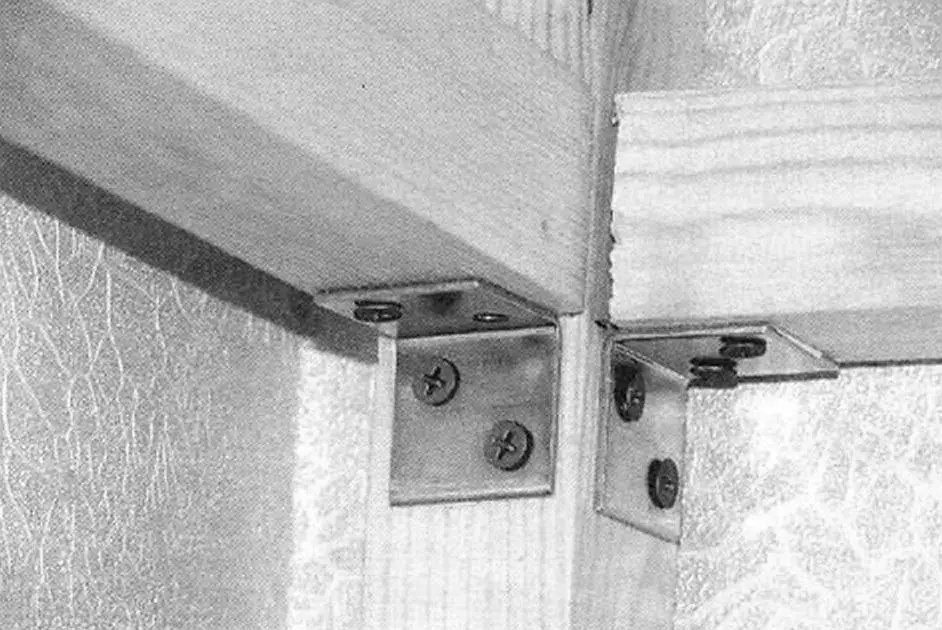
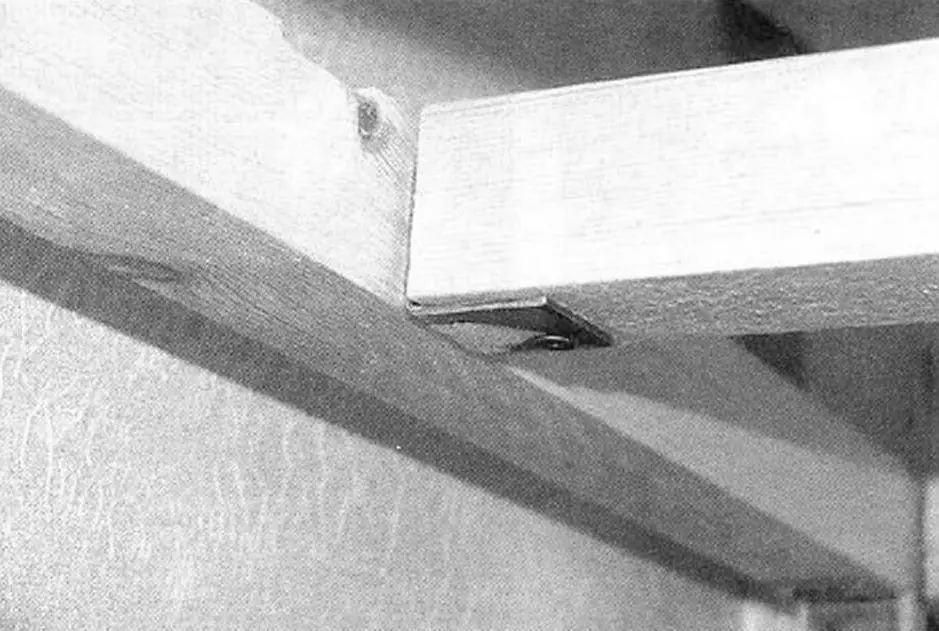
He clad the shelves with tongue-and-groove boards left over from rebuilding the veranda of a country house. At the front he trimmed them with 20×20 mm wooden quadrant; at the back and sides he fixed the same in 40×40 mm so items wouldn’t press against the utility-room walls.
Everyone liked the unusual look of the shelf, and it proved handy in daily use. If you build something similar, check that the room walls are parallel; otherwise a visible gap can open on one side of the unit—even in a new house.
«Modelist-Konstruktor» No. 11’2016, N. VASILYEV
Recommend to read
 CRASHCATCHER
A good assistant hostesses will be crashcatcher for cans with screw locking. To make it simple: two bars must be screwed pieces of steel channel, and one of them should be wearing rubber... FLEET OF HOMEMADE
"Born, live and work in rural areas, writes to the editor our reader N. Kurbatov from the village of Borisovka-2 Belgorod region. Since his school years always was doing something: model...
