Did you ever, as a child, send toy cars down a slope, competing with friends over whose would roll faster? Now this pastime is taken seriously by perfectly grown-up people. The event is called “Valve Cover Racing.”
A valve cover is a part of an internal combustion engine that closes the valvetrain to protect its components and to keep oil inside the lubrication system. Originally, valve covers were stamped from steel. Cast aluminum covers became more widespread: at the same weight they are stiffer.
A little about the history of this unusual and highly spectacular hobby. It originated in the USA several decades ago as a children’s game. Standards gradually took shape, and unified rules appeared. The length of the slope-track is 7.3 m, the height is 1.5 m, and the incline is about 35 degrees. The course has two separate lanes 400 mm wide, fenced with sideboards to rule out collisions. The track is equipped with a traffic light and a starting lever for each competitor. A video camera is installed at the start for recording. When the green light comes on, the athlete lowers the blocking lever, and the model built on a valve cover of an internal combustion engine begins its run. Everything depends on gravity, weight, and the features of the machine.
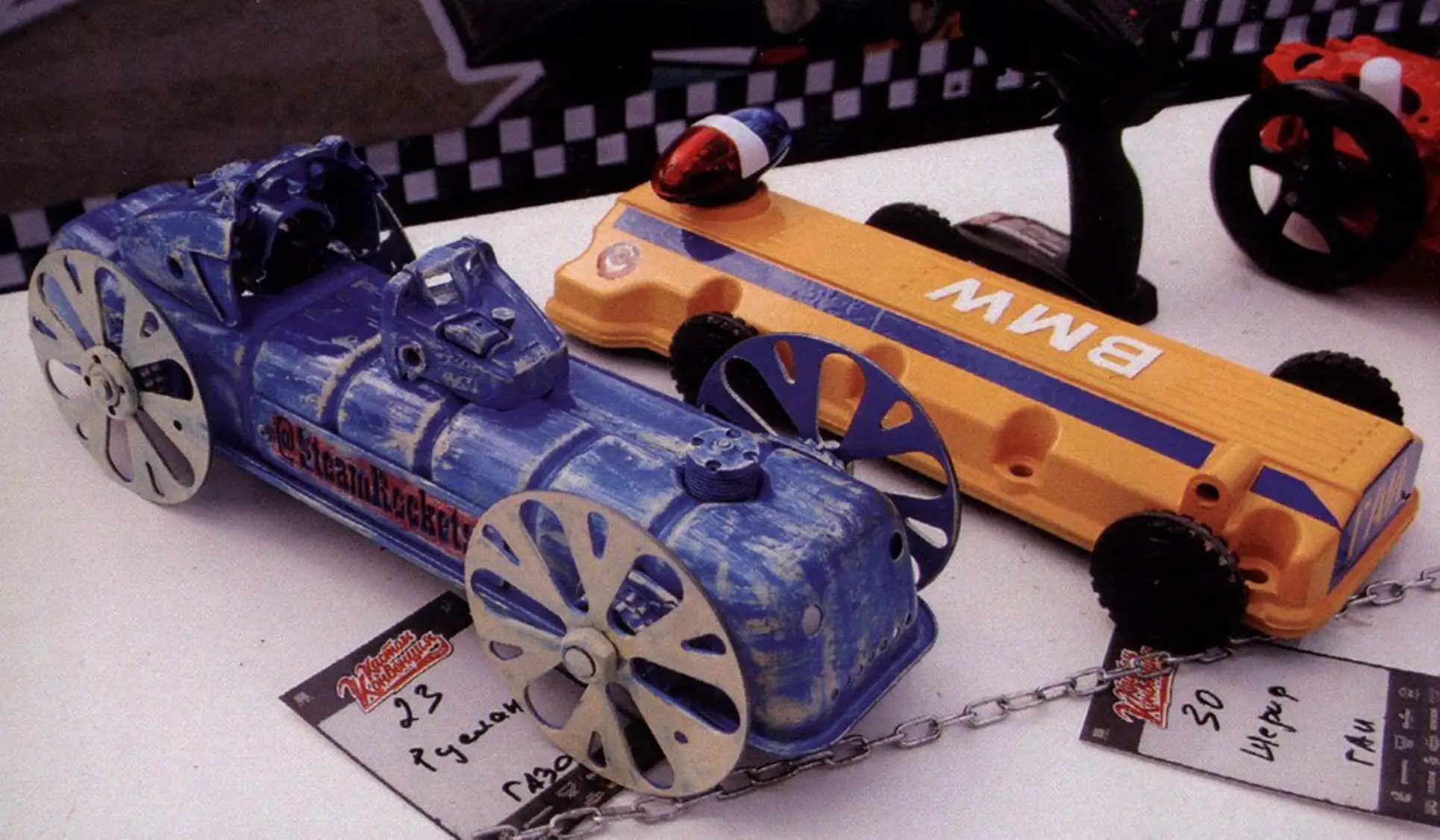
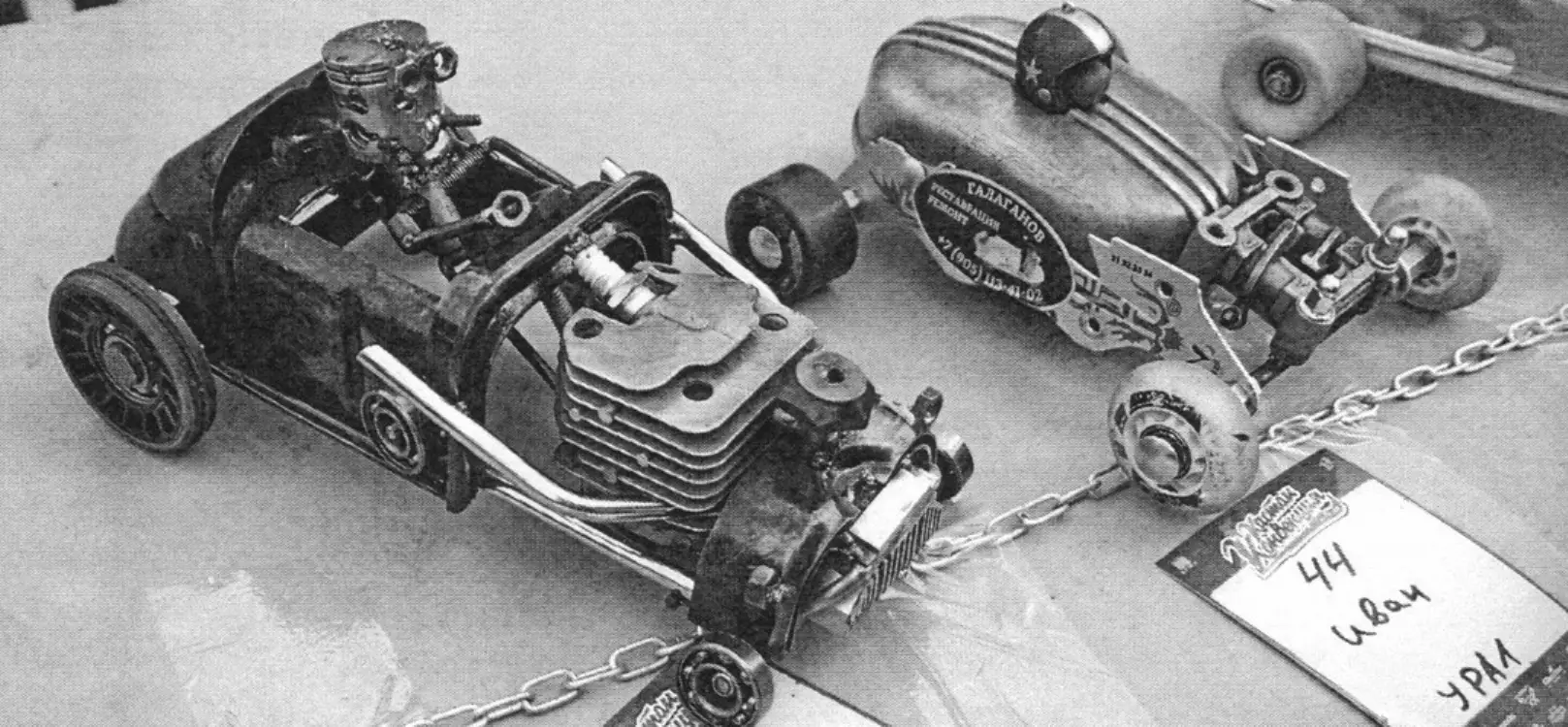
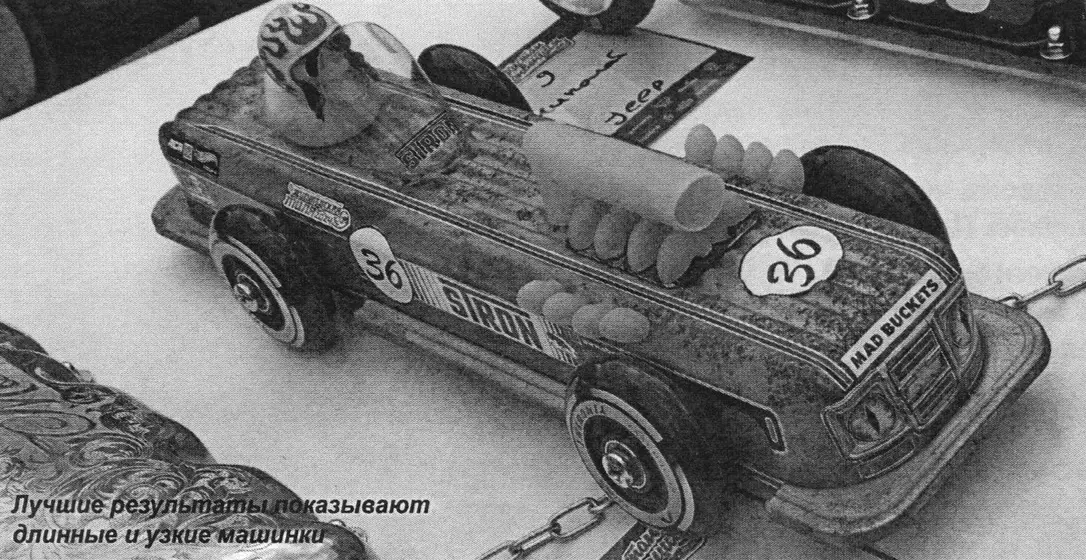
At the same time, the design of cars made from valve covers is also strictly regulated. At least 75% of the original base must be retained; overall weight must not exceed 4 kg; overall length must not exceed 600 mm; width must not exceed 300 mm. Any drives and steering are forbidden. Three or four wheels up to 150 mm in diameter are allowed. Downforce wings, spoilers, air flaps, various decorative ornaments, stickers, and the like are permitted. They are of little practical use, but spectators love such installations. Atmosphere is also added by competitors dressed in racing gear, and some even in fireproof suits and helmets — almost like in F1, only much more fun!
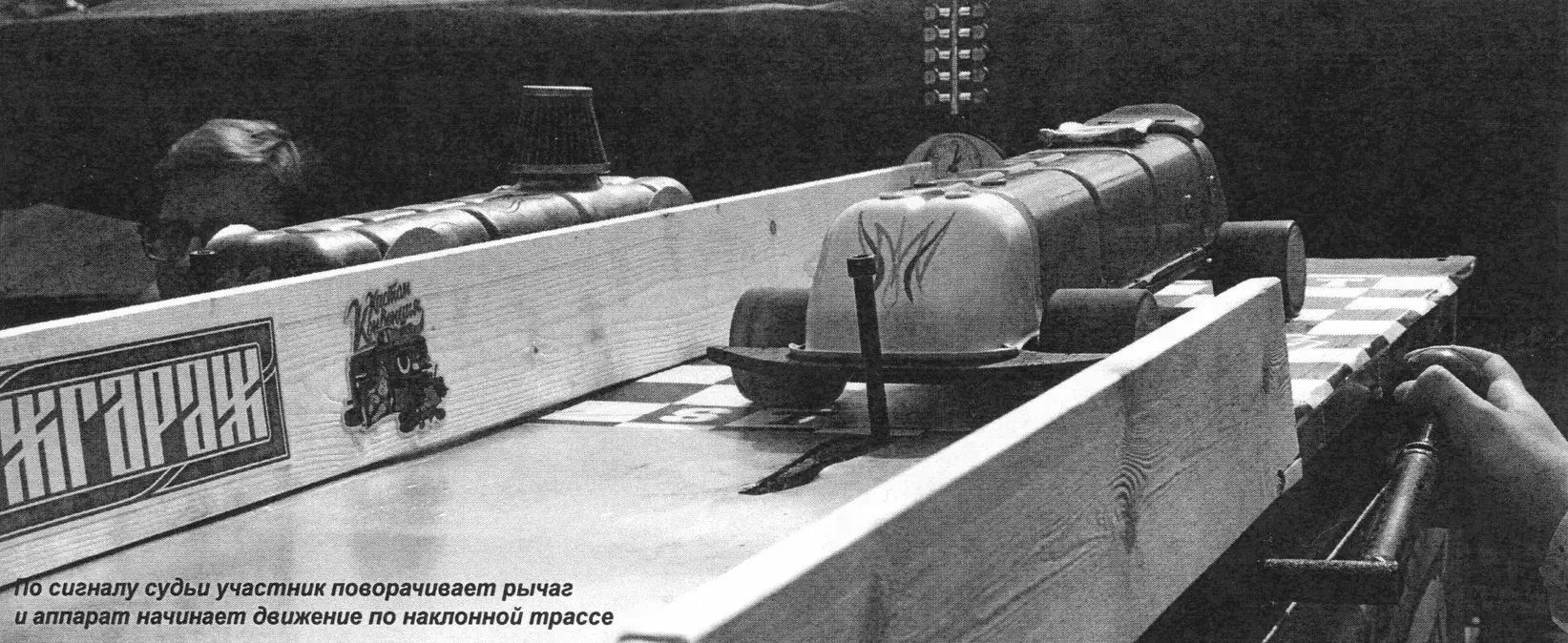
If a competitor makes a false start, they are disqualified, so good reaction and a keen eye are required. If the car is set on the start unevenly, it may clip the sideboard, lose speed, turn sideways, or even roll over. The winner, of course, is the racer whose model covers the course first. And if neither finishes, the heat winner is decided by the distance covered. That racer advances to the next round, and so on until the final.
“Valve Cover Racing” is open to everyone. Such parts from car or motorcycle engines can often be found in garages. Or bought in any auto-parts store. No wonder that several months before the competition all starting slots (about 50) were already taken.
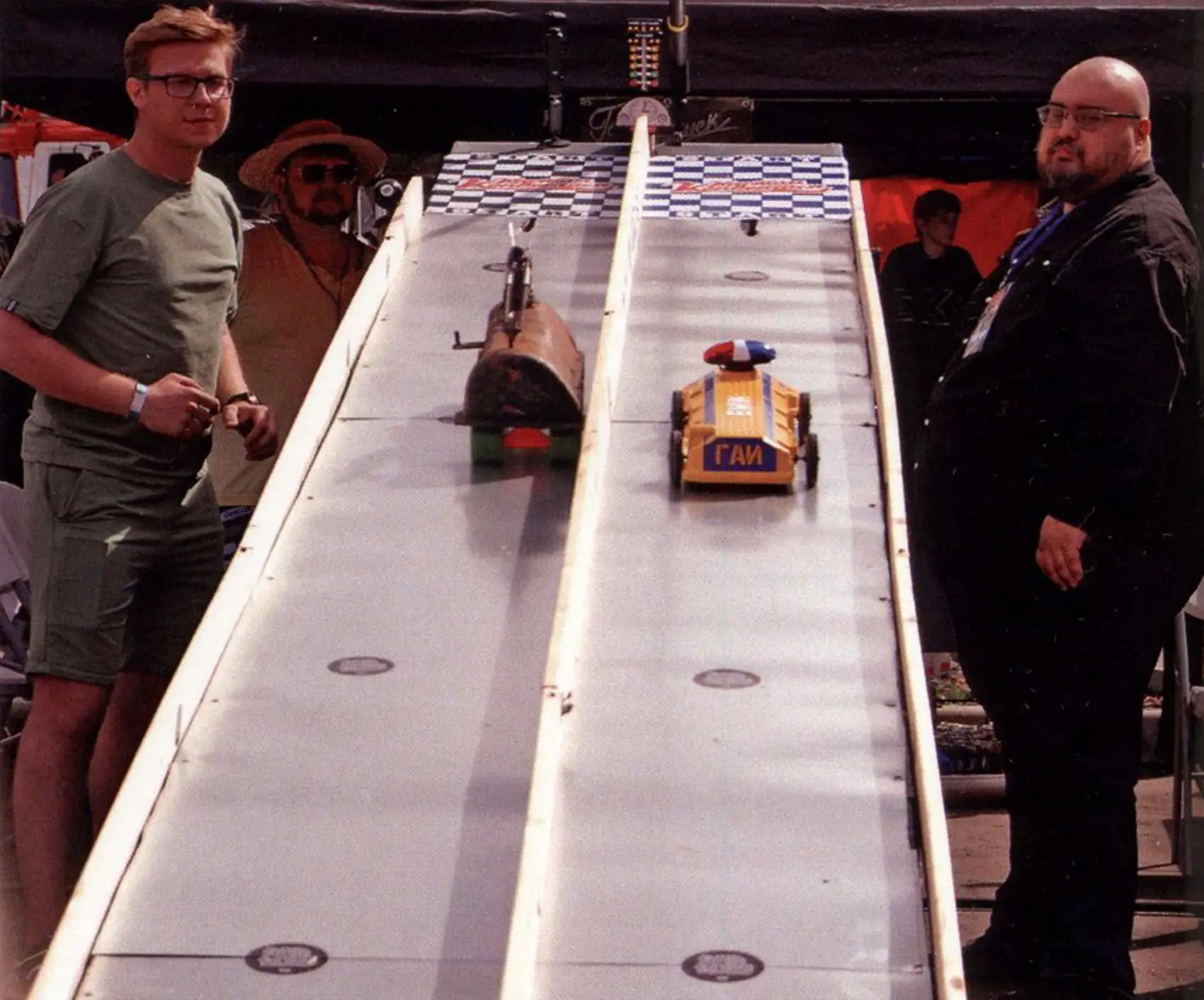
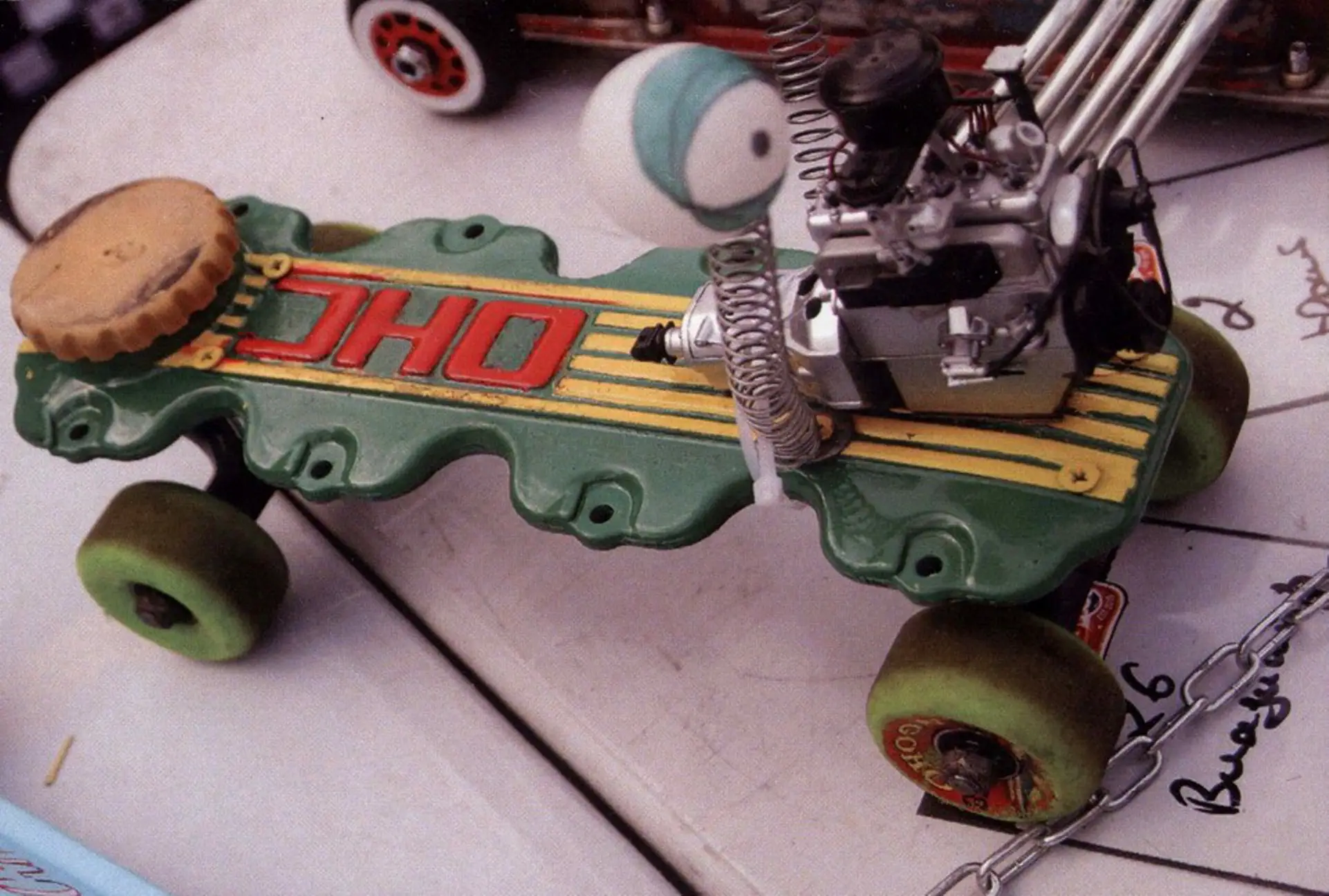
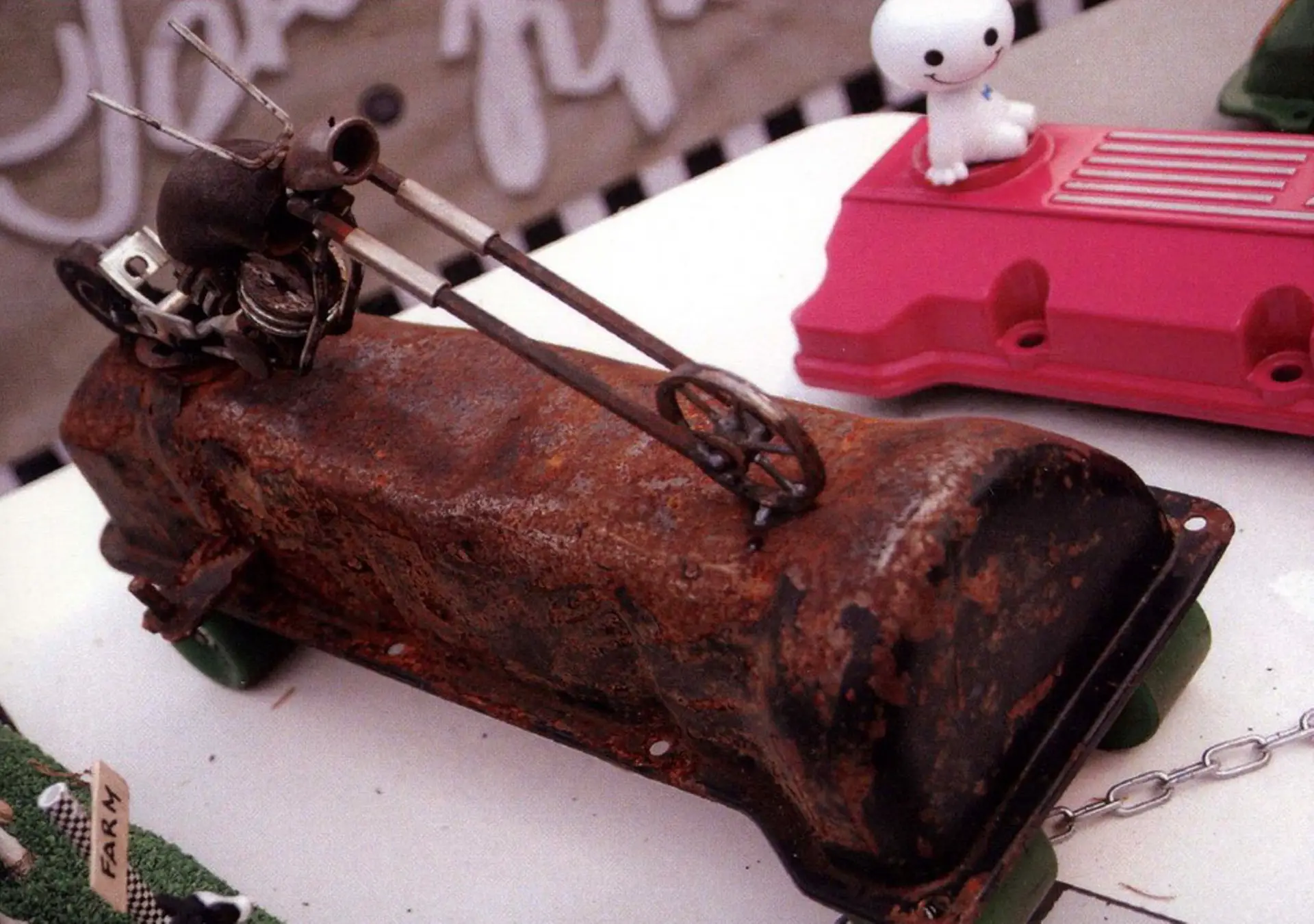
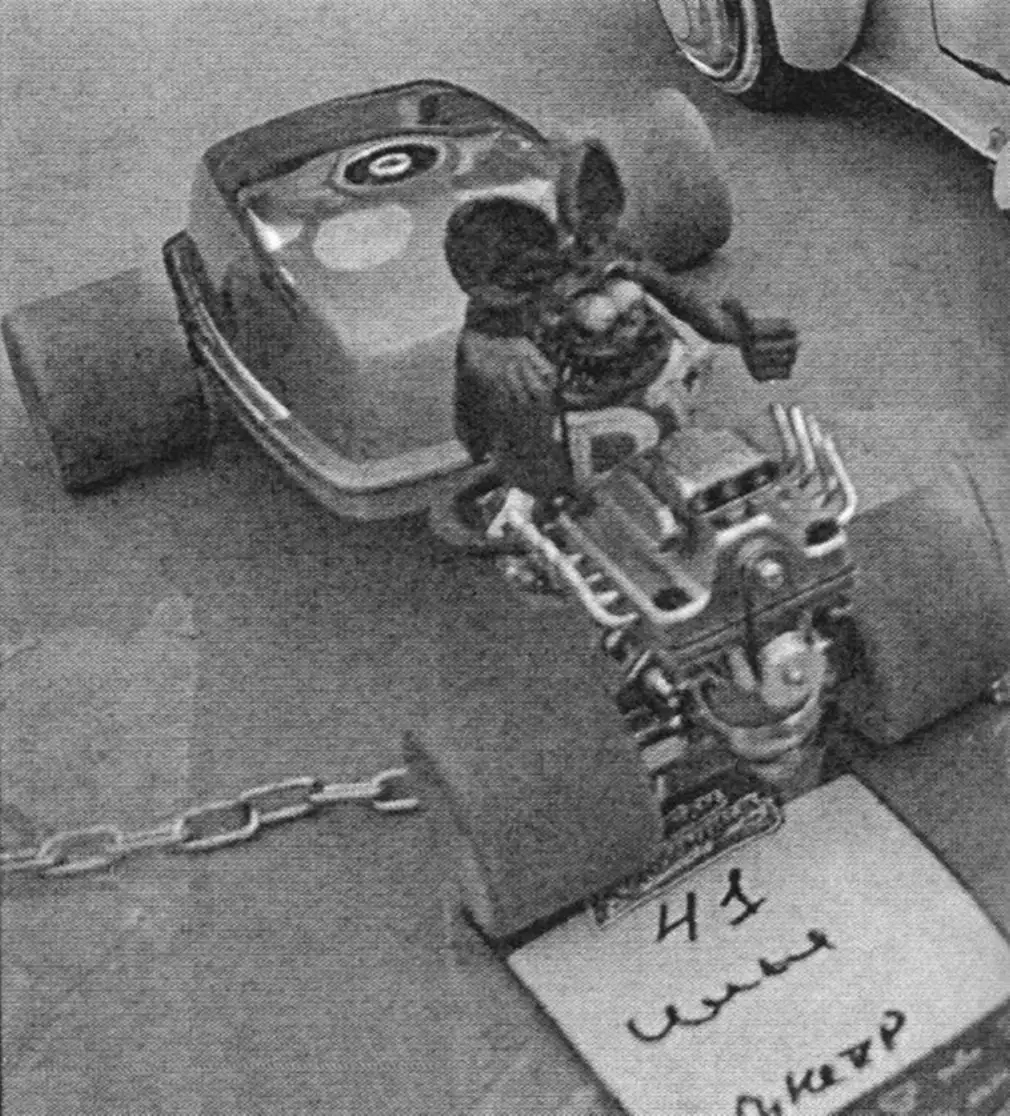
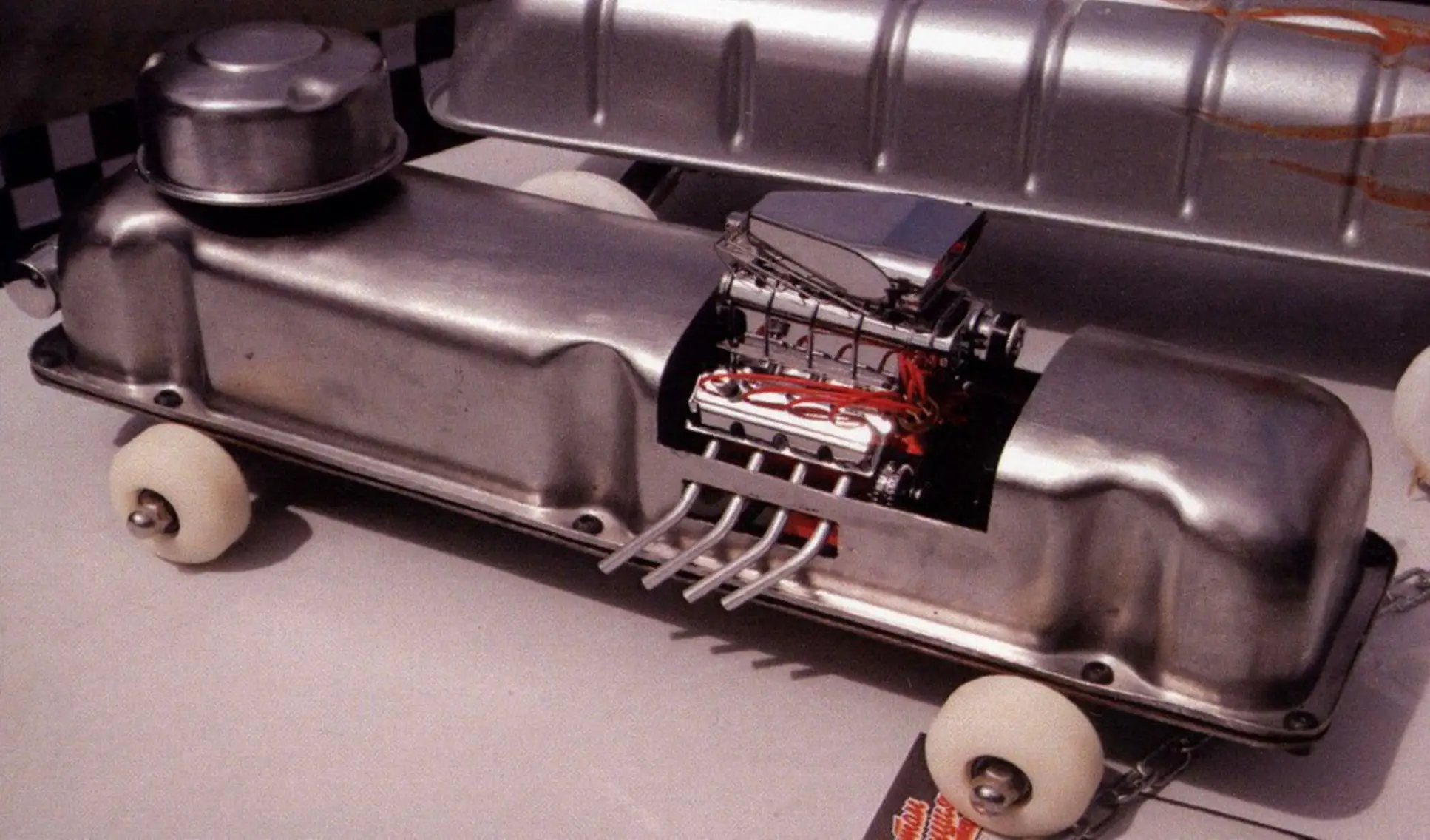
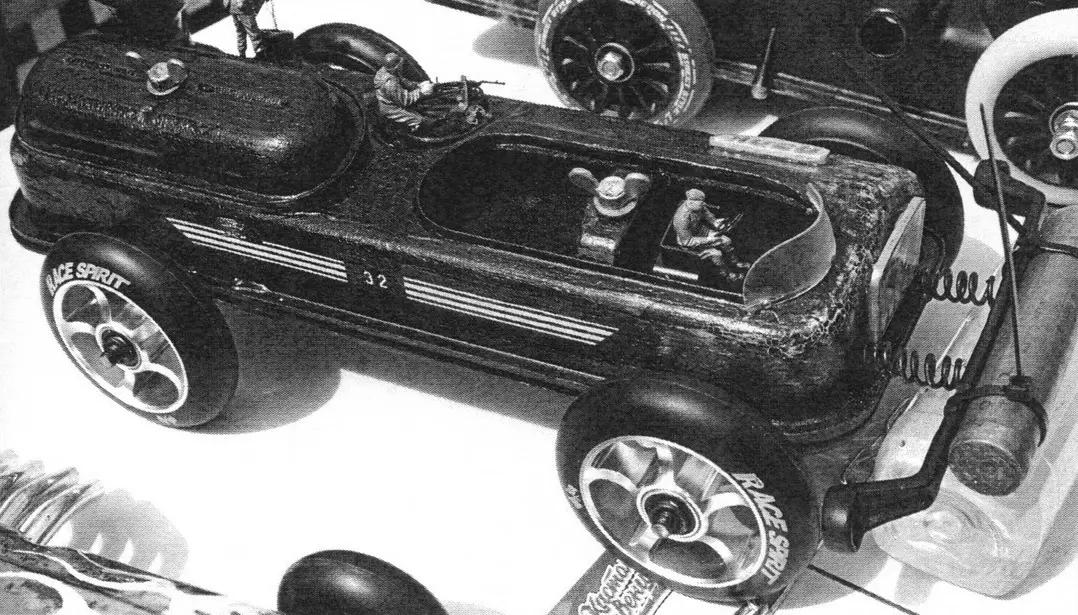
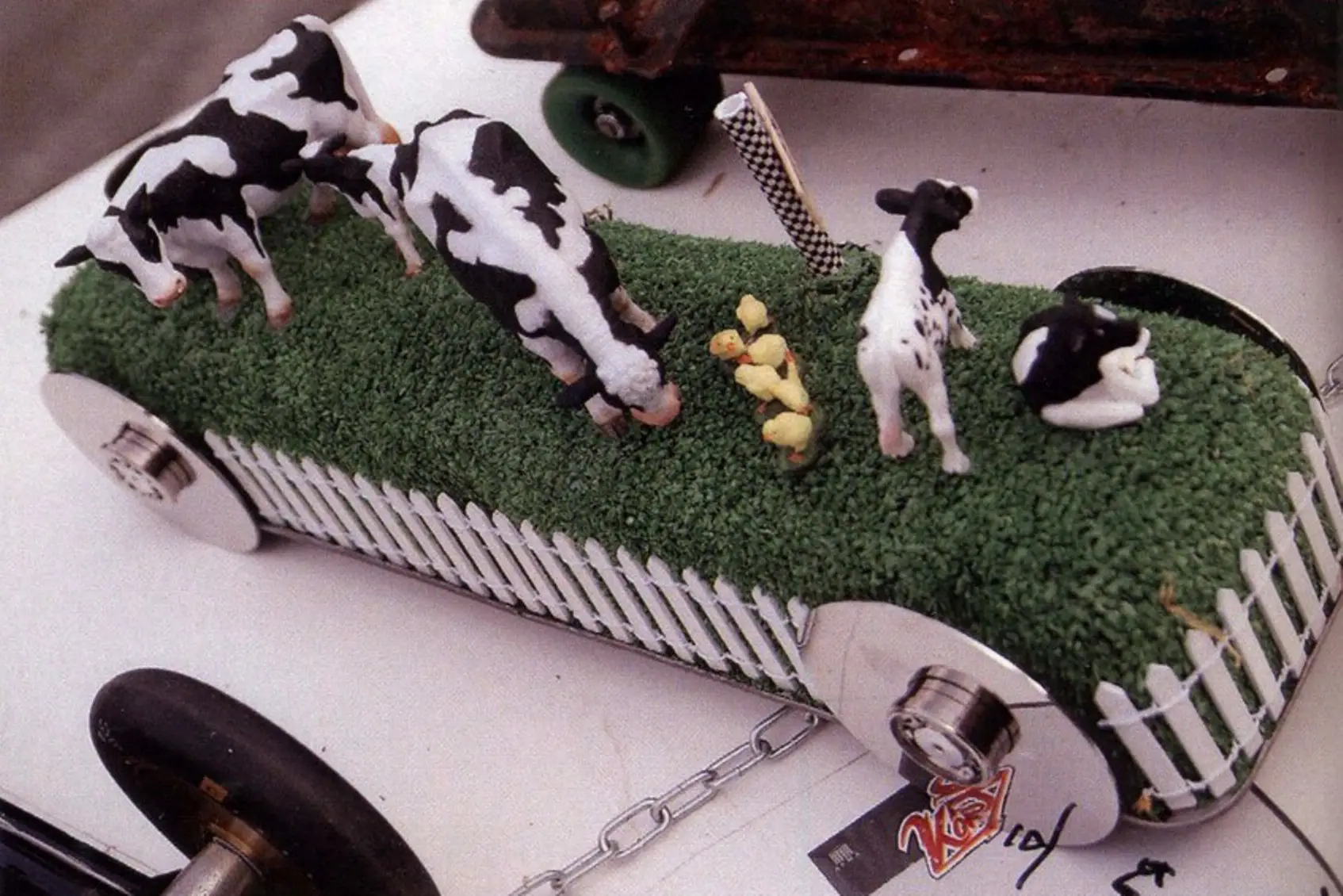
However, despite the democratic rules and simple construction, building a championship car takes skill. The main problem is the modest weight of valve covers — about 3 kg. Some therefore weighted them with a fastened bottle of water, but that did not look very elegant. Credit where it is due: to get close to the coveted 4 kg, most racers approached the task with imagination. Some, for example, styled the covers as real cars. Someone built a cockpit and put a “driver” at the wheel. One competitor built an entire diorama with a “crew” dedicated to the Great Patriotic War. And charming Nastya, who named her model “Farm” (based on a GAZ-21 engine cover), arranged on it… a lawn with cows and chickens grazing at 1:50 scale! Several participants mounted scale copies of real engines on top of the covers. A rusty rat-look car also competed — a VAZ-2107 cover decorated with a homemade model of a custom motorcycle.

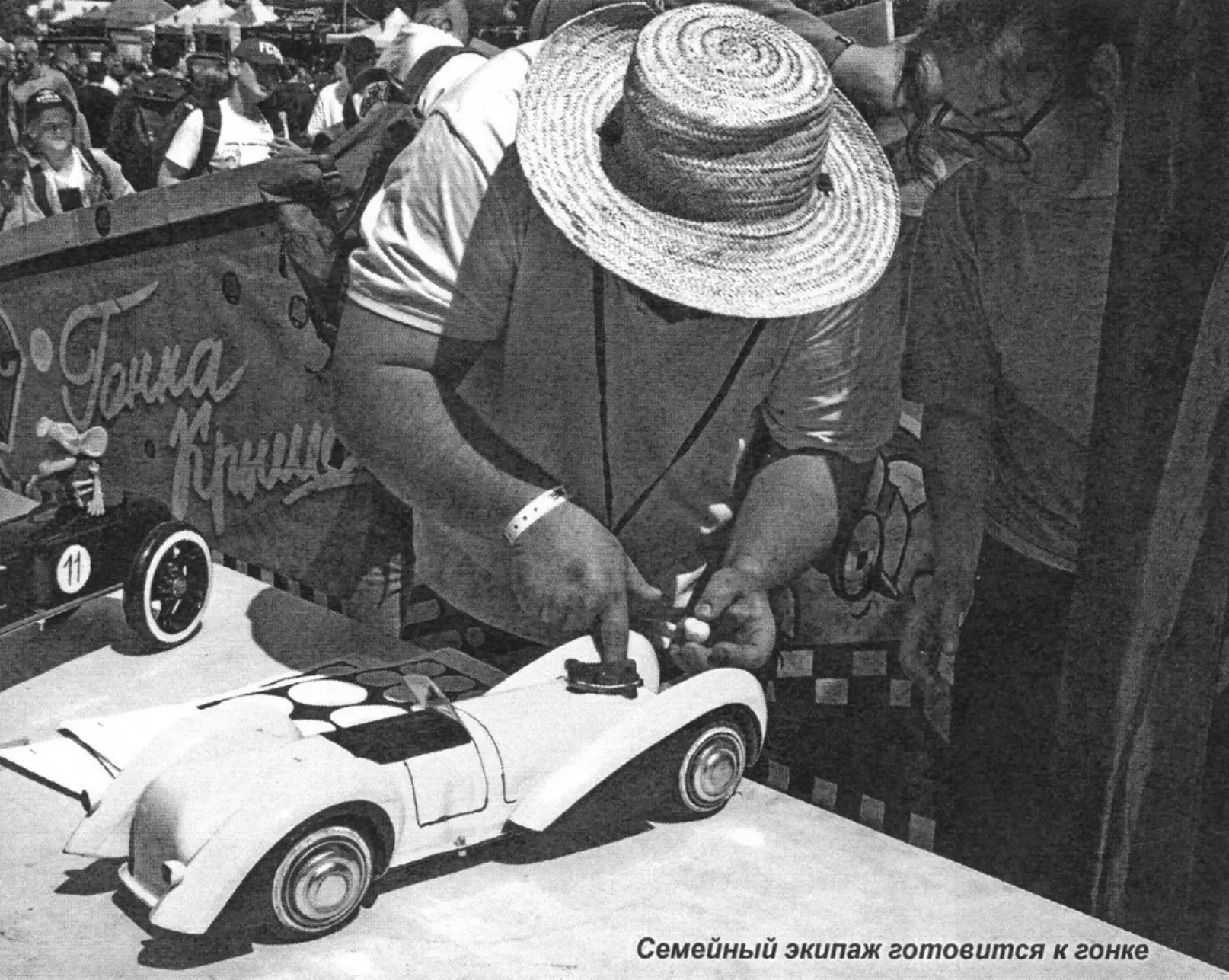
As the heats showed, a lot of success in the competition also depends on the chassis. A simple layout with rigid axles and wheels made from CDs proved quite common. Thanks to their large diameter and small thickness, they have low rolling resistance. However, if the car is set unevenly at the start, large wheels may clip the track sideboard, which can turn the car across the lane. To prevent that, some builders used more complex solutions with original wheels, bearings, and even a working suspension. For those who plan to enter similar events in the future — a tip: all else being equal, the best results were generally shown by heavy, long, and narrow cars.
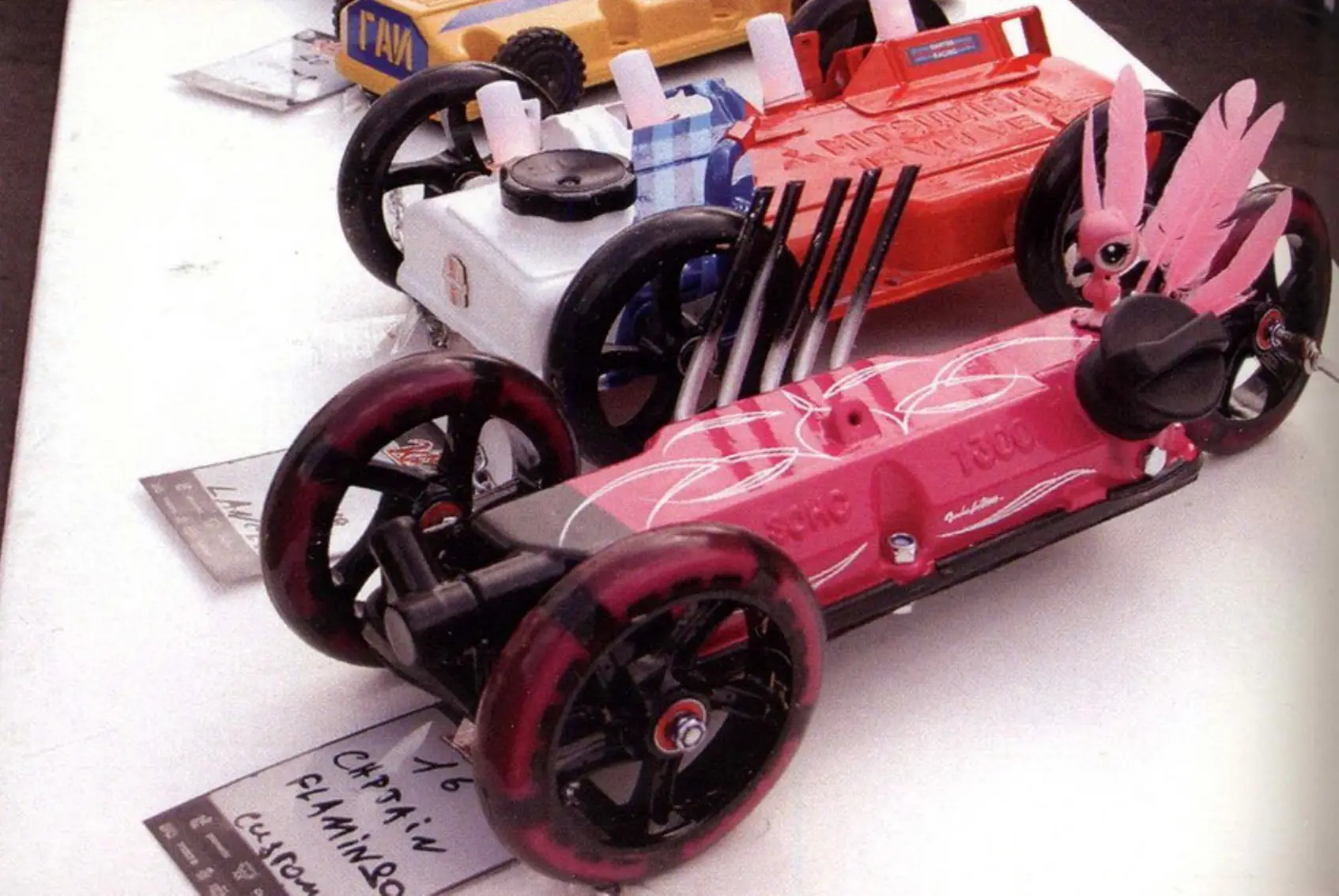
The first Russian “cover races” have taken place — everyone liked them! They are planned to become annual, and separate prizes will also be established for model design and original competitor costumes. Spectators suggested another idea: ICE valve covers are fine, of course, but why are oil pans any worse?! You could build a whole Noah’s ark from them! So perhaps another new sport will soon appear. Fun for children, and interesting for adults!
“Modelist-Konstruktor” No. 8’2025, Andrey NIKITIN
Recommend to read
 HANG FROM NAIL
Sometimes to connect two devices or articles required joint called a swivel. It provides independent rotations of one part relative to another. The swivel is often used in conjunction... AIR PROPELLER FOR A WIND GENERATOR
Unfortunately, power problems are occurring more and more frequently, and there is no guarantee that you will be spared this fate, regardless of where you live — in the city or,...
