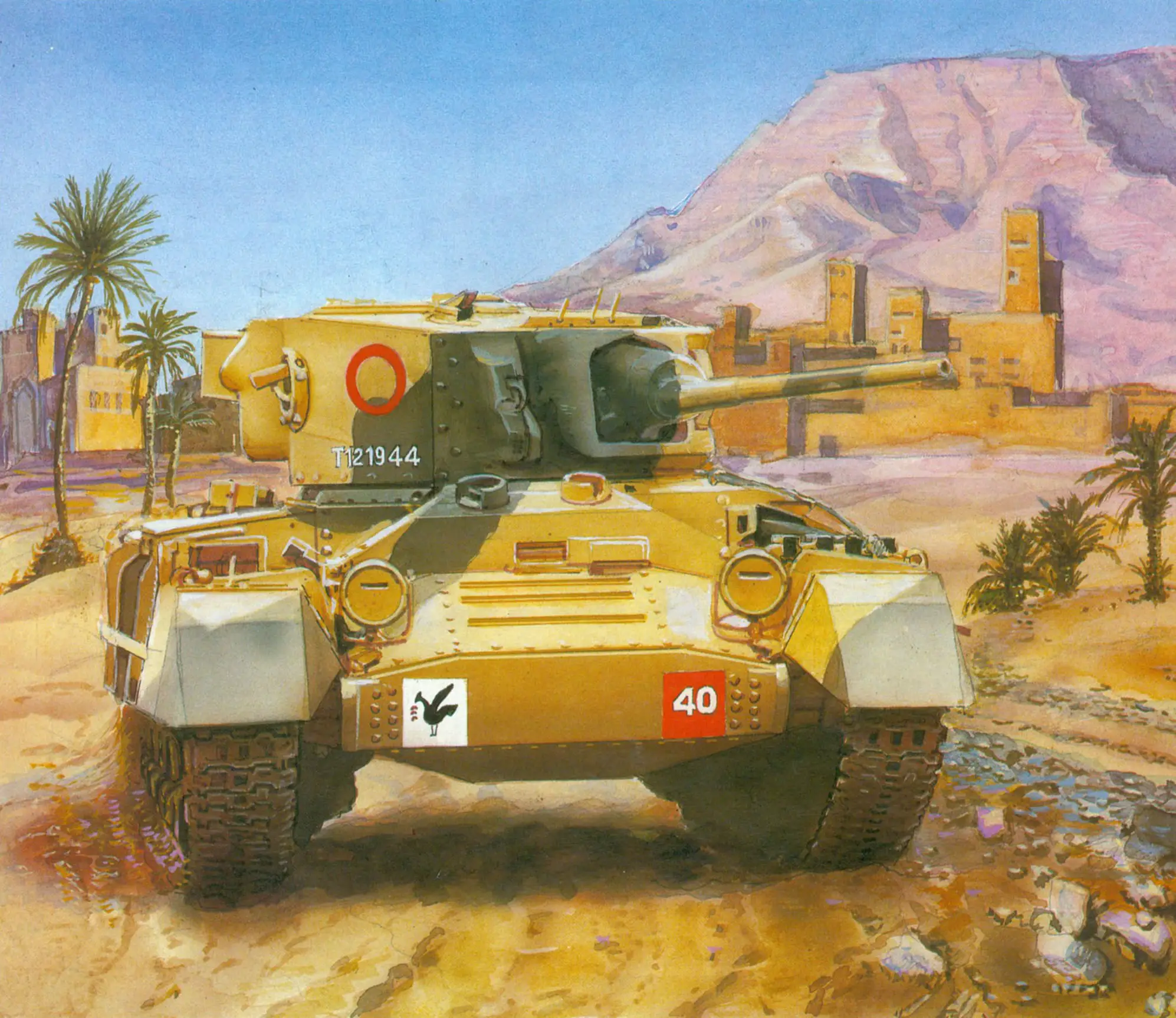
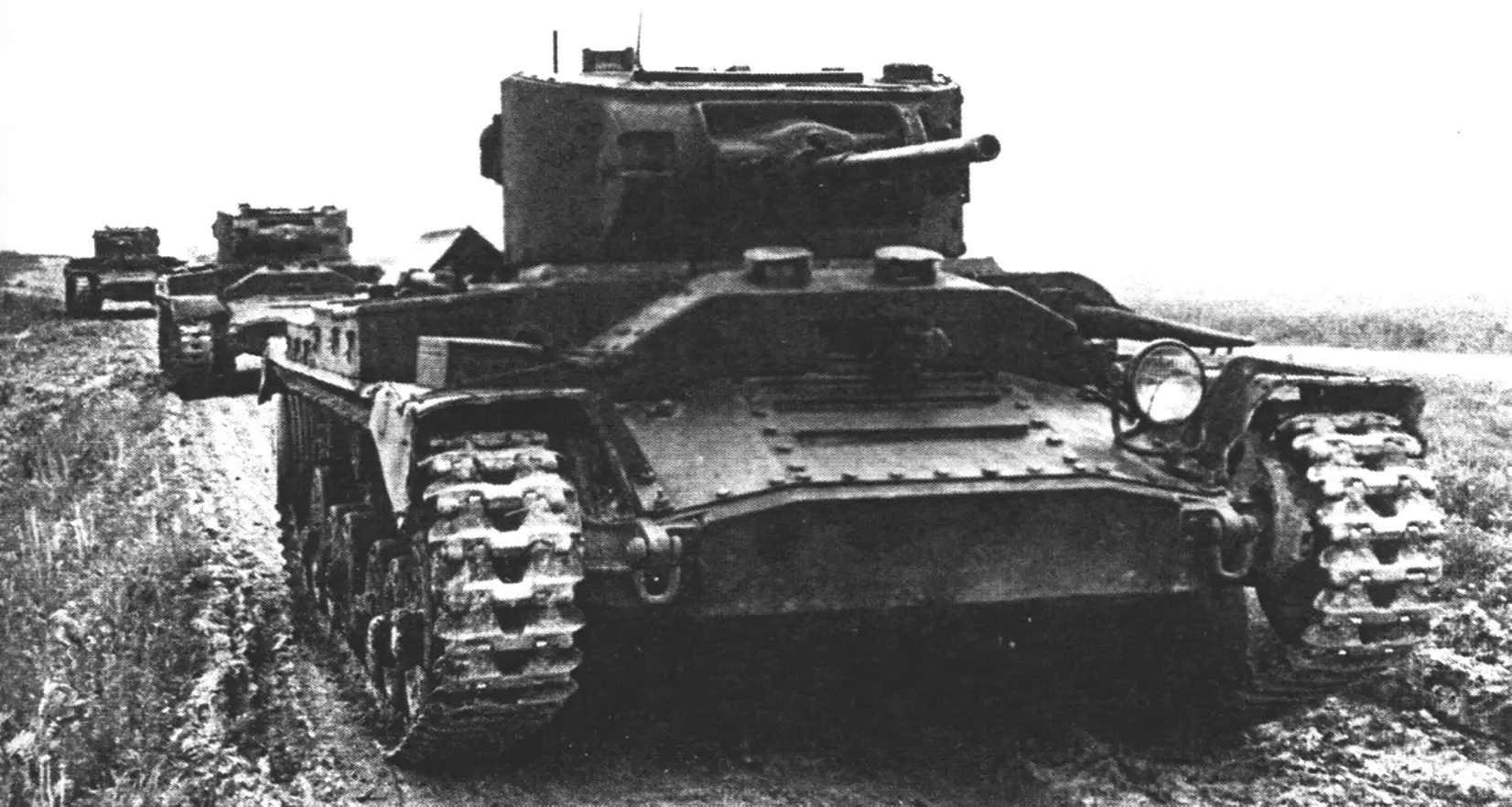
The British Valentine infantry tank was one of several tank types supplied to the USSR under Lend-Lease during the Great Patriotic War. In terms of the number of foreign combat vehicles, as well as its popularity with Soviet tank crews, it ranks second only to the American Sherman. By the end of the war, the Soviet Union ordered only Shermans and Valentines, while the British continued producing their tank until 1944 solely to meet Soviet orders.
At the beginning of 1938, the British War Office proposed that Vickers-Armstrong Ltd. either participate in the production of the Mk II infantry tank or develop a combat vehicle of its own design to similar tactical and technical requirements. Drawings of the new tank were submitted to the War Office on 10 February 1938, and its full-scale mock-up was completed by 14 March. However, the military were dissatisfied with the two-man turret and spent a whole year deliberating whether to accept the project. The worsening situation in Europe contributed to the first production order being issued on 14 April 1939.
The Valentine infantry tank had a conventional layout with rear-mounted drive sprockets. The principal feature of the hull and turret design was the absence of frames for their assembly. Armour plates were machined to corresponding templates so that they interlocked during assembly. The plates were then fastened together with bolts, rivets and keys. Tolerances in fitting the various parts did not exceed 0.01 inch!
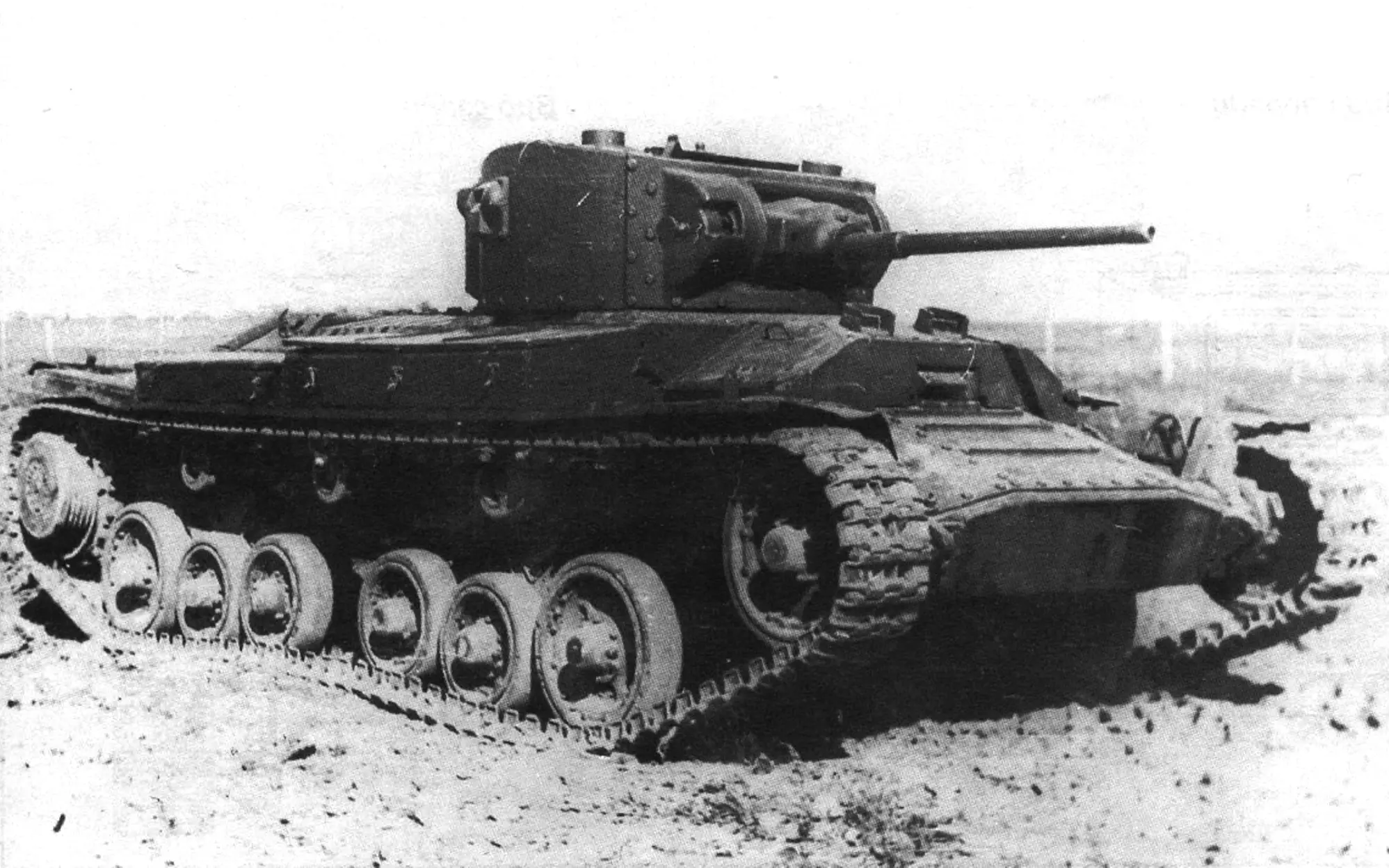
The driver’s position was in the centre of the front of the tank. Two hatches with folding covers were provided for entry and exit. The other two crew members—the gunner and commander (who also served as loader and radio operator)—were accommodated in the turret. A 2-pounder gun and a coaxial 7.92-mm BESA machine gun were mounted in a cast mantlet in its front. To their right, in a separate mantlet, was a 50-mm smoke grenade discharger. The armament was supplemented by a 7.69-mm Bren machine gun on a Lakeman anti-aircraft mount on the turret roof. At the rear of the turret were No. 11 or No. 19 radio sets and a special ventilation opening. Ammunition—60 rounds and 3,150 rounds for the BESA machine gun—was stowed on the walls of the rotating fighting-compartment floor of the turret. The crew seats were also attached to this floor. The ammunition load for the anti-aircraft Bren machine gun—600 rounds (six drum magazines)—was in a box on the rear outer wall of the turret. Eighteen smoke grenades were carried for the discharger.
The spacious engine compartment housed the engine and its fuel, lubrication, cooling and electrical-system components. To the right of the engine were an oil filter and two batteries, and to the left was the fuel tank. The engine compartment was closed off from the fighting compartment by removable louvres. The armour plates of the engine-compartment roof were hinged to provide access to the engine components.
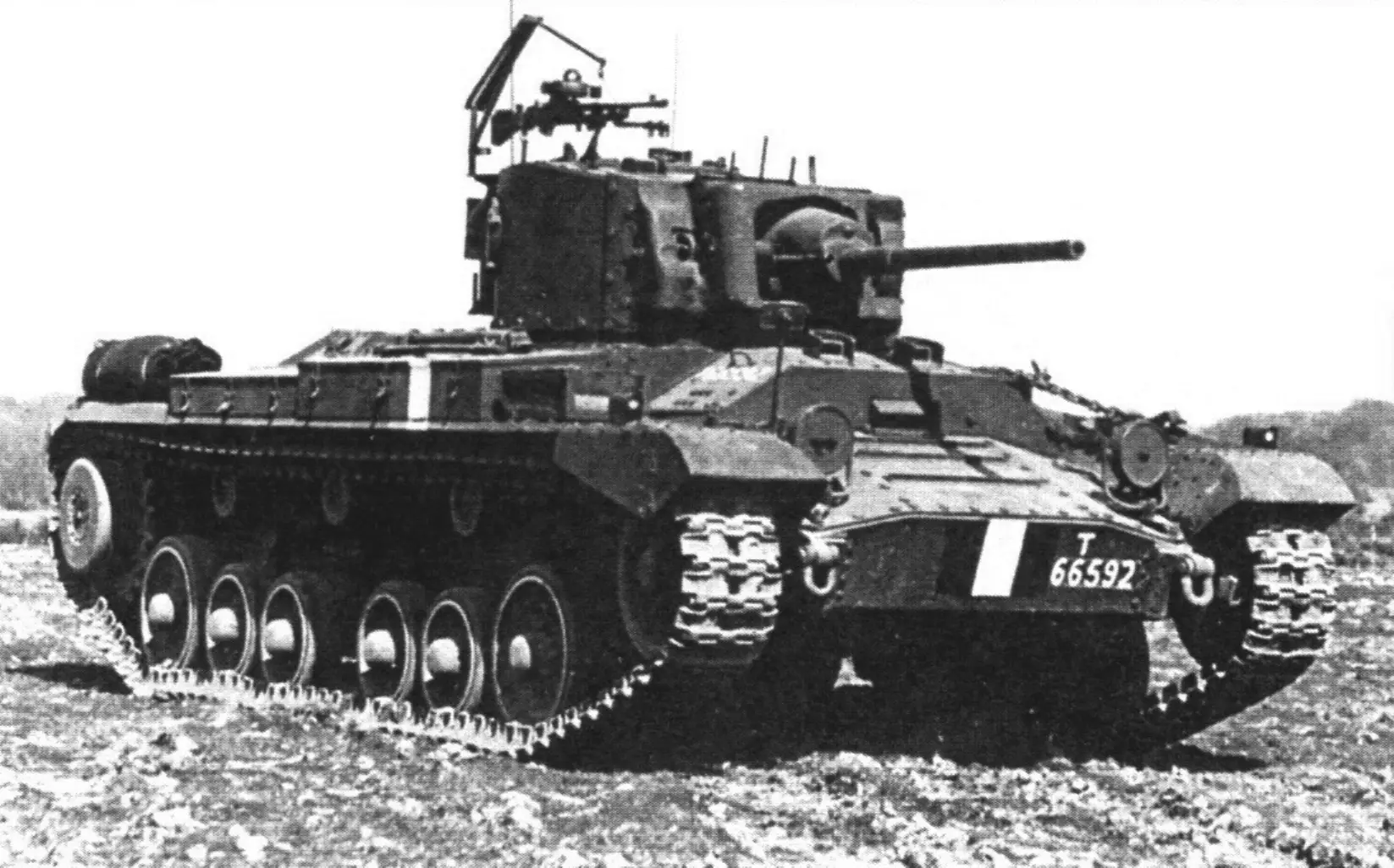
The transmission compartment contained the cooling-system tank, two radiators, a single-disc dry-friction main clutch, a five-speed gearbox, a cross-drive, two multi-disc dry clutches, semi-rigid connections between the steering clutches and final drives, and an oil tank.
The suspension on each side consisted of six rubber-tyred road wheels, paired in threes into two bogies with special springs and hydraulic shock absorbers; a drive sprocket with a removable toothed rim and two rubber tyres; an idler wheel with a track-tensioning mechanism; and three rubber-tyred return rollers. Each track chain had 103 links and a central sprocket engagement.
Valentine tanks were produced in 11 variants, differing in engine make and type, turret design and armament. The Valentine I was the only variant fitted with a 135-hp AEC A189 carburettor engine. From the Valentine II onward, only diesel engines were installed: first the 131-hp AEC A190, and then, on the Valentine IV, the American GMC 6004 throttled down to 138 hp.
Because tank crews complained that the two men in the turret were overloaded, variants III and V received a three-man turret, increasing the standard turret’s volume by means of a newly shaped mantlet projecting forward. Yet the new turret was also too cramped for three tankers, so the improvement proved of little benefit. Otherwise identical, the “three” and “five” differed only in engine make: the AEC A190 and GMC 6004 respectively. Tank weight increased by exactly one tonne, reaching 16.75 t.
In autumn 1941, Valentine production began in Canada at the Montreal plant of Canadian Pacific Co. By mid-1943, 1,420 tanks of variants VI and VII had been built there; they differed little from the Valentine IV. The only difference was the make of the coaxial machine gun: the Valentine VI had the BESA, while the Valentine VII had the Browning M1919A4. Some Canadian-built vehicles had a cast front hull section.
Seeking to increase the tank’s firepower, the British fitted the Valentine VIII with a 6-pounder gun. At the same time, the number of turret crew was again reduced to two. The hull machine gun was also eliminated, reducing the tank’s fire capability.
The Valentine IX was identical to its counterpart except for the power plant: it had a GMC 6004 diesel, whereas the VIII had an AEC A190.
The coaxial machine gun was restored on the Valentine X. Since the weight of the tank with the 6-pounder gun had increased to 17.2 t, the “ten” received a 165-hp GMC 6004 diesel. The 6-pounder guns came in two versions: the Mk. III with a barrel length of 42.9 calibres and the Mk. V with a barrel length of 50 calibres. Ammunition was reduced to 58 rounds.
The final modification—the Valentine XI—was armed with a 75-mm gun. The coaxial machine gun was again removed, as there was simply no room for it. This version was fitted with a GMC 6004 engine uprated to 210 hp.
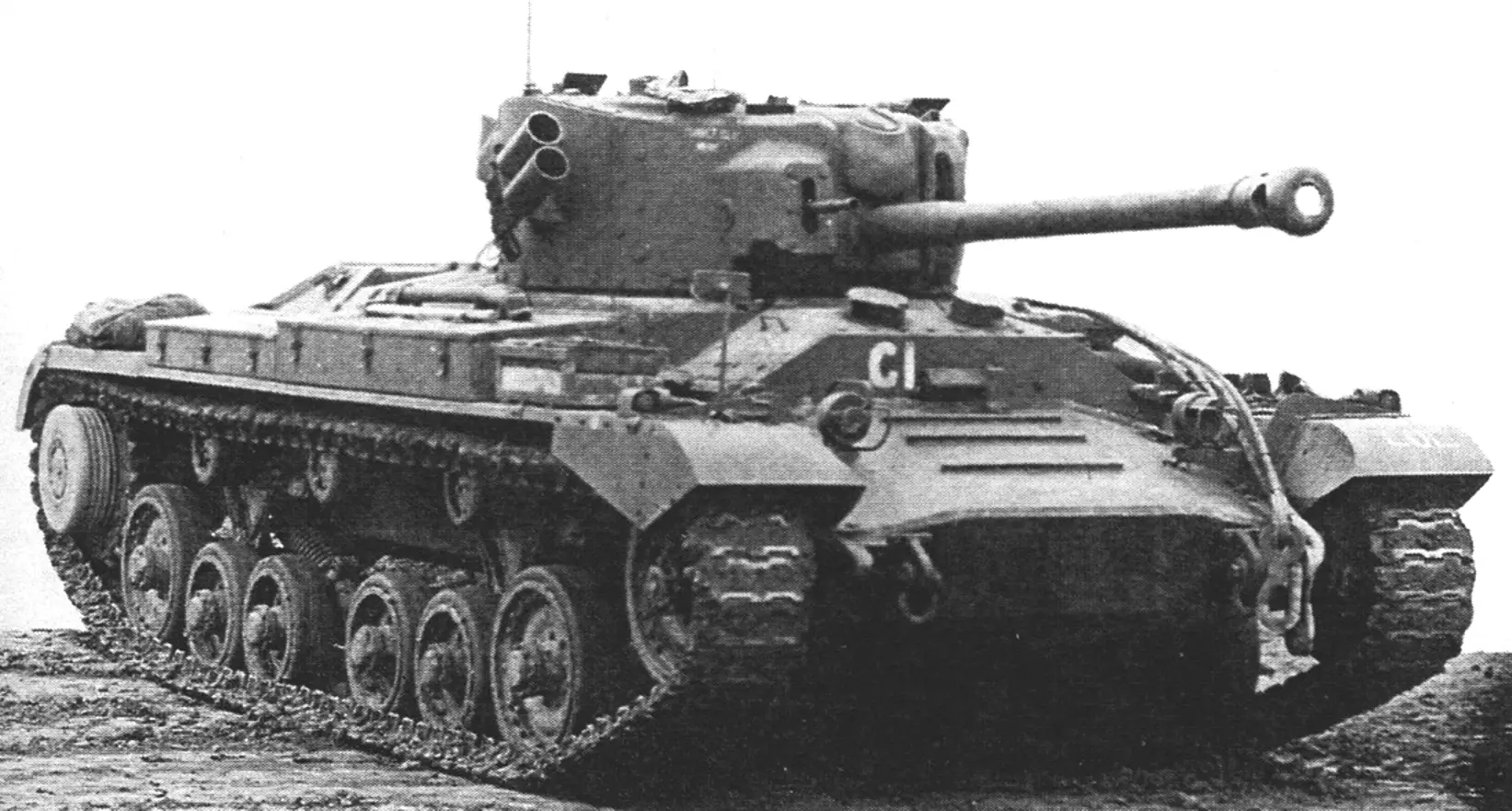
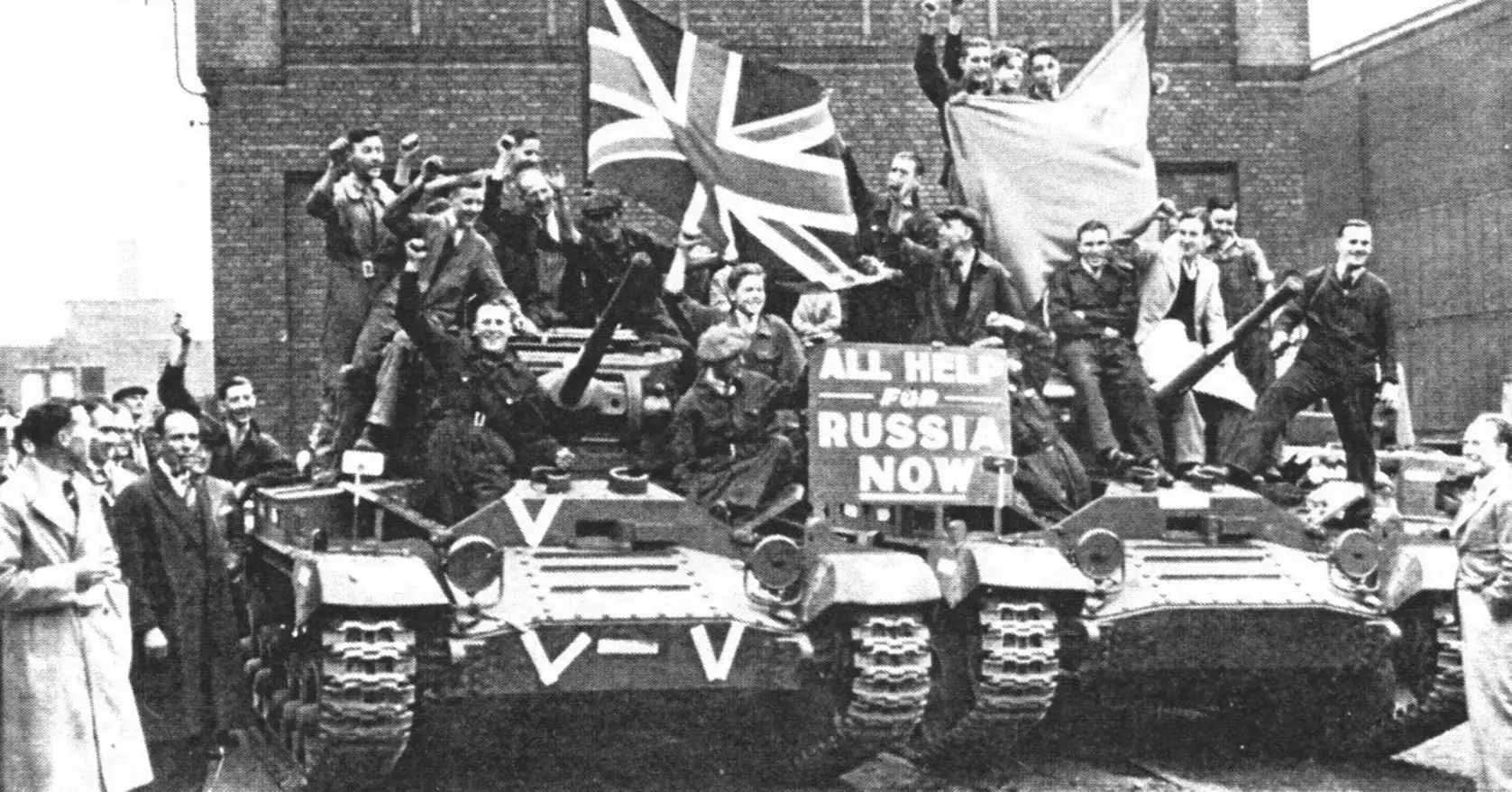
On 14 April 1944, the last Valentine left the factory workshops, one of 6,855 combat vehicles built in Great Britain. Consequently, the total number of Valentines, including those produced in Canada, was 8,275. It was the most numerous British tank of the Second World War.
The Soviet Union was the only country to which Valentines were supplied under Lend-Lease. Almost half of all the vehicles produced were sent to the USSR: 2,394 British and 1,388 Canadian, of which 3,332 tanks reached their destination.
The Red Army received tanks of seven variants: II, III, IV, V, VII, IX and X. As can be seen, vehicles fitted with GMC diesels predominated. This may have been done for standardisation, since the Shermans supplied to the USSR used the same engines. In addition to gun tanks, 25 Valentine Bridgelayer bridge-layers were supplied—the Soviet designation was MK.3M.
In wartime documents, Valentines are referred to in various ways. Most often as MK.III or MK.3, sometimes with the name Valentine added, or more rarely Valentin. Designations for variants such as Valentine III, Valentine IX and so on are also encountered, though not frequently. At the same time, wartime documents contain the designations MK-5, MK-7 and MK-9 in addition to MK-3. It is quite clear that these refer to different modifications of this British tank.
The first Valentines appeared on the Soviet-German front at the end of November 1941. In the 5th Army, defending the Mozhaisk axis, the first unit to receive combat vehicles of this type was the 136th Separate Tank Battalion. It was formed by 1 December 1941 and had ten T-34s, ten T-60s, nine Valentines and three Matildas. The battalion received its British tanks in Gorky only on 10 November 1941, so its crews trained directly at the front. On 15 December, the 136th Separate Tank Battalion was attached to the 329th Rifle Division and later to the 20th Tank Brigade, with which it took part in the counteroffensive near Moscow.
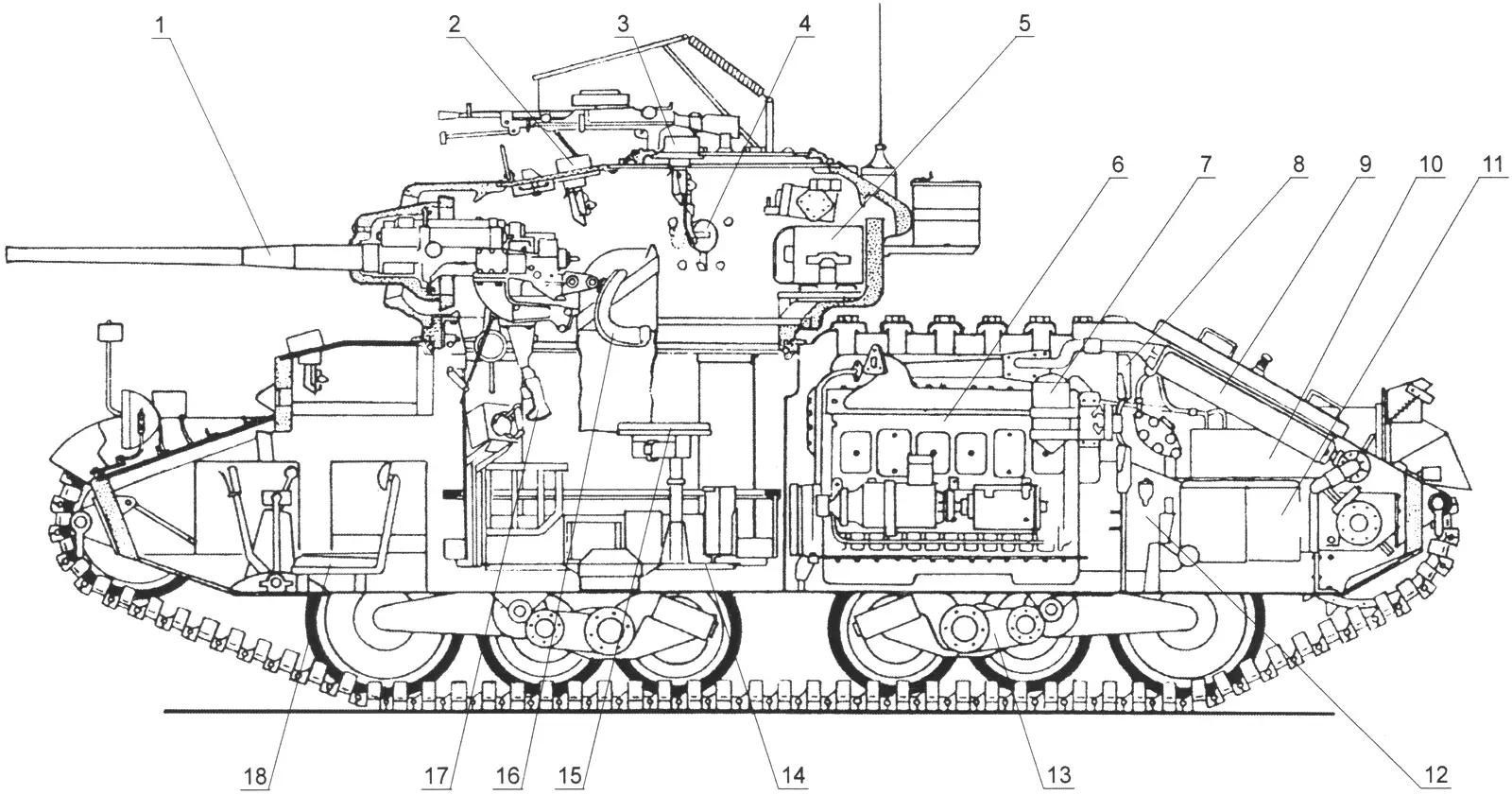
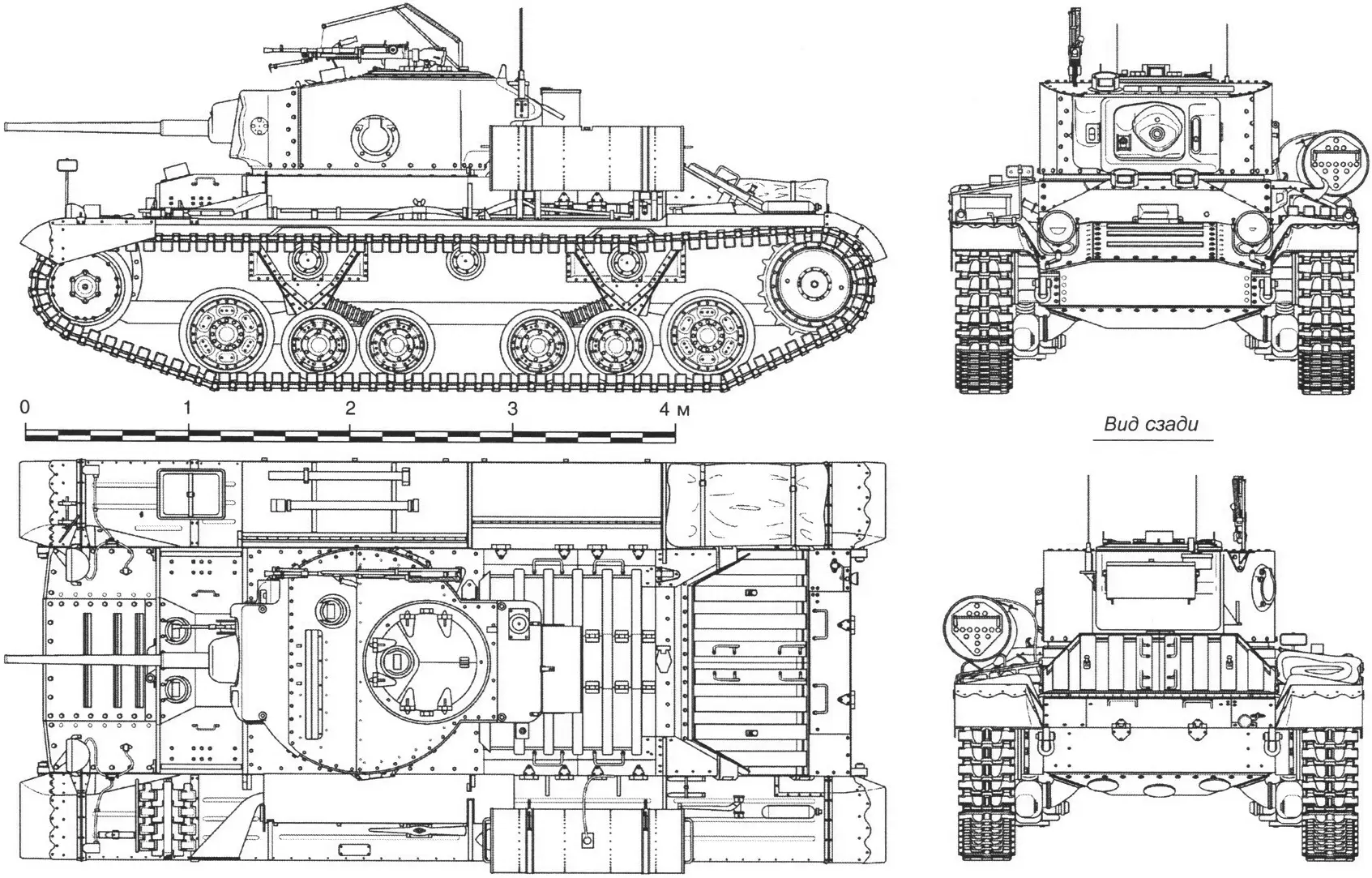
1—2-pounder Mk IX gun; 2—loader’s periscope; 3—commander’s periscope; 4—port for firing personal weapons; 5—No. 19 radio set; 6—AEC A190 engine; 7—air filter; 8—fan; 9—radiator; 10—fuel tank; 11—gearbox; 12—main clutch; 13—suspension bogie; 14—suspended fighting-compartment floor; 15—gunner’s seat; 16—shoulder rest; 17—firing lever; 18—driver’s seat
As with the Matilda, the first engagements revealed a shortcoming of British tanks: the 2-pounder gun’s ammunition load lacked high-explosive fragmentation rounds. This prompted a State Defence Committee order to rearm the Valentine with a domestic artillery system. The task was carried out in a short time at Plant No. 92 in Gorky. The vehicle, given the factory designation ZIS-95, received a 45-mm gun and a DT machine gun. At the end of December 1941, the tank was sent to Moscow, but the project went no further than the prototype.
Many Valentines took part in the battle for the Caucasus. In 1942–1943, tank units of the North Caucasian and Transcaucasian Fronts were equipped with imported materiel to nearly 70 percent. This was explained by their proximity to the so-called Persian Corridor, one of the supply routes to the USSR through Iran. Yet even among the North Caucasian Front’s troops, the 5th Guards Tank Brigade stood out: from mid-1942 to September 1943, its crews mastered five vehicle types—Valentine, M3l, M3s, Sherman and Tetrarch—not counting domestic equipment.
The brigade began combat operations in the North Caucasus on 26 September 1942 on the Grozny axis, in the Malgobek–Ozernaya area. At that time, it had 40 Valentines, three T-34s and one BT-7. On 29 September, the tankers attacked German forces in the Alkhan-Churt valley. In that battle, the crew of Guards Captain Shepelkov destroyed five tanks, a self-propelled gun, a truck and 25 enemy soldiers in their Valentine. In all, over several days of fighting in the area, the 5th Guards Tank Brigade destroyed 38 tanks (20 of them burned out), one self-propelled gun, 24 guns, six mortars, one six-barrel mortar and up to 1,800 enemy soldiers. Its own losses were two T-34s and 33 Valentines (eight of them burned out; the rest were recovered from the battlefield and repaired), and 268 men killed and wounded.
Since most brigades equipped with imported materiel had mixed establishments, the most sound solution had already been found in 1942: domestic and foreign tanks should be used together, complementing one another in terms of their combat qualities. Thus KV tanks and Matilda CS tanks with 76-mm howitzers went in the first echelon, T-34s in the second, and Valentines and T-70s in the third. This tactic often produced positive results.
The geography of Valentine use was very broad—from the southernmost sectors of the Soviet-German front to the north. Besides units of the Transcaucasian Front, they served, for example, with the 19th Tank Corps of the Southern Front (from 20 October 1943, the 4th Ukrainian Front) and took an active part in the Melitopol offensive, then in the liberation of Crimea. MK.III tanks were actively used in positional battles on the Western and Kalinin Fronts until the beginning of 1944. It should be noted that imported tanks in many military units were modified, primarily to improve cross-country mobility on snow and marshy ground. For example, in the 196th Tank Brigade of the 30th Army of the Kalinin Front, which took part in the capture of Rzhev in August 1942, steel plates were welded to every track link to increase its area.
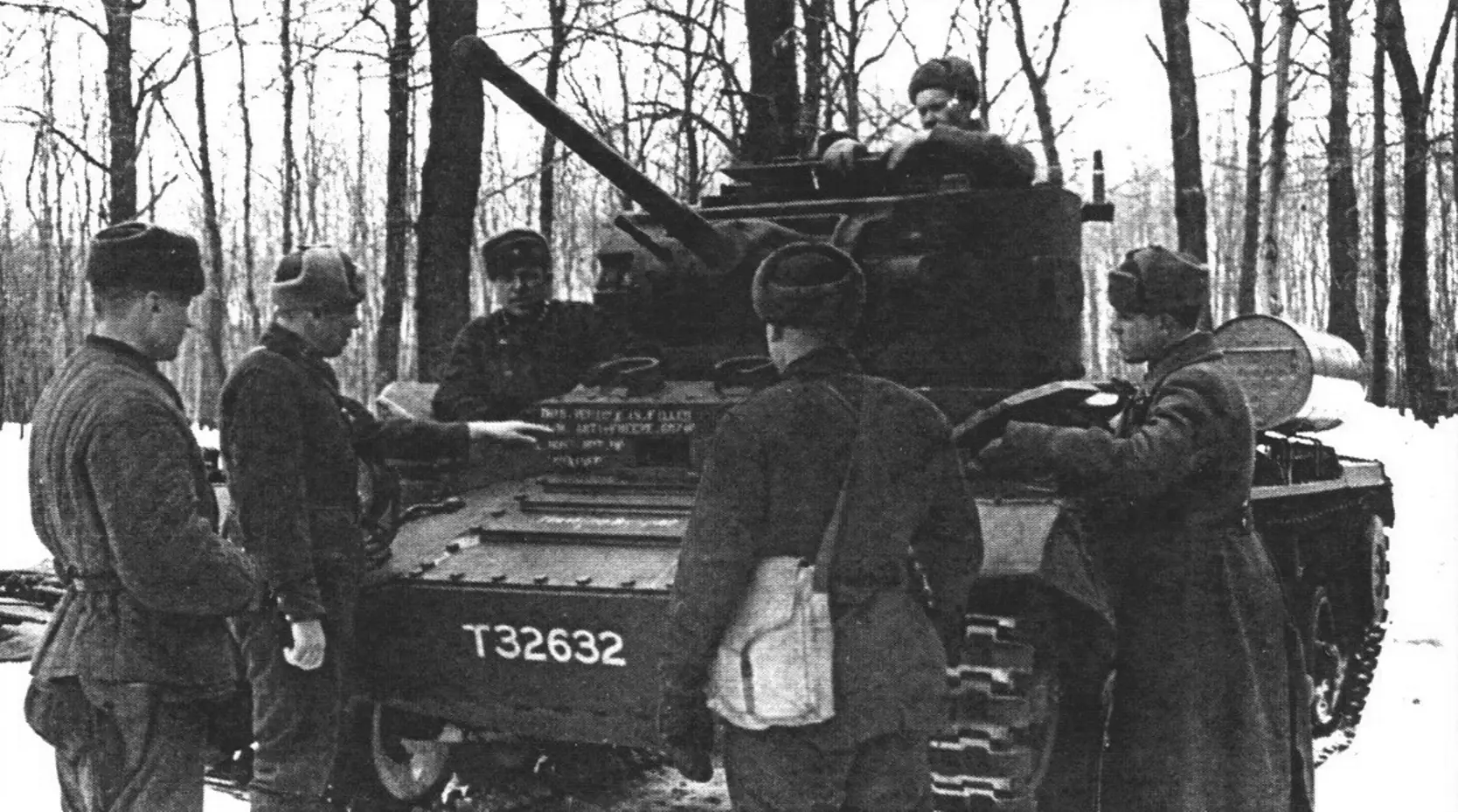
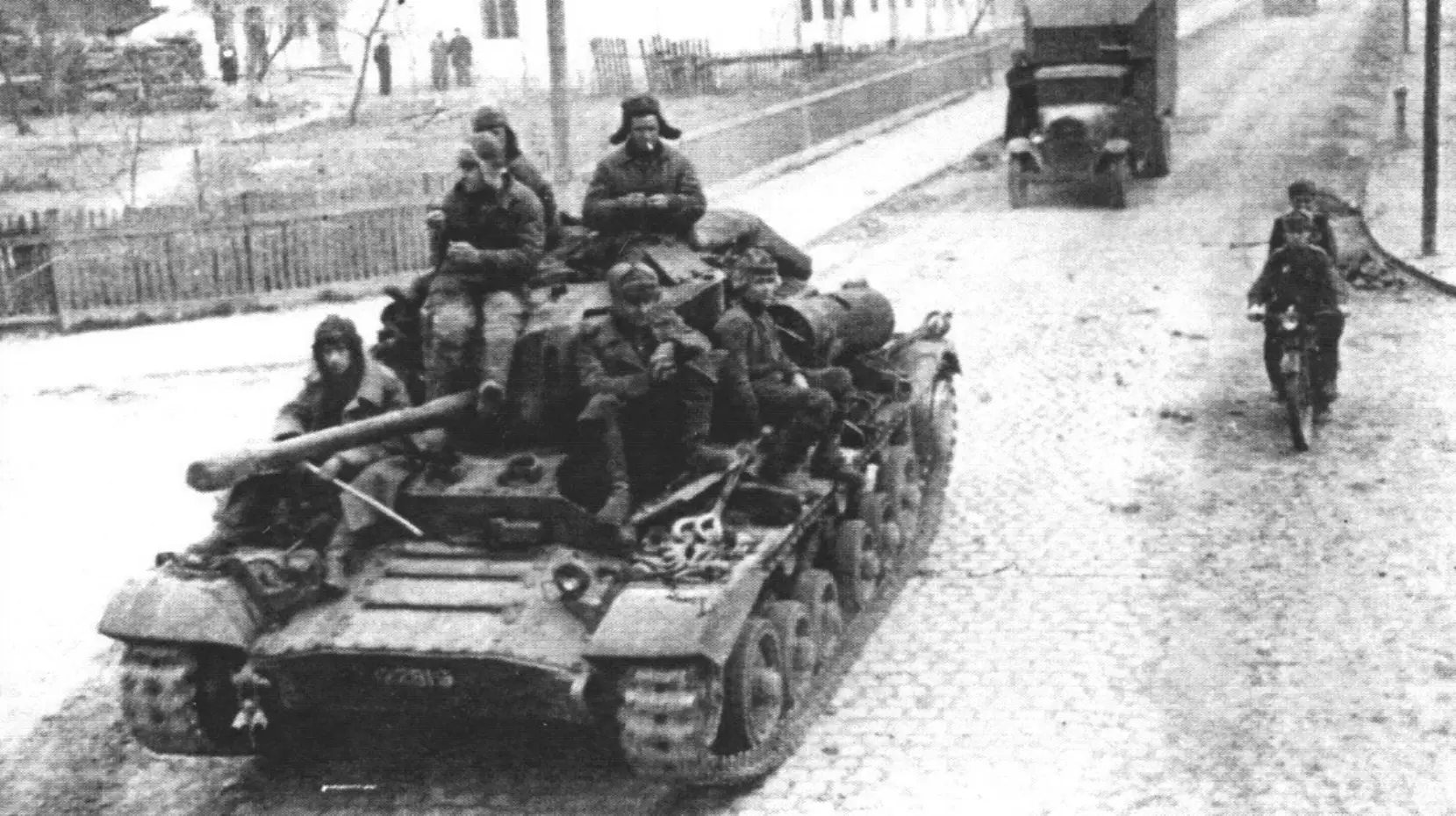
Until the end of the war, Valentines remained the principal tanks of cavalry corps. Cavalrymen particularly valued the vehicle’s manoeuvrability. Most likely for the same reason, Valentines were in service with many motorcycle battalions and separate motorcycle regiments. At the final stage of the war, the establishment of the latter included a tank company of ten T-34s or the same number of Valentine IXs.
Valentine IX tanks were in service with the 1st Mechanised Corps of the 2nd Guards Tank Army during the Vistula–Oder offensive in the winter of 1945. Combat vehicles of this type ended their Red Army service in the Far East in August 1945. The 267th Tank Regiment (41 Valentine IIIs and Valentine IXs) fought as part of the 2nd Far Eastern Front; the cavalry-mechanised group of the Transbaikal Front had 40 Valentine IV tanks; and, finally, two tank-bridge companies, each with ten Valentine Bridgelayer bridge-layers, operated as part of the 1st Far Eastern Front.
It is rather difficult to find a more or less complete assessment of the Valentine in foreign literature. Its service in the British Army was too limited in both duration and scale. It is generally noted that tank crews praised the tank for its reliability and criticised it for the cramped fighting compartment and the absence of high-explosive fragmentation rounds in the ammunition loads of the 2- and 6-pounder guns.
Since several thousand combat vehicles of this type fought on the Soviet-German front under extremely harsh operating conditions, let us analyse the assessments of the Valentine made by Soviet tank crews.
Let us turn to an impartial source: wartime documents. In particular, to the “Brief Report on the Actions of MK.III,” dated 15 January 1942 and compiled by the command of the 136th Separate Tank Battalion, which had participated in the counteroffensive near Moscow since 15 December 1941. This report can apparently be regarded as one of the first documents to assess Lend-Lease equipment.
“Experience with Valentines showed:
1. The tanks’ cross-country mobility in winter conditions is good; movement through soft snow 50–60 cm deep is assured. Traction is good, but spurs are required on ice.
2. The weapons operated faultlessly, but there were instances of the gun failing to return fully to battery (during the first five or six shots), apparently due to congealing lubricant. The weapons are very demanding in terms of lubrication and maintenance…
3. Observation through the instruments and vision slits is good…
4. The engine group and transmission worked well for 150–200 hours; thereafter, a reduction in engine power was observed…
5. The armour is of good quality…
Crew personnel received special training and handled the tanks satisfactorily. Command and technical personnel knew the tanks poorly. The crews’ lack of knowledge of the elements of preparing tanks for winter caused great inconvenience. Because the necessary insulation was absent, vehicles were difficult to start in frost and therefore had to be kept hot at all times, leading to heavy consumption of engine service life. In a battle with German tanks (20 December 1941), three Valentines sustained the following damage: a 37-mm shell jammed the turret of one, the gun of another, and the third received five hits in its side from a range of 200–250 m. In this battle, Valentines knocked out two T-3 medium tanks.
Overall, the MK.III is a good combat vehicle with powerful armament and good cross-country ability, capable of operating against enemy manpower, fortifications and tanks.
Negative aspects:
1. Poor track grip on the ground.
2. Great vulnerability of the suspension bogies: if one road wheel is put out of action, the tank cannot move.
3. The gun has no high-explosive fragmentation shells.”
There is no reason to doubt the objectivity of this report, compiled in the immediate aftermath. It is interesting to note that Soviet tank crews, like their British counterparts, considered the absence of high-explosive fragmentation rounds from the gun ammunition a drawback, but did not mention the cramped fighting compartment—apparently because, for example, that of the T-34 was even more cramped.
A number of design features of the tank, however, drew criticism exclusively in Red Army units. Naturally, in Britain or Western Europe, let alone North Africa or Burma, water in a tank’s cooling system did not freeze because there was no frost. Most of the Valentine’s shortcomings (and not only its own) mentioned in our documents and memoirs were related to the climatic factor that complicated operation. Here we come to another reason for the negative assessments of this combat vehicle by some of our tankers (as a rule, however, those who had not fought in it for long).
There were many hassles! Flush the cooling system and fill it with antifreeze—hassle! At temperatures below −20°, tractor kerosene had to be added to domestic diesel fuel (we simply did not have diesel fuel of the required quality, while the Valentines had automotive diesels)—hassle! To retain engine heat, the radiators had to be covered with plywood, tarpaulin or an old greatcoat (on the Valentine, incidentally, it was recommended to disconnect one fan for this purpose by removing its drive belt)—another hassle! Of course, domestic equipment required similar measures. But it had been designed with the quality of domestic fuels and lubricants and the level of technical maintenance in mind, and consequently broke down less often for these reasons. Moreover, there was less punishment for broken domestic equipment than for imported equipment, which had been “paid for in gold.” This circumstance could evoke nothing but a lasting hatred of foreign combat vehicles, including the Valentine, among deputy commanders for technical matters and mechanics.
And what feelings could, for example, a driver have when reading the following provisions of the operating manual:
“If the engine of a British tank cannot be started after four or five attempts, then, if an ether-starting device is available, load the gun with an ampoule, press the primer-piercing lever and start the engine with the starter. After starting the engine, do not allow it to run above 800 rpm until the oil temperature reaches 27°C (80°F) and oil pressure rises to 60–80 lb/in2.
Once these readings have been reached, engine speed should be increased to 1,000 rpm and, after two or three minutes, it may be operated at the highest speed.
The tank may begin moving only after the engine has fully warmed up, and obligatorily in first gear to avoid damage (with congealed lubricant) to the gearbox, differential and final drives.”
There you have it! Not only must one watch the temperature, but one must set off only in first gear! (On the T-34, as is known, until the end of 1943 only second gear was used at all; the others simply could not be engaged while moving.) Truly, some kind of kerosene stove, not a tank! And in general, “a phenomenon of military-technical culture profoundly alien to us”!
True, by the end of the war, as many foreign technical solutions were adopted in domestic equipment, complaints about the Valentine became fewer and fewer—at any rate, concerning its complex design and difficult operation.
In 1945, in the article “An Analysis of the Development of Foreign Tank Technology During the War Years and Prospects for Further Tank Improvement,” by Major General of the Engineer-Tank Service, Doctor of Technical Sciences and Professor N. P. Gruzdev, published in the proceedings of the Academy of Armoured and Mechanised Forces, the Valentine received the following assessment:
“The MK.III, as an infantry tank (or, following the weight classification, a light tank), unquestionably has the densest overall layout and is indisputably the most successful among tanks of this type, although placing the brake drums outside the hull is unquestionably incorrect. Experience with the MK-III tank ends the debate on the feasibility of using automotive components in tank construction.
The armoured bulkhead between the engine and fighting compartments substantially reduces crew losses in a fire and preserves the engine-transmission group when shells explode. The observation devices are simple and effective. The presence of compensators in the MK-III and servo mechanisms, despite its low specific power, makes it possible to ensure a satisfactory average tank speed of about 13–17 km/h.
Characteristic of the British MK-III, MK-II and MK-IV tanks is the preference given to armour; speed and armament seem secondary; unquestionably, while this is tolerable in the MK-III, in the other tanks the imbalance is an obvious and unacceptable drawback.
The reliably operating GMC diesel should be noted.
Of all existing light tanks, the MK-III is the most successful. It may be said that in the conditions of 1940–1943, it was the British who created the infantry-tank type.”
As they say, nothing to add or subtract!
TACTICAL AND TECHNICAL CHARACTERISTICS OF THE Mark III Valentine VI TANK
COMBAT WEIGHT, t: 16.5
CREW, men: 3
OVERALL DIMENSIONS, mm:
length—5,410; width—2,629; height—2,273; ground clearance—420
ARMAMENT: 1 Mk. IX 2-pounder (40-mm) gun, 1 7.92-mm BESA machine gun, 1 7.7-mm Bren anti-aircraft machine gun, 1 50.5-mm smoke grenade discharger
AMMUNITION: 61 gun rounds, 3,150 rounds of 7.92-mm ammunition, 600 rounds of 7.7-mm ammunition, 18 smoke grenades
SIGHTING EQUIPMENT: No. 24B Mk. I telescopic sight
ARMOUR, mm:
front—60; sides and rear—60; roof—10–20; bottom—7–20; turret—60–65
ENGINE: GMC 6-71 model 6004, six-cylinder two-stroke in-line liquid-cooled diesel; maximum output 165 hp (120 kW) at 2,000 rpm, factory setting—138 hp at 1,900 rpm. Displacement 6,970 cm3
TRANSMISSION: M-6004 single-disc dry-friction main clutch, Spicer synchromech three-shaft synchronised manual gearbox, cross-drive, multi-disc dry steering clutches, double planetary final drives, shoe brakes
RUNNING GEAR: six rubber-tyred road wheels per side; rear drive sprocket (central sprocket engagement); blocked, bogie suspension with coil spring and hydraulic shock absorber; three rubber-tyred return rollers; each track has 103 links, 356 mm wide, with a track pitch of 112 mm
MAX. SPEED, km/h: 32
RANGE, km: 150
OBSTACLES NEGOTIATED: climbing angle, degrees—40; vertical obstacle, m—0.75; trench width, m—2.2; fording depth, m—1
COMMUNICATIONS: No. 1 radio set
“Modelist-Konstruktor” No. 7’2025, Mikhail BARYATINSKY
Recommend to read
 THE INTERSECTION OF PVC
For garden water pipes for watering plants, as a rule, connect the bushing with the thread, which sergevev, makes it difficult to dock. They can be replaced with segments of PVC pipe... TRICYCLE BUCKET…
Floor cleaning the process is quite tedious, especially when cleaning larger areas. A little easier it can, if to produce for a bucket of water special stand, equipped with three swivel...
