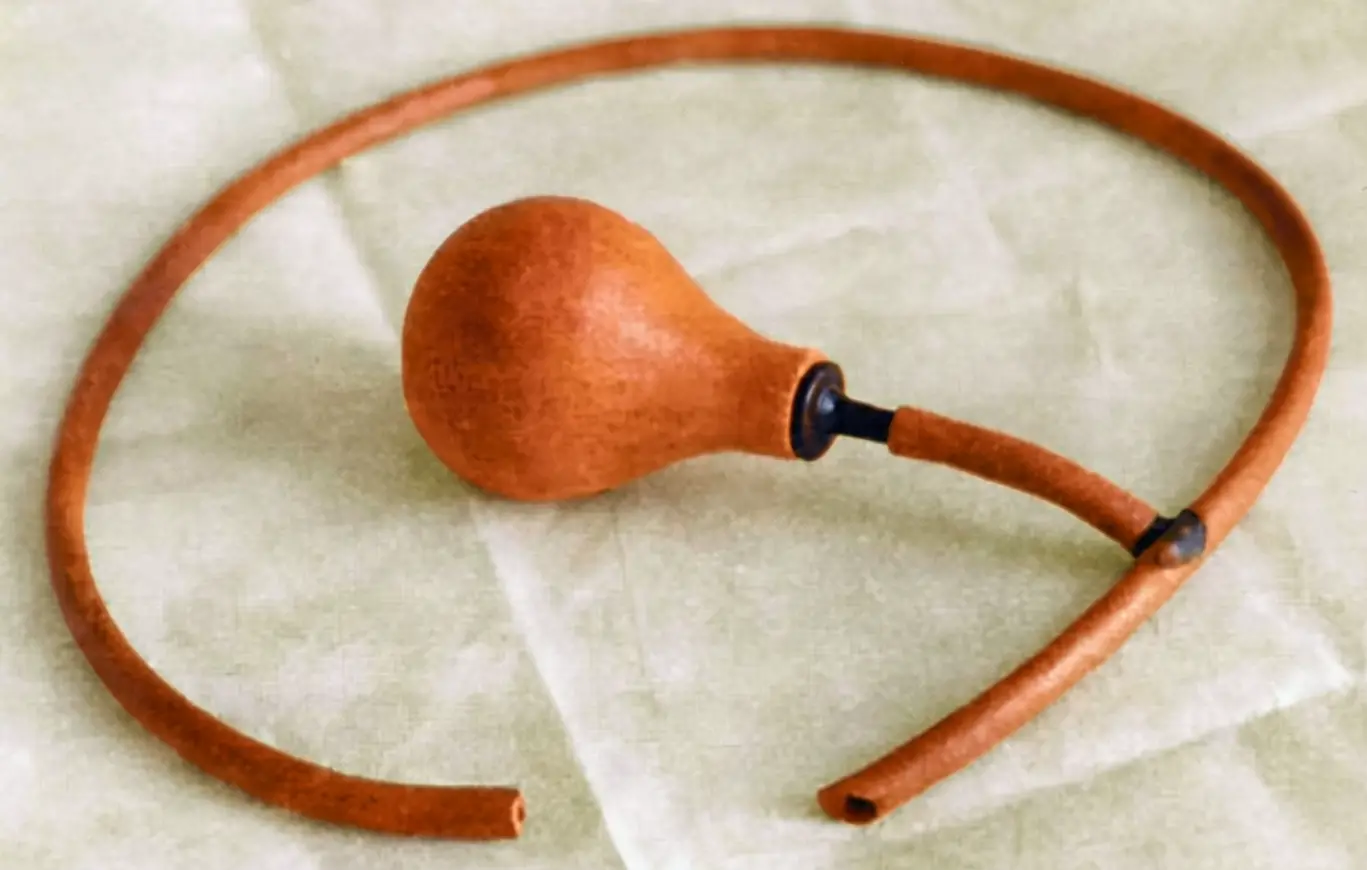
To refuel a car tank in field conditions — for example, from a barrel or another vehicle’s tank — drivers often use a simple hose and the so-called “suction method,” creating a vacuum by mouth, which risks getting some gasoline into it.
You can avoid trouble if you make a simple mini-pump. To do this, in an elastic (flexible) hose 10–15 mm in diameter and 1–1.5 m long, at a point one-third of the length, cut an opening and glue in a branch tube 50–70 mm long made from the same hose (10 mm hole), then insert the tip of a medical rubber bulb (preferably the largest one). As a result, you will have a fail-safe, simple, durable pump (even if it lies among tools in the trunk, nothing will threaten its integrity).
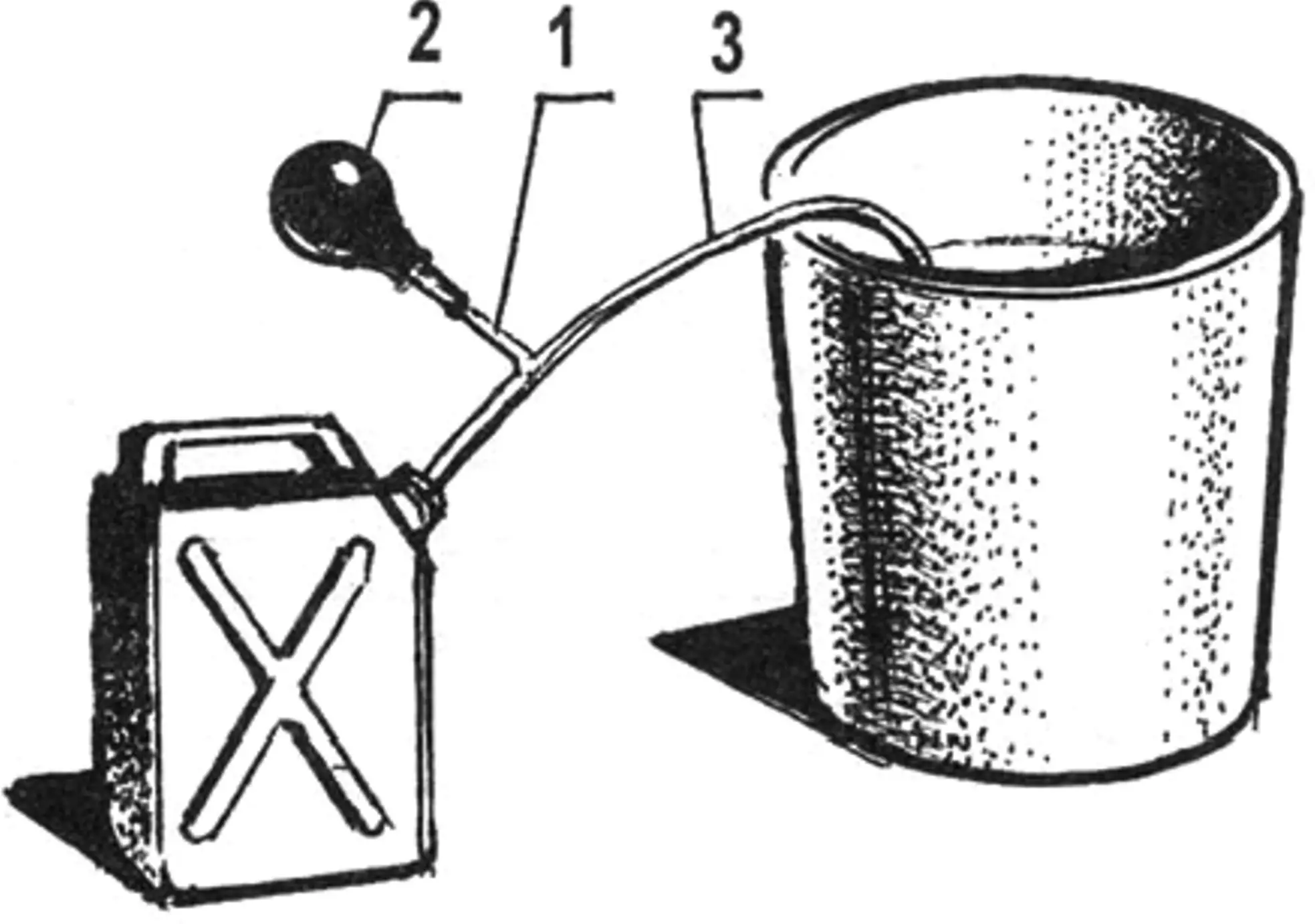
How do you use it? The long end of the main hose is lowered into the container with gasoline, and the short end into the empty one. Now squeeze bulb 2 with one hand, forcing air out of it, and clamp the short end of hose 3 with the fingers of your other hand. Without releasing the clamped end, squeeze the bulb several times — it draws gasoline into the hose and partly into itself. Release your fingers: now gasoline will flow by itself if the source container is higher than the one being filled. It is enough to remove the long end from the source container — the pump stops working.
If you need to transfer other corrosive liquids, this pump will be indispensable, ensuring complete safety in operation.
“Modelist-Konstruktor” No. 2’2008, I. PLYASKIN
Recommend to read
 DEFENDER AIR BORDERS
During the war in Korea was shot down by an American fighter jet F-86 "sabre". After studying Soviet specialists captured machine, the Soviet government in the beginning of 1953, decided... A DRILL-MIXER
To liven up the thickened paint, to mix the components of epoxy resin will help a kind of mixer-impromptu; it consists of a drill, a long bolt and metal blades clamped between two nuts...
