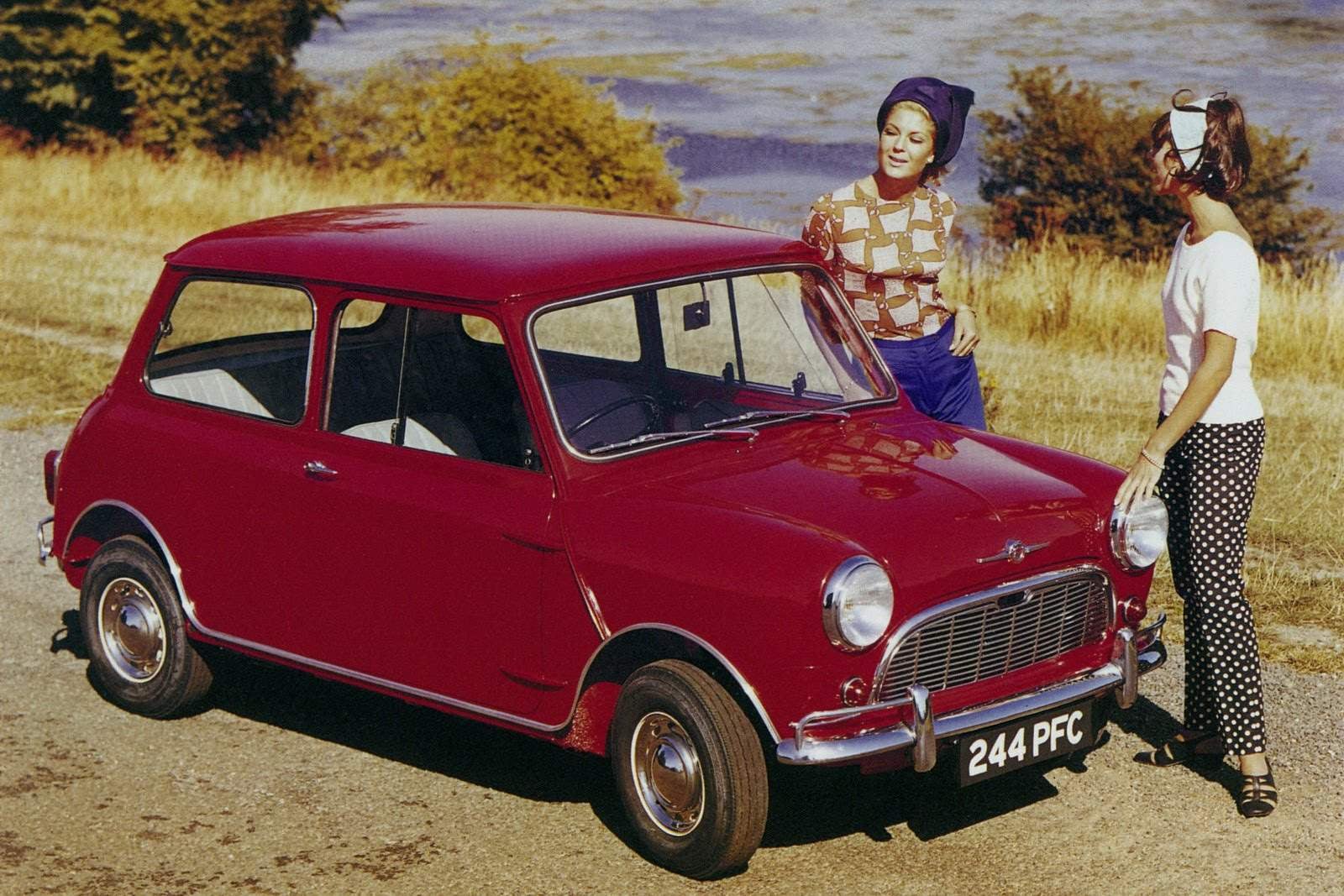
 Runabout created in 1957, little known at the time to a wide audience by engineer Alec Issigonis of the British Motor Corporation, justly called a masterpiece of design and autocostruzione. The urgent need for such a vehicle began to be felt in the large cities of great Britain in the mid 1950s due to increased car ownership and lack of space for Parking. That’s why an inexpensive, compact and economical car, capable to drive and Park there, where there is no place for a full-size, could find demand among buyers.
When designing the car designers are unable to use ready-made components nodes — most of them had to be designed anew. In particular, the subcontractors had to create a new compact battery and alternator, as well as small for the time of 12-inch tires.
The car was designed front-wheel — while very compact Issigonis placed the gearbox beneath the transversely mounted engine, and the left and right drives the front wheels with constant velocity joints made of equal length. The weight of the vehicle, dubbed the Mini was 617 kg, length — 3 m Located at the corners of the body the wheel made the car and with one hand, surprisingly steady, and spacious enough for four people. In the rear of the machine there was even a place for a small trunk.
Machine was in production for 41 years — until October 2000, issue during this time was 5 387 862 instance.
Austin Mini 1959: engine inline 4-cylinder, transverse, displacement 0,848 l, rated at 34 HP; transmission, 4-speed; suspension on rubber pads with hydraulic shock absorbers — for front wishbone, rear trailing; brakes: drum; body type three-door, four-seater; maximum speed 115 km/h.
Recommend to read
 BOX FOR JEWELRY
Of course, it's not safe: it is not necessary to wall to wall to make this place a hanging picture, how often in the movies and that became fashionable in the homes of wealthy oligarchs.... WELDING… WATER
I'm a longtime subscriber of your magazine, use a lot of printed in it. I especially liked the article "Fire... of water", published in "M-K" № 7, 1980. The description made the cell,...
