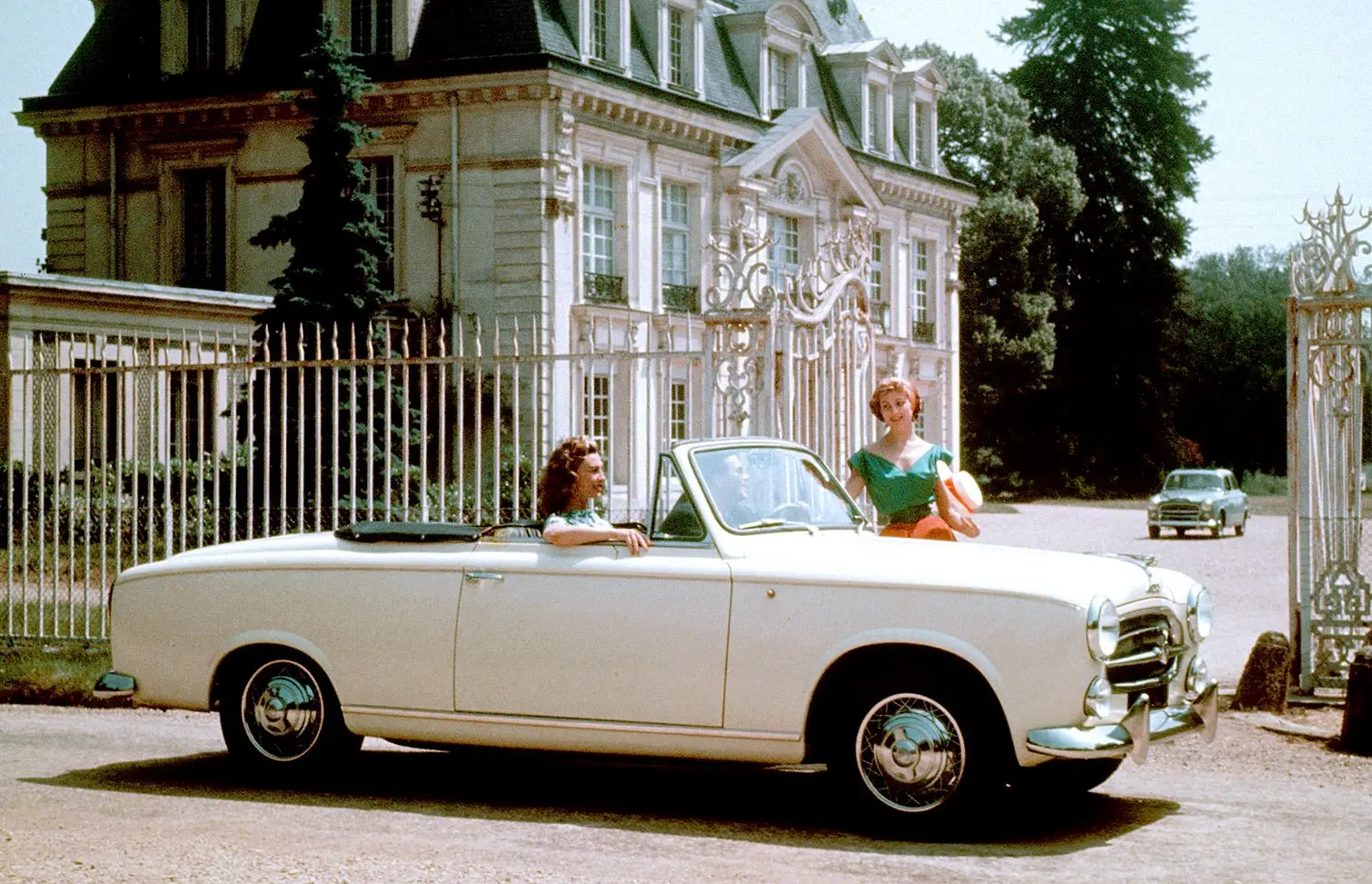
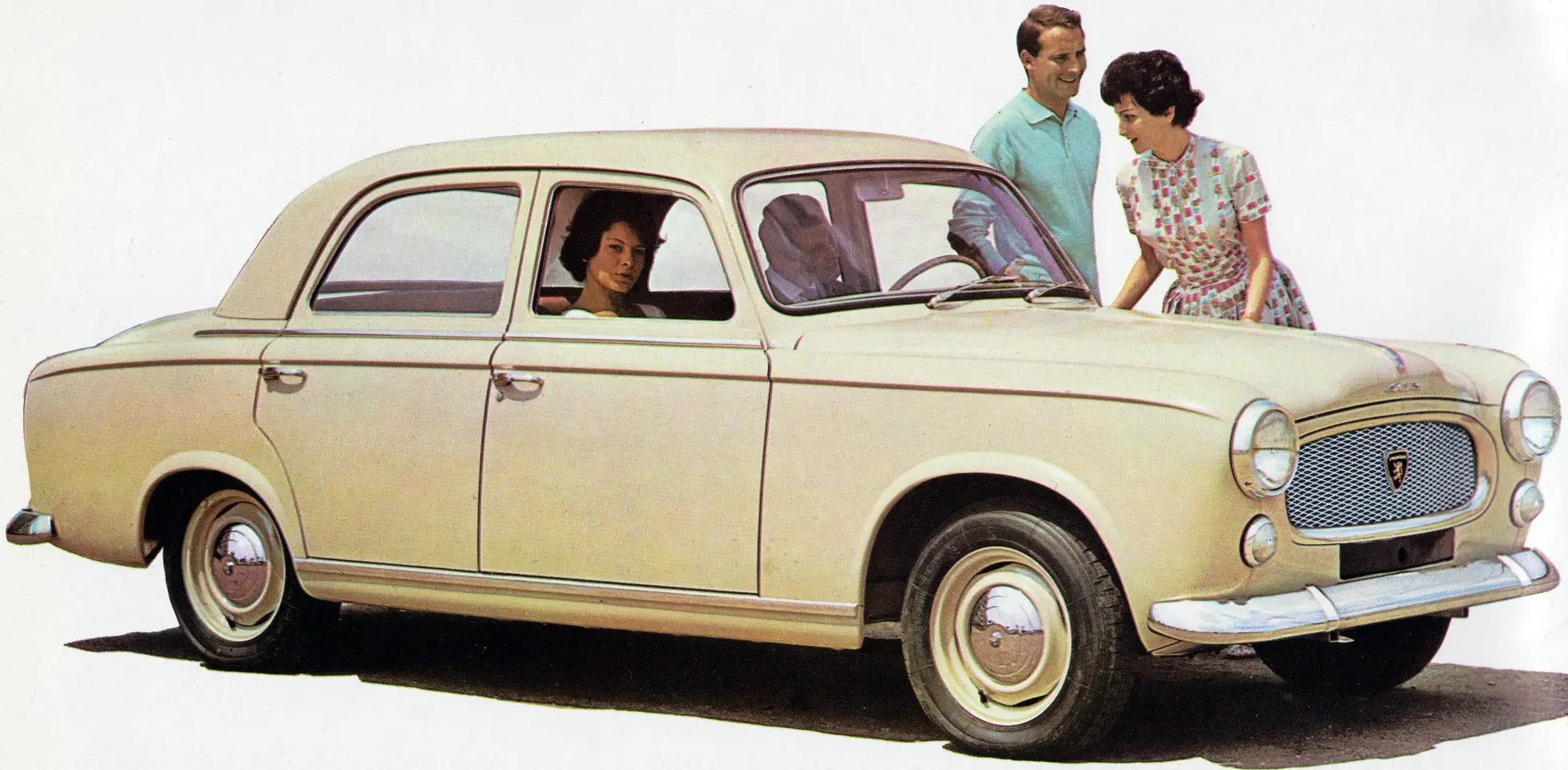
The Peugeot 403 has a lot in common with the GAZ-21 “Volga”. They are roughly the same class and appeared at about the same time. For both Peugeot and the Gorky Automobile Plant, this was the second passenger-car model launched after the war. But unlike the “Volga”, the Peugeot 403 had a convertible body style that made the car famous worldwide.
The Peugeot 403 debuted on 20 April 1955 at the Trocadéro palace in Paris. The Pininfarina studio designed an elegant sedan body especially for this car. For the French it was the first collaboration with the Italians, and it proved successful. For more than forty years thereafter, Pininfarina handled the design of Peugeot cars.
The Peugeot 403 was the firm’s first car with a panoramic windscreen and suspended pedals. It stood out for high comfort and good ergonomics. The front doors opened to almost 90 degrees, and the seats folded into a double bed.
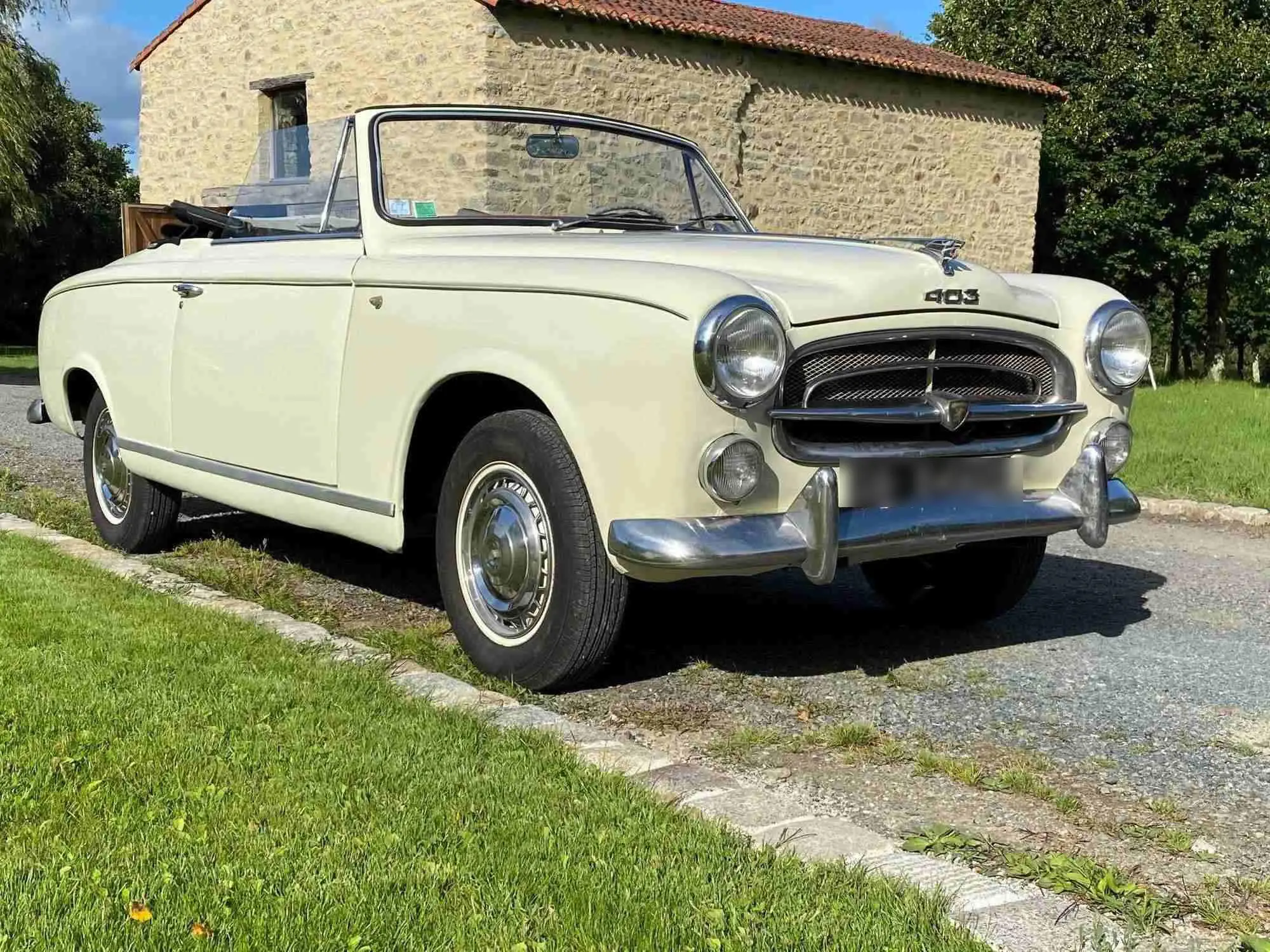
Originally the plan was that the new model would gradually replace the Peugeot 203 on the Sochaux plant line, but in practice both models were built in parallel for almost five years. The Peugeot 403 kept a classic layout. From its predecessor it inherited independent front suspension with a transverse leaf spring, a rear axle on springs with a Panhard rod, rack-and-pinion steering, and hydraulic drum brakes. Under the bonnet was a four-cylinder petrol engine of 1468 cc and 58 hp. The car had a fully synchronized four-speed gearbox with column shift.
Technical specifications: Peugeot 403 Berline
| Model | Peugeot 403 |
| Model year | 1955 |
| Number of doors | 4 |
| Seating capacity | 5 |
| Length, mm | 4470 |
| Width, mm | 1670 |
| Height, mm | 1510 |
| Wheelbase, mm | 2660 |
| Kerb weight, kg | 1025 |
| Engine displacement, cc | 1468 |
| Power, hp | 58 |
| Compression ratio | 7.0:1 |
| Maximum speed, km/h | 135 |
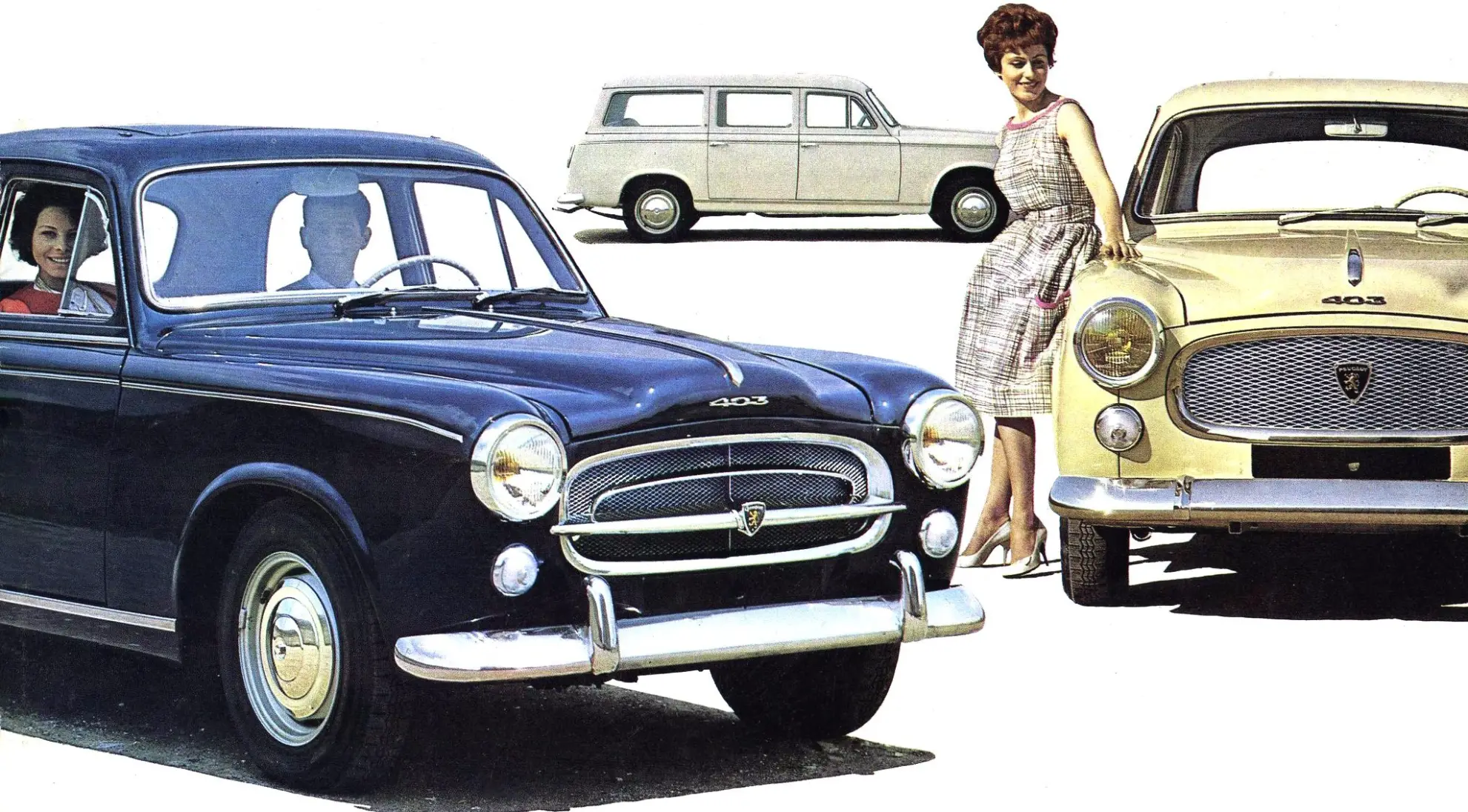
The Peugeot 403 was updated constantly. Early versions can be told by semaphore-type turn signals, “clap-hands” windscreen wipers, and a lion’s-head mascot on the bonnet. In 1957 conventional flashing indicators and parallel trapezoid wipers appeared. In 1959 the lion was removed from the bonnet for safety reasons.
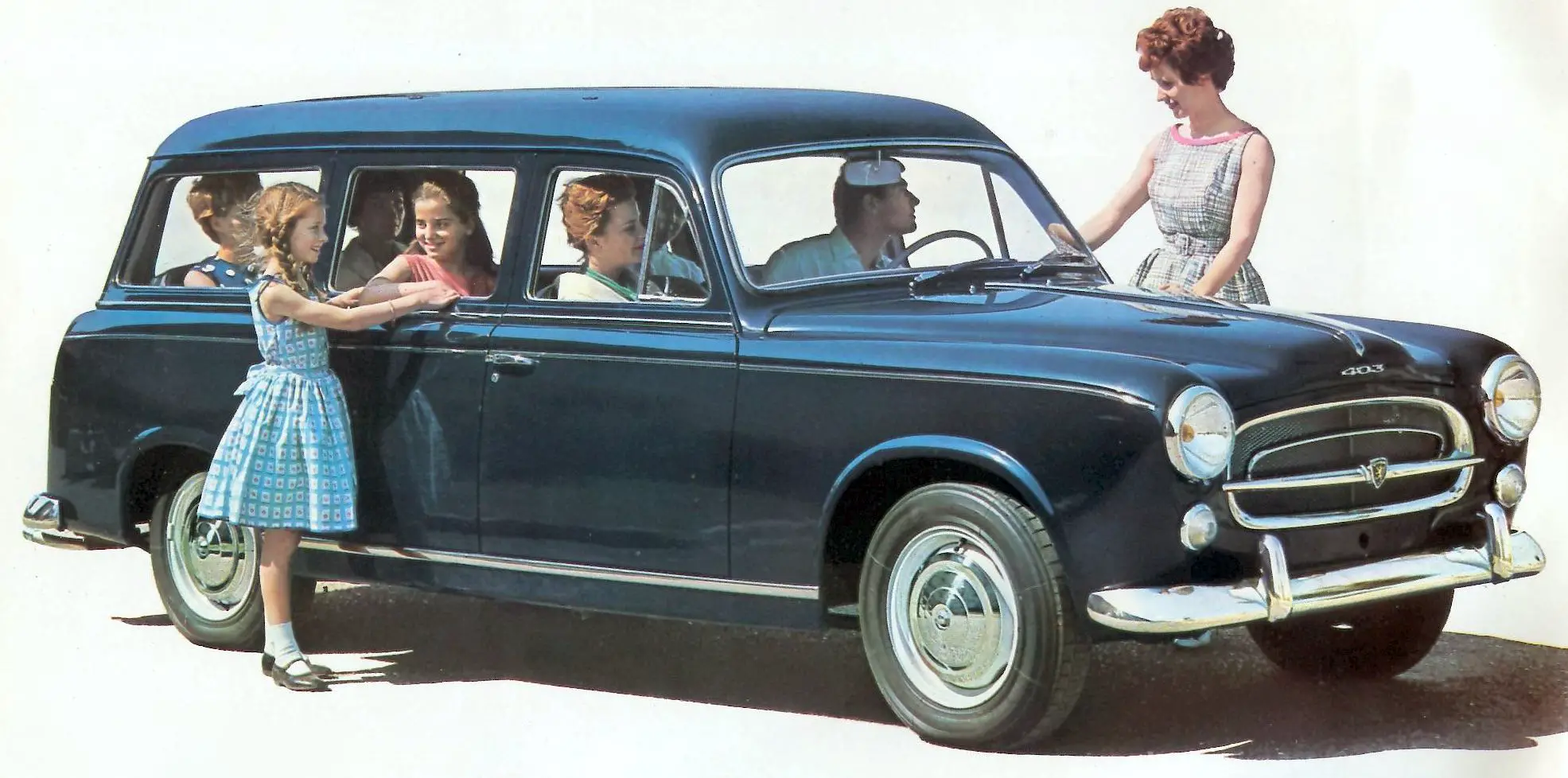
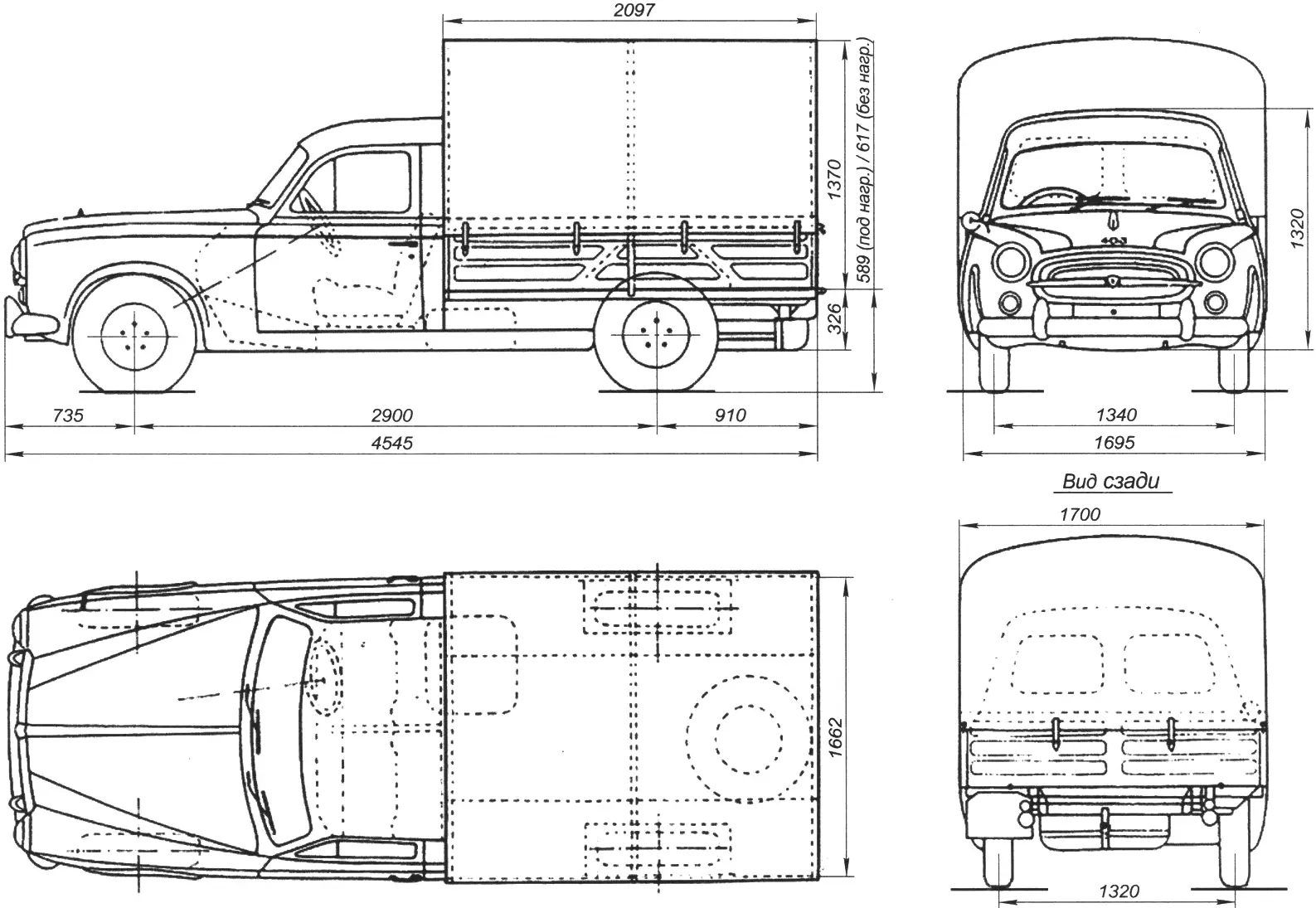
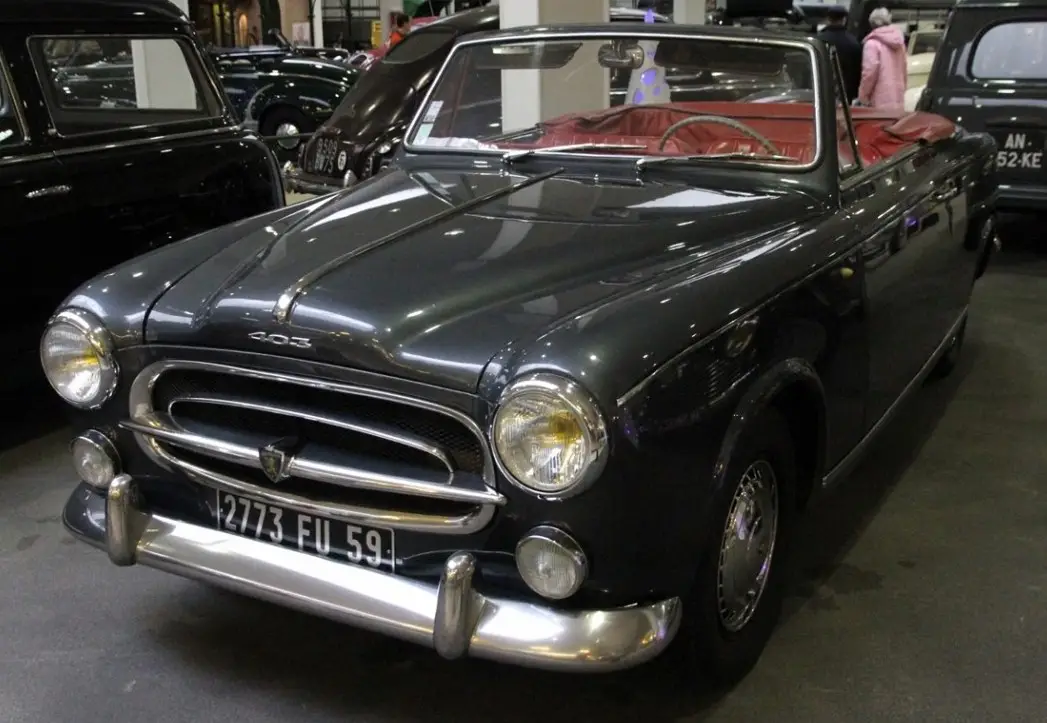
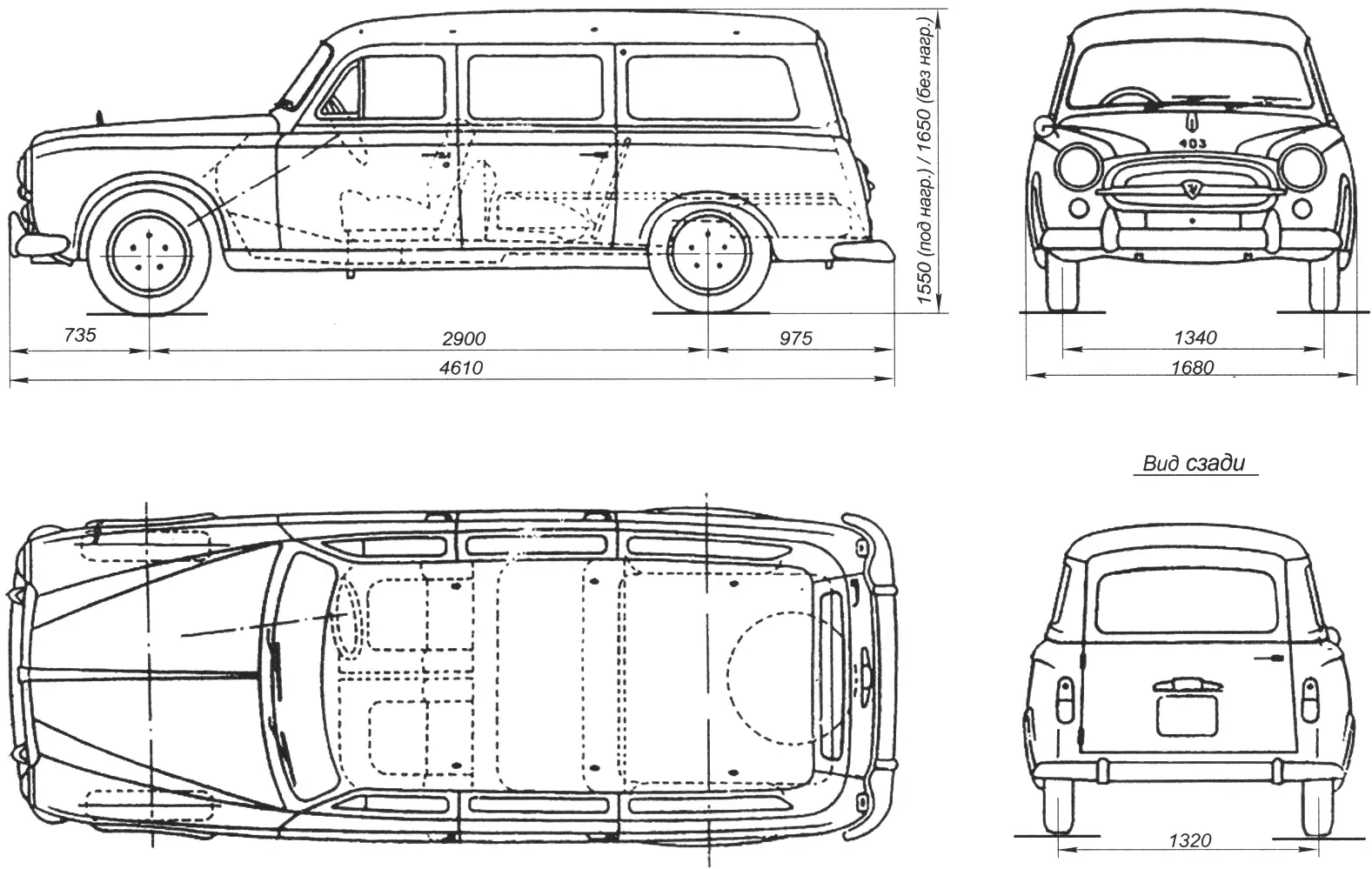
Even while the base model was being developed, a whole family of body styles was created on its platform. In summer 1956 a two-door Peugeot 403 convertible with a luxurious leather interior went on sale; it cost 80% more than the base sedan. That September production of commercial variants began. At first their range matched the Peugeot 203: Fourgonnette van, Camionnette pickup, five-door Familiale (three seat rows) and Commerciale (two seat rows) estates. Compared with the sedan, commercial versions had their wheelbase stretched from 2660 to 2900 mm. These vehicles used a reinforced rear suspension with longitudinal leaf springs.
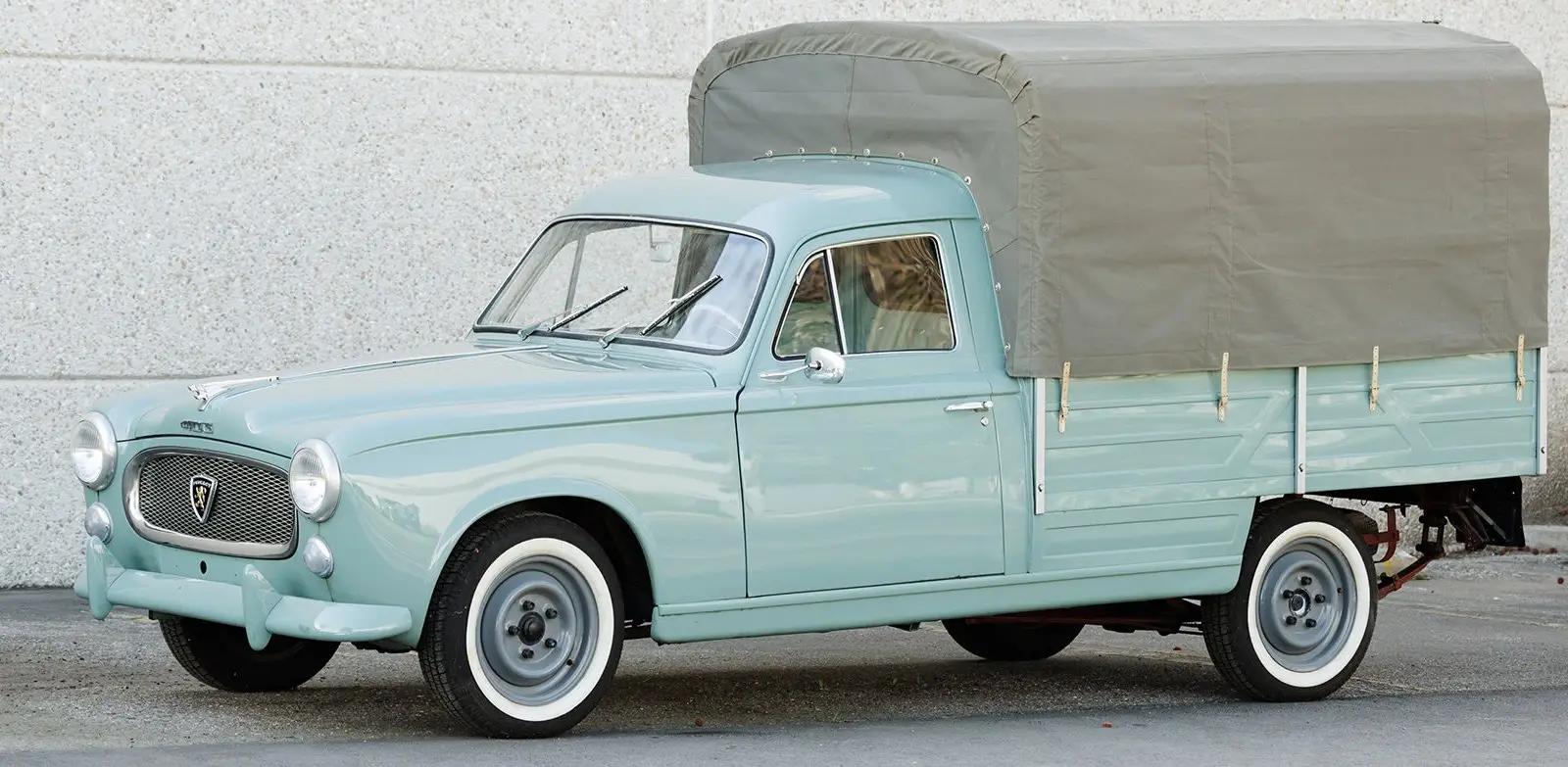
In 1957 another commercial variant appeared — a cab-chassis on which specialist firms built various bespoke bodies. Special taxi versions were also made from sedans and estates. They were the first French taxis to get two-way radios. By the early 1960s the Peugeot 403 had become the most common taxi in France.
From 1957, Peugeot 403 cars could be ordered with Jaeger’s electromagnetic clutch. In autumn 1958 a 48 hp, 1816 cc diesel joined the engine range. In 1959 Peugeot 403s were the first cars in the world to get an electric cooling fan. The 1.5-litre petrol engine became available in 61 and 65 hp versions.
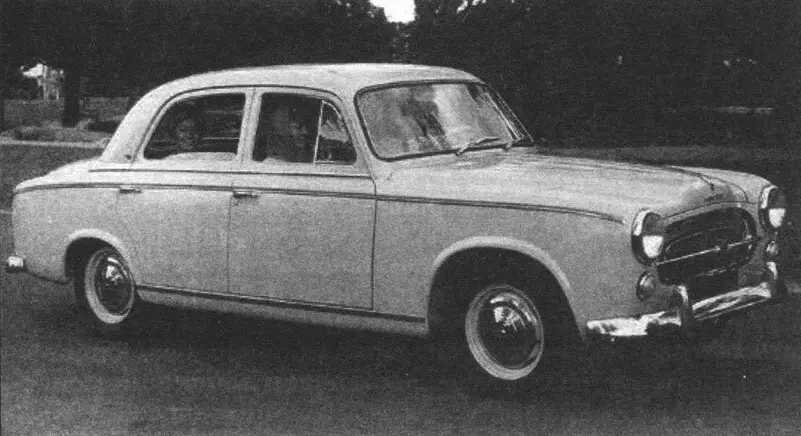
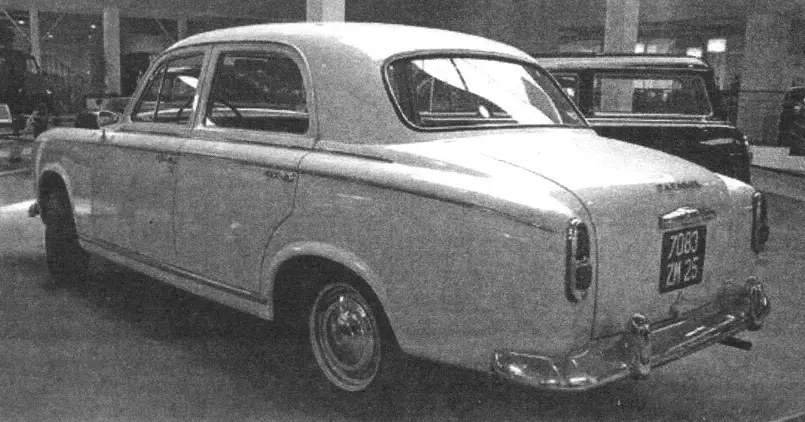
Production of the Peugeot 203 ended in 1960. The line-up then gained a budget Berline Luxe sedan with a 1290 cc, 47 hp petrol engine.
In motorsport the Peugeot 403 worthily continued the older model’s traditions. In 1955 the crew of Eino Elo and Kai Nuortila won the 1000 Lakes Rally in Finland. In 1957 Norman Dennison took first place at the Silverstone circuit in Britain. In 1958 Peugeot crews won the Australian Mobilgas Trial.
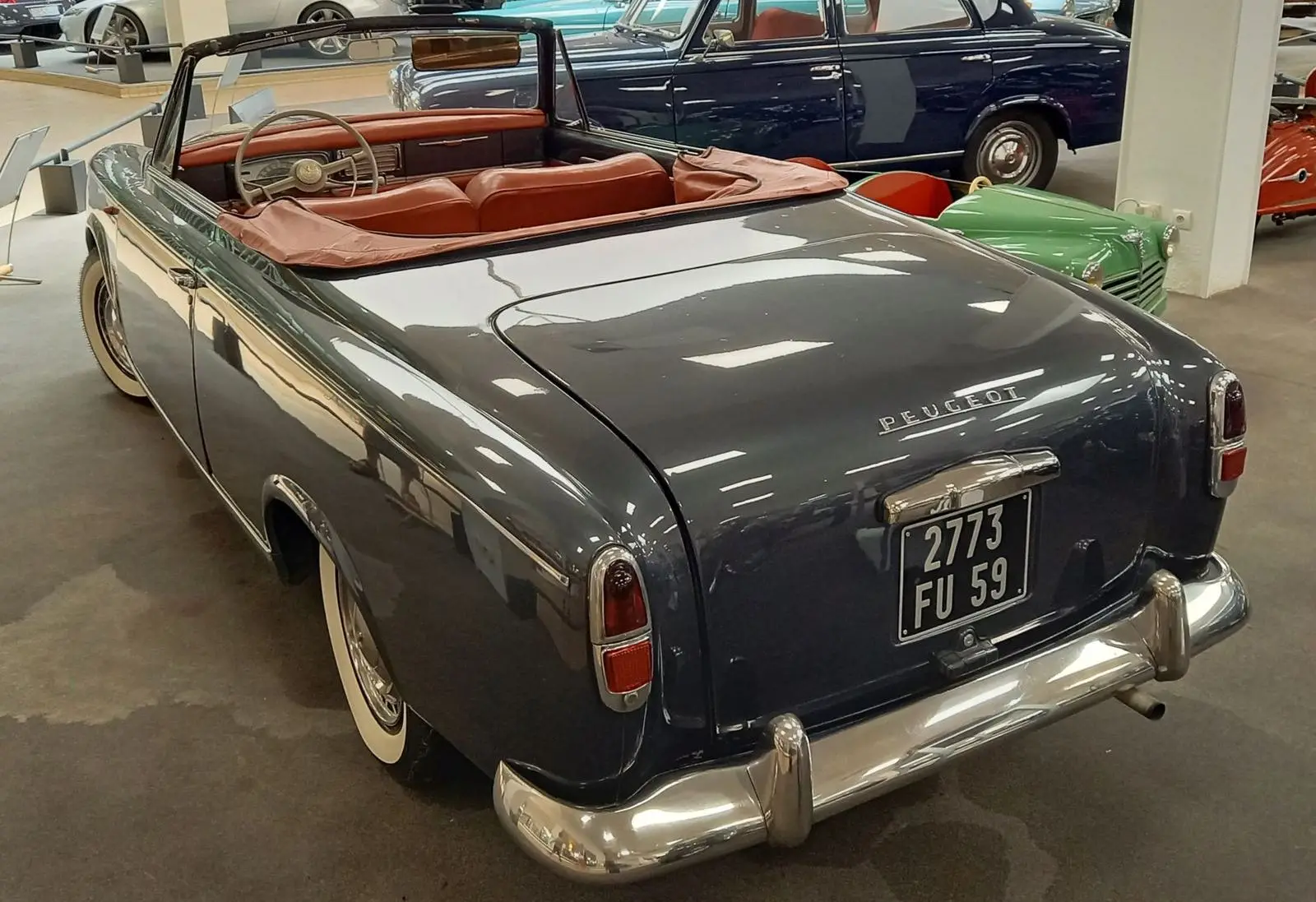
In May 1960 the Peugeot 403 was replaced by the larger, more powerful Peugeot 404 sedan in the same class. Yet the older model remained popular thanks to its lower price and classic looks. The Peugeot 403 stayed in production until 1966, but the range gradually shrank. The convertible was dropped in 1961; the next year France stopped building commercial versions, though production continued abroad. Various Peugeot 403 variants were assembled in Australia, Argentina, and New Zealand. In Argentina the car became a cult object — as prestigious there as a Mercedes-Benz.
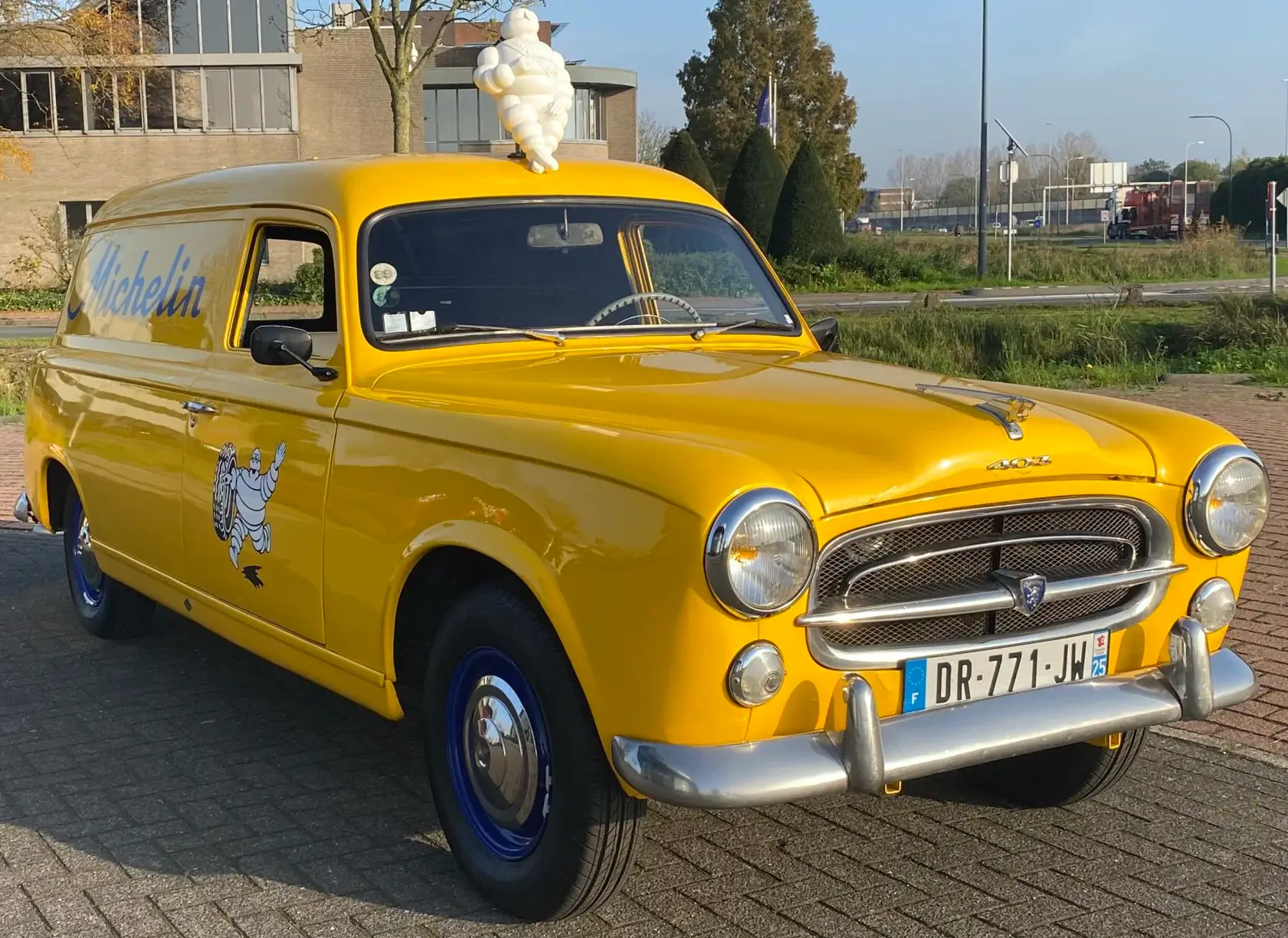
In France in 1962 only sedans and estates remained in production. The base sedan gained a new mesh radiator grille without a horizontal moulding and lost its bumper “fangs”.
The Peugeot 403 was a huge success. A total of 1,214,211 were built, including about 200,000 commercial versions. It was Peugeot’s first million-seller. Reliable cars served for many years, then many found their way to former French colonies in the most exotic corners of the planet. Some still serve their owners today. In a 2024 documentary about Madagascar, several Peugeot 403s appear — in collector condition or well worn — still in daily use.
A star of the screen
The Peugeot 403 played its brightest roles in “retirement”, after production ended. By the mid-1960s it had become a symbol of French classic motoring. You can see a Peugeot 403 in the 1966 film “How to Steal a Million” starring Audrey Hepburn. Soviet viewers knew the car from Pierre Richard comedies: “The Tall Blond Man with One Black Shoe” (1972), “The Return of the Tall Blond” (1974), and “The Toy” (1976).
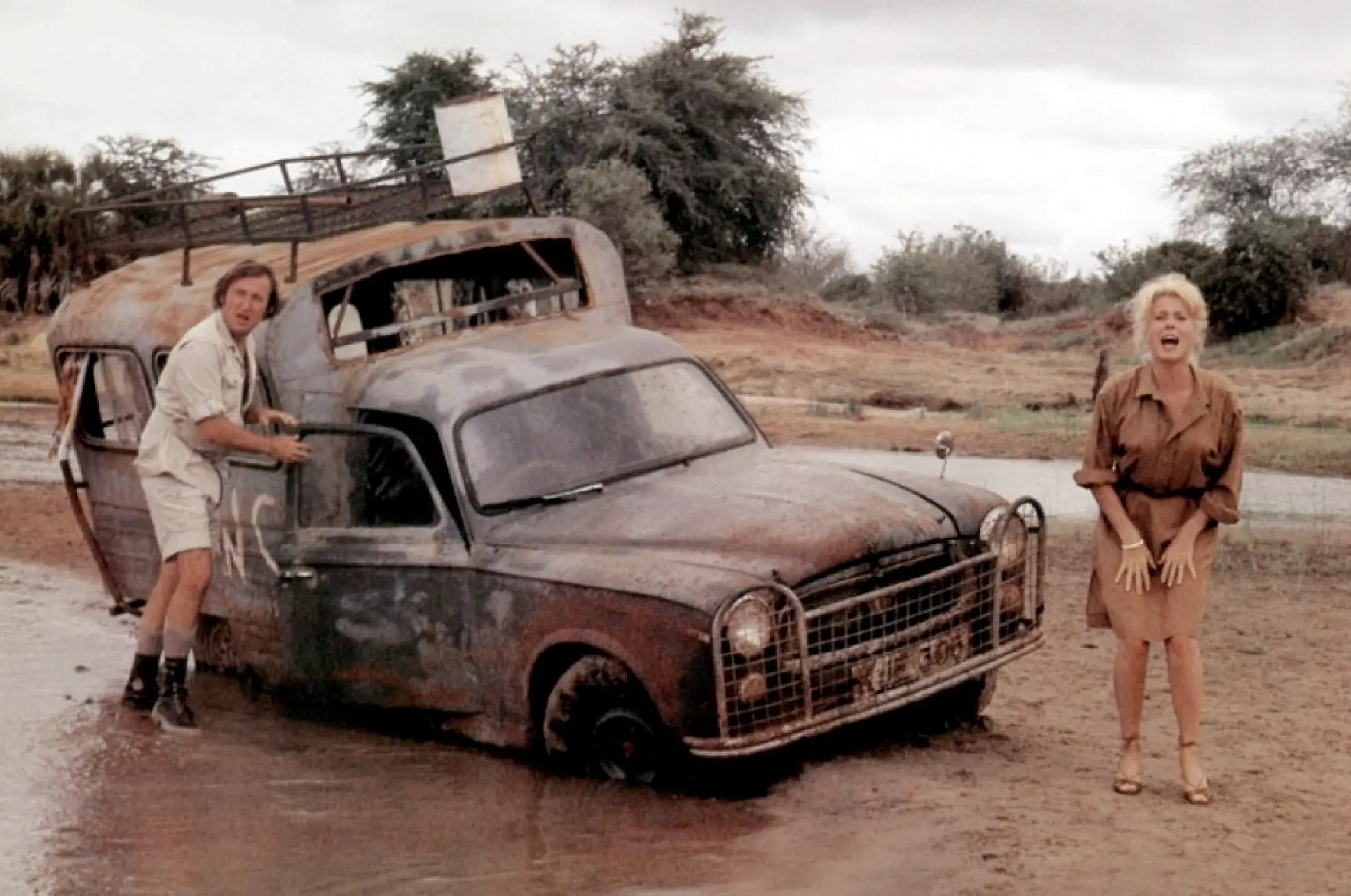
In the adventure film “L’Africain” (1983, Philippe de Broca) starring Catherine Deneuve, all Peugeot 403 sedan variants appear, but the Camionnette pickup steals the show. Filming took place in Kenya and Zaire. In the script the pickup had long been used as… a toilet because the lady of the house’s husband had no driving licence. After the ignition keys were found, the car ran and helped the heroes through tight spots.
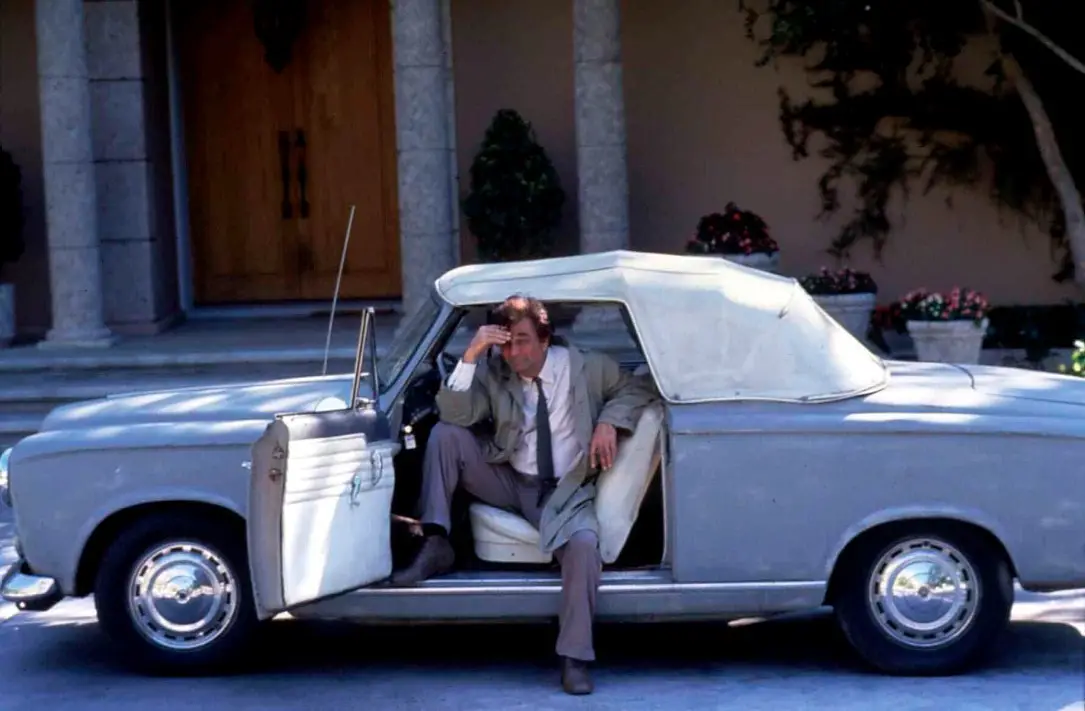
The most famous role, however, went to the convertible that made the Peugeot 403 known worldwide. It is the rarest variant — only 2,050 were built. In 1968 the US detective series “Columbo” began. The lead, LAPD homicide Lieutenant Columbo, was played by Peter Falk. At first the inspector had no car. In 1971, while shooting the fourth episode, the writers decided he needed wheels that matched the image of an “incorruptible officer in a shabby grey raincoat”. Falk was allowed to choose. He spotted an olive-green Peugeot 403 convertible gathering dust on the edge of Universal Studios’ vast props lot. In the early 1960s it had appeared in some film with French scenery, then was forgotten for years. The car was made roadworthy and repainted grey. Two more identical convertibles were used for stunts and as parts donors.
Filming continued until 1978; the car went through all kinds of scrapes. It lost bumpers and lights, the hood rotted. In 1984 it was sold at auction. When producers revived the series in 1988, Peter Falk refused to shoot until his “partner in crime” or at least the same model was found — by then even in Europe Peugeot 403 convertibles were scarce.
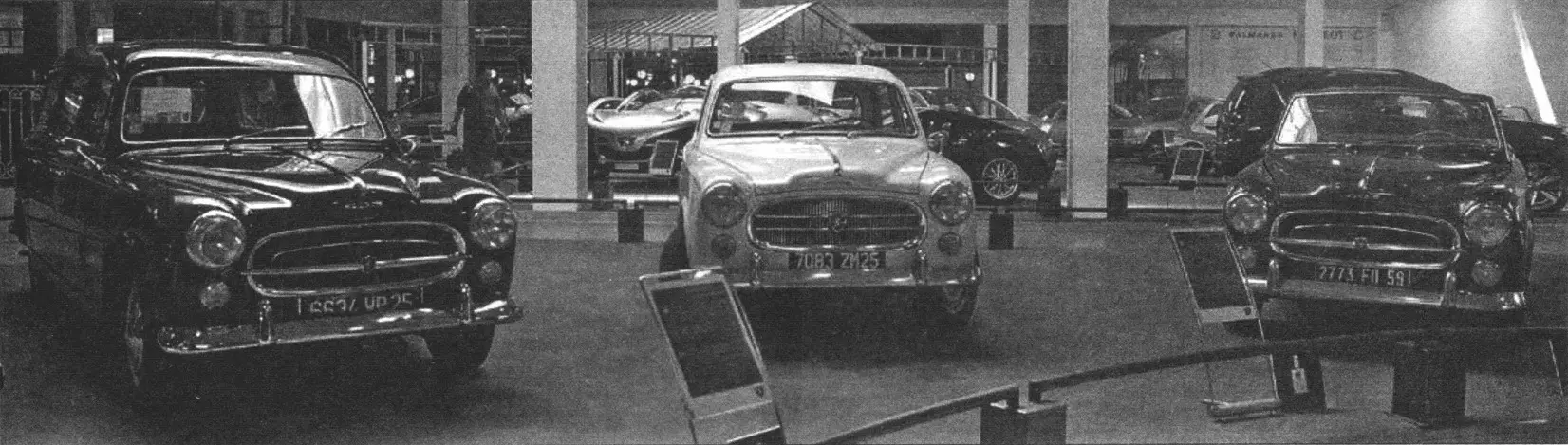
Fortunately collector Jimmy Delan — owner of “that” convertible — agreed to a short-term rental. After restoration it was repainted again, the interior retrimmed, and a new hood fitted. For extra authenticity new dents were even added. Shooting overran, however, and instead of the agreed ten weeks the car went back to its owner only after… 19 years! Today it is in fine health and is sometimes shown at exhibitions.
TECHNIQUE IN MINIATURE
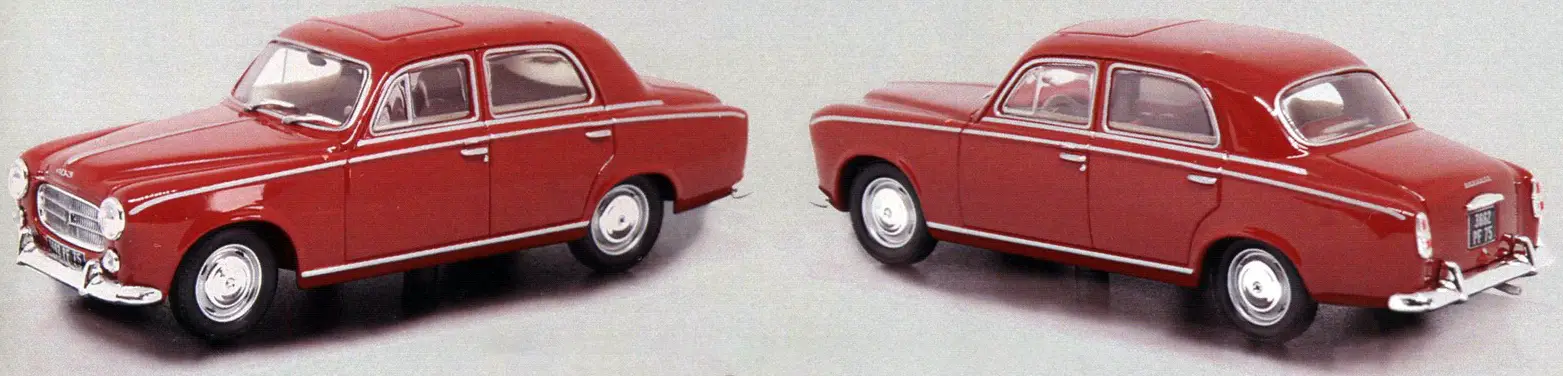
French firm Norev produces a 1:43 scale 1963 luxury-spec Peugeot 403 sedan. The replica is finished in a striking cherry red. The cabin is two-tone — light beige with red. French licence plates. The model is handsome, but has a serious flaw: the side windows are too narrow. The rear lamps are also rather crude.
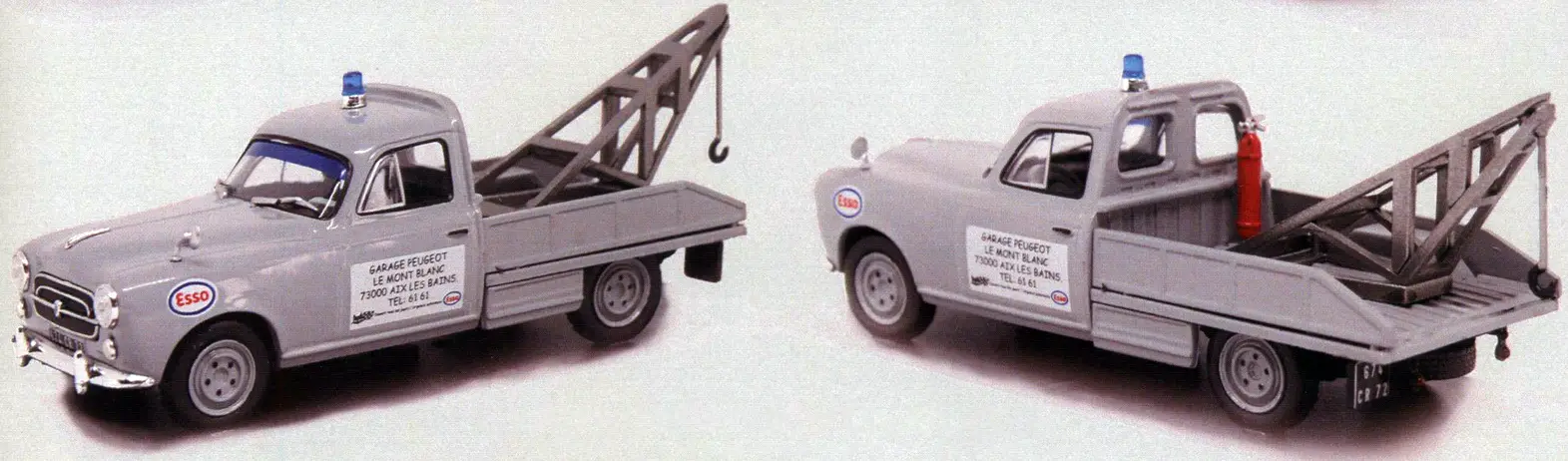
About twenty years ago European magazine publisher Altaya issued an interesting 1:43 breakdown truck on an early Peugeot 403 chassis with “clap-hands” wipers. For a budget segment model it is very well done: correct geometry, minimal simplification (turn signals and rear lamps are just painted detail).
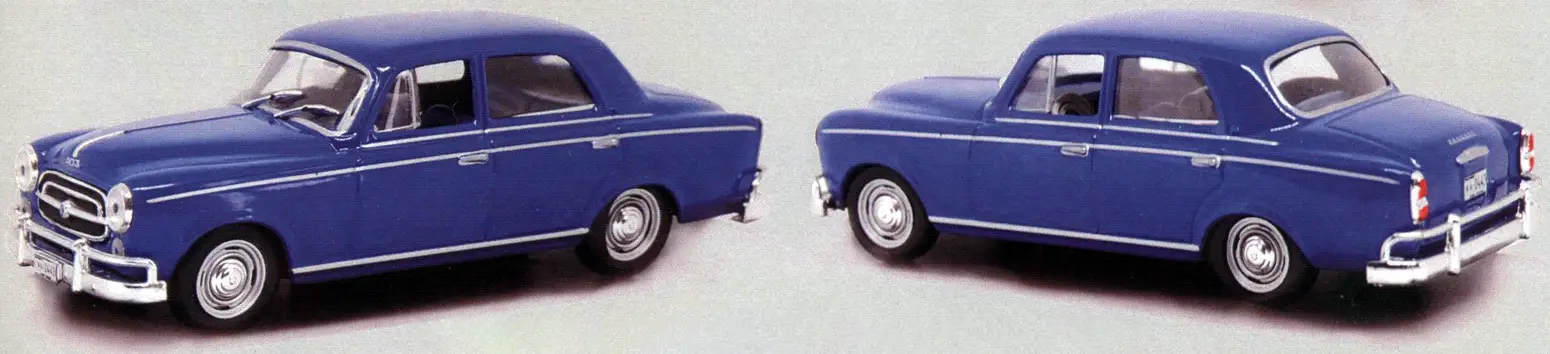
Recently Altaya’s Argentine series produced an excellent, inexpensive 1960 Peugeot 403 sedan model. It has more accurate geometry than the Norev copy. Glazing is the right size. The Argentine version also differs from the French original with bumpers that have extra hoops protecting the lights. The interior is blue, the steering wheel ivory. Argentine plates are fitted.
“Modelist-Konstruktor” No. 6’2025, Sergey DYAKONOV
Recommend to read
 BENCH KNEES
No matter how small nor was a country station, the cultivation of it requires a lot of work and everyday stress. It must be something to plant, paraklit, Spud. And all this has to do... Racing experimental
Instead of the usual steering wheel, I installed a column of the front manual drive of a two-stage chain transmission on the bicycle machine (Fig. 1). When moving, depending on the height...
