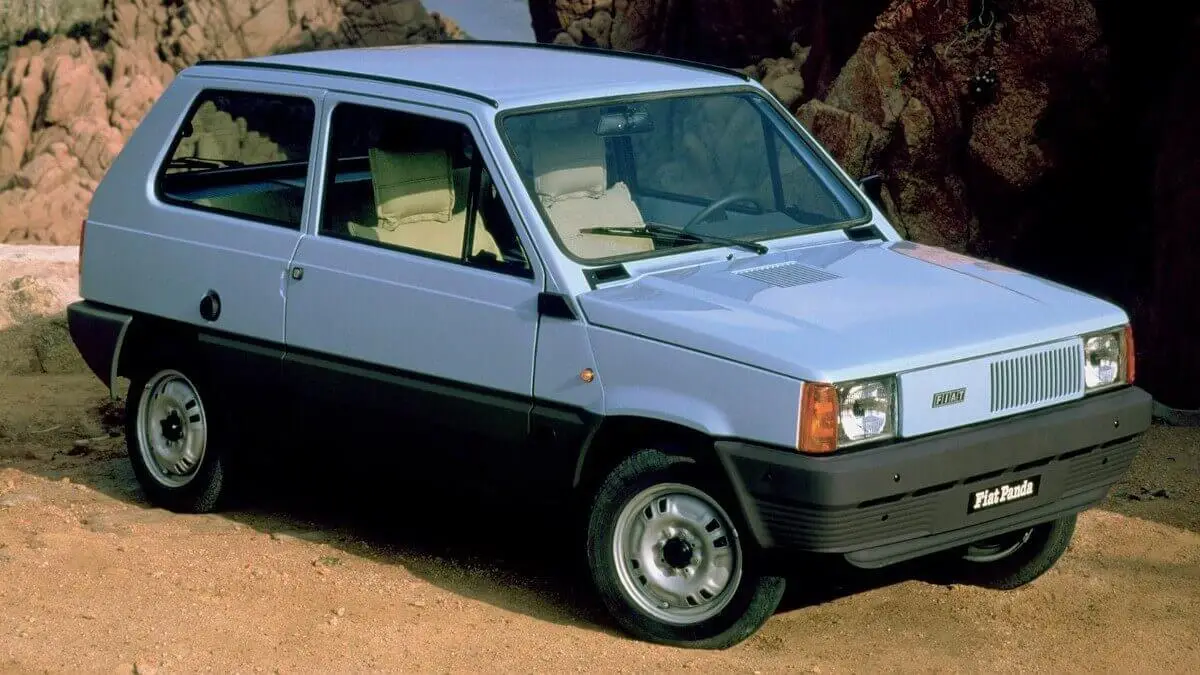
1980. An unassuming little car, the Fiat Panda, takes to the roads of Europe. At the time, no one could have guessed that it would become a bestseller, remain in production until 2003, and that its successors would still be rolling off the assembly line today.
The car appeared at a difficult time. Because of the Iranian Revolution and the entry of Soviet troops into Afghanistan in 1979, the price of oil on the world market skyrocketed. Naturally, gasoline also became more expensive, and in many countries a shortage developed, which increased interest in compact, economical cars. At that moment Fiat’s model range had no competitive car of this class. The Fiat 127 and Fiat 126 were already outdated; moreover, the latter was produced in Poland, where a government crisis had broken out and deliveries were intermittent. The promising compact Fiat Uno, on which the Italian group was placing its main bet, was still only being designed. Under these conditions it was decided to accelerate work on the Fiat 141, which would enter series production as the Panda.
The starting point was a concept by Giorgetto Giugiaro, but the production cars differed significantly from the original version. To cut manufacturing costs and improve repairability, the design was simplified as much as possible. All the glass was made flat, including the windshield; instead of door handles there were buttons; the body came only as a three-door hatchback. Compared with the Fiat 126, the number of body panels was reduced by 18%, and the number of welds by 28%.
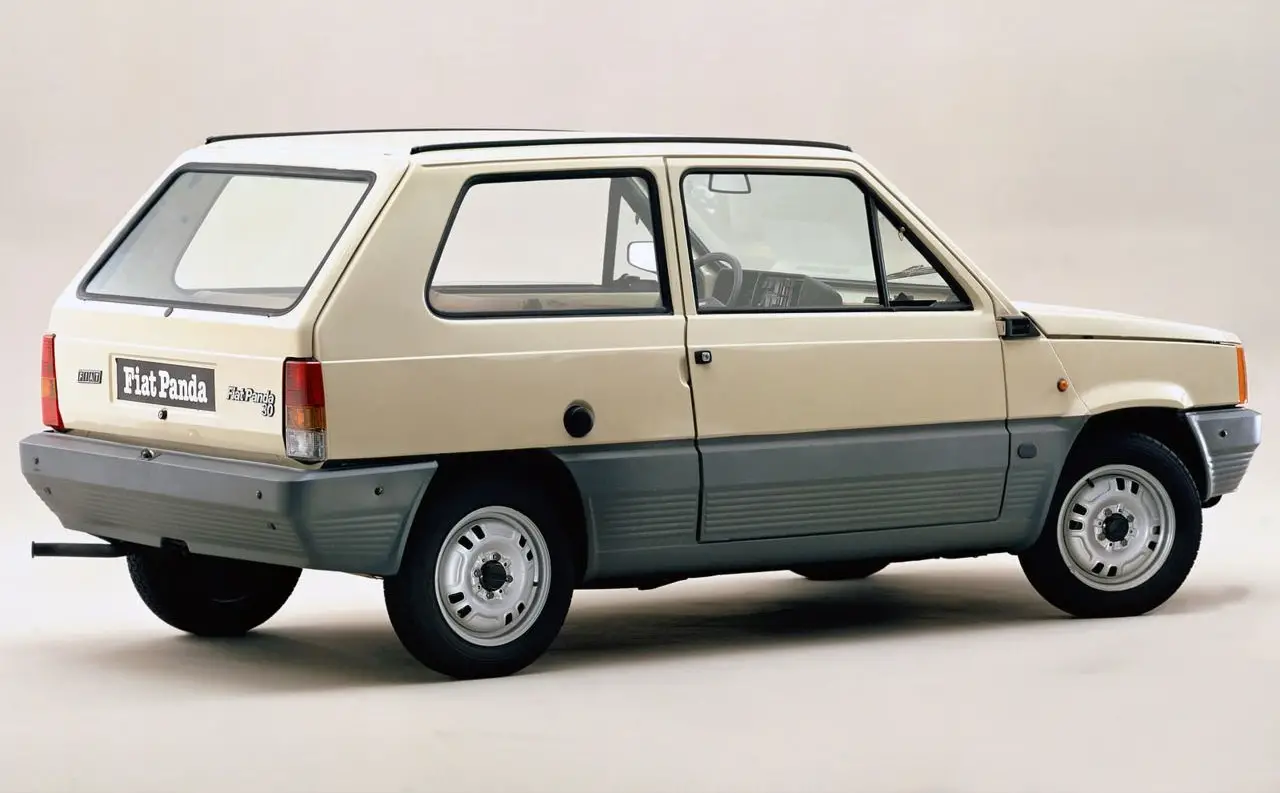
Giugiaro later recalled that he designed the Panda like… a refrigerator! At the same time, great attention was paid to transforming the cabin. The rear seat had seven different positions; it could be used as a hammock or unfolded into a large double bed. From the very beginning, an all-wheel-drive version was also envisioned — a result of the influence of our Niva, which enjoyed great success on the European market in the late 1970s.
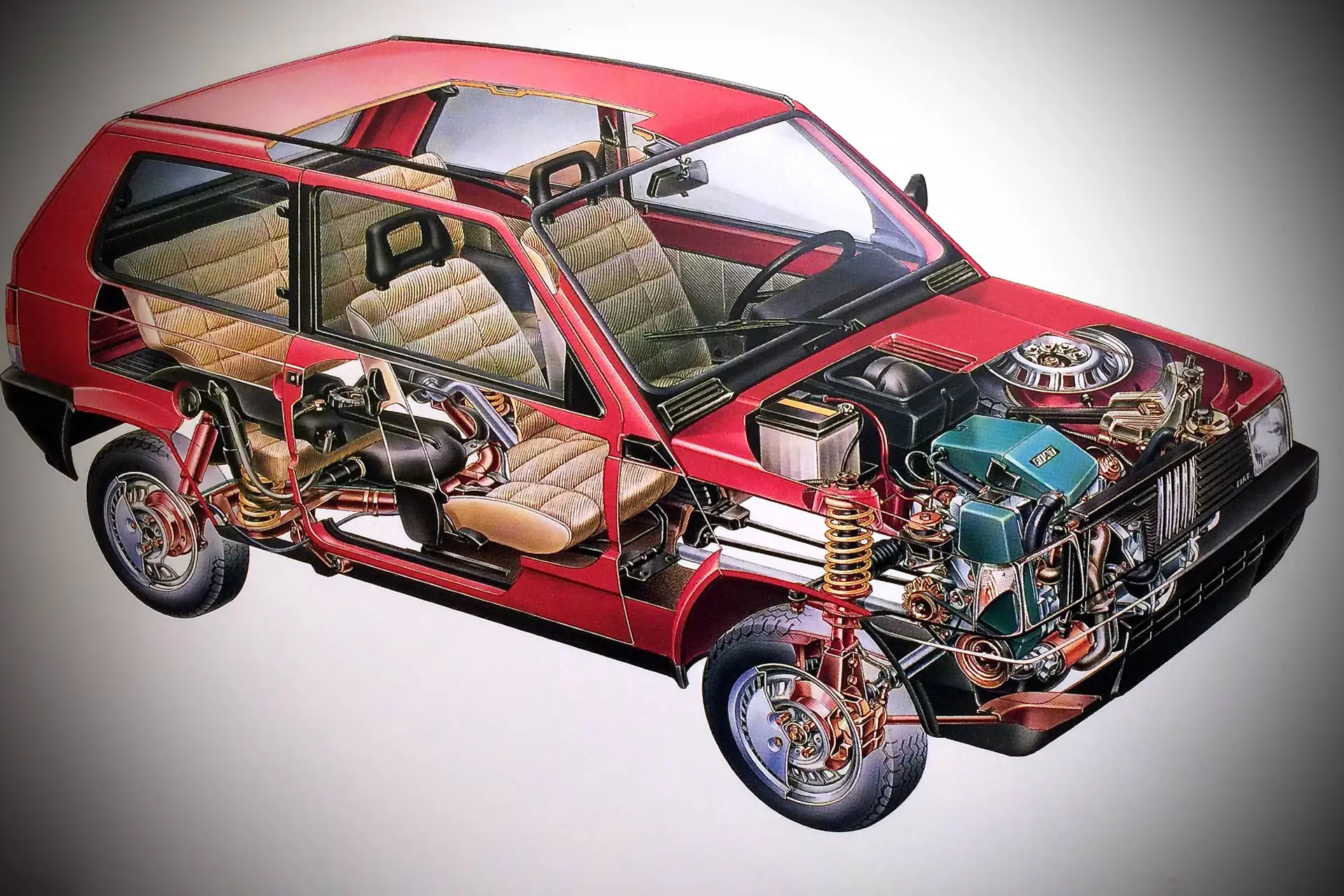
The Panda’s design was quite modern for those years: front-wheel drive, rack-and-pinion steering, and a McPherson-type front suspension. Around the perimeter of the body was a plastic cladding, like on today’s crossovers. The spare wheel was placed in the engine bay, which made it possible to give the car a reasonably spacious trunk despite its compact dimensions. Since at the start of production the promising Fire-family engines were still under development, the car was initially fitted with air-cooled two-cylinder engines from the Fiat 126 (652 cc, 30 hp) or water-cooled four-cylinder engines from the Fiat 127 hatchback (903 cc, 45 hp).
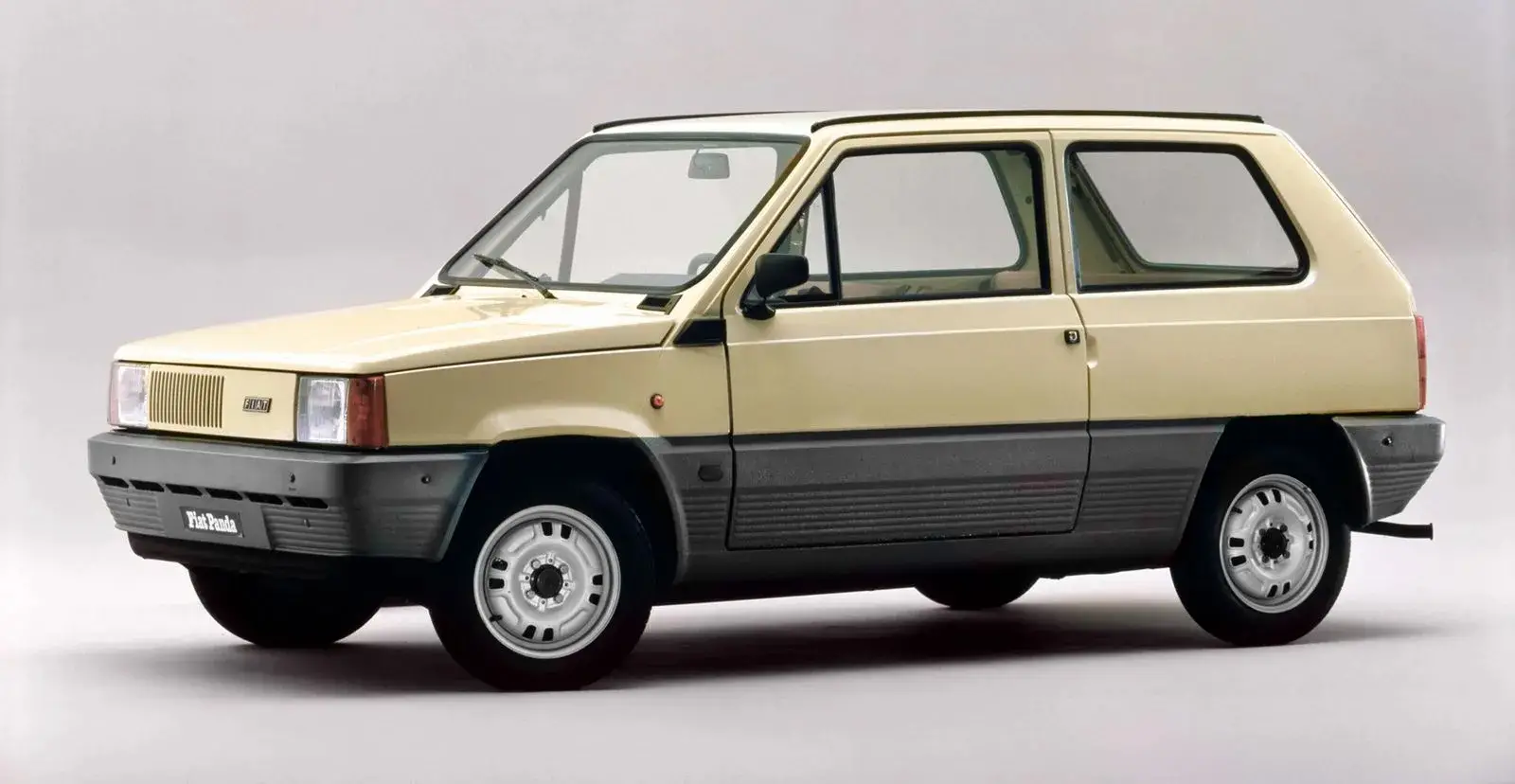
Sales of the Fiat Panda started in February 1980, even before the official premiere at the Geneva Motor Show in March. Production was launched at once at two Fiat plants — in Desio and Termini. Buyers appreciated the inexpensive, practical, and appealing little car — and as early as July 1984 the “millionth Panda” was built. The press also responded positively: in the “European Car of the Year 1981” contest the Fiat Panda took second place, behind only the Ford Escort.
During production the car was continually modernized. In 1981 a right-hand-drive version was introduced. In 1982 the car received a new radiator grille; the range gained a well-equipped Panda Super with a 48 hp, 965 cc engine; and a five-speed gearbox became available as an option.
Besides the hatchback, cargo versions — the Panda Van, without a rear seat — were built for some markets. They came in two main variants: a basic one with a standard body and rear windows closed with metal inserts, and a van with a plastic high-roof conversion and two swinging rear doors.
In 1983 production of the all-wheel-drive Fiat Panda 4×4 began. Apart from the body, it was essentially a different car. First of all, it was assembled not in Italy but in Austria, at the Steyr-Daimler-Puch plant — the same place that built the legendary Mercedes-Benz G-Class off-roaders. The Fiat Panda 4×4 had an original transmission with selectable drive to the rear wheels. The gearbox was a five-speed unit; on hard surfaces, starts from rest were made in second gear, while first was reserved for off-road use. All-wheel drive was engaged manually with a separate lever. Austrian-built cars differed from Italian ones in better assembly and paint quality. But the price was also substantially higher, so demand for these cars was limited. In total about 200,000 first-generation all-wheel-drive Fiat Pandas were built, whereas ordinary “bamboo bears” in Italy numbered 4.5 million, not counting Spanish-built cars.
If you consider the Fiat Panda 4×4 as an all-wheel-drive, upgraded version of a budget hatchback — yes, it is expensive. If you see it as a younger brother of the Mercedes-Benz G-Class — it is almost a gift! All the more so because the little car had excellent off-road ability.
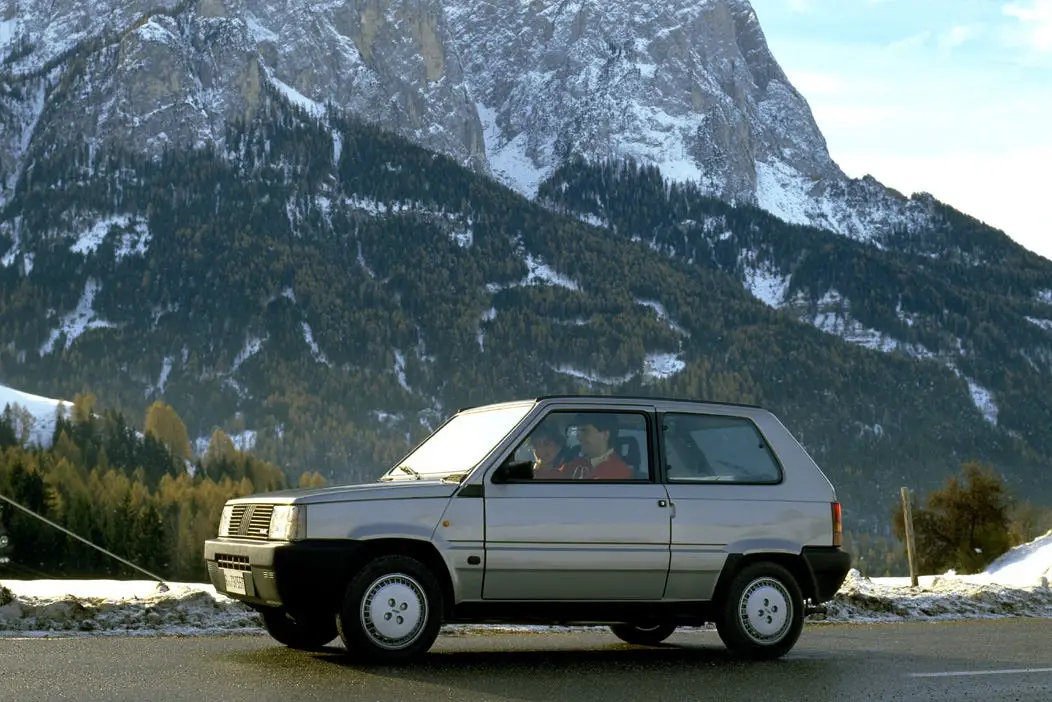
In the 1980s the Swiss postal service needed reliable transport for delivering mail to remote mountain areas. A competition was announced in which many well-known off-road manufacturers took part. The tests were conducted under real conditions. The finalists were the Mercedes-Benz G-Class and the Fiat Panda 4×4. In the end the little “bear” won: it could freely travel trails where the German simply would not fit. In many mountain regions of Western Europe, first-generation Fiat Panda 4x4s still serve reliably today.
But let us return to the base model. In 1986 the car was substantially modernized. The most important change was new Fire-family gasoline engines of 34, 45, or 50 hp — the world’s first designed with computer modeling. A diesel version also appeared. The rear suspension became coil-sprung, except on the all-wheel-drive version, which retained the previous leaf-spring axle. The car received new bumpers, a radiator grille, and an instrument panel; vent windows were removed from the door glass. The plastic cladding that promoted body corrosion was replaced with wide moldings. Higher-trim versions began to get more comfortable seats. In this form the car was produced into the early 1990s. In 1993 it was planned to discontinue it and replace it with the promising Fiat Cinquecento.
Interestingly, in the late 1980s the Fiat Panda almost became the “people’s car of the Soviet Union,” and only the country’s collapse prevented those plans from coming true. The Fiat Panda immediately attracted the attention of our specialists, because the USSR, too, intended to launch mass production of affordable, compact cars. As was then customary, several foreign counterparts were purchased for comparative testing, among them the Fiat Panda. Unfortunately, for the domestic car later named the Oka, the least successful prototype was chosen — the Daihatsu Cuore. The result was a purely urban car with a short-travel suspension and modest ground clearance: rather appealing, but neither technologically suited nor profitable for mass production, with a unit cost comparable to that of the VAZ-2108.
A second attempt to create a “people’s car” was made in the late 1980s. This time the Fiat Panda was taken as the prototype. Production was planned at a new plant in Yelabuga in 1992. Moreover, the equipment needed to equip it was something Fiat was ready to supply on short notice — and cheaply, since the Panda was going to be taken off the line anyway. An intergovernmental agreement between Italy and the USSR was signed to implement the plan. But the Soviet Union collapsed, and in the impoverished country of the 1990s even inexpensive cars were beyond most people’s means. Domestic plants were also able to meet demand on their own.
Technical specifications of Fiat Panda family cars
| Panda 45 | Panda 1000 | Panda 4×4 1000 | SEAT Marbella | Panda 1.2 | Panda 4×4 | Panda 4×4 | |
|---|---|---|---|---|---|---|---|
| Year of manufacture | 1980 | 1986 | 1990 | 1990 | 2005 | 2005 | 2013 |
| Number of doors | 3 | 3 | 3 | 3 | 5 | 5 | 5 |
| Number of seats | 5 | 5 | 5 | 5 | 4-5 | 4-5 | 4-5 |
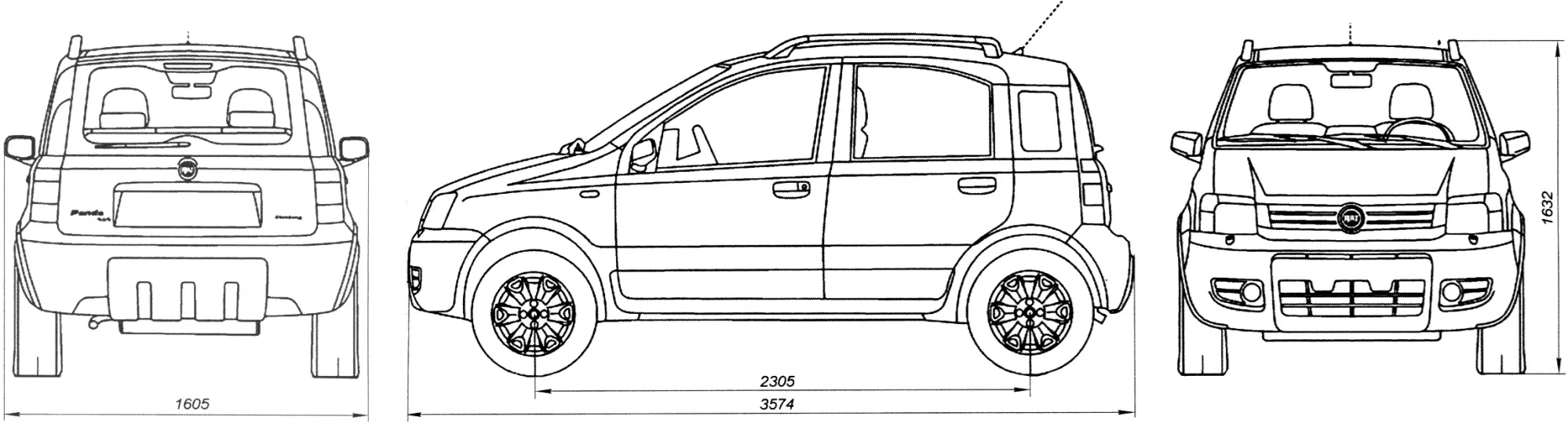
| Length, mm | 3380 | 3408 | 3435 | 3475 | 3538 | 3574 | 3686 |
| Width, mm | 1460 | 1494 | 1500 | 1500 | 1578 | 1605 | 1672 |
| Height, mm | 1445 | 1420 | 1485 | 1445 | 1545 | 1632 | 1605 |
| Wheelbase, mm | 2160 | 2159 | 2159 | 2160 | 2299 | 2305 | 2300 |
| Curb weight, kg | 680 | 715 | 805 | 680 | 860 | 980 | 1050 |
| Engine displacement, cc | 903 | 999 | 999 | 903 | 1242 | 1242 | 875 |
| Power, hp | 45 | 45 | 45 | 40 | 60 | 60 | 85 |
| Compression ratio | 9.0:1 | 9.0:1 | 9.0:1 | 8.8:1 | 9.8:1 | 9.8:1 | 10:1 |
| Top speed, km/h | 140 | 140 | 125 | 130 | 155 | 144 | 166 |
In 1991 the car was modernized again: it began to receive fuel-injected engines, and besides a manual gearbox buyers could choose a Selecta CVT version with a 50 hp, 1108 cc engine. Also in the early 1990s, small batches of two-seat Panda Elettra electric cars were produced, with battery packs installed in place of the rear seats. Demand for them was low because of the high price, however, and production was soon discontinued. Production of the first-generation Fiat Panda in Italy and Austria continued until 2003.
The Spanish version
Almost simultaneously with Italy, licensed Panda production started in Spain at the SEAT plant. Apart from the badge, the Spanish cars differed in their powertrain line-up: the first versions used 843 cc (35 hp) and 903 cc (45 hp) engines. A van with an enlarged body was also built. From 1980 to 1986 Spain produced 463,418 SEAT Panda hatchbacks and 82,832 vans.
In the early 1980s SEAT came under the control of the Volkswagen Group and relations with the Italian company were severed. Nevertheless, production of many Italian models continued, but under different names. Thus in 1986, after a minor update, the Spanish Panda became the SEAT Marbella. The car received an original radiator grille, bumpers, and lighting. A new load-passenger Terra version appeared — a van with glazed bodywork. The powertrain range was reduced to a single 40 hp engine.
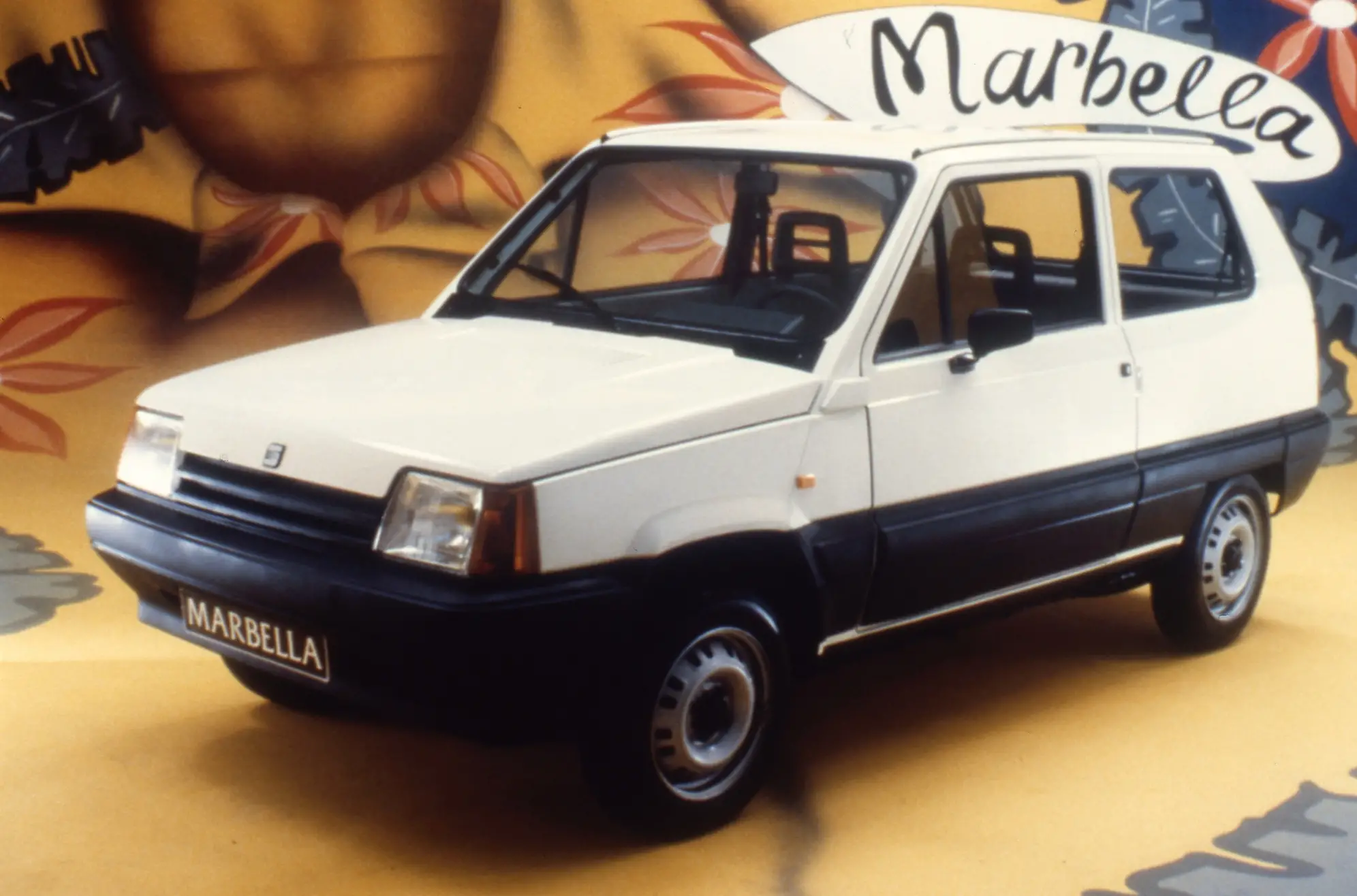
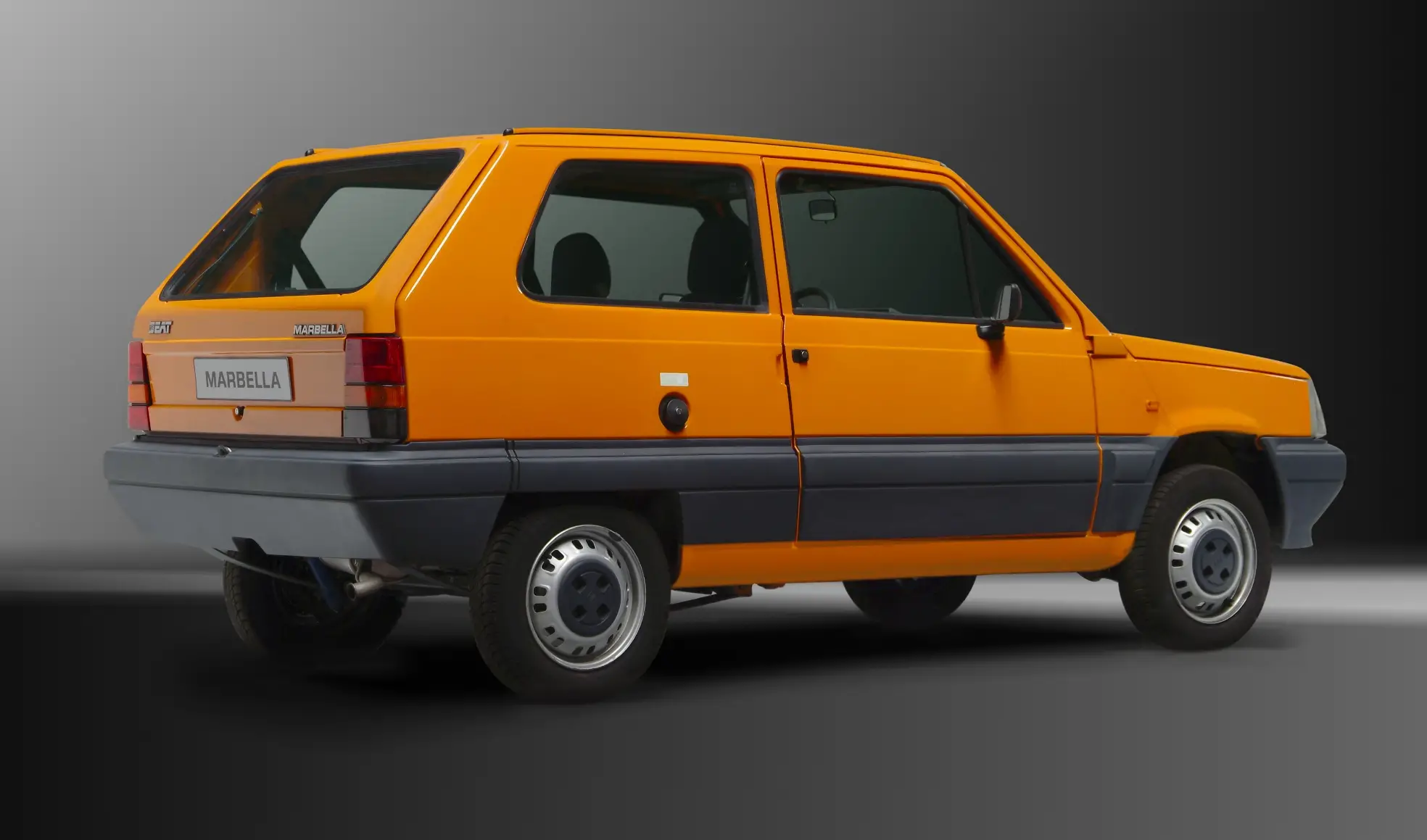
All Spanish cars were front-wheel drive only. Production in Spain was wound down in 1998, five years earlier than in Italy. On the domestic market the SEAT Marbella struggled to compete with more dynamic and comfortable locally built Ford Fiestas, Peugeot 205s, and Renault Twingos. In total, 597,170 SEAT Marbella hatchbacks and 166,601 SEAT Terra vans were built. Interestingly, in both Italy and Spain one could freely buy either a Fiat Panda or a SEAT Marbella — they were simply sold through different dealer networks.
Second edition
In autumn 2003 production of the new-generation Fiat Panda began. It had first been shown in December 2002 at the Bologna Motor Show as the Simba (production cars kept the previous name). The car was designed from scratch on a new platform. The tall five-door body resembled a minivan. In ergonomics, comfort, and safety the newcomer far surpassed its predecessor. Little remained of the old austerity. The base version came with electric power steering, two airbags, central locking, power front windows, and a Blaupunkt audio system. The rear seat slid fore and aft. The powertrain range included two Fire gasoline engines of 1108 and 1242 cc. Slightly later a new MultiJet diesel of 1248 cc appeared. Alongside a manual gearbox, a Dualogic automated transmission was offered as an option. The car used an independent McPherson-type front suspension and a semi-independent coil-sprung beam at the rear. Front brakes were discs; rear brakes were drums.
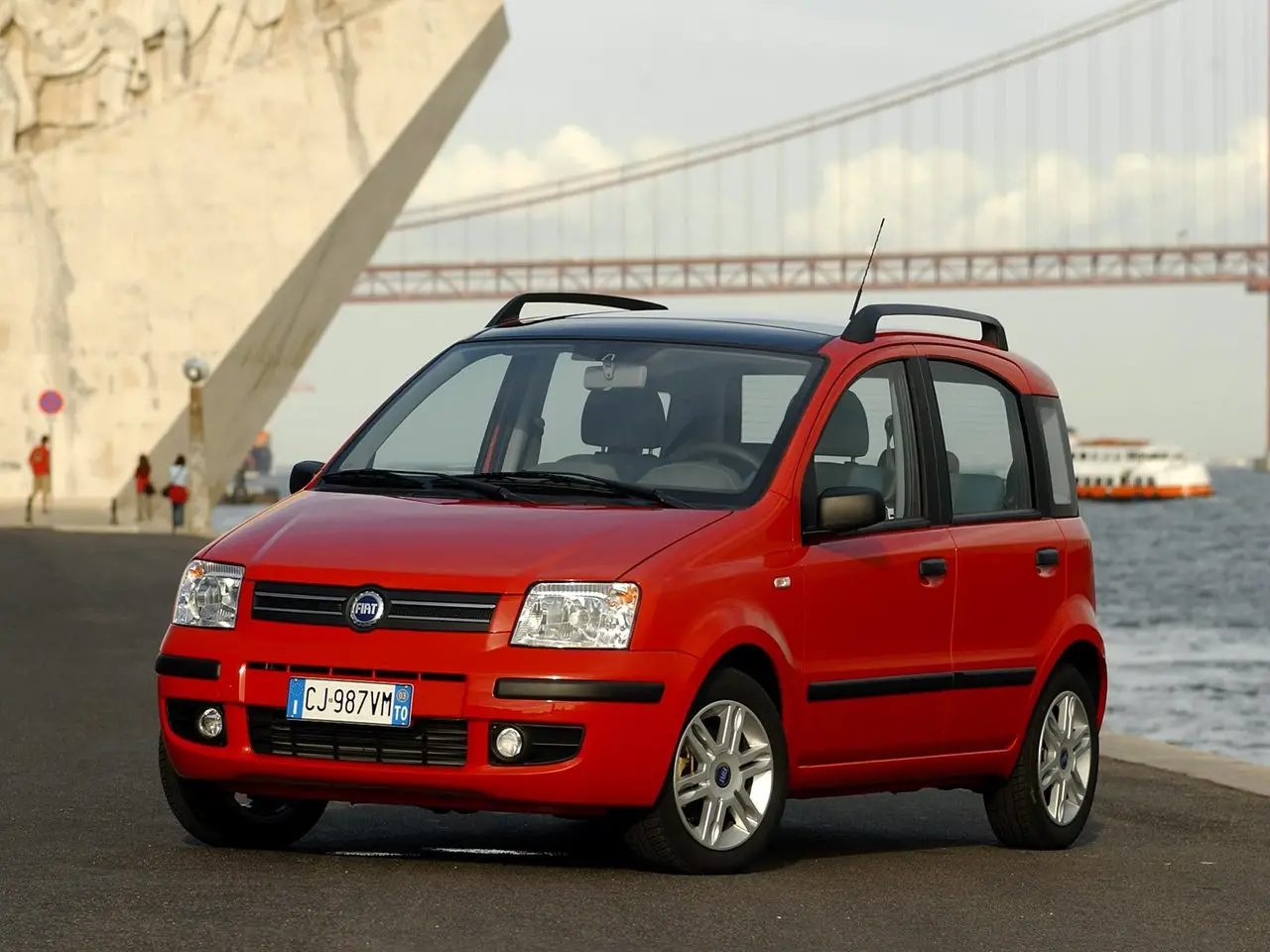
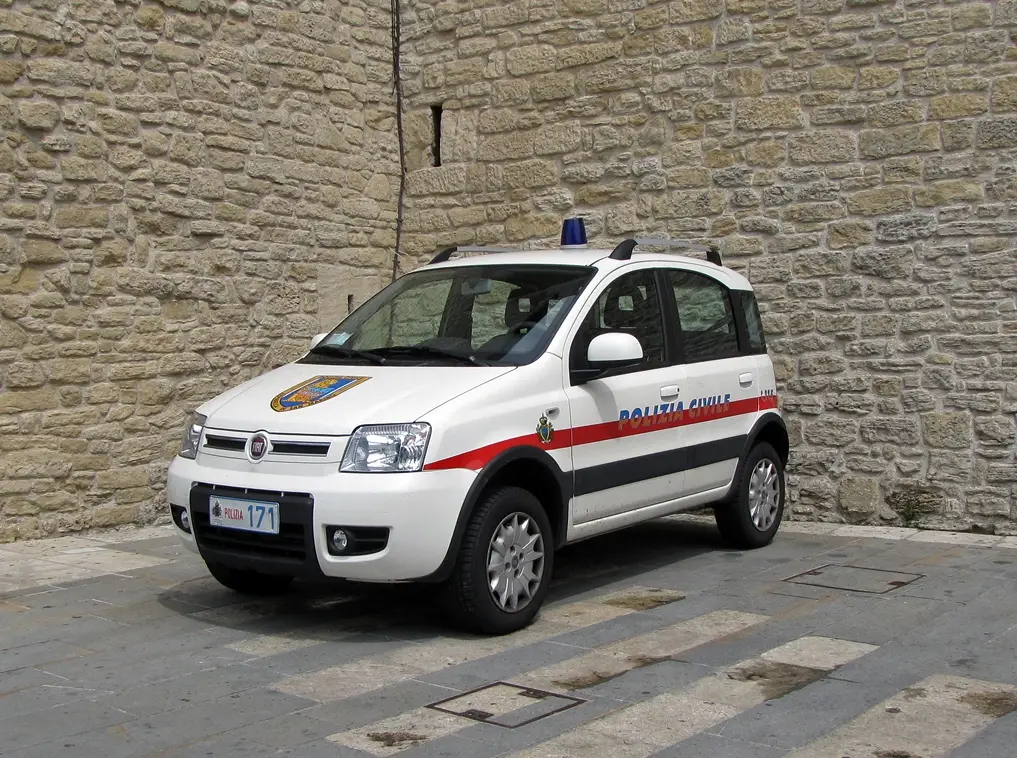
In autumn 2004 production of the second-generation Panda 4×4 began. This car received an all-wheel-drive system with a viscous coupling. The all-wheel-drive version was fitted with an original independent rear coil suspension with wishbones on a subframe. The Panda 4×4 became the first model in the family with disc brakes on all four wheels. Externally it differed in its bumpers and wheels, and ground clearance was increased to 165 mm. A Cross variant with off-road cladding was also built on the Panda 4×4 base. As before, the range retained commercial Panda Van versions, available in front-wheel-drive and all-wheel-drive form. In 2006, for the FIFA World Cup, a special Panda 100HP version with improved trim was released. The car was fitted with a 100 hp engine paired with a 6-speed manual gearbox.
Recent history
In 2011 the third-generation Fiat Panda debuted. The car retained the style and layout of its predecessor but grew slightly larger, with improved comfort and safety. About 70% of the body elements were made of high-strength steels. Even the base trim had four airbags. The powertrain range gained a two-cylinder gasoline turbo of 875 cc and 85 hp. Two versions of a four-cylinder MultiJet diesel, of 75 and 95 hp, were also offered. The range still included Panda 4×4, Cross, and commercial Panda Van versions. The all-wheel-drive version received a new AWD system with an electronically controlled clutch. A Trekking version also appeared. Externally it looks like an off-road variant: ground clearance is increased, but drive is front-wheel only, with an electronic system that simulates a front differential lock.
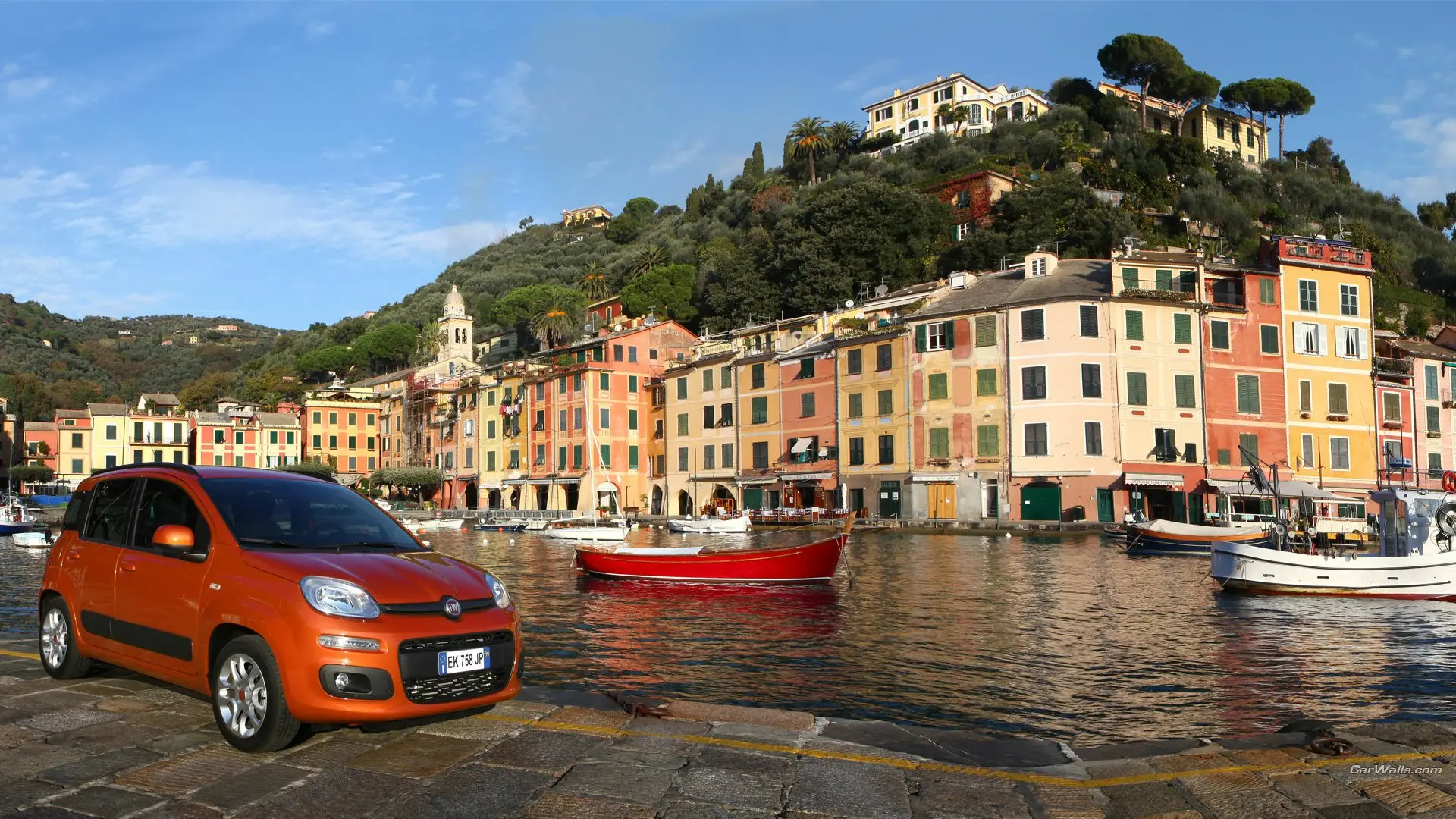
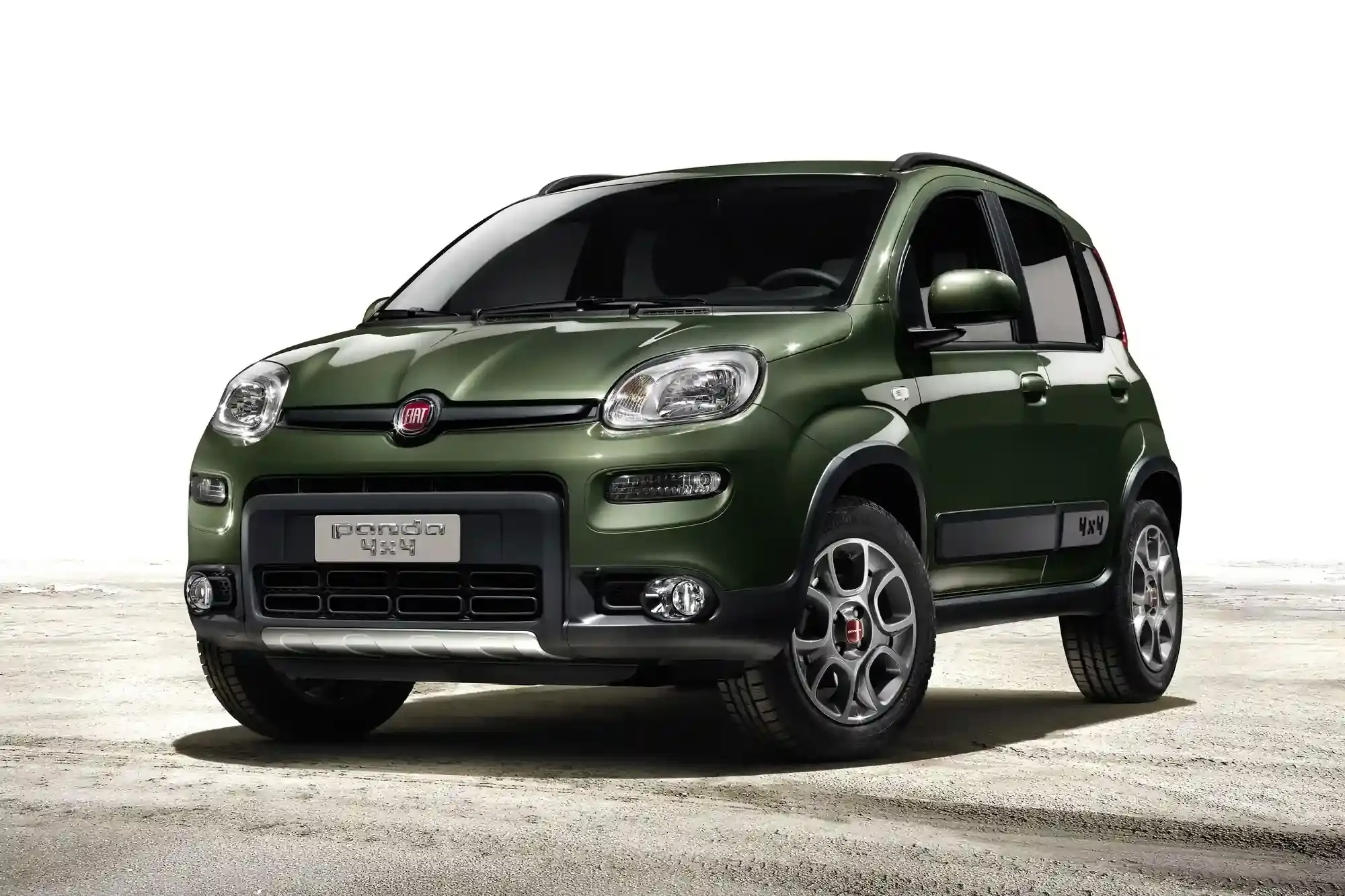
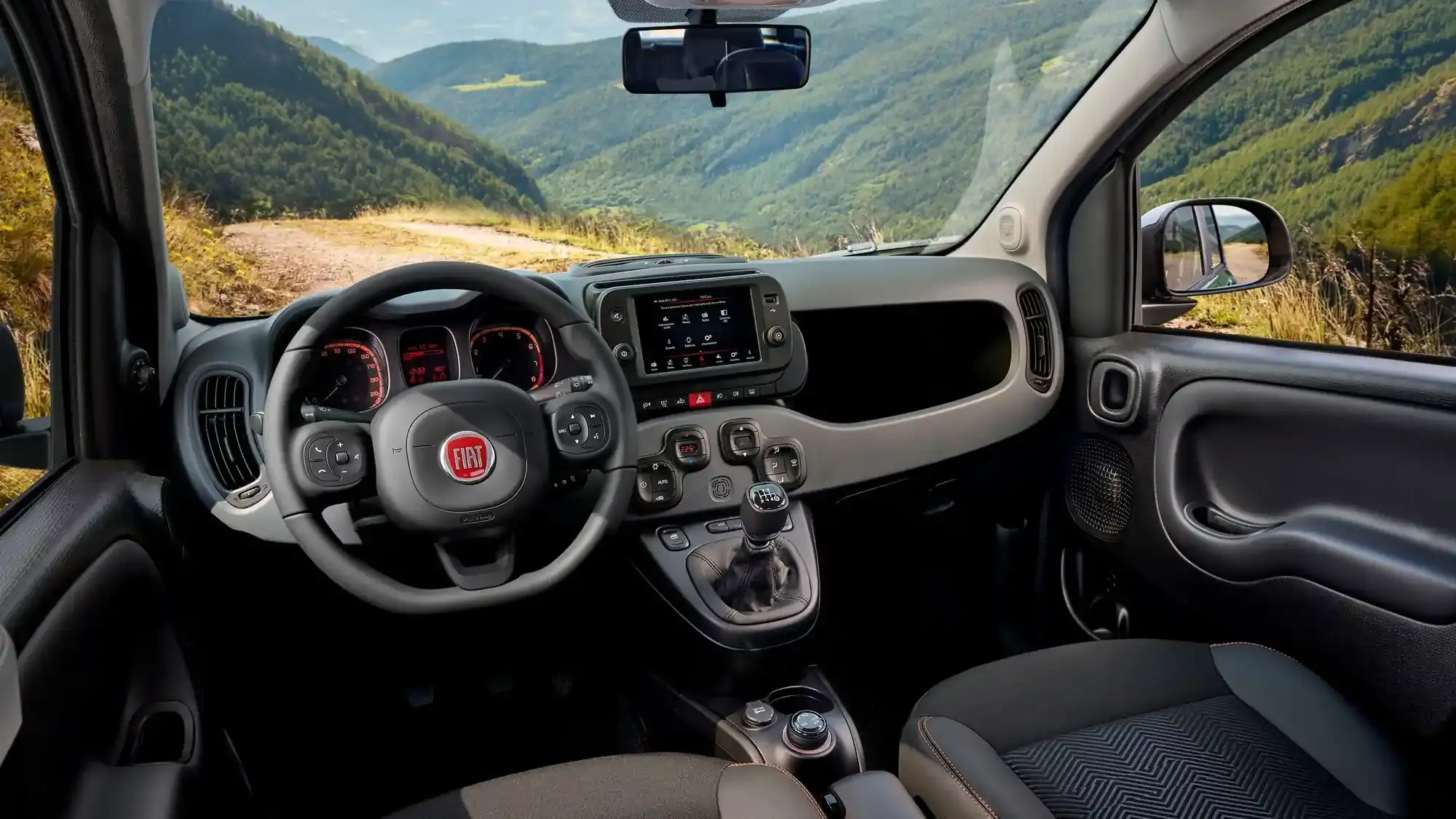
In 2020, for the car’s 40th anniversary, it was modernized once more. It received new bumpers, wheels, and an interior with a 7-inch multimedia system. The range gained a hybrid version with an additional 4.9 kW motor-generator. For several years running the “little bear” has topped sales charts in Italy. In 2024, 99,164 of these little cars were sold. The updated Fiat Panda is planned to remain in production at least until 2027.
In 2024 a larger Fiat Grande Panda was unveiled. It no longer has anything in common with its predecessors and is built on the Stellantis group’s Smart Car platform. Series production of the Grande Panda began in 2025 at a plant in Serbia. The car is available in two main versions: with a hybrid or an electric powertrain. But it is unlikely to repeat the success of the old Panda. Demand for electric cars in Europe turned out to be greatly overstated, and they clearly lose out to more advanced and cheaper Chinese counterparts. As for the Fiat Panda, it will forever remain in memory as a simple, unpretentious little car with a gasoline engine. It is on such first-generation cars that a large share of Italians still drive today — and there is no replacement for them yet.
TECHNOLOGY IN MINIATURE
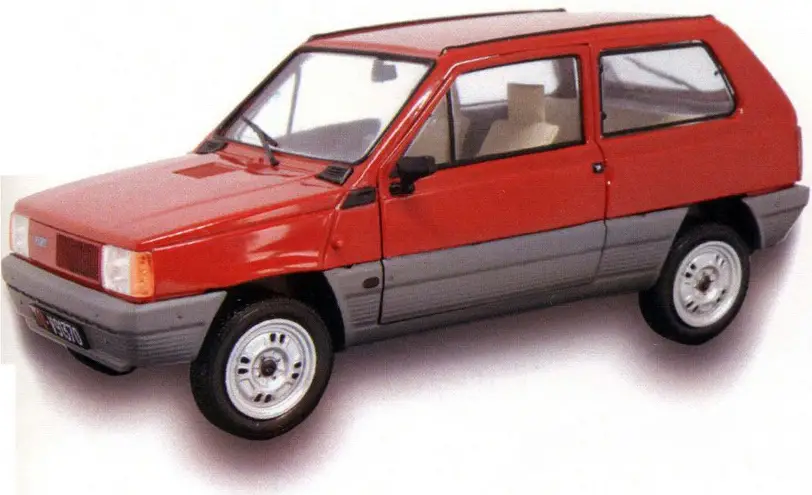
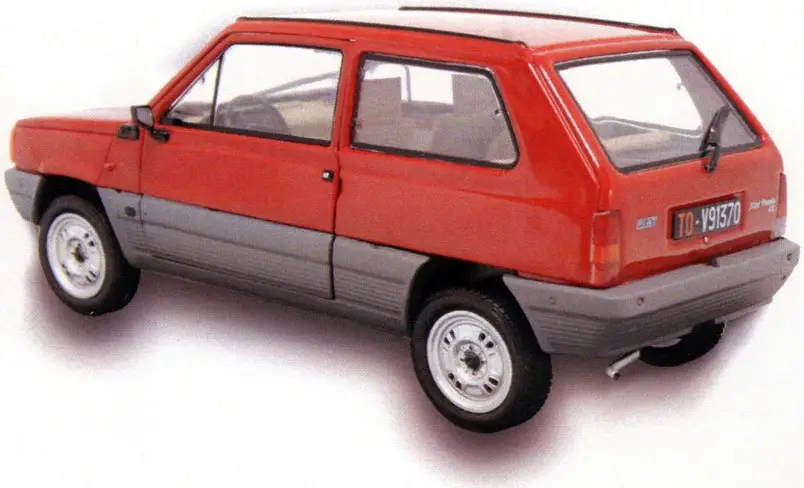
Today the best and relatively inexpensive model of the 1980 Fiat Panda 45 comes from the Altaya magazine series. It is offered in 1:24 scale. The basis is a real prototype in upmarket trim — evidenced by the two-tone interior, seat headrests, and a rear door wiper. Turin license plates are fitted. The headlights and taillights are very well rendered, and the plates are neatly done. Even the rear bumper is deliberately fitted slightly askew — just like on the real car! Weak points: the chassis is poorly detailed, the front wing indicators are merely painted on, and there is no instrument-panel decal or tire sidewall lettering.
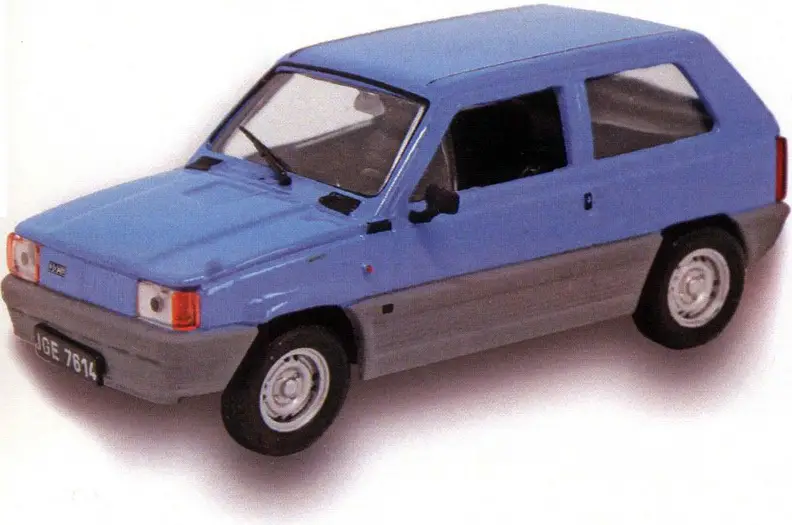
Decent 1:43 Fiat Panda 1980 models in various colors are produced by Minichamps. However, they cost almost twice as much as the Altaya 1:24. An inexpensive alternative is the Panda from the Polish DeAgostini magazine series. It is fairly accurate, and if you use a black marker to simulate window seals, paint the interior, and improve the lights, you can get a very convincing replica.
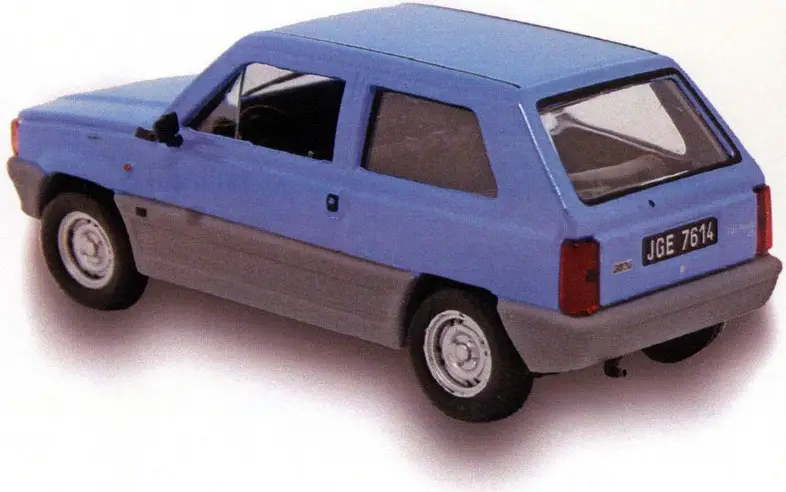
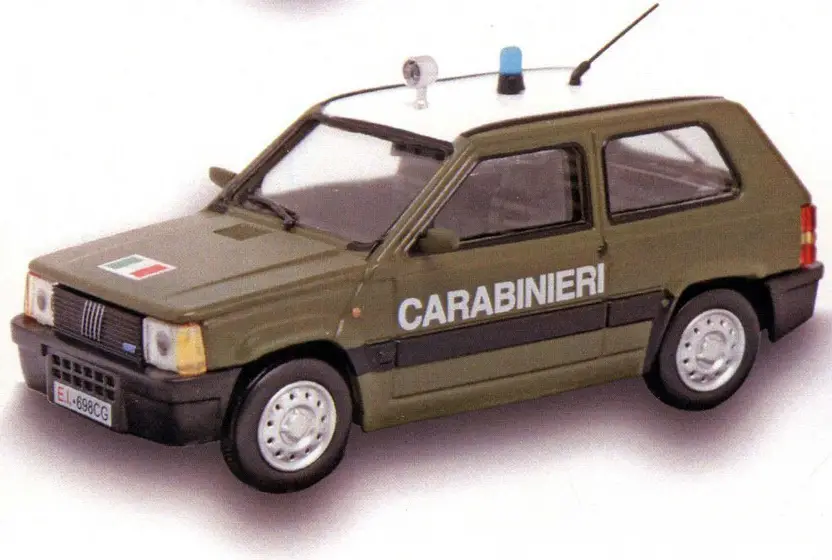
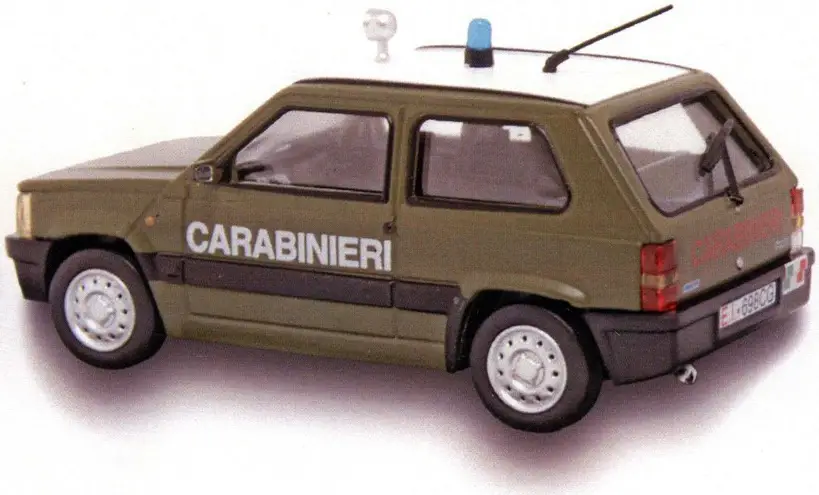
As for models of the updated 1986 Panda, somehow almost no one makes them. There was one “crooked piece” in 1:43 in an Italian magazine series devoted to Carabinieri vehicles. But it is more of a toy. Its body is completely wrong, especially at the front.
“Modelist-Konstruktor” No. 7’2025, Sergey DYAKONOV
Recommend to read
 THE GRIP ON THE LEASH
Bench drilling machines (such as NA-10, NA-12), as a rule, is at any station of young technicians in every school workshop. There are some in our school (I work as a teacher). And once a... THE HAMMER-WEDGE
Each of us happened more than once to dismantle many firmly downed wood planks or boards. Great helper in this work, the hammer-wedge. They are on sale. In principle, any hammer can be...
