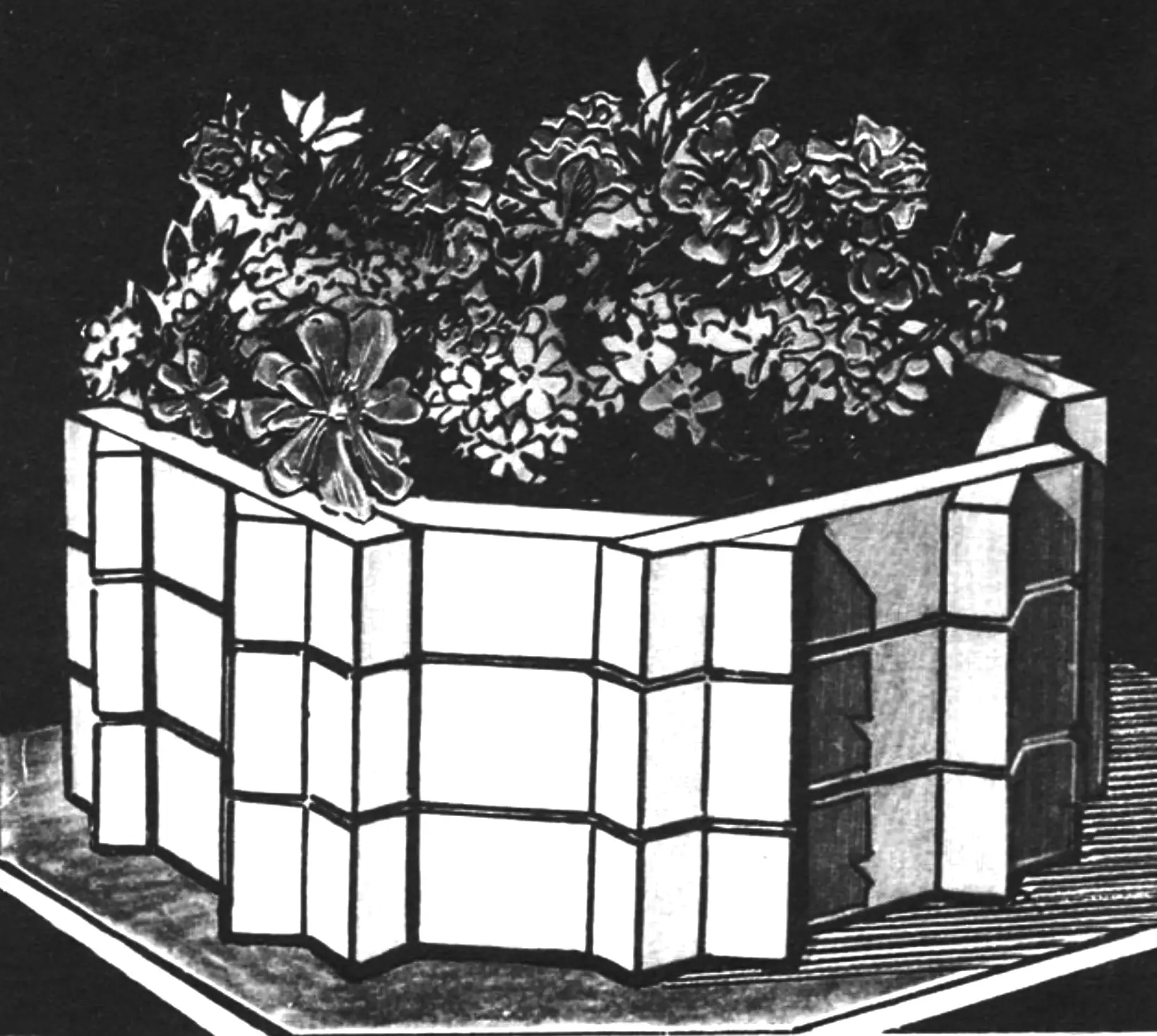
No matter how popular flower beds are among flower-growing enthusiasts, they usually differ little from ordinary garden beds. And this impression is not saved by attempts to refine them with all sorts of brick borders, fences made from random pipes, or, worse still, car tire covers. Besides, such flower beds have a permanent “registration”: they cannot be moved somewhere when needed without being destroyed.
That is why flower lovers are increasingly turning to small structures modeled on ground-level park and garden vases, but in a collapsible, modular form. Compared with traditional flower beds, they have many advantages. The main ones are a more attractive appearance and the ability to easily change location depending on the circumstances. An example is the similar “mobile” flower-garden design proposed by the Hungarian magazine “Ezermester”.
Imagine a flower bed laid out by the gates or wicket of a country plot, and a truckload of coal, manure, or sand arrives — you can hardly dump it onto the flowers! But a small self-contained flower garden can always be moved aside and then returned to its place. And aesthetically such beds are more appealing.
The design under consideration is interesting in that it is assembled, like a children’s construction set, from separate parts that make it possible to obtain twin flower gardens. If desired — of different sizes and heights: from small “single-story” ones to “skyscrapers” resembling columns (so the design is also suitable for an architectural solution of auxiliary buildings on the plot).

What, then, are these parts like?

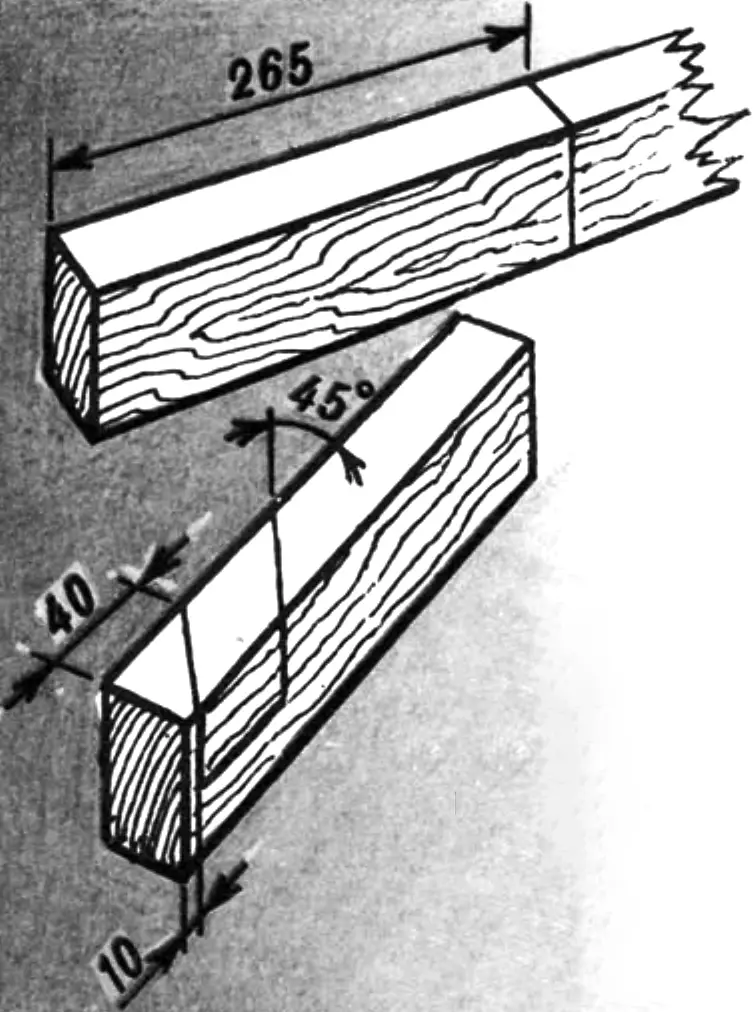
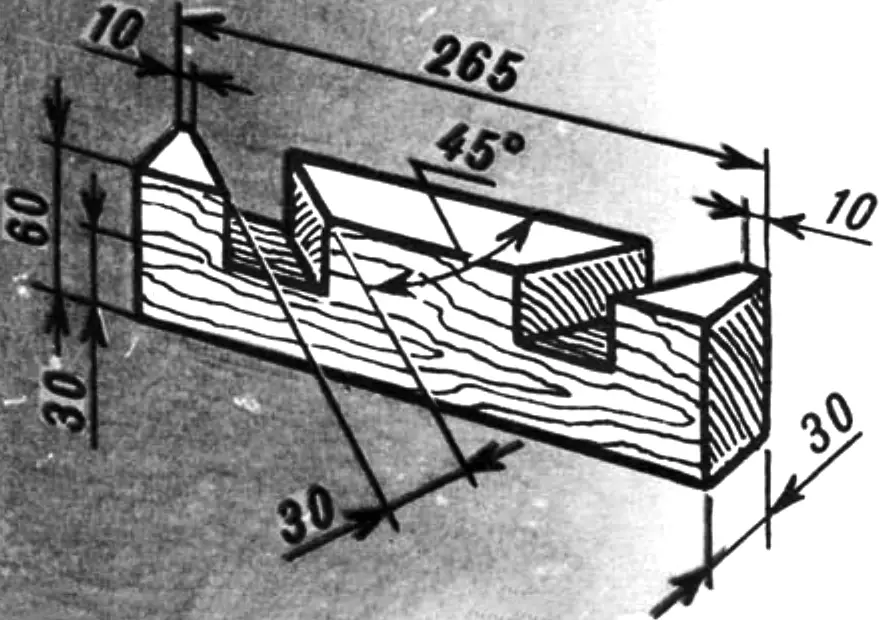
They are all of the same type, like twins, and are even designed for pairwise joining. In essence, it is one and the same wooden bar, repeated as many times as needed to assemble the intended flower garden. Closer to the ends, grooves are cut in the bars at an angle, allowing the bars to be joined to one another half-lap in sequence until a closed octagonal ring is formed with attractive ribbing from the protruding ends.
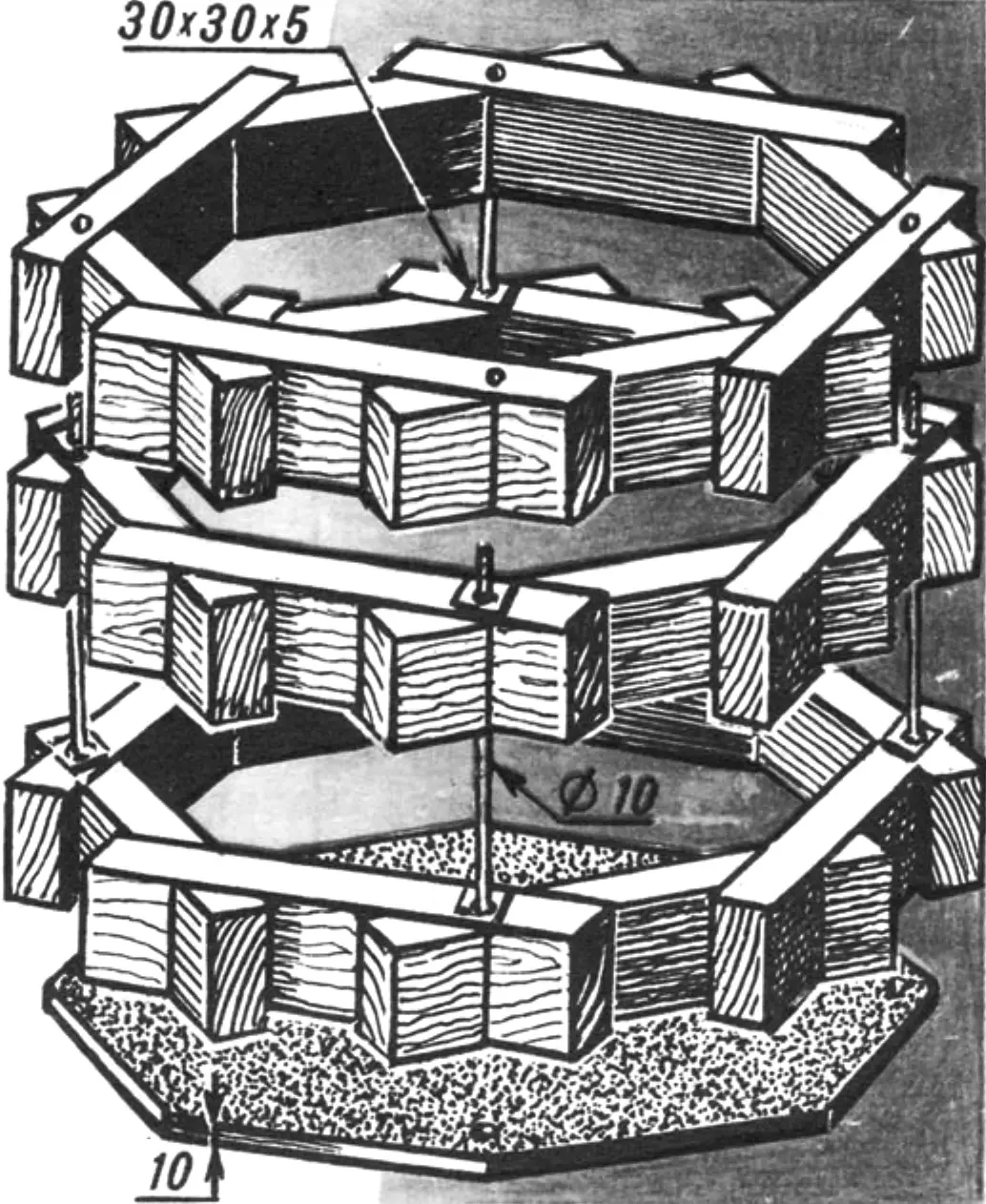
By stacking the octagons tier after tier, you can obtain a container of the required height. To keep it from falling apart, after assembly the rings are threaded by their pre-drilled holes onto metal studs and tightly fastened with nuts. For greater decorative effect, thick washers can be threaded onto the studs after each tier during assembly. This creates horizontal gaps that not only adorn the flower garden but also help excess moisture drain away during heavy rains.
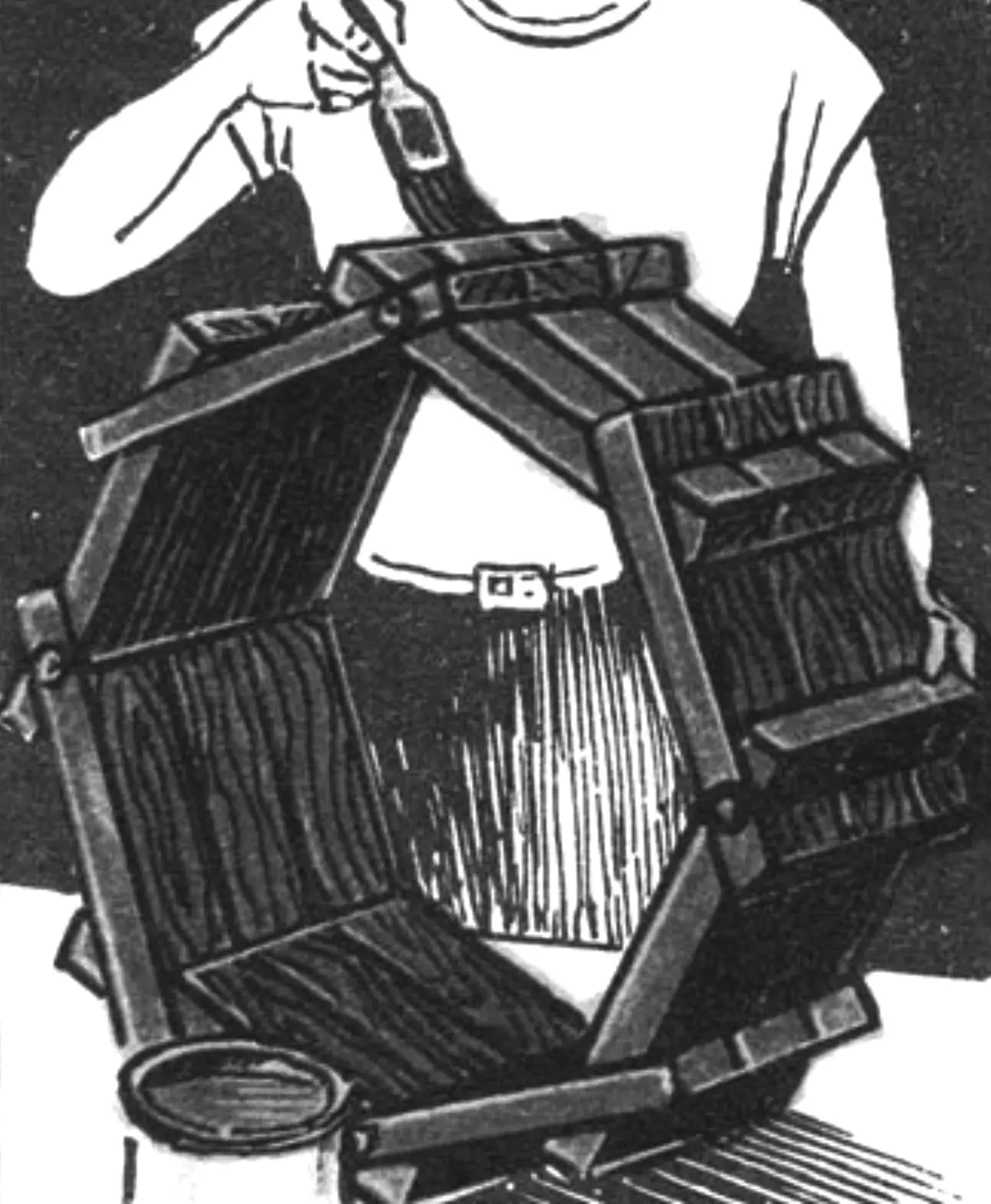
As already noted, the design can be multifunctional, since it is easy to vary its dimensions (they depend on the length of the module bar) and height (the number of tiers when assembling). For example, it is easy to make in this way either a compost box or unusual supports for a gazebo.
«Modelist-Konstruktor» No. 6’99
Recommend to read
 All-wheel drive SUV LUAZ-969
Even the ancient Romans realized that to quickly get to the farthest provinces of the Empire is possible only in the presence of good roads. This truth was so obvious that laying them in... SPANISH LANDFILL LUFTWAFFE
Fighters Messerschmitt Bf 109 first modifications. (The end. Beginning at No. 7 in 2004). Frontline service Bf 109 in Spain began suddenly and quite successfully. In October 1936, when...
