
Smartphones look similar on the outside, but the real changes are inside. iPhone 17 teardown — a journey into Apple’s engineering kitchen. Engineers worked hard: fixed old problems, made bold moves. Teardowns help understand “how it’s made” — how long the device will last, how it will survive drops, how painful battery replacement will be. When you buy Iphone 17, you’re paying for the architecture inside. This article covers five findings: the disappearance of physical SIM, how to remove the battery, 120 Hz, updated cameras, and the A19 chip.
Quick summary: what exactly changed
- SIM tray disappeared — bet on eSIM and freeing up space inside the case.
- Battery removal is easier — adhesive “releases” from power (this really changes everything in repairs).
- Display became noticeably better — 120 Hz in the base model and very high brightness in sunlight.
- Cameras upgraded without fanfare — two 48 MP modules and stronger computational processing.
- Repairability became friendlier… in places — rear cover helps, but there are “trap” components.
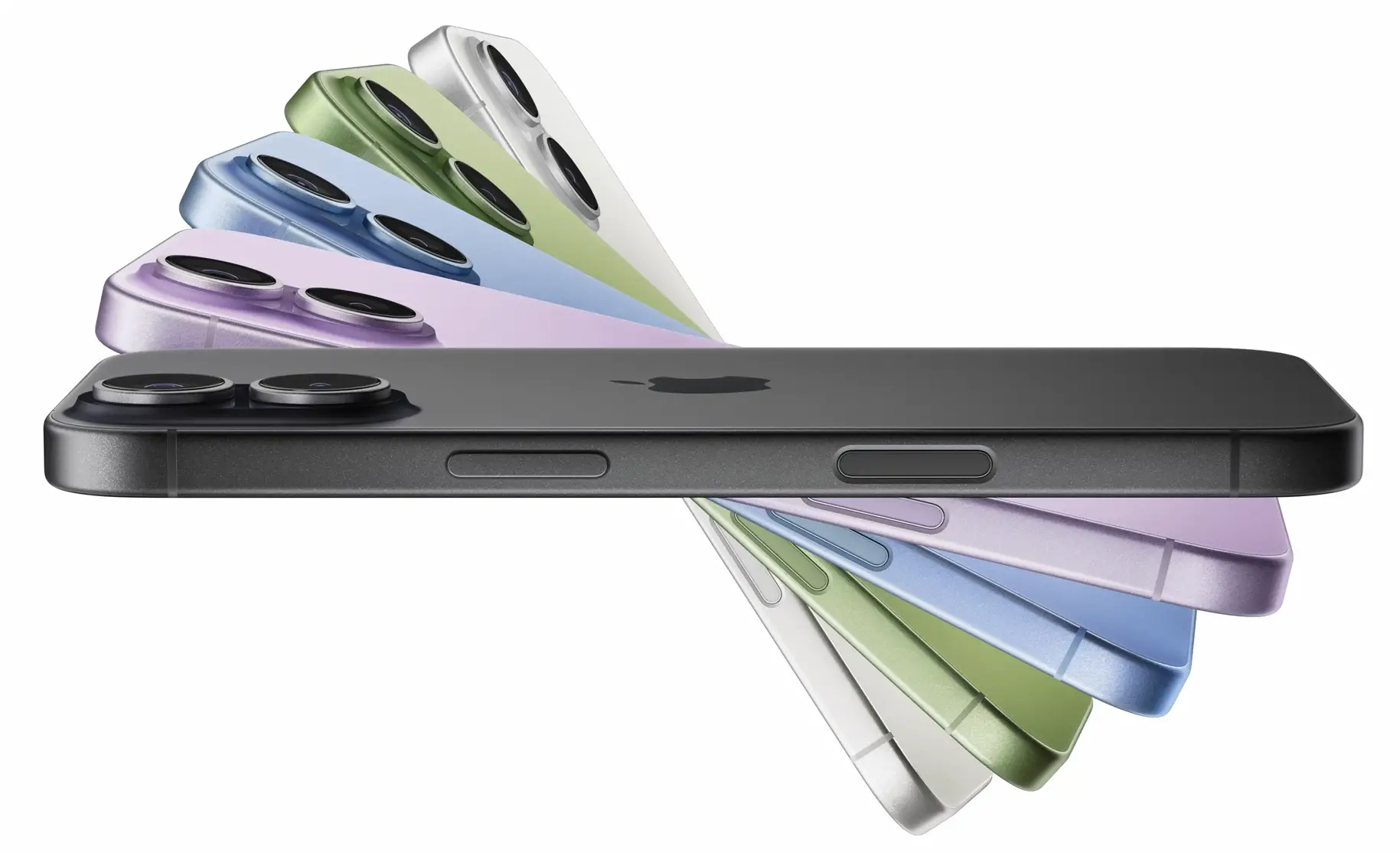
1) Goodbye, physical SIM: eSIM as the new reality
Apple closed the door on the era of physical SIM cards. iPhone 17 has no tray — this is a redesign of internal space. The opening in the case complicates sealing, adds risk of moisture ingress. The freed space is used for a cable that connects the Taptic Engine to the motherboard. eSIM works differently: you can’t “touch” it, but you can quickly add it, store multiple profiles, switch without a pin. In an ideal world, this is convenient, especially if you travel frequently. But in reality, everything depends on carriers: somewhere eSIM connects in a minute, somewhere it becomes a quest. A return to physical SIM is unlikely. If eSIM works stably in your region, you won’t notice the loss. If you’re used to having two or three “physical” SIMs, it’s worth checking how your carrier issues eSIM.
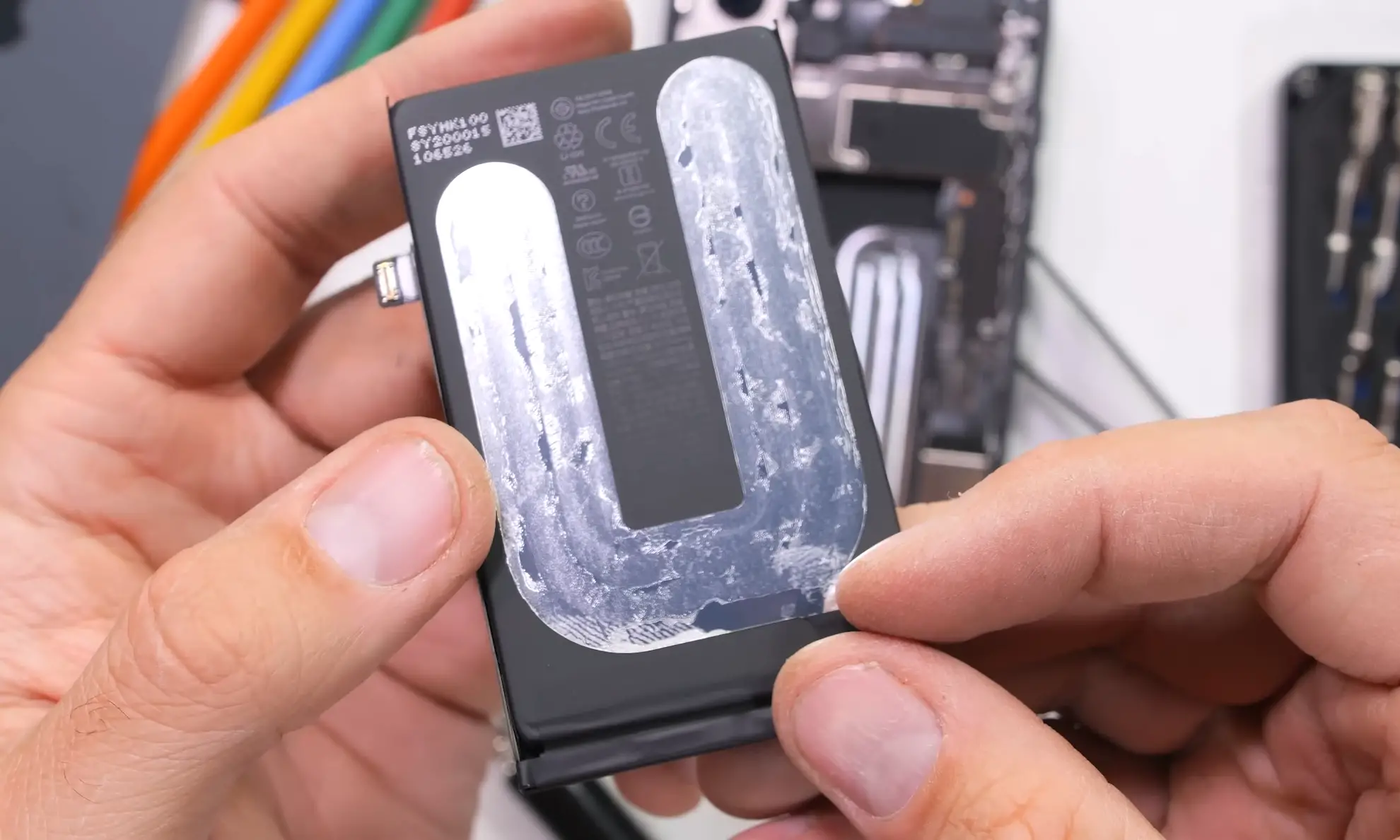
2) Battery: “electro-adhesive” and a noticeable step in autonomy
In iPhone 17, Apple uses adhesive that can be “neutralized” with electricity: apply current to special contacts — the adhesive loses grip. In repairs: find the insulation tab, prepare two clamps and a 9-volt “Krona” battery. Red clamp — on the battery contact, black — on ground, wait a minute and a half. The battery comes off easier. For technicians — a celebration. For users — battery replacement will be safer. Capacity increased to 3692 mAh. iPhone 17 promises up to 30 hours of video playback — a noticeable jump. Capacity growth plus processor energy efficiency give results: less worry that the phone will “die” by evening, more confidence for a day without a power bank.
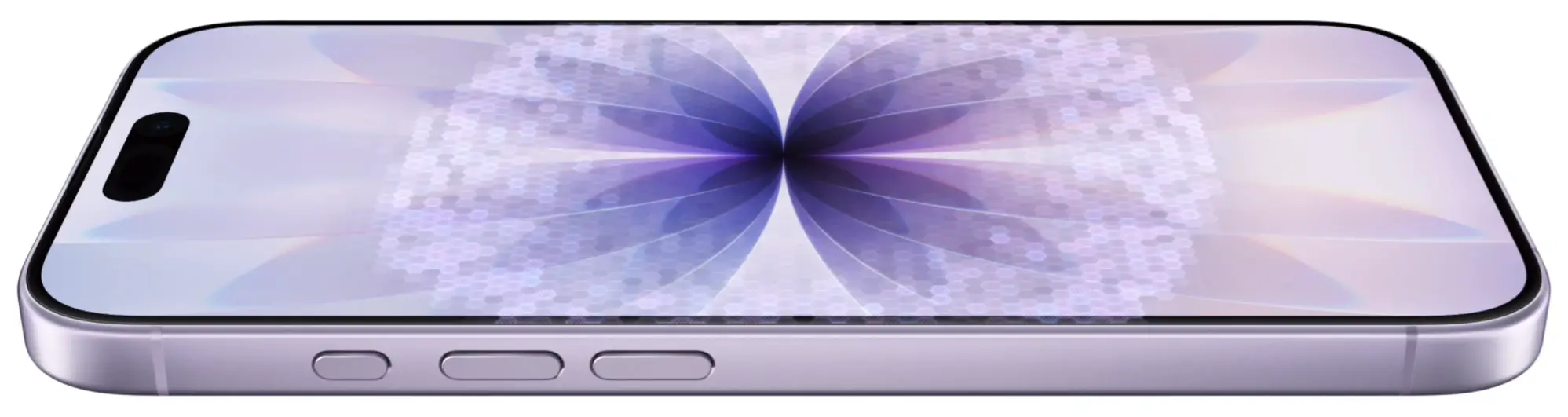
3) Display: 120 Hz finally in the base model
If choosing one iPhone 17 update you’ll feel from the first minute, it’s the screen. The display grew to 6.3 inches. The main thing — Apple brought 120 Hz to the base model. Scroll through the feed — 60 Hz feels like driving on cobblestones, and 120 Hz — like smooth asphalt. Everything becomes alive, responsive, “buttery”. 120 Hz is about how the brain gets less tired from micro-delays, especially when reading long texts. Brightness: Apple raised peak brightness to 3000 nits. The screen holds confidently even in bright sun. No need to seek shade, cover the display with your palm. The base iPhone no longer looks “cut down”.
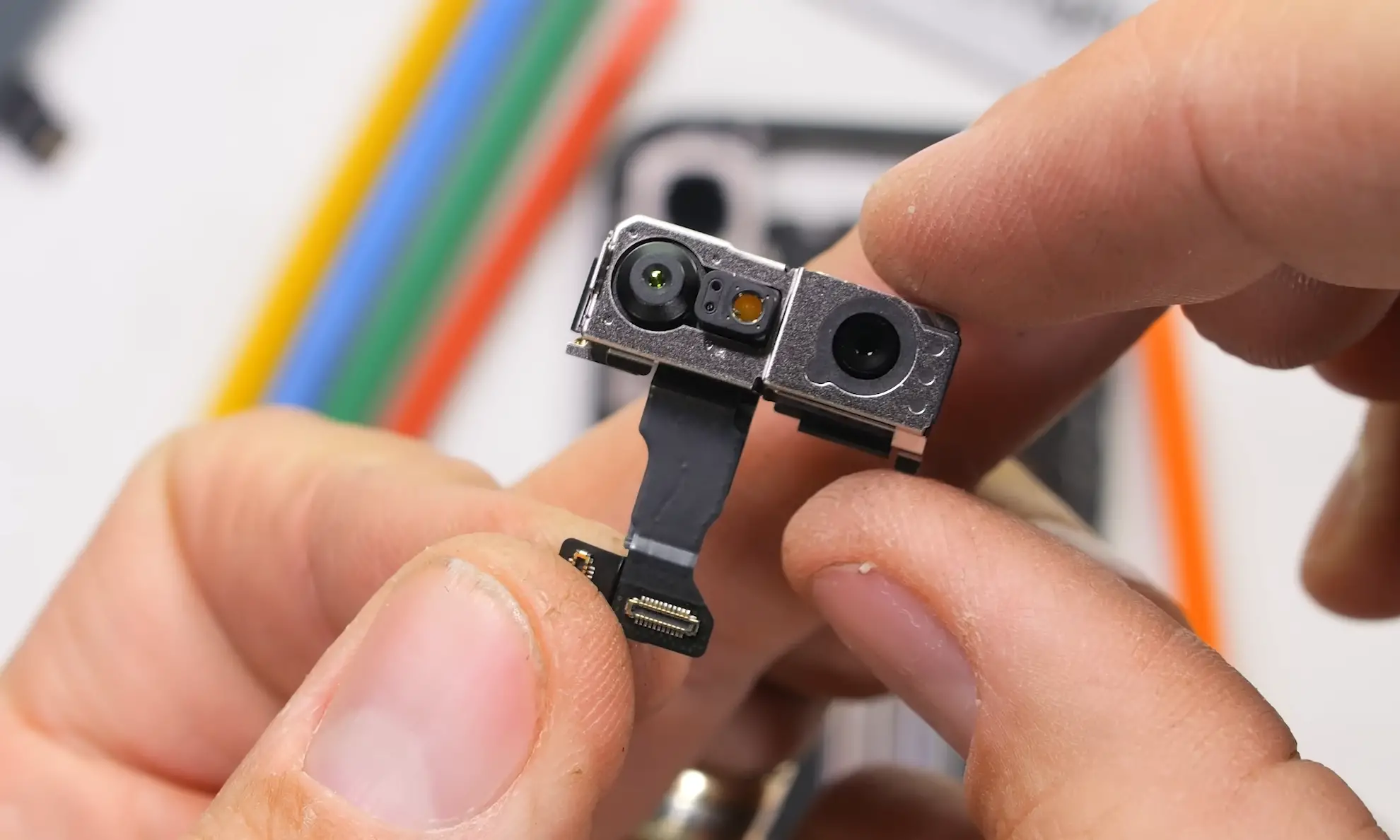
4) Cameras and A19 chip: power without unnecessary noise
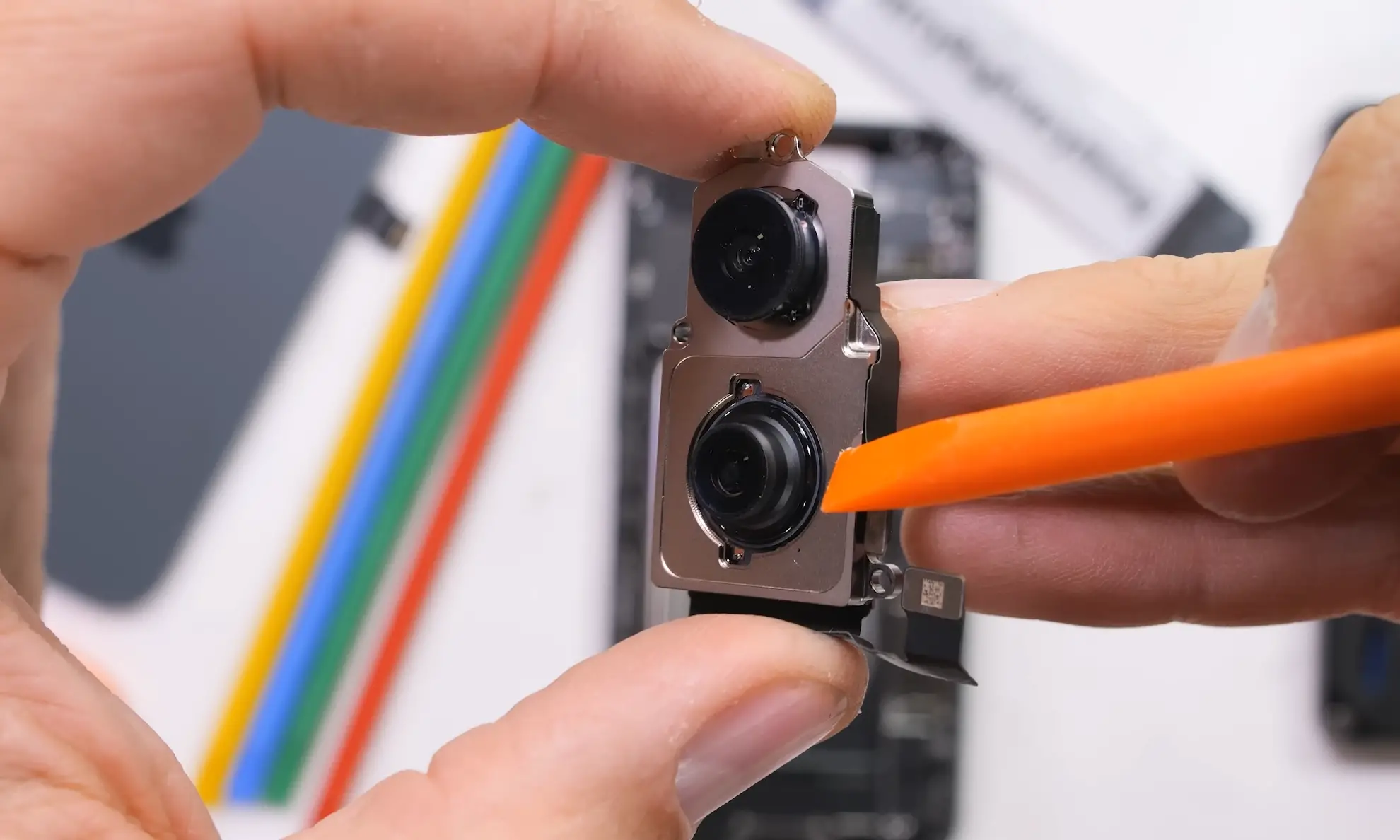
With cameras, Apple’s external block looks almost the same, but inside half the meaning changes. In iPhone 17, a system of two 48‑megapixel modules: the main and ultra-wide sensors got high resolution. The ultra-wide was a “compromise”: beautiful viewing angle, but weaker in details. With a more serious sensor, more freedom appears: you can crop, extract details, get even quality between cameras. Everything runs on the A19 chip: 6‑core CPU, 5‑core graphics with ray tracing, 16‑core Neural Engine for AI. Result: faster photo processing, smarter noise reduction, more accurate HDR, less battery “hunger”. iPhone 17 doesn’t shout about power, it just puts it inside.
5) Repairability: a step forward and two “traps”
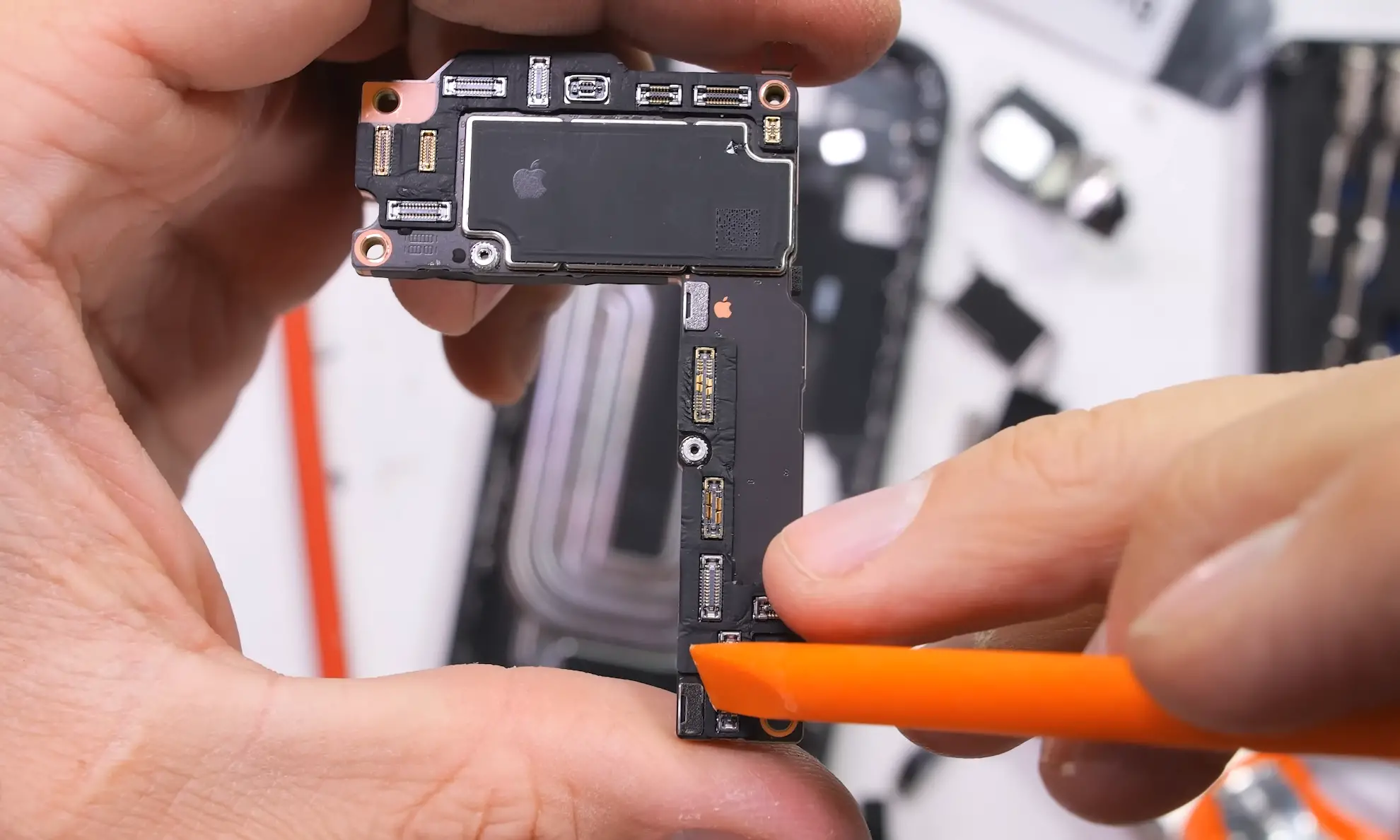
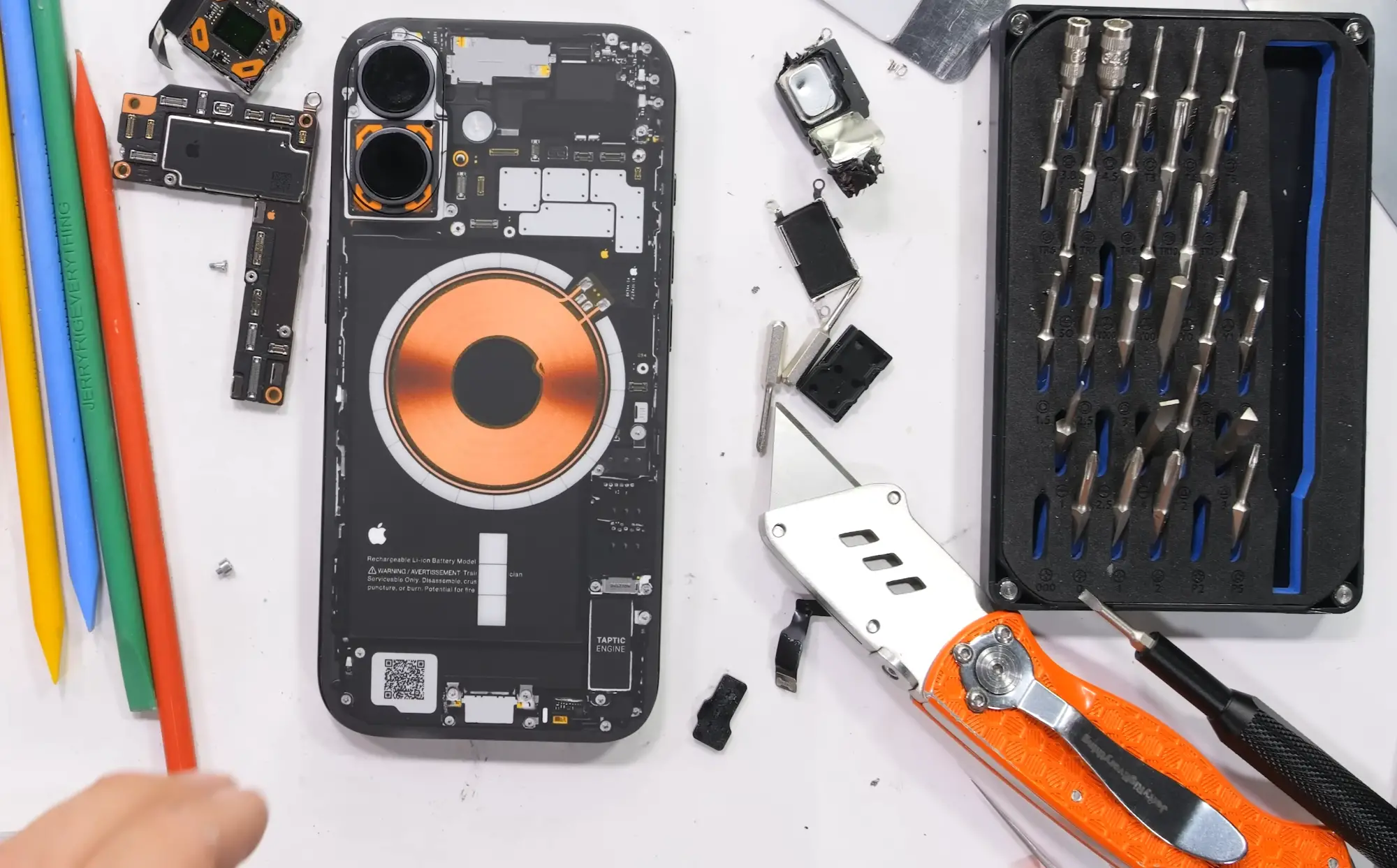
Repairability is like insurance: you remember it not when buying, but at the “oops” moment. iPhone 17 simultaneously pleases and irritates. On one hand, access to internals is possible through the rear panel. Broken rear glass — a common problem, and when the design allows safer replacement, that’s a plus. But there’s no free lunch. Display cables are connected to the back of the motherboard. To extract the board, you need to disconnect the screen in limited space. The control button is attached to the chassis so there’s no modular replacement: if you damage the frame, a simple “we’ll change the button” won’t work. The USB‑C port is linked to the bottom microphone in one unit. If the connector acts up, you change not just the port, but the entire bottom cable. This is more expensive and complex. It’s important to understand the risks: don’t charge with a cable “at an angle”, clean the connector carefully, don’t carry without a case.
“Before / After” table by key points
| Parameter | iPhone 16 | iPhone 17 |
|---|---|---|
| SIM | Physical SIM (tray) | eSIM only (no tray) |
| Refresh rate | 60 Hz | 120 Hz |
| Peak brightness | 2000 nits | 3000 nits |
| Battery capacity | 3561 mAh | 3692 mAh |
| Autonomy (video) | up to 22 hours | up to 30 hours |
iPhone 17 — it’s not a revolution, but a mature refinement. Should you upgrade?
iPhone 17 — a carefully polished version of what already worked. Apple added what was missing: 120 Hz, bright display, confident autonomy and a strong camera set, A19 chip. The company continues the philosophy of compromises: fewer openings, denser architecture, repairs remain expensive in places. Should you upgrade? Think not “want/don’t want”, but “what annoys you in your current phone”. If 60 Hz irritates you, if brightness in the sun makes you squint — iPhone 17 will close these pain points. If you shoot often and want even quality between cameras — that’s a plus. If you live on the edge with battery — the autonomy boost will be an upgrade. If you have iPhone 16 and it suits you, iPhone 17 is evolution: pleasant, but not mandatory. If physical SIM cards are critical, this could be a stop signal. iPhone 17 — a solid, technological device.
S. FONCHIK
Recommend to read
 THE VOICE FROM THE BOTTLE
Another art project from a five-liter bottles — the mouthpiece, which are used by the tourists. You only need to cut off the bottle bottom and the mouthpiece is ready. If "communication"... I Invite You to… the Castle
Before you is not a corner of an ancient castle, but a hallway in the most ordinary city apartment. And the “castle” interior is the work of skillful hands, invention, and the fantasy of...
