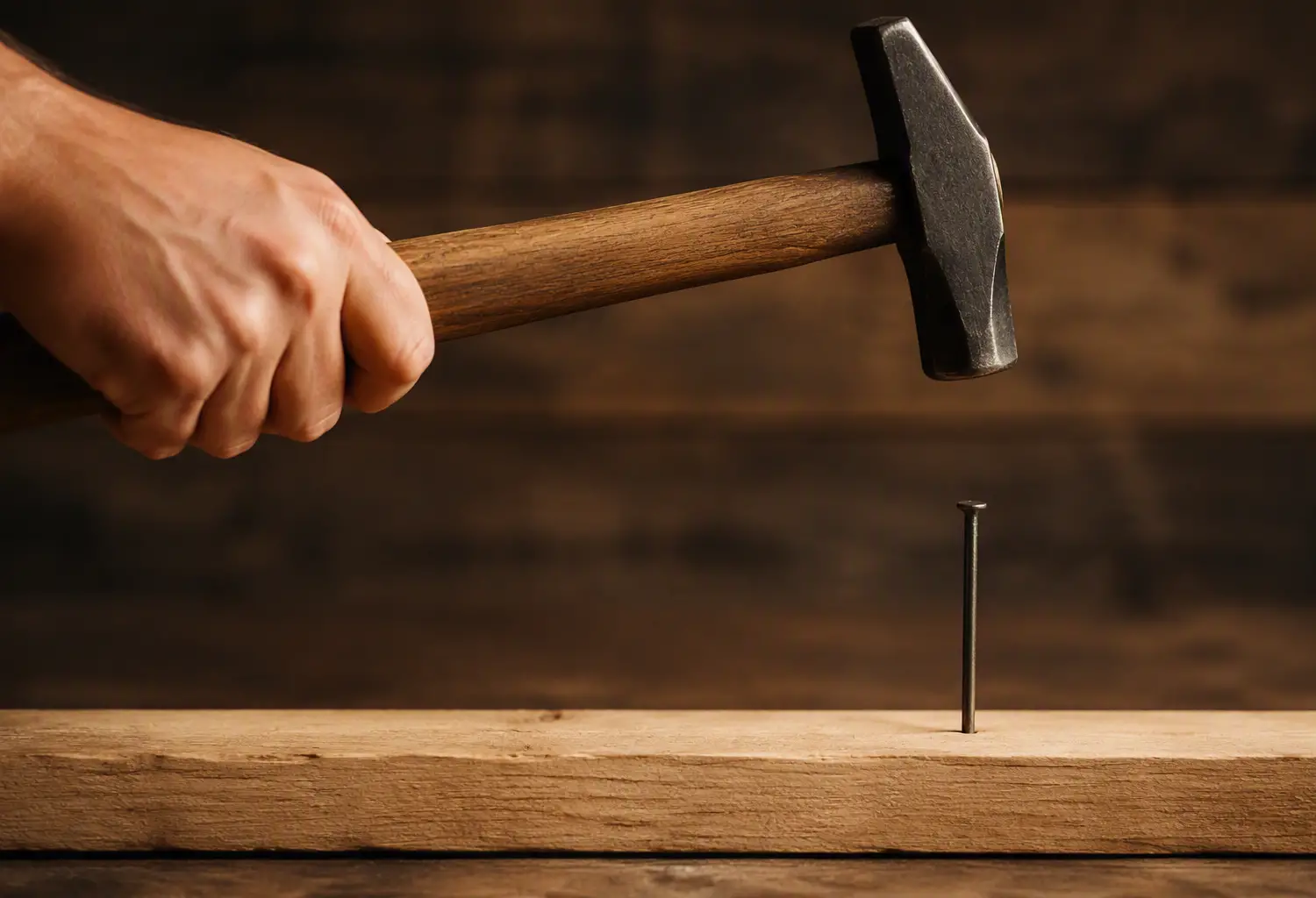
It would seem that driving a nail is about as simple as it gets. Still, even this seemingly straightforward operation requires a calculated approach and some experience.
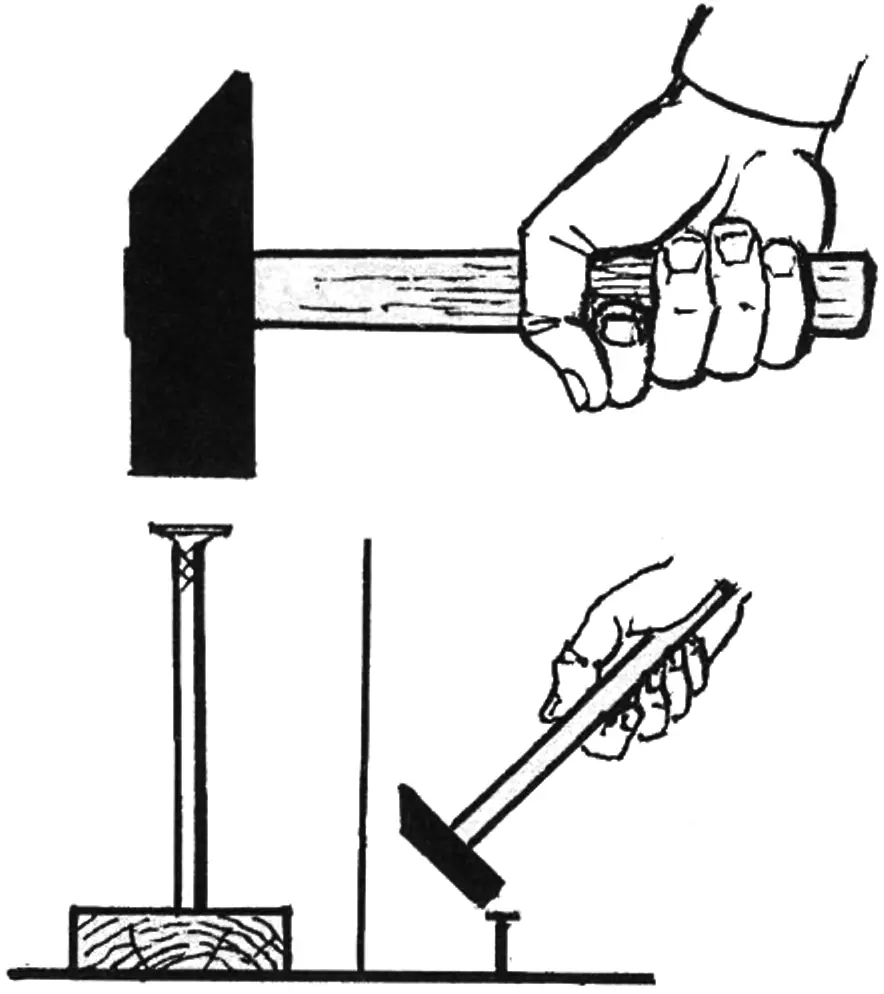
1. Long nails are best driven with a 400—500 g hammer, and small ones with a hammer weighing up to 250 g.
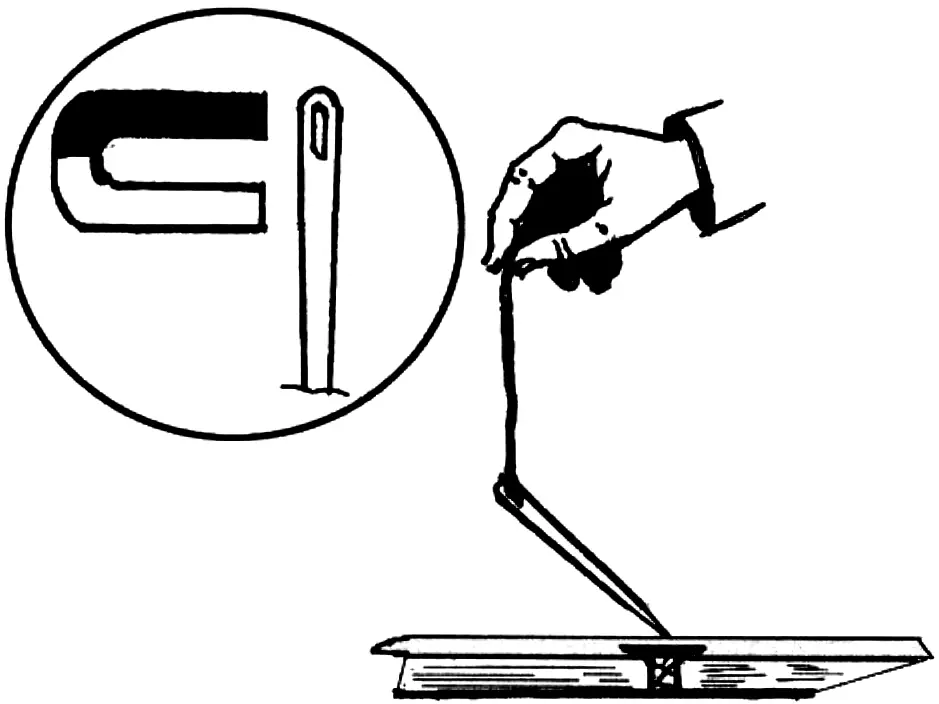
2. To find nails driven deep and puttied over — for example, when repairing loose floorboards — use a magnetized needle on a thread. Move it along the board about one millimeter above the surface: opposite a nail the needle will deflect, pointing exactly to the spot.
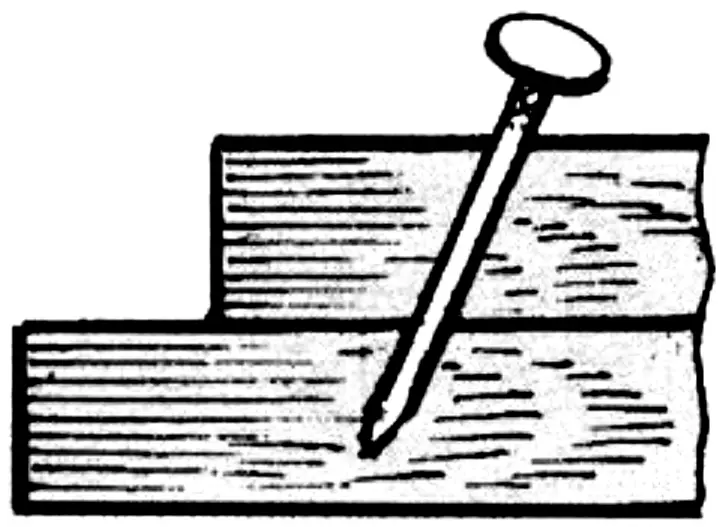
3. Driving nails at an angle makes the joint stronger.
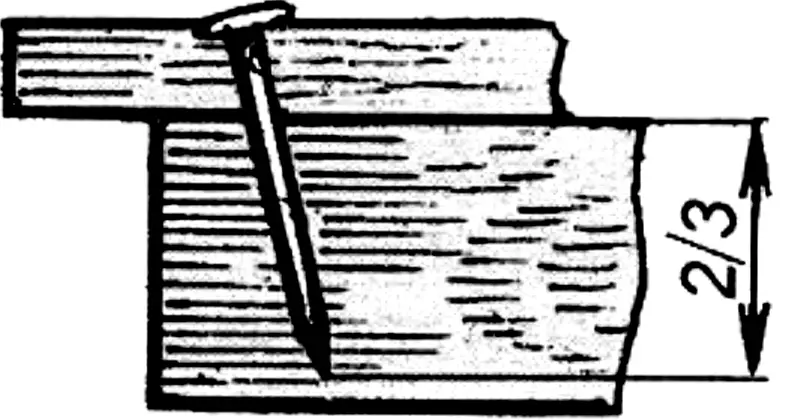
4. Choose the nail length so that after going all the way through the board it enters the timber by at least two-thirds of its length. Then the assembly will be reliable.
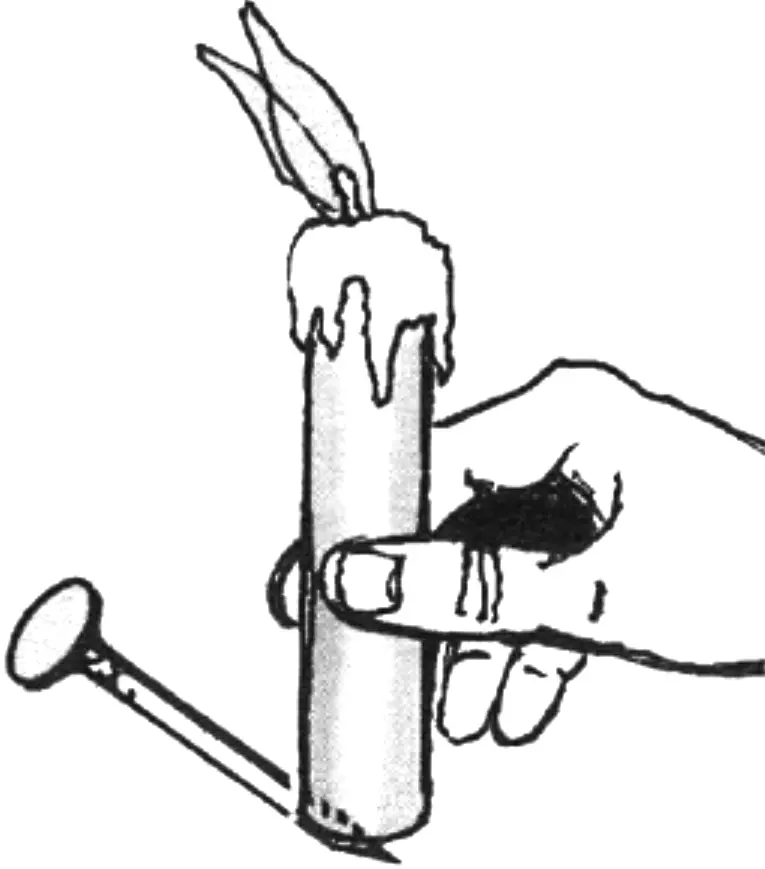
5. Driving a nail into hard wood is quite difficult. It often bends, causing a lot of trouble and spoiling the look of the piece. An ordinary candle can help. Rub wax onto the nail shank — and it will go in much more easily.
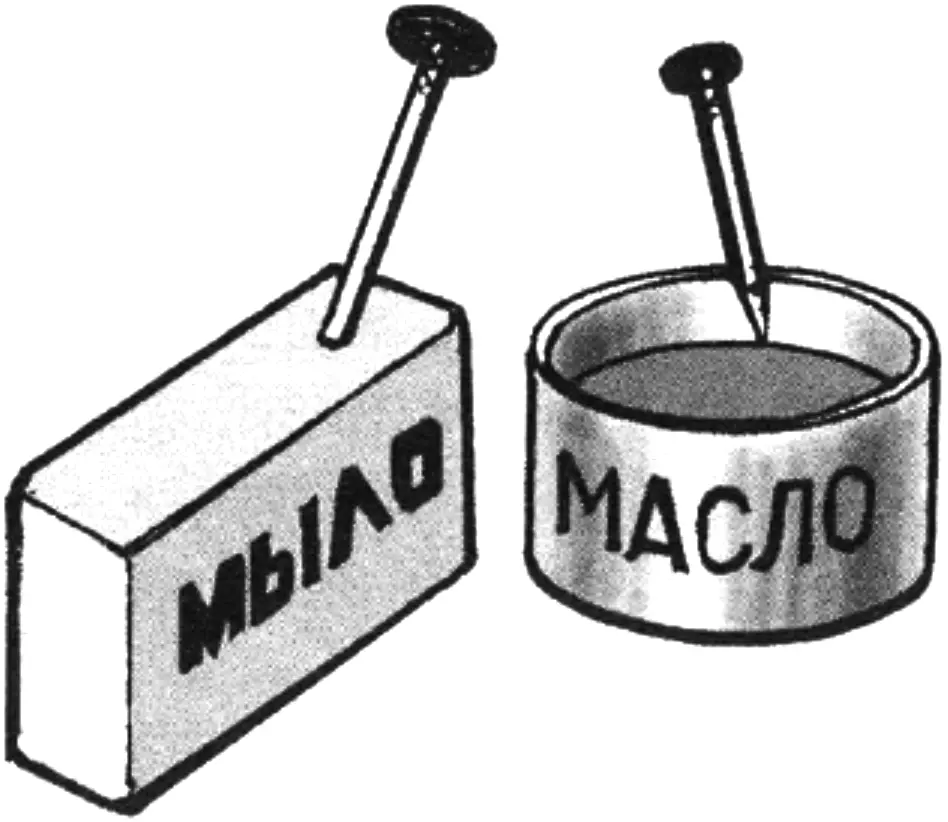
6. A nail will go more easily even into the hardest wood if you smear the point with soap or dip it in oil.
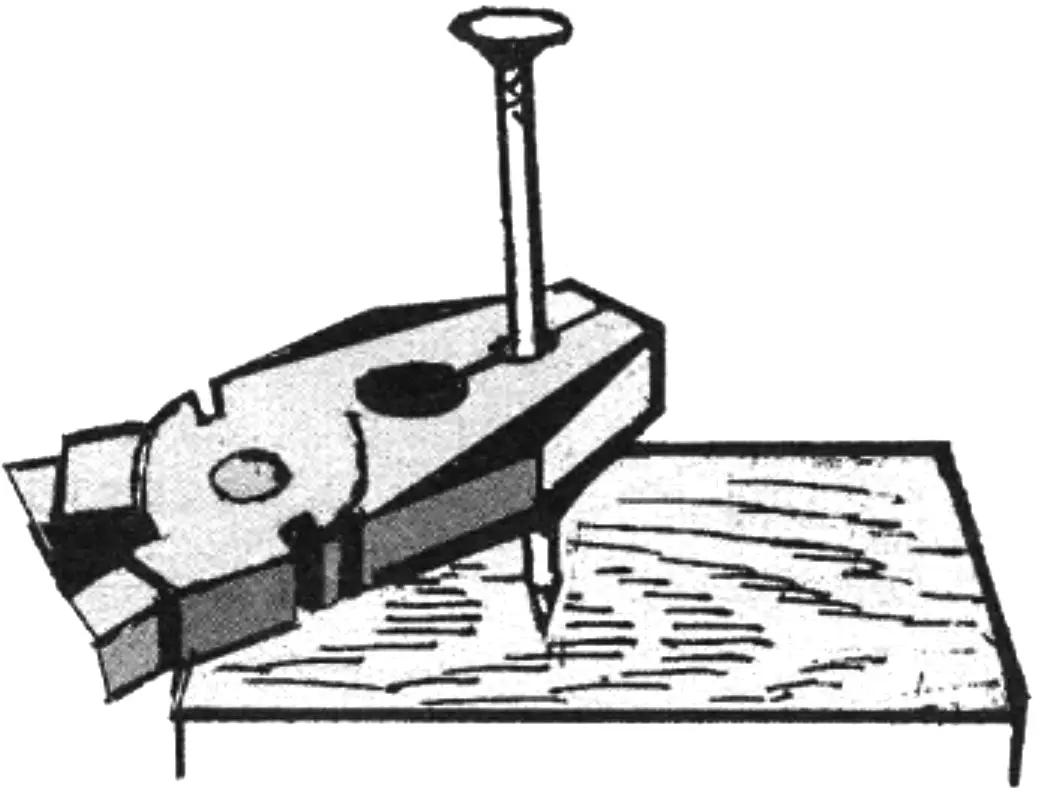
7. The nail will not bend if you hold it with pliers.
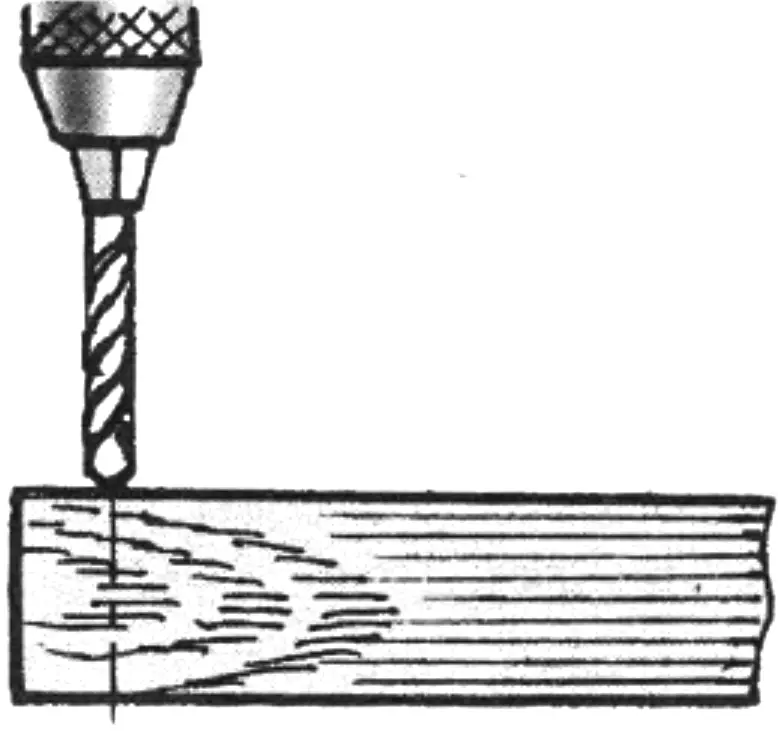
8. When you need to drive a nail near the edge of a board, first drill a hole there with a diameter slightly smaller than that of the nail.
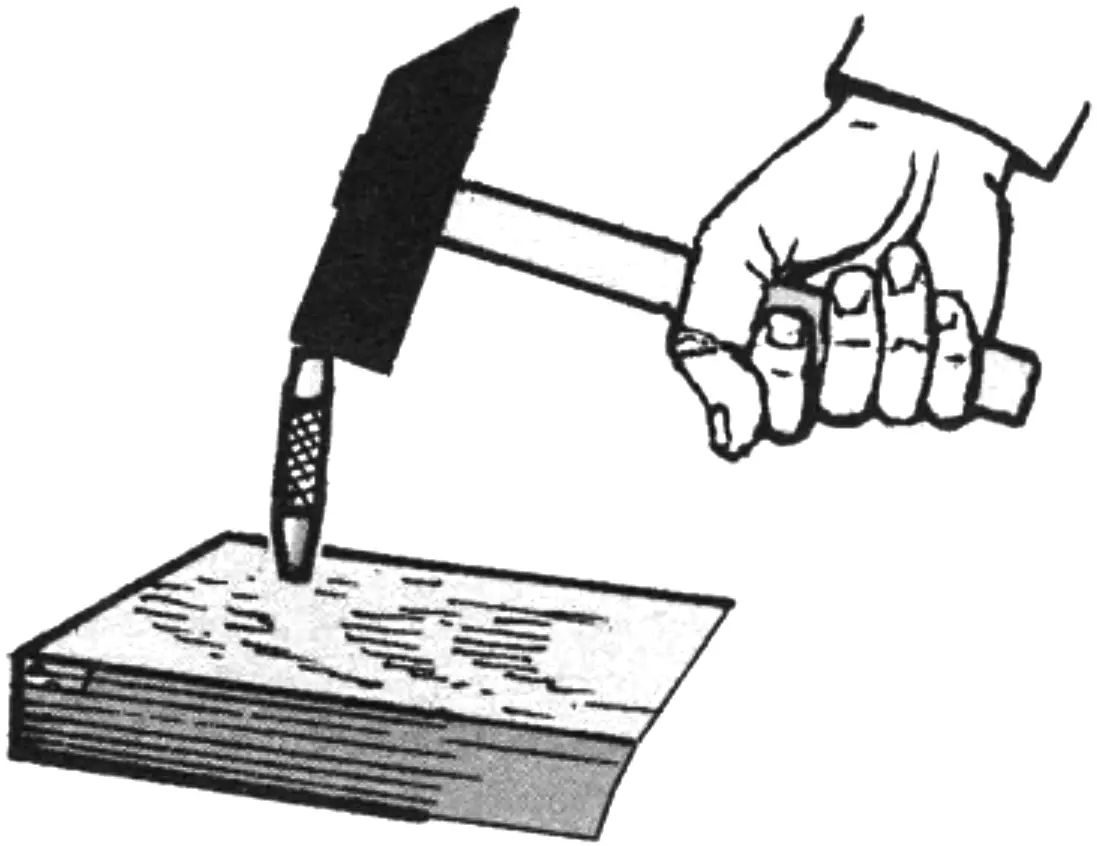
9. When driving a nail near the edge of a board, first densify the wood there by lightly driving a punch with a hammer. This will keep the board from splitting.
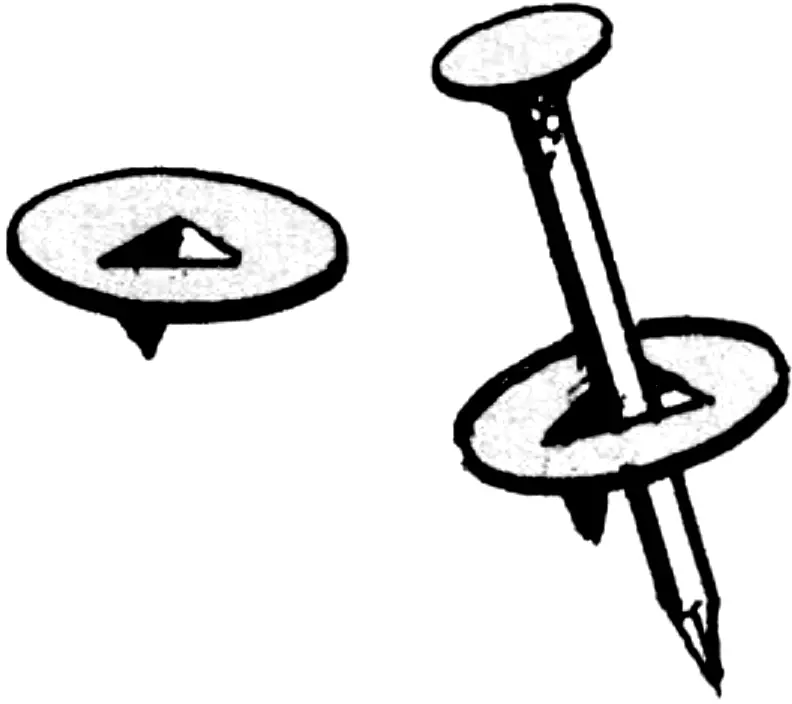
10. If you have no upholstery nails, you can use a combination: a pushpin plus a nail.
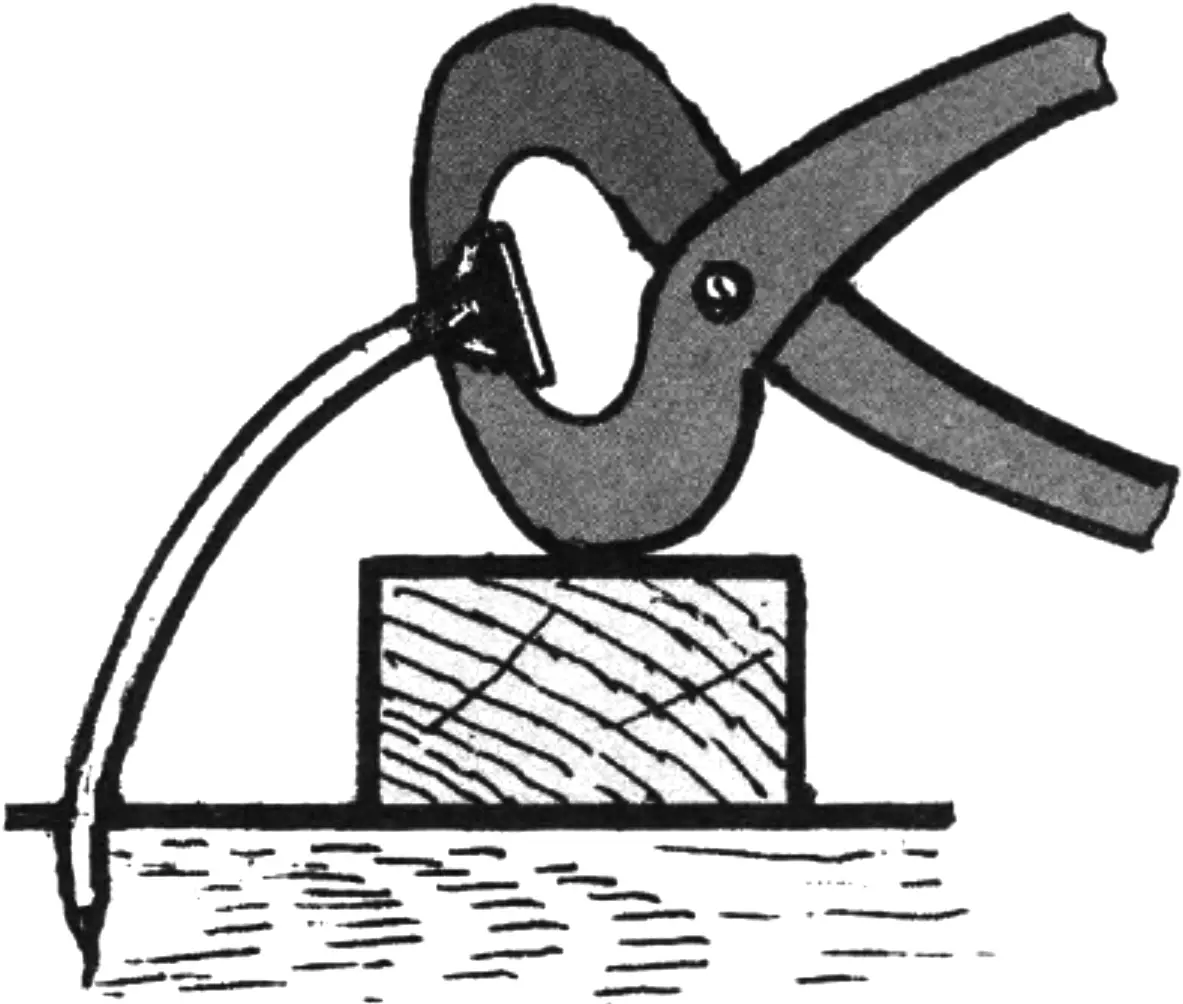
11. To pull a nail out of wood without damaging the surface, place a wooden block under the pliers or claw hammer.
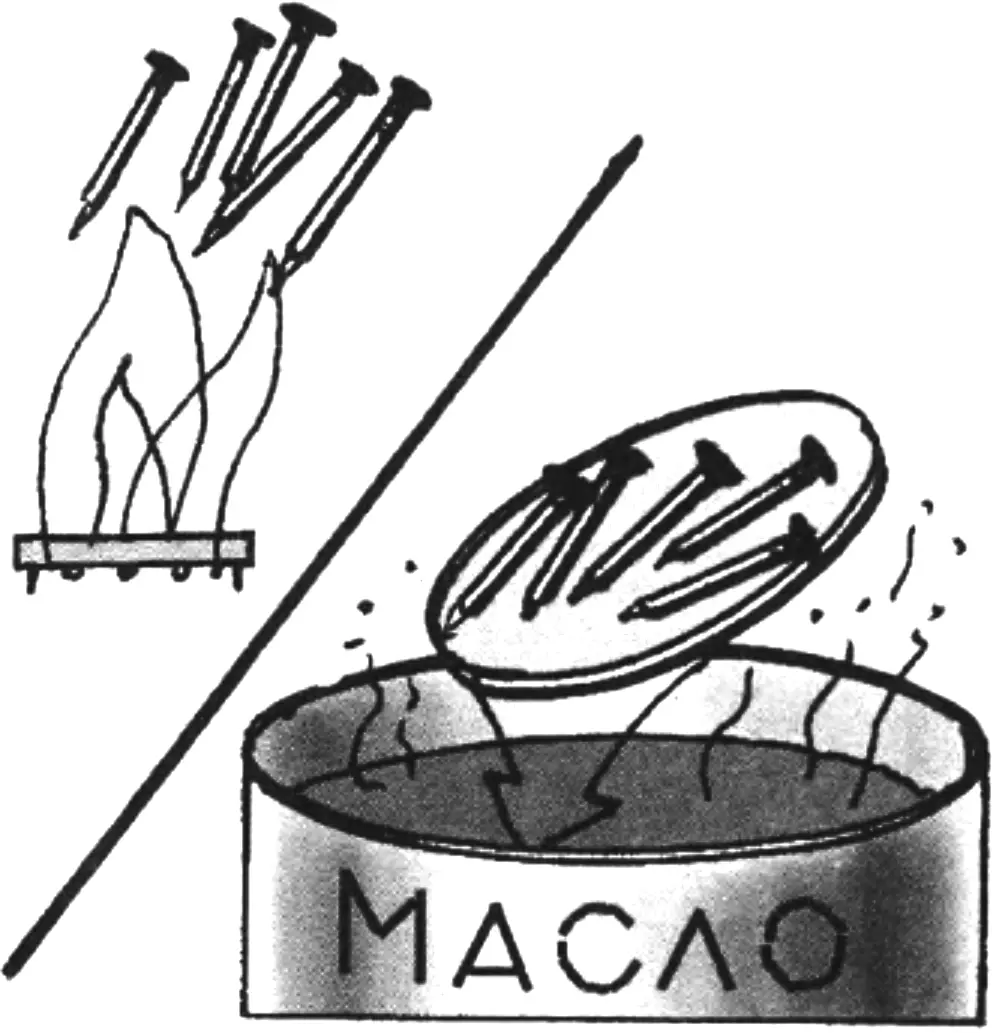
12. If you have no galvanized nails, heat ordinary ones red-hot and dip them in linseed oil. The resulting film will protect them from rust.
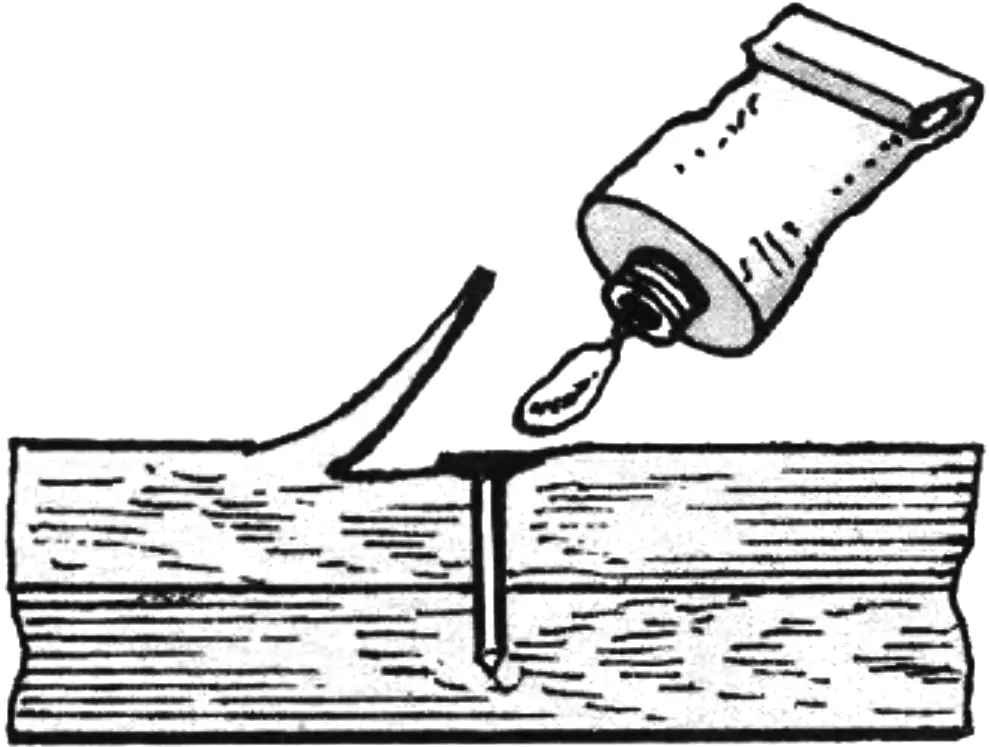
13. If you need to hide a nail head or a screw head joining two wooden parts, split off a thin shaving with a chisel (but not all the way through) at the required spot and drive the nail. Then put a drop of glue and stick the shaving back. The nail head will be covered without a trace.
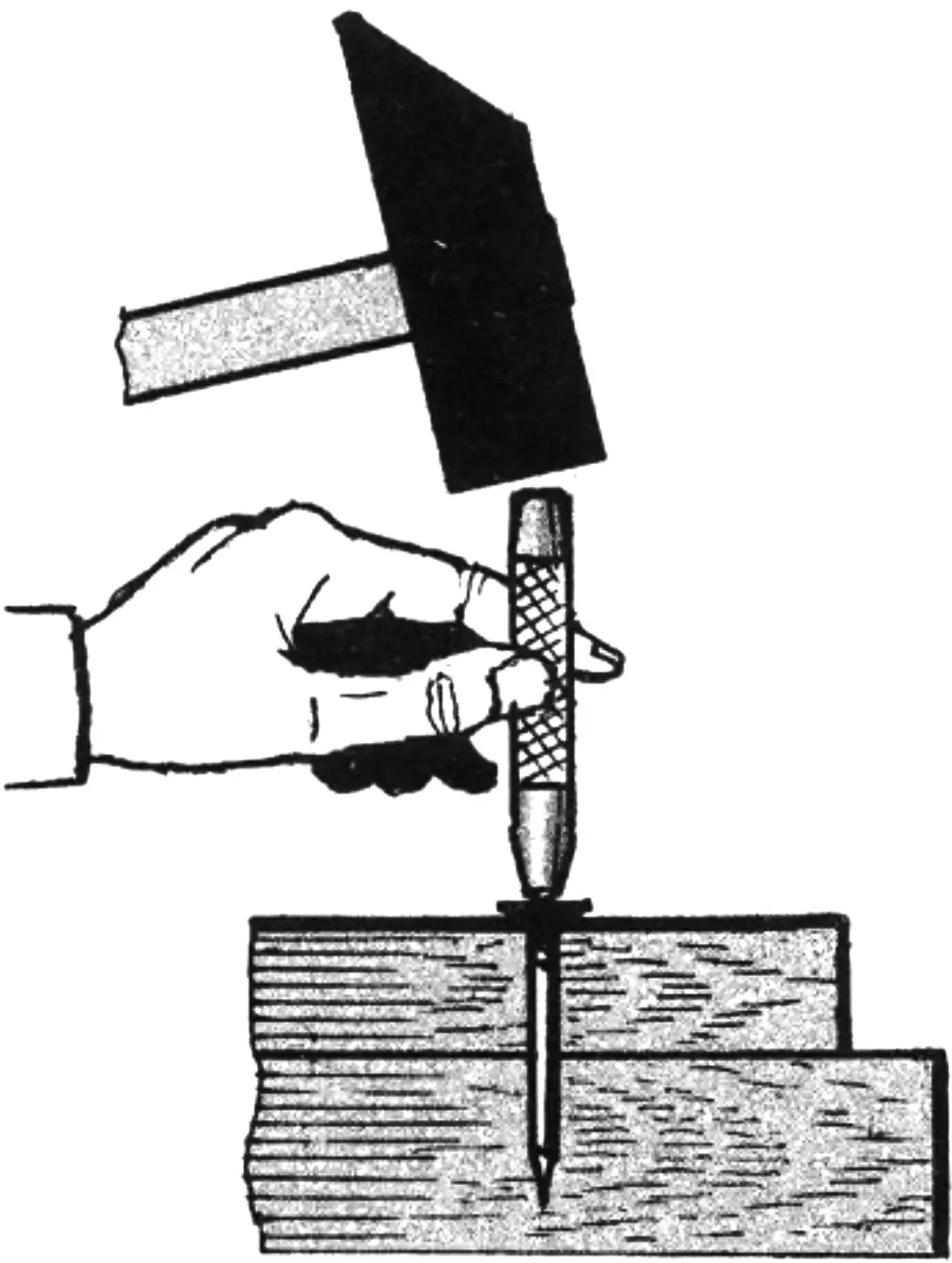
14. You can sink a driven nail with a punch. The head is recessed, and the resulting hollow is filled with putty.
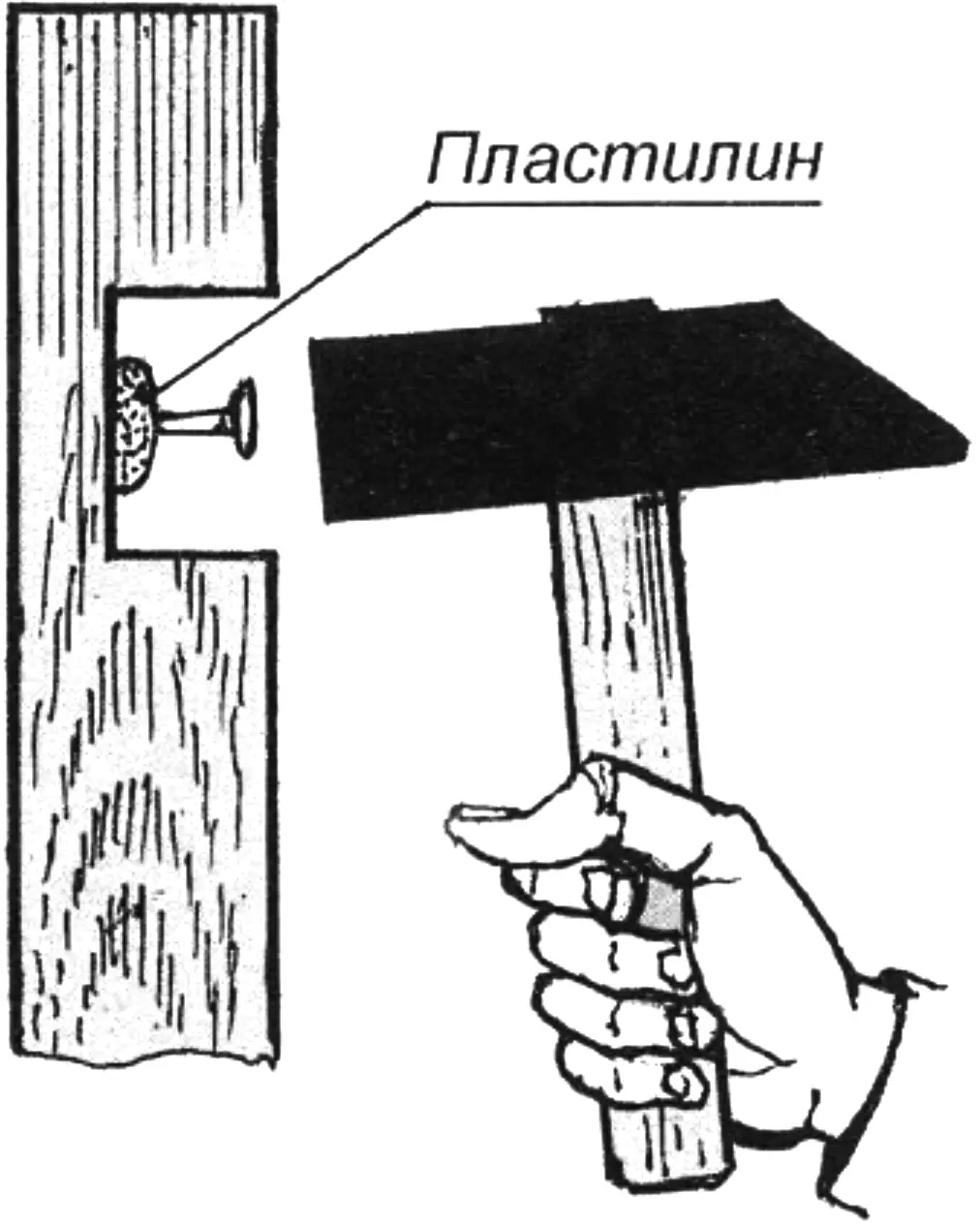
15. It is not easy to drive a small nail in a hard-to-reach place, and at a given angle as well. Starting the nail and making the first blows is especially hard. Stick a piece of modeling clay where the nail will go, and you will manage the job easily. After a few blows the clay can be removed.
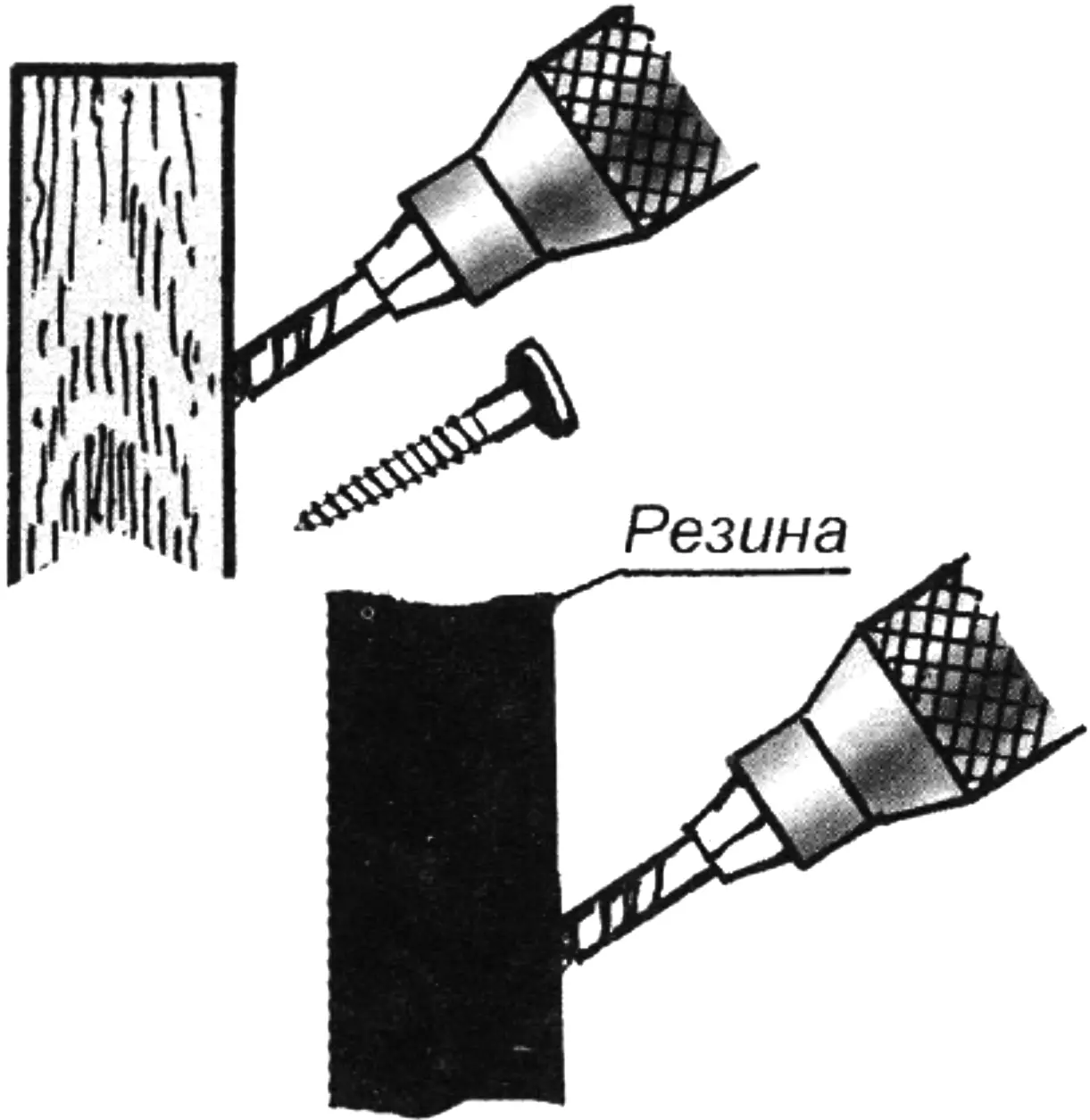
16. Starting and fastening a screw at an angle in wood — and especially in rubber — is not easy. The job becomes simpler if you first drill or burn a hole slightly smaller than the screw diameter.
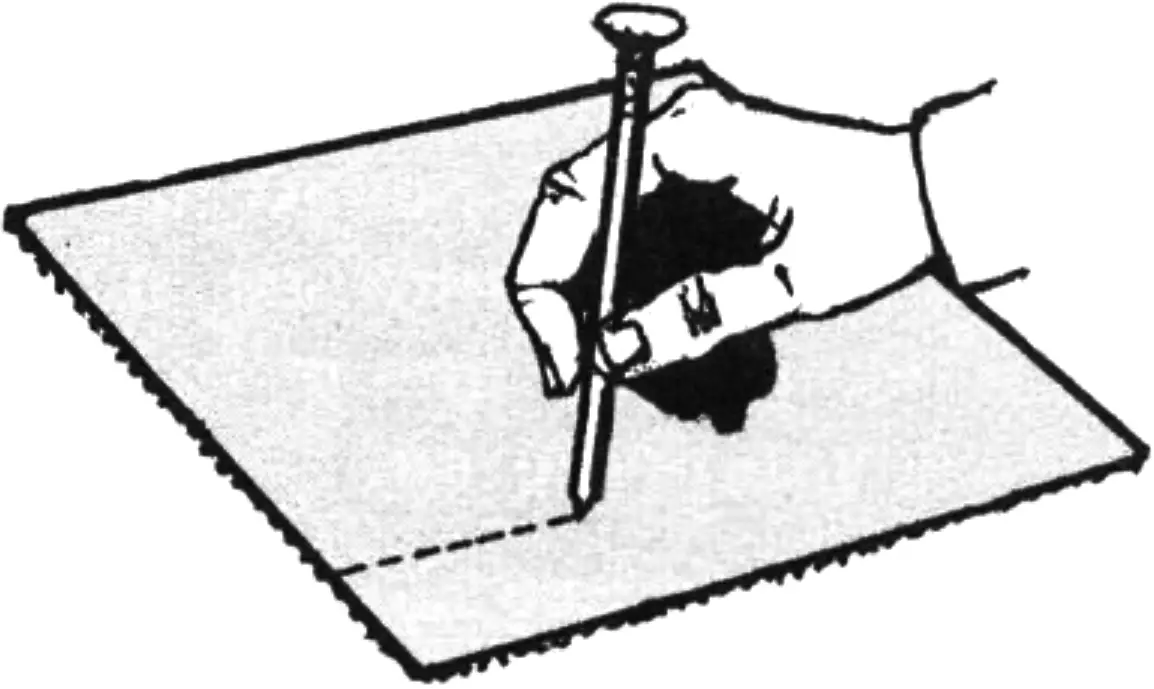
17. Do not cut sandpaper with a knife — the blade will dull quickly. Better place the sheet abrasive-side down and score the paper with a sharp nail — it will tear exactly along the scratched line.
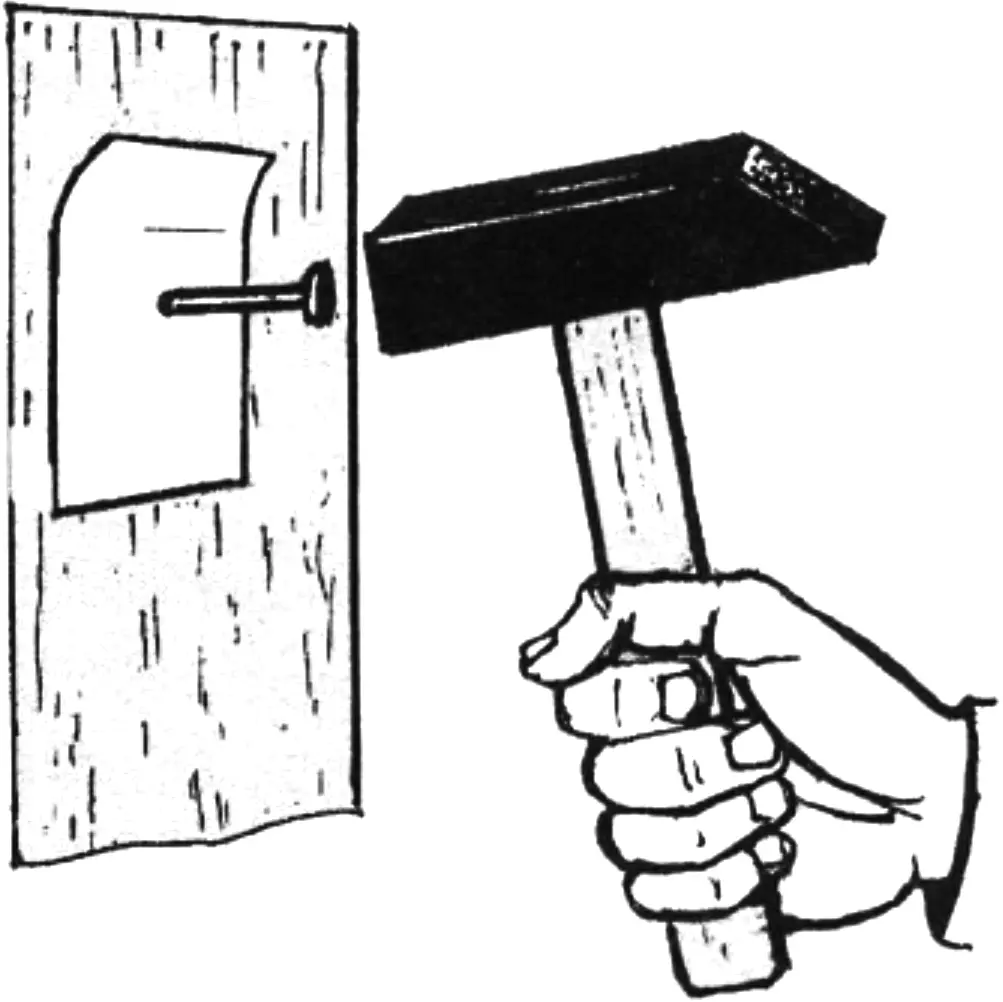
18. When driving a nail into a plastered wall without wallpaper, it is easy to damage the finish. To keep the plaster from crumbling, first stick a piece of adhesive tape where the nail will be driven.
“Modelist-Konstruktor” No. 5’2011, B. REVSKY
Recommend to read
 AT HIGH ANGLES OF ATTACK
To maximize flight time Svobodnaya model championship class, usually try to use large angles of attack. However, flying often becomes unstable due to the disruption of flow from the... THE INDICATOR OF INCLUSION OF HEADLIGHTS
Under the new rules of the road in the sake of safety, drivers of vehicles (especially when driving outside the city) should include the day of the lights But turn them off after a stop...
