More and more cars are produced every year. Today behind the wheel you can find people of almost any profession—engineers and doctors, architects and workers, farmers and teachers. How to operate a car properly—when to change oil, how to choose spark plugs, what to do when something goes wrong—can be learned from the relevant manuals and instructions. Unfortunately, little is written about the small things that make a motorist’s daily routine easier. The aim of this article is to help fill that gap.
Driving into the garage
For a beginner, driving into a dimly lit garage often causes a lot of trouble. One careless turn of the steering wheel or press of the gas pedal—and the new car’s body gets dents and scratches.
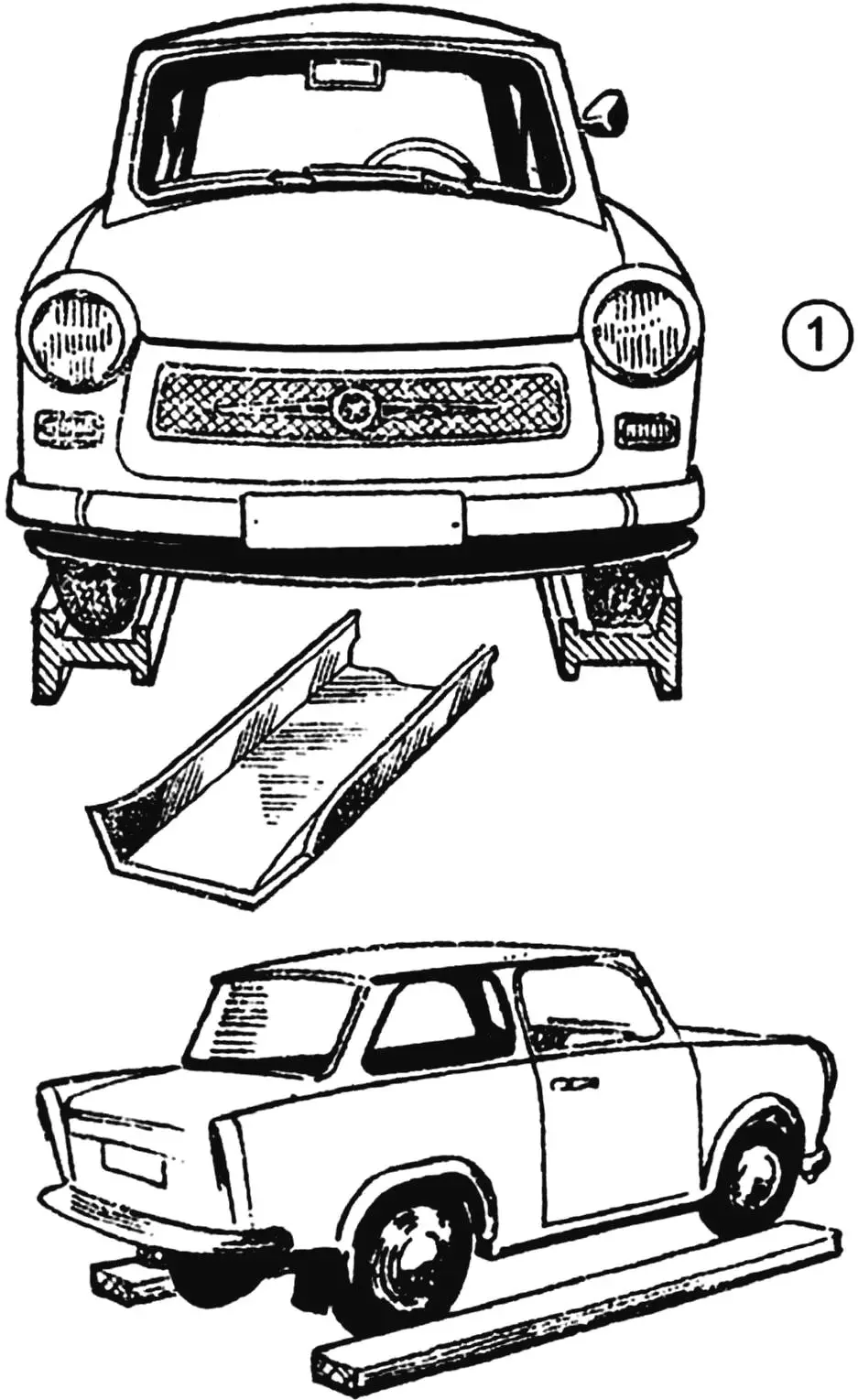
Fix simple guide rails on the garage floor (fig. 1)—and once the front wheels reach them, the car will keep its line by itself. The guides can be two lengths of suitable channel or rail. As a last resort, a pair of wooden blocks will do.
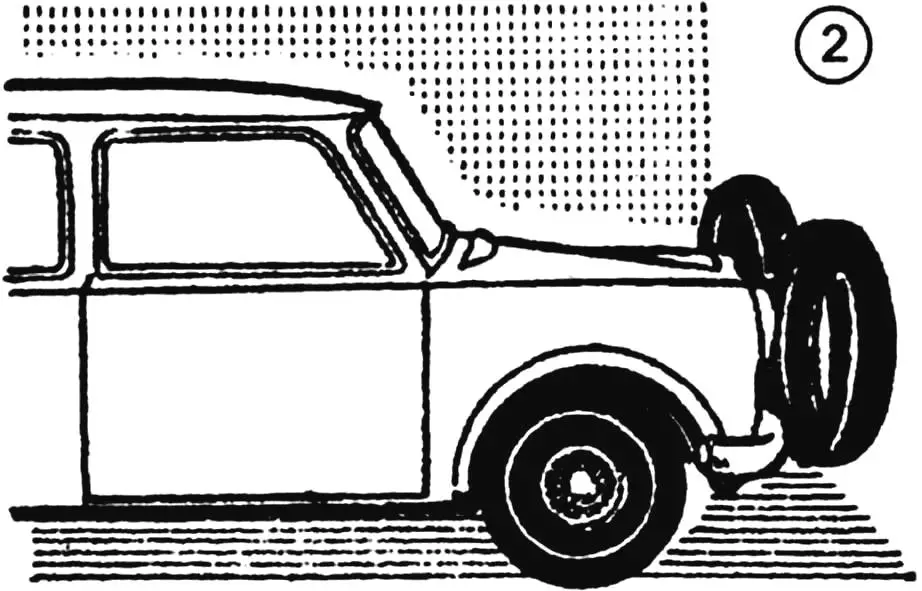
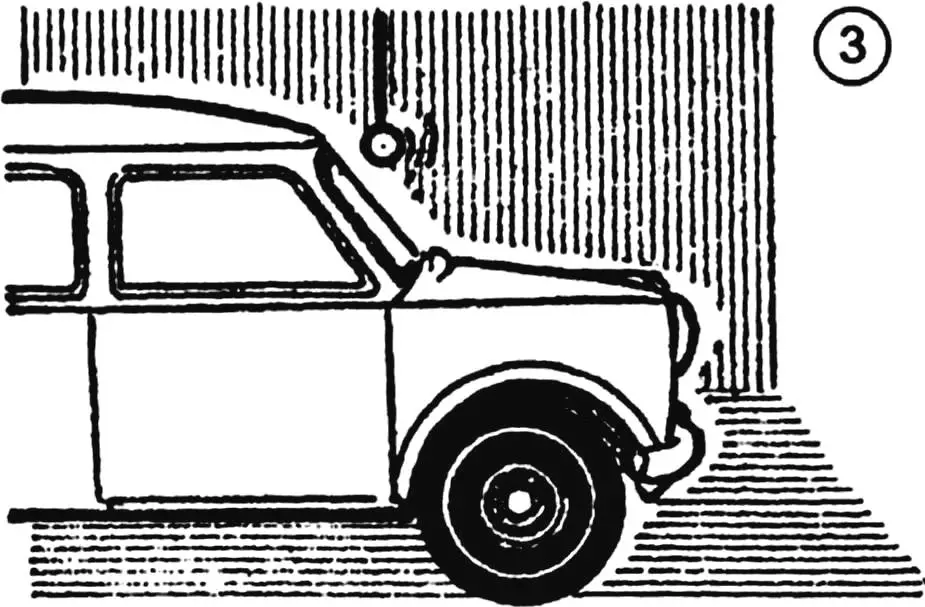
So the entry line is set. The next task is to stop before the back wall. Some prefer to mount two car tires on it (fig. 2) and move forward until the bumper touches them. Here are a few other ways to help you brake in time. One of them (fig. 3): hang a small ball (e.g. tennis ball) from the garage ceiling on a thin cord. Choose the hanging point so that when the car is in place, the ball touches the windshield. The moment of contact is your signal to stop.
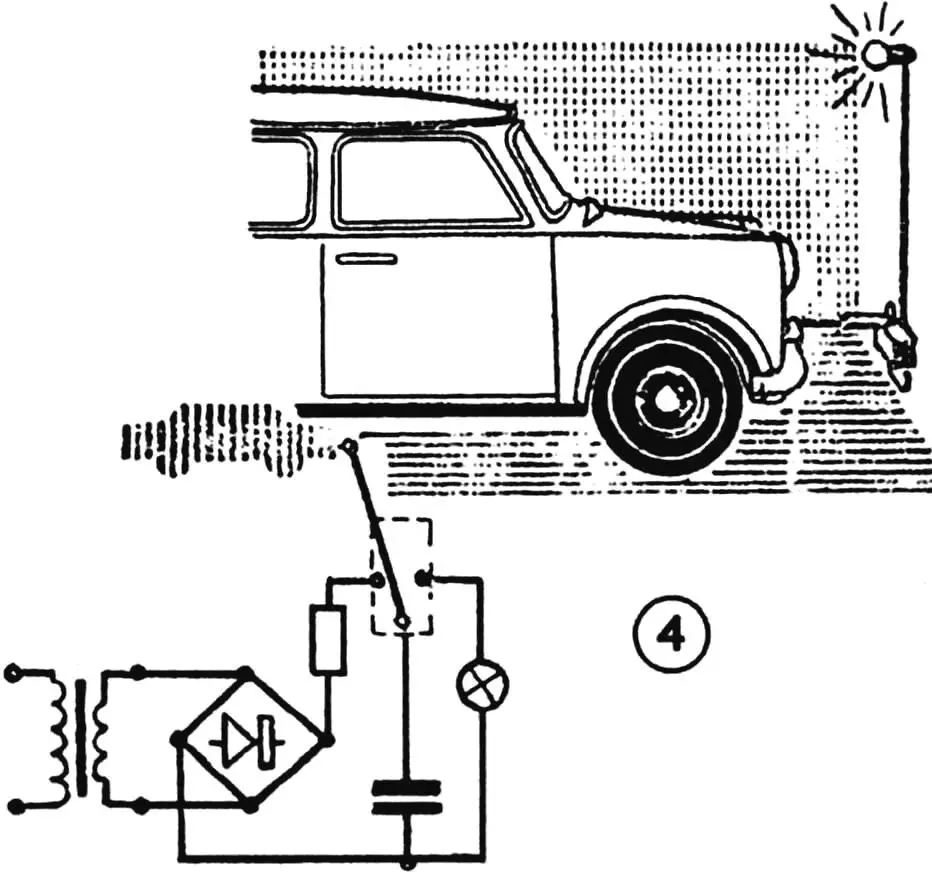
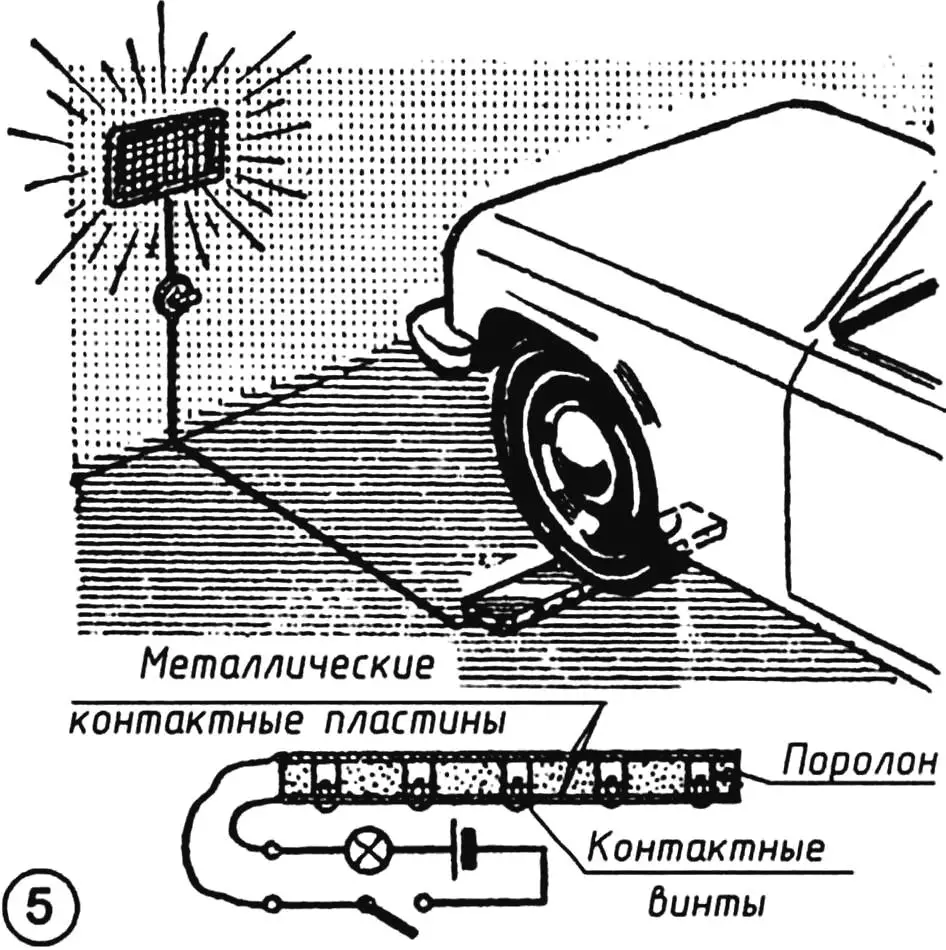
But in a dark garage the ball can be hard to see. In that case it’s better to use an electromechanical beacon (fig. 4)—a lamp fixed to the back wall that lights when a limit switch is triggered. The switch plunger is linked to a telescopic spring-loaded probe; when the car’s bumper touches it, the circuit closes and the signal lamp turns on. The variant shown in fig. 5 is also possible.
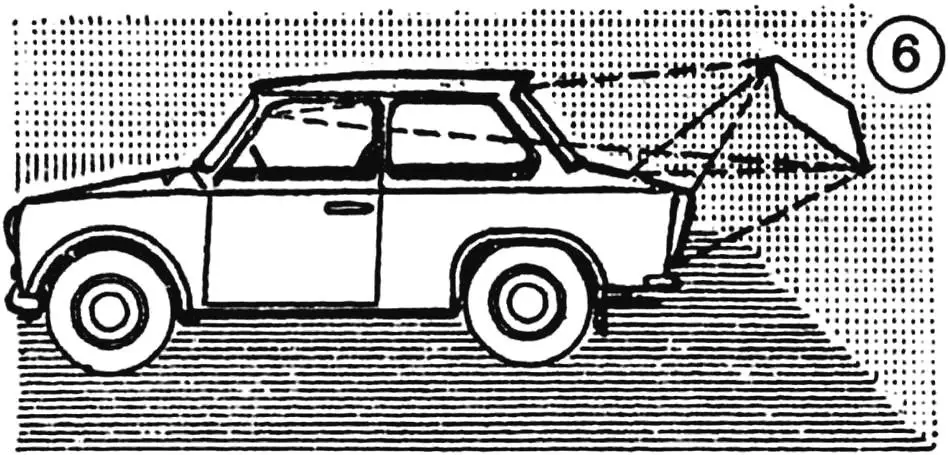
If you usually back into the garage, a simple mirror helps (fig. 6). Finding the right position is easy. Park the car in its usual spot and turn on the rear lights. Adjust the mirror tilt until the light is visible in the rearview mirror. Next time you drive in, press the brake only when that red or orange glow from the tail lights appears in the mirror.
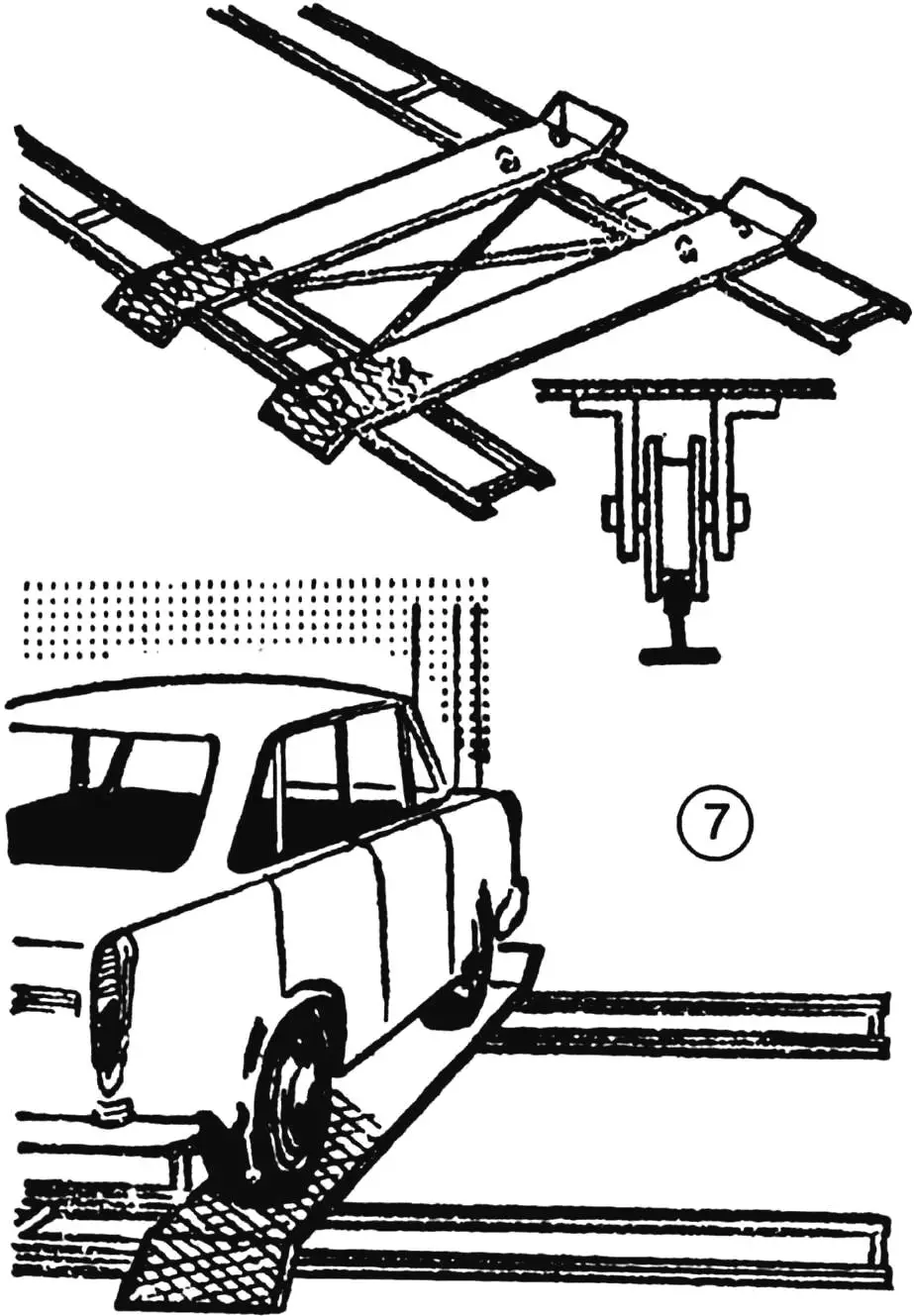
All these ideas apply to a garage with the door in the narrow end. What if the entrance is in the long wall (fig. 7)? Simple: lay four guide rails on the floor and build a movable ramp—a kind of trolley on four rollers. The car drives onto the ramp pulled out of the garage, then is rolled in sideways.
When you need to get under the car
Almost every car owner has to get under the car at some point. The running gear, engine parts, clutch and gearbox are all underneath. Some garages have ramps or inspection pits to make this easier. But what if you don’t have any?
Some owners use a pair of wooden beams on two trestles. We don’t recommend that: a car on a slope can slide off, and trestles can fail.
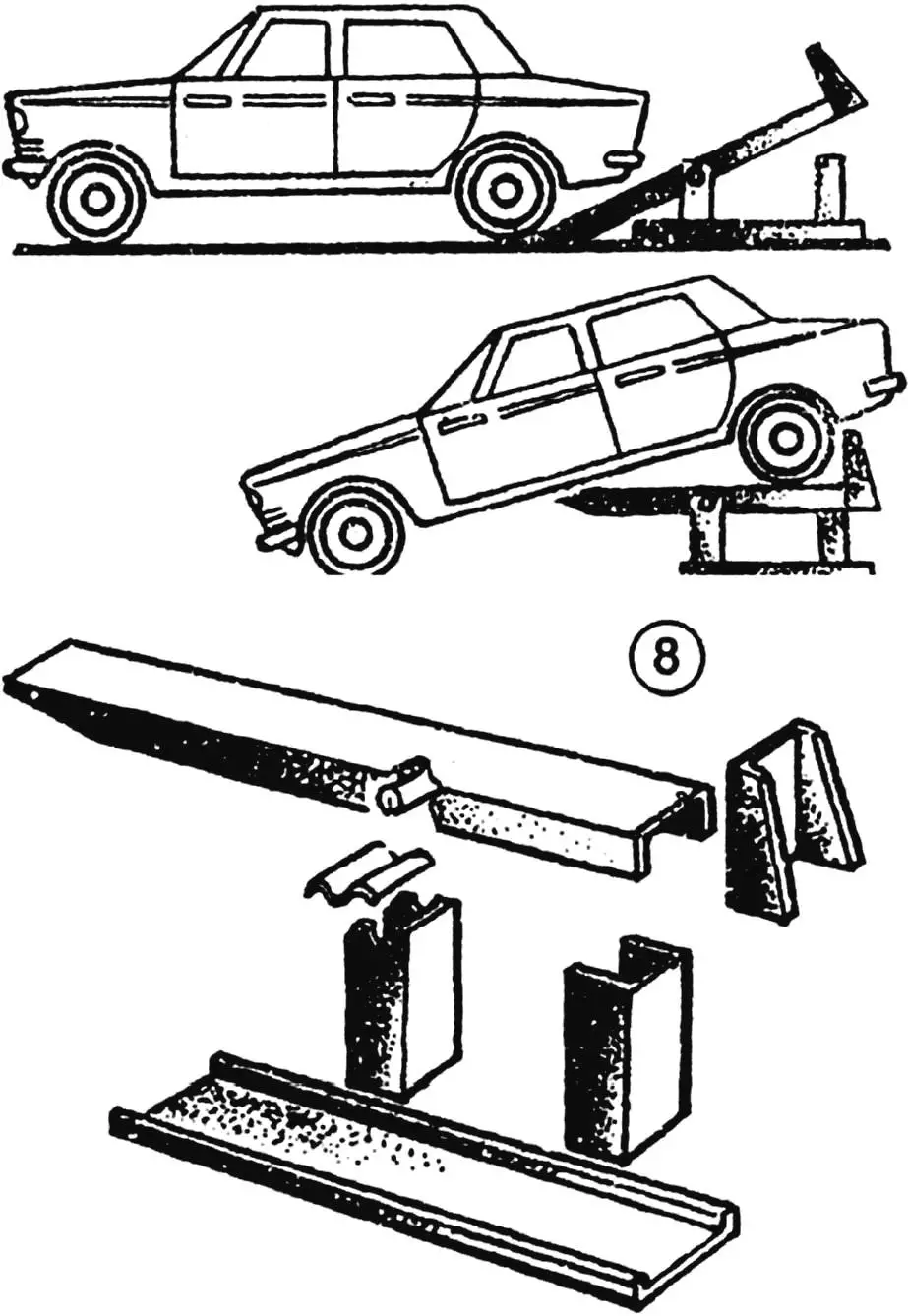
We suggest building a portable inspection ramp (fig. 8); there’s room for it in almost any garage, even a very small one. Use channel offcuts. The ramp design and assembly are shown in the figure.
Handy tips for everyone
To finish—a few small tricks.
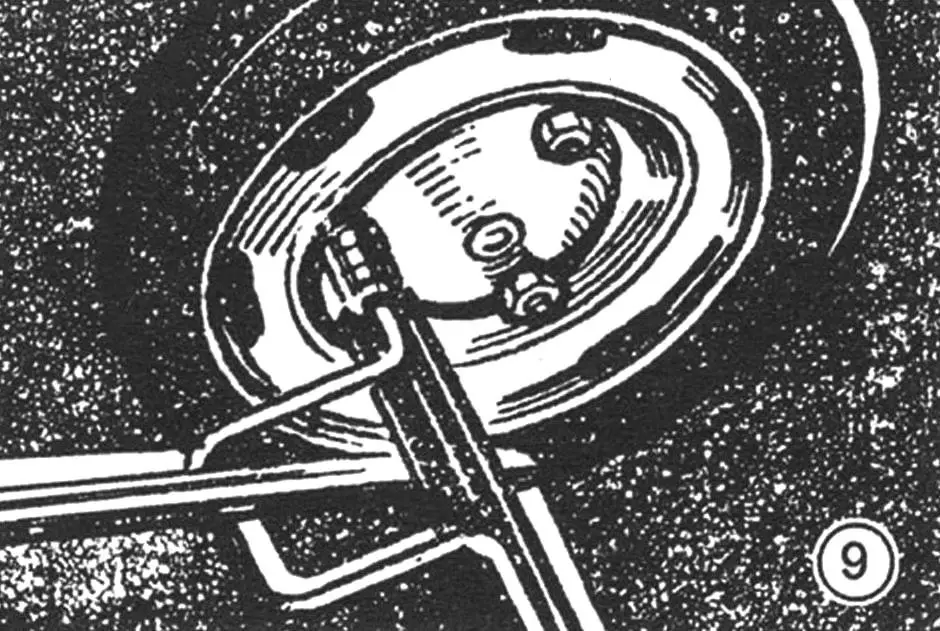
Even the most stubborn nuts are no match for a socket wrench combined with a steel angle and a shovel handle. How to arrange them is shown in fig. 9.
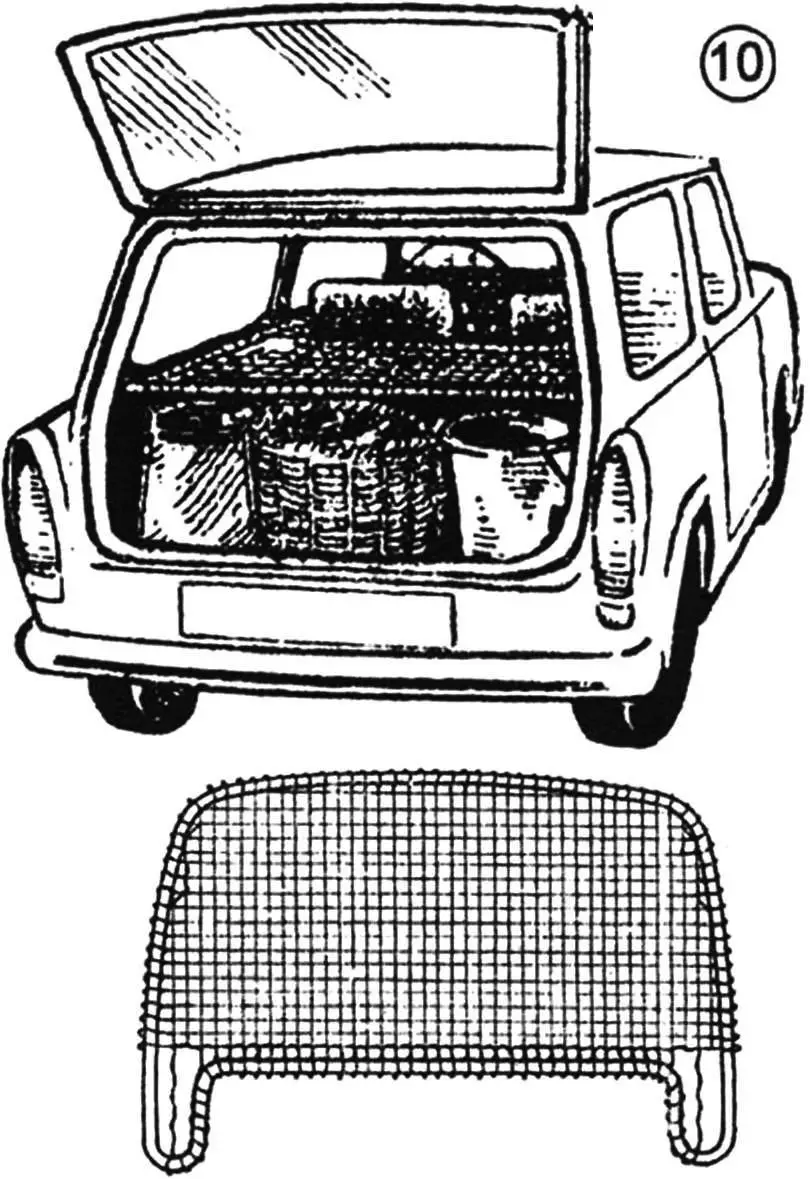
If you have an estate/station wagon, we suggest mounting a shelf (fig. 10) in the rear—steel rod wrapped with nylon cord. The “upper deck” is handy for things you don’t always want mixed with the main luggage.
On the road, in heavy traffic, a lot depends on the driver and their mood—and that depends on how considerate others are and how they behave in critical situations.
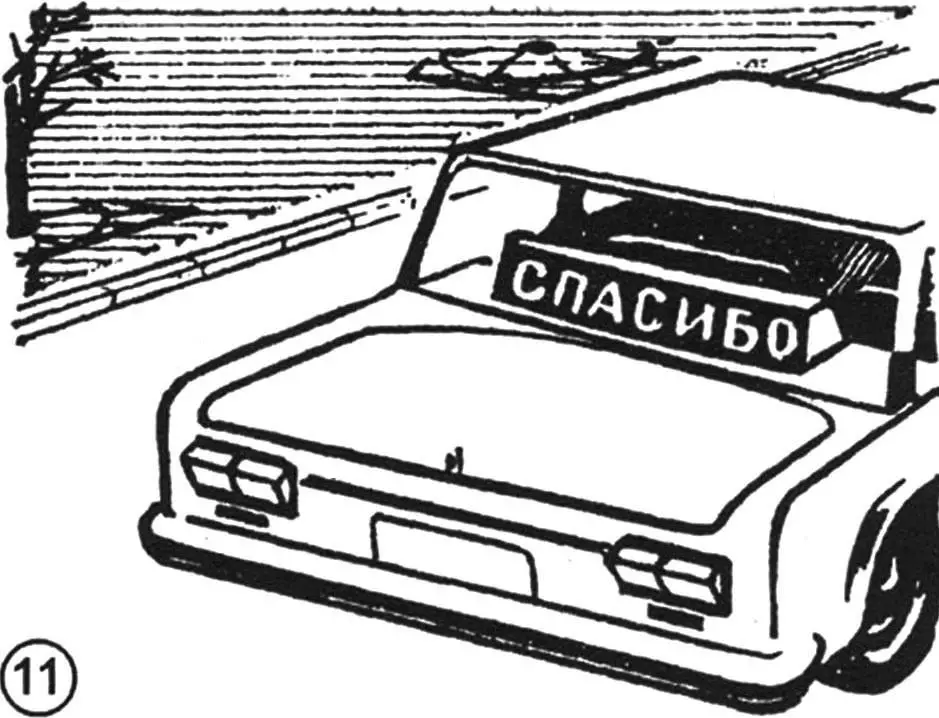
A brief “thank you” on the LED display of a car that just passed you (fig. 11) can feel good—especially if you made room and helped that overtake. If you’d like to thank fellow drivers the same way, consider fitting a similar display on your car.
«Modelist-Konstruktor» No. 4’2013, from foreign periodicals
Recommend to read
 TWO MODELS FOR THE WEEK
Enjoy well-deserved popularity at start-avtomodelistov kordovye racing snowmobiles and cars. Probably every athlete, behind which there is victory, not the competitions of the highest... HARVESTER GARDENER
What is usually stored in the pantry a good host, enthusiastically engaged in cultivating and farming vegetable crops? As a rule, a large set of various tools, among which the most...
