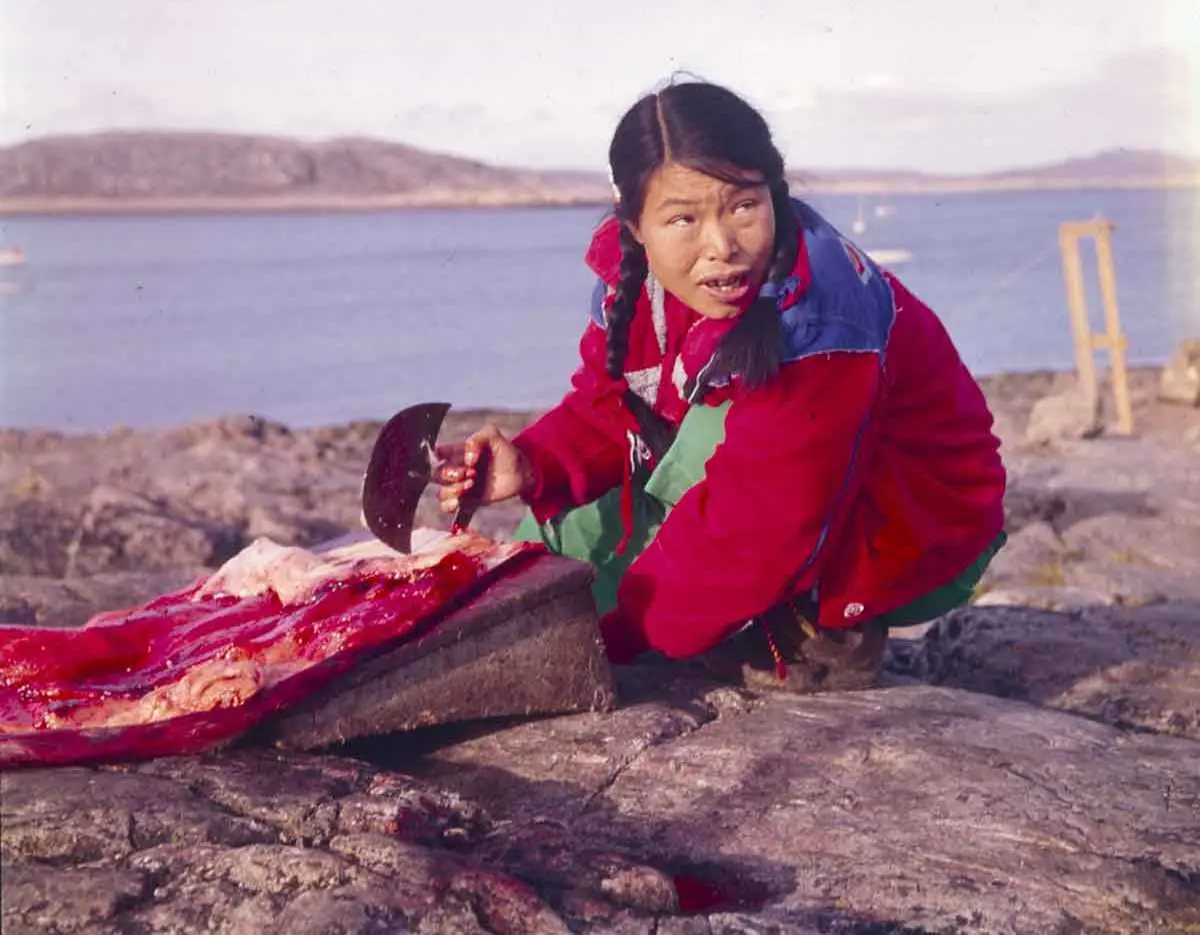
While making Eskimo anti-sun glasses (see “M-K” No. 4-2025), I delved into studying the culture and traditions of Arctic peoples. Nomadic conditions and the harsh climate left their mark on every area of their life and activity. Nothing superfluous — only what is needed! Dwellings, clothing, tools, and household items are all very functional and rationally simple. Everything is dictated by practicality. This applies to knives as well.
Eskimos and other small indigenous peoples of the Far North are peaceful people who have hunted and fished since time immemorial. They know nothing of armed conflicts, let alone battles, so they never had swords or daggers. Even their knives had not a combat, but only a household purpose — to butcher a reindeer carcass, process a hide, gut fish, and so on. One such typically northern knife is the ulu.
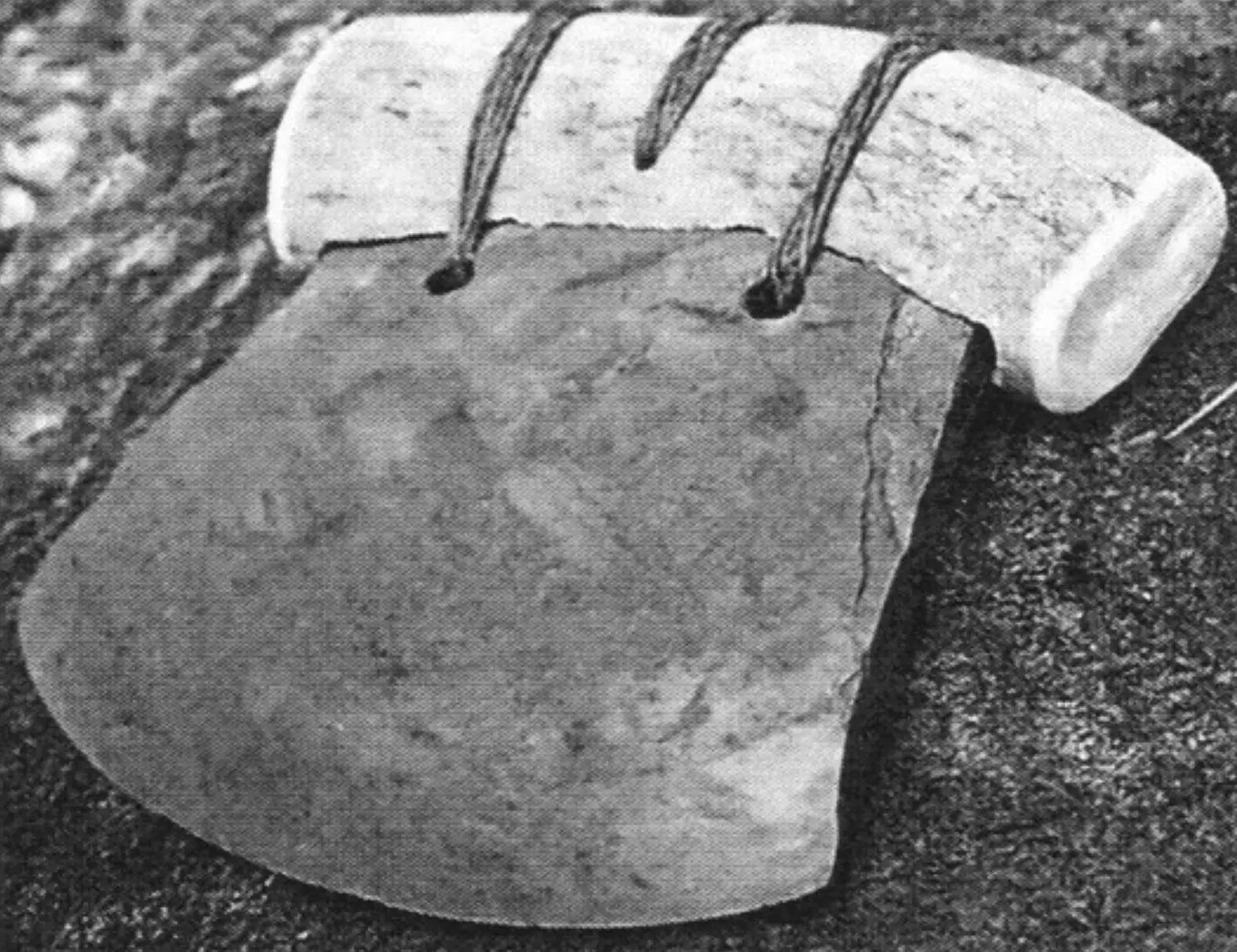
Outwardly, this knife resembles a primitive tool like a “cleaver.” And in essence it really is — at first Eskimos made ulus from thin, sharp flakes of stone. The earliest such knives date to the 3rd century BC. Metal knives appeared among Eskimos in the 19th century, when American whaling ships reached Alaska and then Chukotka. Sailors traded iron goods for furs, and the natives reforged them in ways known only to them into items they needed, including ulus.
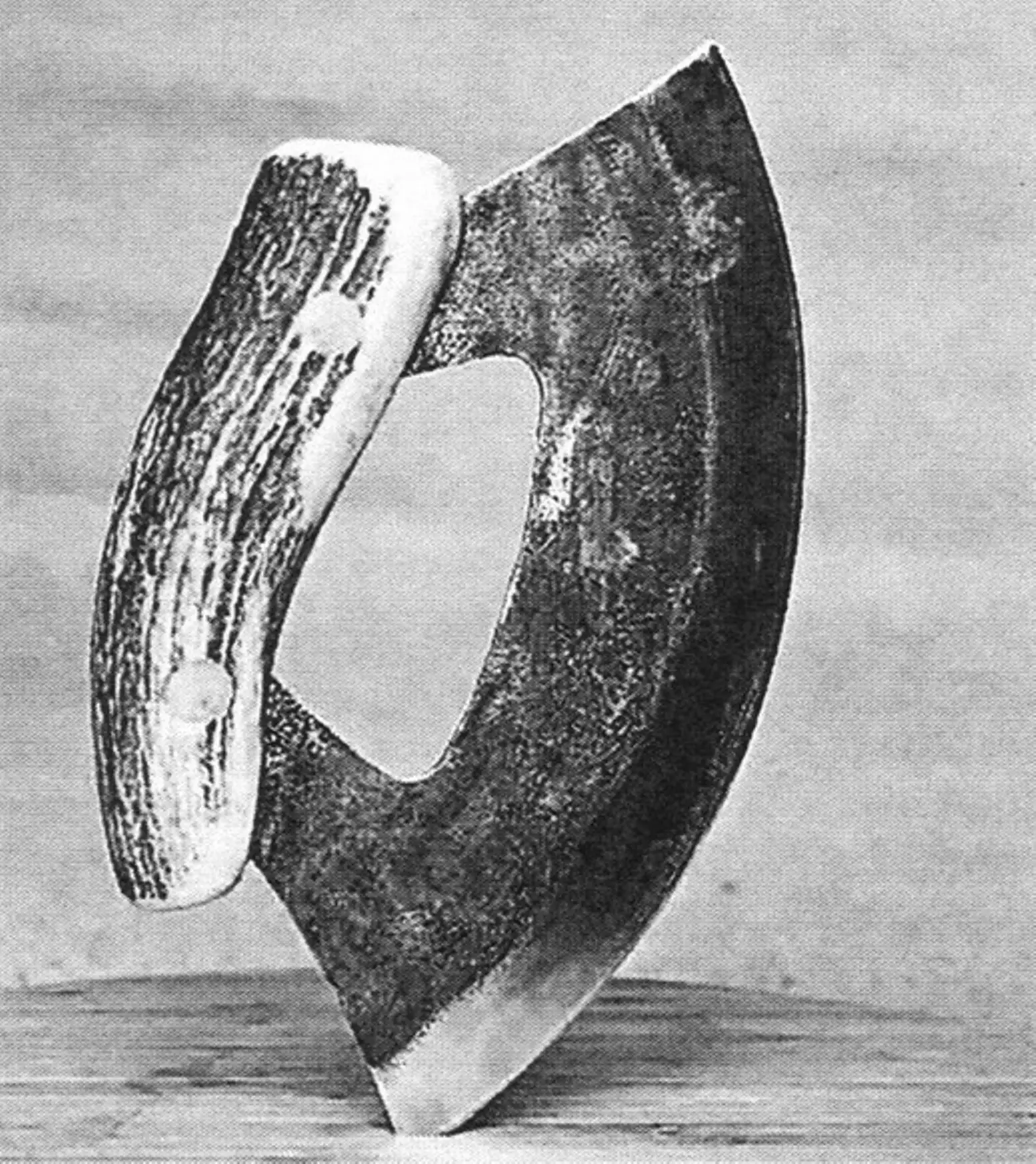
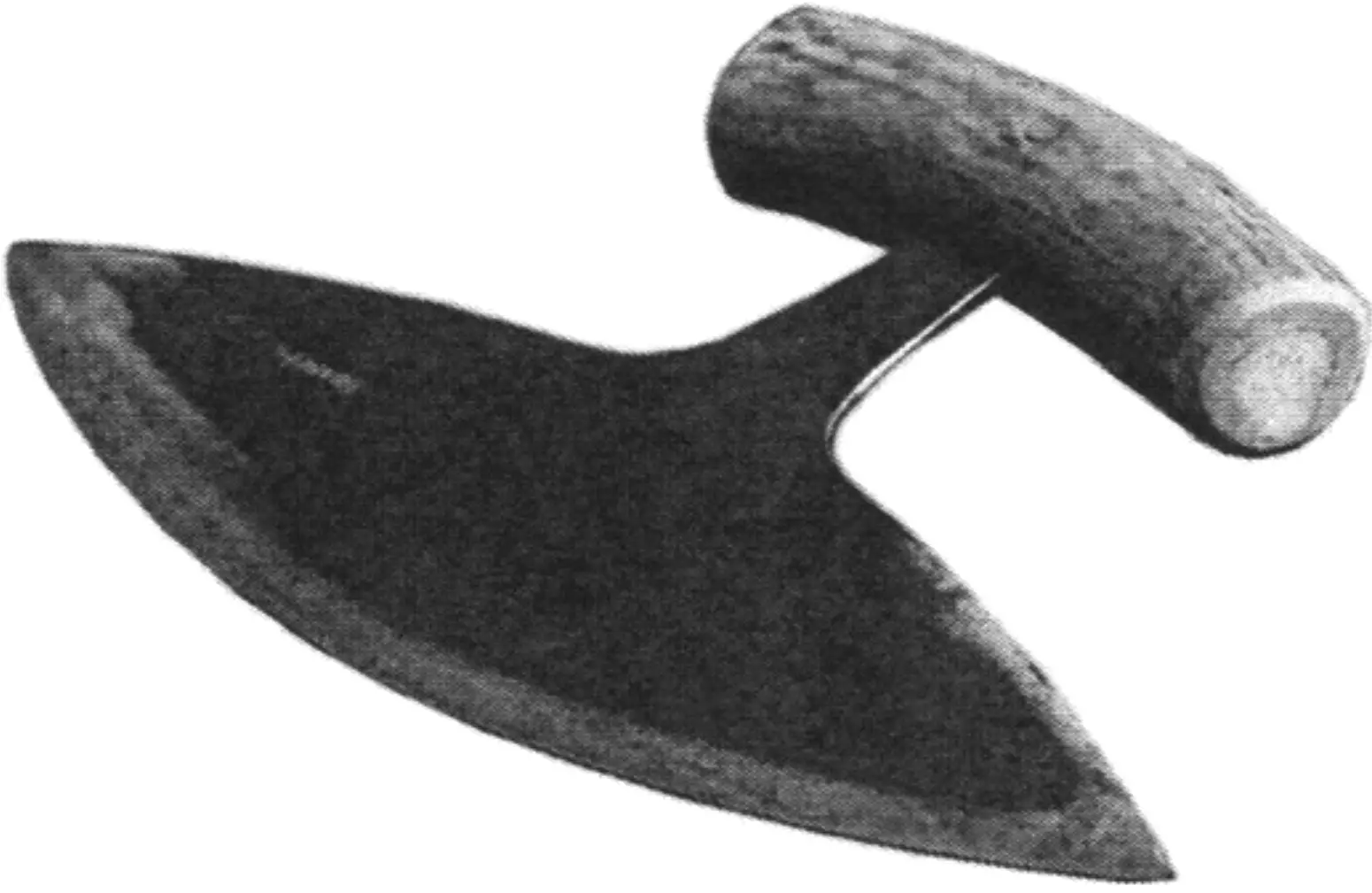
The ulu is not the familiar blade we know, but a vertical plate with a semicircular sharpened part. A transverse wooden handle (they used to make them from reindeer antler) sits directly above the cutting part. The blade shape and ulu design are ideally suited for processing hides and fur by scraping. (Incidentally, Russian furrier knives had a similar shape, but with a perpendicular handle.) Cutting meat with an ulu is also convenient — it is both a knife and a kitchen hatchet at once.
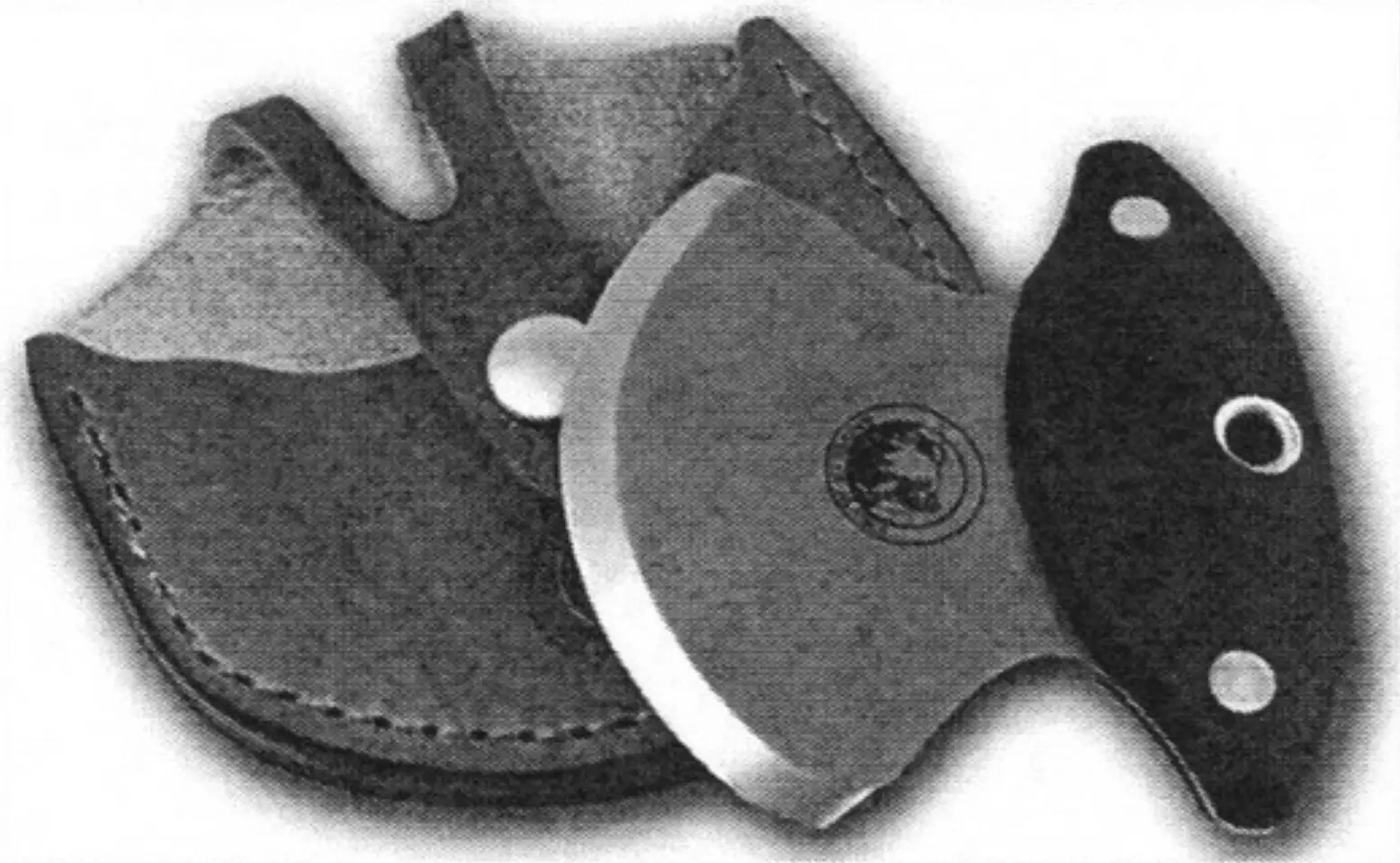
Compared with stone ones, steel Eskimo knives are more convenient thanks to the finger cutout under the handle. The second main traditional version has a narrow handle support that is passed between the fingers during work. Various more modern varieties have also appeared, for example, a skeleton-type knife with an all-metal or angled handle.
In some countries ulus are produced commercially today and have already become popular with hunters and fishermen who butcher game in field conditions. I decided to make such a knife myself.
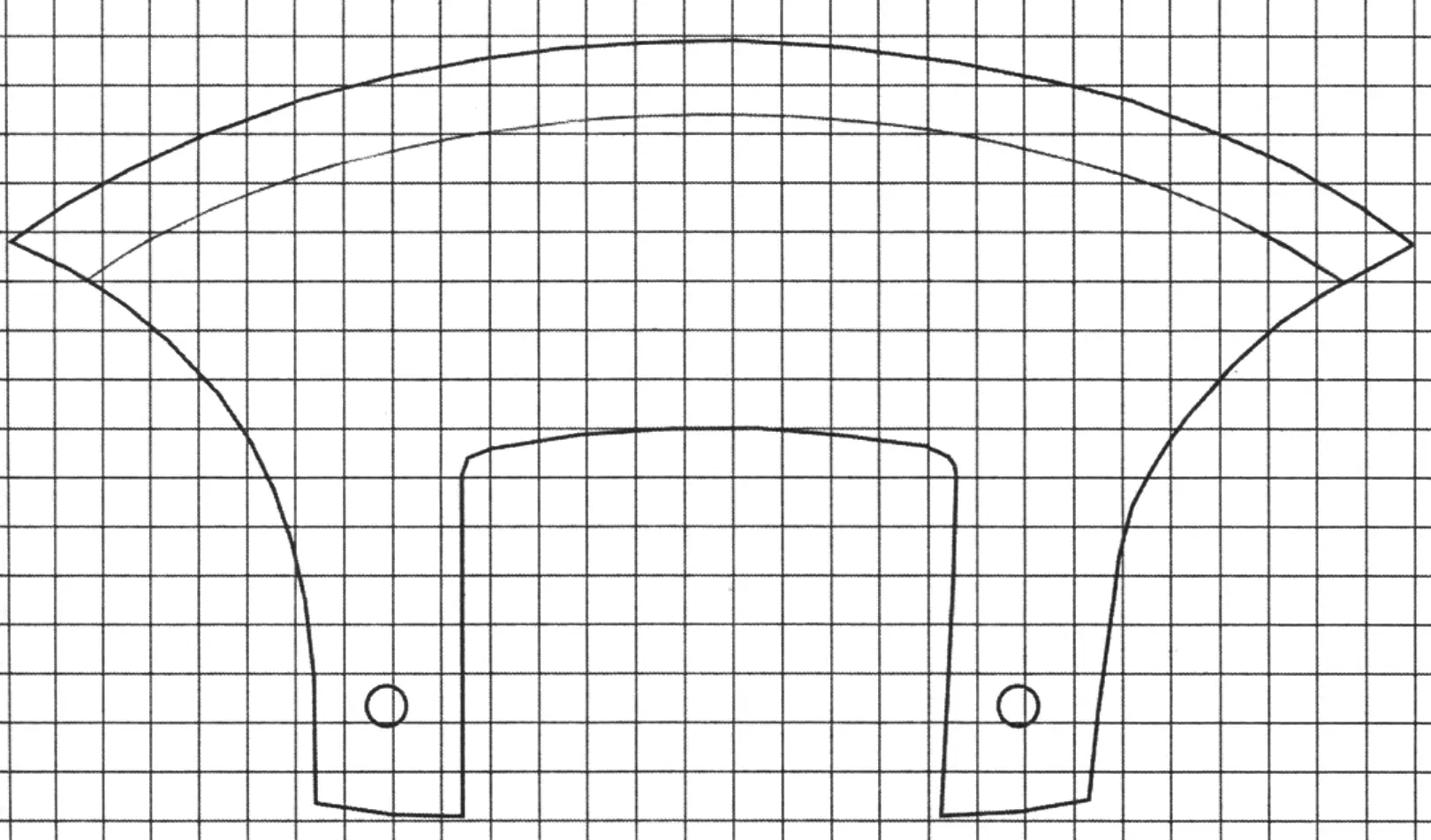
First I found suitable material — a piece of an old large-diameter saw blade about 1.5 mm thick. Then I started drawing sketches. I doubt Eskimos used drafting tools at this stage — most likely they worked by instinct, guided by “ancestral memory.” I did the same. Looking at pictures of prototypes, I estimated dimensions and sketched the approximate outline of the future knife. I traced the rounded cutting edge using a plastic plate that happened to be at hand, and the side curves using some jar. I tried the template on my hand, applied a handle blank, and marked the attachment points.
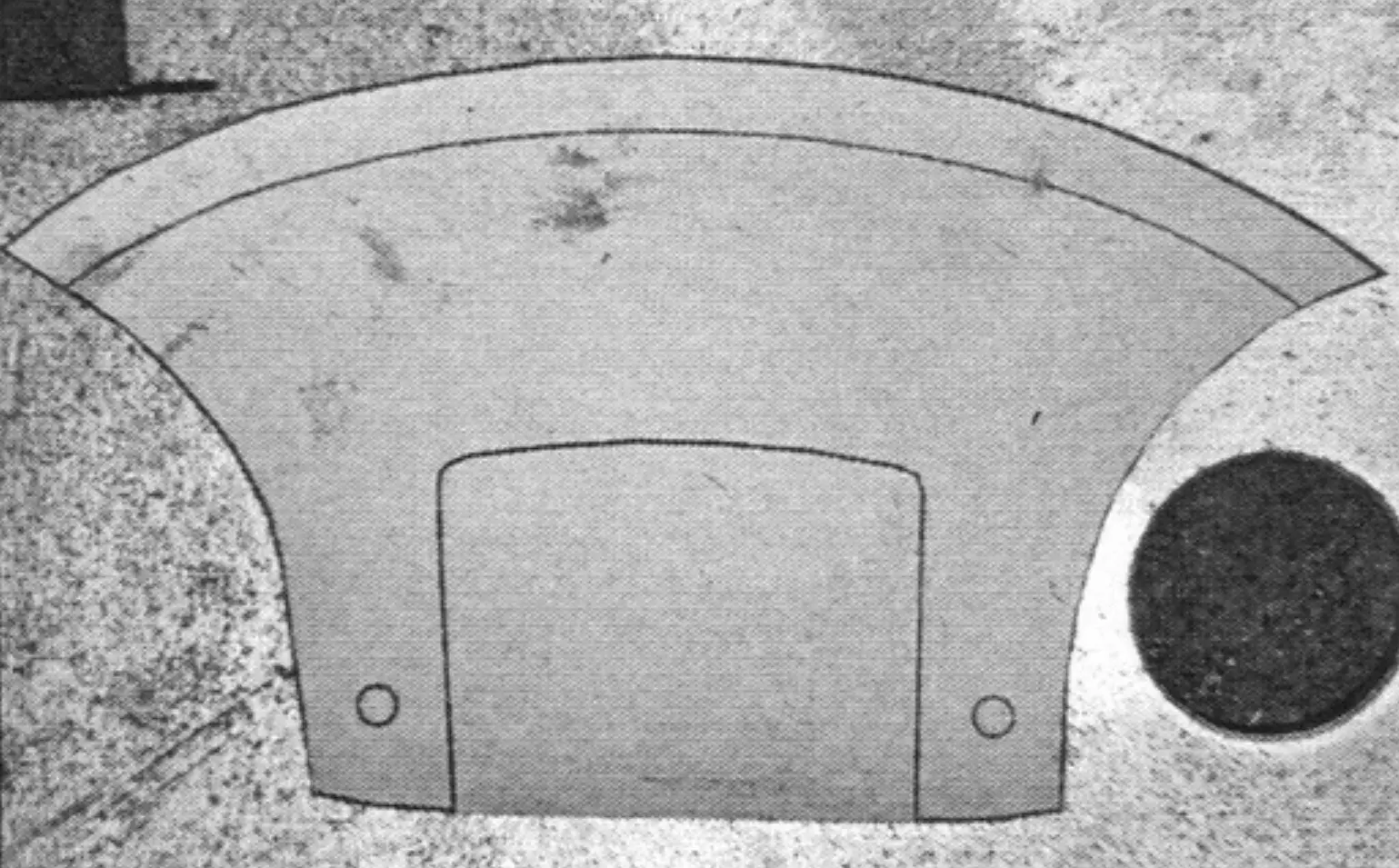
After that — a matter of technique. I glued the template onto the saw blade, clamped it on the workbench, and cut out the blank with an angle grinder. Attention: observe safety rules! At first I wanted to make a knife with a cutout under the handle, but later decided to do without it: more authentic, and less hassle. I drilled holes, ground the plate, and… paused to think.
In principle, if you sharpen the edge and attach the handle — it is ready. But that would be only a knife mock-up or, so to speak, a shelf souvenir. Without heat treatment it has no functional value. To keep the blade from dulling, hardening is required. I had never made knives before, and I had no blacksmith acquaintances with forges or muffle furnaces at hand. But… the eyes fear, the hands do. So we will harden it ourselves!
Having studied many recommendations on the internet (highly contradictory, by the way), I settled on a simple method using a gas torch. Professional masters may criticize it, but I had no other options.
So, placing the blank on two heat-resistant bricks, I began heating it. I tried to do this evenly over the entire surface. I controlled temperature by color — bright cherry red corresponds to the required 750° C. There is also a method of control with a magnet taken from an old speaker, for example — heat the material until the magnet stops “sticking” to it.
Having heated the blank to the required temperature, I lowered it into a bucket of oil. Experienced people advise using vegetable oil. Moreover, no less than 20 liters. I did not have that much — I decided that 5 liters of old “mineral oil,” a canister of which was lying in the garage, would be enough for a first try.
Clearly, all these operations must be performed with strict observance of safety precautions. I worked at the dacha, in an open area, far from buildings. I held the blank with long-handled pliers. Naturally, I used thick gloves and a face shield.
After the blade cooled, I cleaned it again. Whether the next operation was mandatory — I do not know. Nevertheless, having read various “expert tips,” I placed it in an oven heated to 200° C for an hour — this supposedly prevents chipping.
And to darken the metal, giving the knife a “historical” look, I dipped the blade in boiling vinegar for a few minutes — this formed a patina on it.
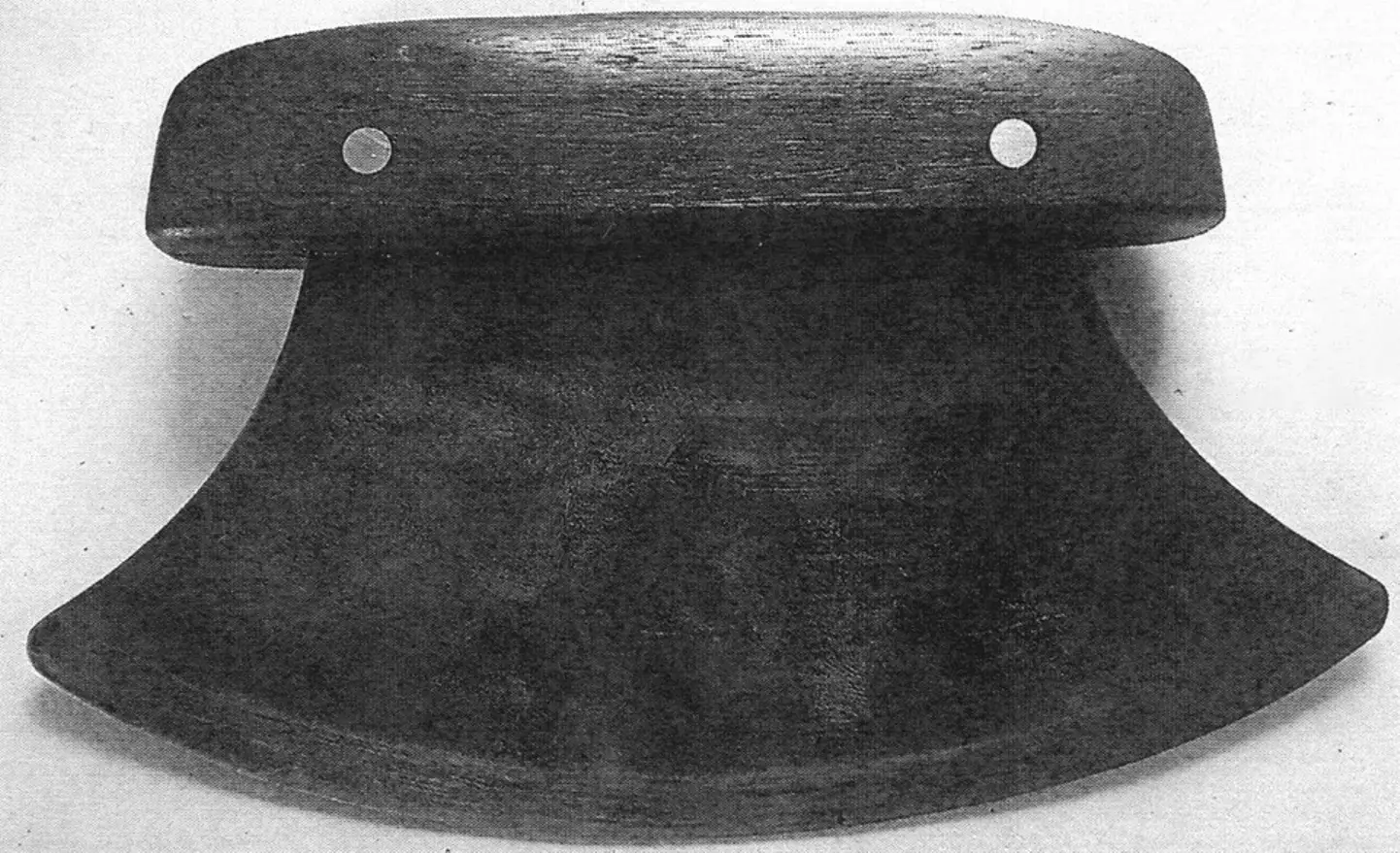
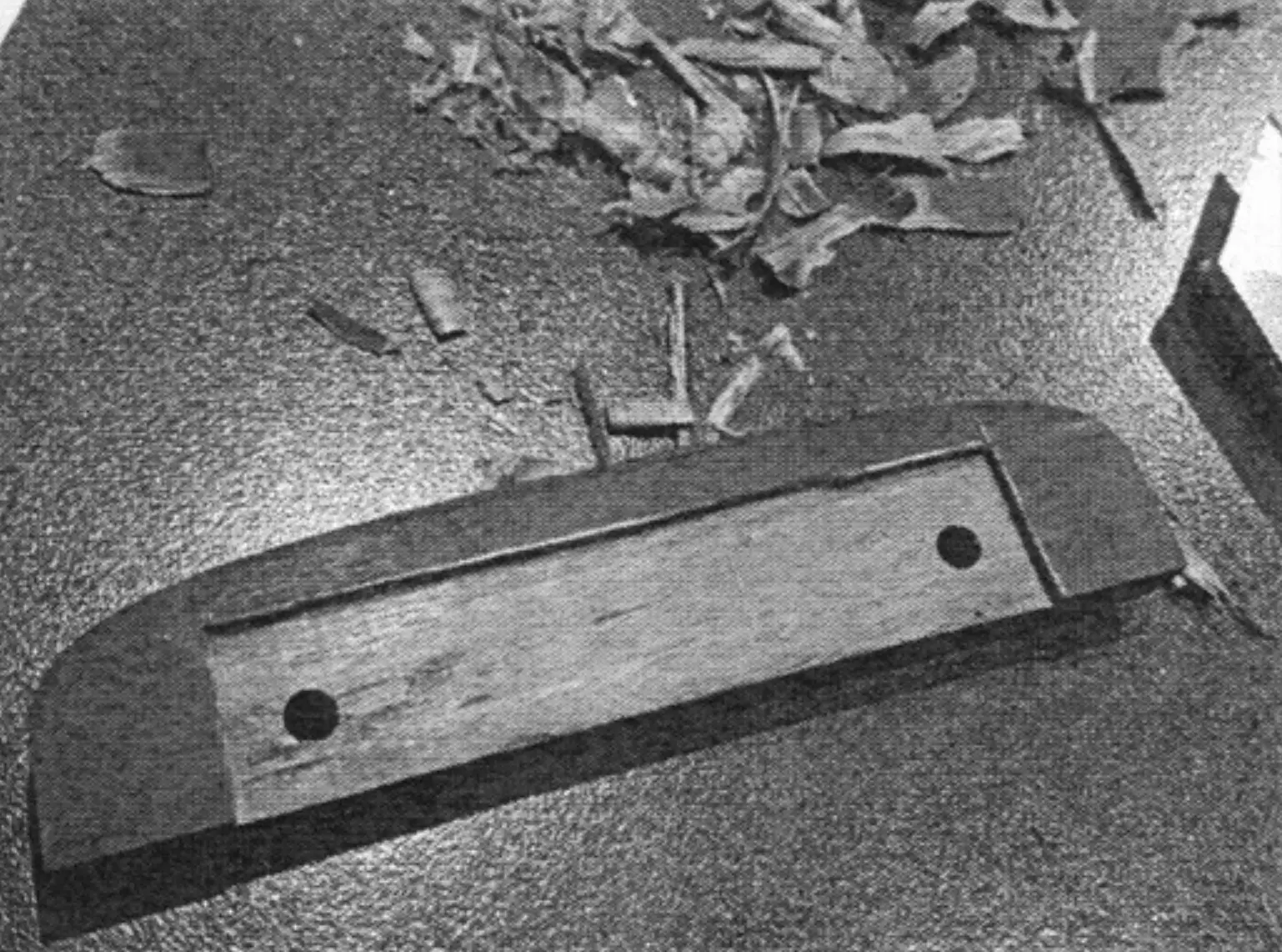
For the handle I chose two beech blanks, cut them to the intended shape, routed grooves inside, and drilled holes. I fitted everything in place, coated the joint with epoxy, held it under a press, and riveted brass pins. After thorough cleaning and polishing, I coated the handle with linseed oil.
I made the sheath from a piece of leather. For it to be stronger and items made from it more durable, special processing — tanning — is required. I did not want to master these subtleties from scratch, so I used a specialist’s services. However, his technology involved the use of salt. As a result, after some time my knife stored in the “salted” sheath rusted in places. This natural aging only added authenticity to the product.
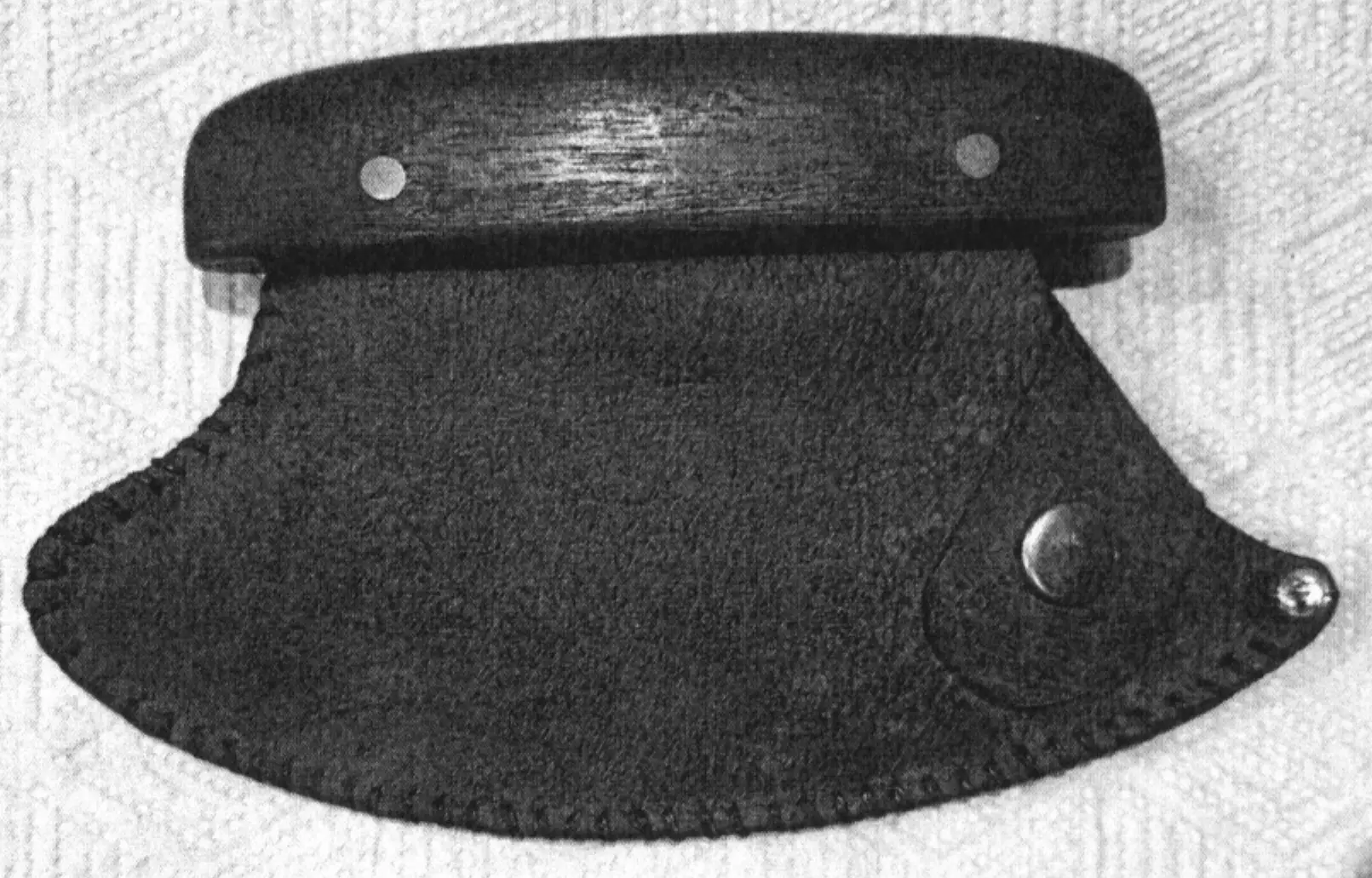
The work is done, and I am satisfied with both the result and the process itself. Now no outing into nature goes without the Eskimo ulu. My friends like it too. One companion even made himself the same knife. As a blade blank he used the cutting edge from an old mattock — it turned out well. I hope my experience will be useful to “M-K” readers as well.
“Modelist-Konstruktor” No. 8’2025, Denis SAMARIN, Orenburg
Recommend to read
 GLIDER BS-3
"If we turn the pages of aviation history, you will find that most modern aircraft as heavier than and lighter than air born motorless aircraft were gliders, airships — balloons. Motors... TO GIVE THE MODELER WINGS!
The entrance to the house I saw a boy pet of the twelve who, standing in front of Mr. he, gave to someone signals. All his efforts, however, remained unanswered. To login for some reason...
