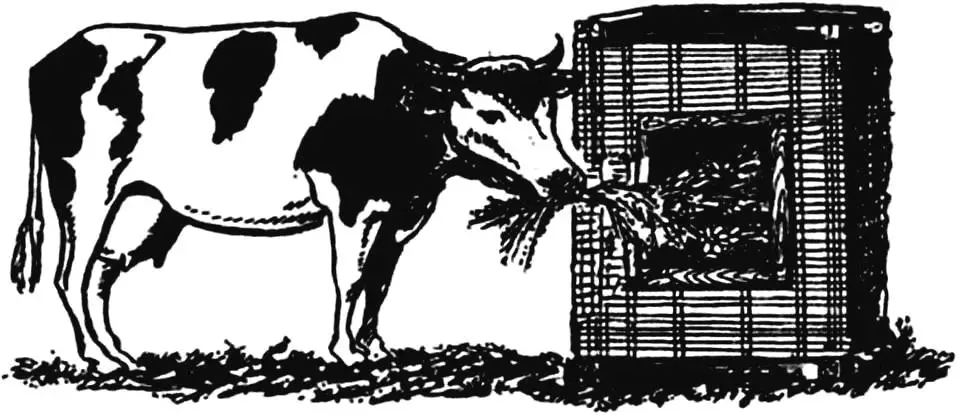
Many rural residents who previously did not keep cows on their farm are forced to get them now. After all, the cow has always helped a person survive difficult times by providing milk. But the owner also needs to take care of the animal so that the cow is well-fed both in the stall period.
As you know, the main feed for the cow is grass or hay. Unfortunately, while in the stall, the cow does not treat its food very carefully and, looking for a tasty sprig, can easily trample an entire armful of hay or grass.
To prevent this, a special feeding rack is made — a hay manger.
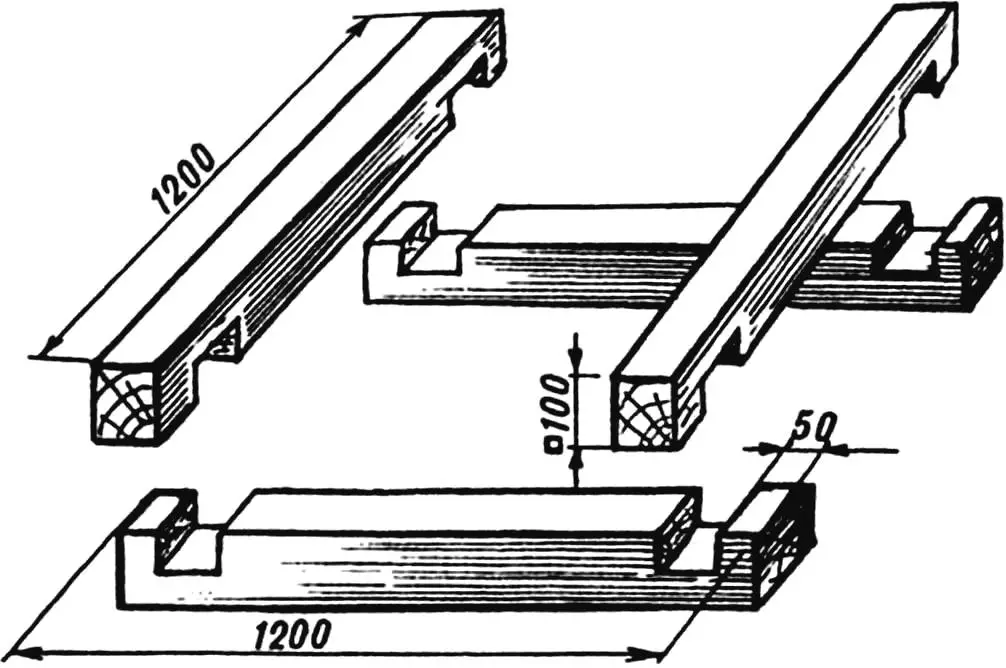
I suggest an old, proven design of a feeding rack — simple and safe for the animal, because this manger is made practically without nails.
The design of the manger is frame-based. The frame is assembled from identical top and bottom rectangular strappings and 16 posts spaced roughly equally apart.
The strappings are made from timber with a cross-section of at least 100×100 mm or from logs with a diameter of about 150 mm and a length of 1200 mm. In this case, the top and bottom of the logs are squared off — each log is trimmed on opposite sides. The strappings are assembled using half-wood joints with a remainder, which must be at least 50 mm at both ends of each timber (log). If necessary, the strapping parts are fastened to each other with staples made from steel wire of 6 mm diameter.
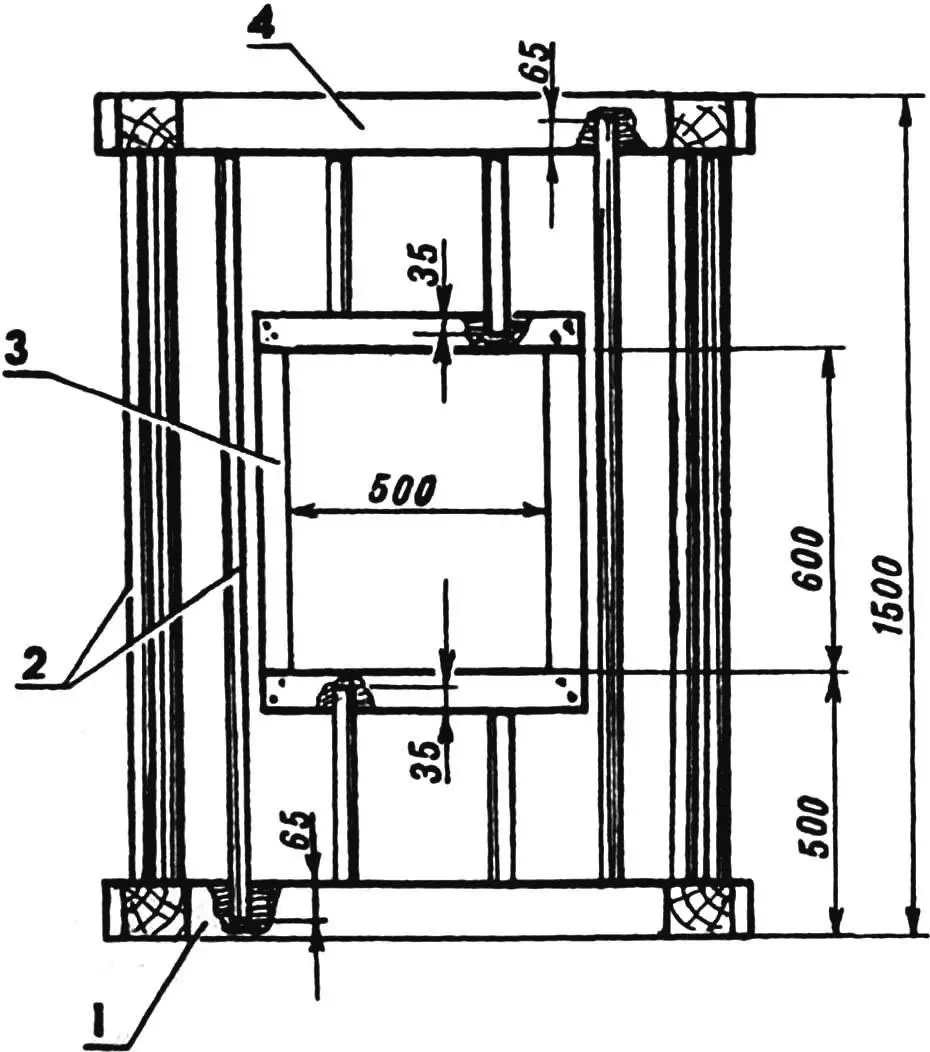
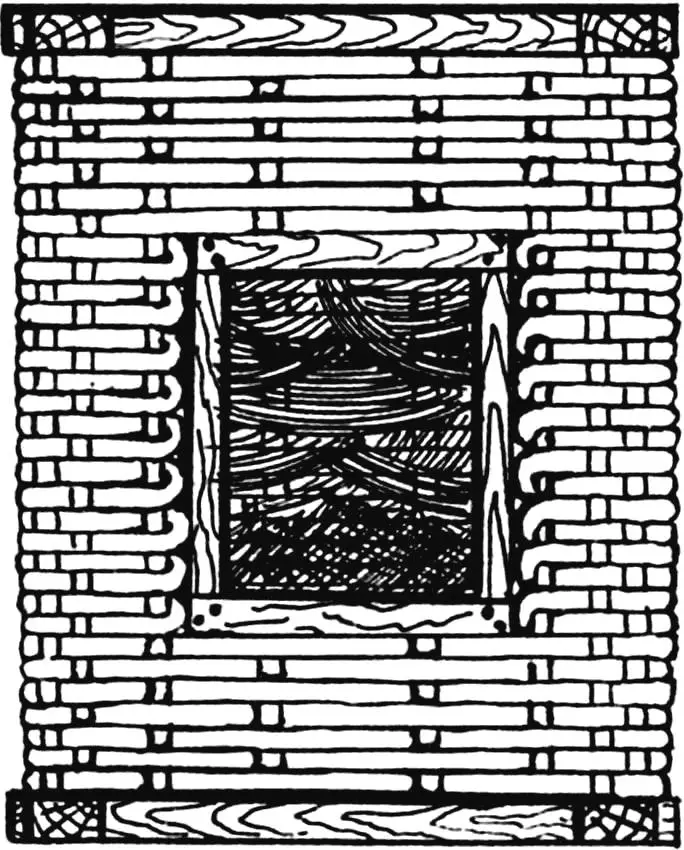
1 — bottom strapping (100×100 timber or log Ø150); 2 — rod posts (Ø40); 3 — window frame (50×50 timber); 4 — top strapping (100×100 timber or log Ø150)
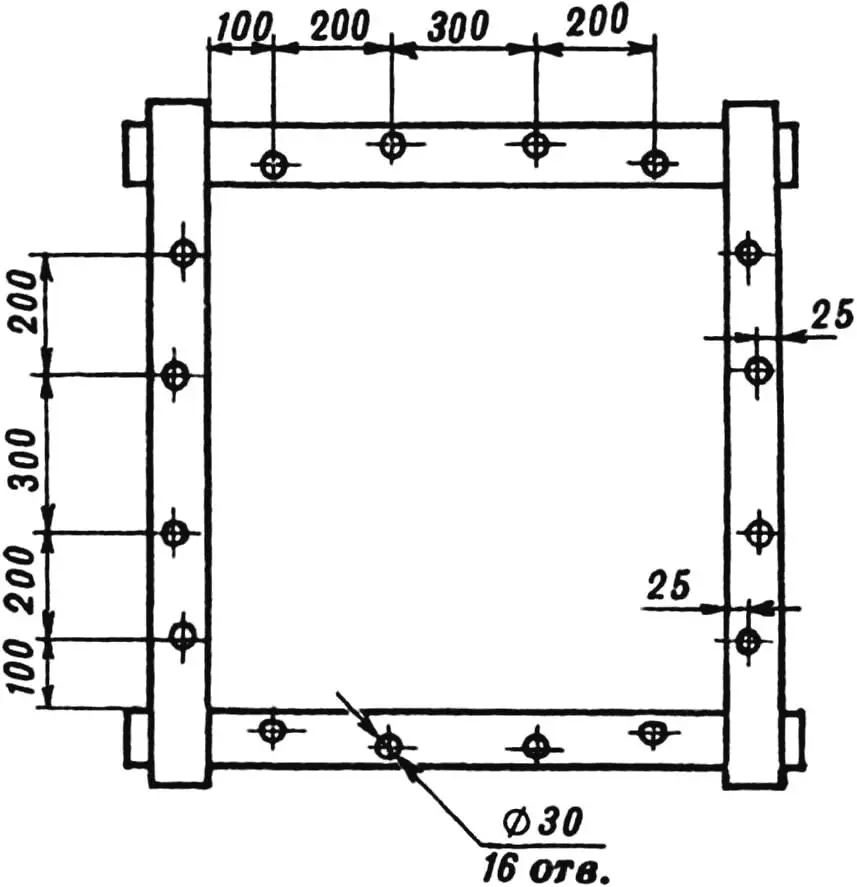
On the upper surface of each timber (log) of the bottom strapping, drill four blind holes with a diameter of about 30 mm to a depth of roughly 2/3 of the timber’s thickness. The middle holes should be located closer to the outer side of the strapping, while the end holes — closer to the inner side.
The same mating holes are drilled on the lower surfaces of the timber of the top strapping.
Next, drive in the rod posts about 1500 mm long and approximately 40 mm in diameter into the holes of the bottom strapping, having sharpened their ends to match the hole sizes for a tight fit. But on one side of the strapping, two middle posts are installed shorter (about 400 mm). In this spot, a window is arranged through which the cow could reach hay or grass from the feeder. The window, with opening dimensions of at least 600×500 mm (height x width), is assembled from bars with a 50×50 mm cross-section. The corner joints of the frame are a single tenon plus a cheek with fastening using wooden dowels (nagels). In the top and bottom bars, corresponding holes for the rod posts are drilled on the outside.
For the walls, use rods (willow or similar, well-bending) with a root-end diameter of no more than 20 mm. Wrap the posts around in a circle by moving around them alternately from one side and then from the other, just like weaving baskets. When the wall height together with the strapping reaches about 500 mm, mount the window frame on the short posts. While weaving, when the rods approach the frame post, bend them around the nearest long post by 180° and weave back in the opposite direction. Once the top of the window is reached, weave around the circle again. When about 50 mm of the posts remains above, stop weaving and mount the top strapping on the ends of the posts.
If the feeder is to be installed outdoors, you should also make a light cover and attach it to the top strapping with hinges.
Long-term operation of such a rack has shown it to be reliable, practical, and safe. And most importantly, the animal cannot scatter the feed and eats it all.
“Modelist-constructor” No. 2’2003, P. BELOUSOV
Recommend to read
 BUILDING A CAR
(Continued. Beginning at No. 10 in 1975.) TO ENSURE THE SMOOTH PROGRESS AND SUSTAINABILITY This task is more difficult than a lighter car. There are examples where Amateur... RUFF OF ROPE
Commercially available drills are equipped with different attachments and accessories. I suggest another attachment. With its help you can easily clear the body avtomobila against rust...
