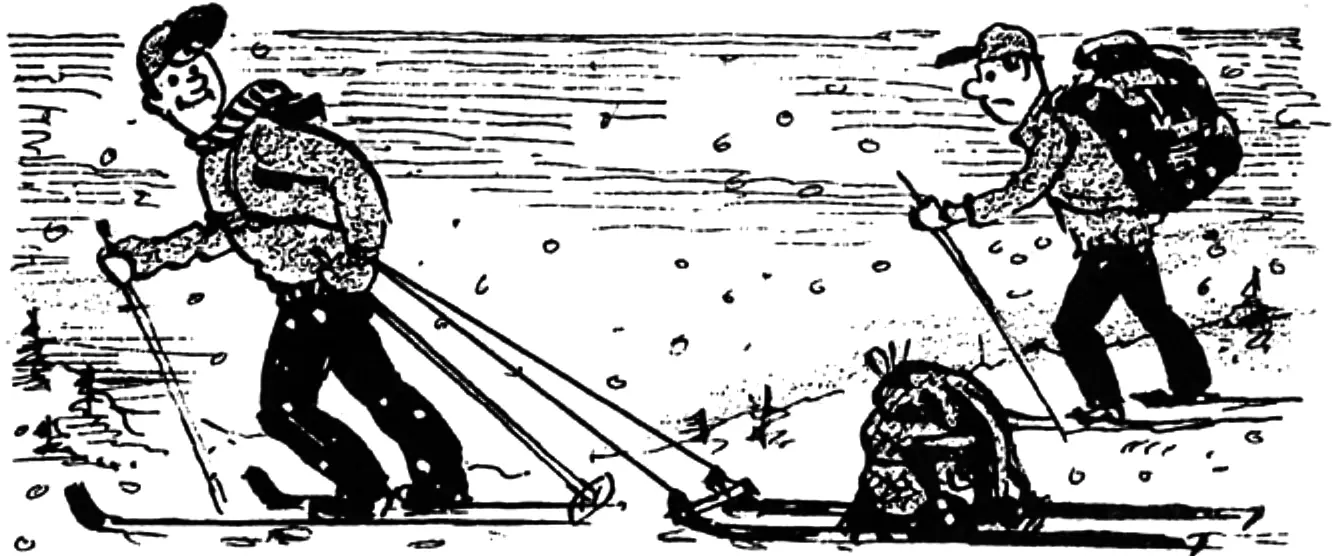
During winter trips to the dacha — to relax or for the produce stored in the garden — or on a weekend hiking outing, you may find yourself having to carry a heavy backpack. Hauling it on your back while walking through snowy terrain is not much fun.
Experienced hikers have a joking saying: “A smart person won’t climb the hill; a smart person will go around it.” In this case too, you can “go around” an unpleasant situation by shifting the load from your shoulders to a lightweight ski trailer, which, as the Hungarian magazine Ezermester reports, anyone can build.
The proposed design is intended for use with downhill skis — mounted in their bindings. However, the principle embodied in this construction can also be adapted to ordinary cross-country skis (and even children’s skis). In all cases, the skis can be easily removed from the trailer and used again for their primary purpose.
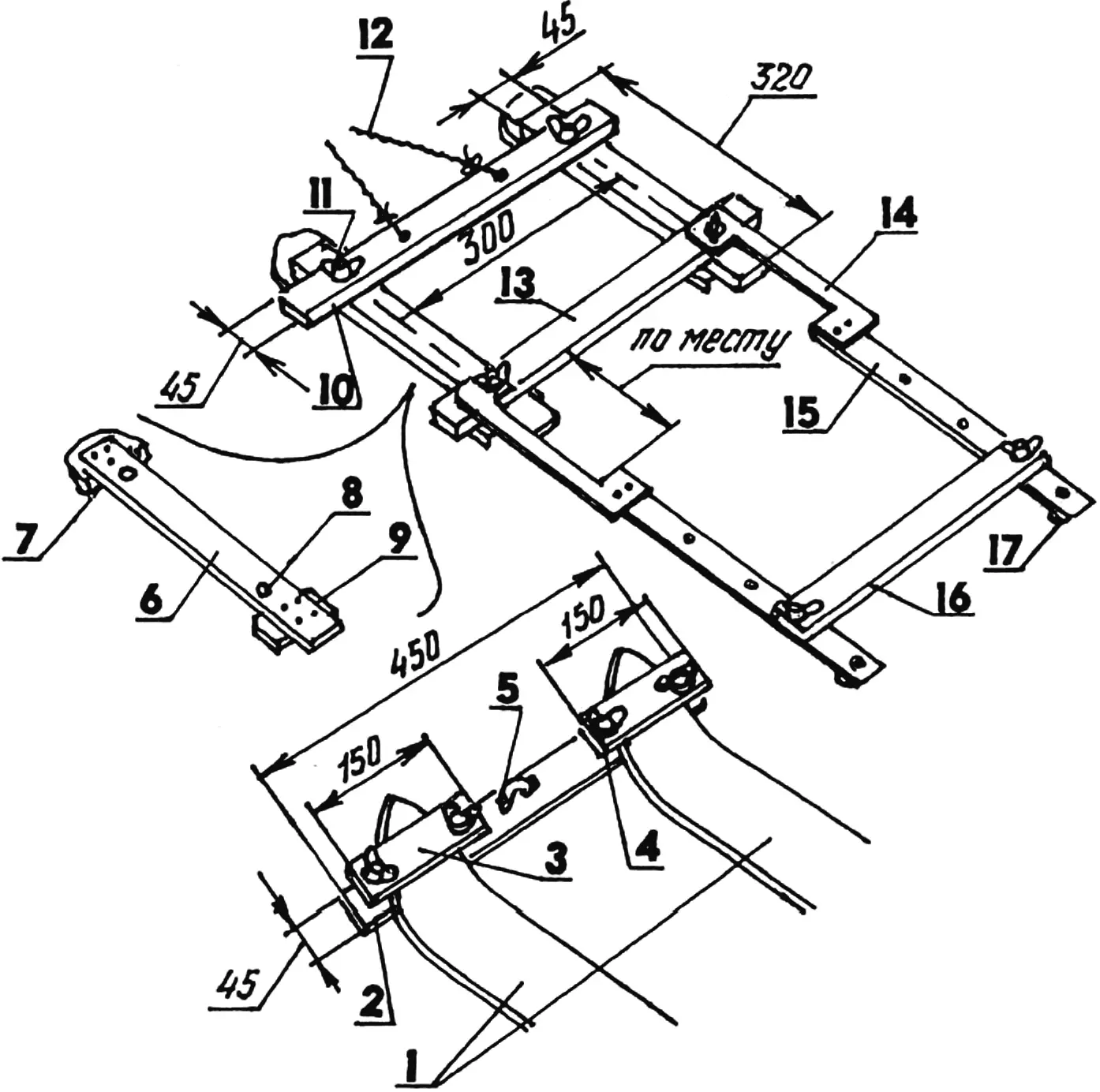
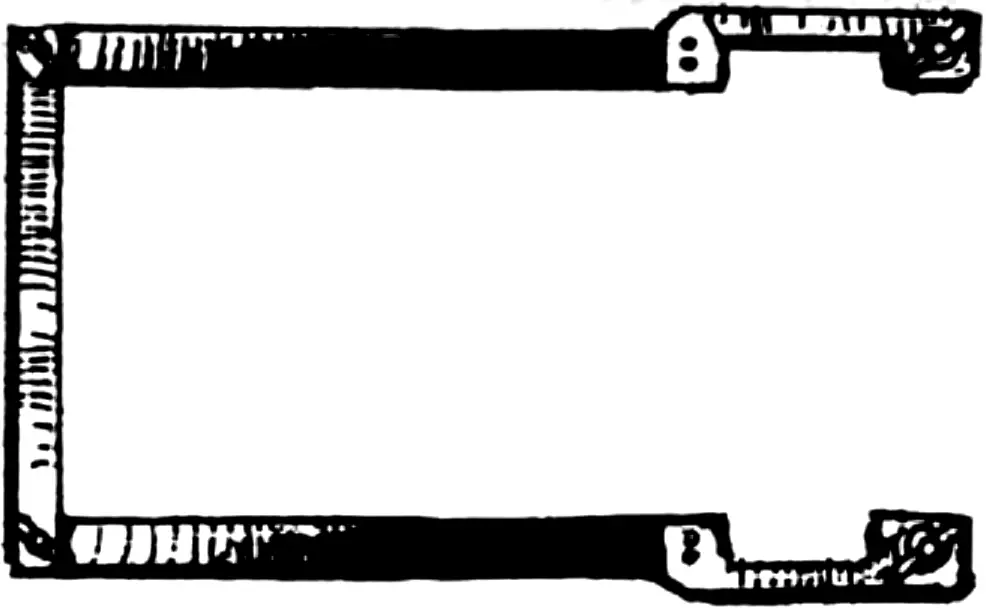
1 — skis; 2 — front cross member; 3 — overlay strip (2 pcs.); 4, 11 — wing nuts; 5 — front eyelet; 6 — cargo frame base strip (2 pcs.); 7 — front end piece for ski binding (2 pcs.); 8 — hole for fastening bolt (10 pcs.); 9 — metal bracket; 10, 13 — cargo frame cross member (2 pcs.); 12 — tow rope; 14 — metal bracket of the extension frame; 15 — extension frame side member (2 pcs.); 16 — extension frame cross member; 17 — heel piece (2 pcs.)
So how do the skis turn into a trailer? With the help of a very simple frame for a cargo platform, secured by the ski bindings, and a front assembly that links the ski tips together.
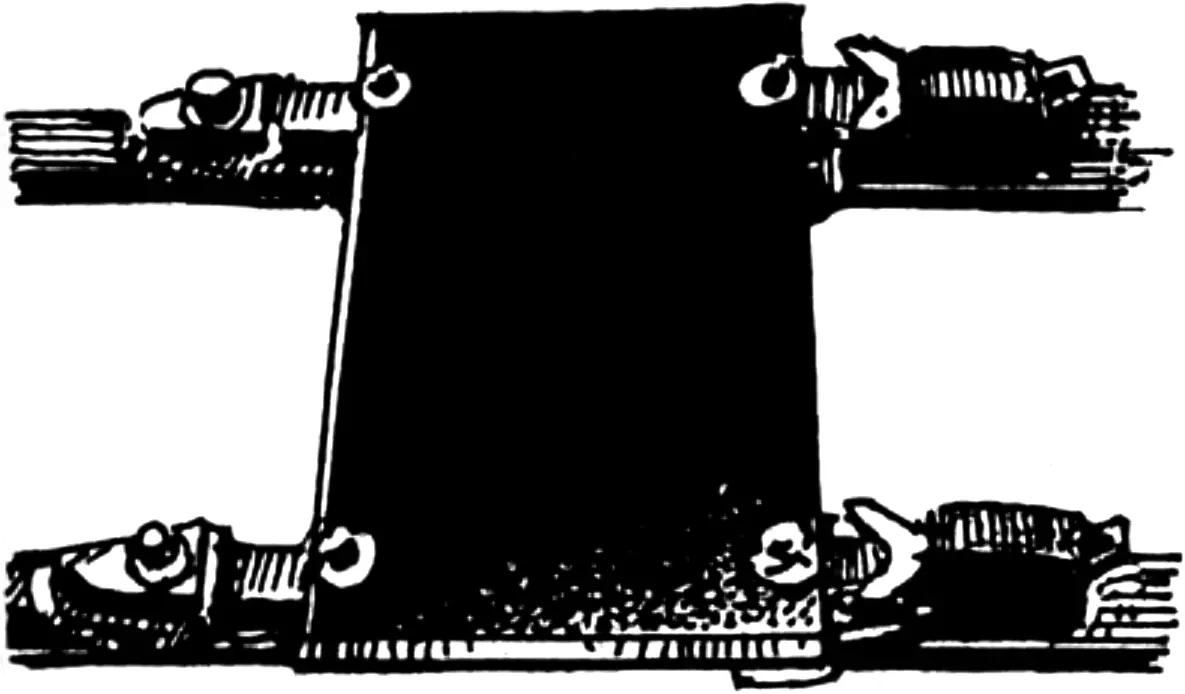
The frame consists of two longitudinal wooden strips — the base — and two cross strips. The longitudinal strips and their end pieces are sized so that they can be secured in the existing ski bindings. In addition, the rear ends of the strips have brackets underneath that prevent lateral displacement of the frame. The frame elements are assembled together with bolts and wing nuts. These same fasteners also hold the plywood cargo platform placed on the frame.
If desired, an extension frame for large loads can be added to this frame. Its front part has flat metal brackets that wrap around the rear ends of the ski bindings and are secured to the cargo platform frame. The side members and cross member of the extension frame can also be made of wooden strips joined together with bolts and wing nuts. The rear end pieces of the side members have heel pieces underneath that align the extension with the front frame.
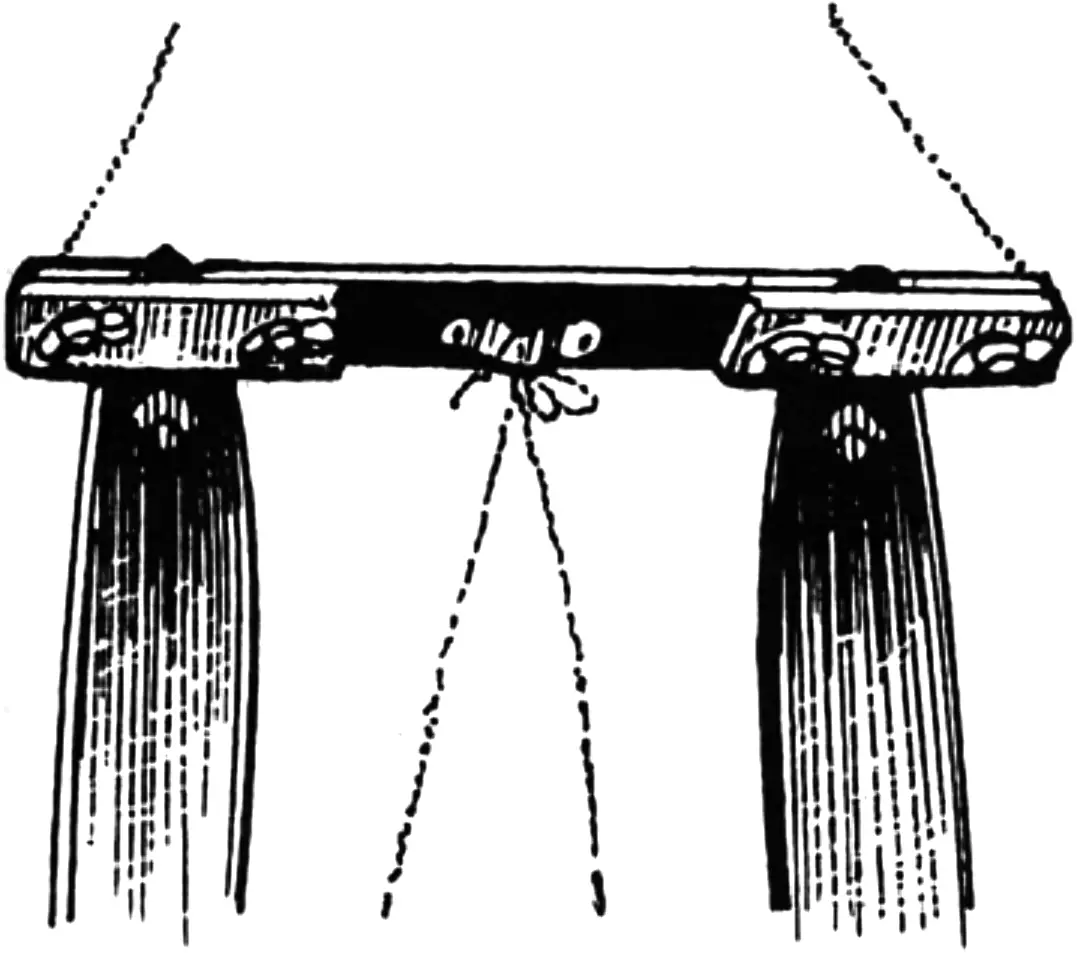
As for the trailer front assembly, it is built from one long cross strip and two short overlay strips: the latter are tightened with bolts and wing nuts, thus clamping the ski tips. Two tow ropes run forward from the front assembly, and safety ropes run backward from a metal eyelet mounted on the cross member to the cargo frame cross member.
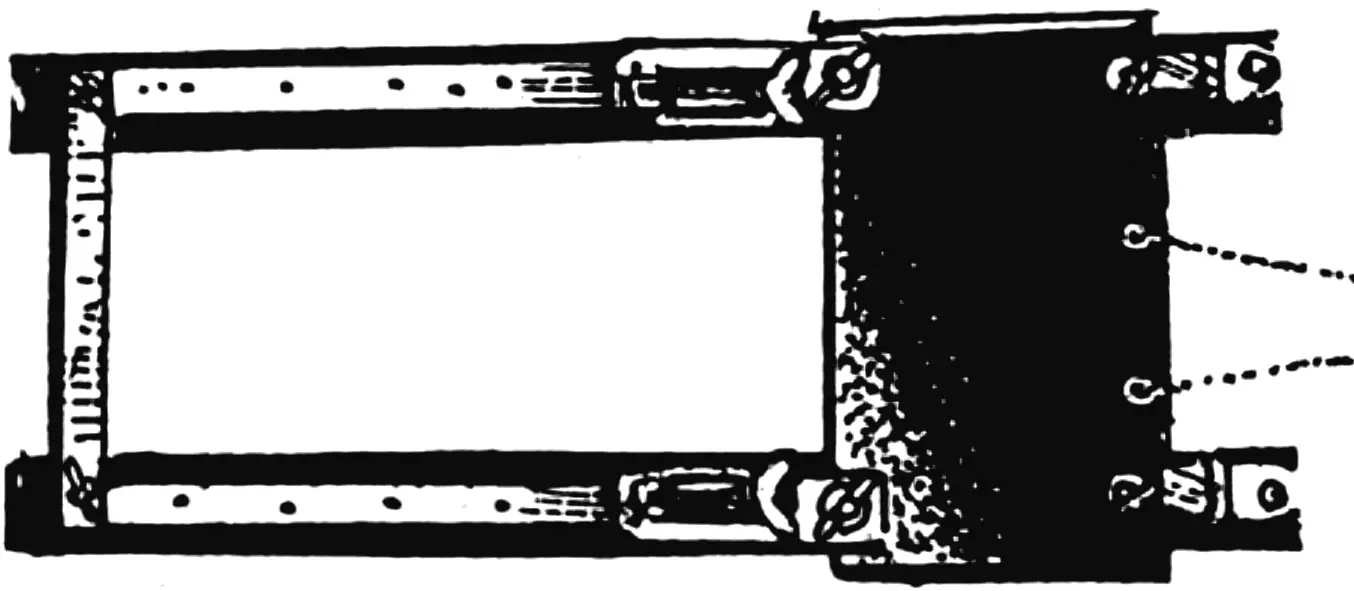
The result is a kind of flat sled suitable for transporting fairly bulky and heavy items.
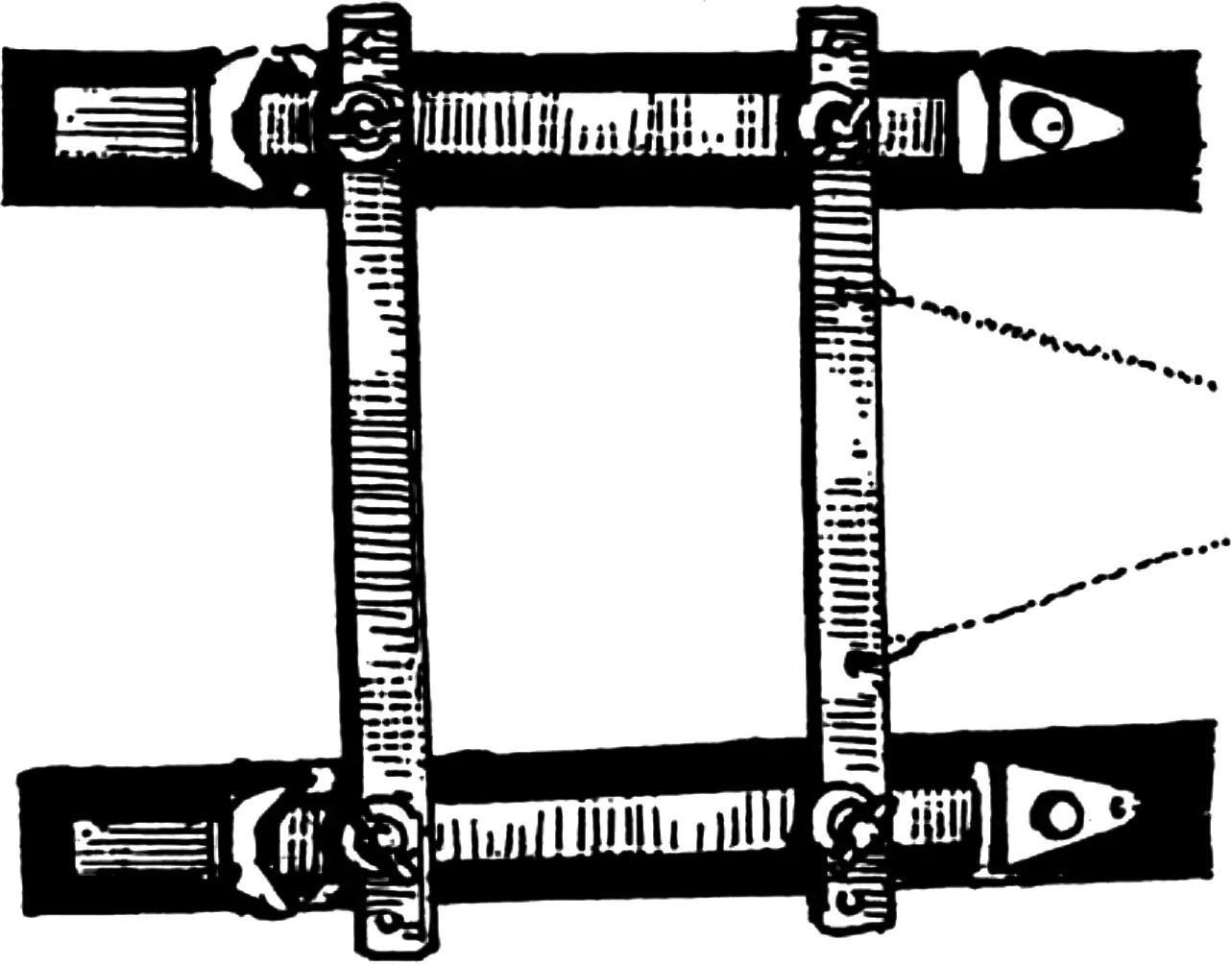
The use of wing-nut connections makes it easy and quick to assemble and disassemble this handy ski trailer.
Modelist-Konstruktor No. 12’2003
Recommend to read
 WITHOUT A BRUSH AND IS CONVENIENTLY
Offer an easy and convenient option of using paper glue sold in plastic bottles without a brush. On the lid of the bottle make a hole with a diameter under the core-tube of a ballpoint... AND REMEMBER, AND WILL GIVE A SIGNAL
Digital multimeter in a new role. Inexpensive digital multimeters M-830В today widely used not only in industry but also in everyday life: for example, to measure the voltage in the...
