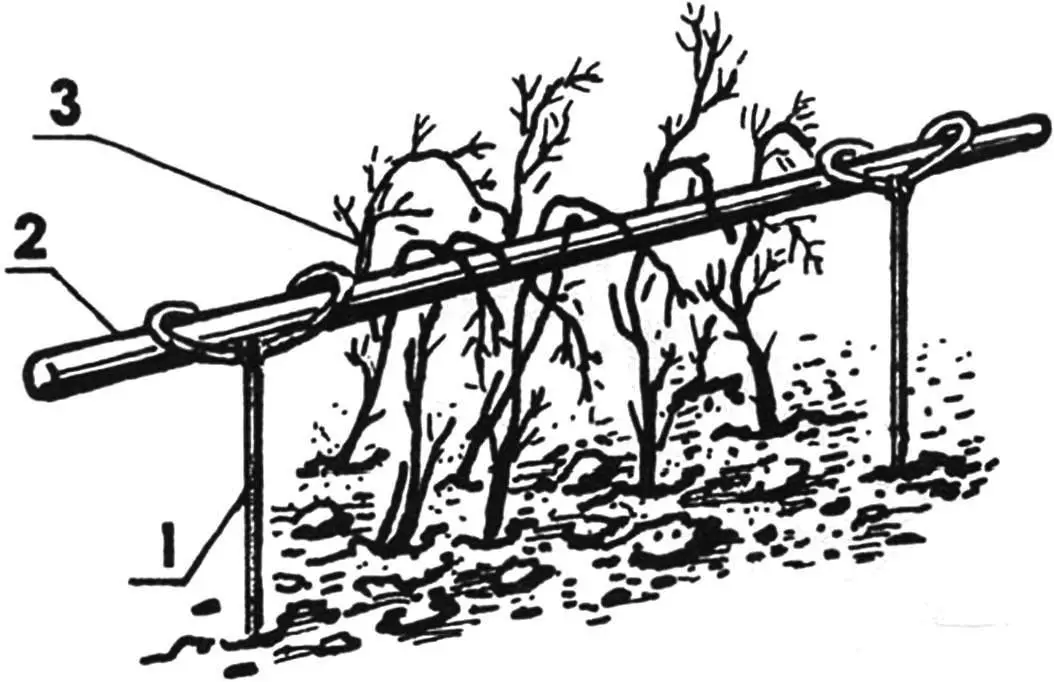
Transformable supports for currants, gooseberries, and other shrubs can be easily made from steel wire with a diameter of 5—8 mm (“rod wire”) and available materials like poles. And with minimal effort and time.
The supports will be segments of “rod wire” after their lower ends are sharpened and the upper ends are bent into a figure-eight shape. The rings of such springy figure-eights need to be turned at an angle to each other and, after inserting metal or plastic tubes, wooden sticks — the future crossbars — inside, allow the “self-gripping” rings to slightly straighten.
The reliability of the resulting connection is, as they say, guaranteed!
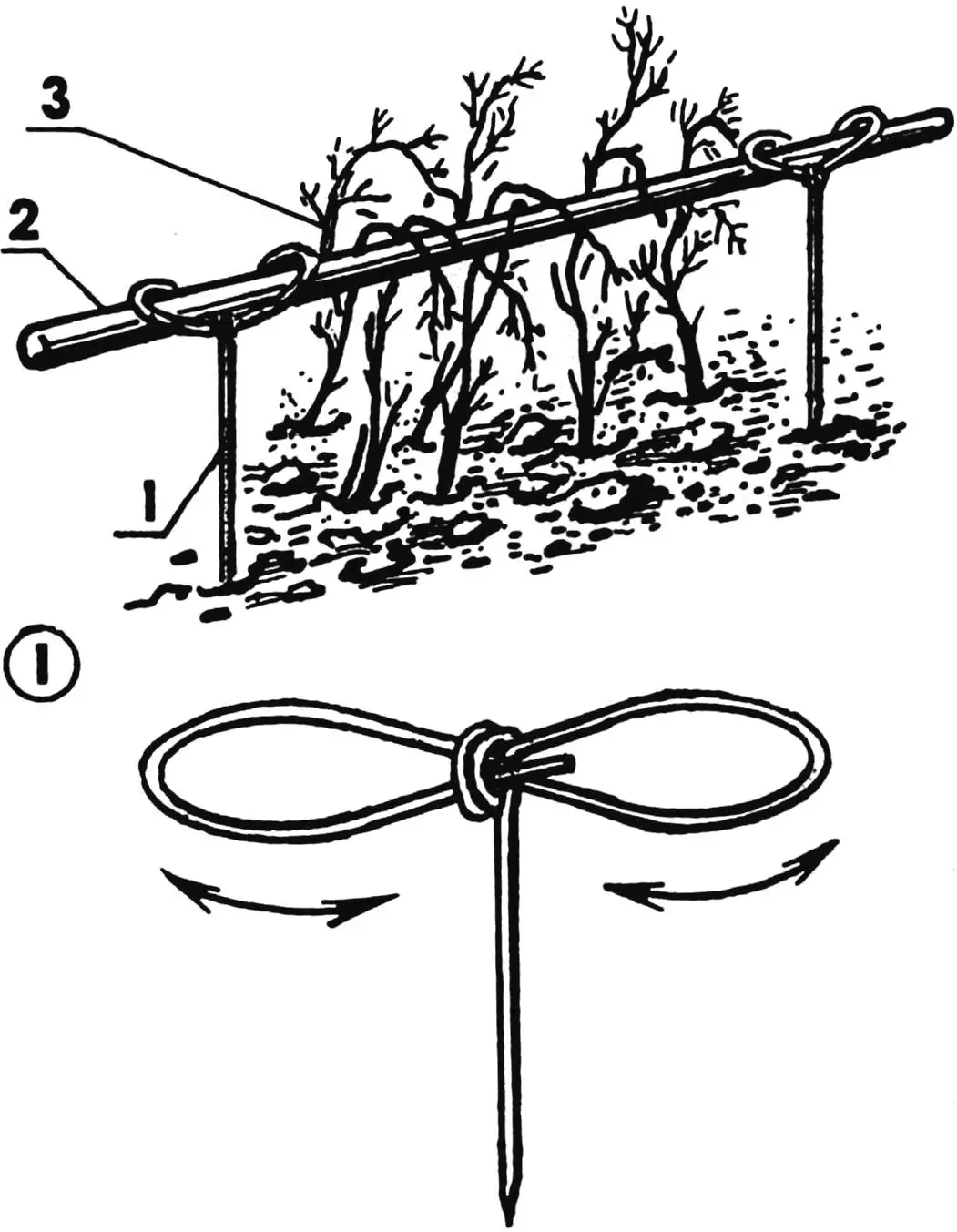
1 — twisted support (steel wire Ø5…8); 2 — crossbar; 3 — shrub that has gained support
Those who grow tall varieties of tomatoes are certainly familiar with the situation when there is an urgent need to tie stems to supports, and there seems to be nothing suitable at hand. True, there are unused remnants of wire in vinyl insulation lying in the storeroom, but what use are they…
But the most effective and direct! Remember how children sometimes skillfully and carefully wrap an uneaten candy in a beautiful “wrapper.” Remembered? So get to work!
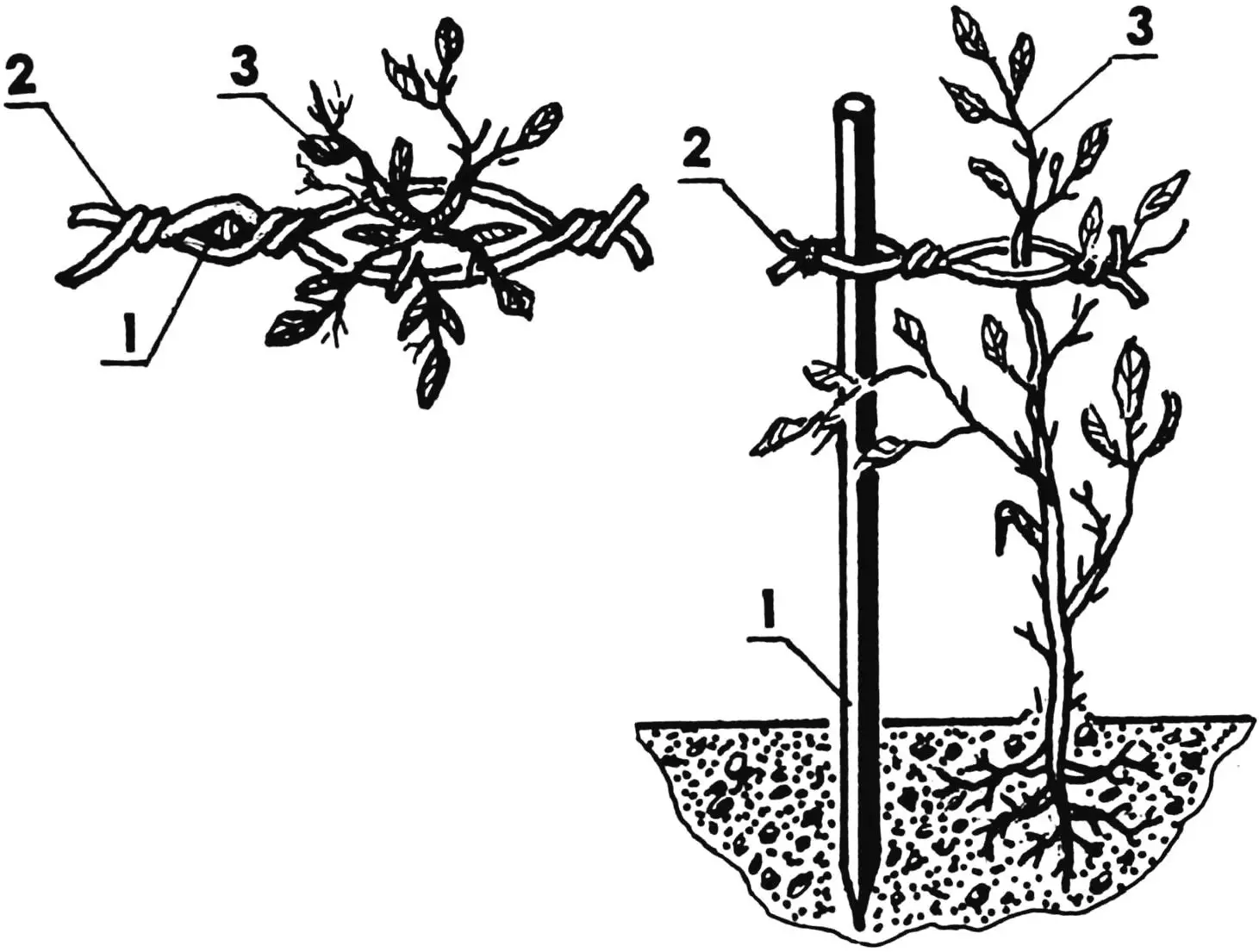
1 — support; 2 — wire in polyvinyl chloride insulation; 3 — plant being tied
Take 50—60 mm pieces of wire (preferably double, “ribbon” type) in polyvinyl chloride insulation and use them to tie tomatoes to vertical supports. With intensive growth of bushes, you can add a new tie, move or loosen an old one.
In autumn, remove the ties (this is done very easily), straighten them, briefly dip them in a disinfecting solution of copper sulfate. Then dry and store until the next season.
Such ties are convenient, practical, and last a long time.
B. NIKOLAYEV, Khmelnytsky region, Ukraine
Recommend to read
 NOT TO “SUNBATHE” ON THE SIDE
The motor "cut" suddenly, unexpectedly. Include prasu "flasher", I pulled over to the side. The sudden failure of the engine of the motorcycle has a simple explanation: ran out of fuel.... PLATE HOSTESS-CHISTYULI
Neat woman, always worried if the cooker escapes milk or zarazhayutsya fat burners from the naked red-hot pans. Moreover, the penetration is not so easy to clean. A small trick will save...
