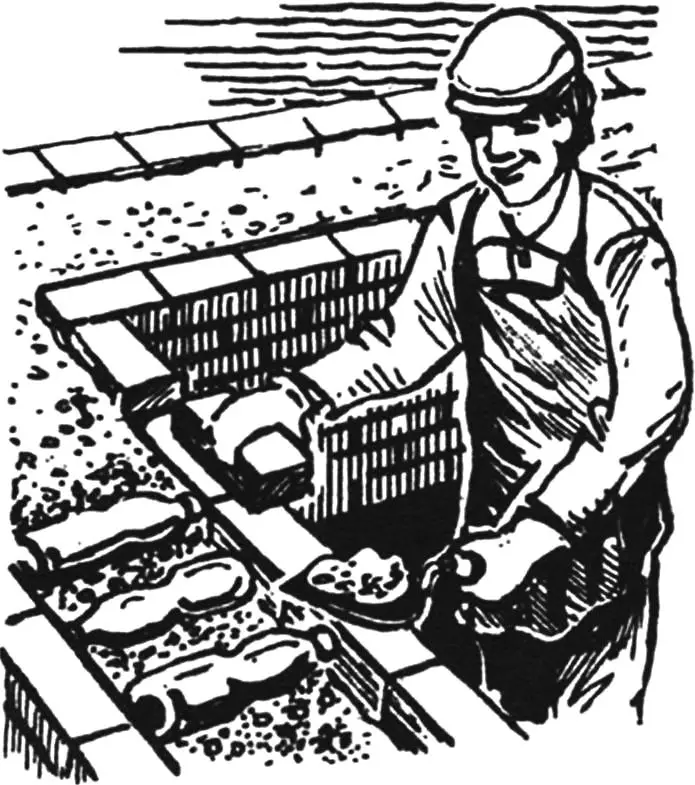
I have been a loyal reader of your magazine for more than 25 years. Responding to your call to subscribers to be not only readers but also active authors, I decided to share an interesting technology based on which I built my residential house: while erecting the walls, I widely used plastic bottle containers. I think that nothing like this has been published in the press during these years. True, I remember that about 15 years ago, one of the magazines ran an article about a craftsman who built a house from empty glass containers, but that is the kind of single-case story. My experience is more accessible and may be useful to many.
At first glance, it is an ordinary two-story brick house—one of millions like it today. However, for its construction, compared with traditional technologies, we spent almost twice less of expensive building materials—cement, crushed stone, and brick—which, by today’s standards, is very important. Moreover, the geographical and climatic features of our Saratov region, where summer heat reaches up to 40°C, and winter frosts drop below 30°C, impose special requirements on buildings: the house must have thick, solid walls that retain heat well during cold periods and, on the contrary, ensure cool conditions inside during the hot season.
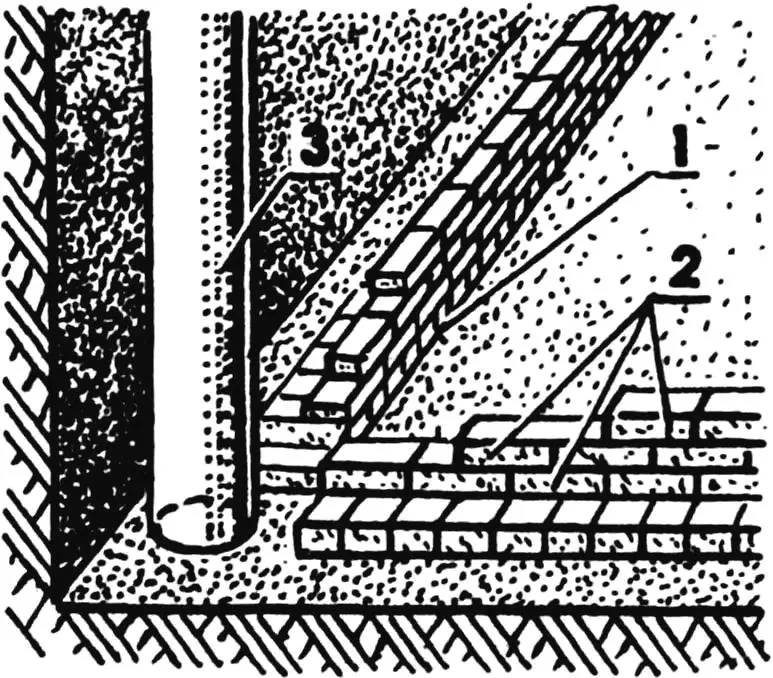
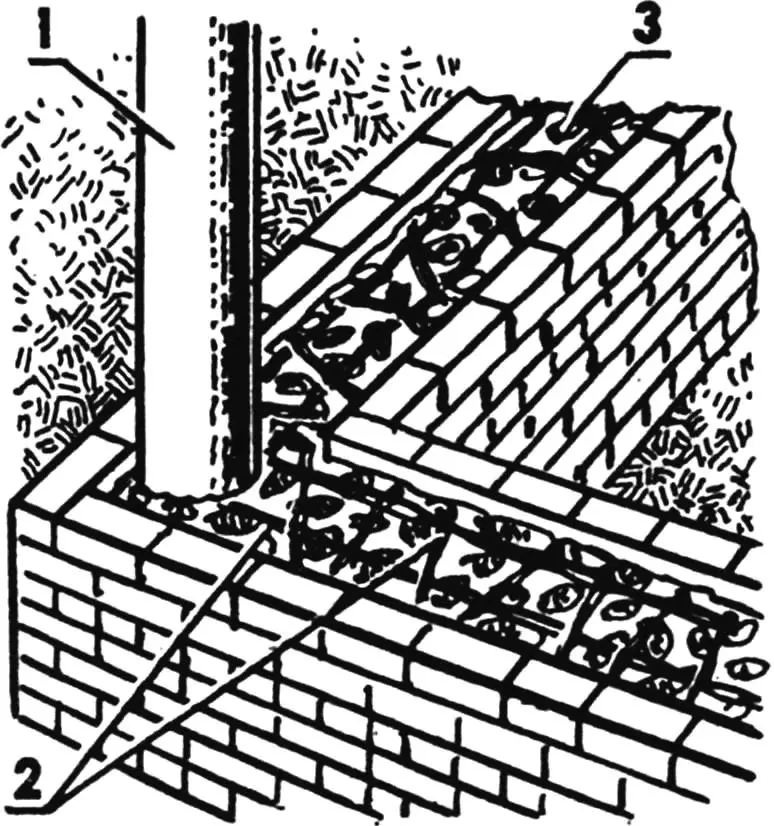
1 — first row of bricks; 2 — subsequent rows; 3 — corner ventilation pipe.
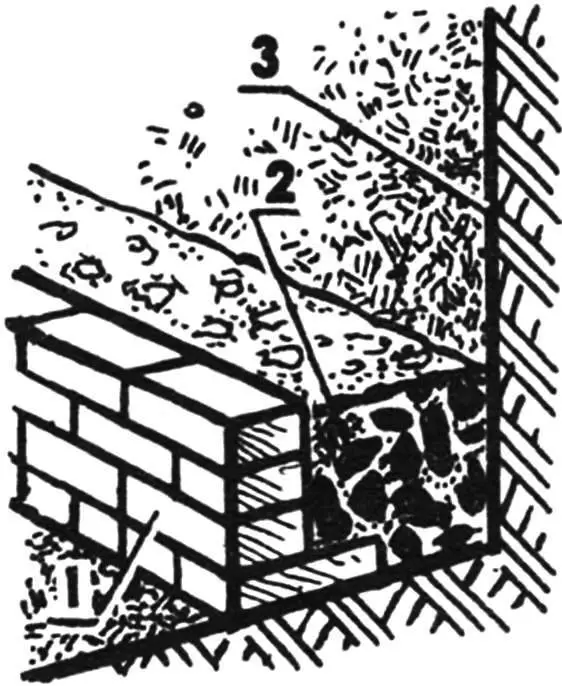
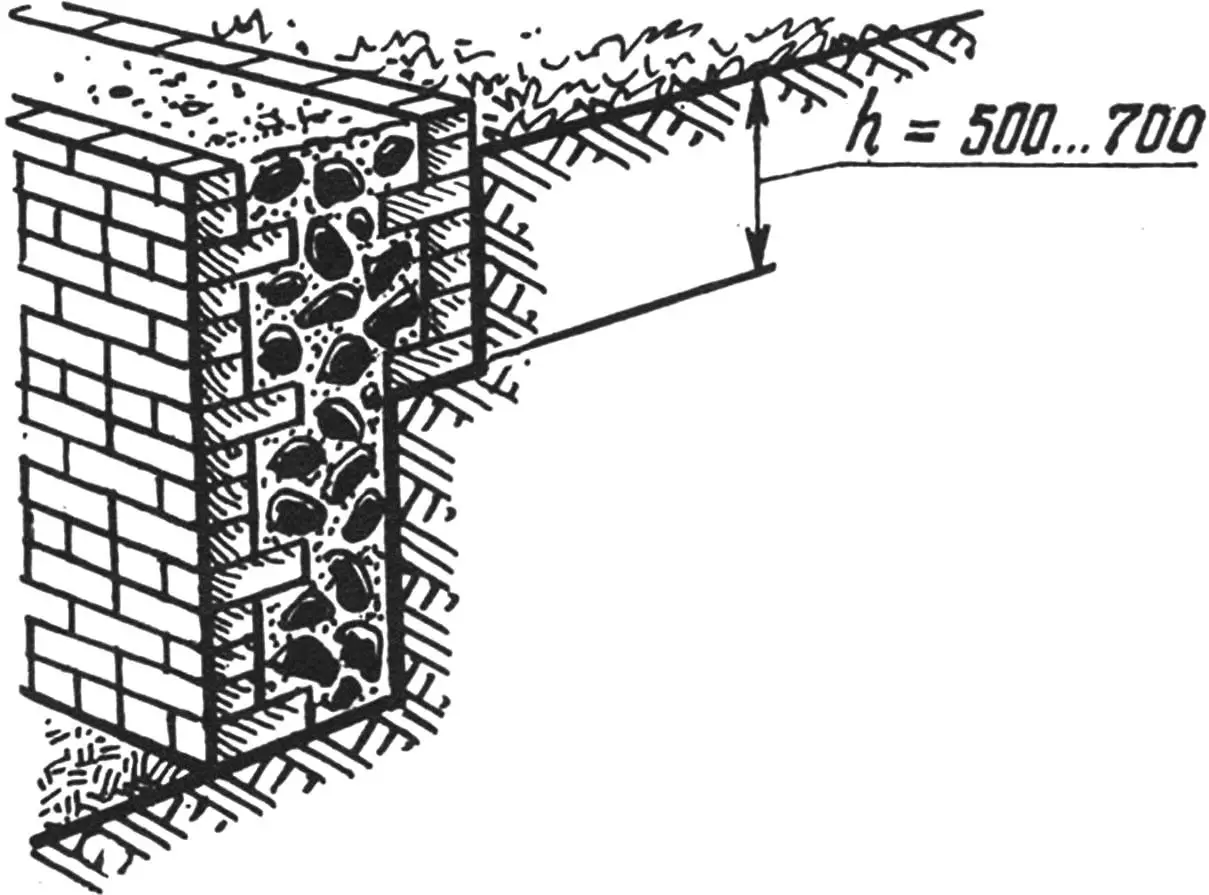
1 — brick wall-formwork; 2 — rubble concrete; 3 — excavation wall.
The overall scheme of building the house is classic. Construction began with digging a pit, making its sides strictly vertical. Stepping back from them by the width of the future foundation (300—500 mm), we laid a row of red brick along the perimeter: flat on the bed, with the larger face tightly against the next (Fig. 1). On top of that — three rows laid in one brick as well, also flat on the bed, but along the perimeter, joining with their end faces. This produced a wall that at the same time serves as formwork: after a couple of hours, when the cement set, rubble (brick scraps, stones, concrete and metal waste calculated at about 50 percent of the volume) was thrown behind it and the whole thing was filled with mortar (Fig. 2). A hand tamper was used to work through all possible voids and gaps. At the corners, old metal pipes were installed vertically in advance (asbestos-cement pipes can also be used, with a diameter of 80—300 mm) for later use for ventilation, running electrical wiring, and other needs.
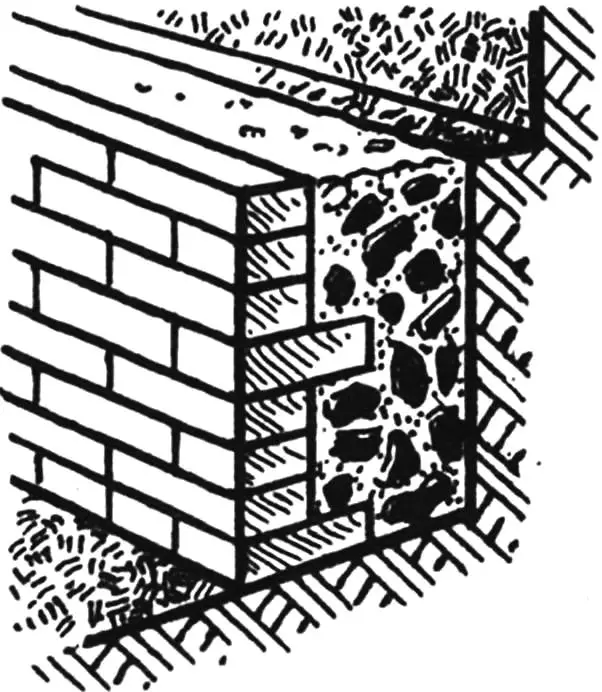
This laying scheme was kept for the further work (Fig. 3), all the way up to the widened (stepped) portion of the pit (about half a meter before the so-called zero mark): beyond that, two-sided brickwork with rubble concrete infill was carried out (Fig. 4).
With an eight-hour workday, two people laid the basement — which is also the foundation — with dimensions of 6x6x2 m in two weeks.
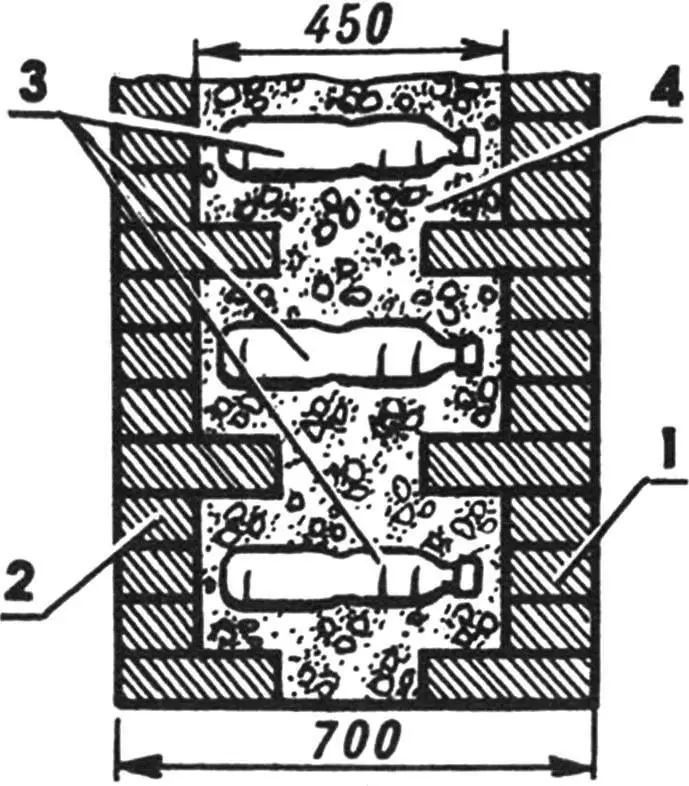
1 — inner wall masonry; 2 — outer wall masonry; 3 — plastic bottles, embedded elements; 4 — concrete infill.
The walls were erected, in principle, using the same scheme—brickwork simultaneously becomes the formwork. Even the orderings are the same: one row in a brick, three rows in half a brick. But when filling the gaps with mortar, plastic bottle containers were used. This infill turned out to be the most optimal: placed horizontally (Fig. 5), 1.5–2 L bottles fit perfectly into the space between the brick walls, which for our region should be 450 mm—sufficient to install the third frame.
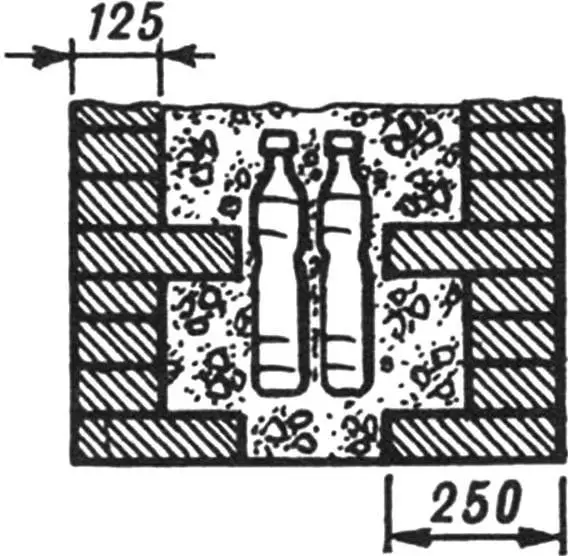
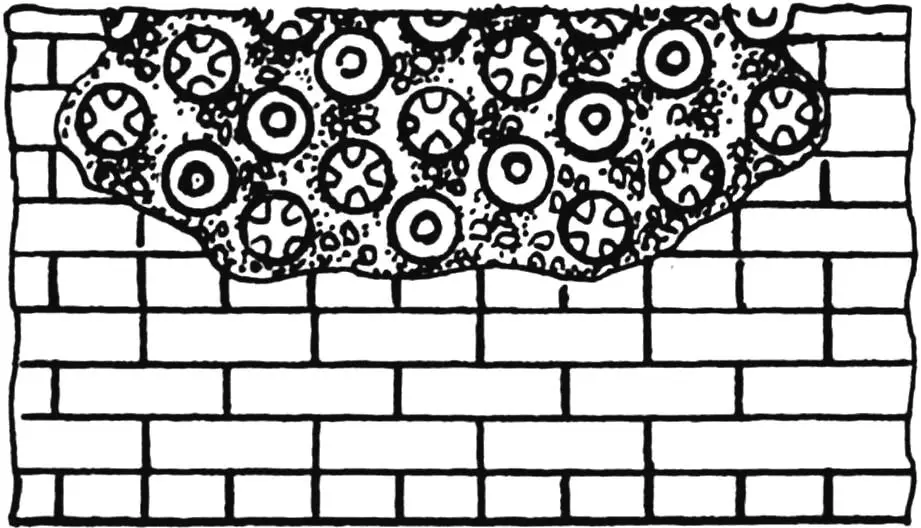
During the work, variants of embedding the bottles appeared: vertical placement (Fig. 6) and a denser horizontal arrangement in a checkerboard pattern (Fig. 7). Practice has shown that it is preferable to use bottles with screw caps; if caps are missing, the bottles should be placed with their necks down, pressing them into the mortar for tightness; otherwise, under the weight of concrete they lose their shape, flatten, and the point of using them disappears.
1 — ventilation pipe; 2 — metal reinforcement; 3 — concrete.
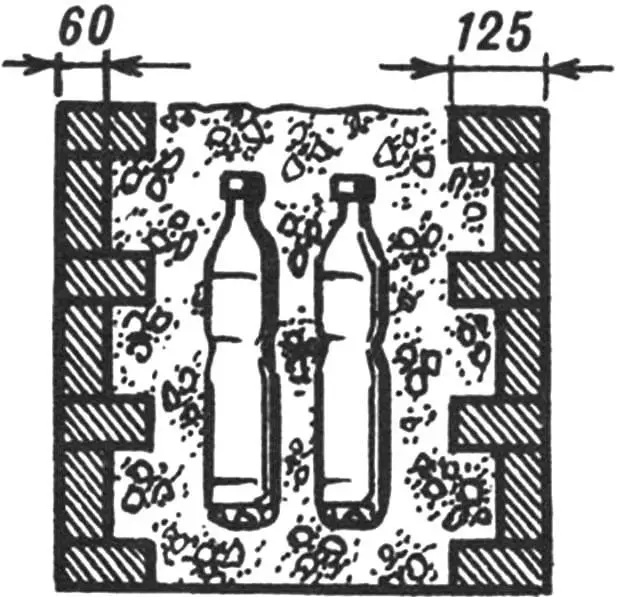
As a rule of thumb, this infill occupies up to 50 percent of the volume of the concrete mass. It may be more, but then, for strength, some metal reinforcement must be embedded. Our neighbors use all the “riches” of today’s dumps as infill: paint cans, toys, glass containers. However, plastic bottles are beyond competition: convenient, environmentally clean, and for thermal and sound insulation qualities—far above all praise.
At the corners, where, as already mentioned, ventilation pipes are installed, additional reinforcement is embedded (Fig. 8).
When we gained some experience building the walls, the second floor already had a different ordering: one course in half a brick, and one course with bricks laid on their edge (Fig. 9). Interestingly, the wall build-up rate remained roughly the same as on the first floor.
Over the past five-plus years, we have had houses standing that were built using the described technology or using its elements. Reviews are only positive.
We would be glad if our experience could be useful to some of the readers.
«Modelist-konstruktor» No. 5’2000, A. BONDAREV
Recommend to read
 REVERSE GEAR
"Acquired motor brand Bouzid, going to use it on microstructure. But faced with the difficulties of linking the power transmission from the engine to the wheels, and the reversal of the... DRILL-IMPROMPTU
If there is an urgent need to punch a hole in the tree, but you don't have suitable drill, you can make... of the nail. Asclepia it on the end as shown in the drawing, and sharpen edges...
