Regular subscribers know that our publication pays considerable attention to individual construction. By regularly publishing various house projects and thus communicating with reader-builders, we have found that many novice builder-cottagers have a poor understanding of the house construction process itself.
Finnish builder and teacher Renti Jormalainen tells about the initial stage of building a home.
Choosing the Type of House
The choice of residential house type is largely determined by the size, configuration, and character of the land plot.
In the house design process, they proceed primarily from the family size, its lifestyle, and the nature of each member’s interests. It is also very important when drawing up the project to consider possible family development prospects over a long period. It is completely insufficient, for example, to look ahead only 3-5 years. Such a short-term forecast can lead to the fact that in, say, 10 years, the house will have extra unused rooms or, conversely, there will not be enough of them. This is especially significant when building a wooden house, whose service life is, as a rule, at least 50 years. Therefore, when choosing the type of house, the following factors should be taken into account – family size and the probability of its change over the years; the possibility of using all rooms for their main purpose depending on changing circumstances; the possibility of house reconstruction; the overall service life of the dwelling.
When starting to design a house, they first ask such questions: what is mandatory? what is desirable? (within available financial capabilities), what can and should be abandoned?
Abroad, the design principle is: one living room per family member. In this case, the kitchen is not counted as a room.
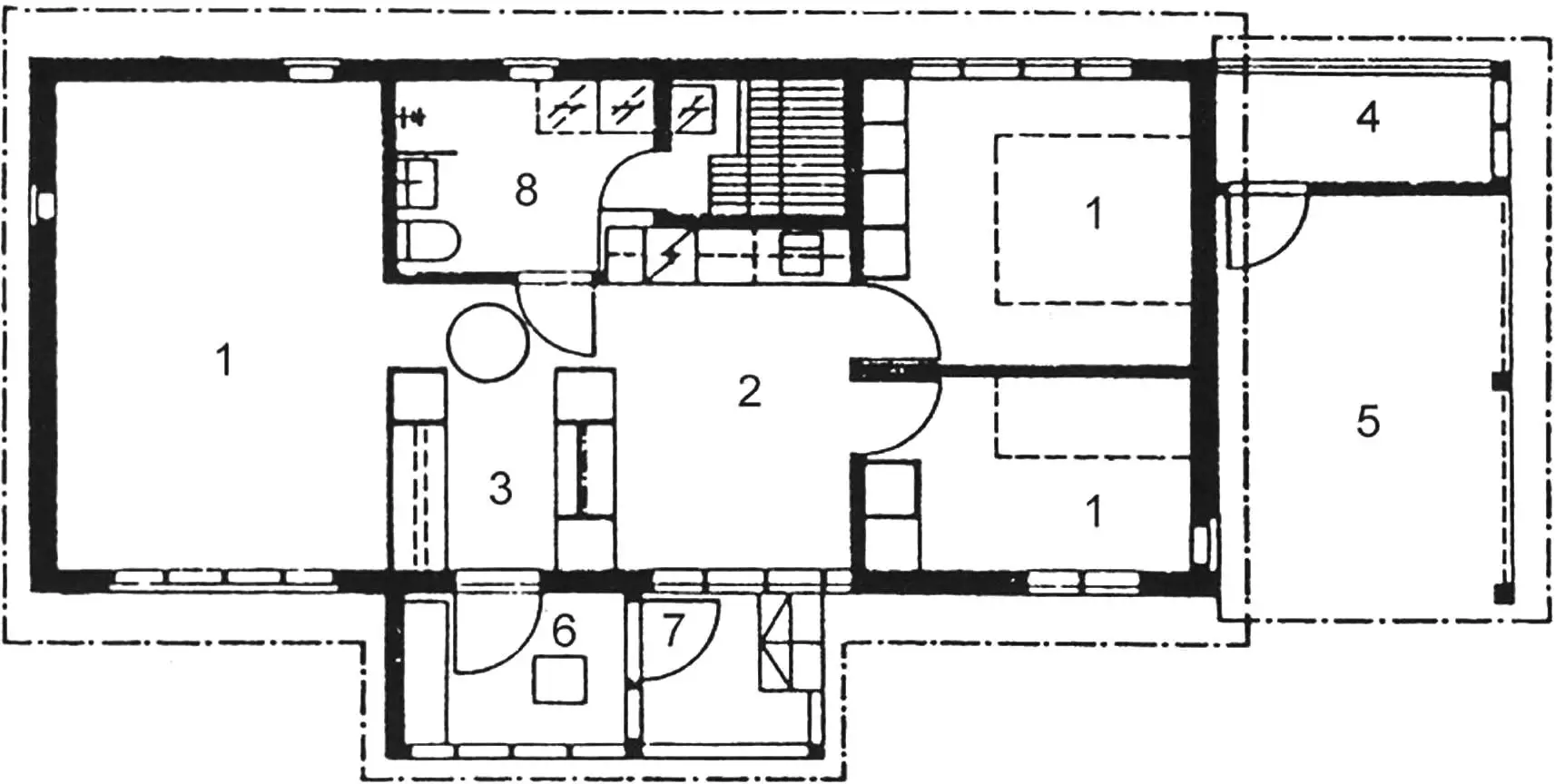
1 – living rooms (living room, bedroom and children’s room); 2 – kitchen; 3 – hallway; 4 – pantry; 5 – garage; 6 – vestibule; 7 – porch; 8 – bathroom (toilet and sauna)
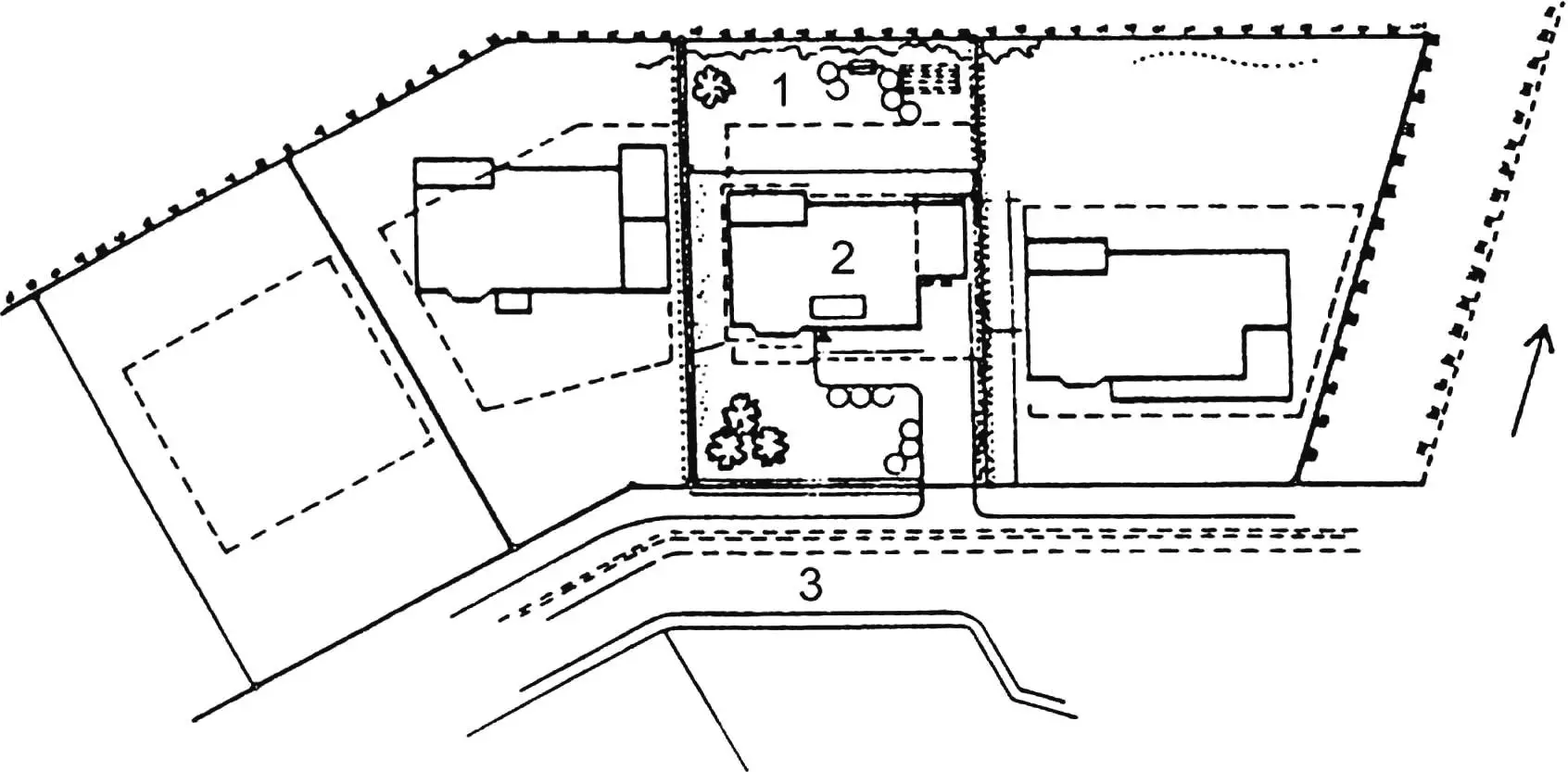
1 – part of the site with preservation of natural growth; 2 – residential part of the house; 3 – country road
A dwelling for a family of 3-4 people is shown in figure 1. Having chosen the type of house and number of rooms, one can proceed to study the conditions that depend on the size and location of the land plot, as well as on regulatory requirements (building codes). For example, in Finland, construction in settlements is determined by the detailed plan project regulation. It regulates for each block or its part the roof form, facing materials and facade color, number of floors, roofing material, etc. A fragment of the detailed plan project is shown in figure 2.
Placing the House on the Land Plot
The building must be located at a distance of at least 5 m from the land plot boundary. To avoid irrational use of land, for arranging car access, the house is best placed in the part of the plot that is located closer to the road. A plot of at least 2.5×5 m should be allocated for car parking (fig. 3). If a hard surface is provided, the minimum dimensions are 2.7×5.5 m. Taking these conditions into account, a preliminary scheme of structure placement is drawn up (fig. 5).
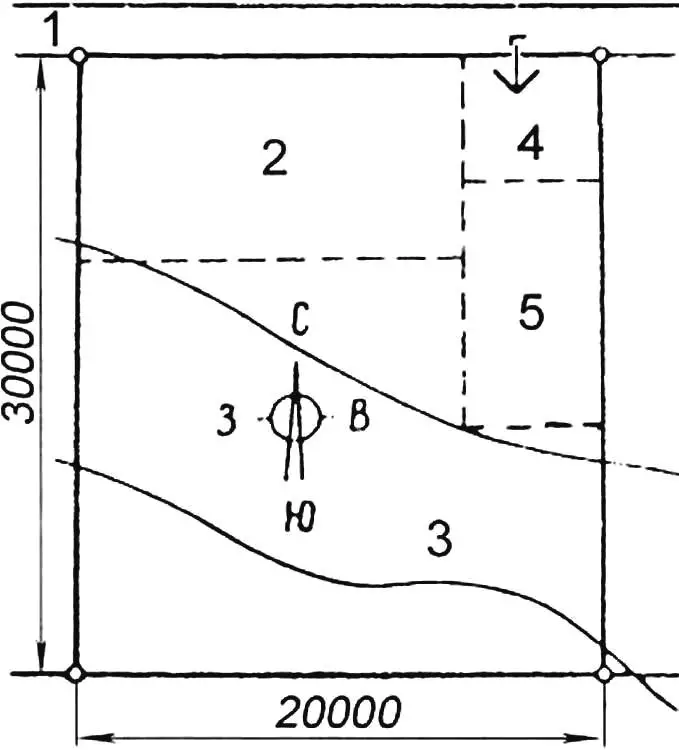
1 – road; 2 – place for a separate garage; 3 – free zone; 4 – plot entrance; 5 – recreation area
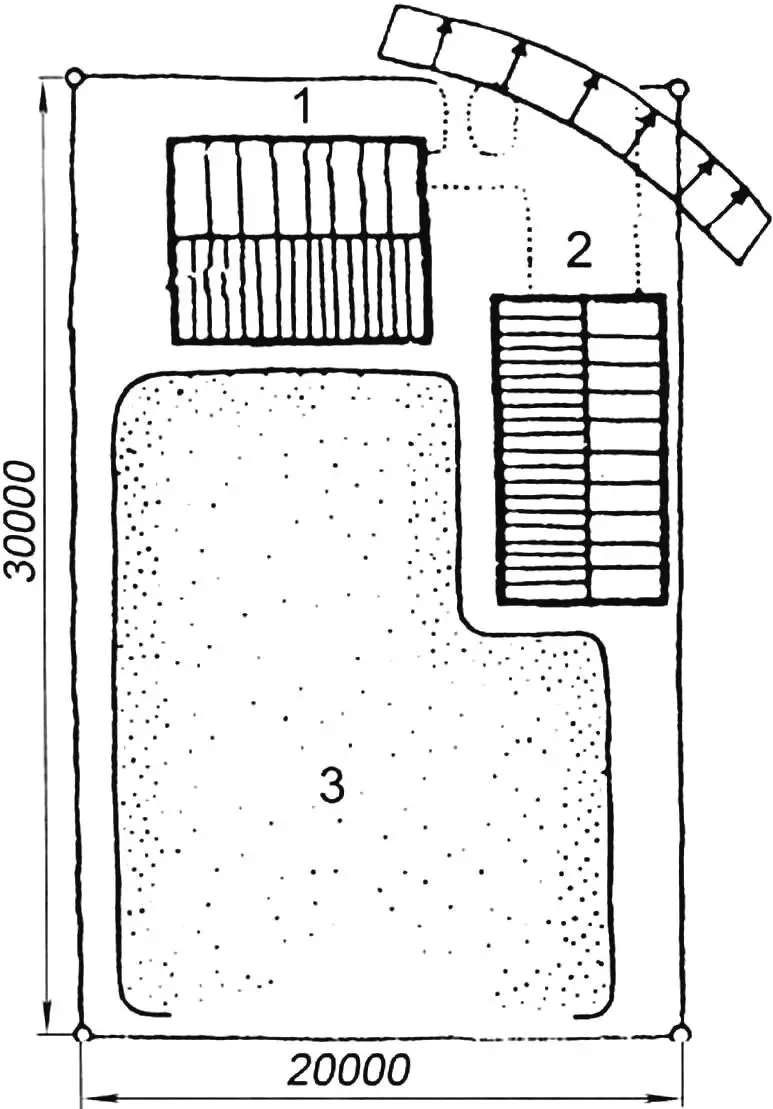
1 – garden-vegetable garden; 2 – berry bushes; 3 – lawn area
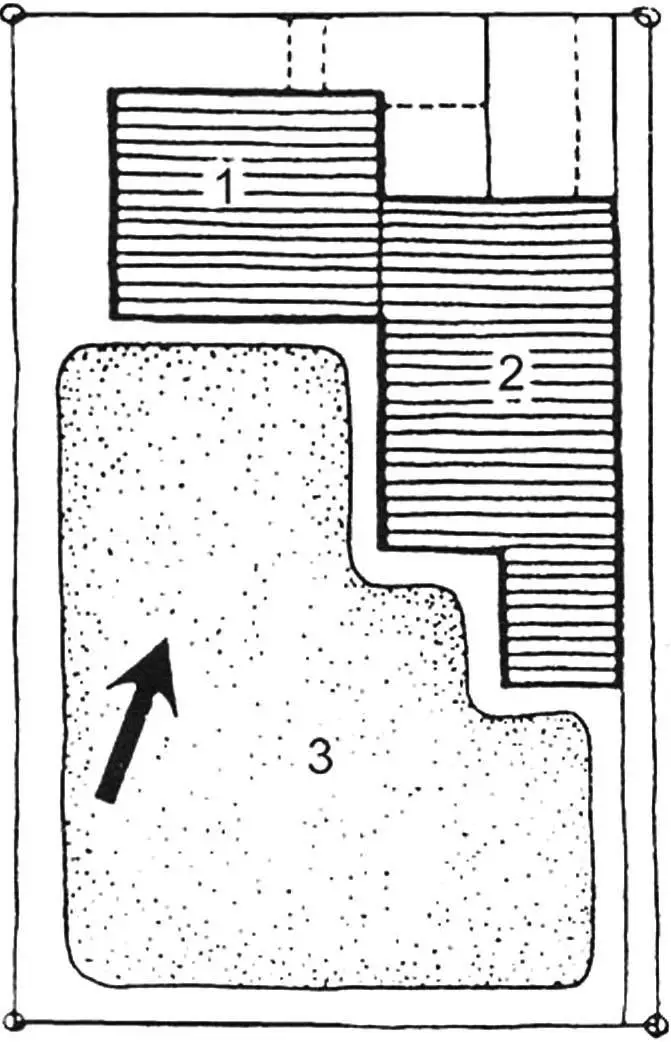
1 – residential house; 2 – utility block with garage; 3 – garden-vegetable garden
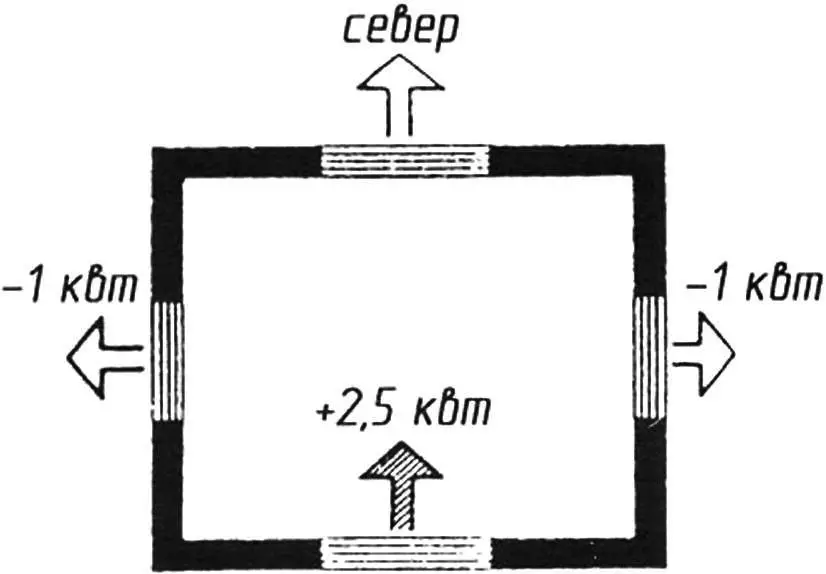
Living rooms are oriented to the south to best utilize solar thermal energy. This allows reducing heating costs. Auxiliary and utility rooms, including the sauna (bathhouse), bathroom, etc., are placed on the colder, northern side. When installing windows with triple glazing, it should also be taken into account that windows on the south side let in more heat (fig. 6).
Thoughtful house placement and proper choice of foundation height considering the plot relief significantly reduce the volume of earthworks, including those related to digging the foundation pit and backfilling (fig. 8).
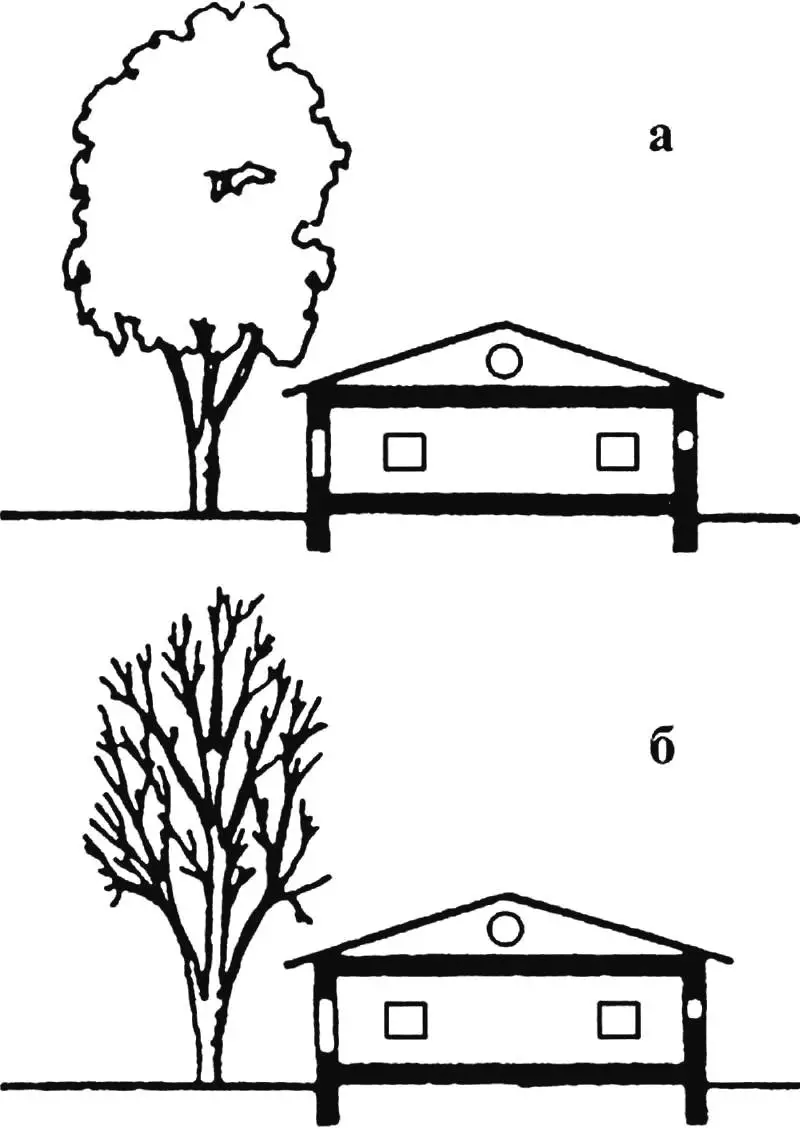
a – incorrect; b – correct
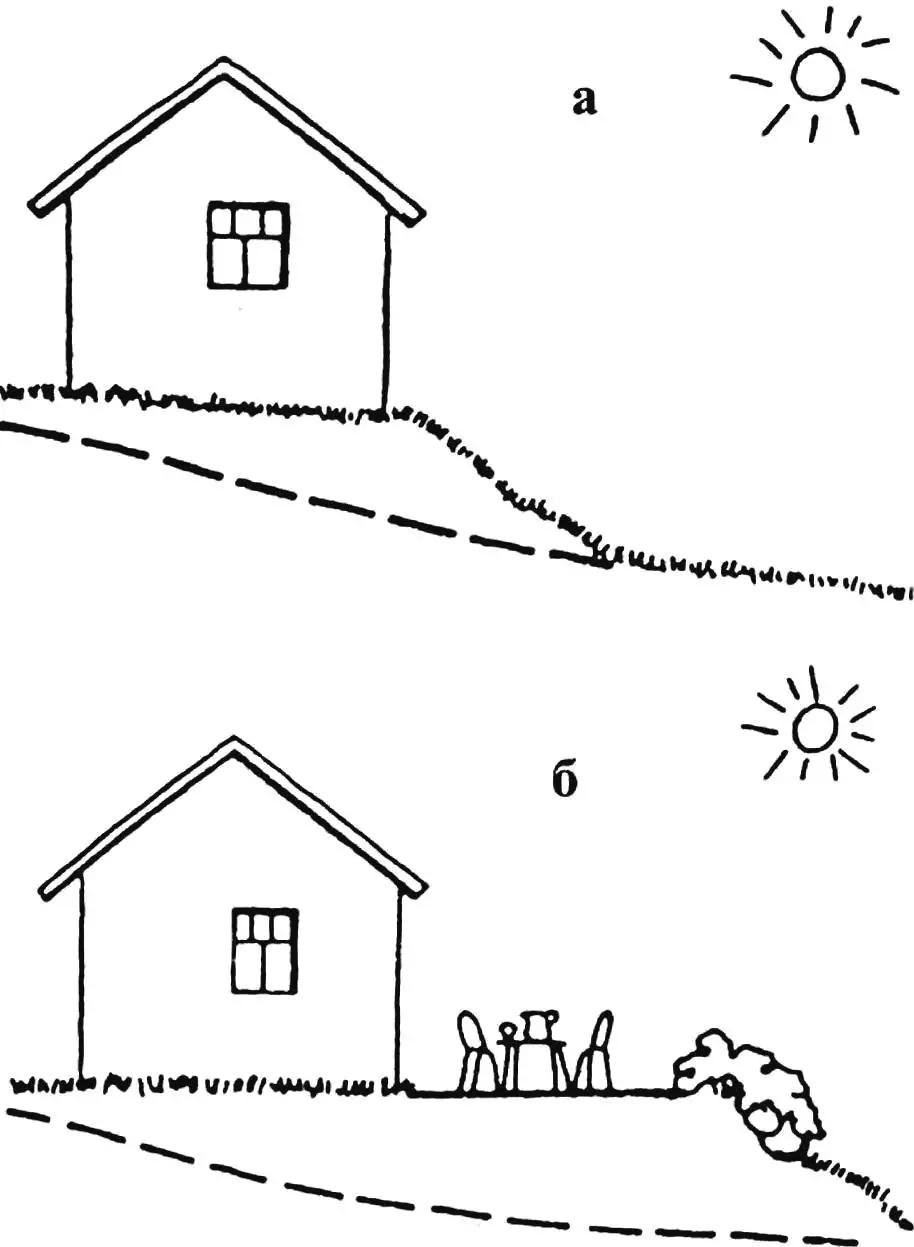
The foundation height relative to the ground surface should be such that surface water runoff is diverted from the building into the soil and unnecessary backfilling work can be avoided.
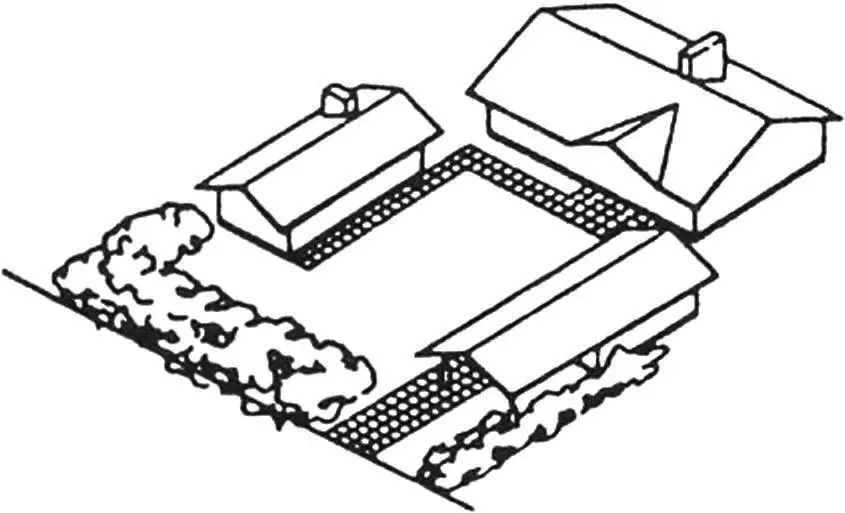
Some of the trees on the plot should preferably be preserved (fig. 2), especially those located on the northern side: they will protect the building from cold wind. Yard buildings should be placed as shown in figure 7. In this case, they will also protect the house from wind.
R. JORMALAINEN
Recommend to read
 CANDLE AGAINST RUST
Much easier to remove rust from any parts, if its surface is pre-treated with a special compound which is easy to make at home. To do this, simply chop the wax (i.e. candle) in a small... INSTEAD OF THE SPINNERS — THE RUBBER MOTOR
Hand drill — the same one that we, the modelers, and then put out for winding the rubber motor, — not the best fixture. She's heavy, and bulky. Much more convenient to use for this...
