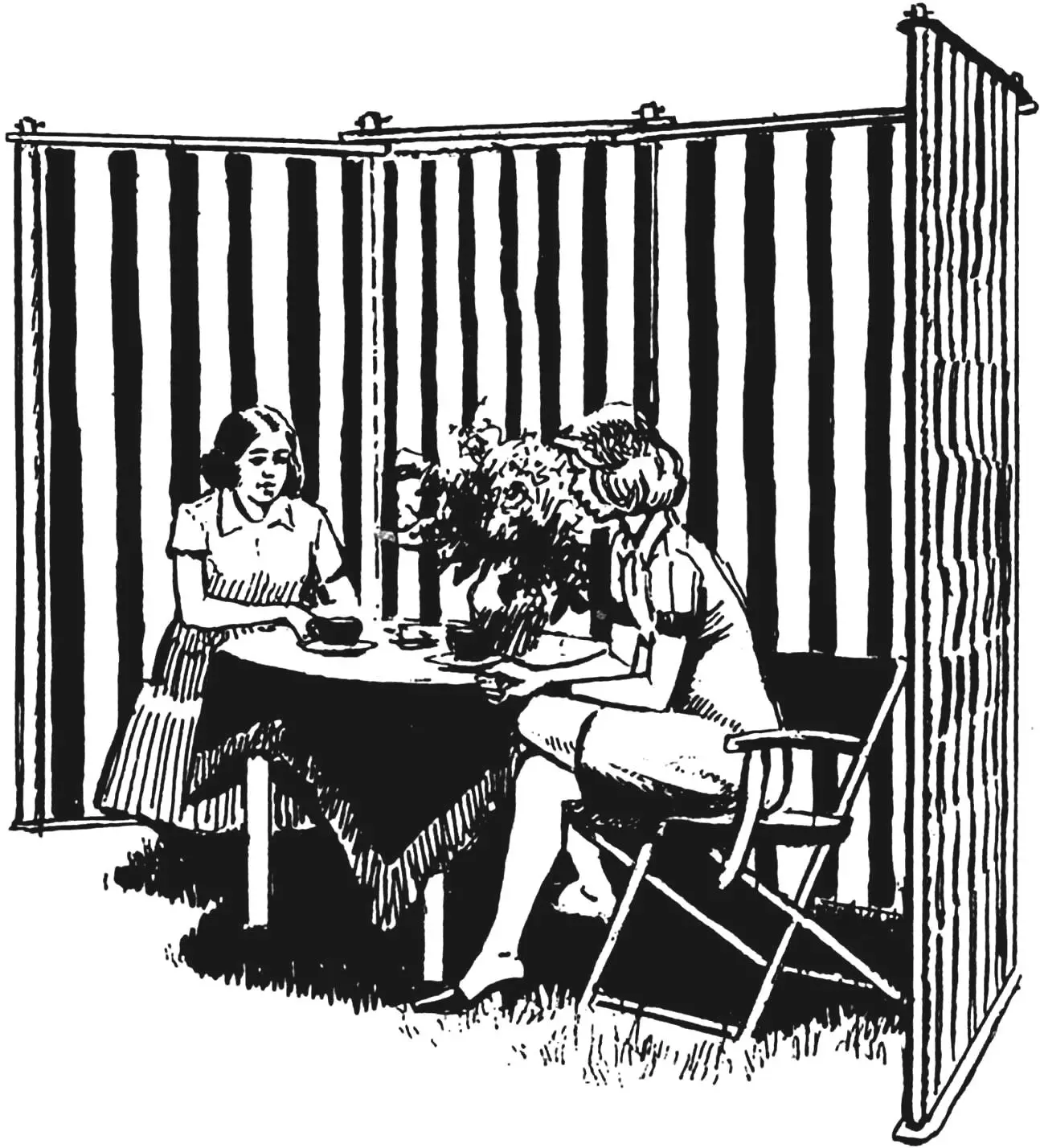
A stationary gazebo on a dacha or garden plot is a great convenience: under its roof, both in the heat and in bad weather, it’s nice to sit in the fresh air, rest from daily chores, and have tea by the samovar.
However, there isn’t always room for such a permanent structure; and its immobility often simply gets in the way, especially when redesigning the plot. And not everyone can build such a gazebo themselves.
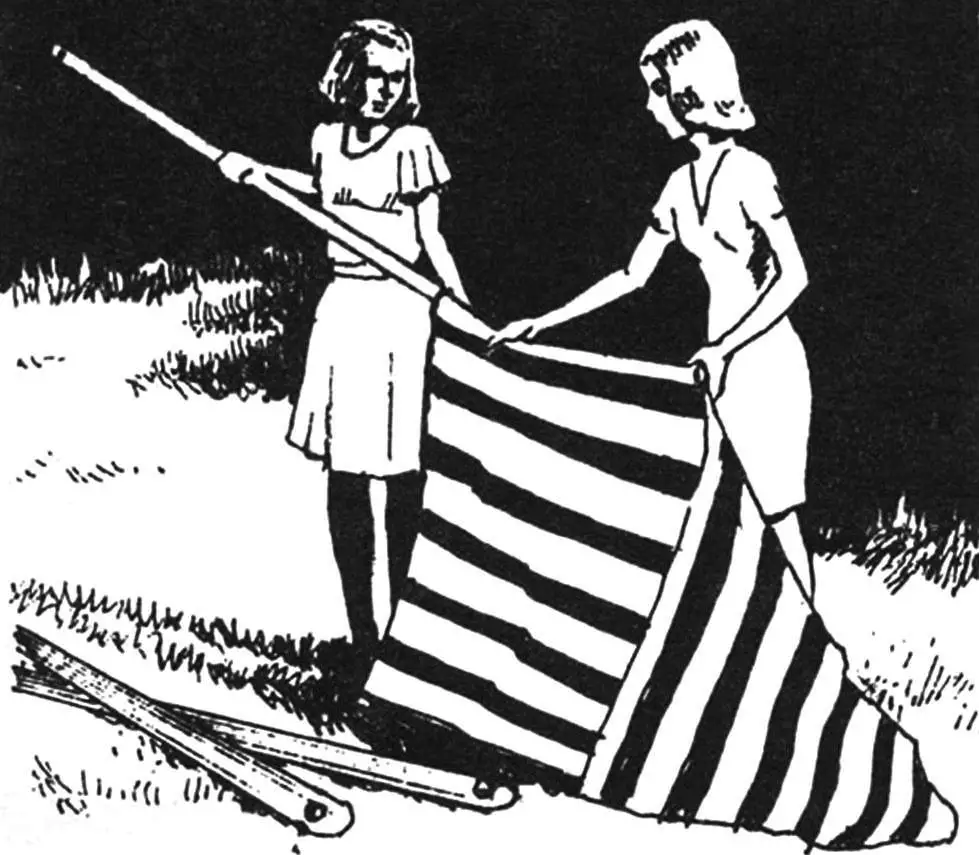
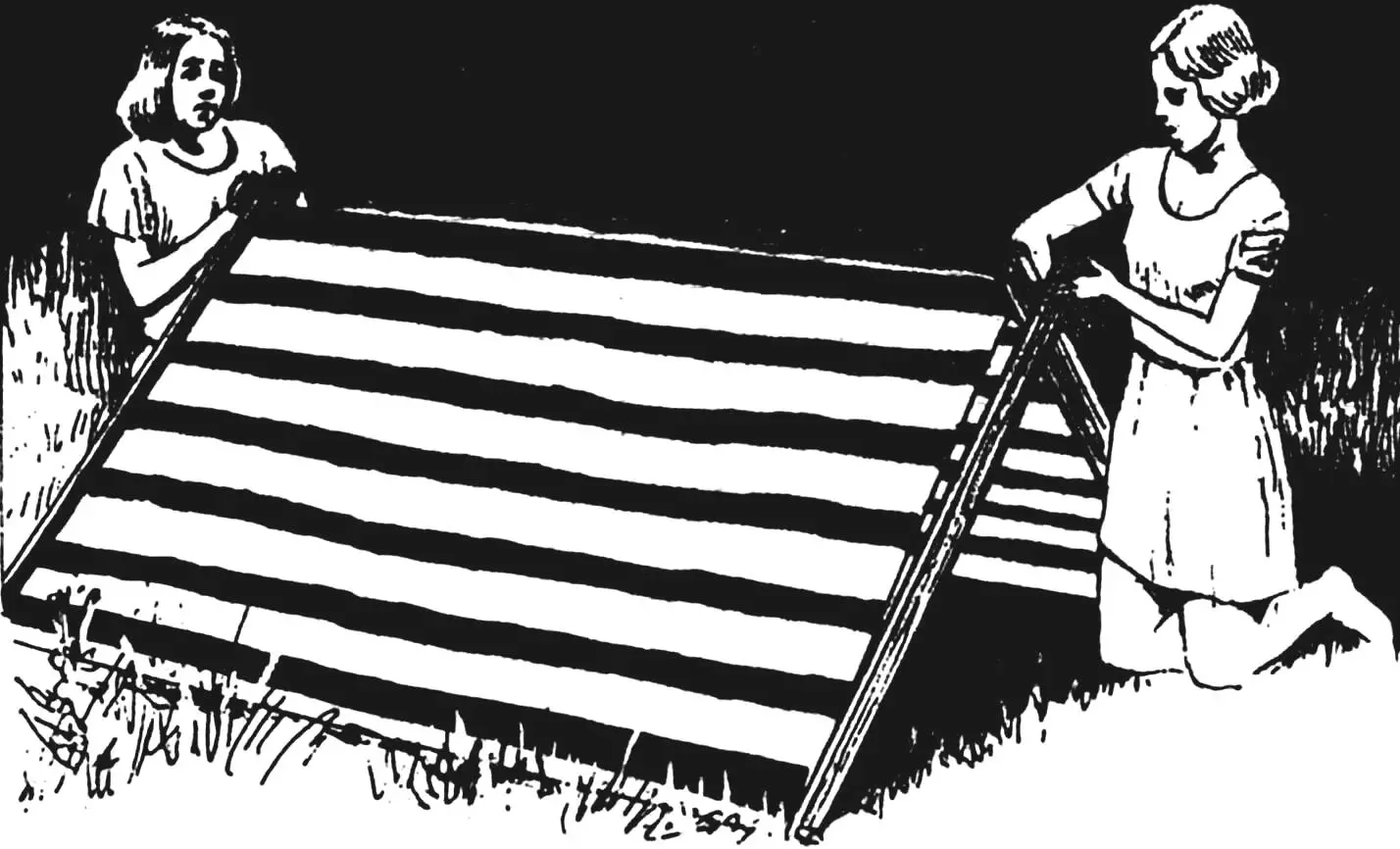
The proposed lightweight structure, however, can be assembled by anyone, and in just one day from readily available materials—five poles, eight boards, and four fabric panels. The parts are joined together into a kind of four-panel screen that successfully serves not only as a gazebo but also performs many other useful functions: when needed, it easily transforms from a vertical fence into a horizontal canopy over a rest area, into a lean-to, a shower enclosure, or a children’s play tent.
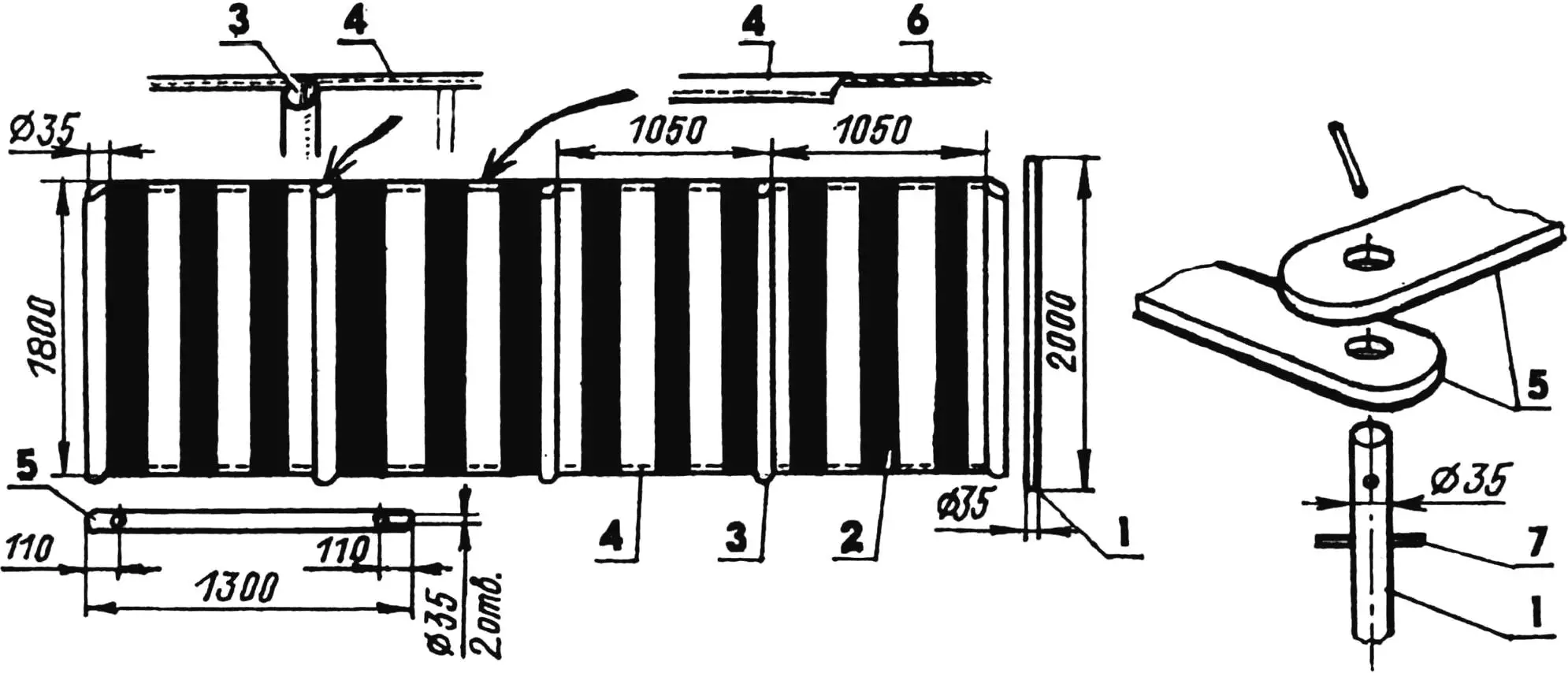
1 — posts (wooden pole, 5 pcs.); 2 — panel; 3 — slots for post; 4 — hems for cord; 5 — ties (board, s10…15, 8 pcs.); 6 — cord; 7 — stop pin (20 pcs.)
This is achieved thanks to the features of its construction. The basis of the screen is a frame assembled from the aforementioned wooden pole-posts and board ties connecting them at the top and bottom. Each pole, 2000 mm long and 35 mm in diameter, has two mutually perpendicular through holes at the ends, into which wooden or metal stop pins are inserted: between them, the board ties are mounted with their holes. The resulting hinge allows the screen panels to be positioned at any angle to each other, which provides the structure with such a variety of functional forms.
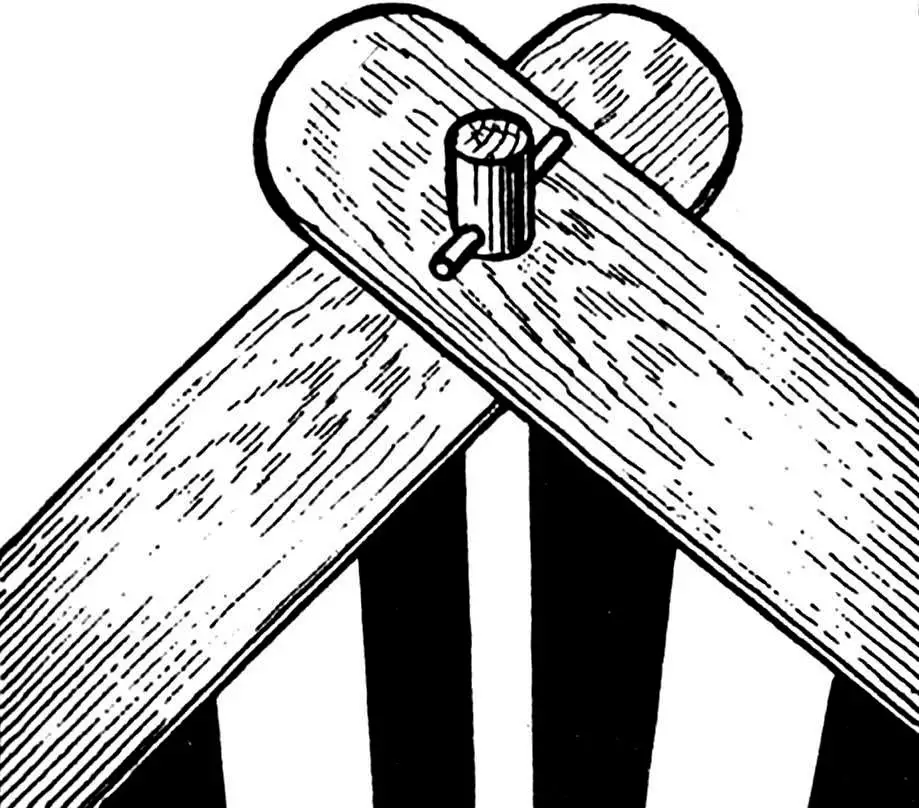
The fabric part of the panels can be formed either from a single panel for the entire length of the frame, or from separate ones—sized for each panel. Depending on this, the method of their attachment to the frame is determined. In the first case, five transverse slots are sewn into the panel with a pitch of 1050 mm and of such width that a pole 35 mm in diameter can be tightly inserted into each of them. The longitudinal edge of the panel is first hemmed, a cord is placed under it, and then it is sewn. It’s better to choose fabric with water-repellent treatment.
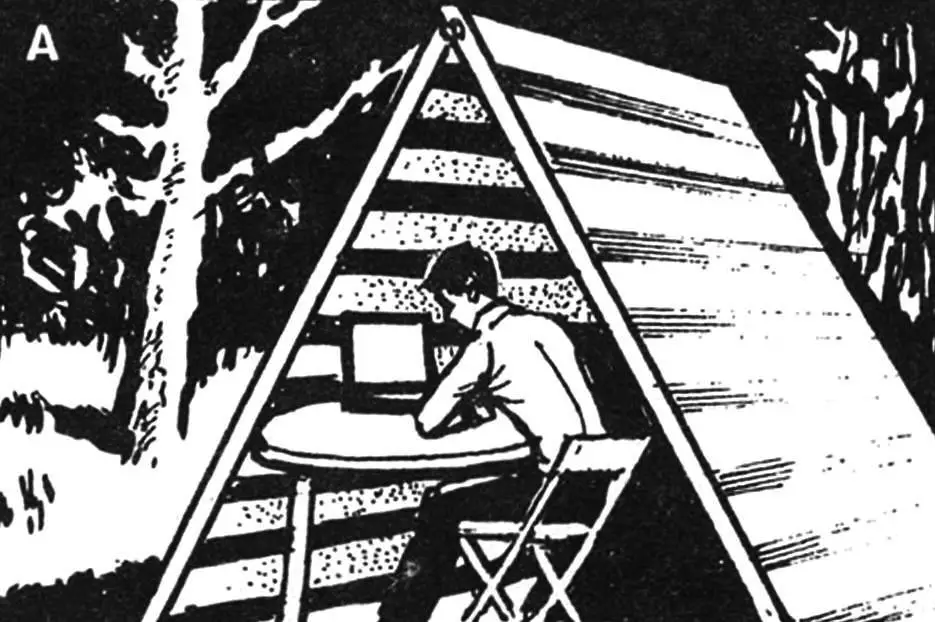
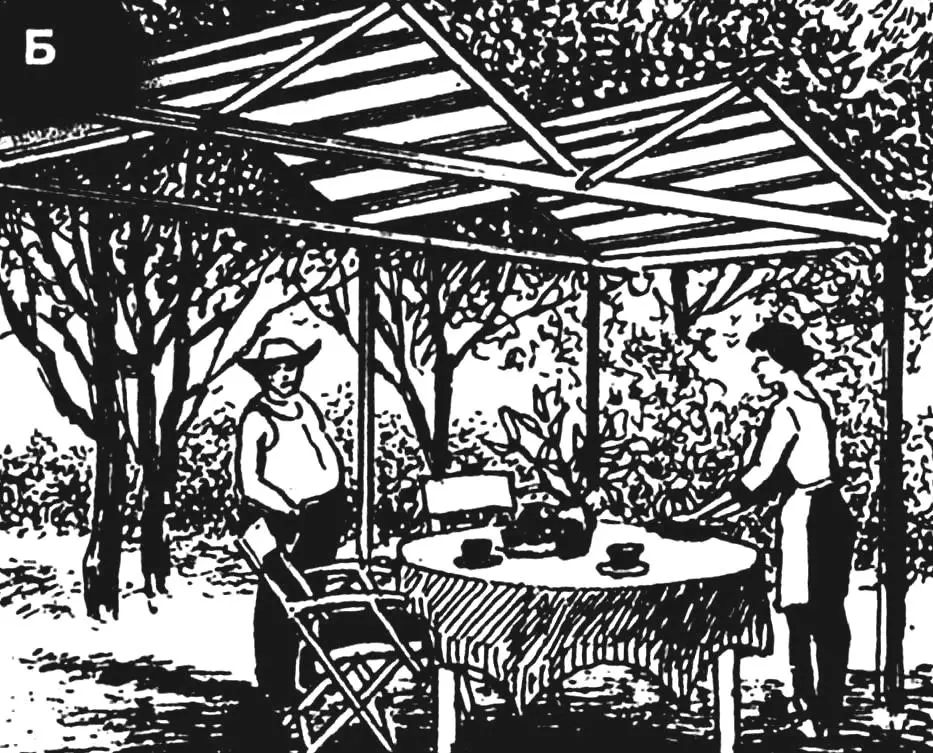
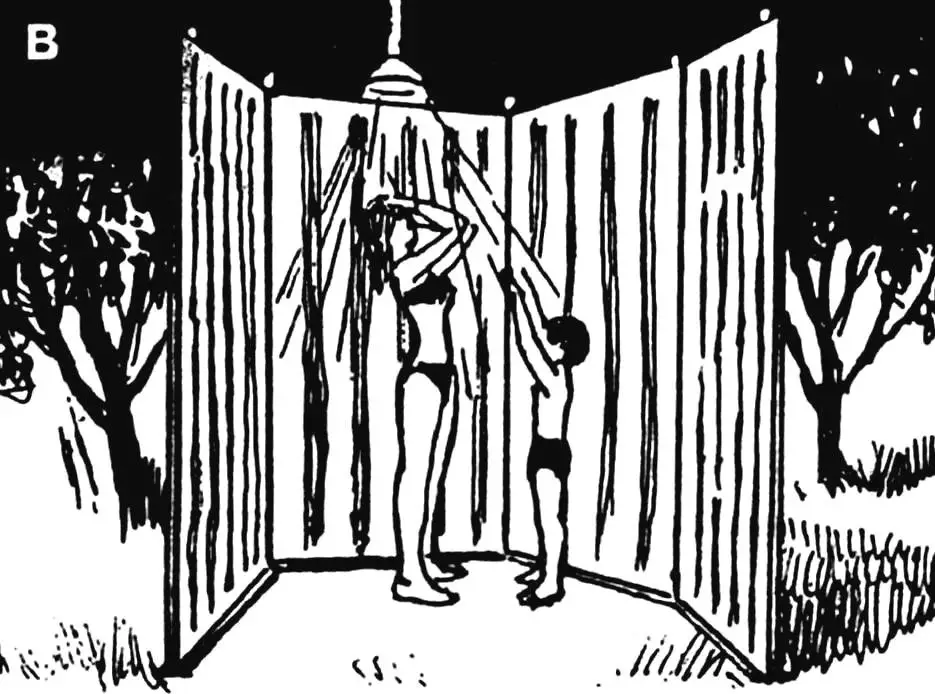
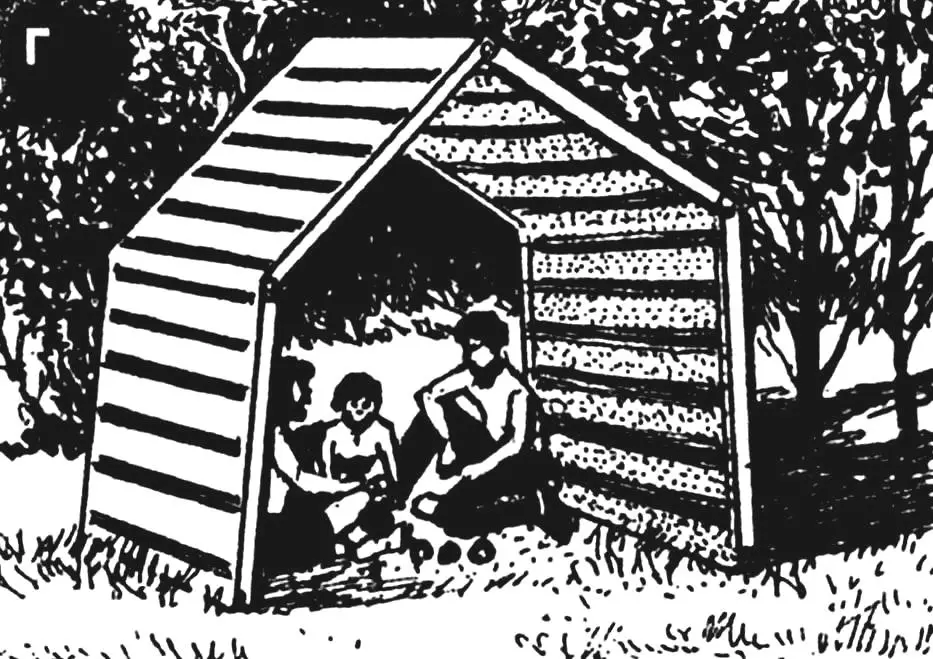
A — lean-to; B — canopy; C — shower; D — play tent
After the panel is prepared and the poles are inserted into the slots, board ties measuring 1300x100x10 mm are mounted on them. At their ends, there are holes not only for the poles, but also for metal fasteners—bolts with wing nuts (not shown in the drawings), thanks to which the ties ensure the panels are positioned at a certain angle to each other. To ensure all holes at all ends of the ties are identical and aligned, they are made using overlay templates that serve as marking stencils or jigs when drilling.
The poles and ties, after appropriate treatment and sanding with sandpaper, can be coated in several layers with furniture varnish or oil paint.
Based on materials from ABC tehnike magazine (Croatia)
Recommend to read
 “TRIPOD” FOR THE ROD
Sometimes in fishing there is a need to put the bait, take the bait, Sneath from the fire pot with the finished soup, and the hand is not even an ordinary slingshot. To get rid of this... TREAT THE PEDAL…
Bike pedals used to put a metal screw cap to protect the bearings from contamination. Now, instead, use the plastic plugs, which are often lost. Rescue plastic or nylon tubes from...
