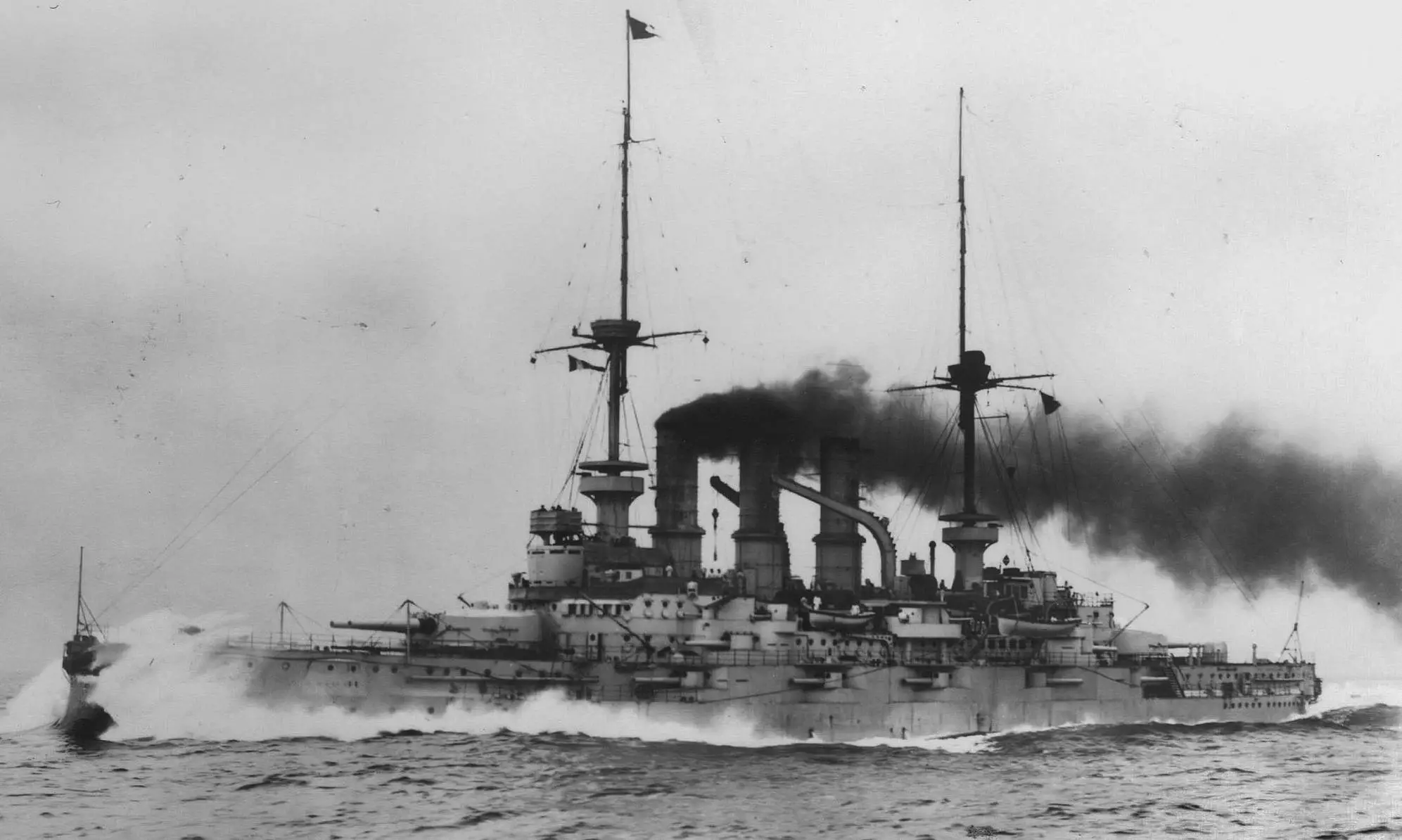
The last pre-dreadnoughts of the Second Reich received the names “Deutschland”, “Pommern”, “Hannover”, “Schleswig-Holstein” and “Schlesien” — when ordered they were listed as N, O, P, Q and R respectively. Ship Q was built in Kiel by Krupp’s Germaniawerft; she was laid down on 18 August 1905 (yard number 113) and launched with ceremony on 7 December 1906. Many high-ranking figures attended the ceremony, headed by Kaiser Wilhelm II, and his wife, Empress Augusta Victoria, became the ship’s sponsor. The official date of the battleship’s commissioning is considered to be 6 July 1908, but in fact she became a “true combat unit” somewhat later.
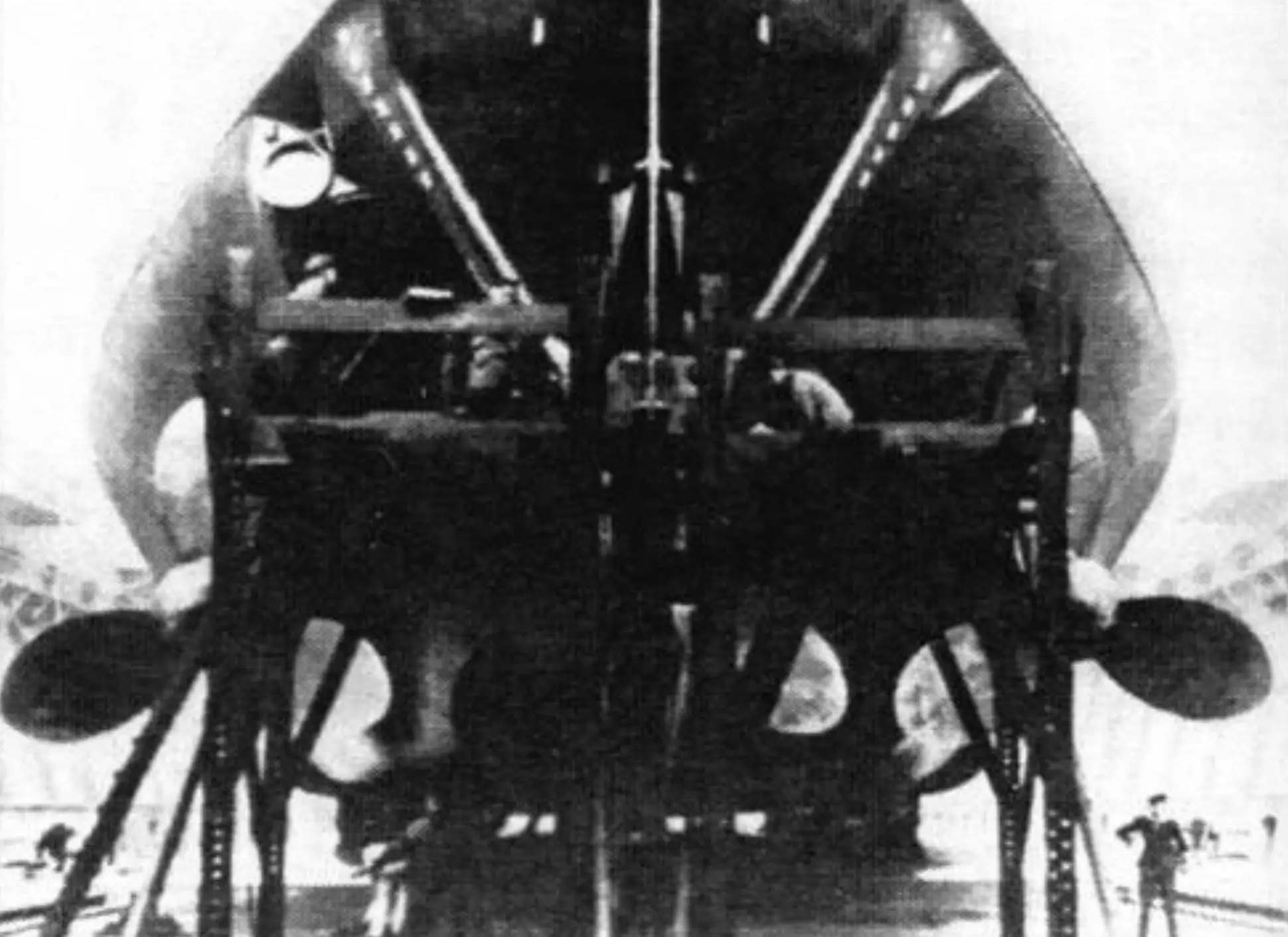
The machinery plant consisted of three triple-expansion steam engines; steam for them was produced by 12 “naval-type” water-tube boilers. An interesting feature of the propellers: the centre screw was four-bladed, 4.5 m in diameter, while the wing screws were three-bladed, 4.8 m in diameter each. The fastest ship in the class proved to be Schleswig-Holstein: with 19,330 hp she made 19.1 knots. Her normal coal capacity was 850 t and her full capacity 1,750 t; her steaming range rose to 5,720 miles.
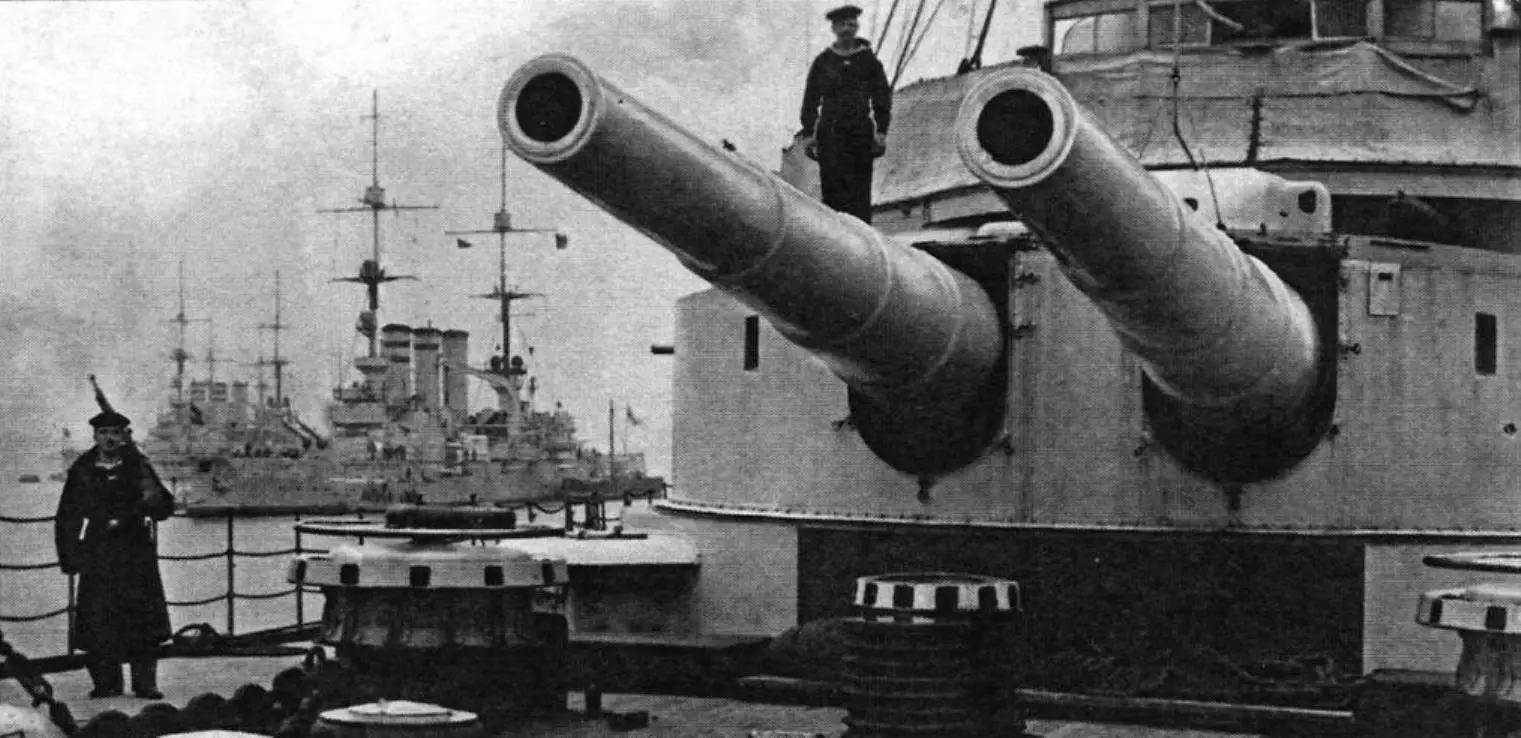
The armament at commissioning consisted of four 28 cm/40-cal guns (28-cm-SK L/40 C/01) in twin turrets, fourteen 17 cm guns in single casemates, twenty 8.8 cm anti-torpedo-boat guns and four 45 cm torpedo tubes. In 1916 the armament was supplemented by two 8.8 cm anti-aircraft guns.
After completing trials the battleship joined the II Battle Squadron of the High Seas Fleet, and in the autumn of 1908 she first went into the Baltic on a training cruise with the squadron. In the spring of the following year, together with several other battleships, Schleswig-Holstein was used as an icebreaker. Thereafter, up to the summer of 1914, she took part in manoeuvres, cruises into the Atlantic and to the Norwegian coast, reviews and so on. On the whole her service passed without especially notable events. It is worth noting only that in February 1913 Reinhard Scheer took command of the squadron — in the near future the commander of the High Seas Fleet.
The Great War
After the Sarajevo assassination the German fleet continued combat training in the usual way. Only the Austro-Hungarian ultimatum to Serbia convinced everyone that preparations for the opening of hostilities were needed. At the same time hope remained that the war would be fought only against France and Russia. Scheer notes in his memoirs that during a conference on the flagship Friedrich der Grosse the fleet commander, Admiral von Ingenohl, “made a statement on the international situation, warned of the need to prepare, and also expressed the view that England would probably remain neutral”.
It was precisely the hopes for British neutrality that explain the dispatch of part of the High Seas Fleet’s forces — including the II Squadron — to Kiel. At that moment German admirals “thought it imprudent to leave the Baltic without large ships”. Once again Scheer’s memoirs: “On the morning of 31 July the fleet commander also proceeded through the canal in Friedrich der Grosse to the North Sea. From that decision it followed that the centre of gravity of the naval war was shifting westwards. Shortly before his departure I spoke with Admiral von Ingenohl, and in the event of war he again entrusted me with conducting operations against Russia with the II Squadron.
Hope of conducting independent operations in the Baltic disappeared that same day, because the II Squadron was ordered to proceed immediately to the North Sea. At 20:00 on 1 August, when the High Seas Fleet was fully assembled in the Jade roadstead, the mobilisation order arrived…”.
The numerical superiority of the Royal Navy over the Kaiserliche Marine left the Germans no hope of victory in an open clash; they could only count on weakening the enemy through various “small operations”. As for the battleship Schleswig-Holstein, until the end of May 1916 she neither went to sea particularly often nor took part in combat actions. The role of the II Squadron amounted to supporting the operations of more modern ships. Even so, in these conditions the “old-timers” sometimes found themselves in dangerous situations — for example during the December 1914 sortie: “On our fleet’s return voyage an extraordinarily large number (over 70) of floating mines was observed. Evidently these were mines torn from a large minefield that lay at the entrance to the Channel. By a fortunate chance they caused no harm the night before, when our ships crossed the same area and the mines could not be seen”.
When in May 1916 the High Seas Fleet began preparing for a major sortie into the North Sea, R. Scheer, by then the commander, faced a dilemma: whether or not to take the II Battle Squadron with him. He ordered the formation to proceed to the Jade, where he discussed with the squadron commander, Rear Admiral F. Mauve, the prospects of the old battleships’ participation in a battle and their possible actions under various conditions. In the end Scheer decided that the pre-dreadnoughts would take part in the forthcoming sortie, noting after the war: “Not only military considerations spoke for or against leaving this formation behind, but also thoughts of military honour and of the mood of the personnel, who would not hear of being left in the background together with their ships.
I will not deny that besides the persuasions of the squadron commander, Rear Admiral Mauve, my former belonging to the personnel of the II Squadron played a part in my unwillingness to subject the ships to disappointment. As it turned out, on the day that followed, 31 May, the ships were with us. I do not regret that decision in view of the benefit the II Squadron rendered”.
Schleswig-Holstein, then commanded by Kapitän zur See Barrentrapp, formed part of the IV Division — together with Hannover and Schlesien. The pre-dreadnoughts played no particularly noticeable role in the Battle of the Skagerrak (better known as the Battle of Jutland). During the day of 31 May they neither fired themselves nor were fired on by the British. Moreover, because of their lower speed than that of the newer battleships of the I and III Squadrons, the “old-timers” constantly lagged behind them. Only late in the evening, almost in complete darkness, did the pre-dreadnoughts render some service by covering the heavily damaged battlecruisers. Under visibility conditions that were thoroughly unfavourable for the Germans, the pre-dreadnoughts fired only 32 heavy shells at the enemy (of which 20 were from Hessen).
Schleswig-Holstein did not fire a single main-battery round at all. She herself received a single hit at 21:34 — believed to have been a 13.5-inch shell from the battlecruiser Princess Royal — in the 6th casemate on the port side. Personnel losses were three killed and eight wounded. It is possible, however, that New Zealand scored a 12-inch hit on her. While beating off night torpedo attacks Schleswig-Holstein fired twenty 17 cm shells at the enemy, safely avoiding British torpedoes. In turn, it was most likely her gunners who damaged the destroyer Onslaught, on which the commanding officer, two officers and two ratings were killed; two more ratings were wounded.
“Jack of all trades…”
One conclusion drawn by German admirals from the battle was that pre-dreadnoughts were unfit for use in the front line. And although Schleswig-Holstein was repaired promptly (from 10 to 25 June) at Wilhelmshaven, her active service was in fact interrupted for a long time. In February 1917 the ship was used in the Baltic as an icebreaker, and on 2 May she was placed in reserve. In August of the same year disarmament began; then the former battleship became a depot ship and floating barracks at Wilhelmshaven, and after the end of the war she was laid up at Kiel. Until 1924 she again served as “floating accommodation”, and was then taken in hand for a major refit and modernisation; the work was completed in early 1926.
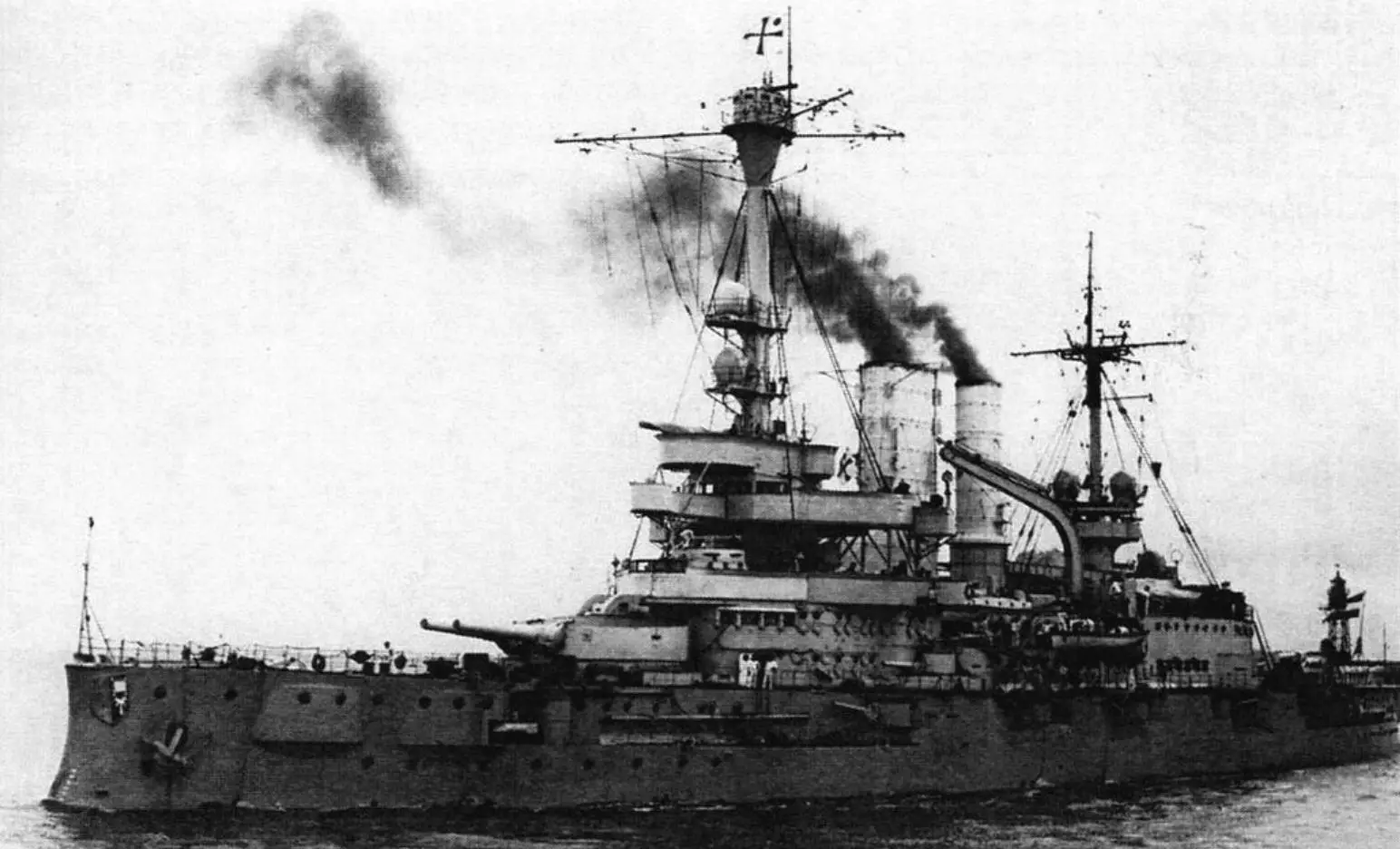
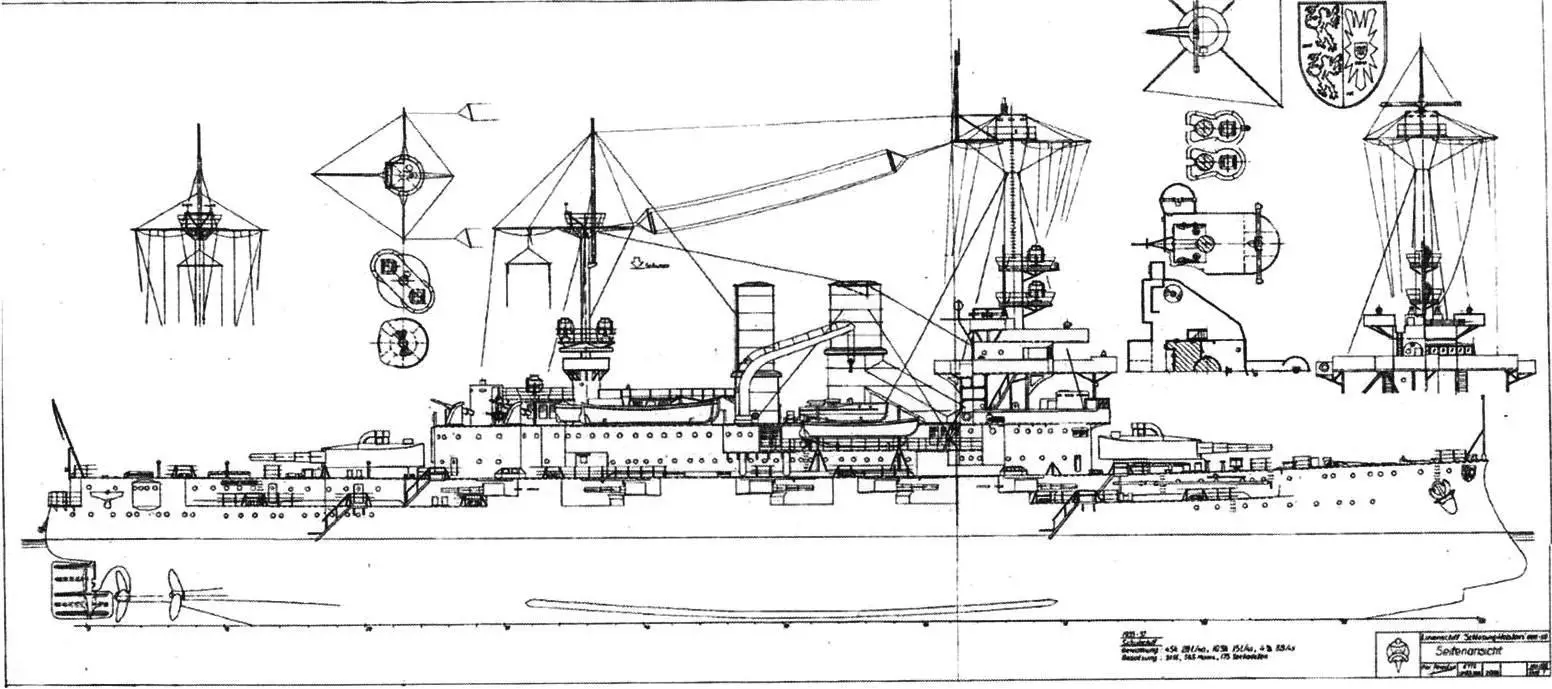
Schleswig-Holstein received new 15 cm medium-calibre guns, eight 8.8 cm guns on the superstructure and four 50 cm torpedo tubes. The ship’s appearance also changed somewhat — a new foremast, an enlarged bridge and so on. And on 1 February 1926 the Kaiserliche Marine veteran became flagship of the Weimar Republic’s navy. As early as 14 May the battleship sailed on a long cruise into the Atlantic and to the Spanish coast; the voyage ended on 17 June. The following year (30 March – 14 June) a training cruise to the coasts of Spain and Portugal took place, after which the ship went into dock at Wilhelmshaven. During the work she was converted from a three-funnel to a two-funnel ship — the first and second funnels were combined.
The repaired Schleswig-Holstein repeatedly sailed to the Norwegian coast, plied the Atlantic and the Mediterranean, and visited Swedish and Dutch ports. In late winter 1929 she was once again used as an icebreaker in the Baltic, and on 29 October of the same year, during manoeuvres, she collided with the torpedo boat Leopard. Both parties to the incident were damaged. In August 1935, during demonstration gunnery firings, Reich Chancellor Adolf Hitler was on board the battleship (accompanied by a large suite), and the following month the ship ceased to be regarded as fleet flagship. A few months later her conversion into a training ship for naval cadets began at Wilhelmshaven. In that role the “veteran” made a number of long voyages — to the coasts of South and Central America and Africa, and into Irish and British waters.
The Second World War
In the course of preparations for the attack on Poland, Schleswig-Holstein arrived at Danzig on 25 August 1939, bringing with her a naval infantry assault company of 225 men. The battleship’s guns were to support the attack on Polish positions on the small Westerplatte peninsula in Danzig Bay, where a small garrison was stationed.
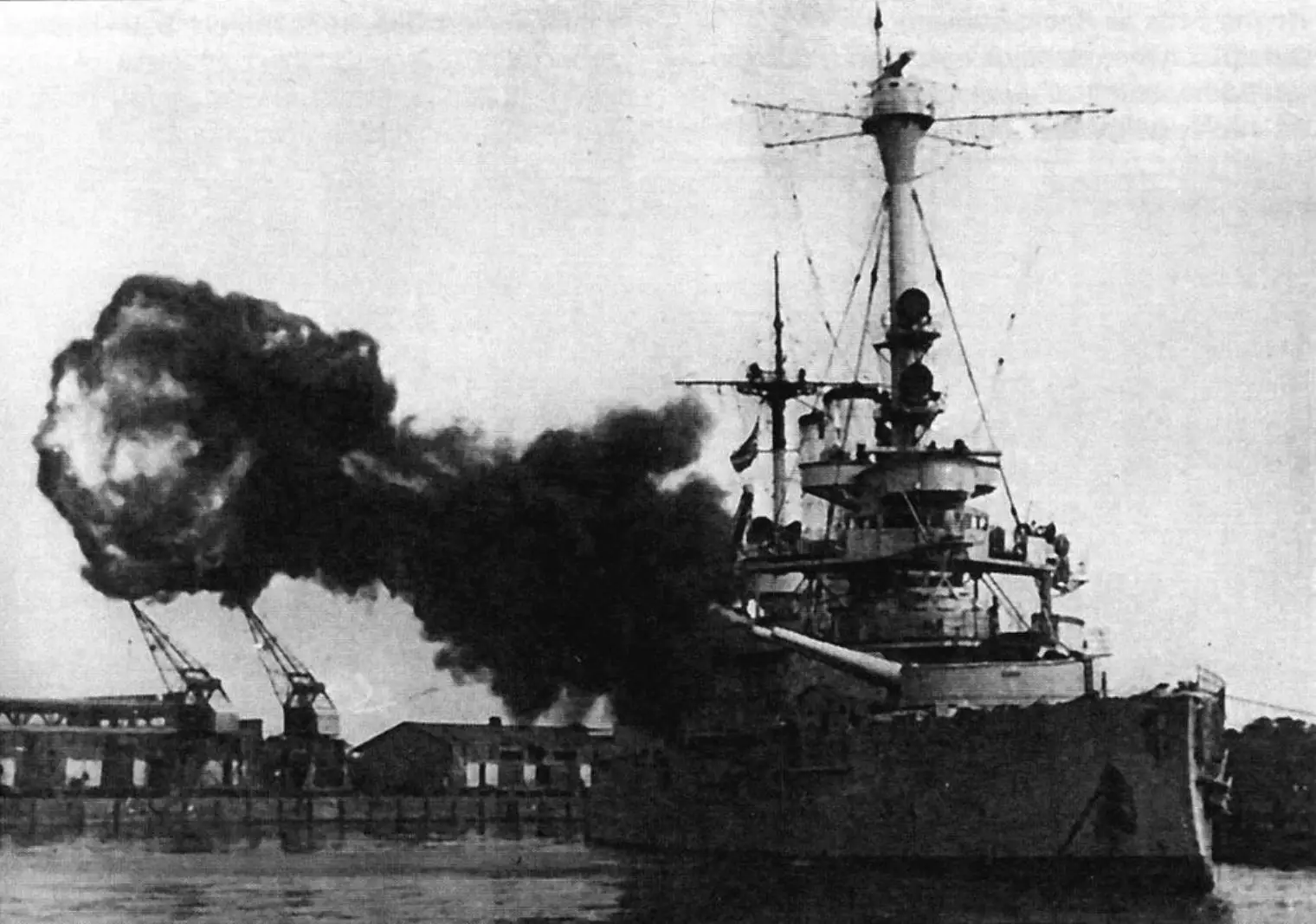
It is well known that the first shot of the Second World War was fired by a gun of the battleship Schleswig-Holstein: the order “Open fire!” was given at 04:47 on 1 September. To be precise: the first gun shot, since German aircraft had dropped the first bombs on Polish territory a little earlier. In all, by 04:55 the ship had fired eight 28 cm and fifty-nine 15 cm shells, while the 2 cm AA automatic guns fired about 600 rounds; astern of the “armoured giant” stood the tug Danzig, intended to ease her manoeuvring in the confined waters. At 04:55 the signal “Cease fire” was made from the shore, and a minute later the assault company went in to the attack.
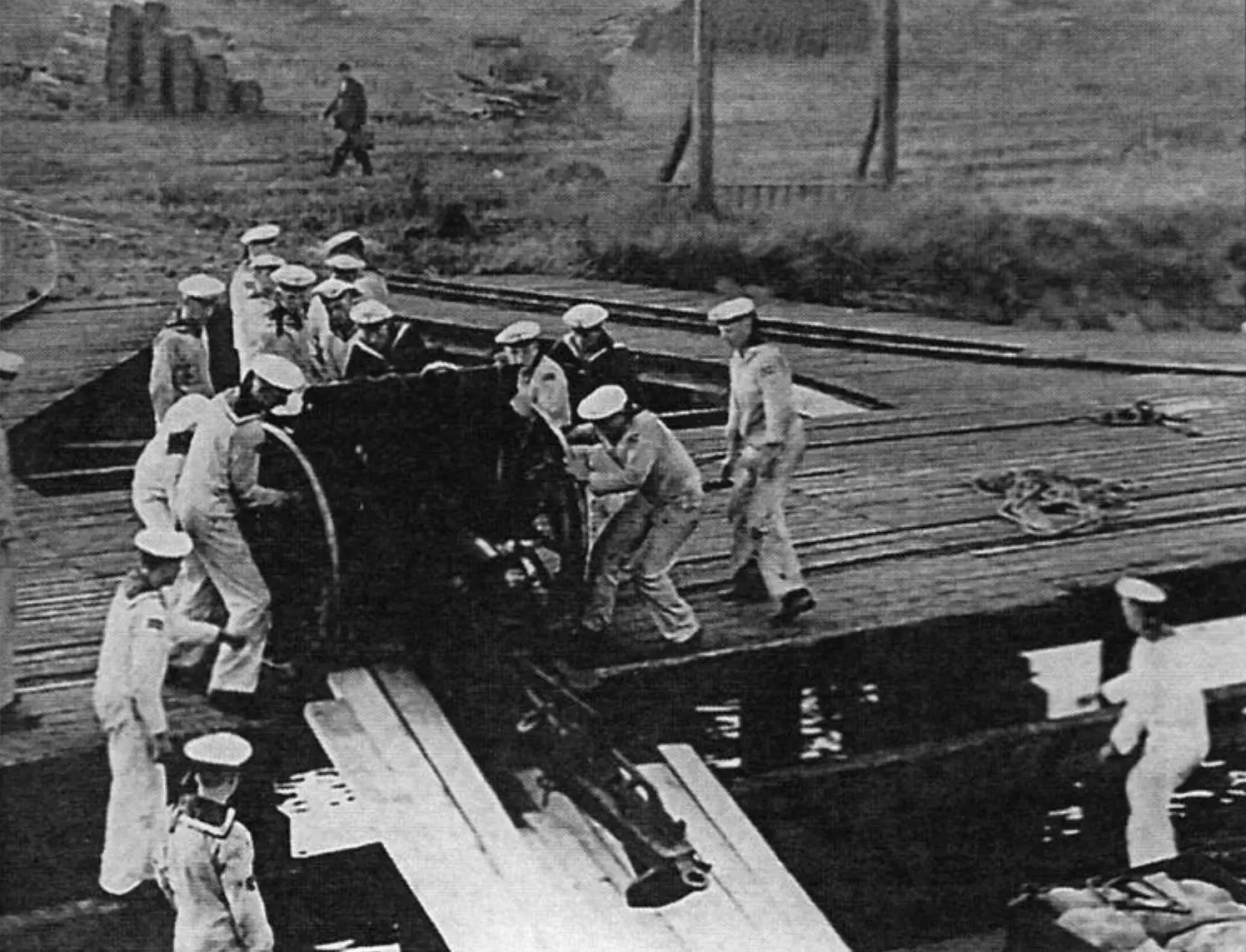
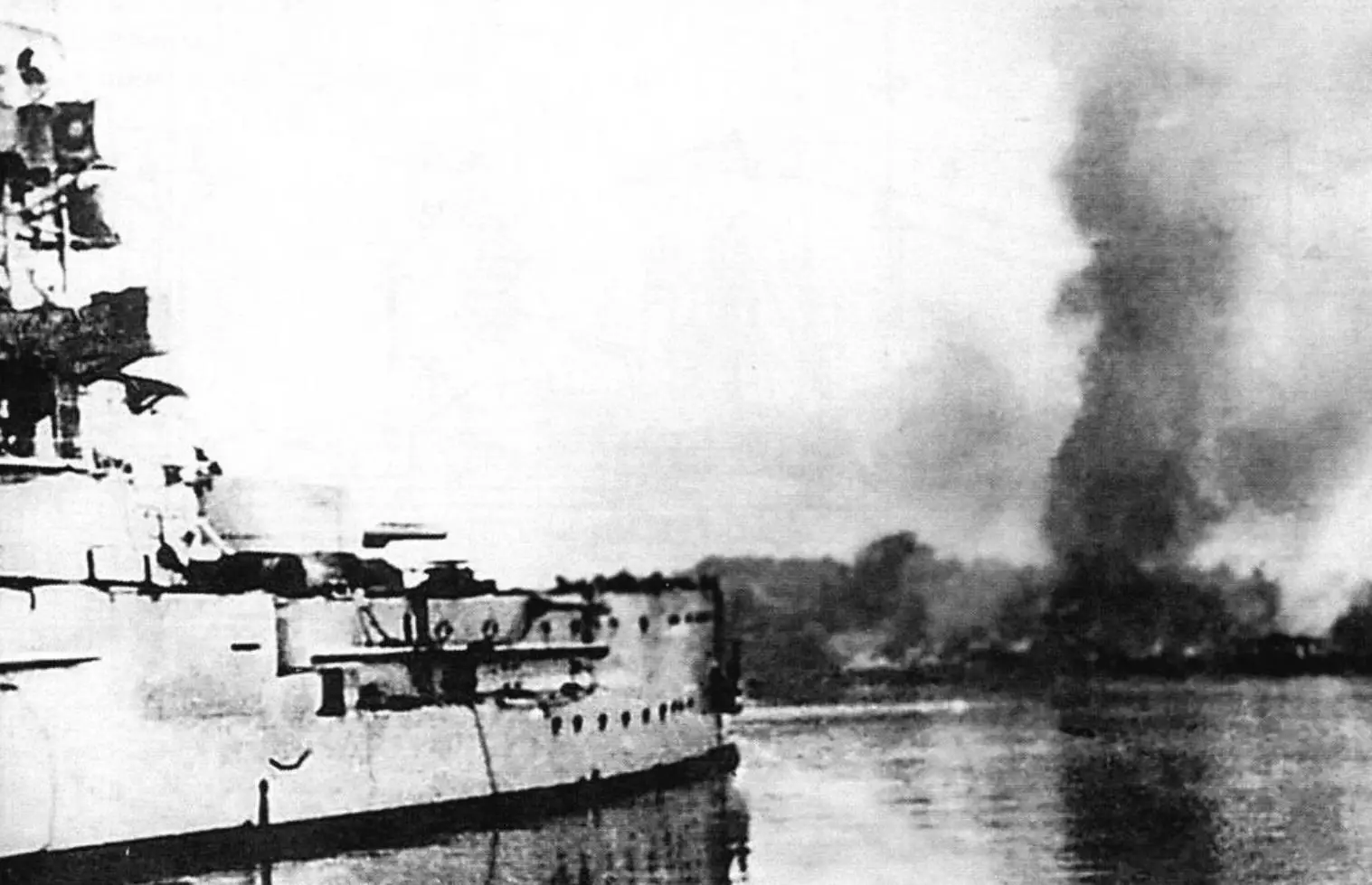
The ship’s gunfire caused destruction and fires on Westerplatte, but the Polish garrison put up fierce resistance and successfully beat off German attacks. The Poles even tried to shell the battleship; several shells passed over the bridge. The stubborn and skilfully organised Polish defence forced Schleswig-Holstein to bring her guns into action again. From 07:40 to 08:14 and from 08:29 to 08:55 guns of all calibres fired intensively, expending 90 main-battery shells, 407 of 15 cm, 360 of 8.8 cm and about 3,000 of 2 cm. The effect, however, was slight. The only significant result was damage at 07:45 to a Polish 76.2 mm gun from a near miss by an 8.8 cm shell. In the following days, up to the morning of 7 September, the battleship’s guns (of all calibres) repeatedly shelled Polish positions — again without notable success. And to reinforce the assault company, which had suffered serious losses, 45 men were sent ashore from the battleship.
The heroic defence of Westerplatte lasted until 10:15 on 7 September — despite bombardment from sea, air and land. Moreover, the garrison’s losses proved several times smaller than those of the enemy.
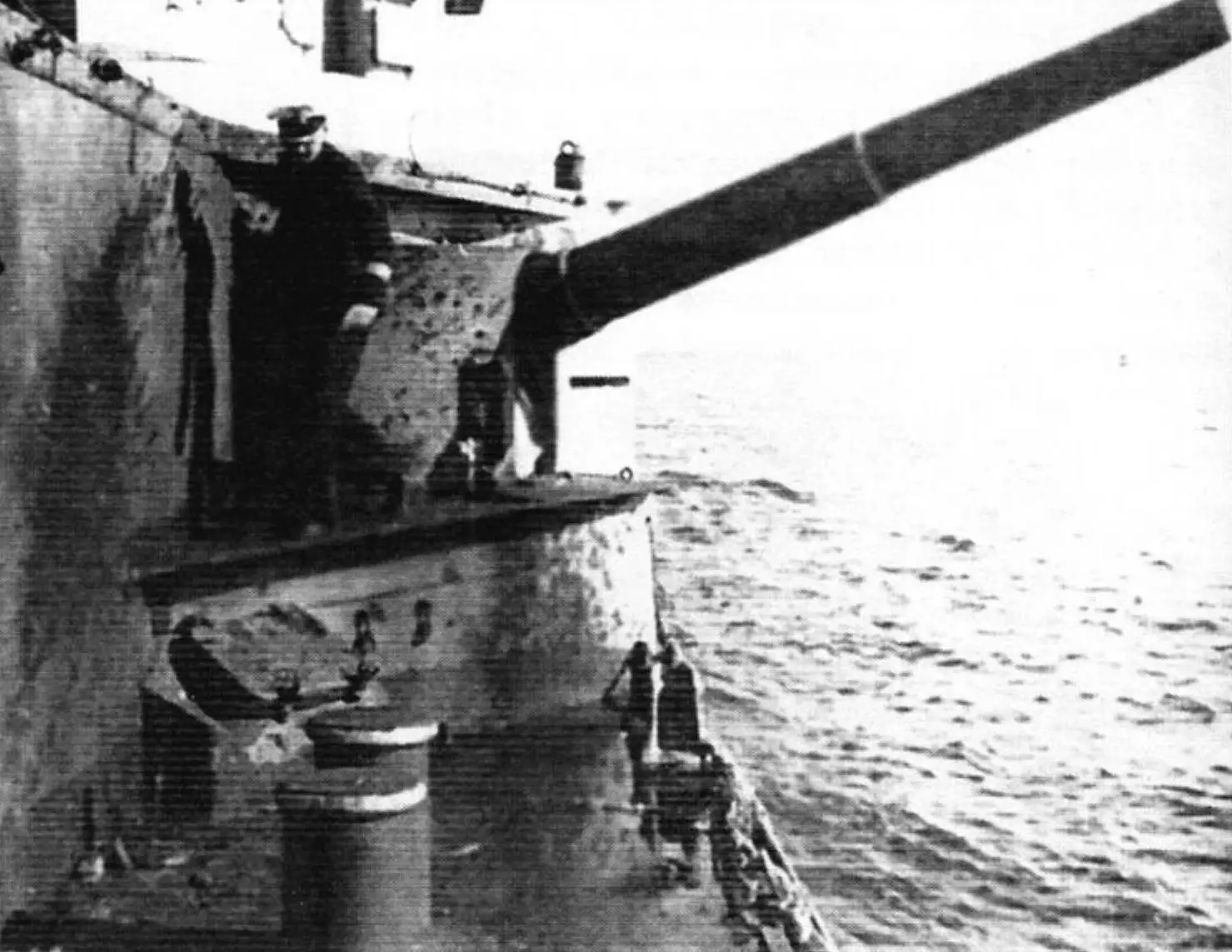
The next targets for the old battleship’s guns were the Polish batteries and fortifications on the Hel Peninsula. The 28 cm guns first opened fire on this target on 11 September; from 14:30 to 15:00 fifteen shells were fired. Thereafter the bombardments became regular; at times they were conducted with the aid of an He 60 spotting seaplane. On the 21st a second old battleship, Schlesien, joined the shelling, and on the 25th an especially intensive bombardment took place: from 09:26 to 10:45 Schleswig-Holstein fired 130 of 28 cm and 123 of 15 cm shells, and Schlesien 29 and 86 respectively. Fire was opened at ranges of 14,000–17,000 m.
Polish gunners replied whenever they could, and shortly after midday on 27 September they achieved some success: a 152.4 mm shell hit Schleswig-Holstein, striking the armour of the fifth starboard 15 cm casemate. Three German sailors were seriously wounded and four more lightly.
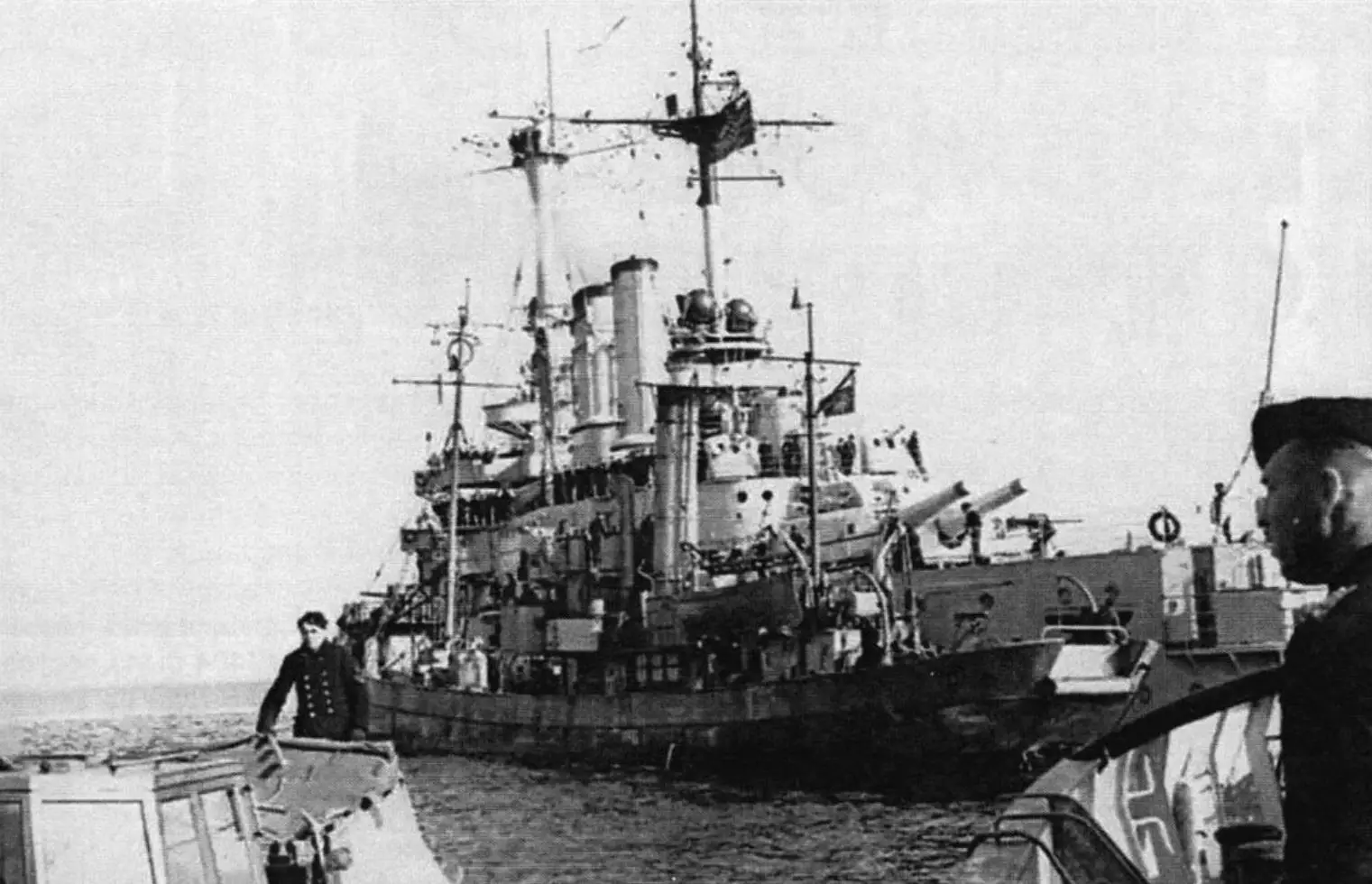
In the view of Polish participants in those battles, heavy naval gunfire was not particularly effective. Damage to battery equipment and the destruction of various buildings were, of course, not entirely avoided.
On 9 April 1940, during the invasion of Denmark — Operation Weserübung (more precisely its part called Weserübung-Süd) — Schleswig-Holstein was the lead ship of a force tasked with seizing Nyborg and Korsør. But on approaching them the ship ran aground and was only refloated several hours later. Fortunately there was no serious damage.
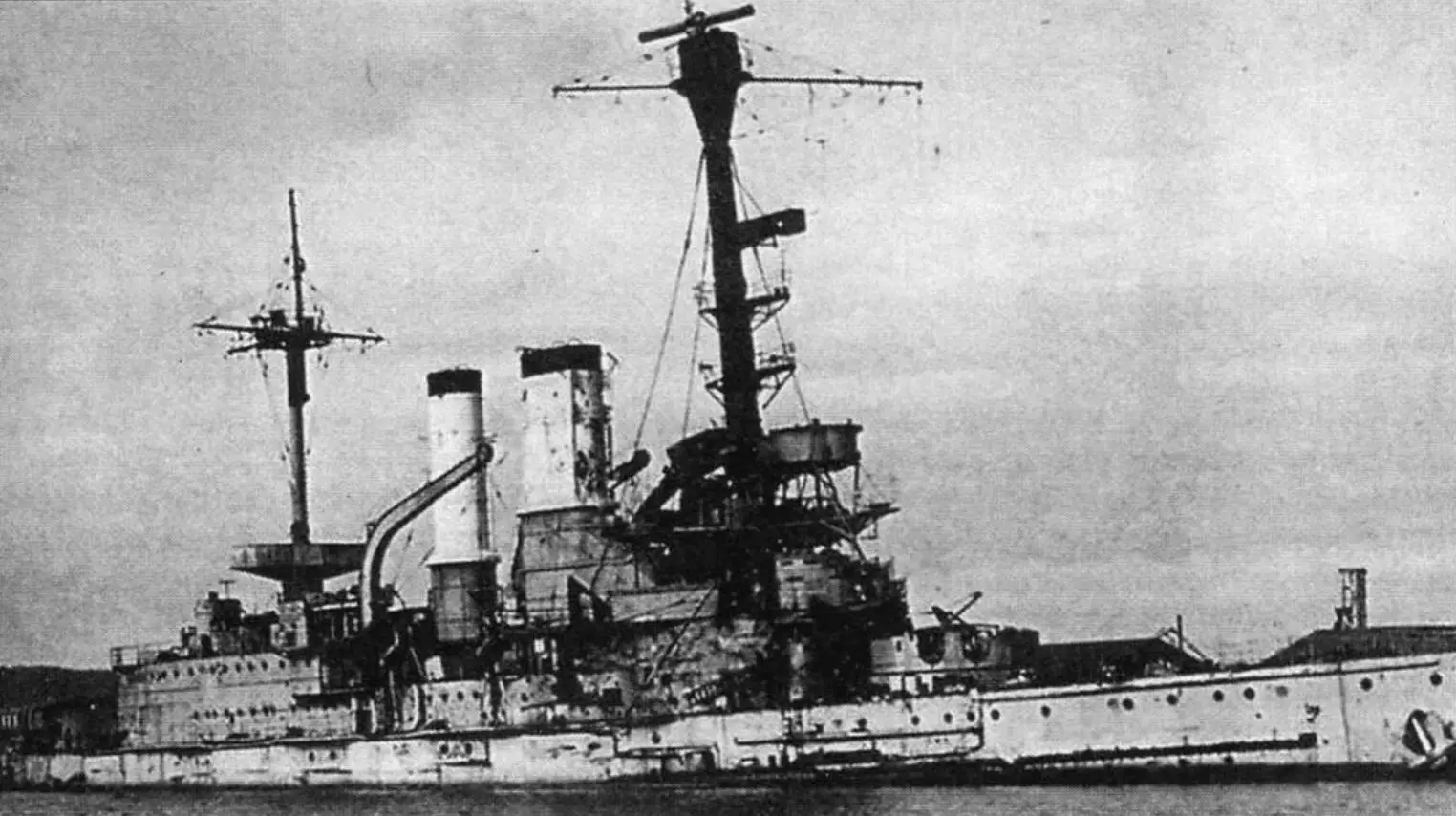
In May the medium battery was finally removed from the battleship, and in the summer, when preparations for the invasion of England began, the possibility of using both old battleships for gunfire support of a landing was seriously considered. Grand Admiral Raeder ordered a study of converting them to improve survivability, but representatives of the shipbuilding firms stated that this would take a great deal of time. In the end nothing was done…
Schleswig-Holstein was used sometimes as a training ship, sometimes as an icebreaker, was placed in reserve, and was turned into a convoy escort. Anti-aircraft guns were removed from her and put back (and then repeatedly strengthened). A serious ordeal fell to her lot on 13 January 1942 when, once again working as an icebreaker, she struck a mine in the Baltic. The battleship reached Gotenhafen with the help of the icebreaker Castor; there the damaged bow was patched up, and the final repair was carried out at Wilhelmshaven. Incidentally, while being prepared for use as a convoy escort, Schleswig-Holstein in 1944 received not only a strong AA armament but also radar equipment.
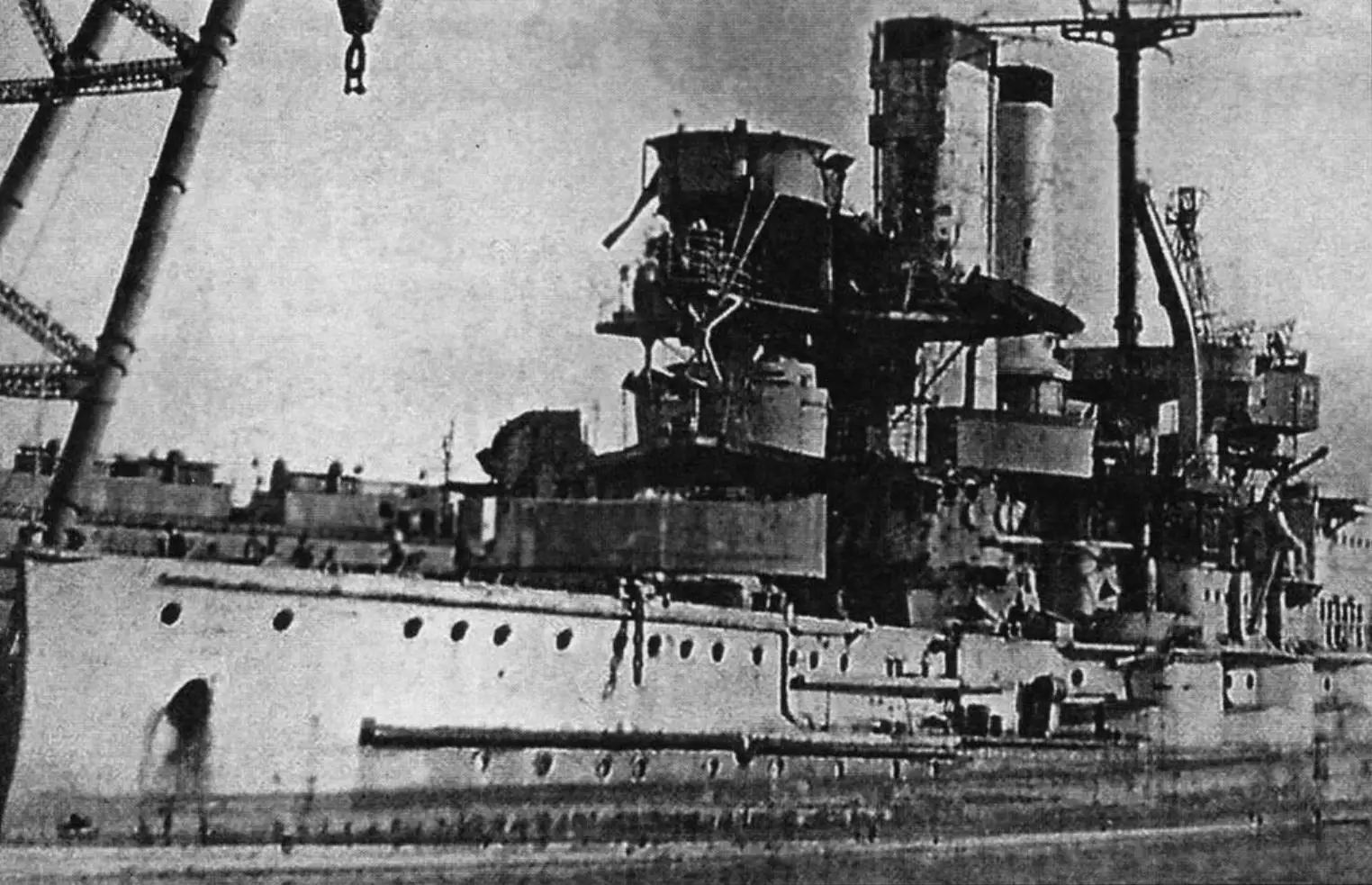
Schleswig-Holstein had not yet finished her conversion when, on 18 December 1944, during a British air raid (236 Lancaster bombers dropping 824 tonnes of bombs), she received three bomb hits. The ship settled on the bottom in 12 m of water; crew losses were 28 killed and 53 wounded. On 25 January 1945 the old battleship was struck from the navy list, and on 21 March, as Red Army units approached Gotenhafen, she was blown up by the Germans themselves.
***
In the spring of 1946 the Salvage Service of the South Baltic Fleet raised Schleswig-Holstein. According to S. S. Berezhnoi in the reference work Trophies and Reparations of the Soviet Navy (Yakutsk, 1994), the ship “on 26.09.1946, after being towed to Tallinn, was enrolled in the Soviet Navy, but on 25.06.1947, owing to the impossibility of restoration, was sunk in the area of the Neugrund bank in the Gulf of Finland”.
But the former battleship was not sunk. In 1948 she was grounded on a sandbank at 59° 20′ N, 23° 31.5′ E and until the mid-1960s was used as a target. Later the heavily wrecked hull sank completely and has now become a favourite diving site. According to Estonian divers, quite a few German shells (of main-battery calibre!) remain there. How far this matches reality is unknown…
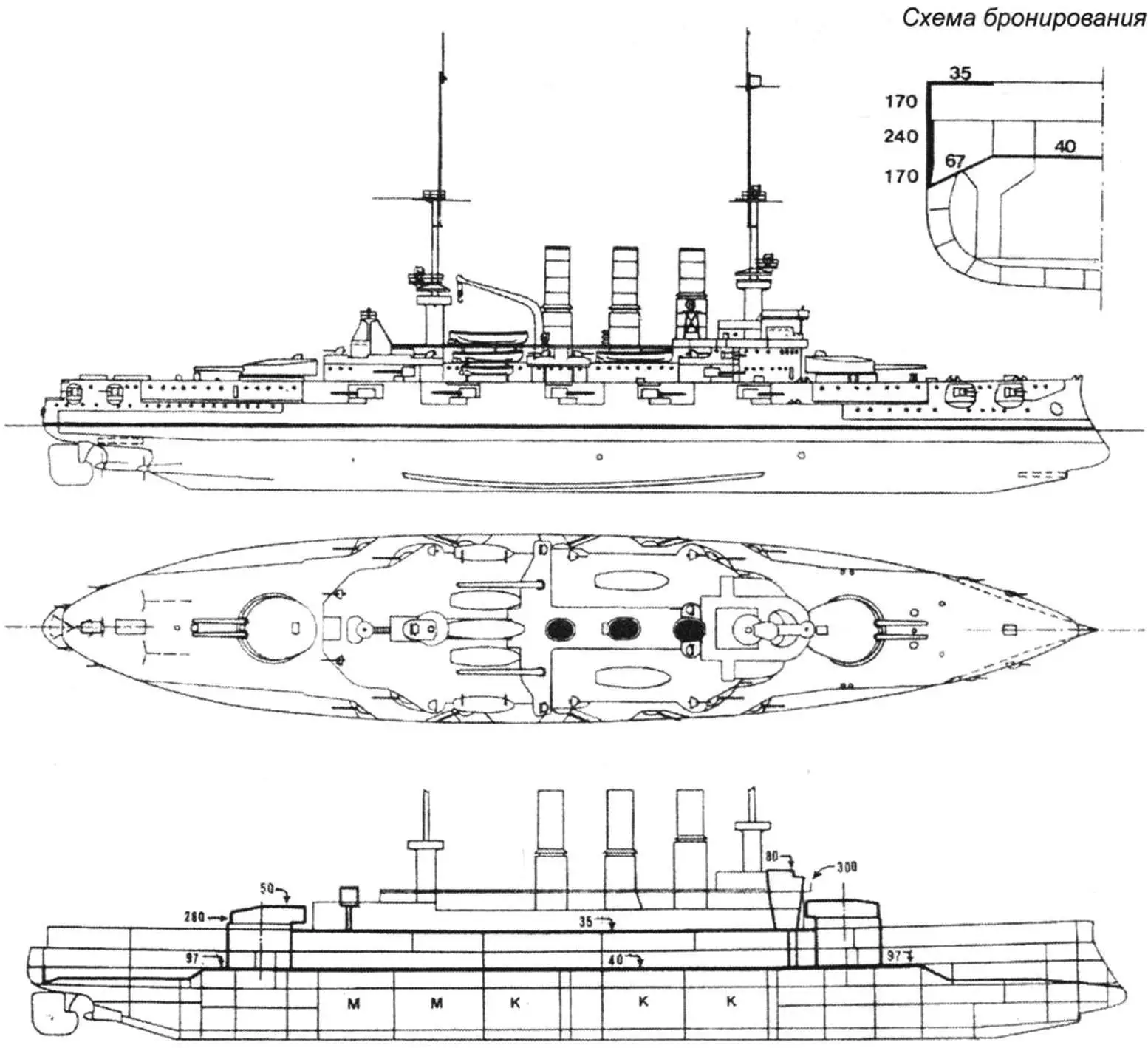
According to the design, Deutschland-class ships had the following characteristics:
displacement — 13,120 t (normal) / 14,218 t (full);
length — 127.60 m (overall) / 125.90 m (waterline);
beam — 22.20 m;
draught — 8.25 m;
machinery power — 17,000 hp;
maximum speed — 18 knots;
coal capacity — 700 t (normal) / 1,540 t (full);
fuel oil capacity — 200 t;
steaming range — 4,800 miles (at 10 knots);
complement — 35 officers, 708 petty officers and ratings.
From the authors
In Morskaya Kollektsiya No. 6-2025 Vyacheslav Filipov published a most interesting study, “Battleships of the German Empire from Braunschweig to Schleswig-Holstein”. It examines in considerable detail the design history and technical features of these ships. Some events connected with the Second World War, however, were touched on only in passing. Without attempting to “compete” with that successful issue, the authors of the present article have tried to supplement it, while giving only the minimum necessary technical information. We have also refrained from describing every detail of the modernisations, including the ship’s rearmament.
Modelist-Konstruktor No. 9’2025, Boris SOLOMONOV, Pavel SOLOMONOV
Recommend to read
 BUGGY TEENAGE
On the roads and cross roads of Latvia in recent time, new sporty micro cars — buggy, built at the Central station of young technicians of the Republic. One of them — school "Buggy-350"... THE TRUNK OF THE CAR
Who more who less, but there is a need to transport long or bulky cargo which does not fit inside of the car. Designers have already come up with for these purposes a versatile...
