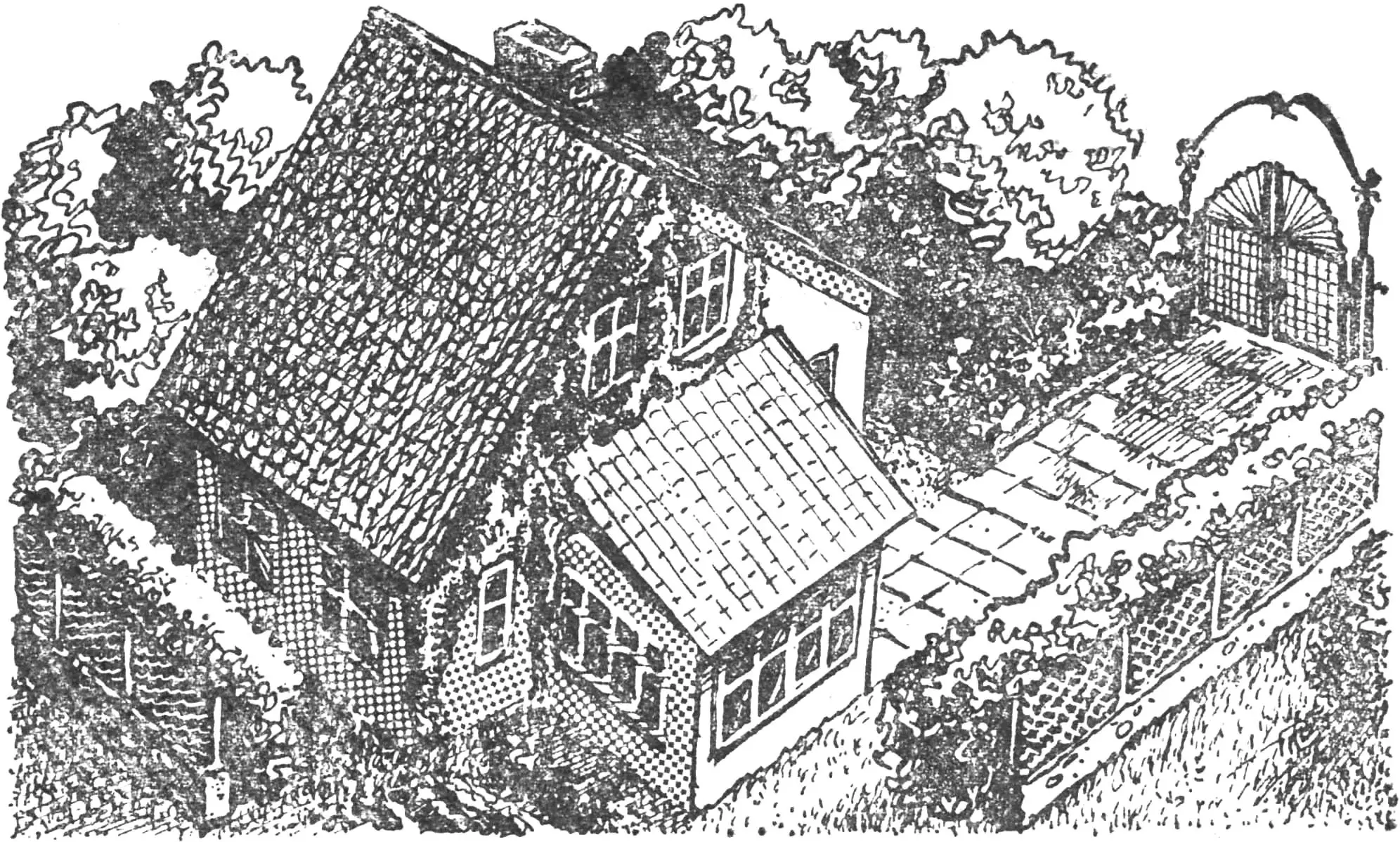
Arch, gate, wicket gate, fence, pathway — as a rule, all these elements of landscaping a new homestead or garden plot are usually not done first: materials, building parts, tools, seedlings are brought in, the plot is processed, a structure is erected — there’s plenty of work, and the fence simply gets in the way at first.
But eventually it’s time to get to it, and here traditional questions arise: “how?” and “from what?”. And it turns out that there are options that are quite affordable both in terms of materials and construction, especially since much remains from the main construction: cement, boards, sand, timber, pipes. Everything will come in handy. Here are several practical recommendations from the magazines “Veda a technika mladeži” (ČSSR), “Napravi sam” (NRB), “ABC tehnike” (SFRY) and “Practical Household” (England).
***
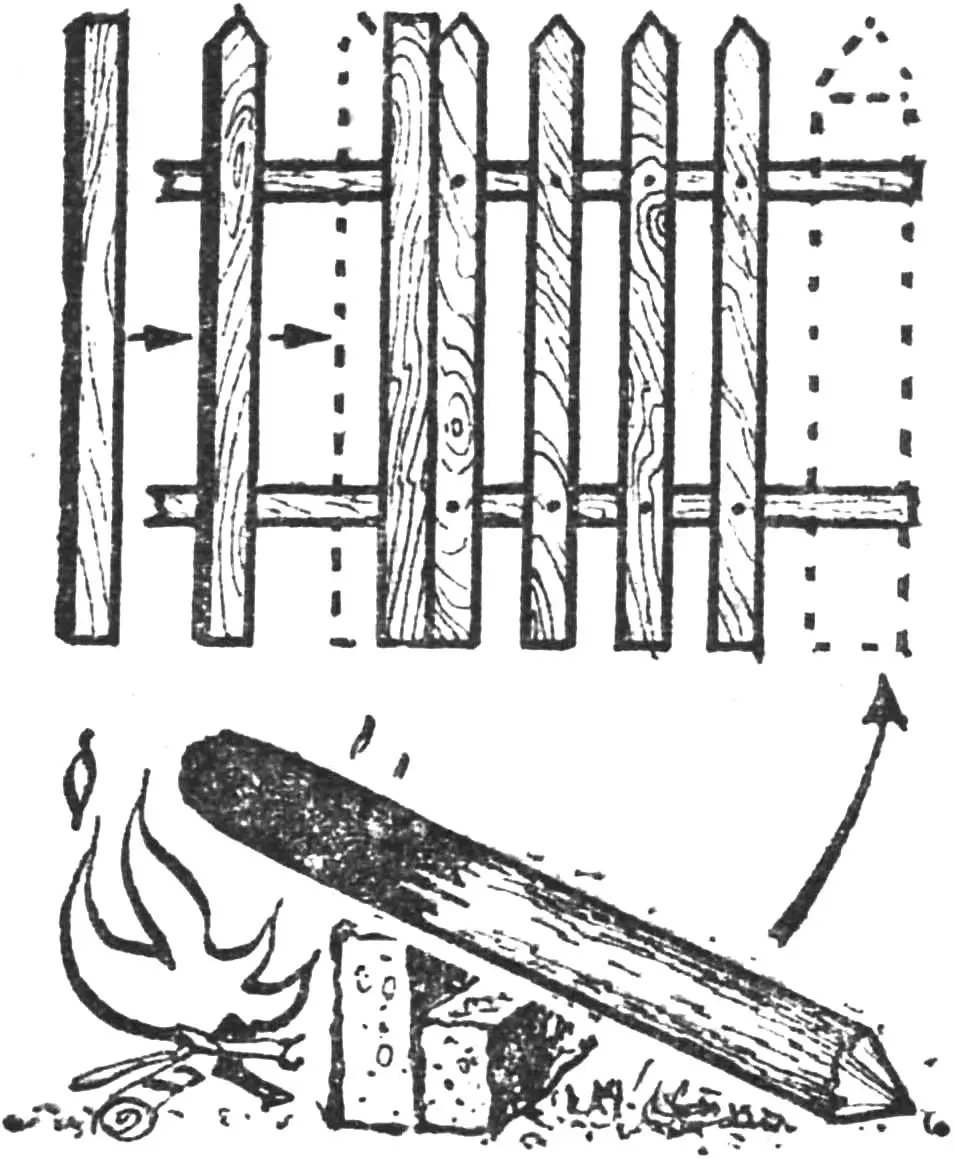
So, the fence. The most common option is a picket fence: narrow planks, sawn to a point at the top. For such a fence to look beautiful, you should precisely maintain the distance between the planks being nailed. And this is easy to do without any marking: it’s enough to use one of the planks as a spacer between the already nailed and the plank being nailed. The fence posts — the part that will be in the ground — should be charred over a fire: the charred surface is less susceptible to damage from moisture and woodworms.
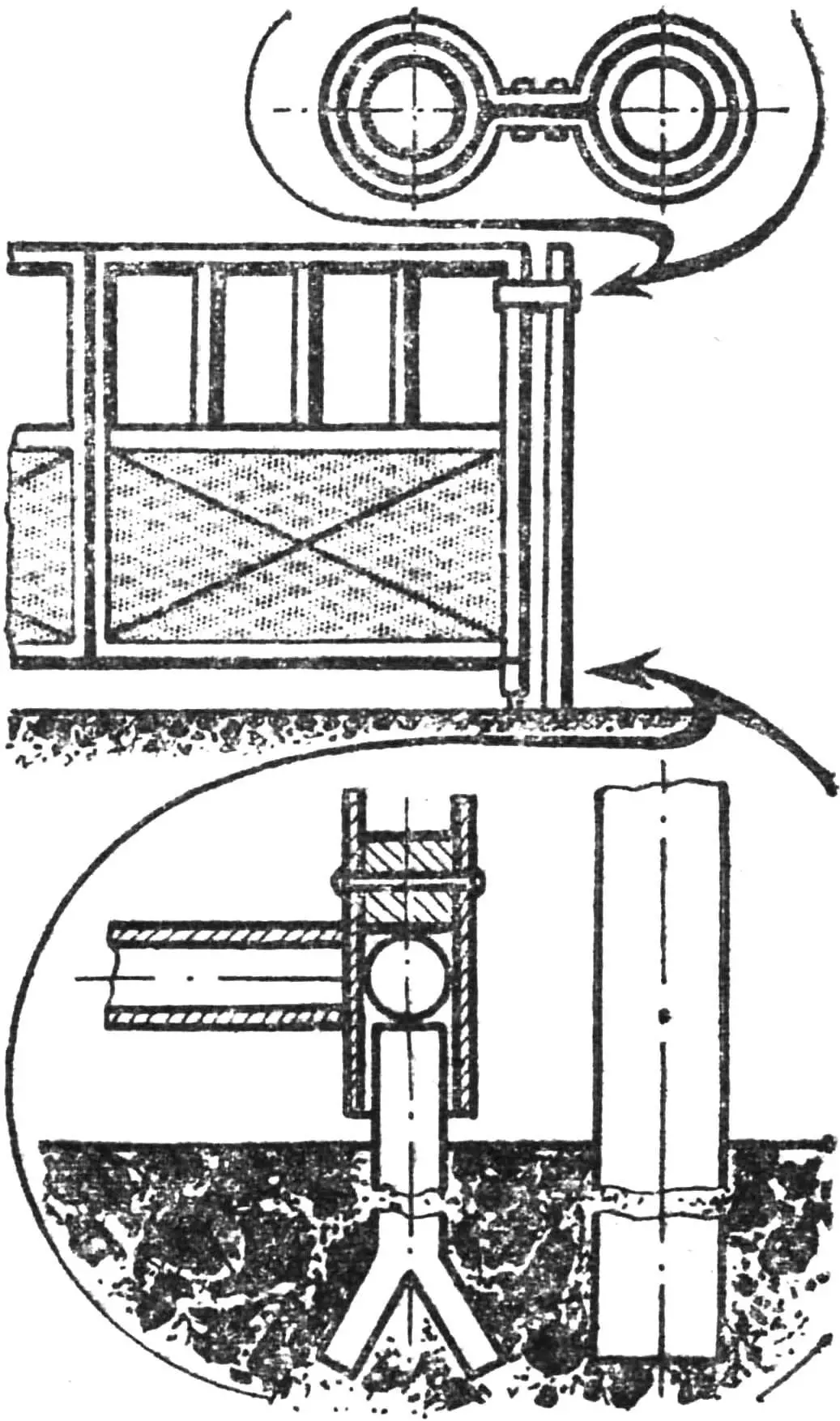
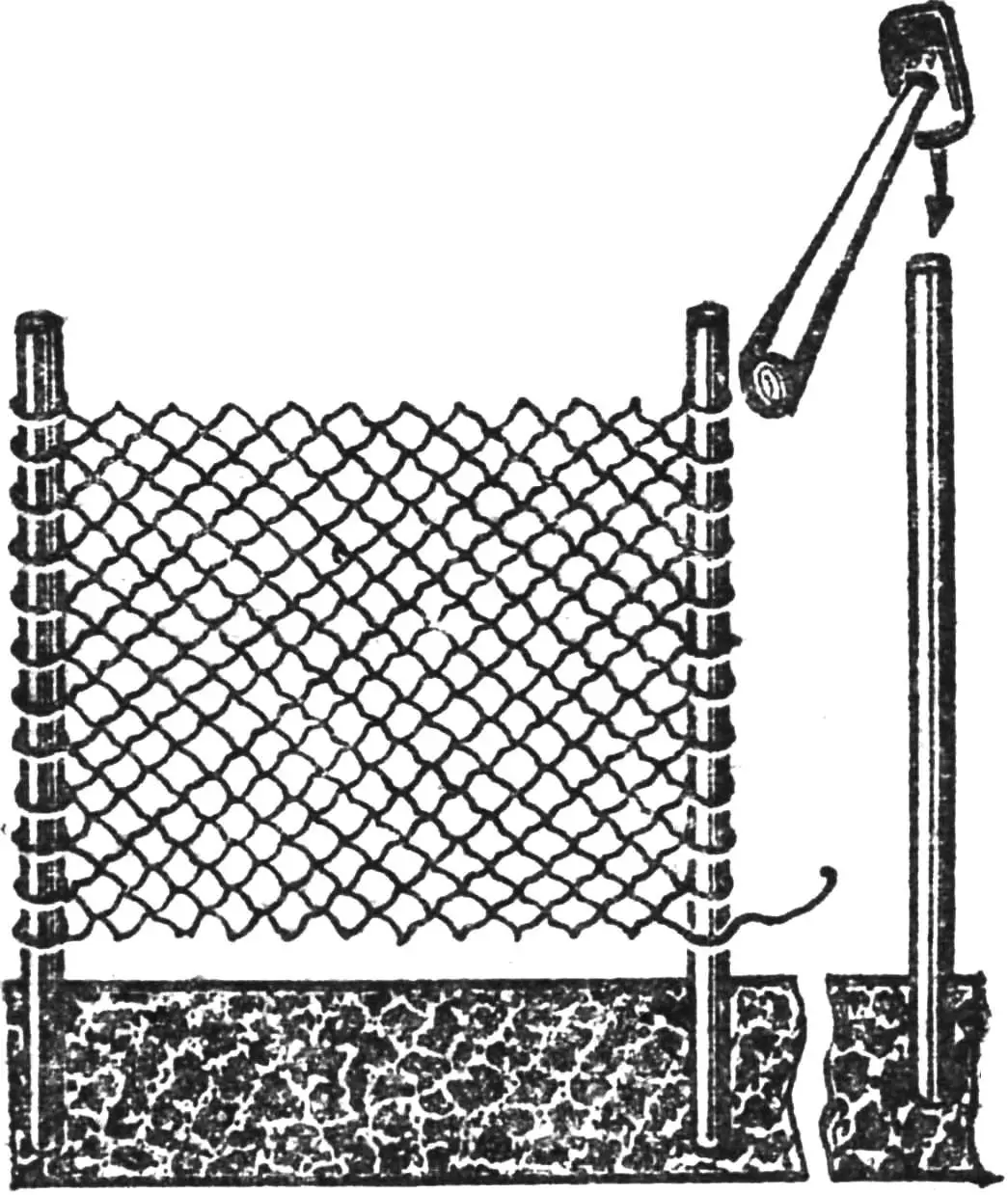
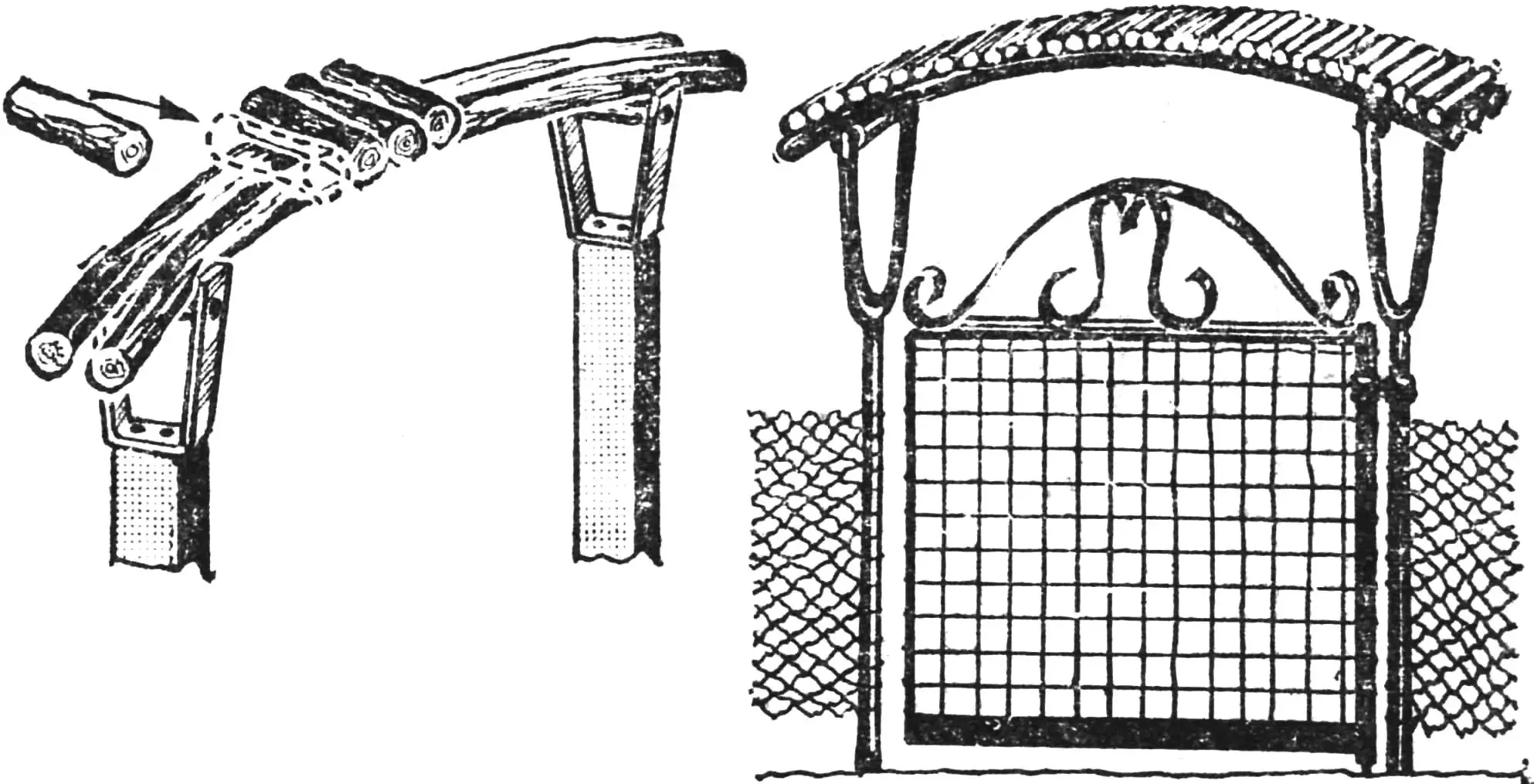
Of course, a fence made of metal mesh stretched between pipe posts driven into the ground is more durable. Painted with oil paint, such a fence looks neat and is not afraid of rust. A wicket gate or gate made of pipes will match it. The cleverness of the design is that their weight rests not on traditional hinges, which usually loosen from this, but on the support post of the frame, as shown in the diagram. Such a suspension is strong and convenient.
For the fence, you can also use dried rod-like trunks of hazel, young pines collected in the nearest forest: they can even be left unsawn and nailed to crossbars at an angle, approximately 45° to the ground — you’ll get an original cascading palisade. A decorative arch will suit such a fence very well, the top of which is formed by the same poles with sawn logs laid across them from the same trunks.
Of course, any plot needs a neat, strong pathway. It can be laid out from broken bricks, a mixture of sand with gravel, paved with flat stones or stump cuts. But the strongest and most durable will be made from waste concrete slabs. For their installation, a bed is first prepared: a shallow (10—15 cm) trench is dug to the width of the future pathway. Sand is poured here and carefully leveled. Slabs are laid on this cushion with small gaps, approximately aligned with broken edges or pre-“cut” with a chisel and sledgehammer into even rectangles and squares. Each slab is tamped down from above.
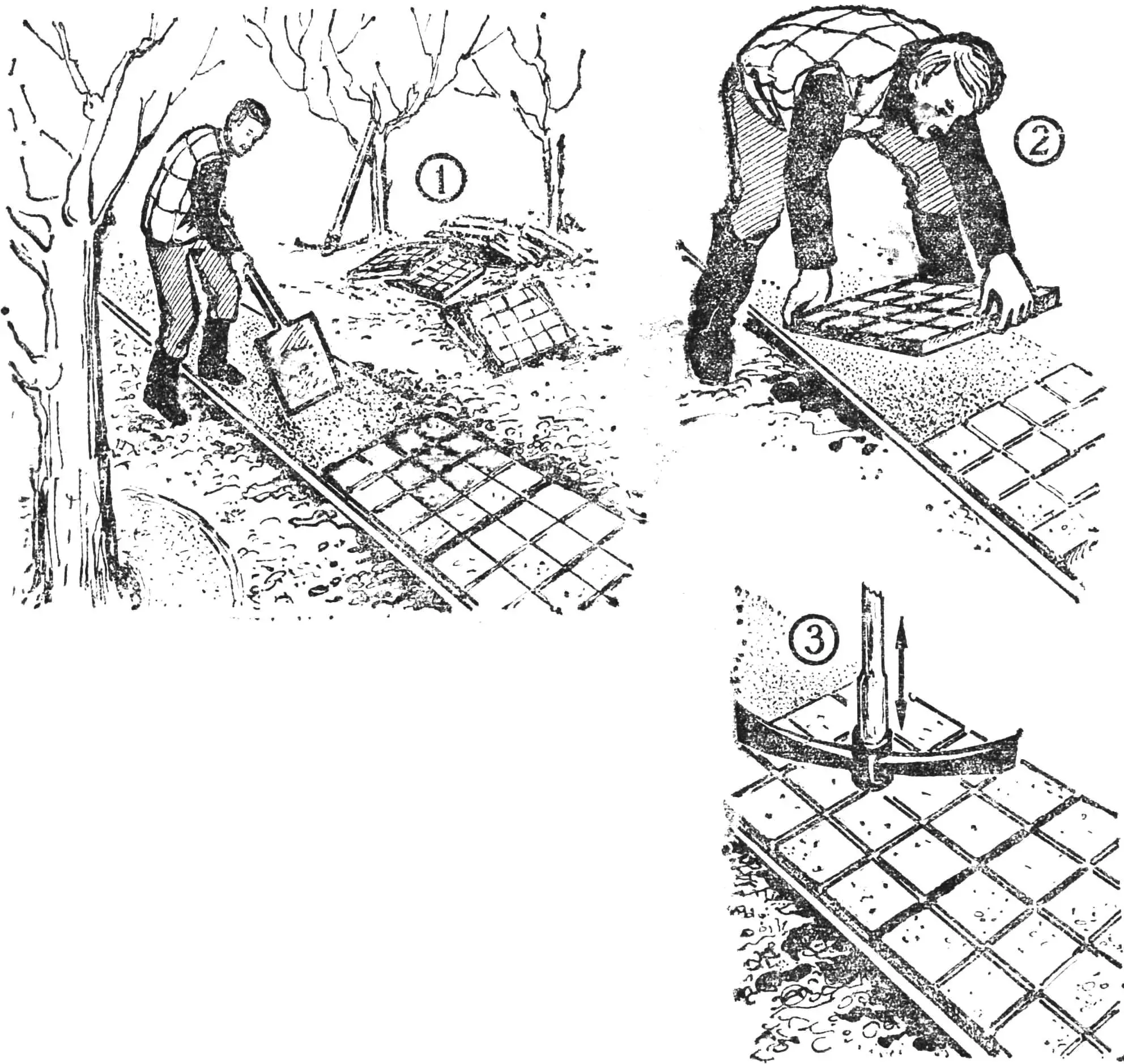
1 — подготовка песчаного ложа, 2 — укладка плиты, 3 — притрамбовывание.
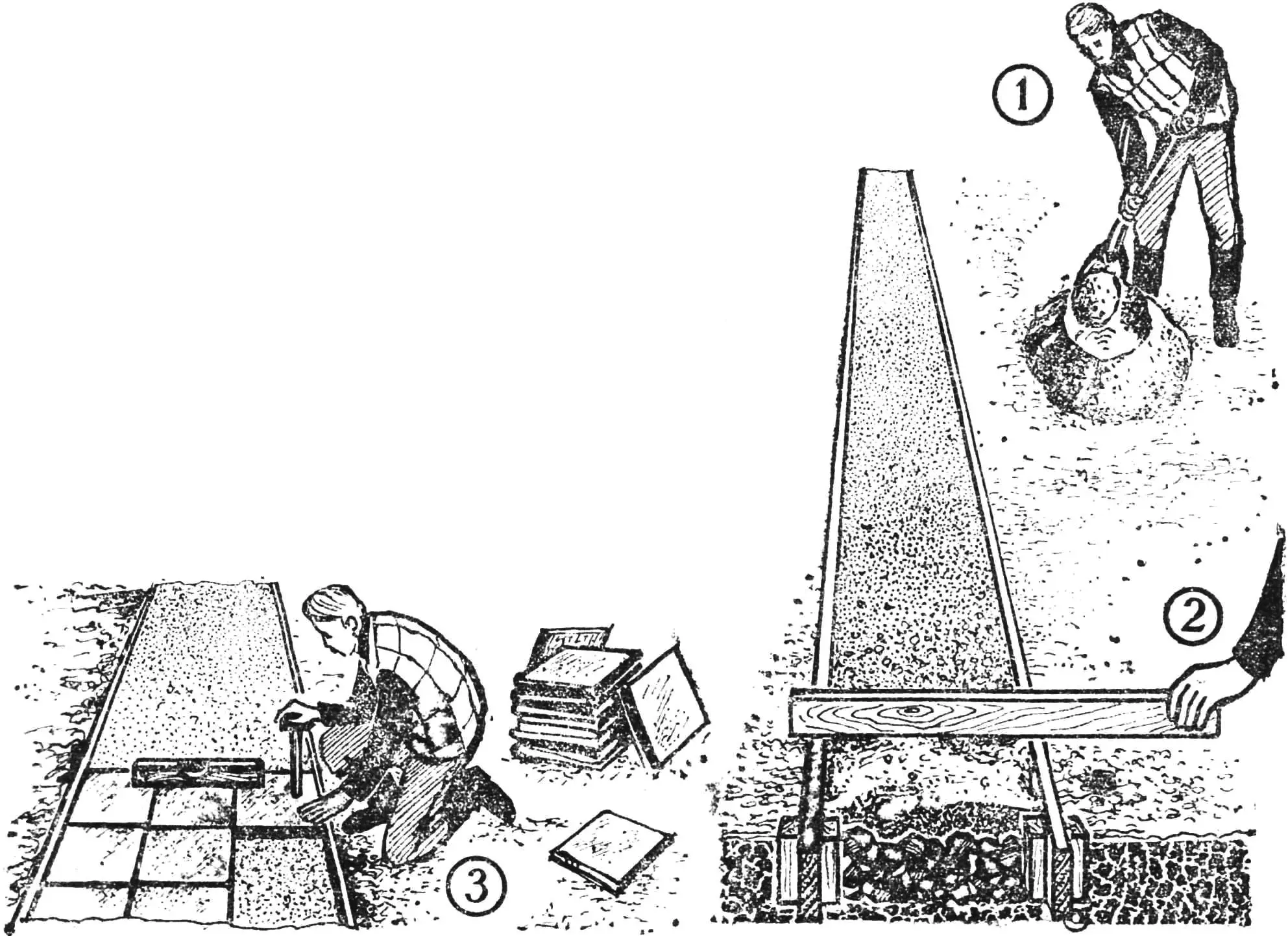
1 — приготовление цементного раствора, 2 — подготовка основания, 3 — выравнивание уложенных плит.
If possible, instead of sand, lay broken stone or brick, and on top — cement mortar at the rate of one part cement and five parts sand. Everything is thoroughly mixed with a shovel and leveled according to board or cord control levels. The slabs laid on top are also carefully tamped, and in such a way that there is a barely noticeable slope toward the edge of the pathway — for rainwater runoff.
«Моделист-конструктор» № 5’1985
Recommend to read
 SCRABLED
Such a tool would work if in wood handle metal brushes to punch the metal plate. The tool will be indispensable in the preparation of surfaces for repainting plate conveniently scrape... SPRING A BLUEPRINT
Currently in stores you can easily buy any necessary household products. At the same time, attention and creative efforts of Amateur designers more going on technically complex objects:...
