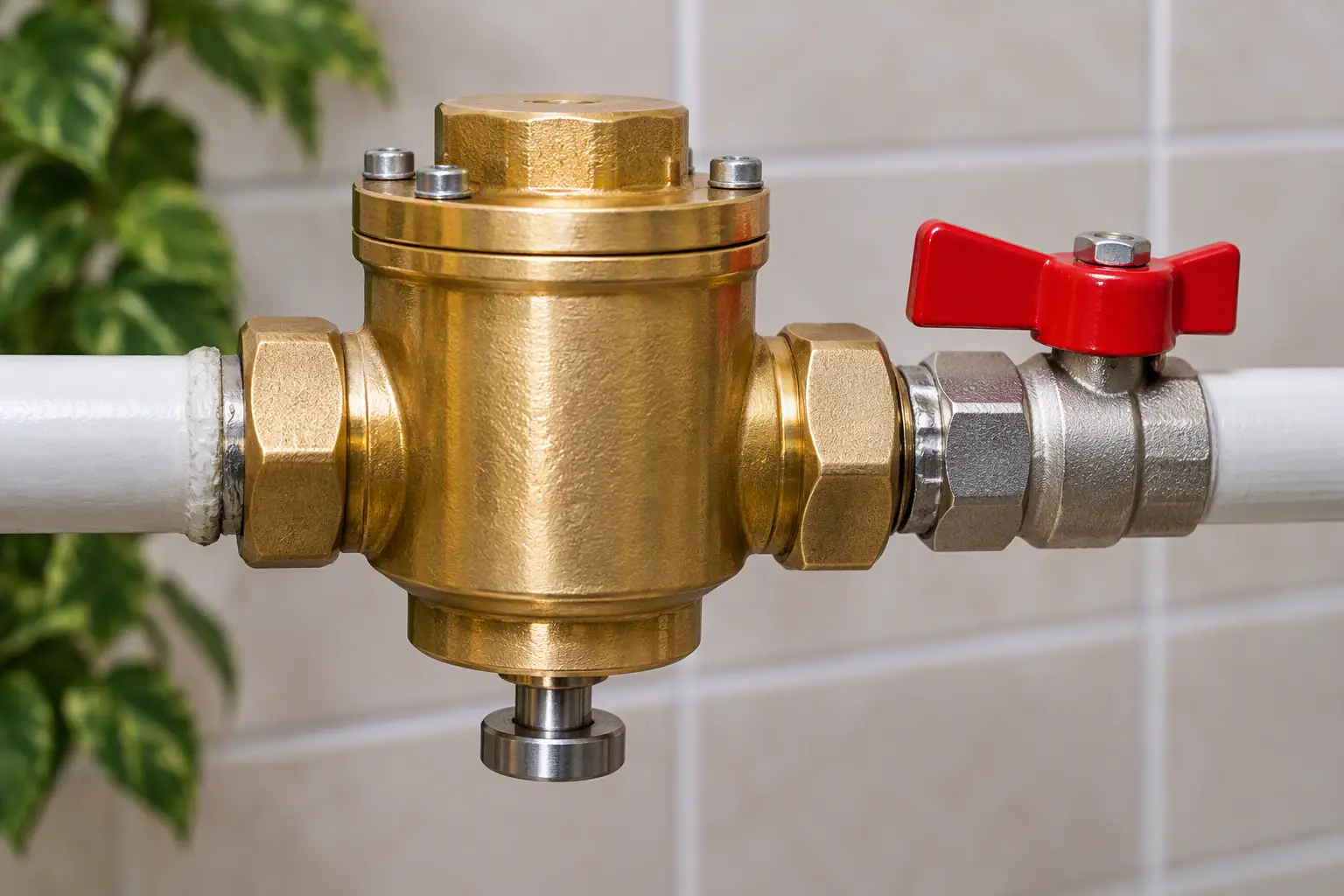
Cases of water being shut off in homes for a long time are not uncommon — not only for repairs to the water-supply system, but also to save water. Such interruptions carry the risk of flooding the entire apartment and the neighbors’ because of a faucet left open, which happens not only in a hurry or through absent-mindedness, but also because there is no water in the pipes and therefore an impression that the valve is closed. It is not hard to imagine the consequences of a sudden restoration of the water supply when the apartment’s occupants are away.
The solution is to introduce into the water-supply system a new shut-off fitting that prevents emergencies caused by an open faucet. Below are a description and diagrams of a safety valve that is simple in design and not difficult to make. It automatically shuts off the apartment’s water-supply system when there is no water and remains closed when the supply is restored. The valve is opened manually.
The operating principle of the valve is based on a special float which, when pushed up, floats in the water and does not impede its flow, and in the absence of water sinks under gravity into a conical shut-off seat and closes the system.
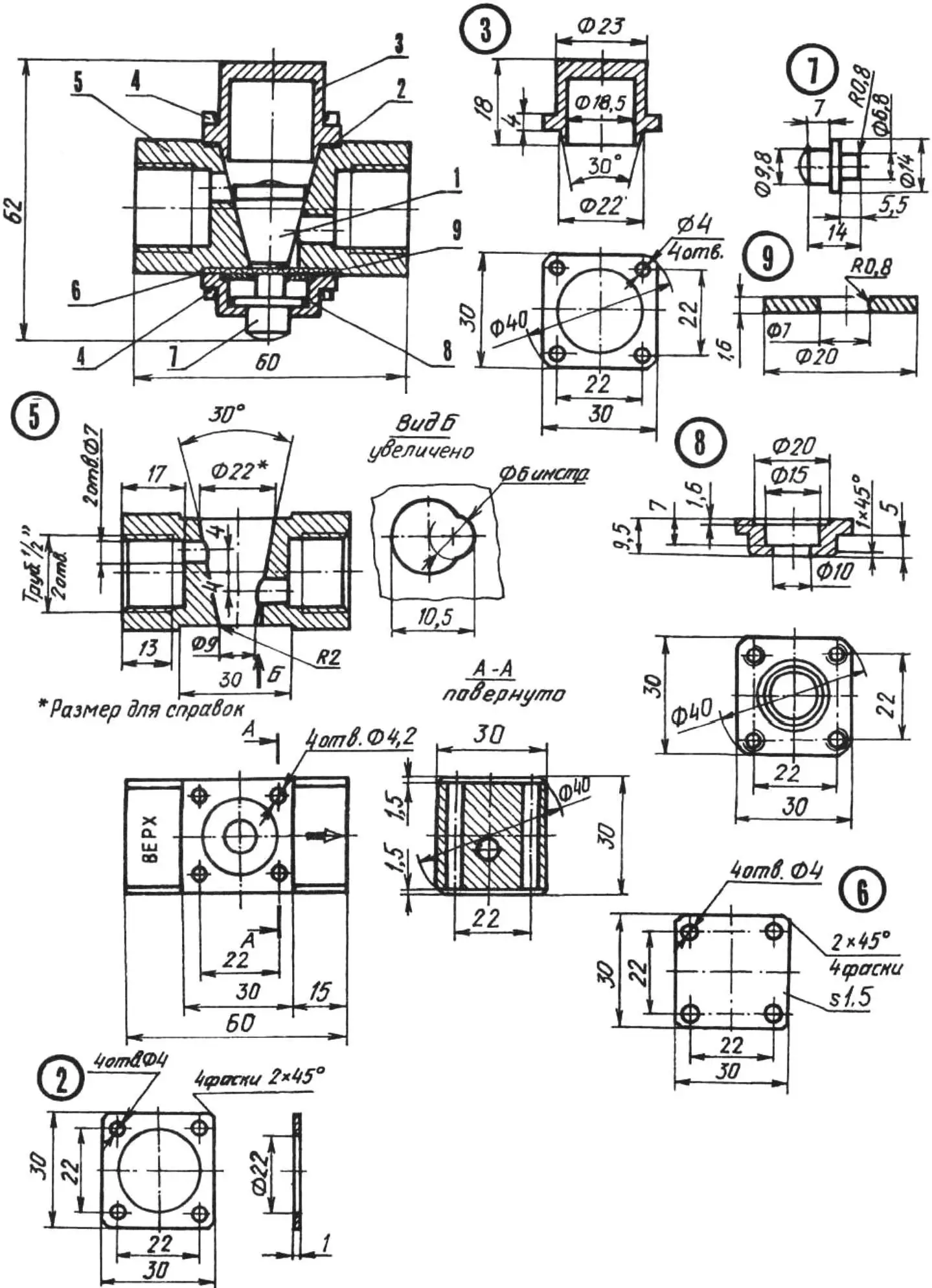
1 — float; 2 — upper cover gasket; 3 — upper cover; 4 — fastening screws; 5 — body; 6 — diaphragm; 7 — button; 8 — lower cover; 9 — guide ring.
The valve is made as a pipe coupling installed ahead of an ordinary valve on a horizontal section of the pipeline. Its float is freely placed in the conical seat of the body and itself has a conical shape that ensures a tight fit when water leaves the system. When the water supply is restored, the float is additionally pressed from above by the pressure of water that has entered through the upper opening in the conical seat. To open a path for water through the valve to the faucet valve, you must press the button under the lower cover. Through the rubber diaphragm the pressure is transmitted to the float; it overcomes the water pressure from above and floats up into the cavity of the upper cover of the valve — water then flows freely to the faucet valve. At the next water shutoff the cycle repeats: as the water leaves, the float sinks under gravity and closes the valve’s outlet opening.
Materials for making the valve parts: brass (body, covers, button, ring), plastic (float), and rubber (diaphragm, gasket).
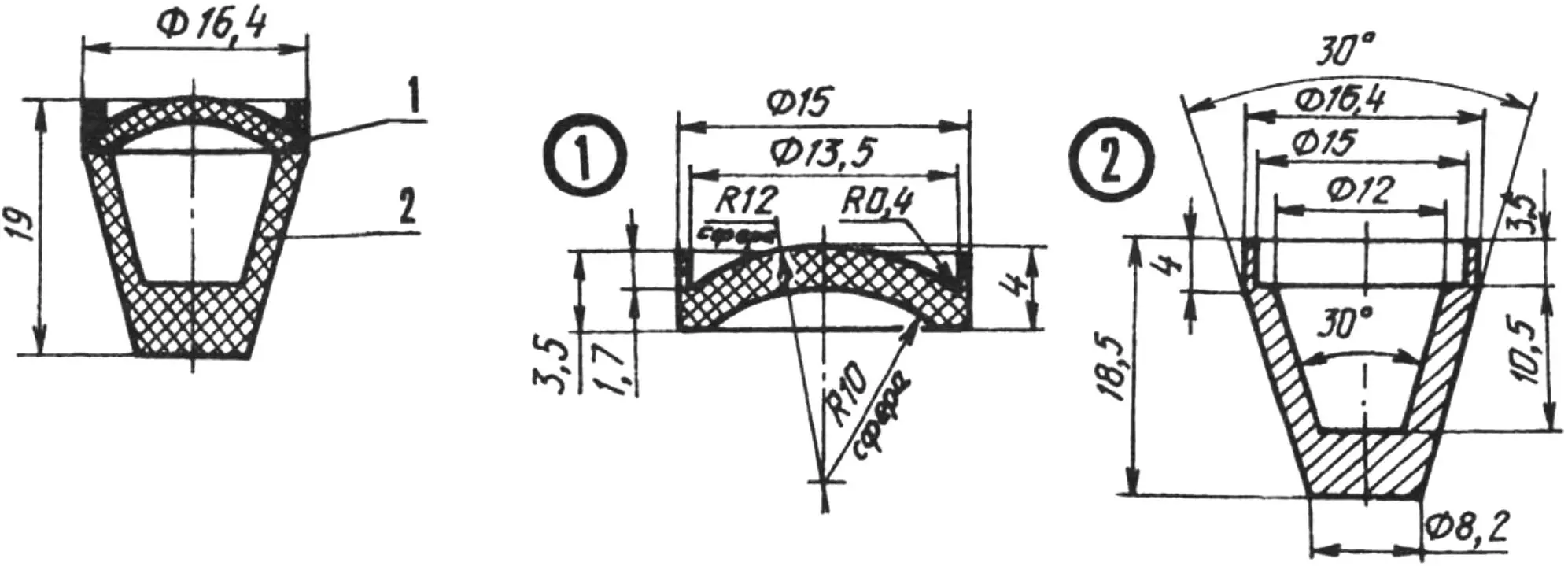
1 — cover; 2 — body.
The float may be hollow, assembled, or solid, made of hard foam plastic with a metal plate attached at the bottom for stability in water.
The valve’s design is intended for long service life. The parts that may eventually need replacement are the rubber diaphragm and gasket. Replacing them, however, is not difficult and can be done by hand.
“Modelist-Konstruktor” No. 12’99, A. YEGISHYANTS, Candidate of Technical Sciences, Obninsk, Kaluga Region.
Recommend to read
 FOAM — AWAY!
It is known that after boiling milk on its surface is formed with the foam. Some like it, others don't. A matter of taste, as they say, if we are talking about adults. However, if the... THE BOOTS ON THE RACK…
Indeed, I may call it depicts the coupled stand, thanks to which the boots do not stand and hang. The advantage is obvious: the shaft of such fashionable footwear do not crumple, because...
