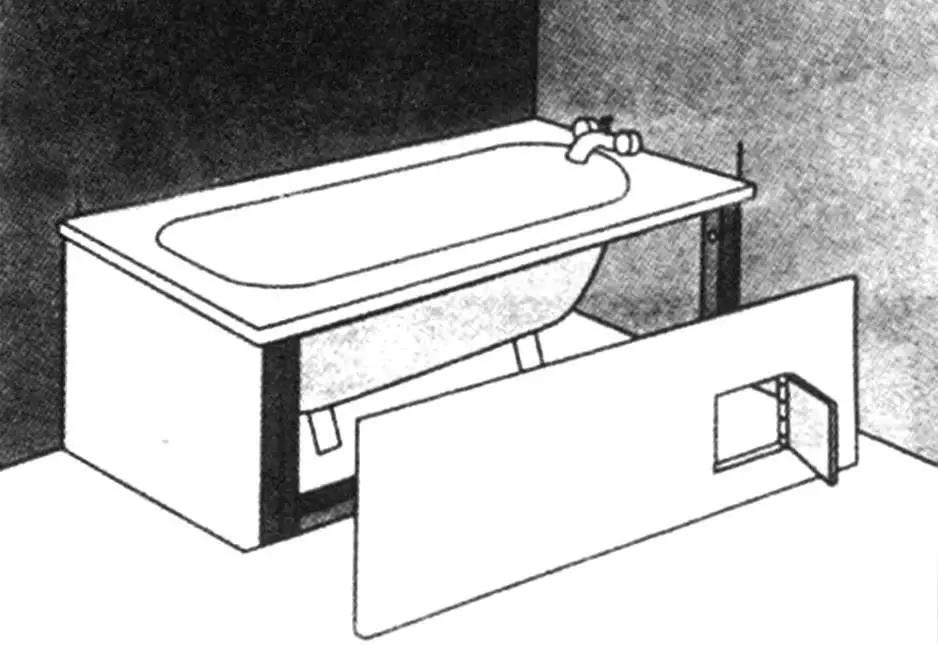
No matter how beautifully the walls and floor of the bathroom are decorated – the overall pleasant picture is disrupted by the gaping space under the bathtub itself, which is usually installed on legs and is not covered by anything. It is no coincidence that the industry has recently started supplying a special panel device – a screen, which is attached to the side of the bathtub, forming a single unit with it.
However, today bathtubs themselves and their installation are so different that the design of a purchased screen does not always fit in each specific case. That is why an accessible and universal way of making a screen yourself directly to suit the features of your bathtub is of interest. This will not require any special tools (see fig. 1), and the materials can even be those available at home or at construction markets. Mainly these will be chipboard panels or moisture-resistant drywall and wooden beams. And in order not to delay the manufacturing process – before starting work, make sure you have all the necessary tools and materials.
FRAME
The screen made of panels is installed on a frame made of wooden beams 40×40 mm, located along the edges of the bathtub and attached to the walls. The figures show the preparation for work in the case when the bathtub is located in the corner of the room, but this order of work is suitable for any layout.

To begin, use a plumb line to draw a vertical line on the wall that touches the corner of the bathtub. It will mark the location of the first frame post. To account for the thickness of the beam, make an appropriate offset and draw a second line parallel to the first. Erase the first line.
Now let’s move to the other corner. Place the plumb line against the corner of the bathtub and mark the corresponding point on the floor. This is where the second frame post will be. At this location, draw a square with a corner at this point and with sides 2.5 cm long so that the square is located under the bathtub rim. Such an offset is necessary to account for the thickness of the screen panel and possible cladding (tiles).
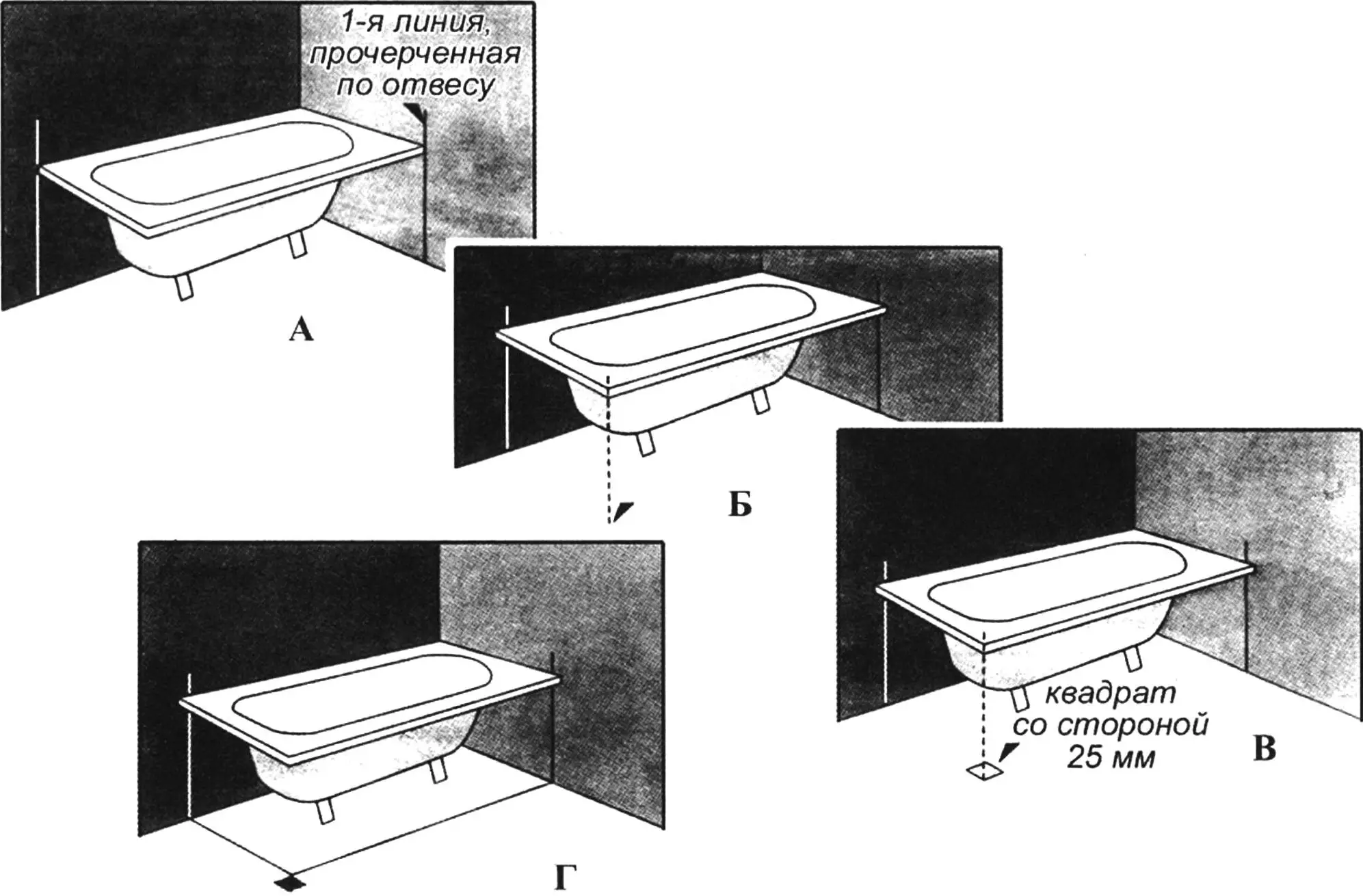
A – start; … D – completion
It remains to mark the location of the third frame post. To do this, first on the wall, draw a vertical line along the plumb line, as in the case of the first post, and mark the resulting point on the floor. Now from the corner of the square diagonally opposite to the point marked with the plumb line, draw lines to the base of the lines drawn on the walls. Thus we have completed the marking for the screen frame.
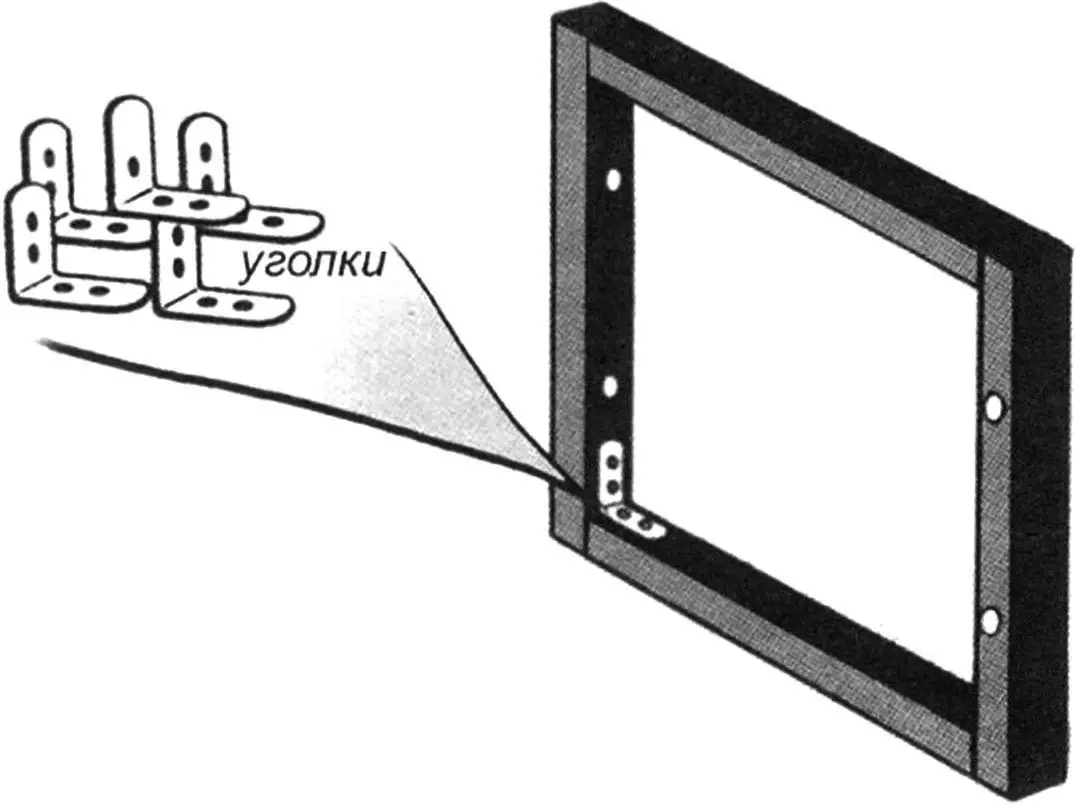
We can proceed to making the frame itself. For this, prepare wooden beams with a cross-section of 40×40 mm, having the following dimensions. For the vertical parts (posts) of the frame – four beams, the length of which is equal to the distance between the lower surface of the bathtub rim and the floor. For the horizontal parts of the frame – two beams, the length of which is equal to the length of the line drawn on the floor along the long side of the bathtub minus 120 mm (triple thickness of the beam); two beams, the length of which is equal to the length of the line drawn on the floor along the short side of the bathtub minus 80 mm (double thickness of the beam).
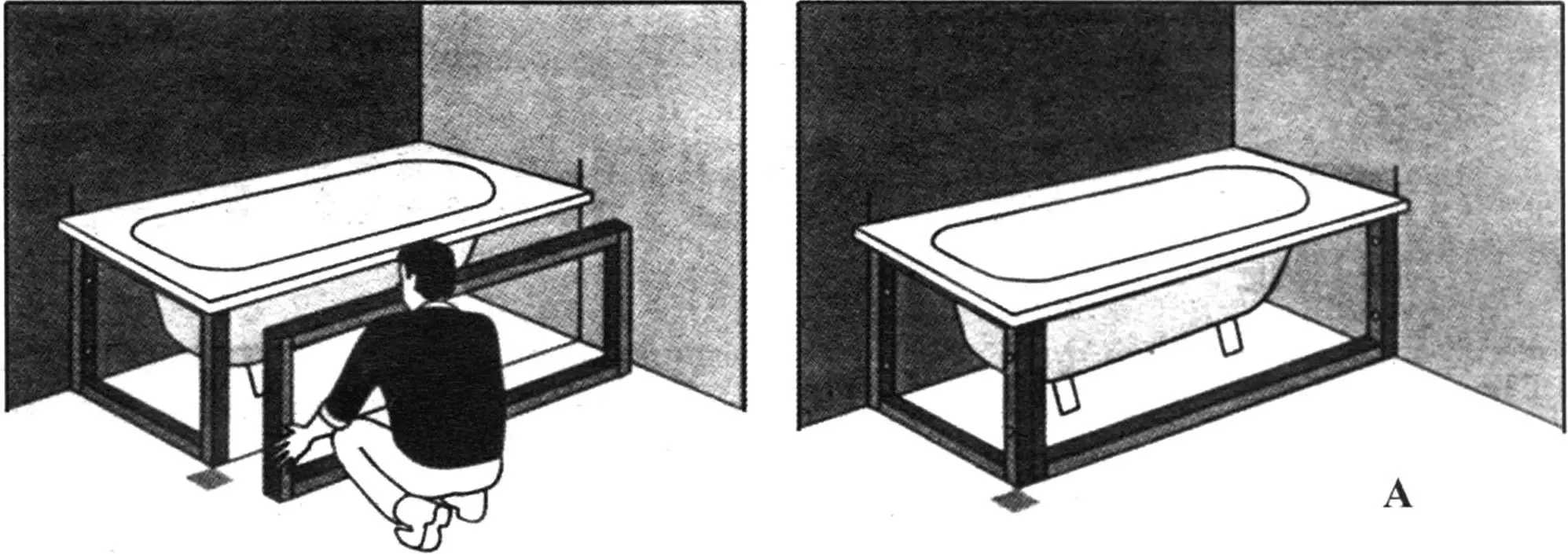
A – screen frame assembled
These blanks will allow you to assemble two independent frame frames in any sequence. Let’s start with the small one. For this, using model corners (see fig. 1), assemble a frame from four corresponding beams. Drill holes in the frame: it will be attached to the wall at two points. Use screws and dowels suitable for the wall materials (solid or hollow wall, brick, wall block) for this.
It remains to assemble the beams for the side frame (long side of the bathtub). Their fastening is done in the same way as for the small frame. The assembled large frame is attached simultaneously at two points: to the wall, as in the first case, and to the installed small frame using screws.

A – making the window; B – hanging the door
Another option for their connection is also possible. It provides the ability to access under the bathtub at any time if necessary without dismantling the frames. For this, only the small frame is attached to the wall, and the large one is installed and held in place thanks to magnetic latches: at two points on the small frame and two – on the wall on the right.
SCREEN
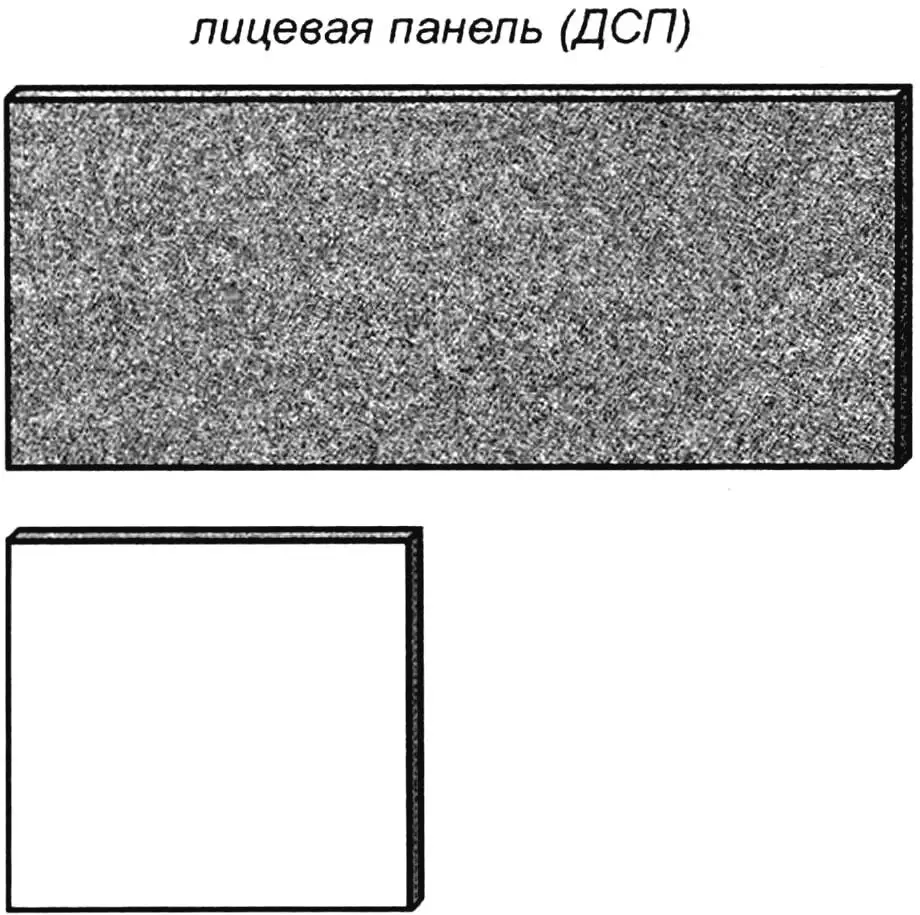
Two chipboard panels 16 mm thick or moisture-resistant drywall are used for it. The small panel size corresponds to the size of the small frame. The large panel has the same height as the front, long side frame. Its length is equal to the length of the frame plus the thickness of the beam, plus the thickness of the small panel. Additionally, you need to have hinges and a metal clamp – for the window on the large panel. To provide for it, use an electric jigsaw to cut an opening for an inspection window in the large panel on the side where the pipes and drain are located. Calculate the exact location of the opening depending on the desired screen cladding. Secure the inspection window using hinges on the end of the opening and attach a metal clamp on the opposite end to close it.
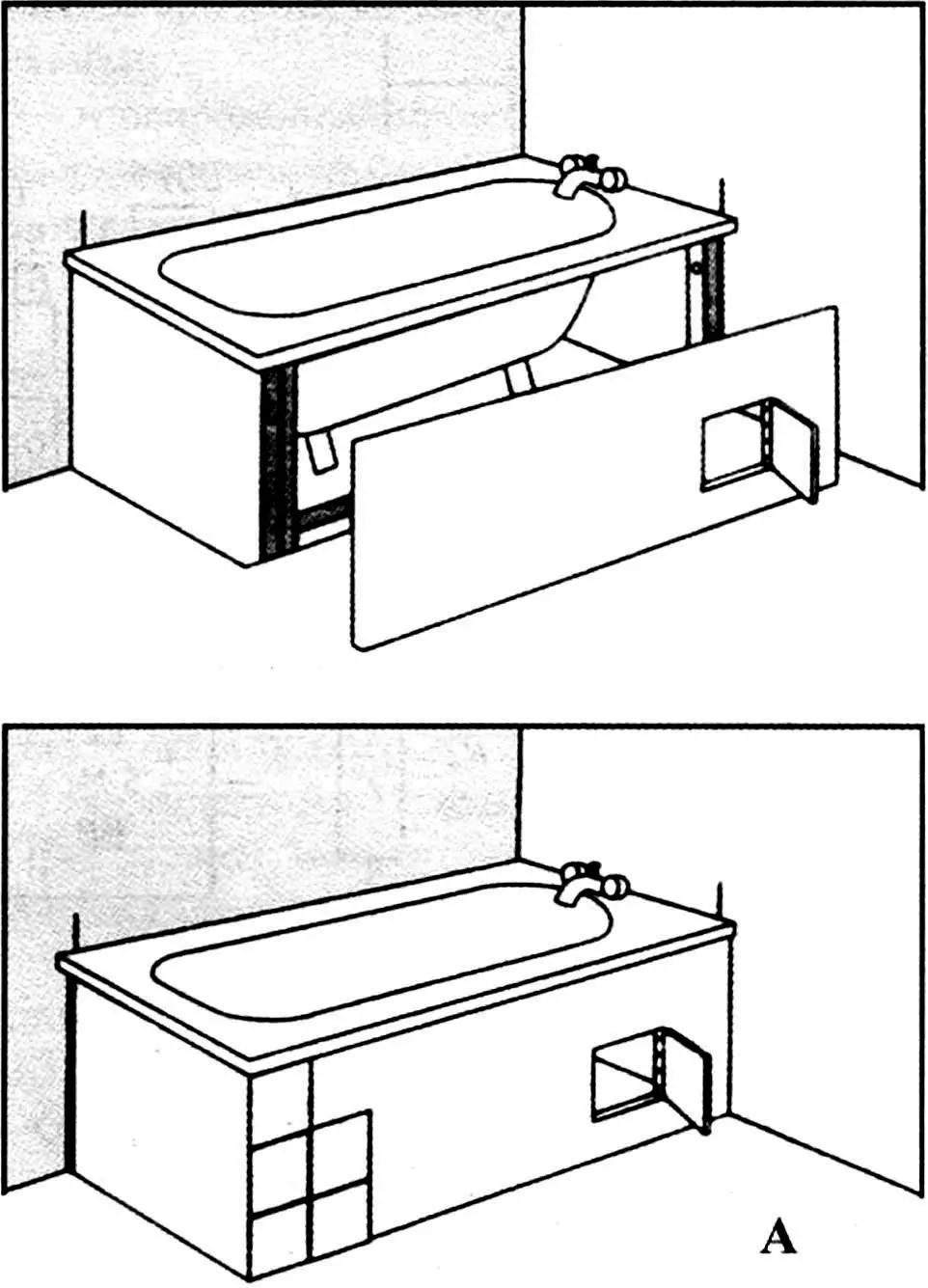
A – start of screen tiling
And finally – the final stage. Screw the small panel to the side frame. Place the large panel in its designated place and make sure that right angles are maintained and the structure is stable. Screw the panel to the frame.
Complete the screen cladding using cladding materials of your choice.
“Modelist-Konstruktor” No. 10’2012, B. VLADIMIROV
Recommend to read
 AS A RULER
Tightly connect the edge of the Board with logs of a log house is not an easy task. However, it is easily solved in the manner shown in the figure. You will need a line? with a number of... NOT ONLY THE VISE
Of course, treating detail at home, you can keep it and just hand, but it is better to use a vise (if they exist of course) — this will increase the usability and reduce the risk of...
