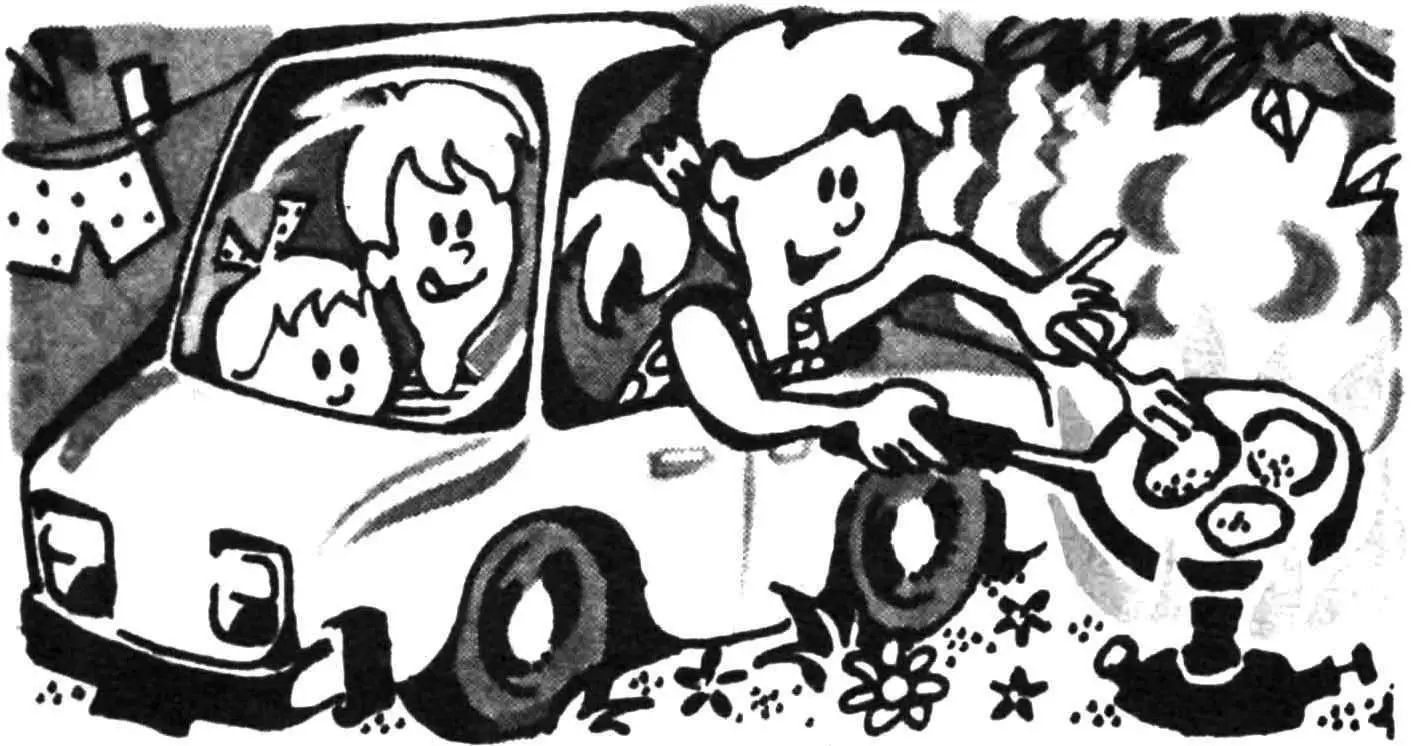
The kerosene primus stove «Rekord» had been lying idle in my garden shed for a long time. At first I wanted to throw it away, since kerosene is hard to find even in the countryside nowadays, but then I changed my mind and decided to convert it to a more readily available fuel—gasoline.
However, you cannot simply replace kerosene with gasoline. The former has a high vaporization temperature, so the «Rekord» burner is designed so that fuel is fed to the nozzle from the tank not directly, but through a tube that runs over the primus flame. There it evaporates and, mixed with air at the nozzle outlet, ignites.
Gasoline, with its low vaporization temperature, will boil instantly in the red-hot tube, which can lead to a rise in tank pressure, explosion, and fire.
For the «Rekord» to work reliably and safely, a new burner was needed. I turned its parts from steel (brass is also possible). The cap and reflector in the body bell sit loosely, without fastening; they are easy to remove if the nozzle needs cleaning. The nozzle is protected from clogging by a fine-mesh metal screen rolled into a coil (fastened with a drop of POS-60 solder).
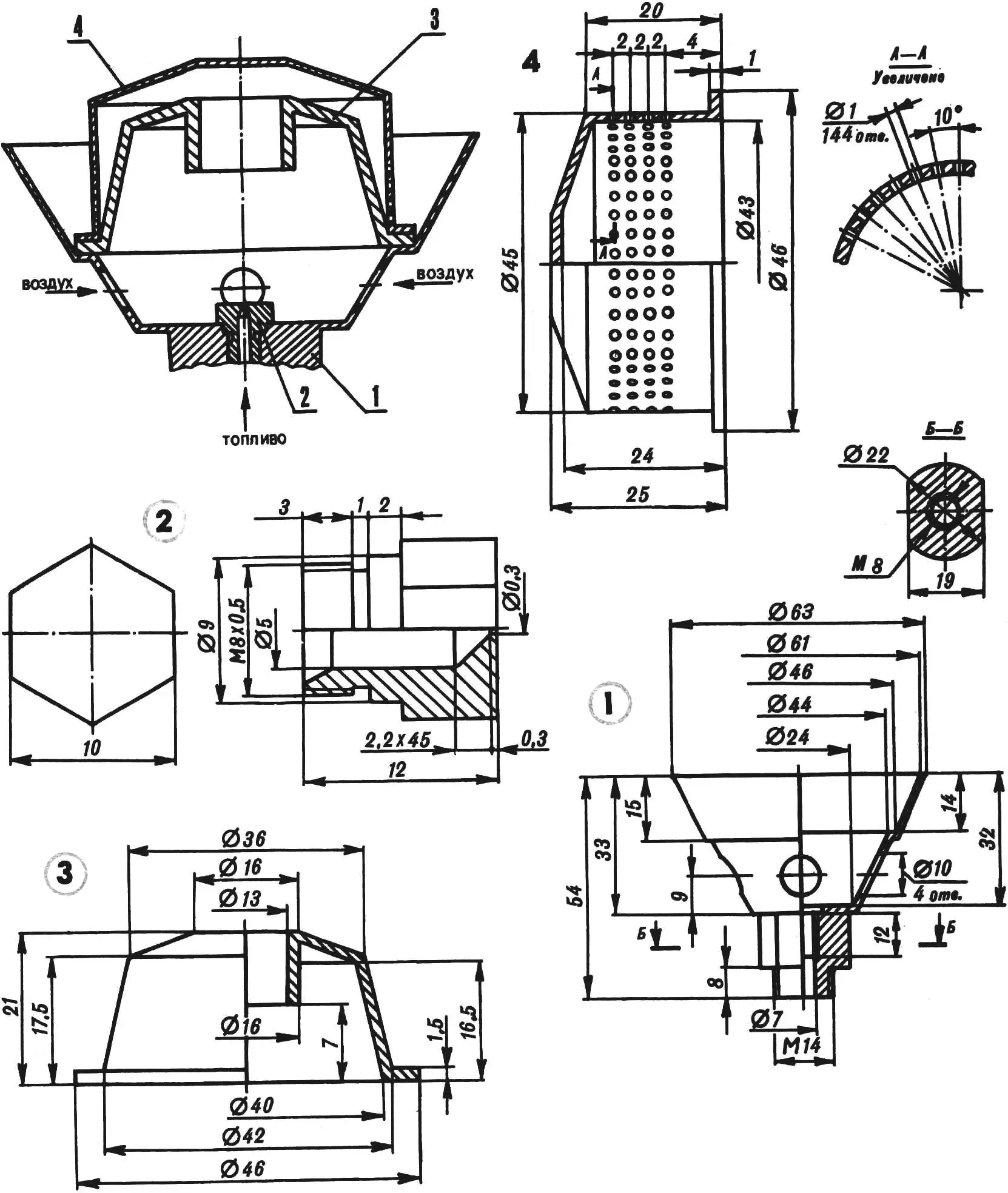
1 — body, 2 — nozzle, 3 — cap, 4 — reflector.
The burner works much like a blowtorch. Under the pressure of air pumped by the pump, gasoline rises to the nozzle and is injected into the space between the cap and the reflector. There it evaporates, mixes with air, heats up and, leaving through the small holes in the reflector, ignites.
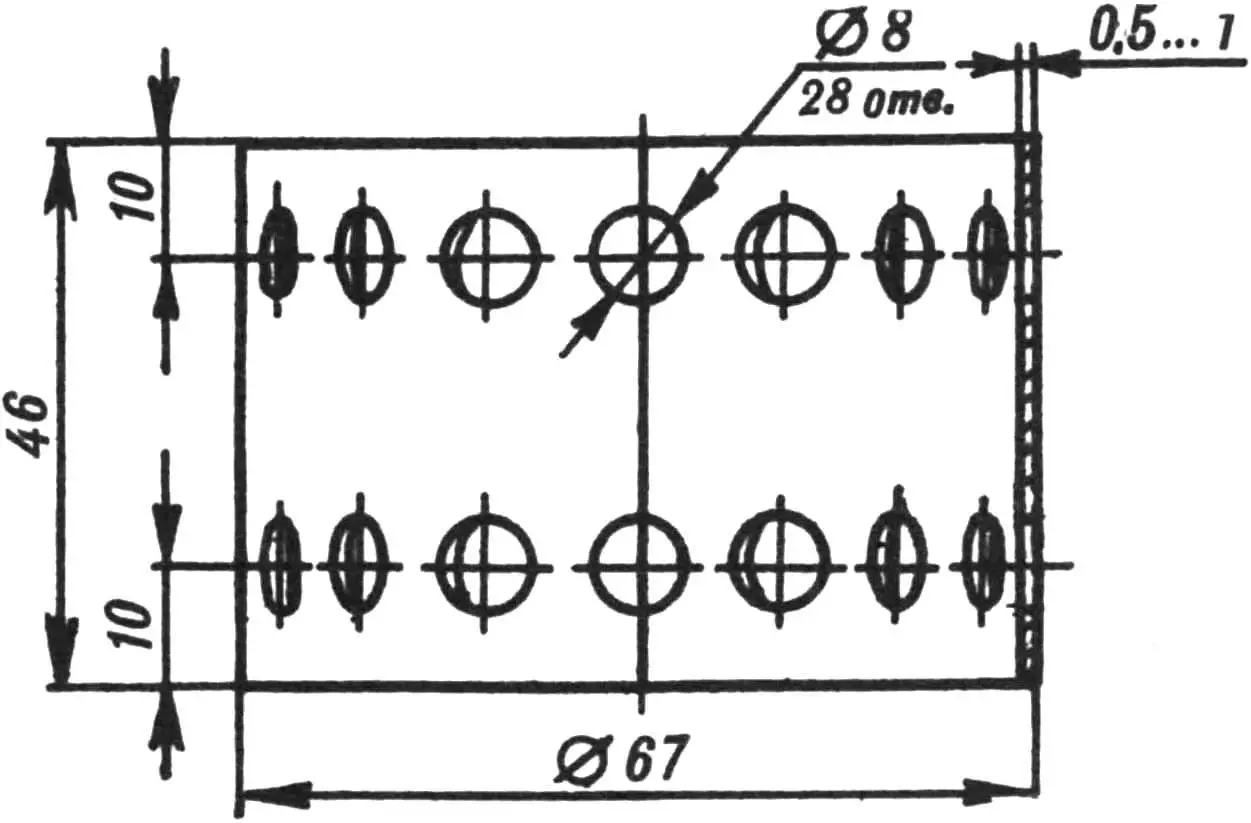
For using the primus outdoors I made a wind guard from 0.5 mm steel sheet that fits over the burner. (As a last resort you can use a suitable tin can, carefully cutting out its lid and bottom.) The guard height is roughly equal to the burner body height in working position, the diameter is slightly larger; the edges are perforated with Ø 8 mm holes at 15 mm pitch.
Such a primus is preheated the same way as a kerosene one, using alcohol, denatured alcohol, gasoline, or solid fuel. In bad weather the last is better, crushed and wetted with gasoline.
The burner flame should be pale blue. If it forms a torch, extinguish the primus immediately and repeat preheating. Do the same when the flame roars and heats the reflector red. That means the burner parts in the bell are installed incorrectly.
In addition, the safety rules given in the kerosene primus manual should be extended: do not use gasoline with an octane rating above 93; do not pour it into a hot or running primus; do not mix it with lubricating oils—that does not reduce its fire hazard. Finally, do not use leaded fuel—it is toxic.
«M-K» 11’89, Yu. SHURCHKOV
Recommend to read
 City car “Alezonnik-2”
The two-seat car “Alezonnik-2” was built specifically for driving in urban conditions. Therefore, even before design work began, I formulated the main requirements the future vehicle had...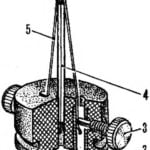 THREE, TWO, ONE-BLASTOFF!
...Pressed — and rocketmodel rushes into the sky. It worked Elektrostal — nichrome spiral, covered with inflammable matter, heated by an electric current, and the fuse ignited the powder...
