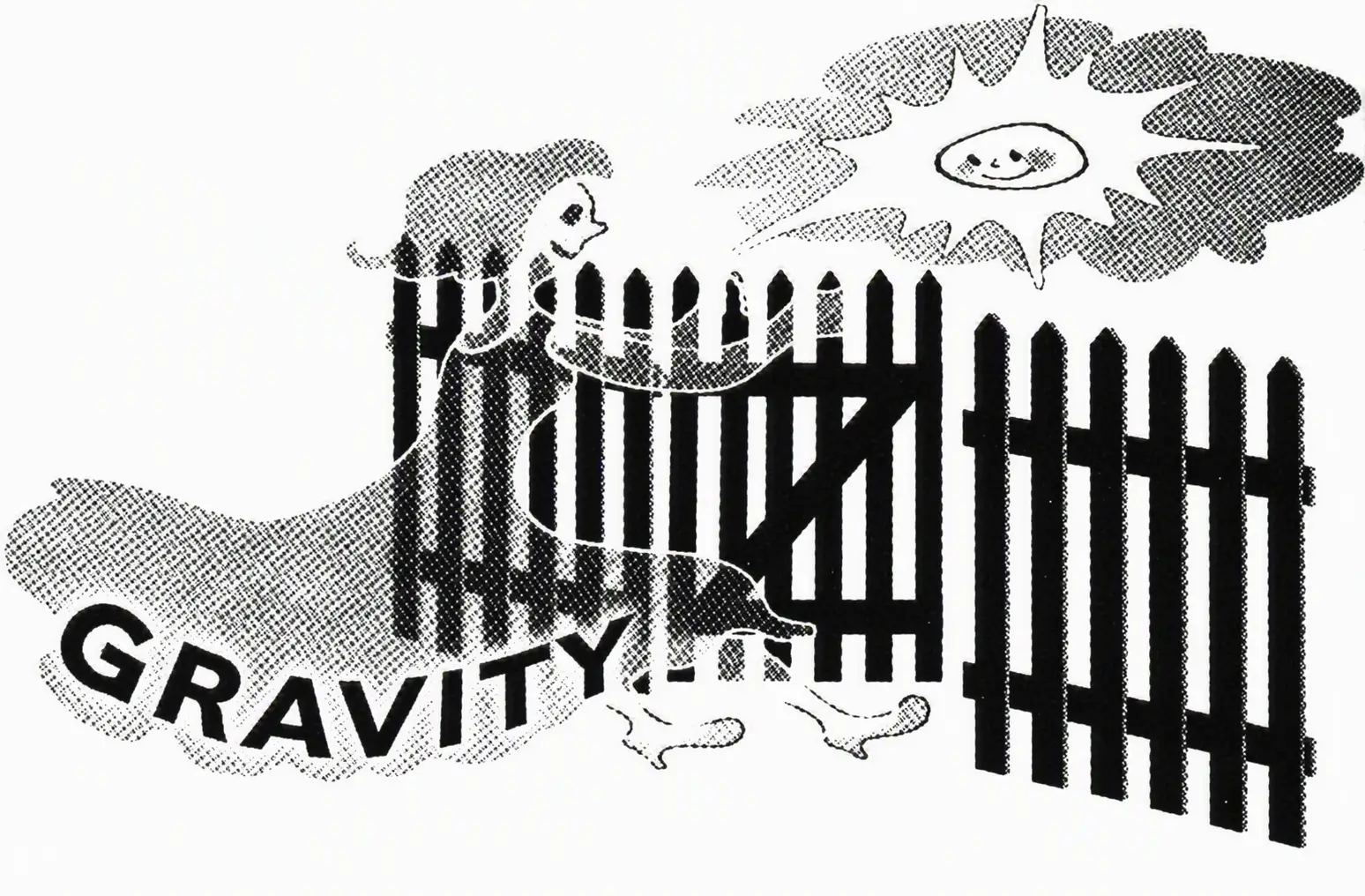
The finishing touch of any dacha fence is, as everyone knows, a wicket gate. Country homeowners often equip them with simple devices that automatically close the gate after someone passes through — steel springs, rubber tension cords, counterweight weights… However, all these “automatic” mechanisms have drawbacks, and the main one is that they all require extra parts — springs, rubber bands, weights, and so on. Yet there are devices that contain not a single additional part, and the closing force is obtained through… gravity.
Look at the drawing — a gate like any other, hung on two homemade hinges; however, on an ordinary gate the hinge axes lie on a vertical line, while on a “gravity” gate this axis is tilted away from the vertical by 5 — 7 degrees. Accordingly, the hinges are special too — they are made from sections of steel channel 40x50x4 mm, and their pivots are also tilted 5 — 7 degrees from the vertical.
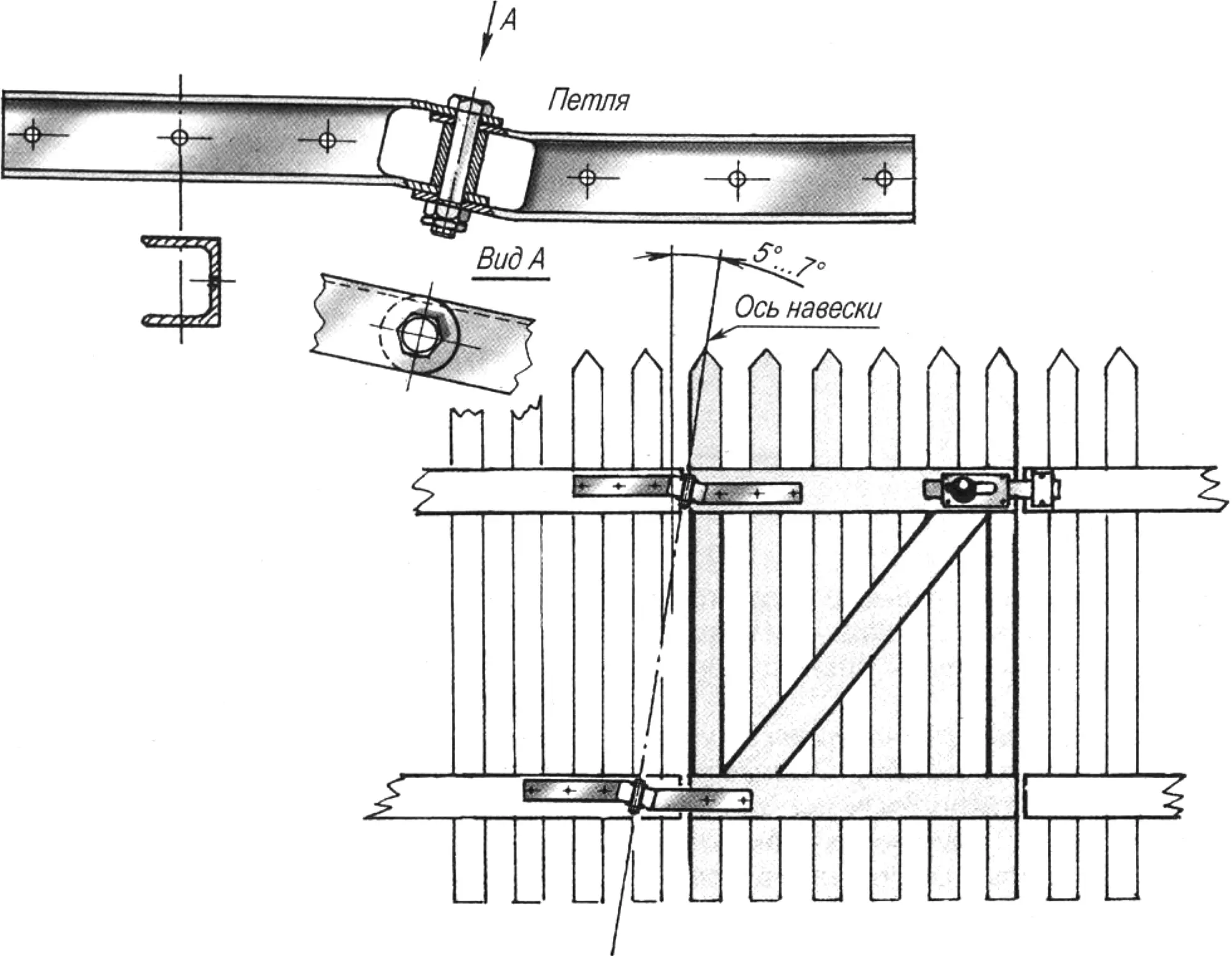
When hanging the gate, you should align the hinge pivot axes with the hanging axis as precisely as possible — otherwise the device will not last long.
After hanging it, try opening the gate — it will rise slightly, and when released it will slam shut under the action of gravity.
That’s it — and not a single extra part!
“Modelist-Constructor” No. 8’2010, I. GALKIN
Recommend to read
 BUSINESS CARD OF A COUNTRY HOUSE
Not talkr the house, but the fence around it has a lot to say about the host: one it's an easy fence, another fence and the third fence. But whatever the barrier, it is necessary to... AND LOCK LIKE NEW
It happens that the fastener-"lightning" on jackets, boots, trousers or skirts after some time becomes hard to hold. If all its teeth in order, the case is in lock-slider — weakened his...
