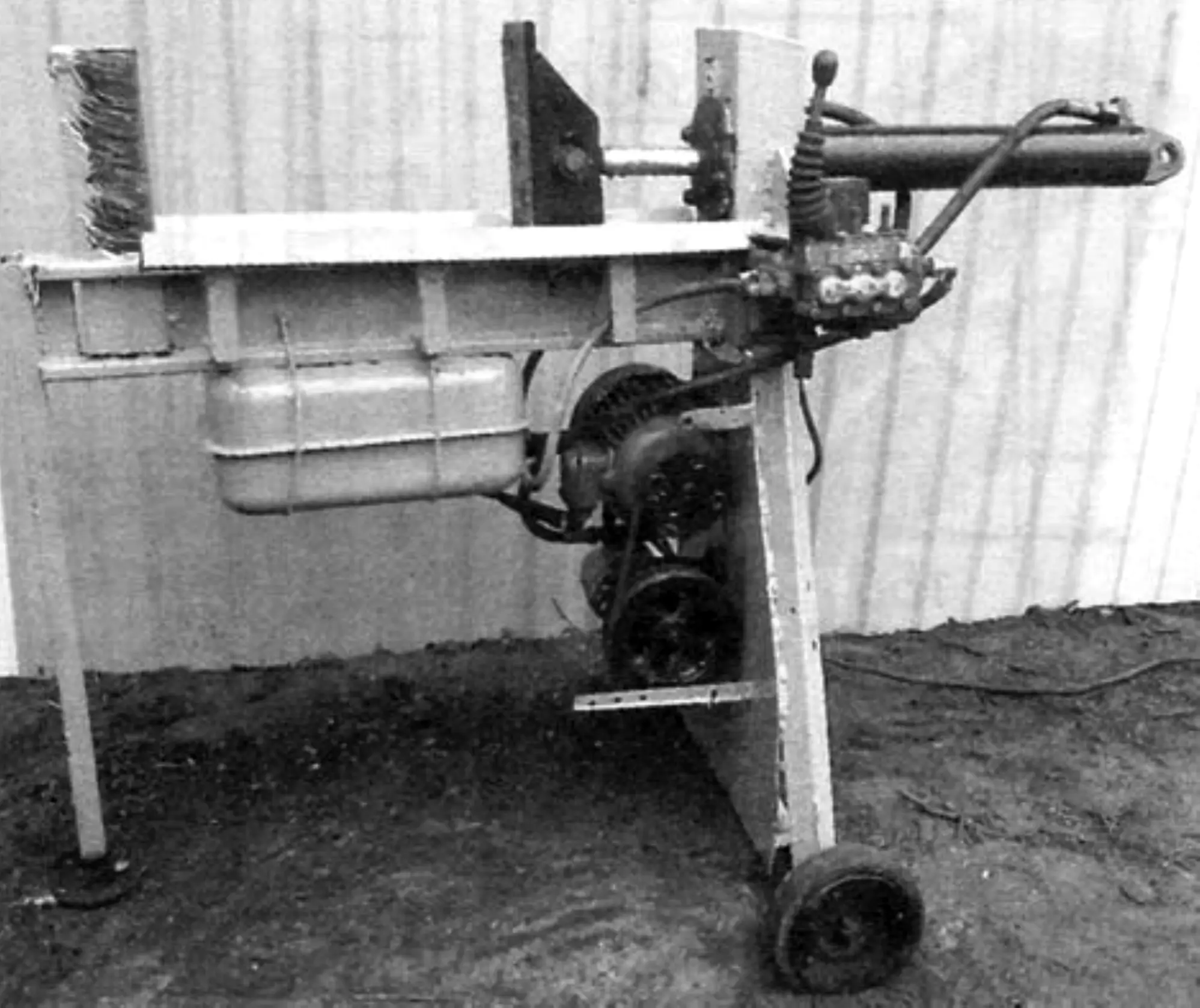
In a well-known encyclopedia of the century before last, “Industry and Technology,” in the volume on the “processing of fibrous substances,” which wood also is, it is said that “in work on dividing wood … splitting is of importance.” And further: “a wedge-shaped tool bends apart the parts of the wood being separated; here the wood is torn at a distance greater than the tool can penetrate.”
There is an extraordinary number of types of axes. But for splitting, a splitting axe (maul) is the most suitable. It is not only a matter of its greater mass and a longer handle for the swing. The main thing is the edge of the blade and its sharpening. Scientists have found that the optimal sharpening angle is 40°–60°. In this case the side surfaces of the blade work, helping to split the log, directing tensile forces in different directions and delaminating it into parts.
The operating principle of a mechanical splitter is in no way different from “hand splitting.” But here too the blade must approach the log exactly parallel to its longitudinal fibers, otherwise the axe will simply stick in the wood. Therefore it is necessary to ensure reliable stability, first of all for the frame of the mechanism along which its main parts move.
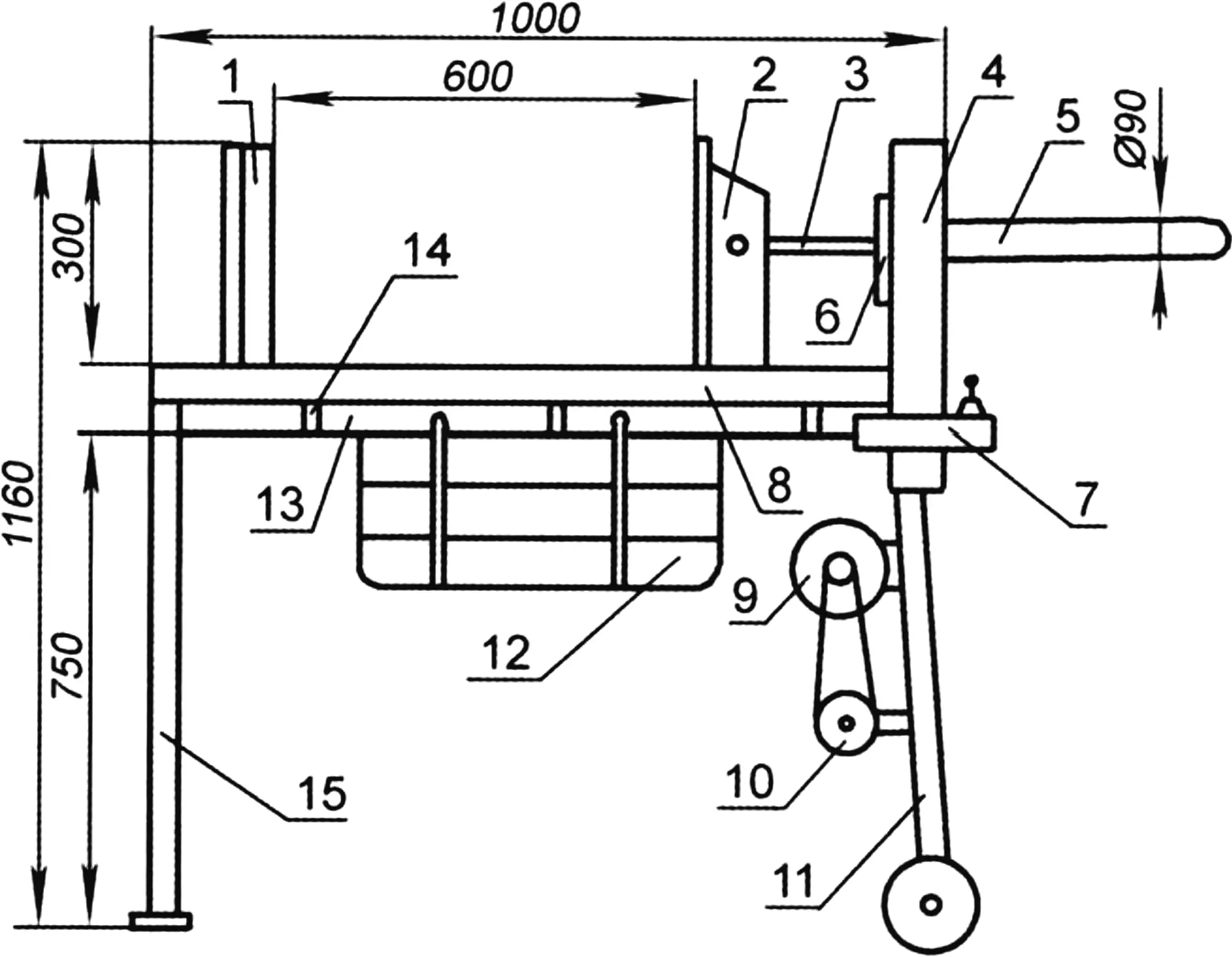
1 — knife; 2 — pusher; 3 — hydraulic cylinder rod; 4 — hydraulic cylinder stand (channel 180x70x9); 5 — power hydraulic cylinder, stroke 600 mm (Ø90); 6 — mounting flange; 7 — control distributor; 8 — guide angles (50×50); 9 — electric motor 3.5 kW; 10 — drive of oil pump NSh 32; 11 — front support; 12 — oil tank (20 l); 13 — base T-beam (90x90x10); 14 — holder of guide angles (150x40x5); 15 — rear support
Therefore, as the frame of the fixed guide of the log splitter, a relatively strong I-beam No. 18U measuring 90x90x10 mm was chosen. On one side of it is the splitting knife, on the other — a pusher actuated by a power hydraulic cylinder with a pump and an electric motor. It was also desirable for the mechanism to be movable from place to place. For this it must have wheels on the front and rear stands.
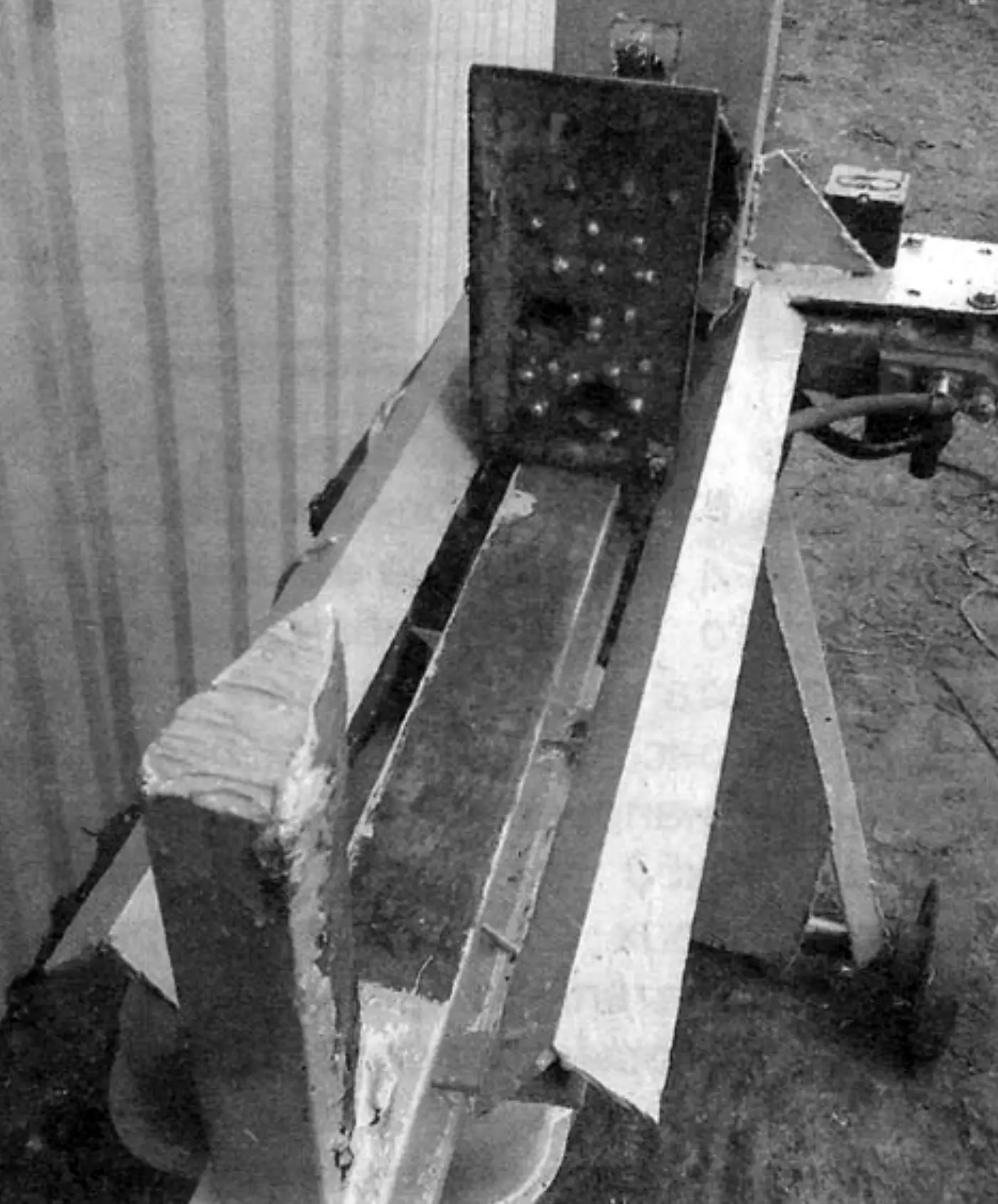
Along the frame, the hydraulic cylinder moves the log toward the splitting knife. This part was made from a steel billet (steel 45) measuring 400x80x50 mm and ground on an emery wheel to 60° at the tip. At one end of the I-beam frame — on its upper flange — a cutout was made, the splitter was inserted vertically and firmly welded to both flanges.
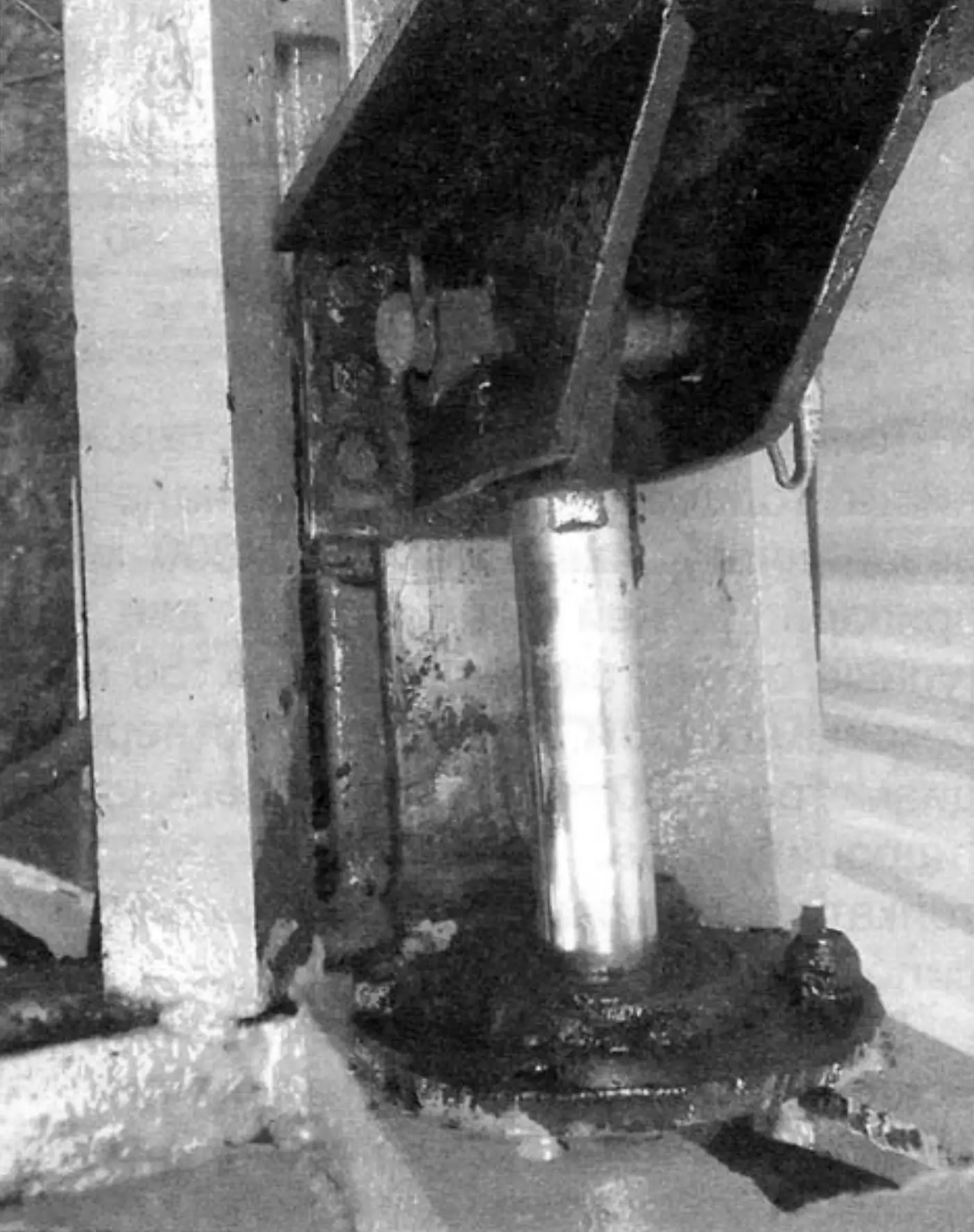
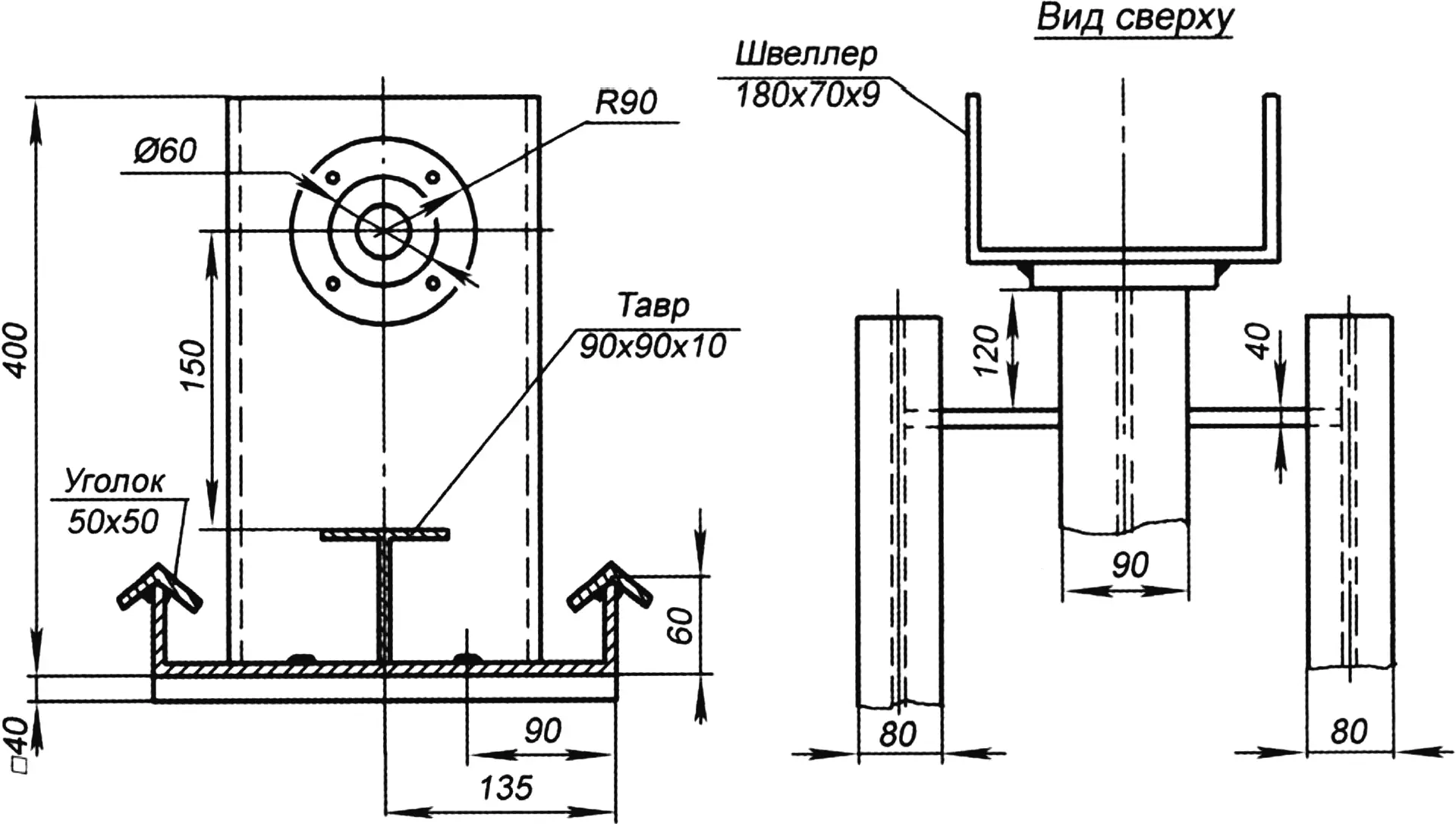
At the other end of the frame the hydraulic cylinder stand was welded on. It was made from a channel measuring 180x70x9 mm, 400 mm high. On its inner side, for mounting the hydraulic cylinder, a circular flange with four holes for 14 mm bolts was already welded. In its center is a hole 60 mm in diameter for the passage of the cylinder rod.
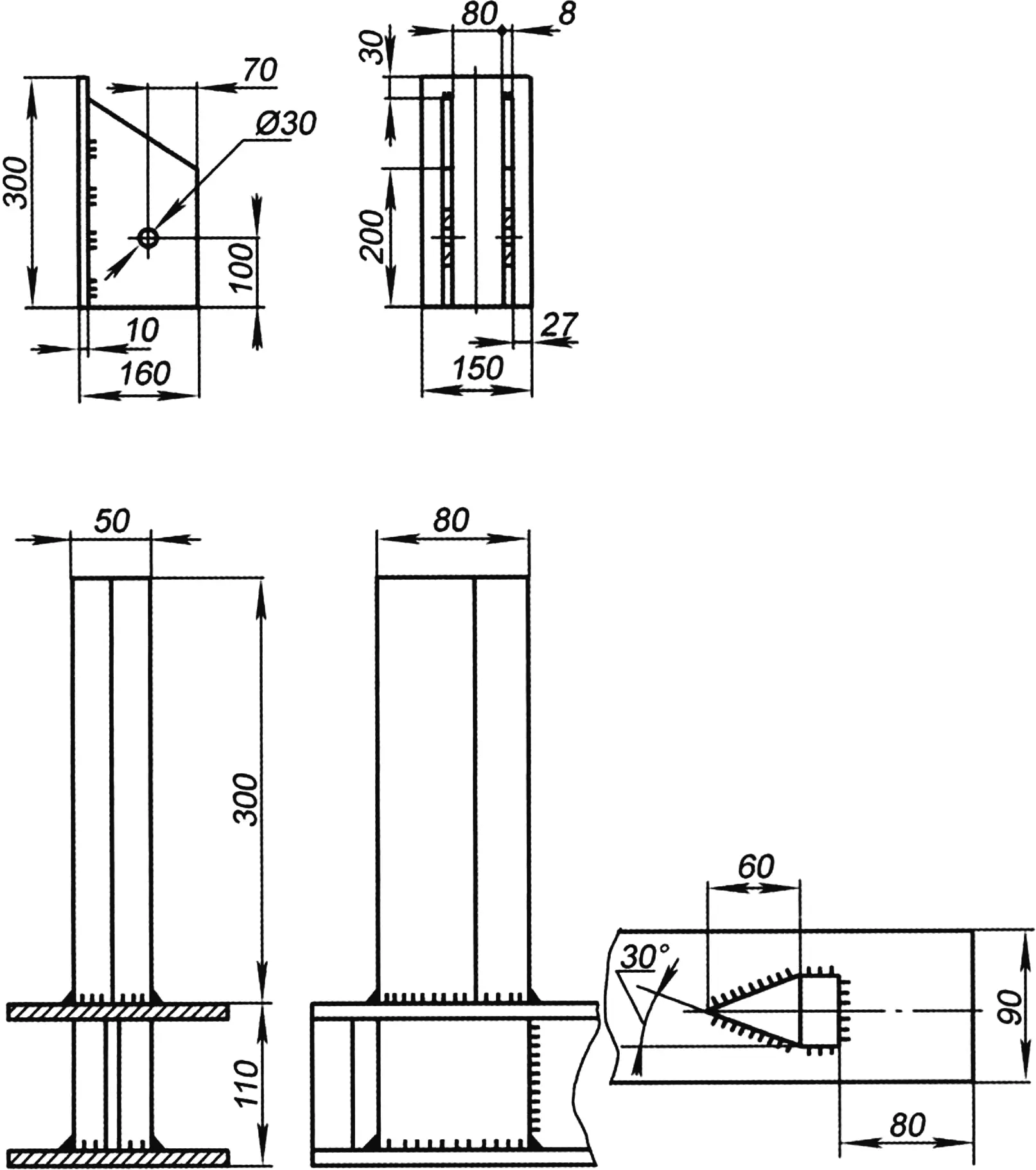
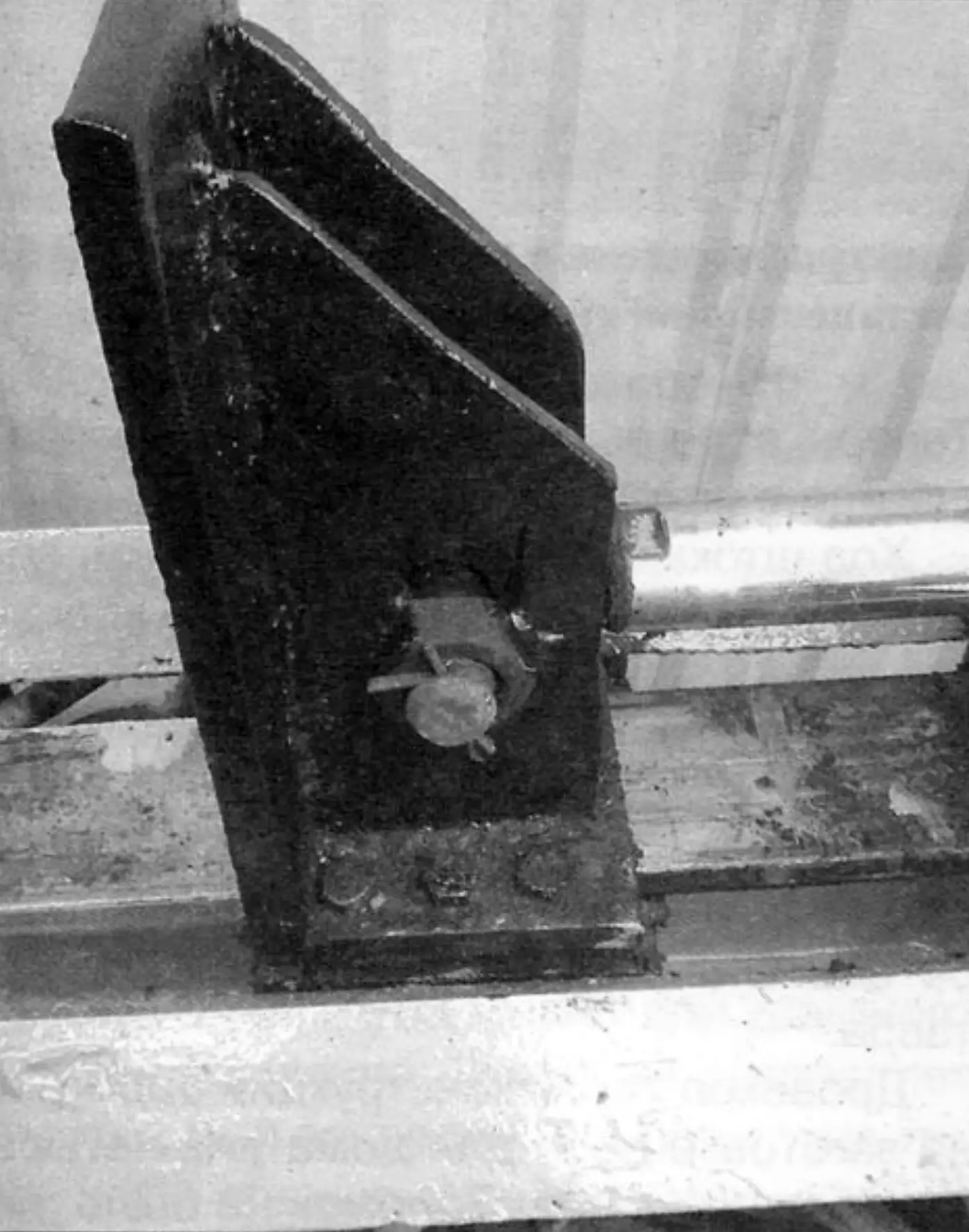
The pusher was made from 10 mm steel plate. First a plate measuring 150×300 mm was cut and two shaped uprights measuring 270×150 mm with a side cut were welded to it vertically. A 30 mm hole was drilled for the pin of the hydraulic cylinder rod. In this way the pusher itself could be connected to the power cylinder.
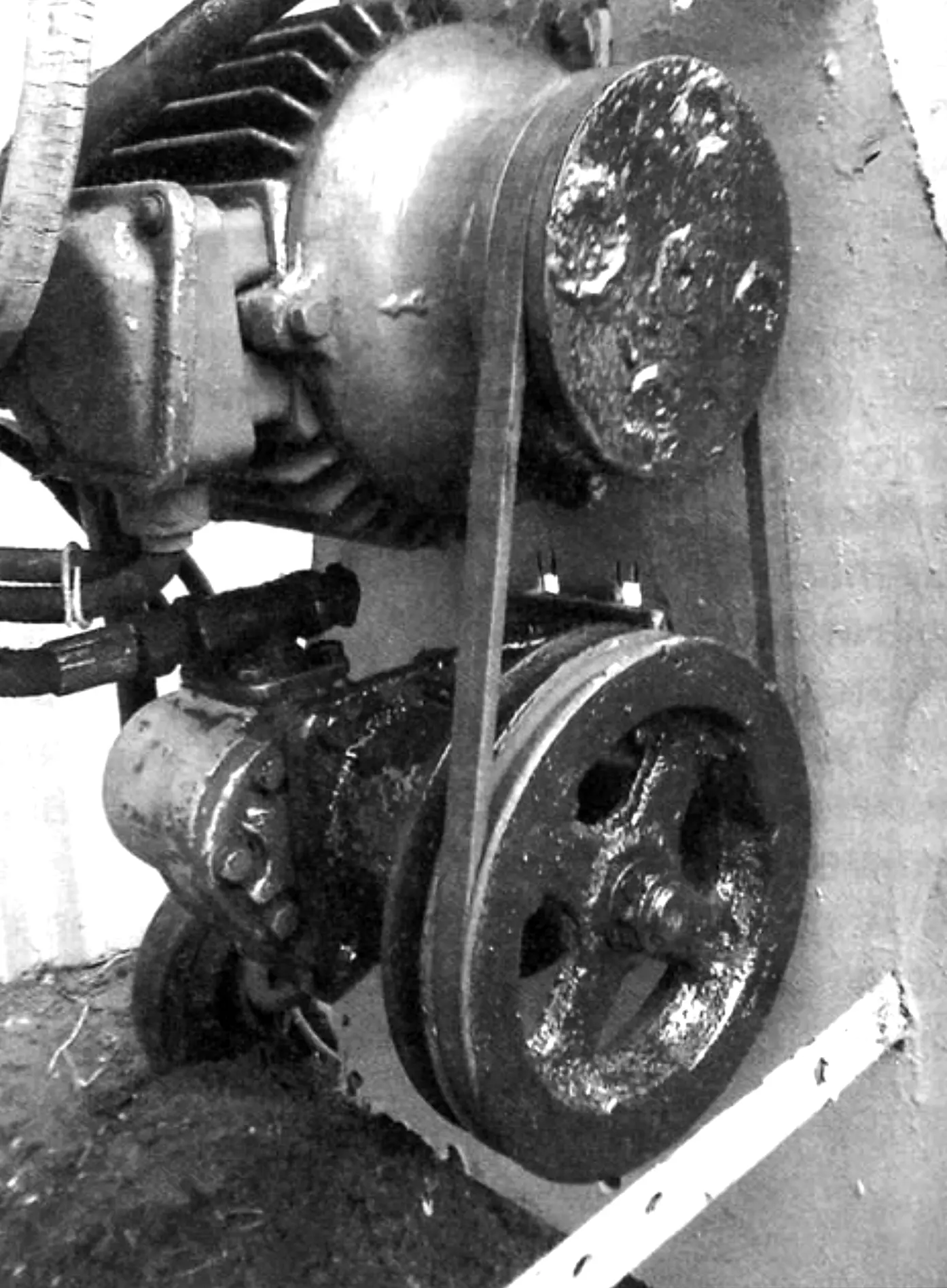
For operating the hydraulic cylinder, a 3.5 kW electric motor at 1500 rpm was selected. As it turned out, the motor power was quite sufficient in operation. From it a belt pulley was led to the drive of pump NSh 12 — a gear oil pump measuring 146x159x137 mm. Both were placed at the edge of the log splitter under the cylinder stand. A 20-liter oil tank was fastened under the frame at its center.
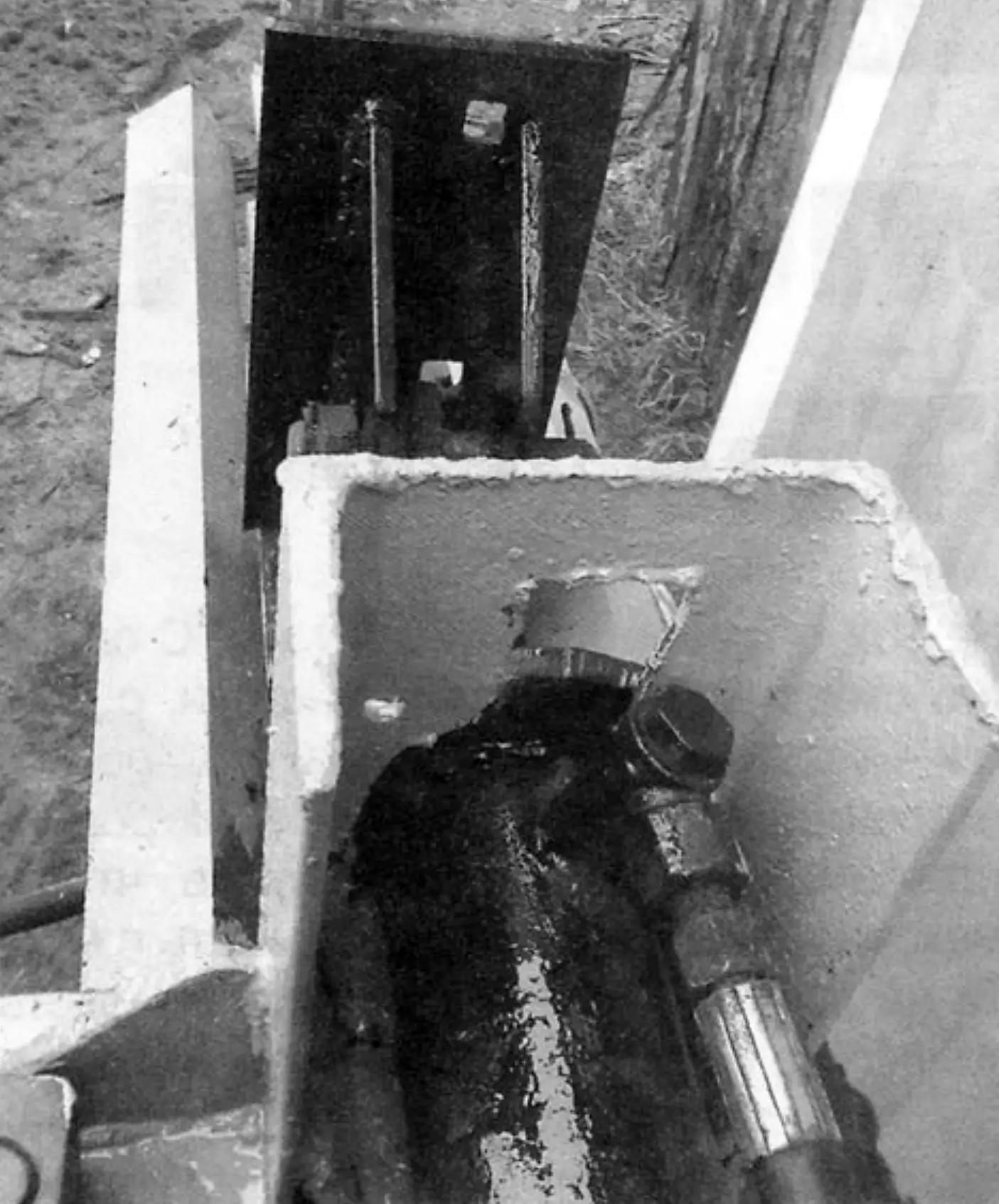
To keep the log from falling off the frame, guide angles measuring 50×50 mm had to be run along both sides of it at a distance of 90 mm. They are mounted on three pairs of holders-strips bent at a right angle, measuring 40×5 mm, which are welded to the lower flange of the T-beam.
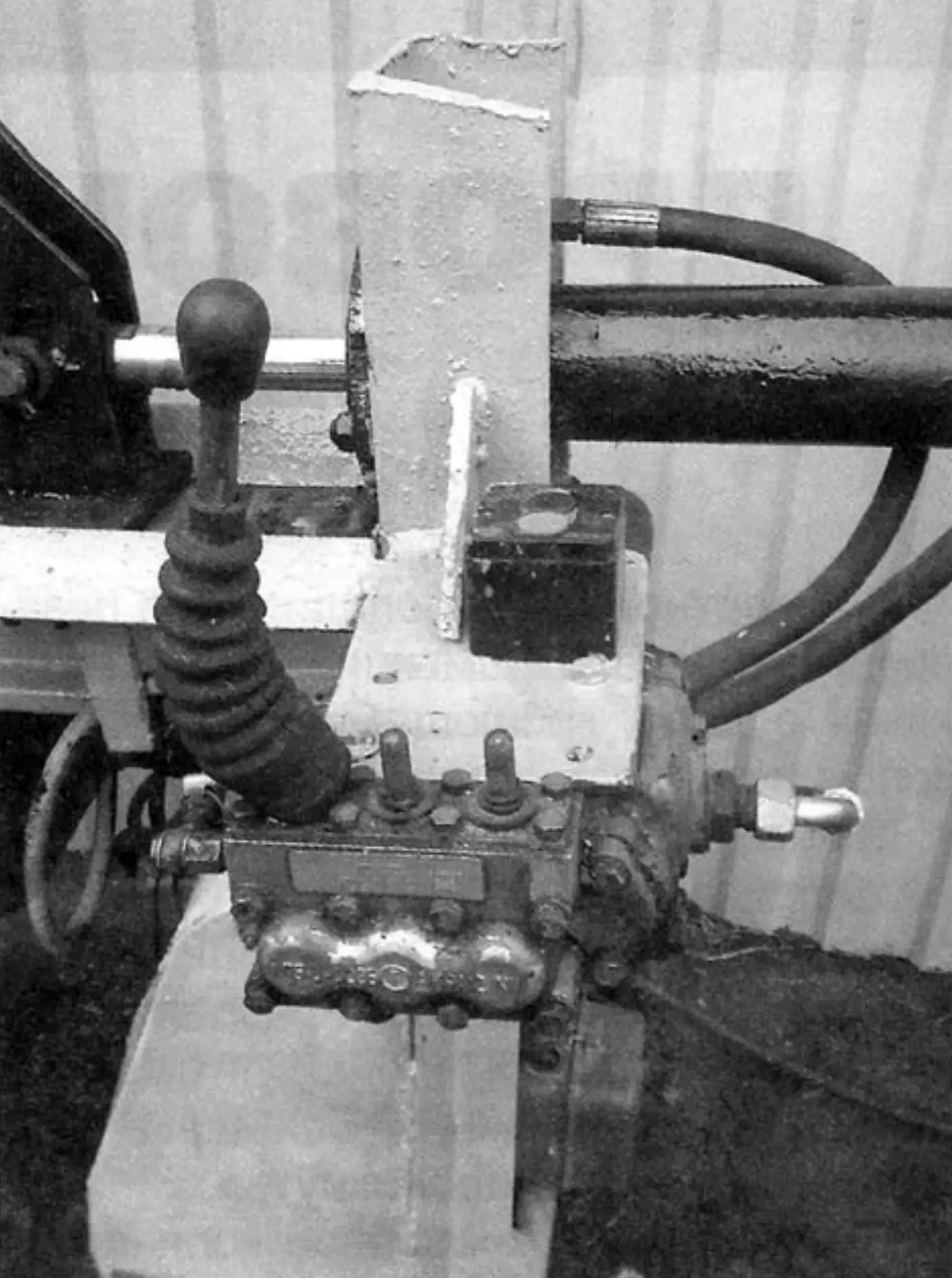
The mechanism is controlled by means of an R-80 distributor from an MTZ tractor. It is somewhat modernized, though: the balls that lock the lever were removed for safety. Now, if the lever is released, it returns to the initial position.
The hydraulic cylinder stroke is 600 mm, so logs 40–50 cm long can be placed on the frame. They are split into two parts, but it is also possible to fit a four-edged knife.
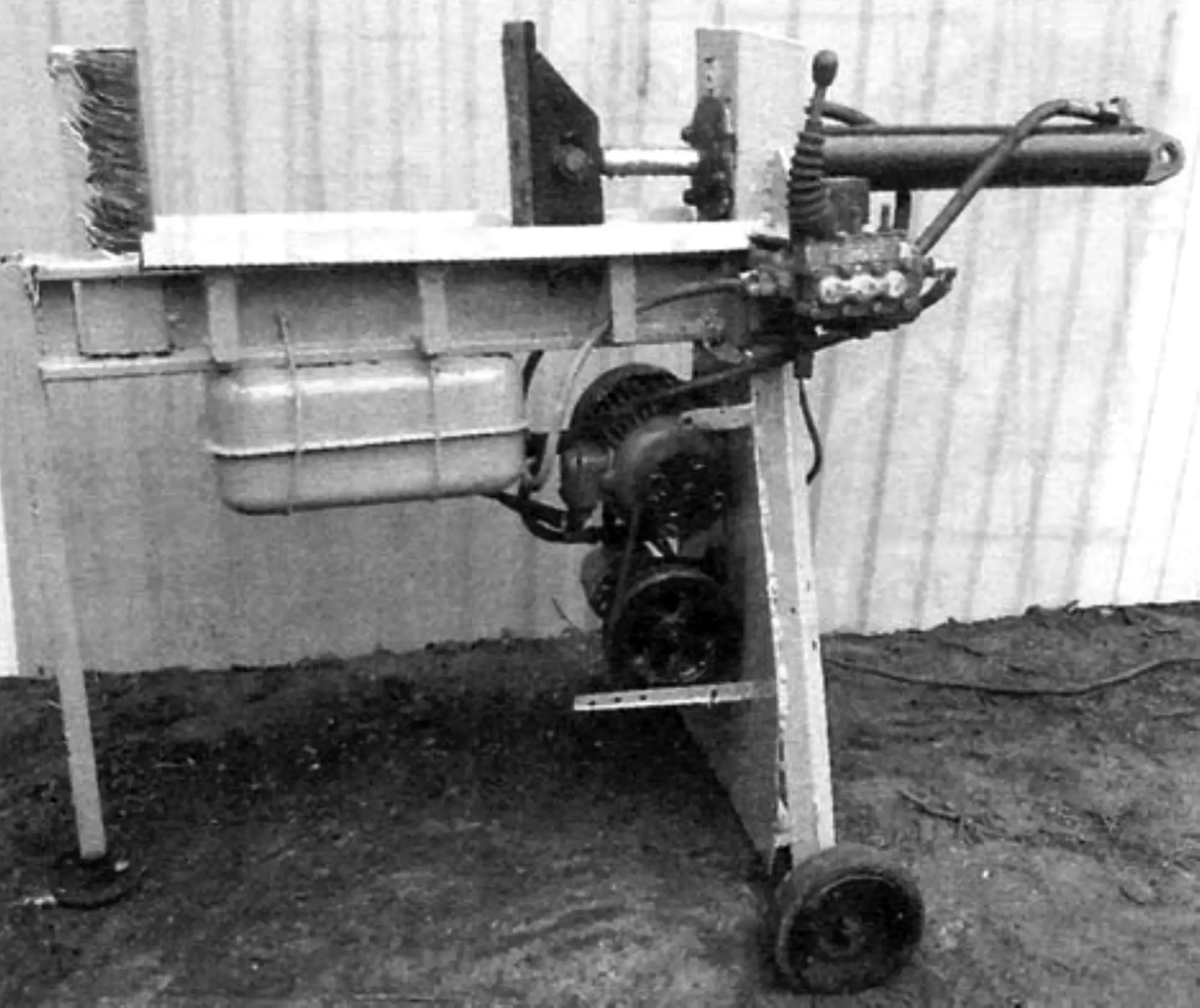
The front supports and the rear ones — on wheels — are made from 50 mm diameter pipes. They are also welded to the flanges of the T-beam.
A log splitter of this design has been working on preparing firewood for the home for four years without interruption. There have been no breakdowns, and there is little in it that can break anyway.
“Modelist-Konstruktor” No. 4’2014, R. VLASOV, Belarus
Recommend to read
 CLIP-RETAINER
Hanging the trousers on the bar hangers can not be sure that they won't slide because are always in a state of some kind of "unstable equilibrium". To avoid this, the bar often hang the... COMFORTABLE AND BEAUTIFUL
Now a for additional lighting over the kitchen counters satisfied with the lamp, hanging it is usually to the bottom of the shelves. However, the fluorescent lamp with fixture suspension...
