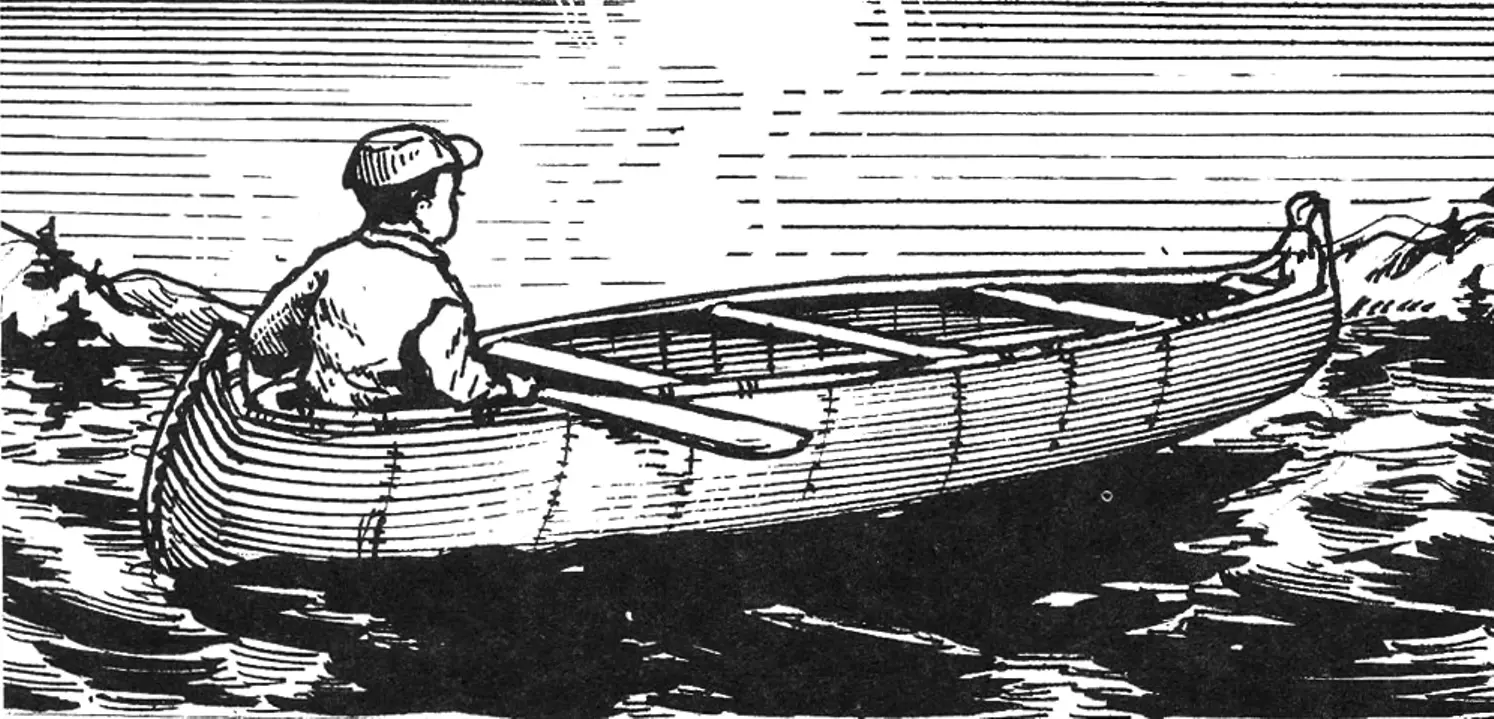
“A canoe made of birch bark… the most convenient and lightest of all means of travel. The bark of one birch tree is usually enough for one canoe; they have such a sensible shape that they float on water as easily as a cork” (J. Catlin, 1841).
A canoe of the North American Indians can be made quite easily not only from birch bark, but also from rigid fiber sheets (for example, hardboard) or thin glued plywood. Below is a guide to making a canoe from such sheets.
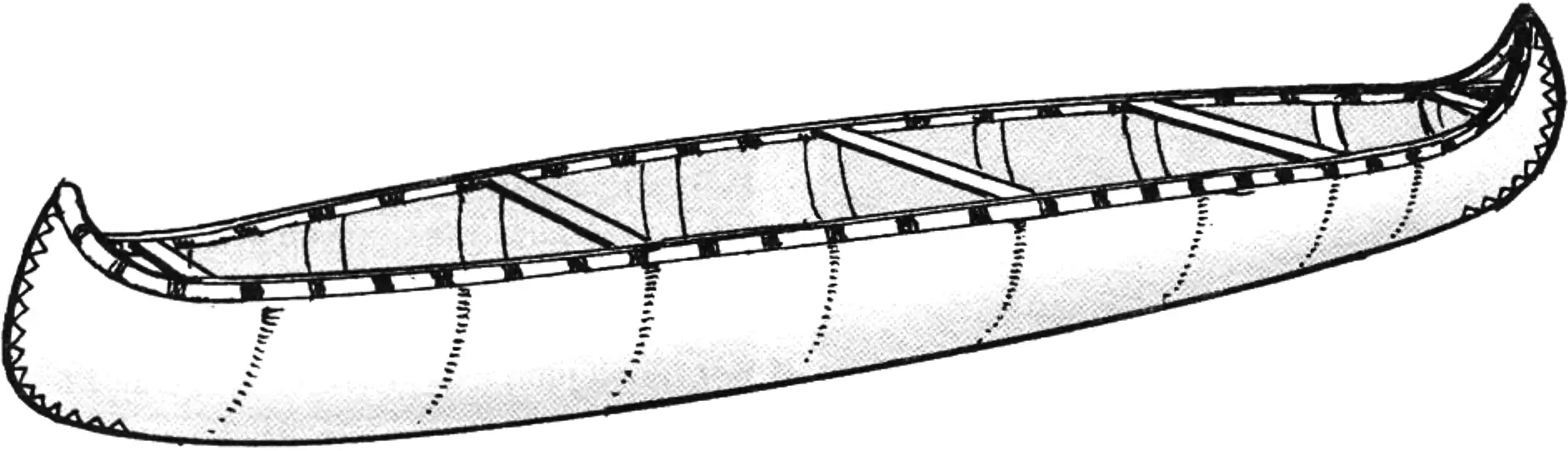
In shape and size, the boat proposed for DIY construction by the German magazine “Praktik” closely resembles the Indians’ hunting canoe. But the hull, of course, is not birch-bark; it gains rigidity and reliability through the use of a rigid fiber material, not through longitudinal and transverse frames as in the original.
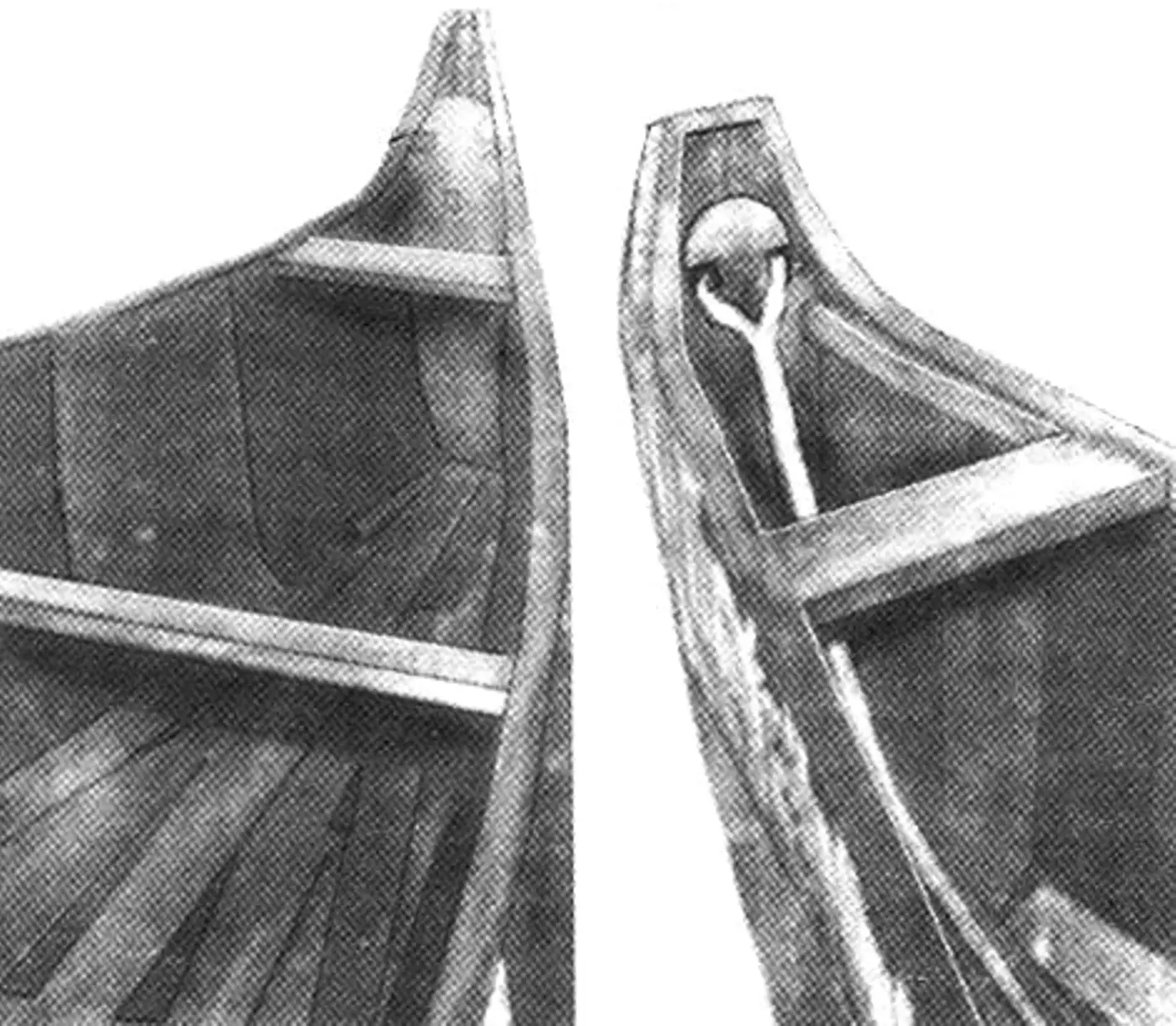
The finished canoe weighs about 30 kg, so it can be transported even on a bicycle trailer, and all the more on a car roof. At the same time, the boat itself has enviable carrying capacity: it can hold two adults and three children. The maximum load with evenly distributed weight in the canoe is (as required for a sports boat with a minimum freeboard of 0.15 m) about 280 kg. When moving on calm water, paddles with a T-shaped handle are used for rowing; such paddles are sold in sports stores, but paddles can also be made independently; the blade should be about 120 mm wide and 450 mm long.
In addition to the drawing, the following notes should be taken into account.
Hull
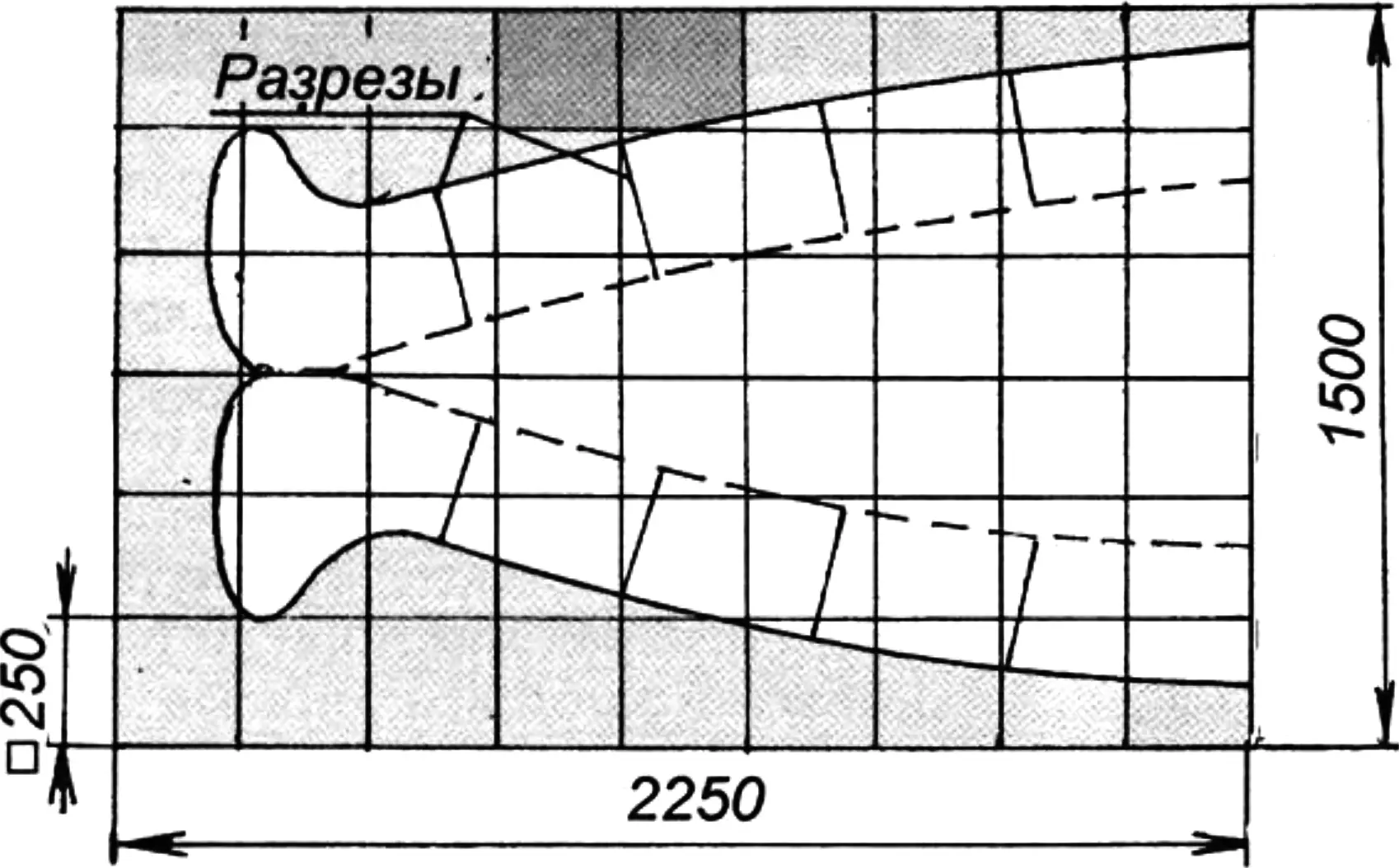
It is formed from hardboard (Masonite) sheets, on which a scale grid and the hull “pattern” with marking of transverse cuts are applied according to the drawing. If the rigid fiber sheets are smaller than needed to lay out the full size of the boat, the drawing can be applied on two sheets (on the second one — mirrored). After cutting out and final shaping of the hull blanks, the resulting halves are pushed slightly into each other (overlapping) and stitched with two parallel seams.
However, before that, all preparatory operations must be carried out. And the main one after cutting out the contour applied to the sheet is thorough soaking of those areas that are to be bent later. Moistening is done, depending on the sheet thickness, on its “inner” surface or on both sides, by alternately pouring water over them or wrapping them with a wet cloth.
Bending of the hull blank should begin at the bow (and accordingly — at the stern) part, bringing its halves together and clamping their edges with overlay planks and clamps. The remaining sections are carefully bent upward, as if forming the future gunwales of the boat, and secured with ring-shaped rope lashings wrapped around them. After that, the blanks are dried until the material regains its original hardness.
Wooden parts
While the hull blanks are drying, you can proceed to forming the wooden parts of the hull — these are the stems and gunwale planks. Since the bow and stern of the canoe are the same, their base, that is, the stems, have the same design. They consist of a shaped axial part (rib) and a transverse teardrop-shaped plank with holes and cutouts for connection to the stem rib and the hull gunwale rails. The stem elements are sawn from 20 mm plywood and joined with a mortise joint.
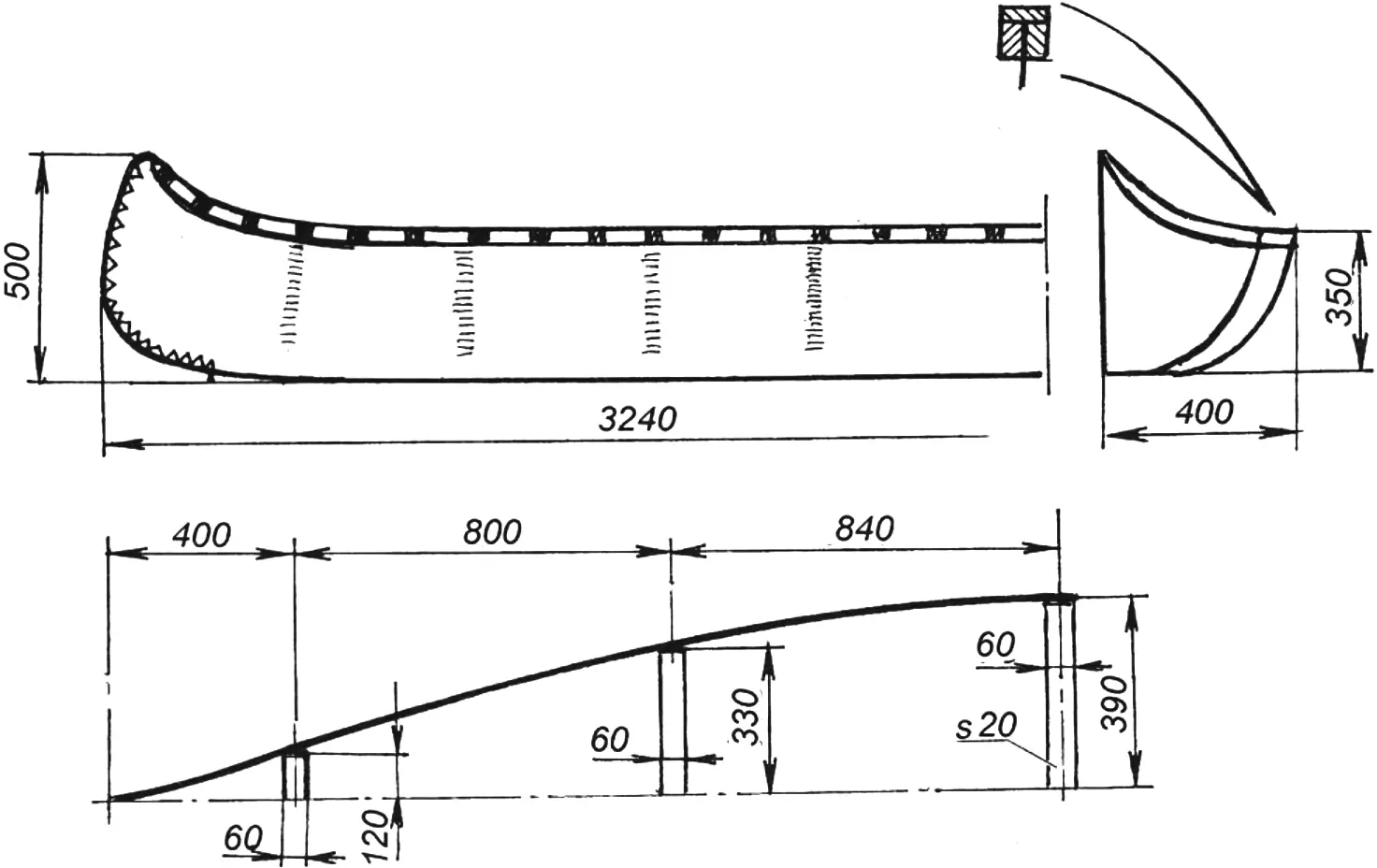
Gunwale edging rails approach the stems along the sides of the boat, gripping the upper edge of the hull sheets on both sides, and also covering their horizontal planks. The length of all these elements can be any, as long as together they complement each other along the entire length of the canoe.
In addition to the wooden parts mentioned, five flat bars of different lengths will be needed, serving as gunwale braces along the entire length of the hull.
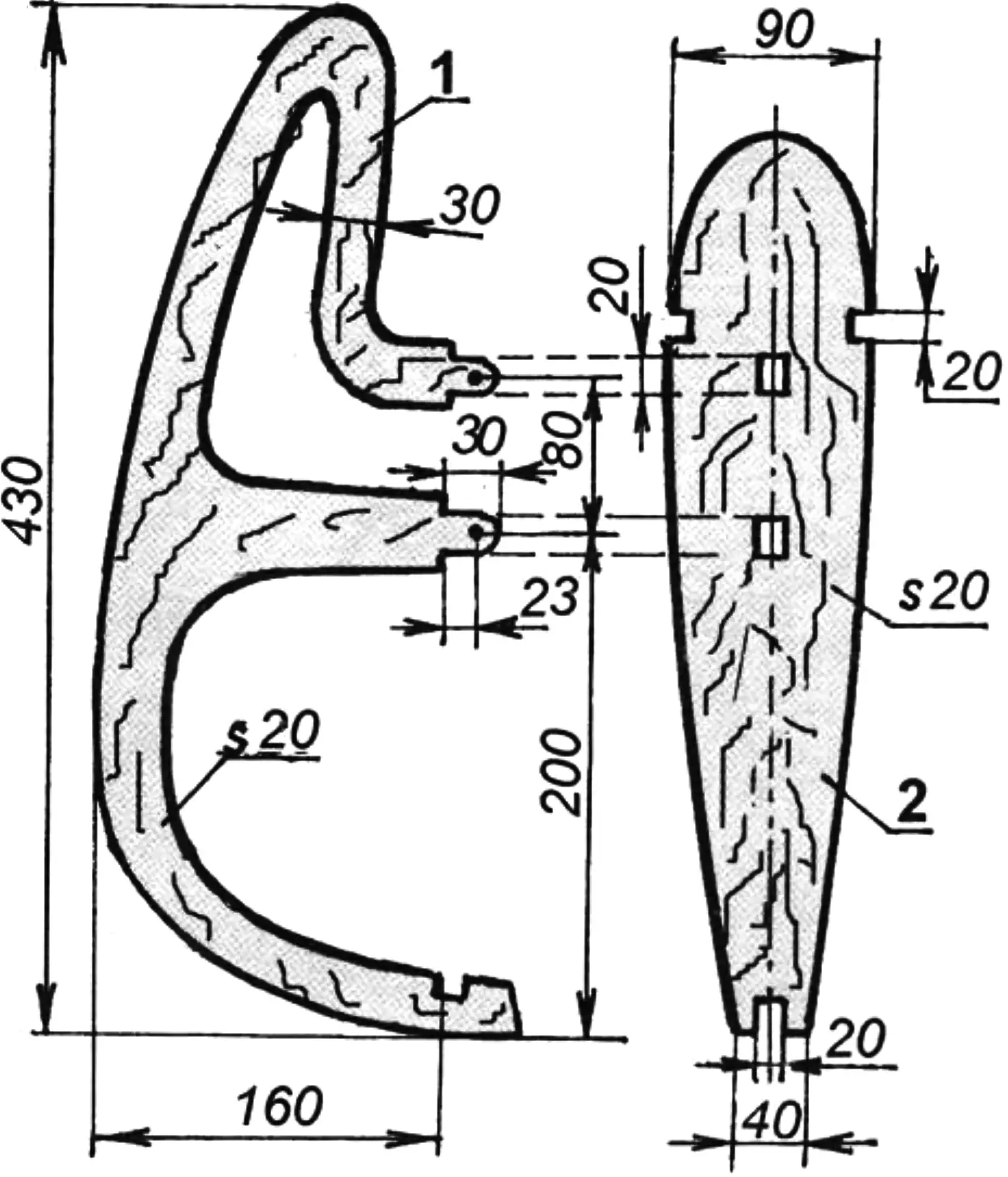
1 — rib; 2 — transom (frame)
All wooden parts of the canoe must be treated with a moisture-protective compound (for example, “Pinotex”) before assembly.
Assembly
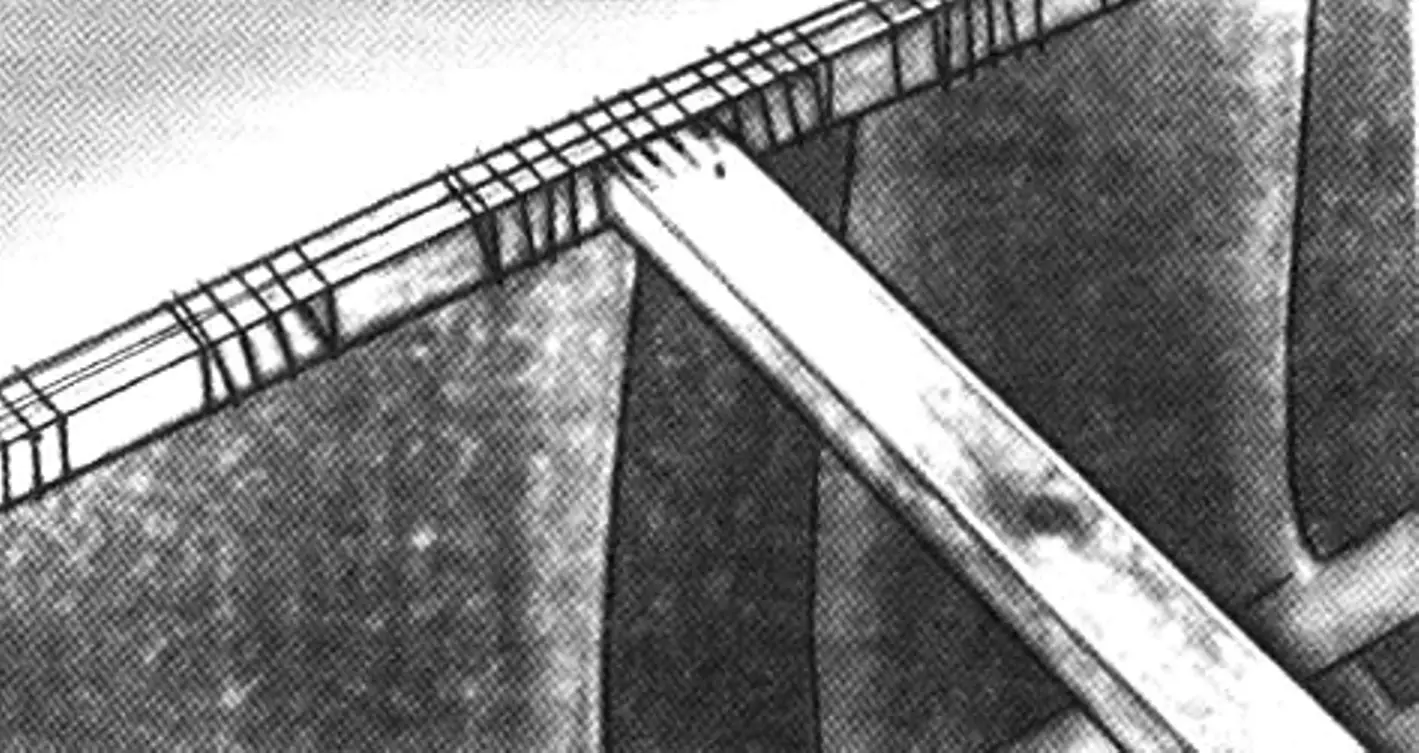
All elements of the canoe, as in the Indian original, are assembled without nails: they are laced. For this, a cord of synthetic fiber about 2 mm thick is used.
In the dried parts of the hull, the gunwale cut locations are laced first; they are joined with some overlap at the top and holes are made on both sides of it, through which the cord is passed sequentially and tightened. The bow and stern are joined beforehand — temporarily: they will take their final shape after they are mounted together with the stems.
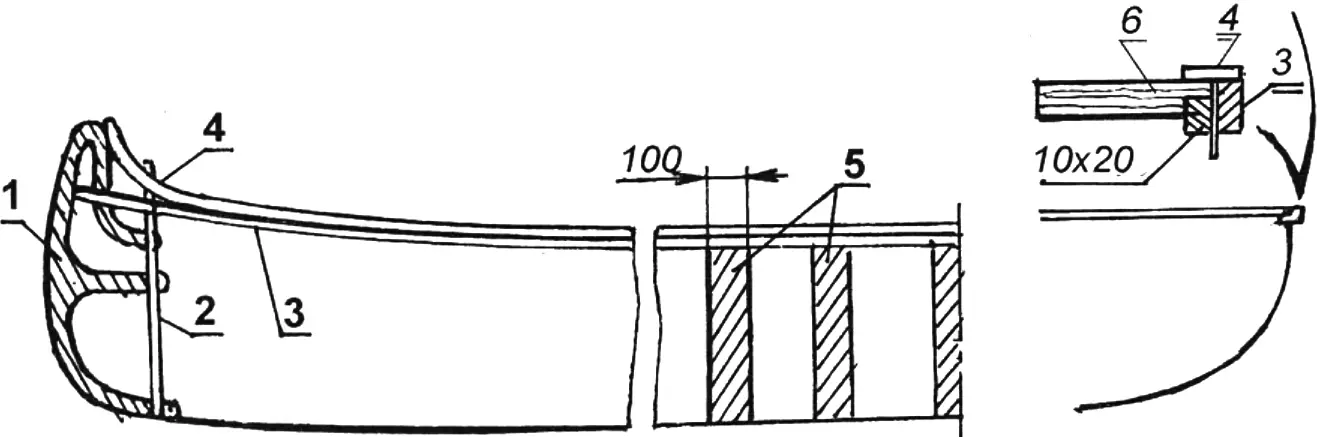
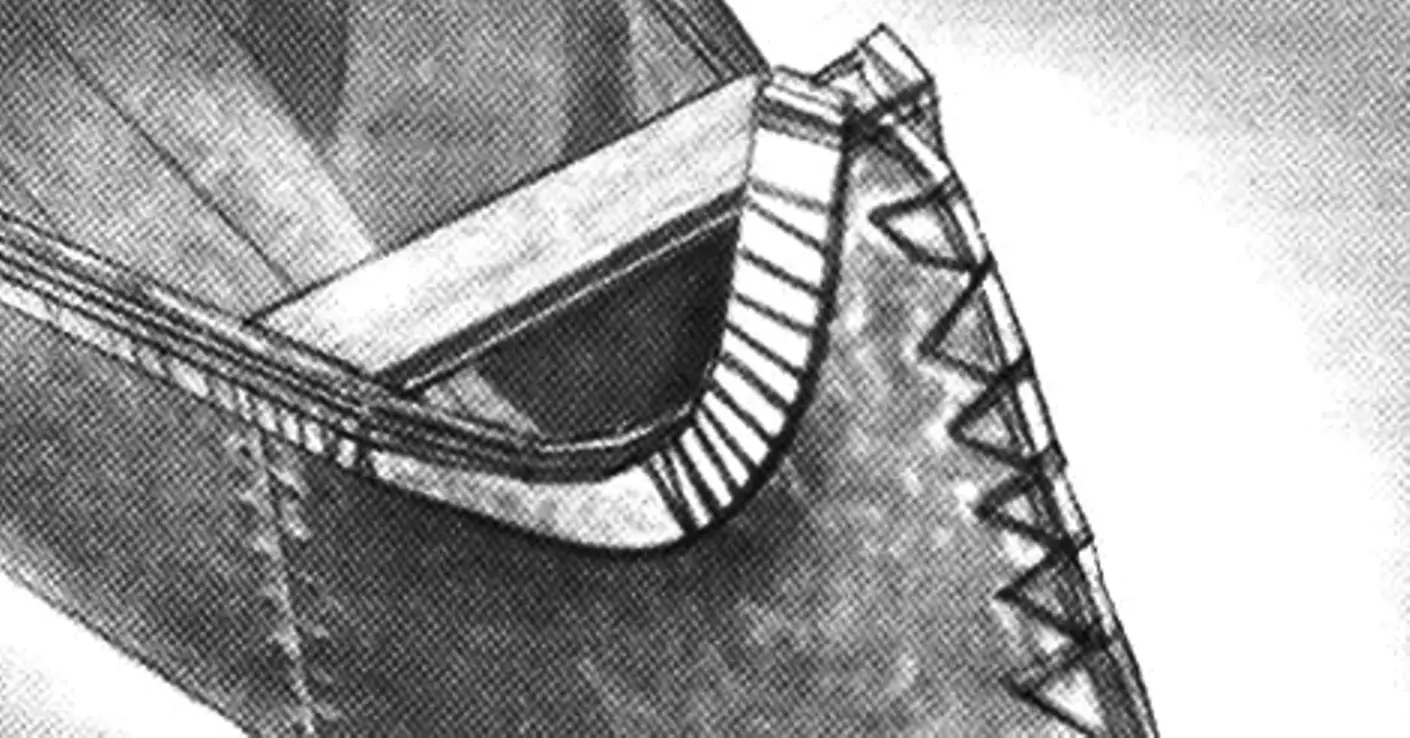
1 — stem rib; 2 — stem transom; 3 — gunwale edging rails; 4 — overlay edging plank; 5 — fabric seam sealing; 6 — gunwale brace
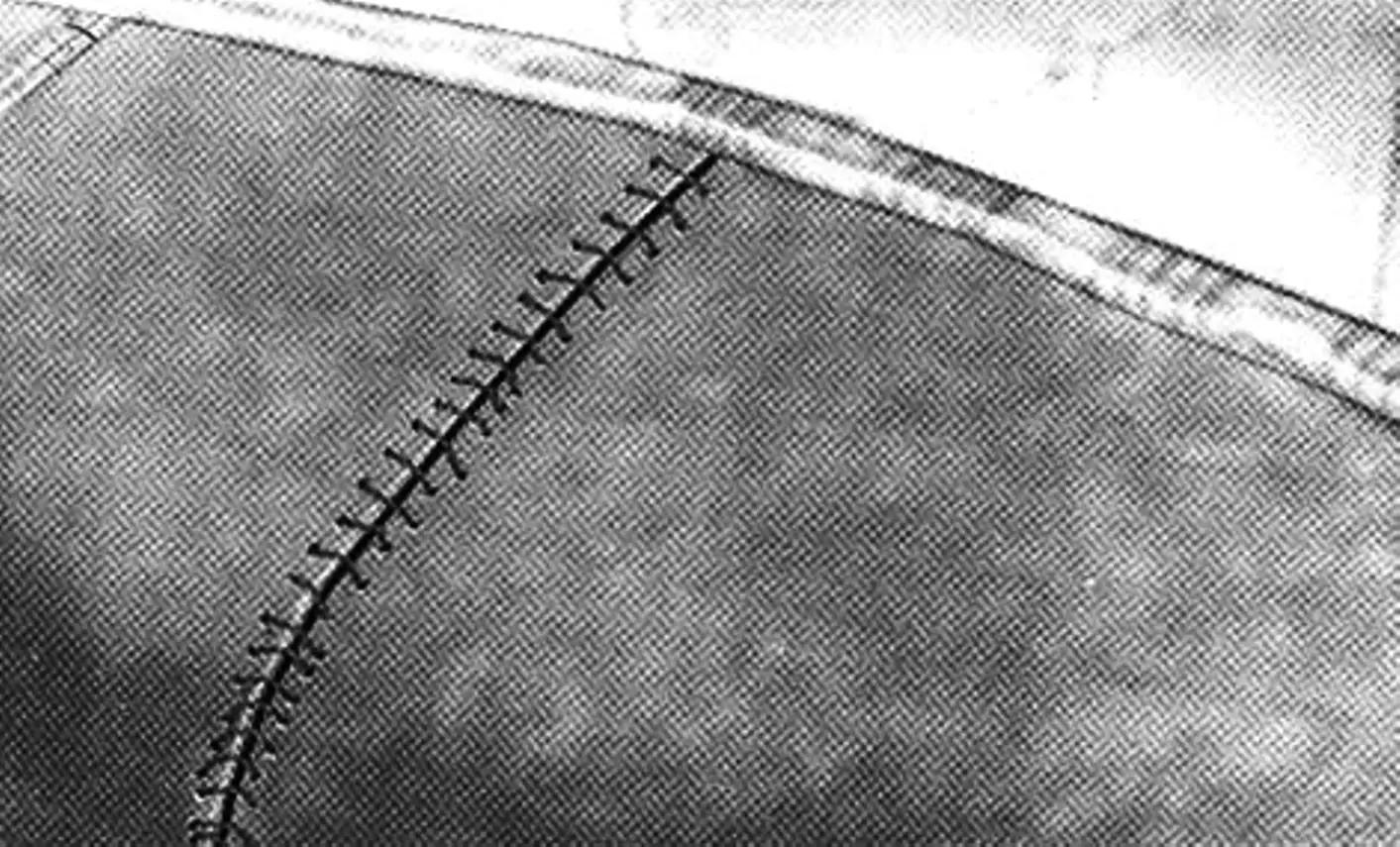
If after lacing the gunwale part its edge turns out uneven — protruding sections are trimmed. The finished hull halves are pushed slightly into each other (overlap), glued and stitched with two parallel seams (along the edges of each joined half).
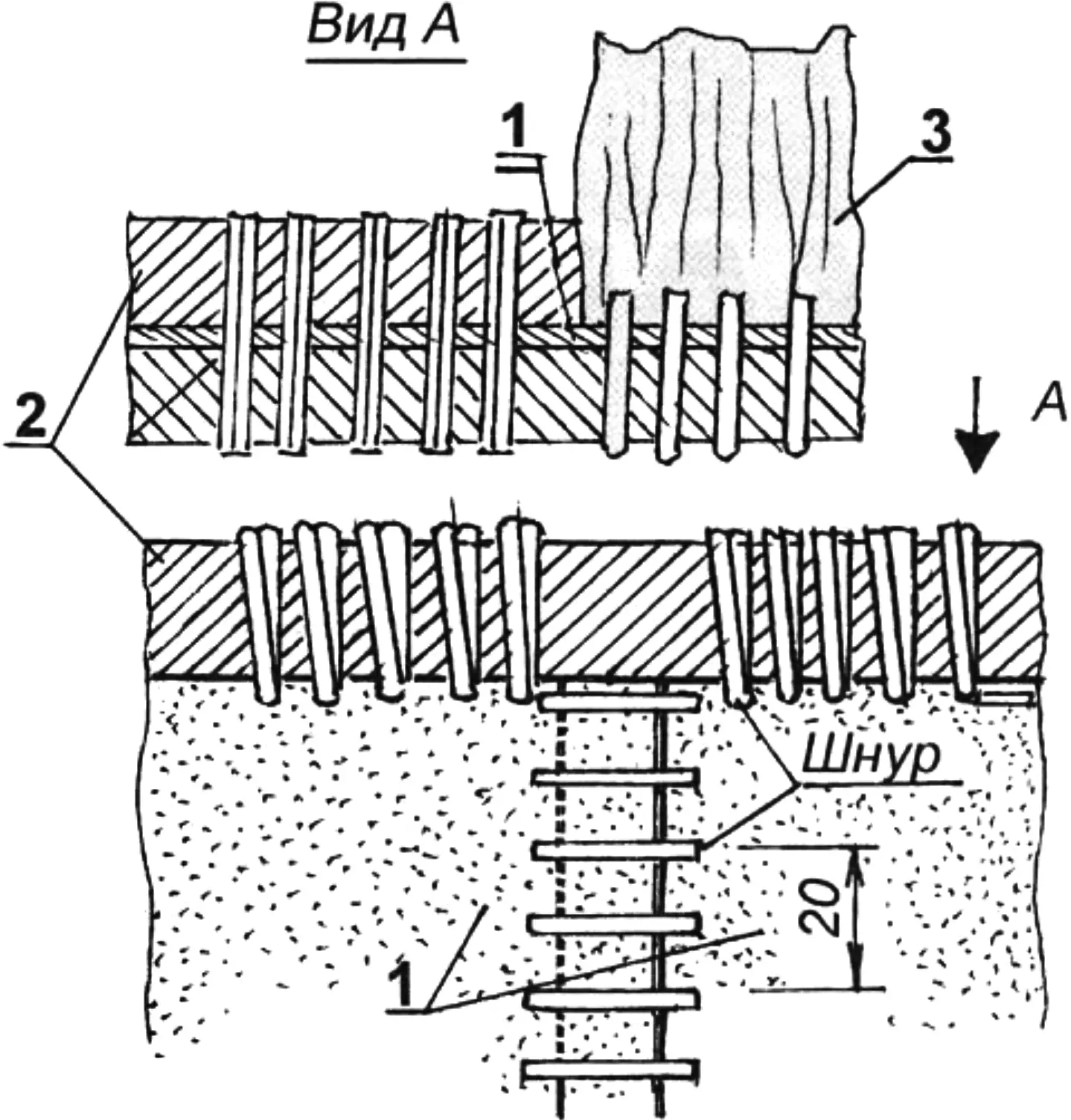
1 — hull sheets; 2 — gunwale edging rails; 3 — gunwale brace
Gunwale edging of two rows of rails is sewn on, gripping the gunwale edge from both sides. The stems are inserted with glue and sewn on; the gunwale edging rails are brought up to them and secured — the shape of the canoe begins to take form, which is finally fixed by sewing the brace bars to the gunwales. Everything is completed by fastening overlay horizontal planks along the gunwales, the ends of which run up to the stems and are sewn to them.
Finishing operations
All seams are thoroughly coated with epoxy adhesive, and fabric strips soaked in epoxy adhesive are laid on and pressed onto the gunwale and bottom seams. Wooden parts are coated with waterproof varnish (so-called yacht varnish).
The entire hull is thoroughly treated with linseed oil several times inside and out. After drying, it is coated three times with diluted waterproof varnish.
When launching on water, a “fish spine” is laid on the bottom of the canoe — a deck of plywood strips or boards.
«Modelist-Konstruktor» No. 10’2010
Recommend to read
 THE AIR — SCOUT
The plane of distant radar detection E-1B TRACER. The idea of installing a radar plane to detect air targets first appeared in England in early 1936. But the preference nevertheless was... THE HAMMOCK IS MADE LIKE THIS…
It's nice to relax after working in the garden by settling comfortably in a hammock. Buying a ready-made hammock is no problem today, but a true craftsperson prefers to make everything...
