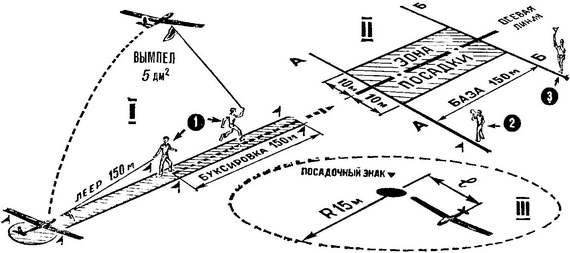
All-around radio controlled model gliders (class F-3-B), which includes three flight exercises, is the youngest species of the competitions of flying models. It is flying on the duration, distance and speed. Place in the competition is determined by the sum of the results of the three exercises shown in the two flight rounds. In competition an athlete may use two models: allowed rearrangement of parts from one to another, however, the weight of the model and the maximum area of bearing surface shall not exceed respectively 5 kg and 150 DM
2, and the load on an area of 12 and 75 g/DM
2. The rules allow change of the geometry of surfaces in flight using radio control, but the transmission of information from the Board to the pilot is prohibited. The model was run for the guard rails, the movement of the Modeler’s assistant, engaged in towing, shall not exceed 150 m. a climb can be carried out with the help of the engine, for every 1 cm
3 working volume of which (but not more than 2 cm
3) shall be at least 100 g take-off weight of the model. It allowed the use of additional ballast. The engine operating time is limited to 45 C. To complete the exercise on the duration of the flight, the Modeler is given 8 min of working time at the start. The countdown of flight begins with the uncoupling of a rail (or stop the engine of a motor-glider). Every second in the air is estimated at one point. The maximum number is 360. For a flight over 6 min, the Modeler receives one penalty point for each extra second in the air (down to zero).
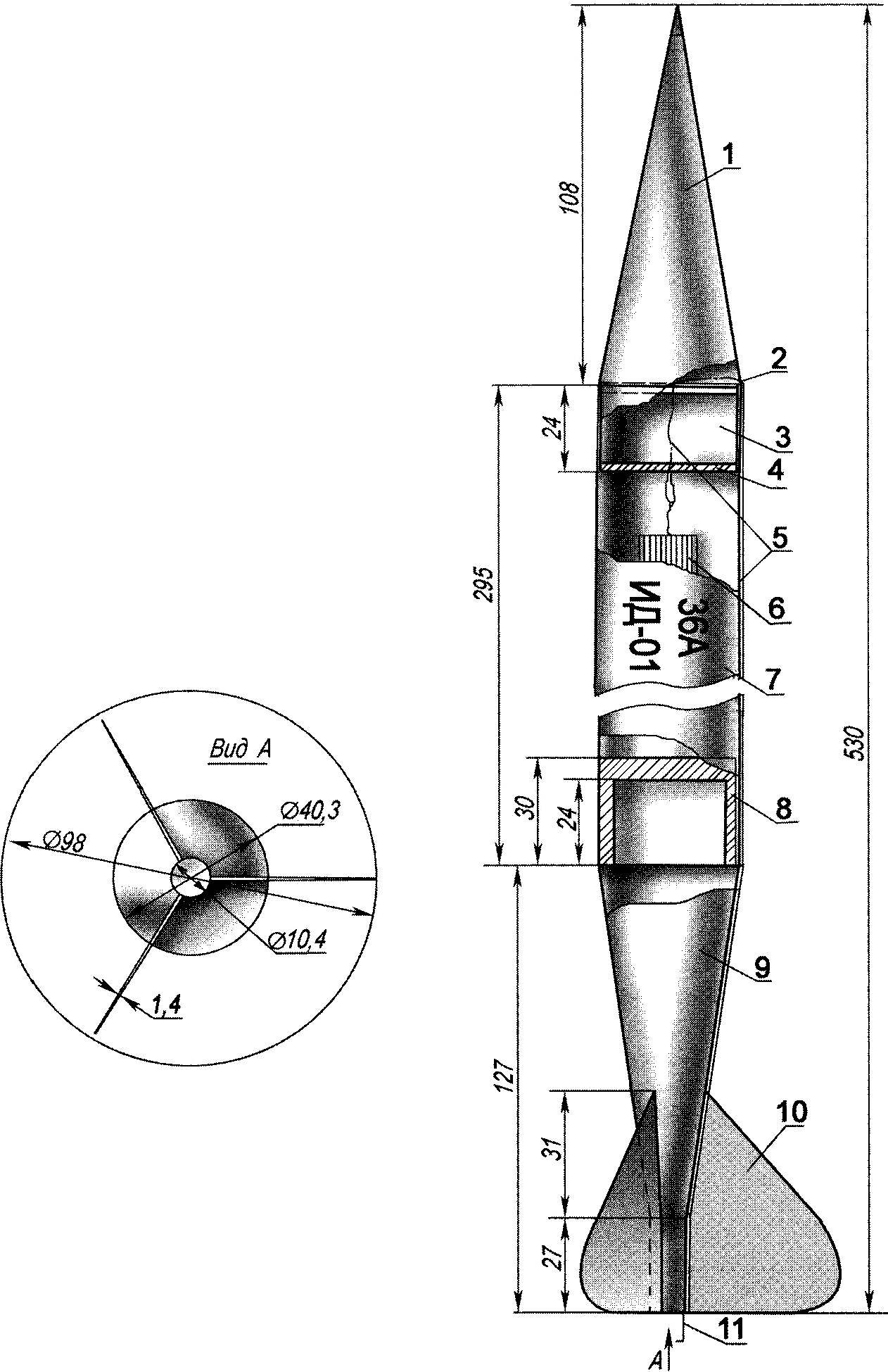 Over the past 3 — 4 years in the lists of winners of major Russian competitions in sport flying are increasingly common names “rocket scientists” of the Republic of Karelia. So, on superiority of Russia among older students, the 2008 champion in the class S6A became the student of Petrozavodsk Ilya Drats. And team the victory it celebrated, too, “the rocketeer” Karelia, which was represented by pupils of school № 45. Even in the same class S3A, they were third in the overall standings in fourth place, behind the team of Belgorod and Moscow regions and the Krasnodar territory.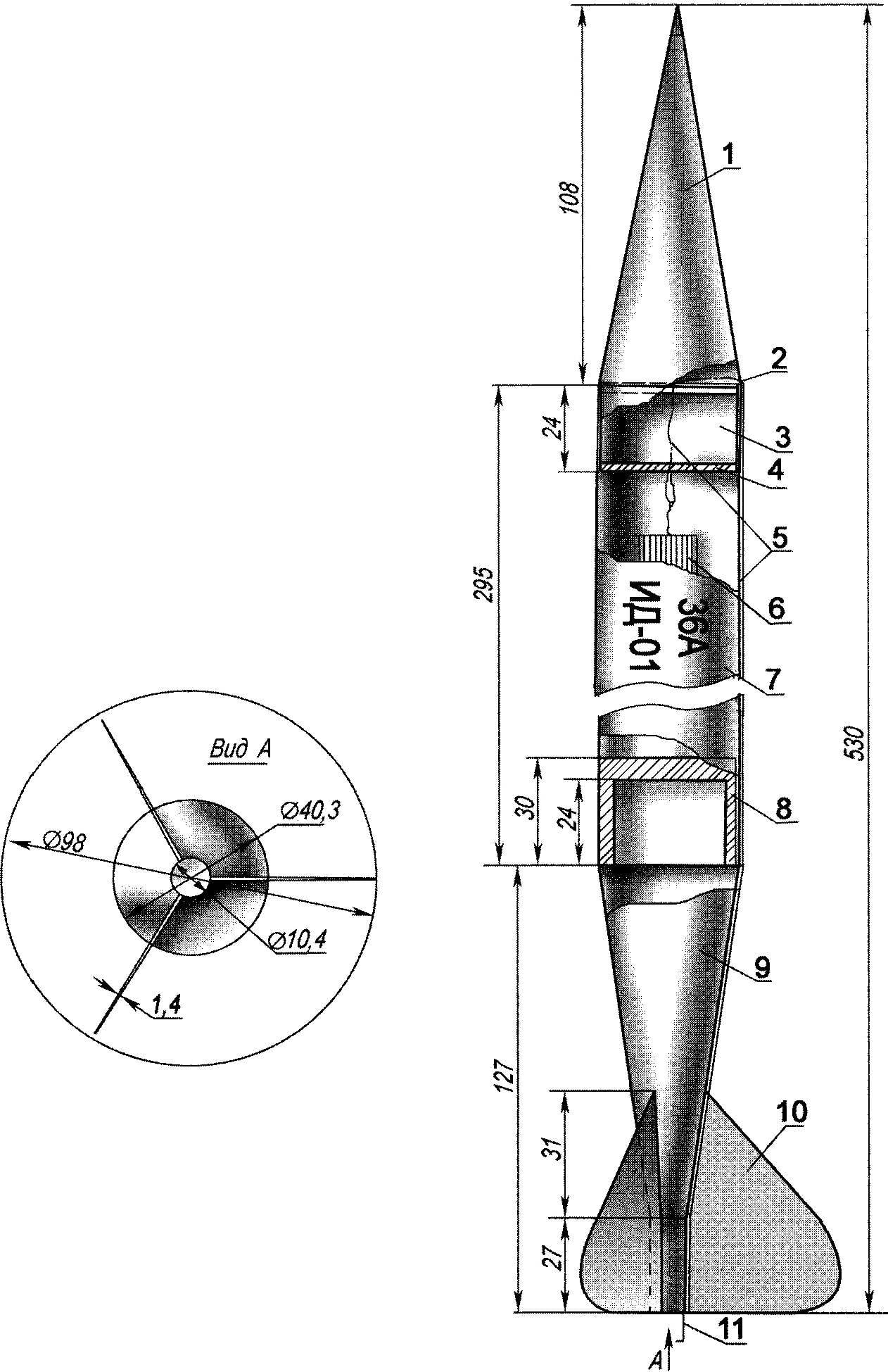
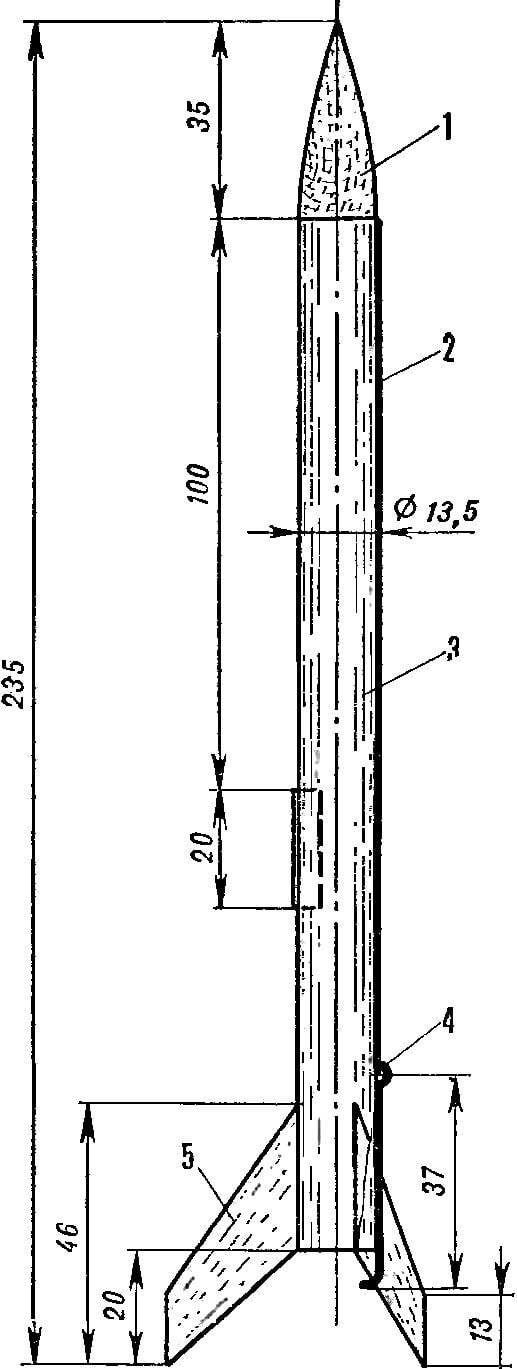
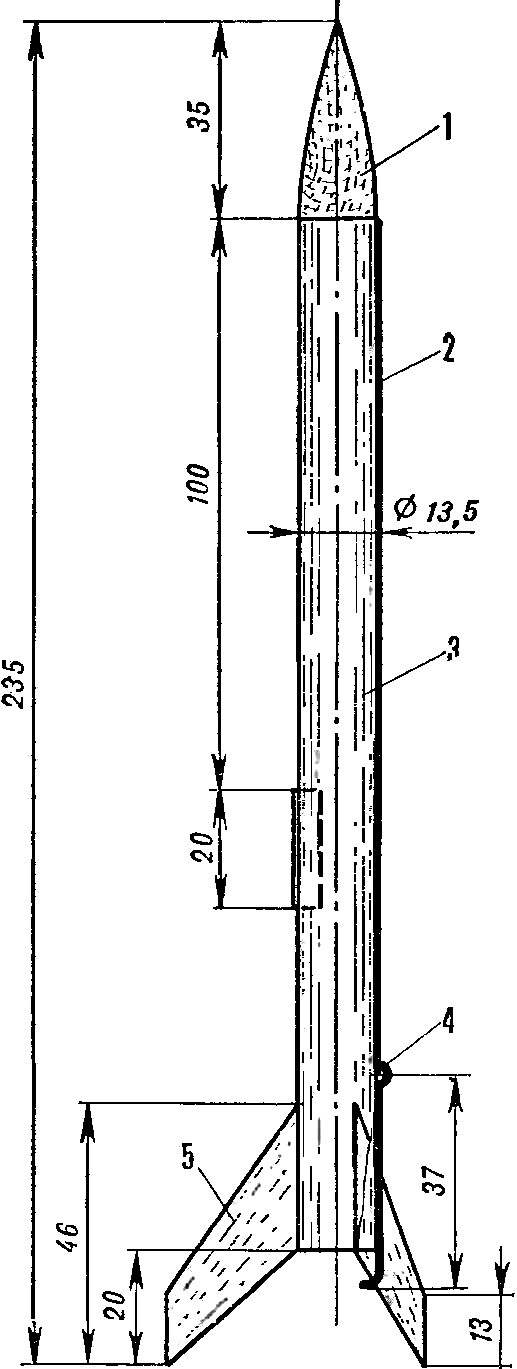 European champion 1979, on models of missiles in the category of S-6-A X. Ignota (Spain). In three rounds it model showed the best result, and the fourth, additional, — 3 min.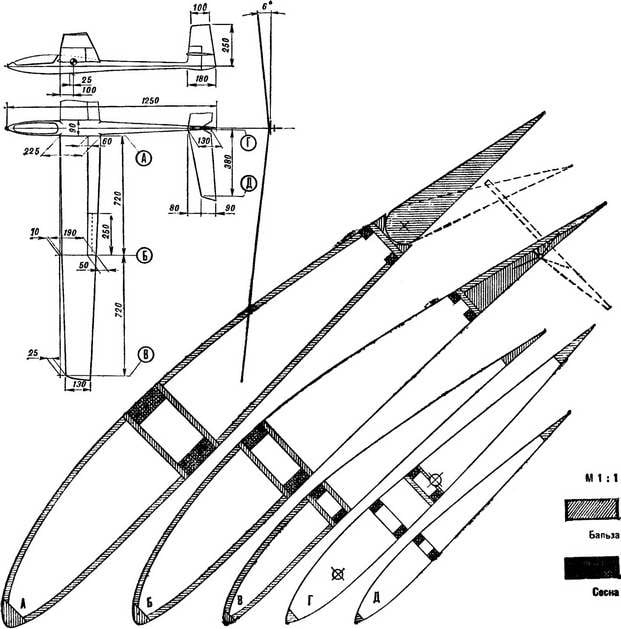
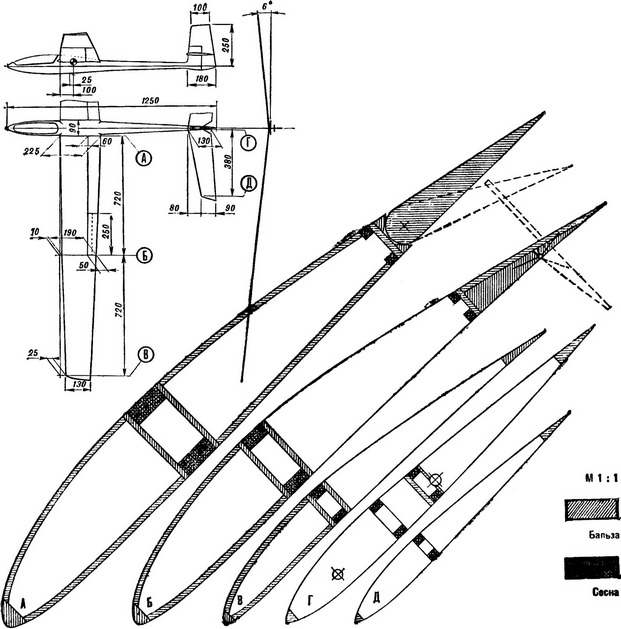 The model is designed to compete in all-around in class F-3-B. Although the airframe is designed for domestic equipment ROOM-2, it can be successfully applied abroad.
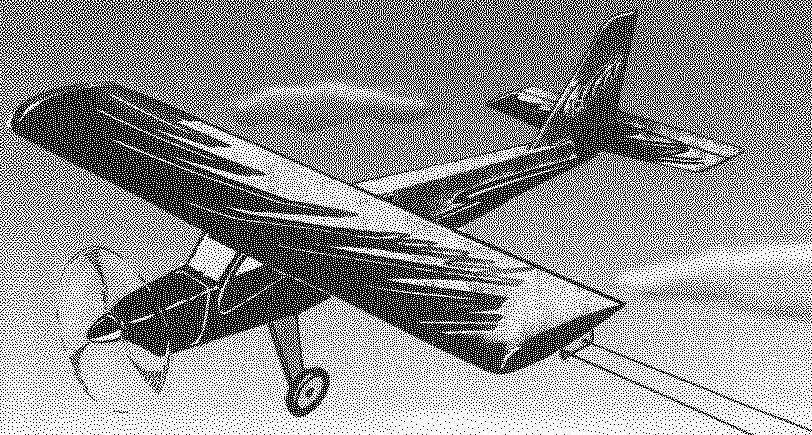 Not so long ago in the journal “modelist-Konstruktor” was about the simplest model of a glider made from a conventional packaging corrugated Board material although not aeromodelling, but it is durable, tough and light. By the way, a square meter of corrugated Board with a thickness of 3 mm has a weight of only 400 g, respectively, the density of this material is only 0.13 g/cm3! Experiments have shown that the durable and lightweight corrugated cardboard is well suited for creating flying models. Needed only in the cutting and processing of corrugated Board to consider some of its features and to use a knife-cutter, literally honed to razor sharpness, otherwise cut lines get ragged.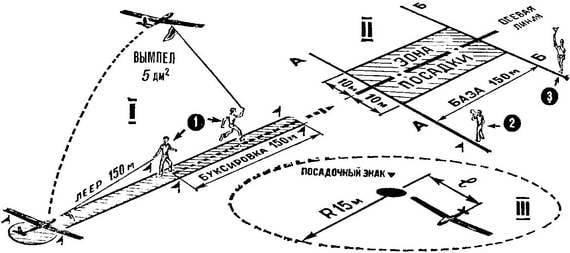

 Model missiles Ѕ3А Cup winner S. P. Korolev 2008 Igor Danilov made by well-known scheme called “Chelyabinsk”. Its main feature, distinguishing feature is elongated up to 165 mm tail section. This helped a little to alleviate (about 0.5 g) stern, to shift the center of gravity of the model up.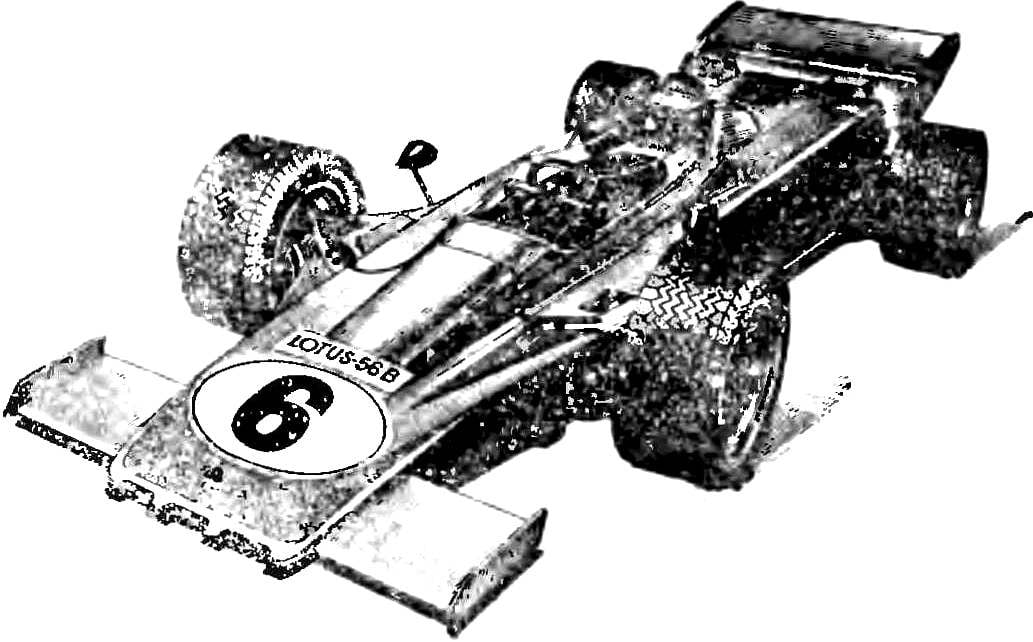
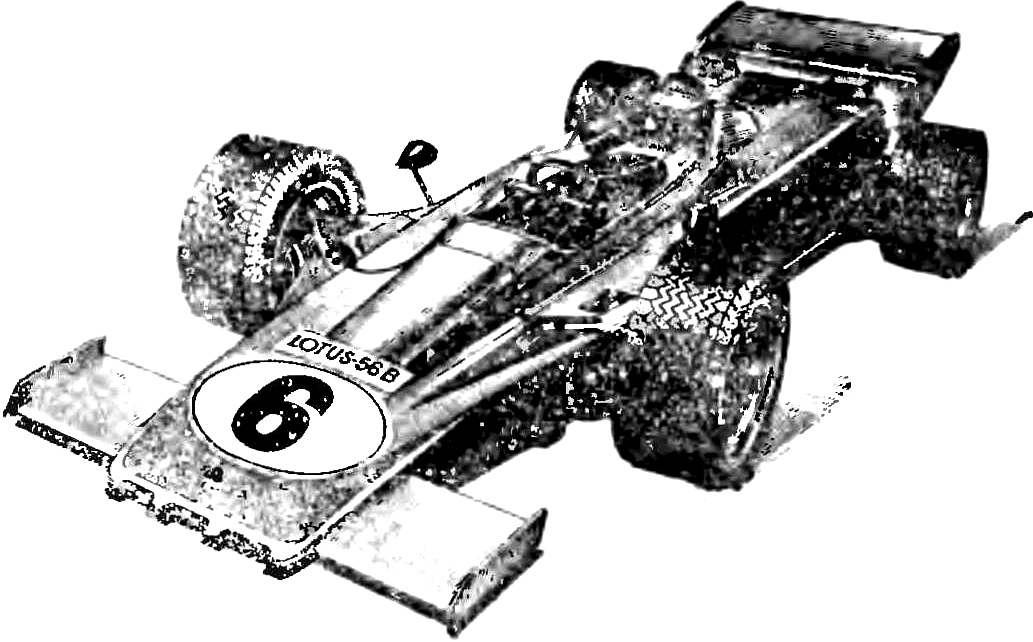 Picking up the prototype for the model with open wheels (the trace of A class), we did not immediately notice the car “Lotus” with a modest architecture of the body and a relaxed silhouette — machine like a machine. But one of the guys asked “innocent” question — why would he ship the pipe? After looking at the car more closely, we realized that the prototype carries many more mysteries: where is this race car exhaust pipe, where futerko, inlet air into the cylinders of the engine, why so few intakes, why is the car the same front and rear wheels, etc.? They began to understand, and found that perceived at first as “the ugly duckling” “the Lotus-56V” can rightfully be considered a “Swan” of motor vehicles.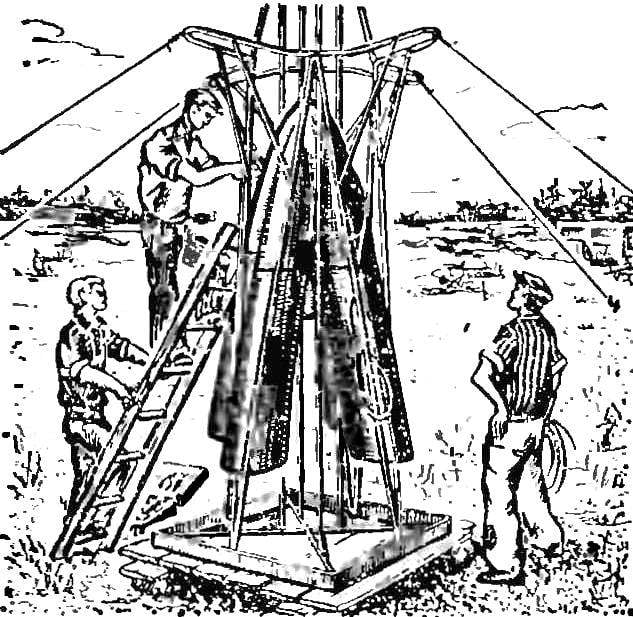
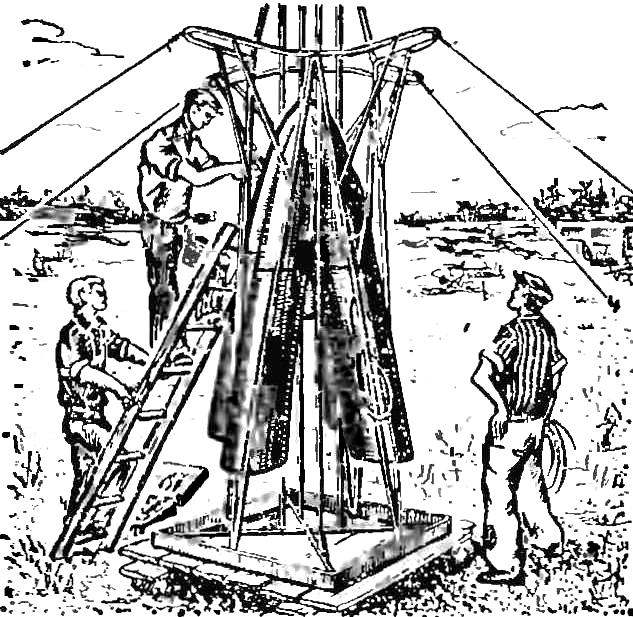 Rocket “07” — the first rocket was working 2nd brigade Gird (Group of study of reactive motion), led by K. M. Tikhonravov.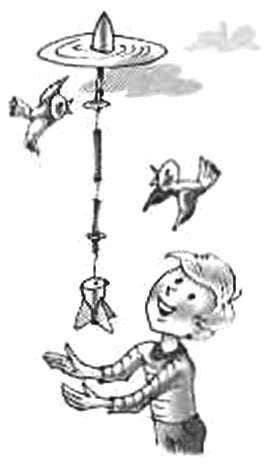
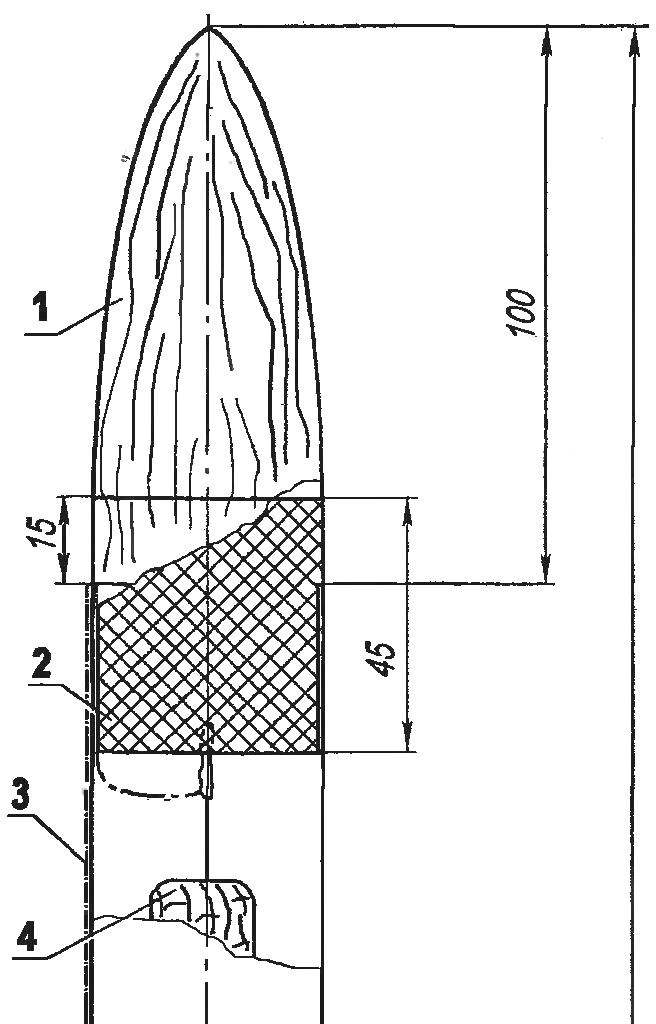
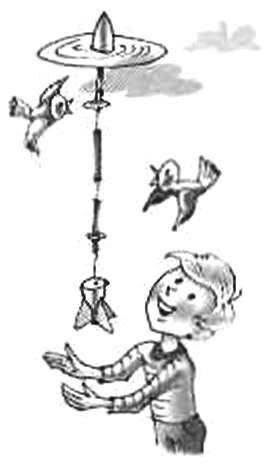 General interest competitions rakatomalala (the first open championship of Asia and championship of Russia) resulted in a model of Rotorua (class Ѕ9А) Russian athlete Vladimir Menshikov. Will talk about it in detail. This model is schematically recall the development of the first of rotochutes (1994 — 1996) at the dawn of this category. It was then suggested that a similar version V. Menshikov. But the current model is at a higher technical level. It does not apply to the type of rotochutes container type. The body of the model consists of four blades made from balsa plates with a thickness of 1 mm. folded along the axis of the model, each blade, or rather its width (chord), is 1/4 of the circumference of a circle with a diameter of 40 mm.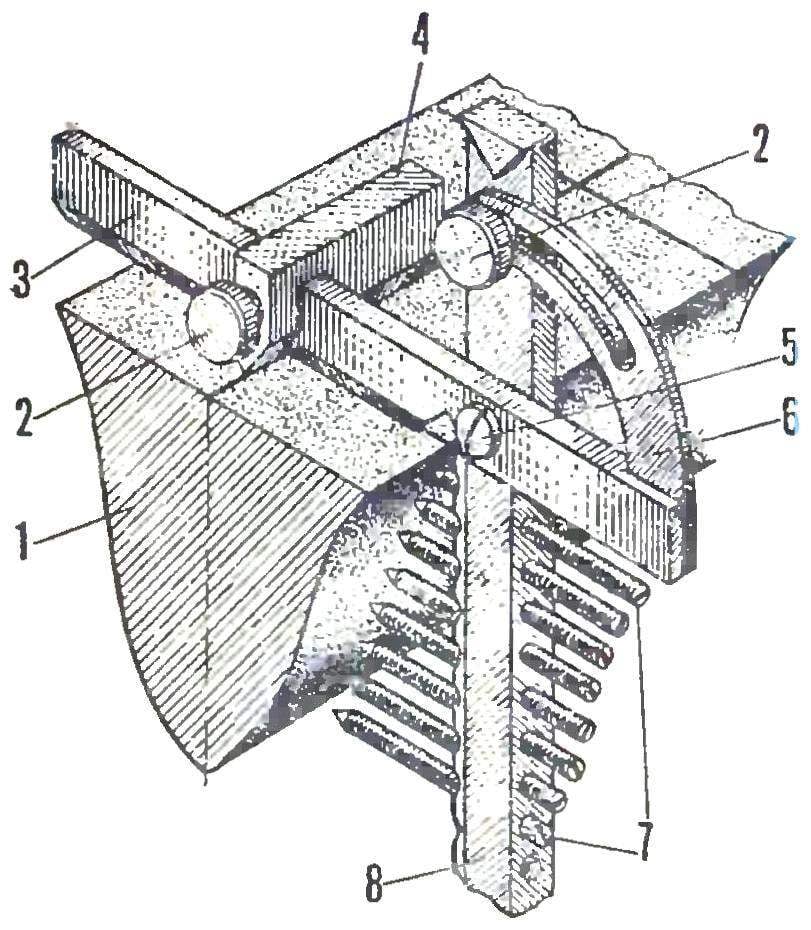
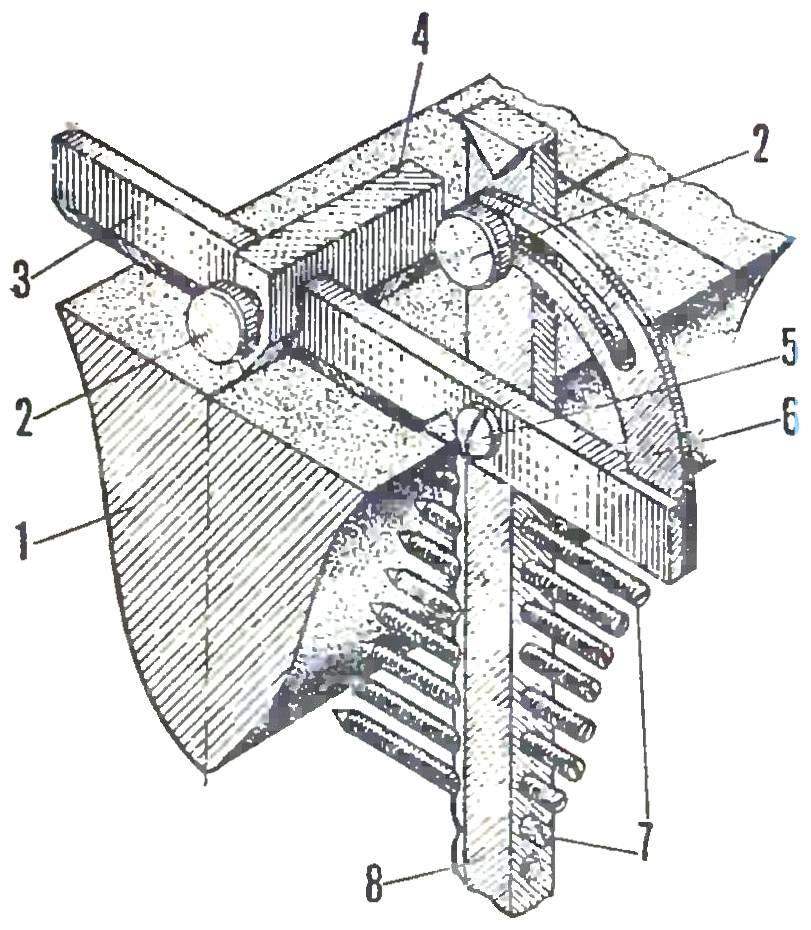 To check the symmetry of the punch of a model of the ship on the drawing manufactures all of its frames (or polosamote). Although this work is easy, but requires time and material cost. For ship modeling clubs and laboratories, which launched production models of ships of various classes, I suggest using a universal mechanical pattern. It reliably and quickly provides control of compliance with the hull lines of the model of the vessel its theoretical drawing and defines even the most minor asymmetry to each side of the punch.