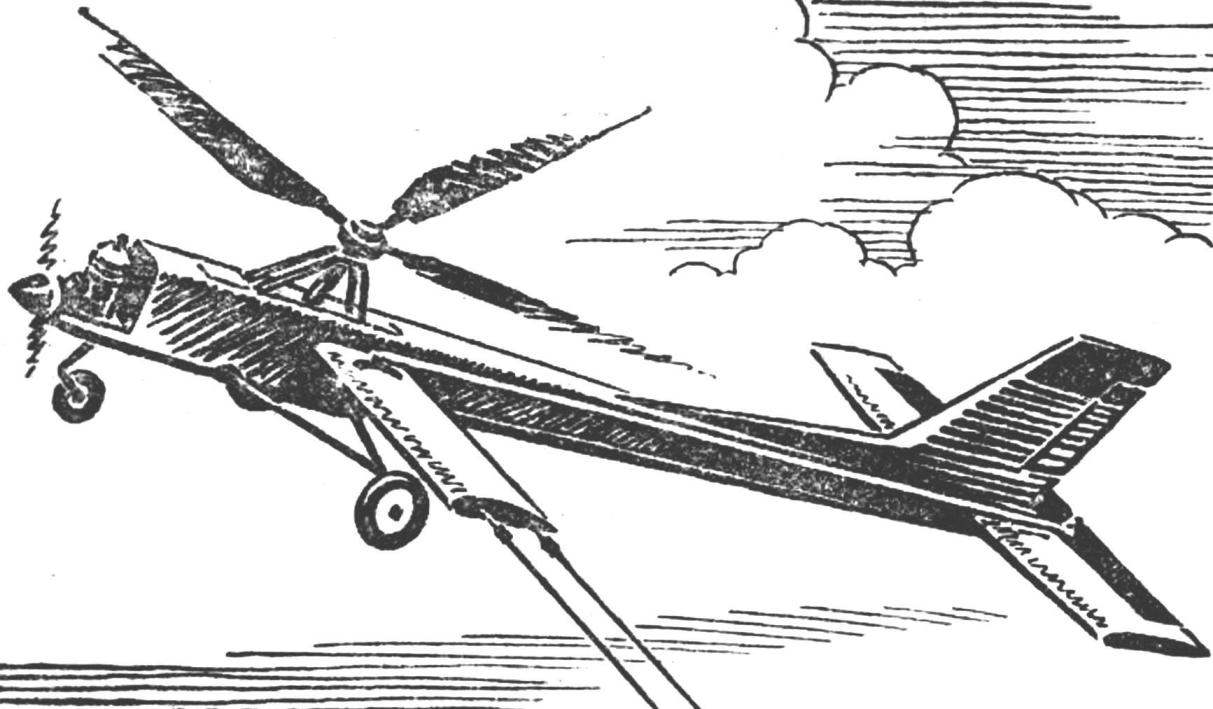
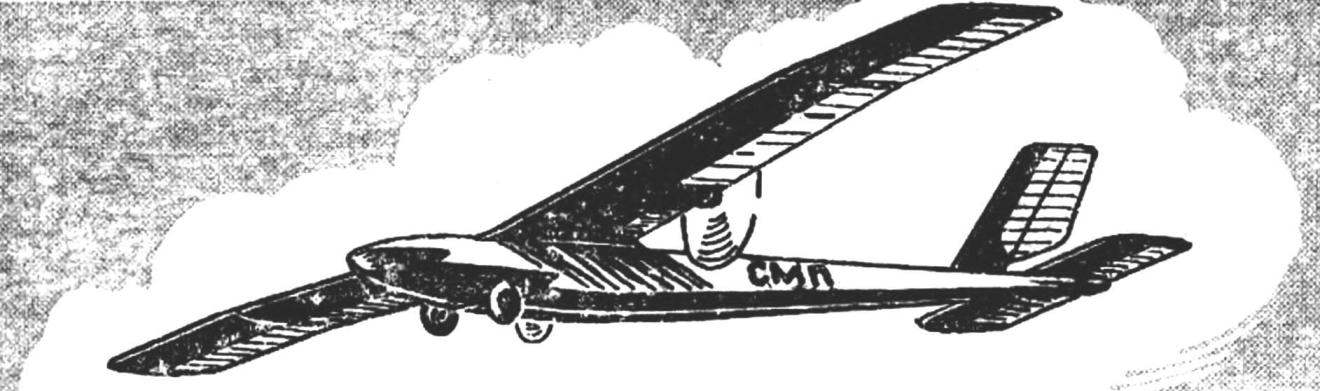
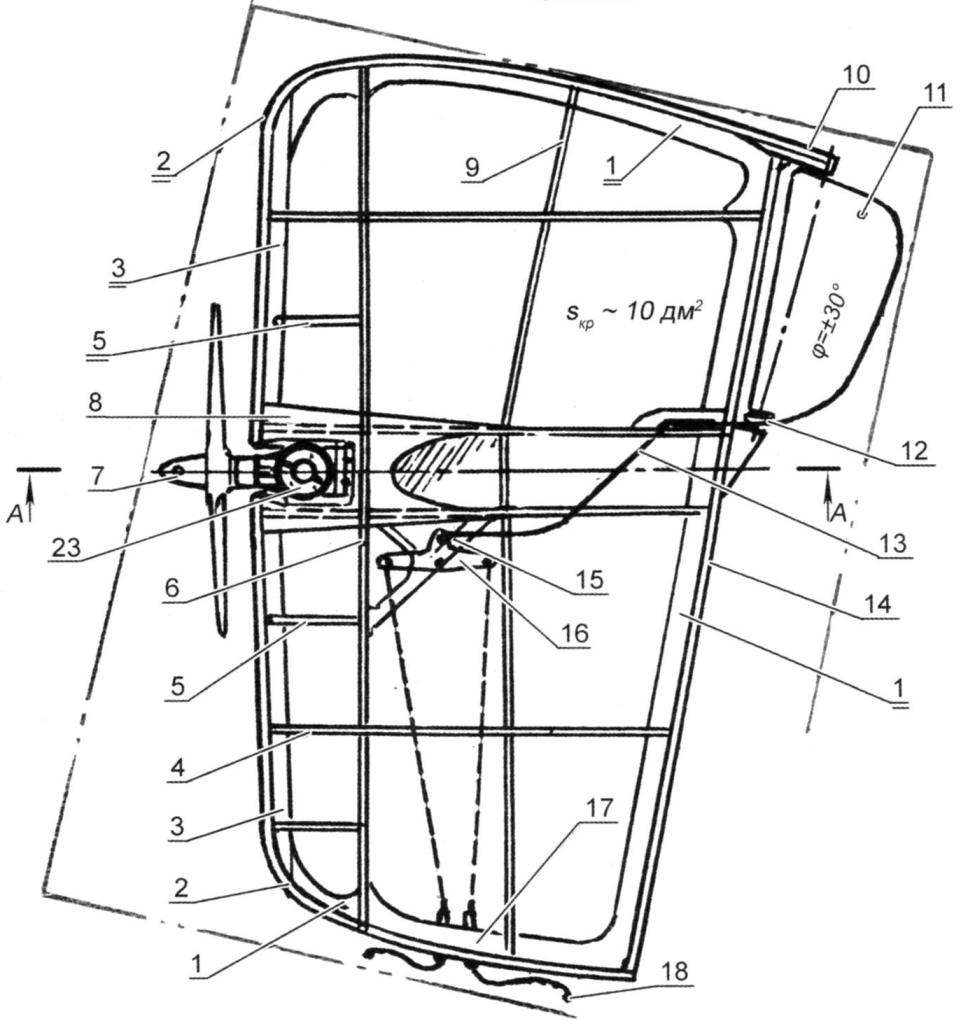
 Model autogyro designed and built in the laboratory of the Aero modeling club of young technicians of the Siberian branch of the USSR. The author is a graduate of the class of technical physics and mathematics school Ilya Skiba. The model is made in Cordova. In this case adjusting it is easier than Svobodnaya. The design of the autogyro is quite simple. The fuselage, landing gear, empennage, engine mountings — as a conventional cord models. A three-bladed propeller creates lift, rotating from the incoming air flow, that is, using the phenomenon of autorotation. However, the number of blades may be three, four or more.
THE GYRO ON A ROPE
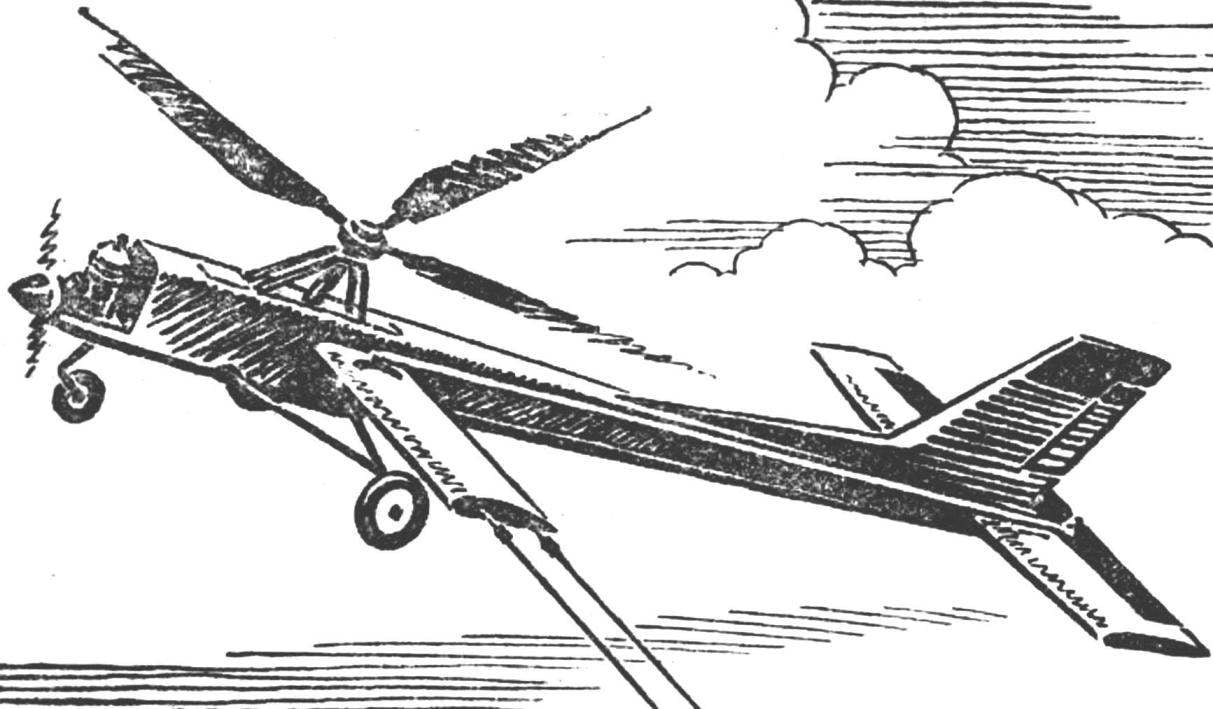
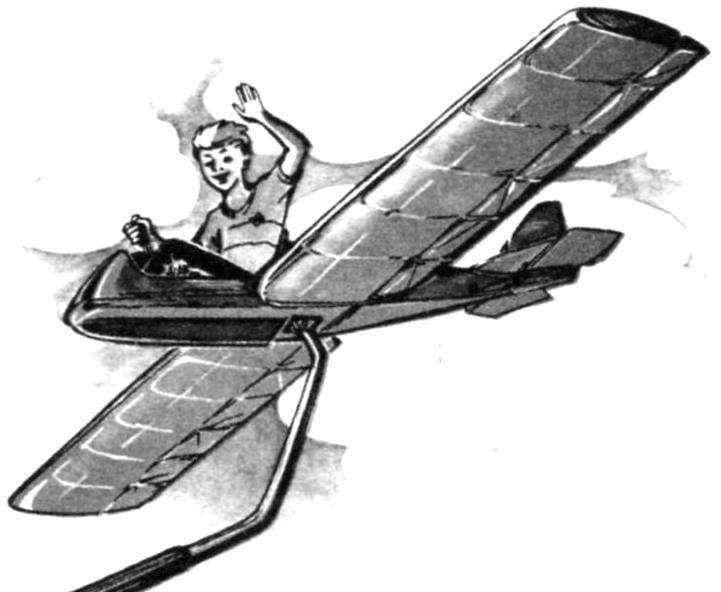
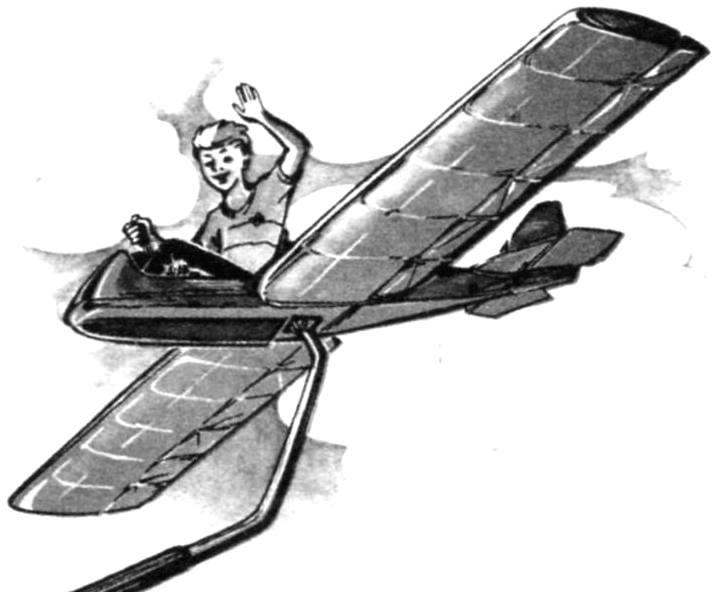 …Control knob soft is selected, the glider can easily lift the nose off the ground and shoots up. There, on a five-meter altitude, where popiskivaet on planes fresh wind, we are now going to demonstrate what they have learned to parry the roll of the glider, deviation from course, it’s a “press” machine to the ground, find the optimal angle kupirovaniya, which is necessary for a proper take-off… everything in this free flight! Meanwhile, our glider… can’t fly. Installed it on the building, resembling a well sweep. And is, in fact, the layout. To make such a trainer in the club or at the station of young technicians is not so difficult. It will allow children, dreaming of the sky, to practice a lot of exercises necessary for mastering flying skills.
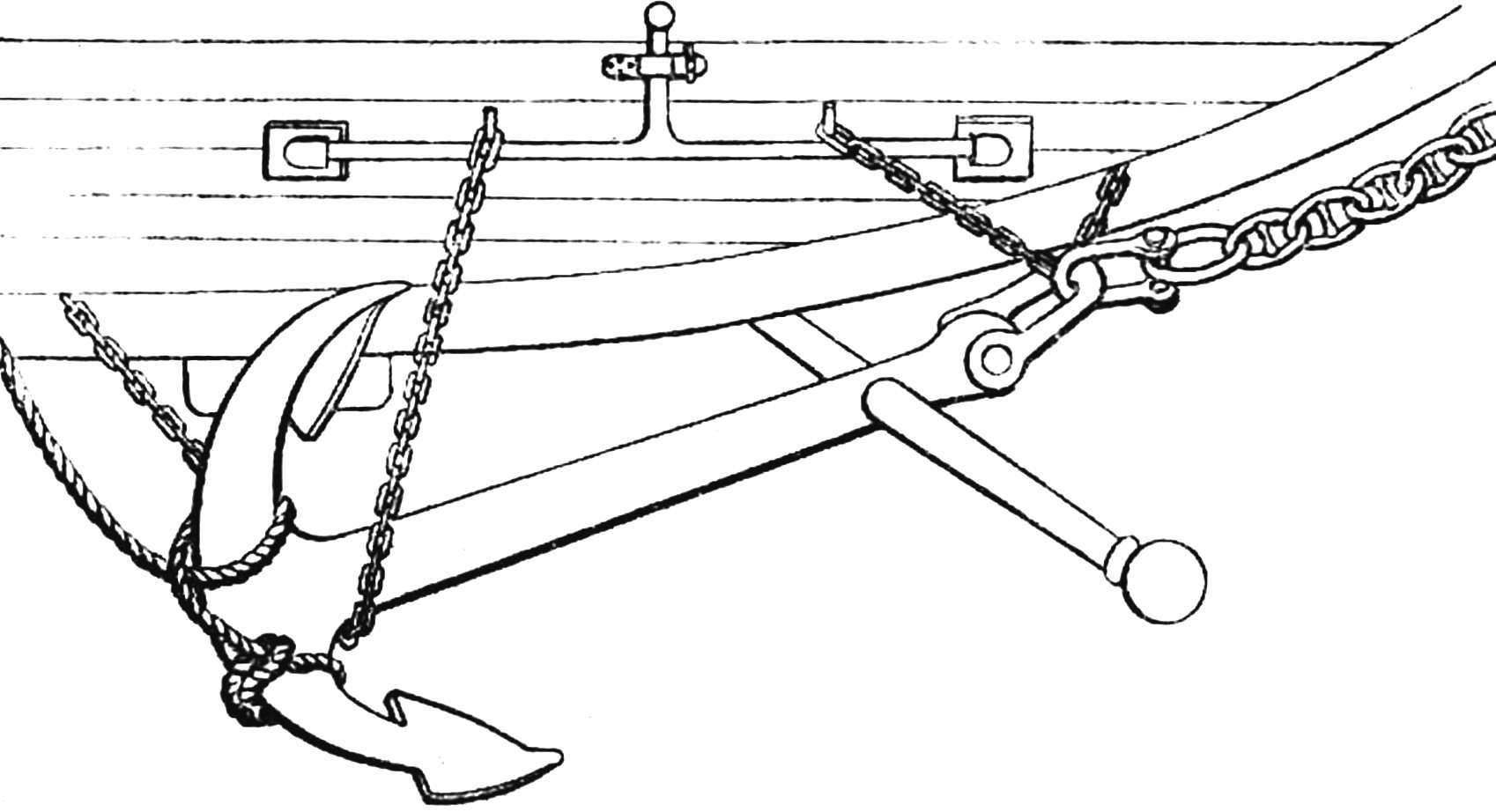 For rowing and sailing vessels of the middle ages was used cetarehwodie anchors-cats and the two-horned anchor with a wooden stock, like the Admiralty, which appeared in the second half of the XIX century. In Portuguese and Spanish caravels and Galiano, Dutch flutes, Venetian trabaccolo and other vessels anchor in the stowed position suspended and attached sling through a block under the bowsprit or primitives horizontally to plancher bulwarks, whose strength is in the area of the school has increased due to additional brackets. To lift the anchors on these ships are applied blocks, chain blocks, arrows, hand-windlasses and wooden bollards. Mistake is made by those modelers that are on the model of a sailing ship belonging to the period of the middle ages, doing crumbly and spire. History of shipbuilding proves that these devices anchor devices appeared only in the second half of the seventeenth milestone.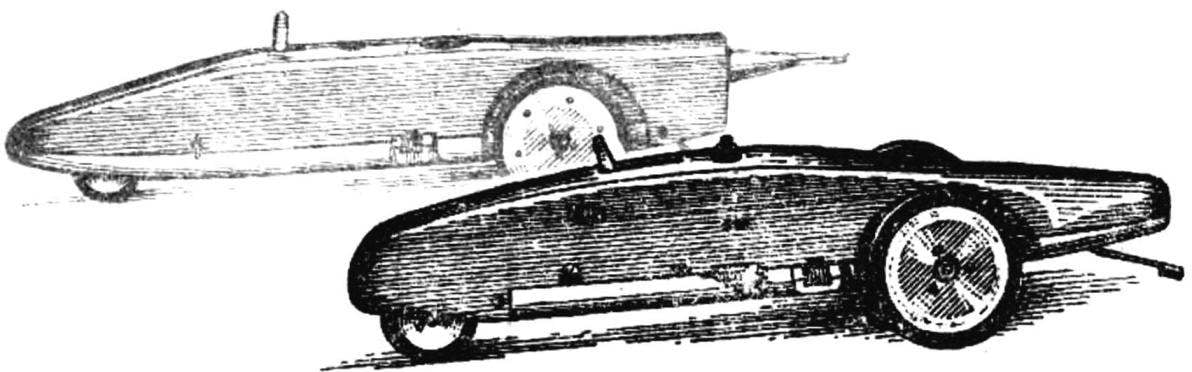
 Control line racing model class 2.5 cm3 designed and manufactured in a self-similar laboratory of the Palace of pioneers and schoolchildren of the Pervomaisky district of Moscow under the leadership of A. Pyatibratova. Model — winner of national Championships in 1977-1978. Designed for engine KMD-2,5, diameter of wheels 80 mm. With properly adjusted and well firmed engine model of this type at speeds of about 170 km/h Special attention during development was paid to reliability of all units.
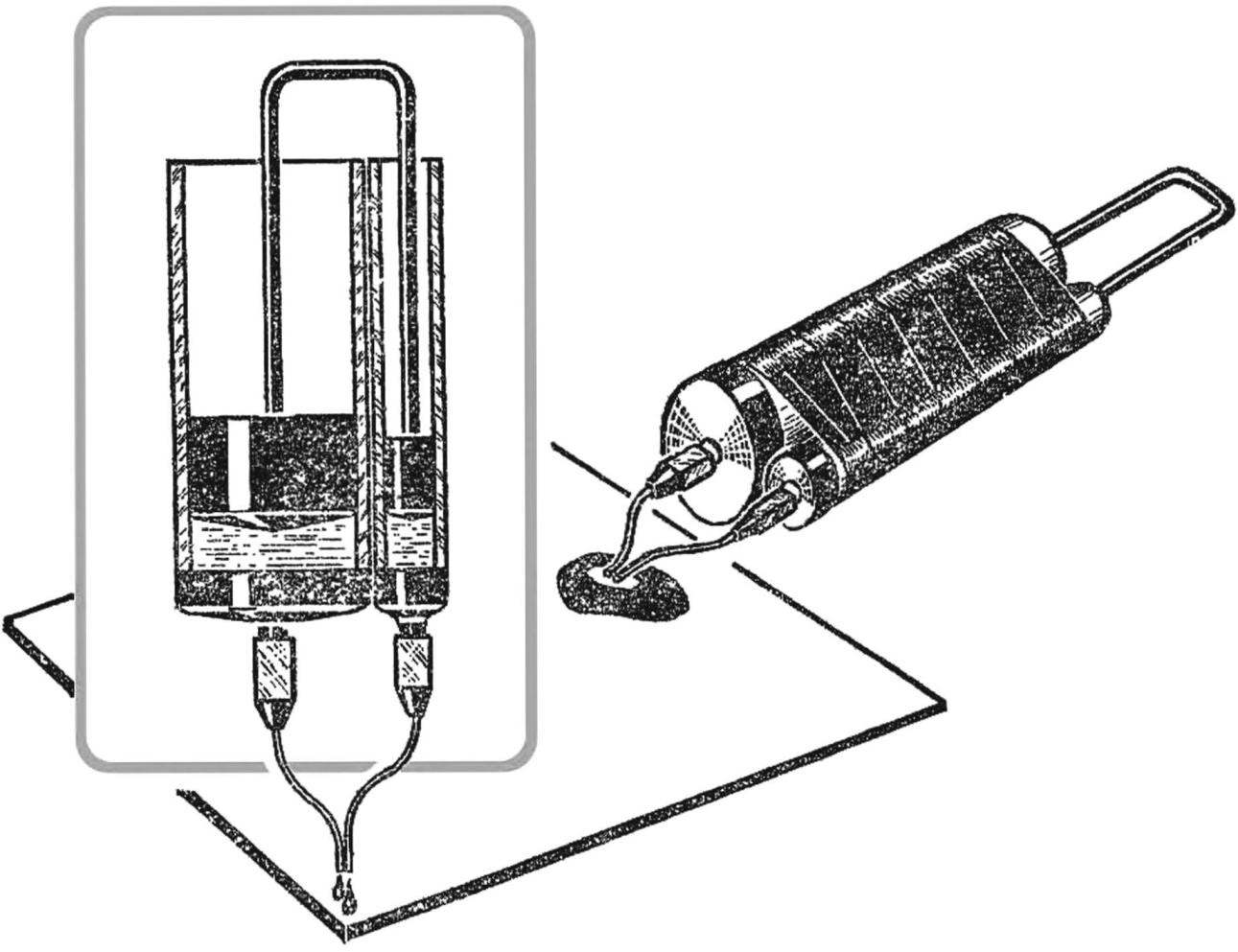 Epoxy adhesive, as is known, consists of two components: resin and hardener. Before use, the components are mixed in the ratio of 8 : 1 (by volume). It’s easy, especially when the operation is performed with a sufficiently large amount of resin. But sometimes (especially modelers) need only a few drops of universal glue. Observe in this case, the necessary proportion between resin and hardener is not as easy as it is a very meager number of components necessary to measure at the same time.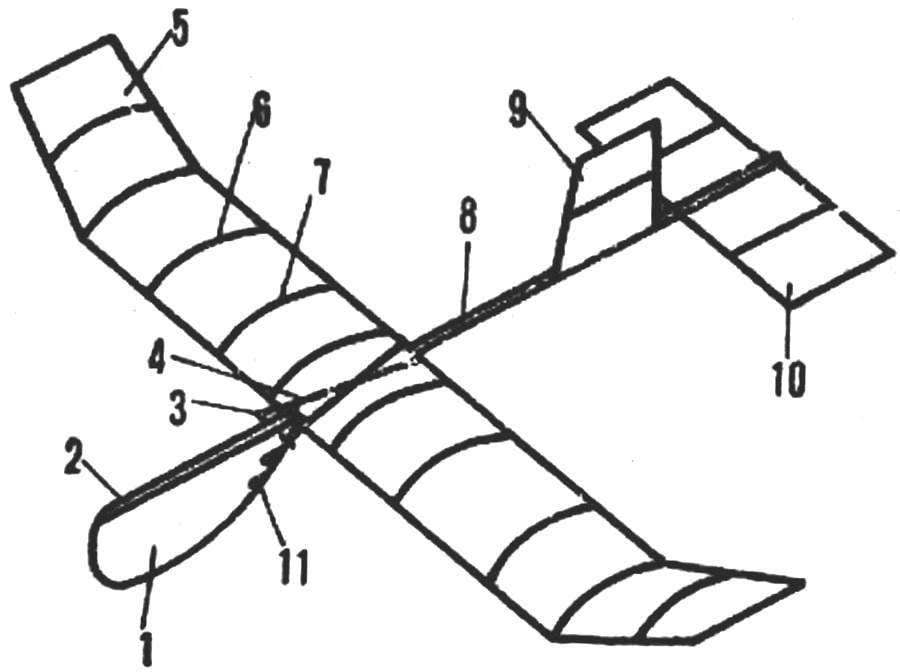
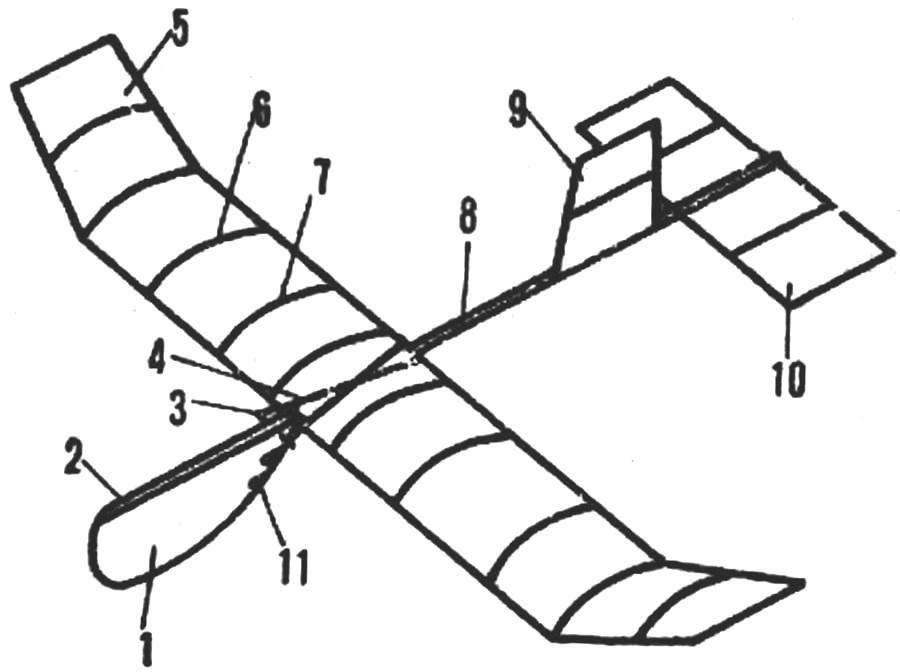 Before starting work, carefully examine the drawing and description. Then prepare the tools: small plane, a sharpened knife, pliers or pliers and a jig saw with saws. Materials you will need: a pine rail, a small sheet of tinplate, paper, spool of white thread No. 10, plywood thickness of 1 mm and 3 mm, or micuenta tissue paper or polyester and nitrogly (it may be enamel, “AGO”, supercement, etc.).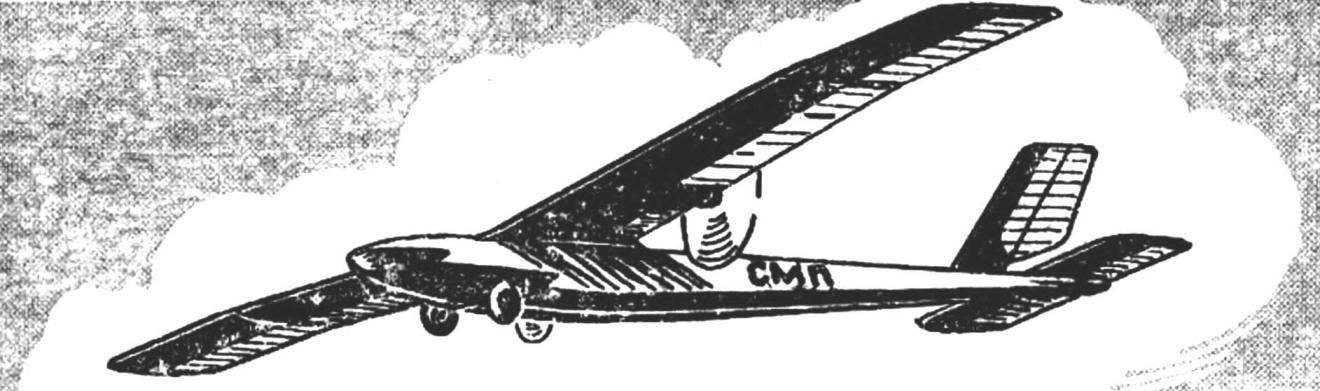
 In the past year (“M-K” No. 5 of 1979), we introduced our readers to the technology of refinement of microelectromechanical DI-1-3 and EDR-40 to install them on a flying model. The article evoked a wide response among modelers. Yes, otherwise it could not be: after all, nowadays, no one not vysavac>1 doubt the prospects of application of electric motors not just for cord, but for radio controlled models free flight. However, even the best examples of electric motors are still unable to compete with internal combustion engines primarily by power density, its weight IS1 resident students nutrition.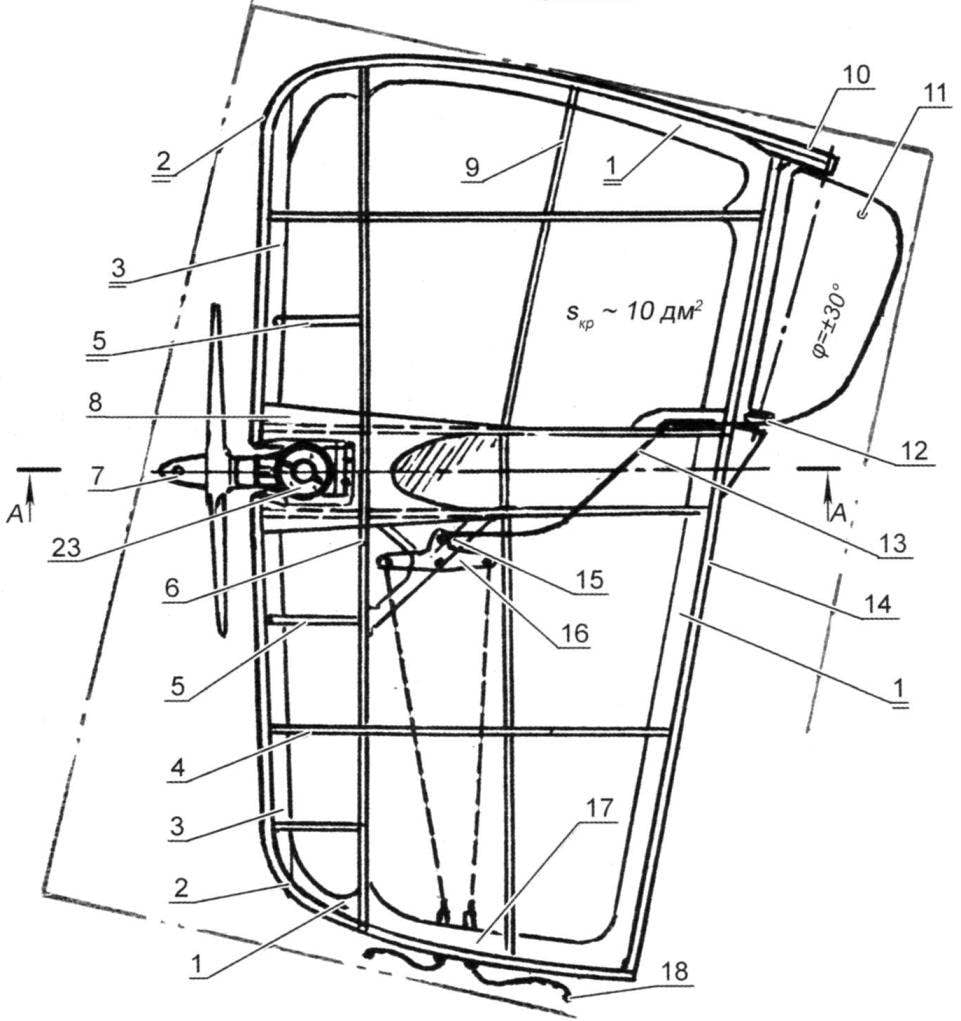
 Modern models of air fight as a championship class and “Junior” are in many respects similar in construction and, accordingly, on the concept. They completely satisfy the “fighters” requirements and only differ in the manufacturing technology.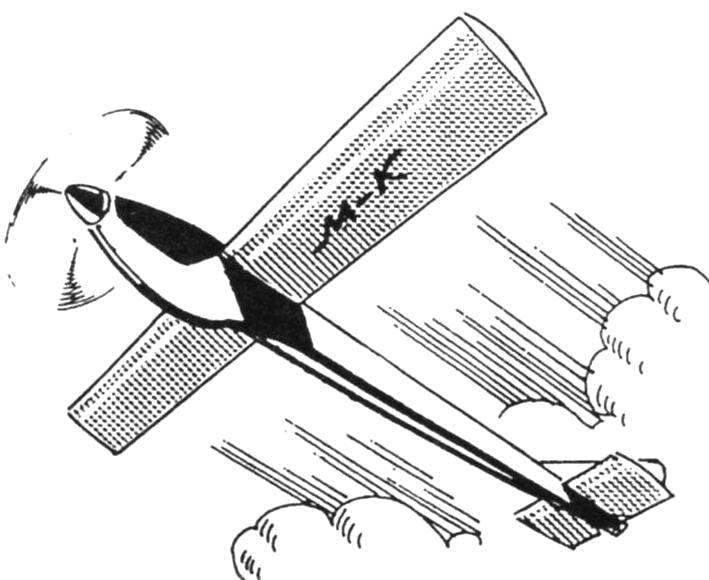
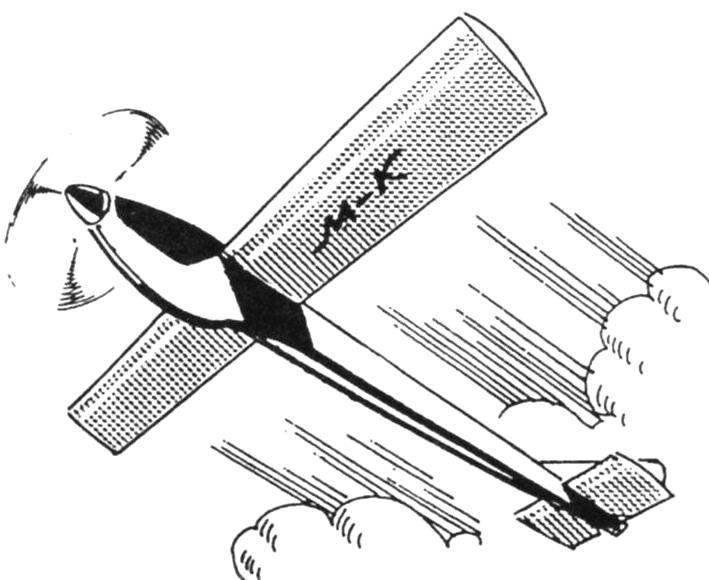 Schematic model of the airframe and the aircraft, as you know, started flying much earlier than their full-size prototypes. Paving the real aircraft’s path in the sky, they are now helping novice modelers to do their first steps in small aircraft. It is a pity that the modern “schematicity” do not differ from those that did even our grandparents: all of the same pine strips, aluminum wire, model aircraft rubber, a little tissue paper, yarn and glue. No new materials, no advanced design and engineering techniques.
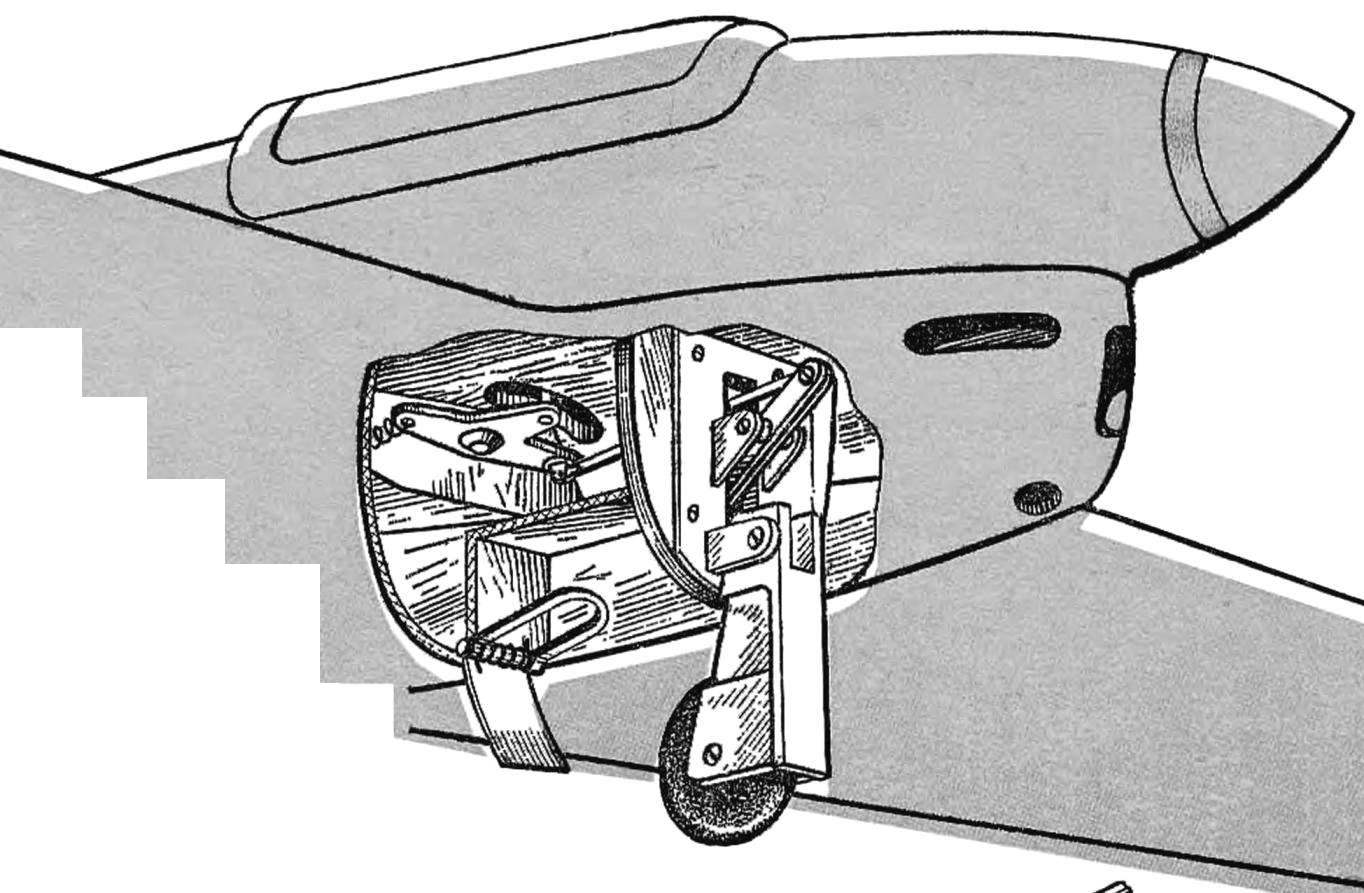 About 190 km/h! This is a technical medium speed modern racing model with a powerful engine. Moreover, the maximum operating speed of the model exceeds 170 km/h, this is not the limit. Constantly improving miniature aircraft, athletes strive to further reduce the time of passage of a ten-kilometer distance. Before the Modeler, usually three ways: change the layout scheme, forcing the engine and improved aerodynamics models.