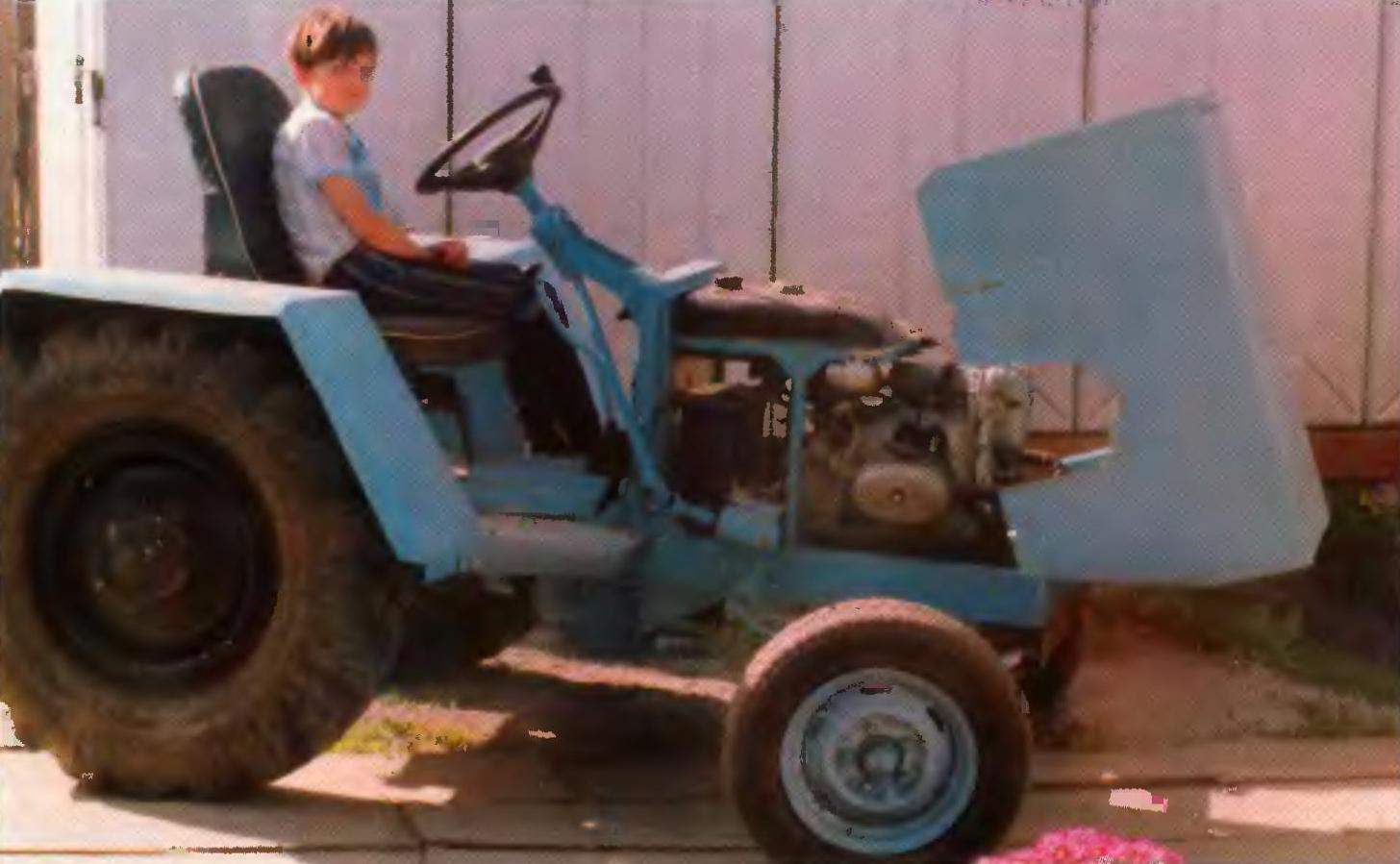
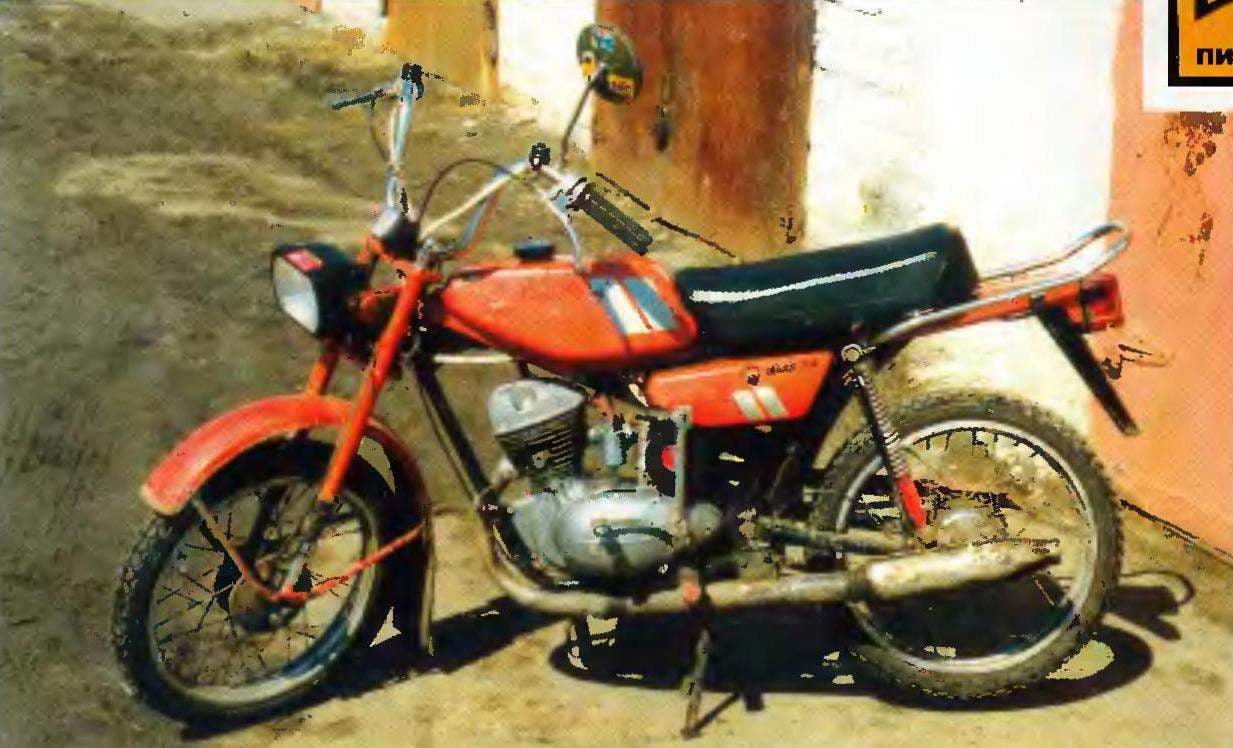
 Built a similar machine I used. But this is considered the most successful. Layout scheme it is similar to a tractor “Belarus”. The engine of the motorcycle “Ural”. Electrical sectiontwo, but modified Instead of the standard ignition circuit breaker has two—one for each cylinder. Ignition coils B-110 also became two.
MINI TRACTOR
 Built a similar machine I used. But this is considered the most successful. Layout scheme it is similar to a tractor “Belarus”. The engine of the motorcycle “Ural”. Electrical sectiontwo, but modified Instead of the standard ignition circuit breaker has two—one for each cylinder. Ignition coils B-110 also became two.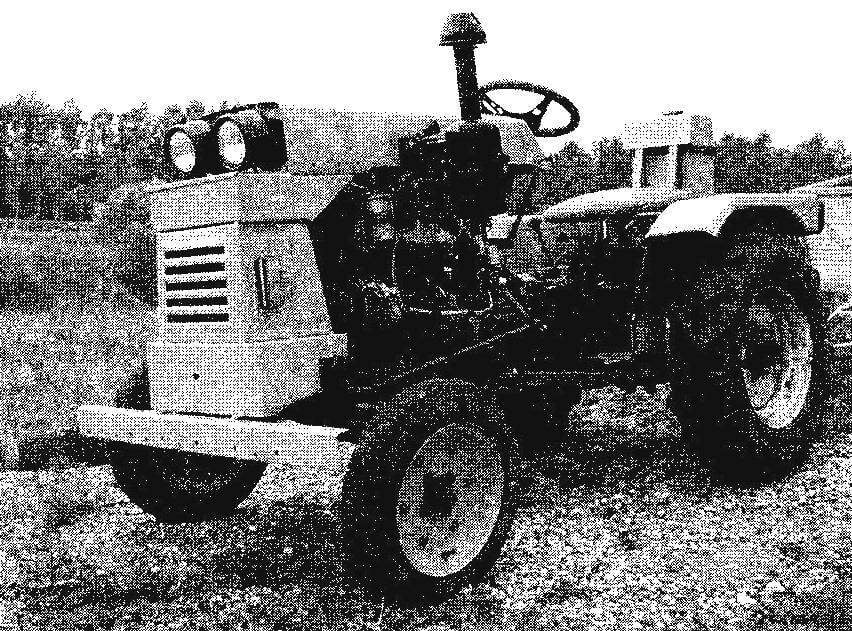
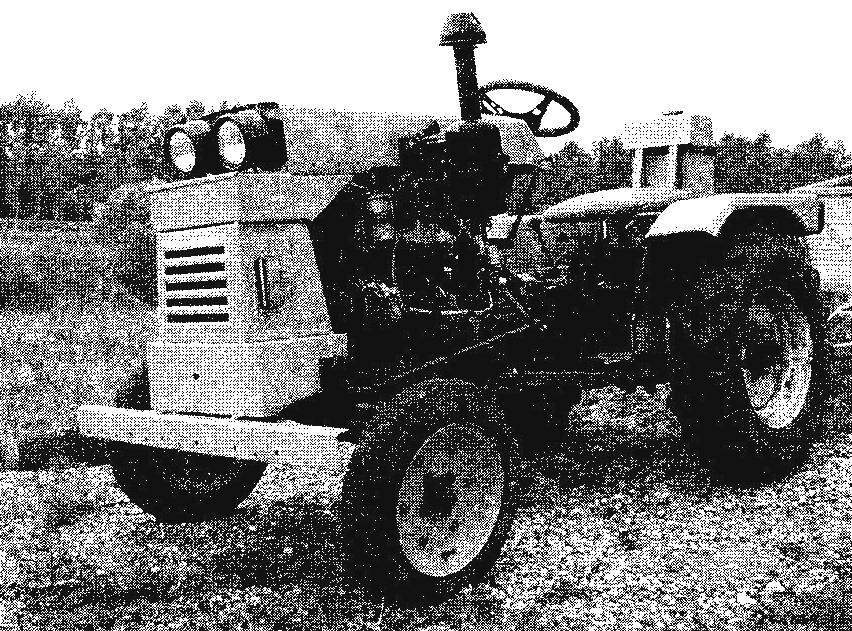 Readers familiar in № 4’2006 a tractor trailer Muscovite V. Wheels, interested and yourself mini-tractor for this Amateur designer. Today we publish the description of technology of manufacture of this tractor and schematic of its main components.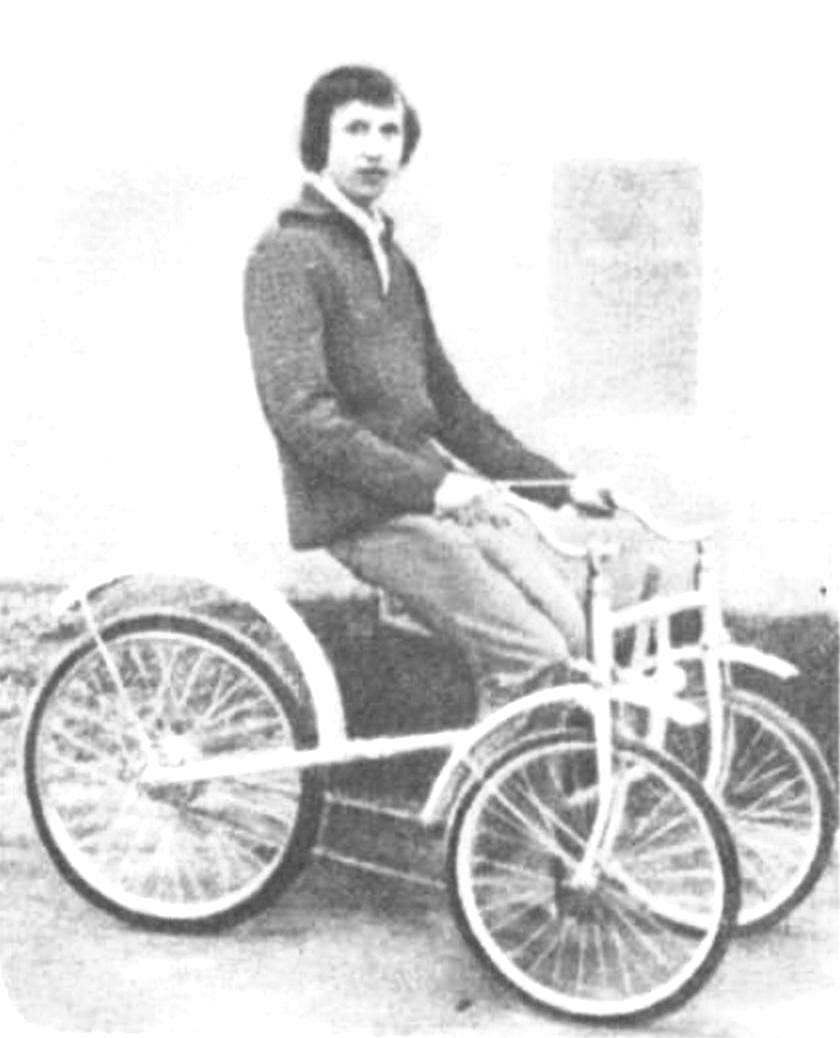

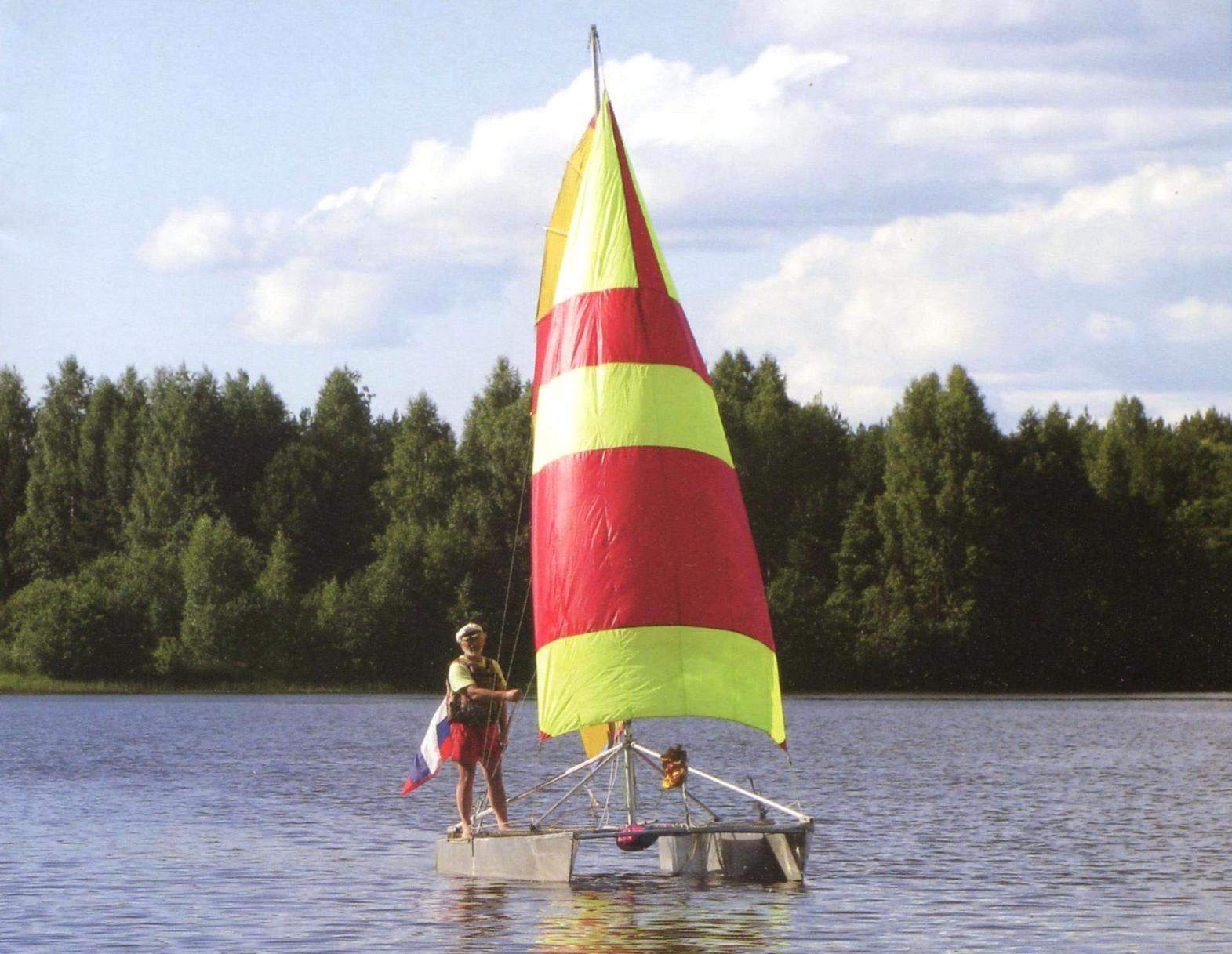
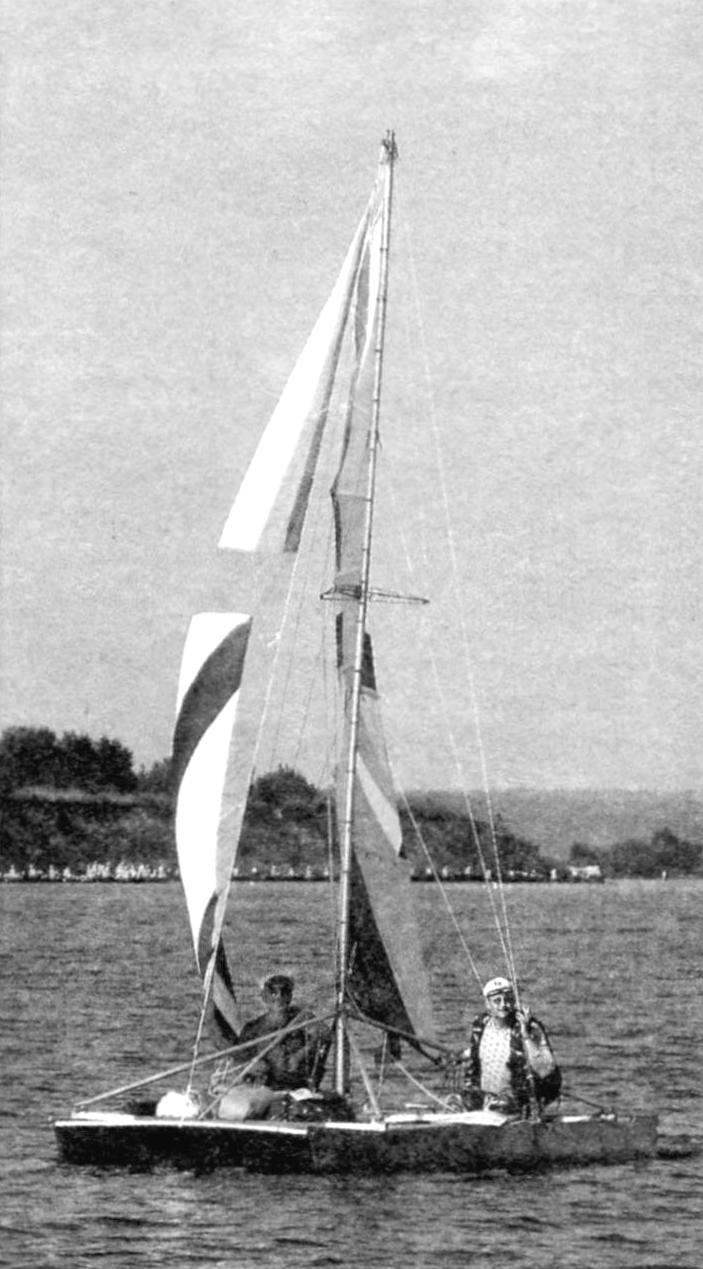 From the time of this writing I have built five catamarans of various designs. In designing, building and testing these boats took an active part my friend Anatoly Pavlovich Ignatchenko. Not to say that none of them did not satisfy me. A catamaran with inflatable floats performed well on water the Moscow region, and Lower Volga. But Pneumatics poorly kept shape, which significantly reduced the speed. So the idea arose to build a catamaran with rigid floats.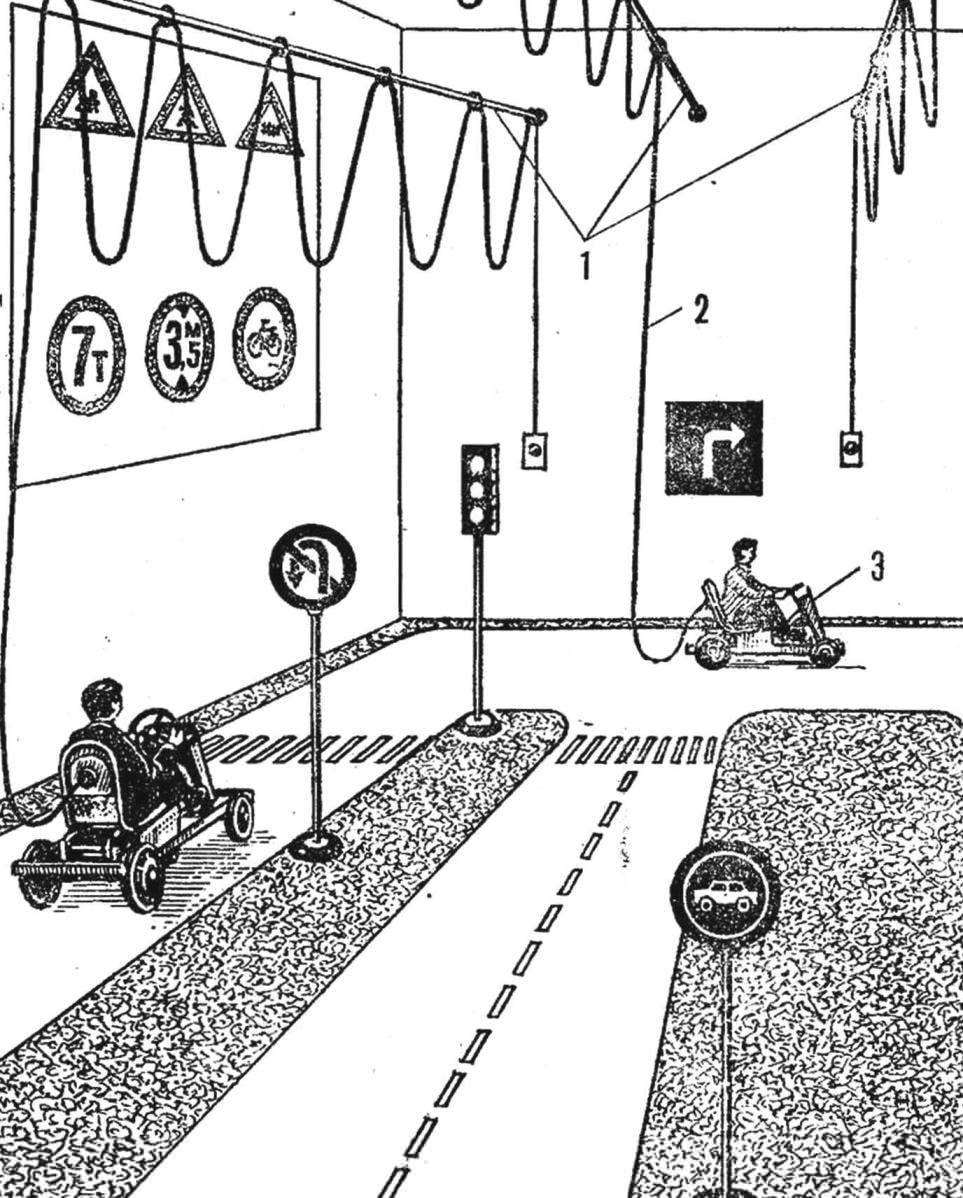
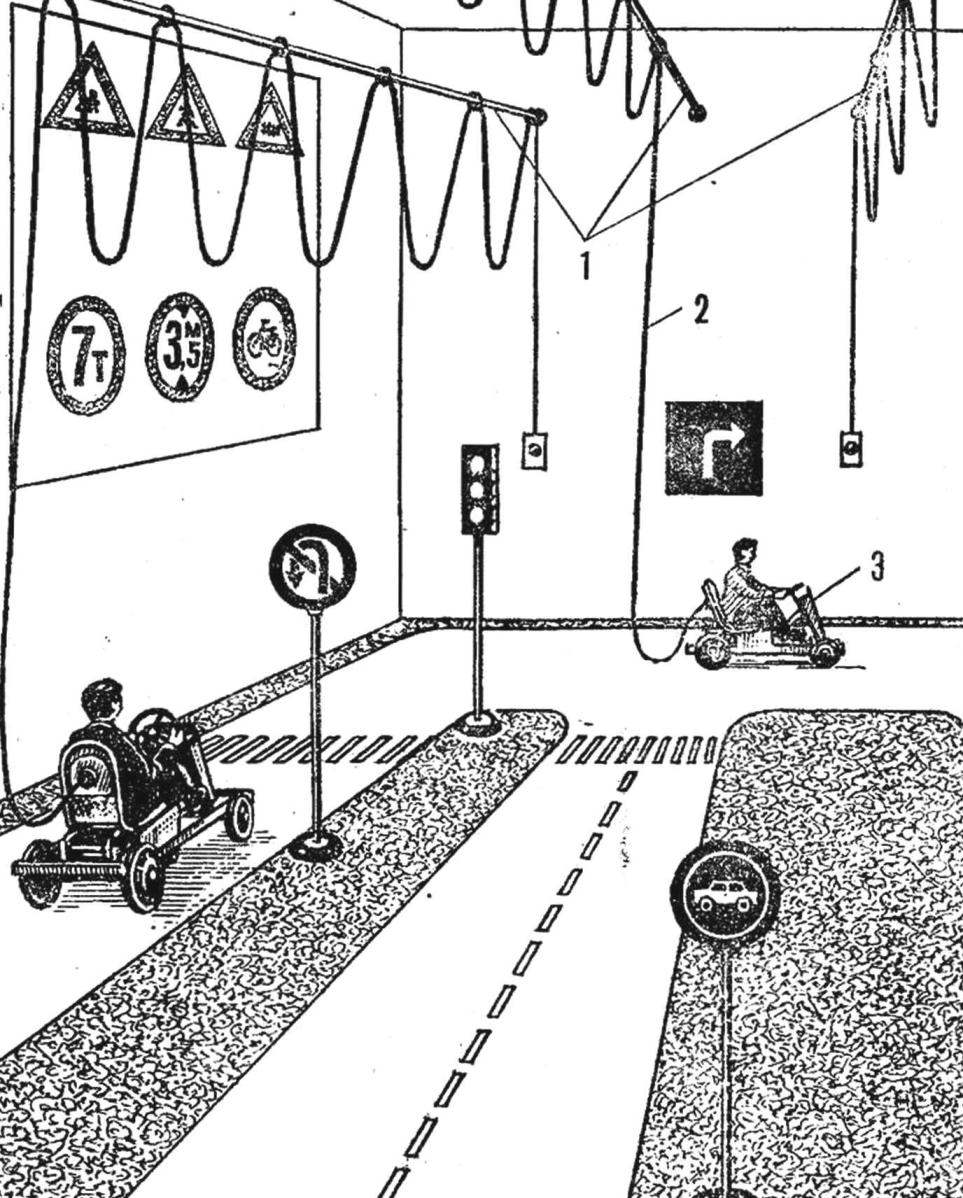 When I hear the word “dubbed”, it is a sun-drenched Playground, dry asphalt paths, summer-dressed children… unfortunately, autumn, winter and spring avtogorodok contraindicated. What should I do? Where to engage with students?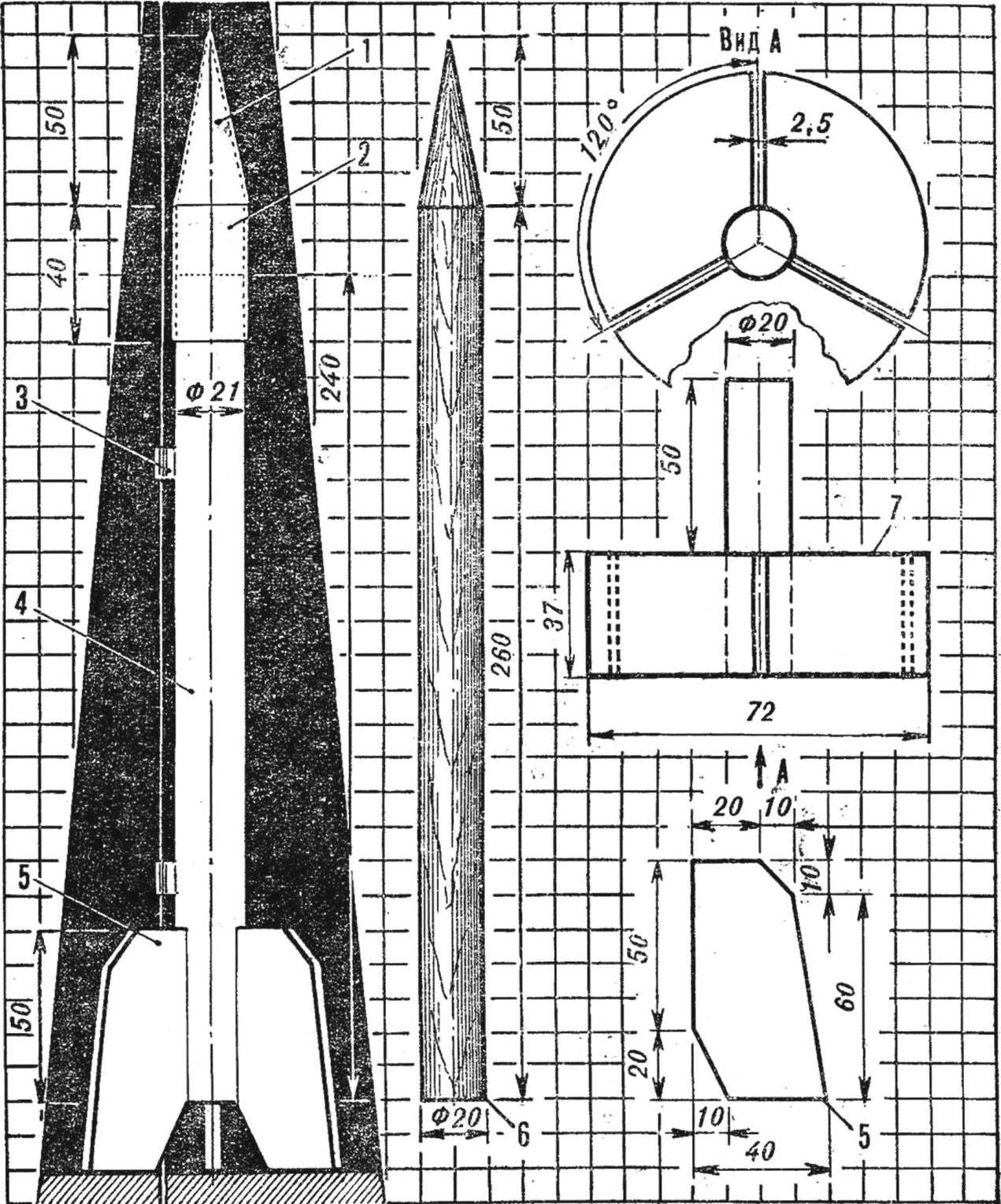
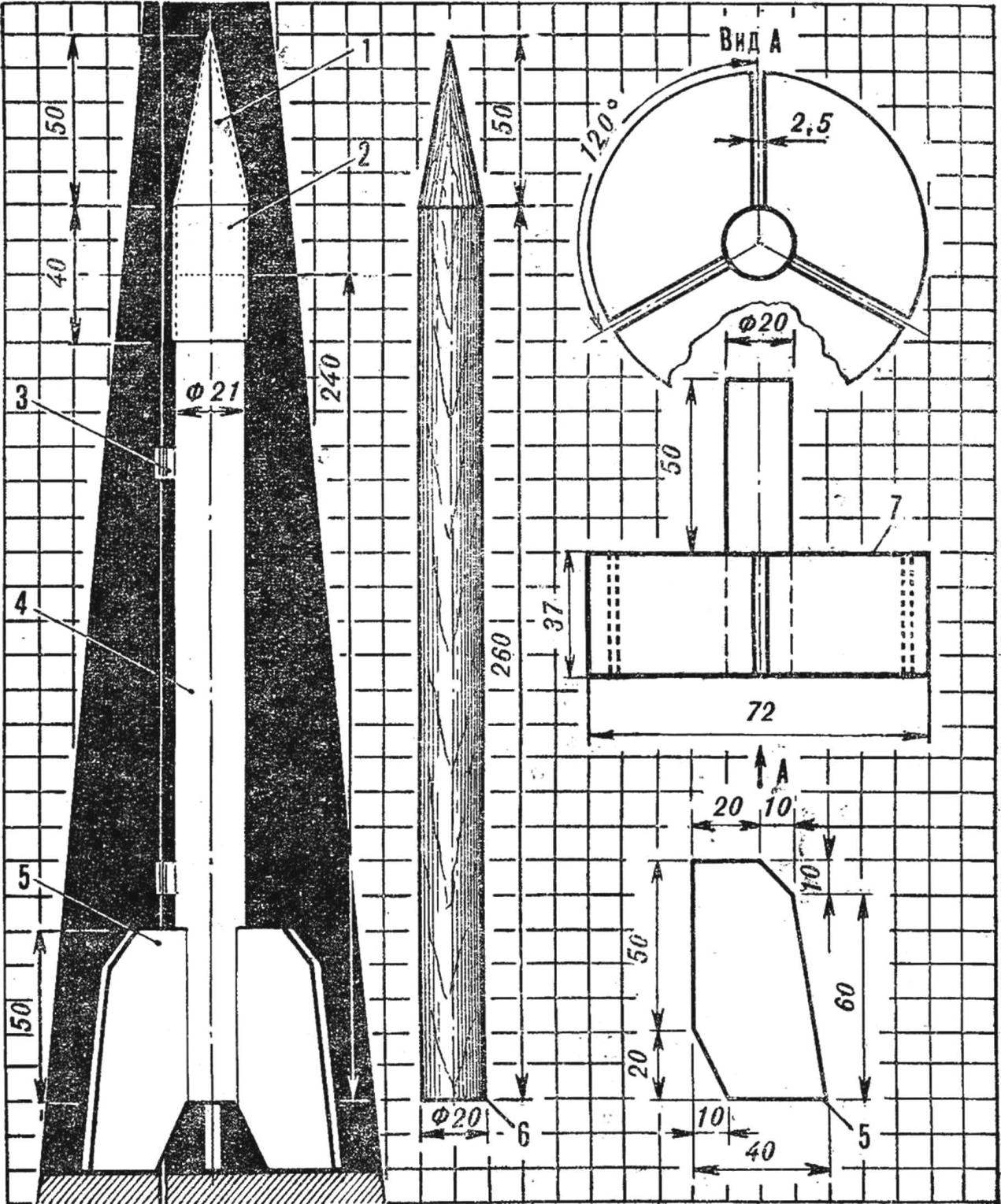 To make this model forces students 4-6 grades, first starting modeling. The first detail which you will need when building Navoiy 6. It is made of the housing 4 missiles and cap-cone 1. The last carved out of tree diameter casing.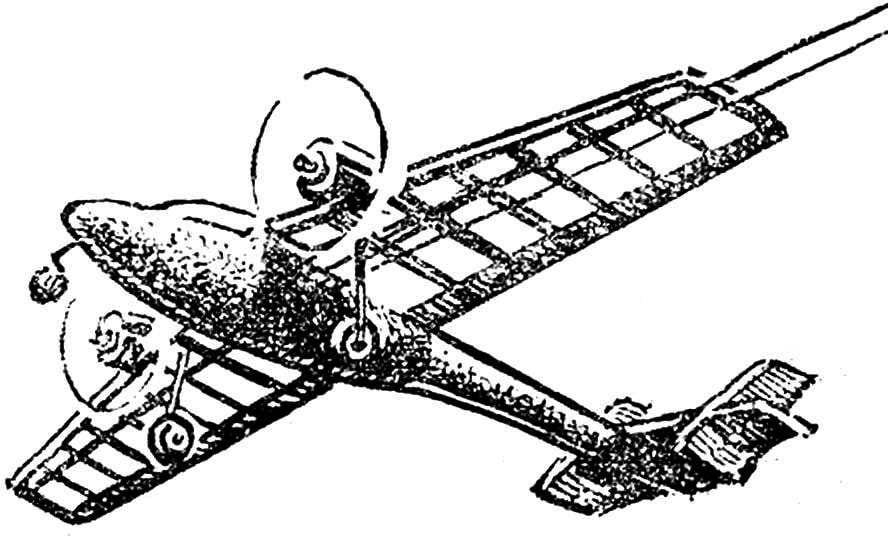
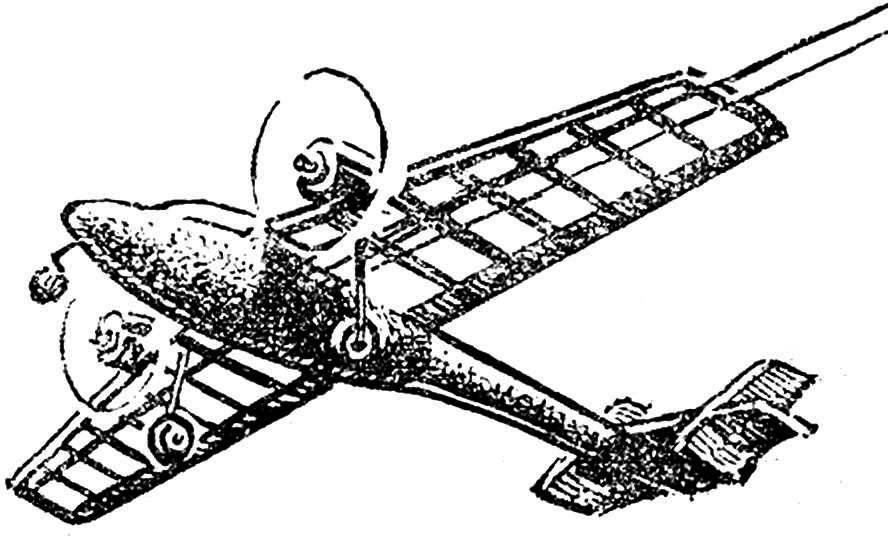 Increasingly, we receive letters from readers describing flying models, which instead of internal combustion engines operate motors of different systems. This is quite natural and timely: judging by many indications, the electrification of aircraft modeling – in sight. No wonder the first successful examples of flying models are available in the “toy” version of some foreign model aircraft firms. Among them are low-cost models, capable of conducting free uncontrollable flight duration of 1-3 minutes, Cordoba for the different types of food on the wire and even radio-controlled model of the coast, including the piloting. The duration of the last flight without recharging has managed to bring up to 10-15 minutes. However, the electric power is still inferior to compression and heat rating.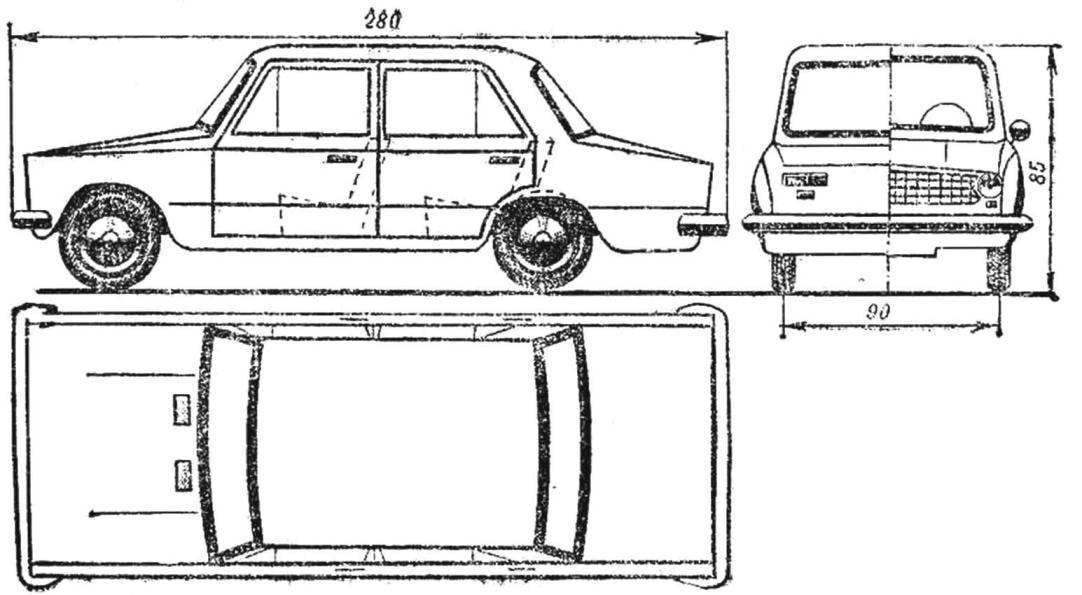
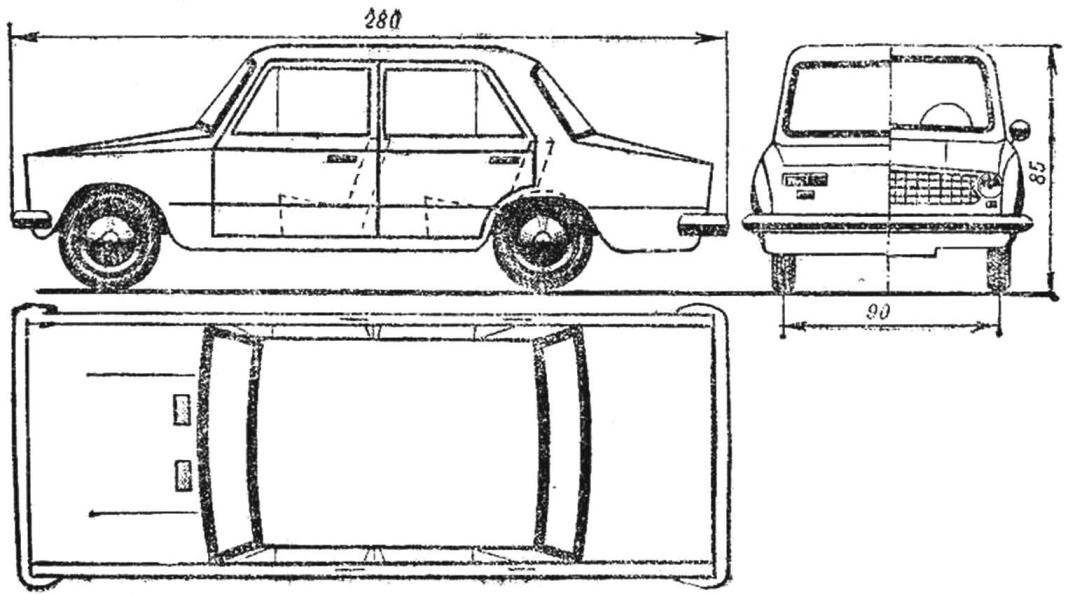 Novice automodellista propose a simple model with a body made of thin stiff cardboard. Manufacture the body you need to start with drawing and cutting with the side walls of the pattern No. 1. To get the contours right and left walls, the pattern upside down. After cutting the parts beaten out from the inner side with a hammer, giving them a slightly curved profile. Longitudinal breaklines make incisions on half the thickness of the cardboard on the outside and the inside — on the dotted line.