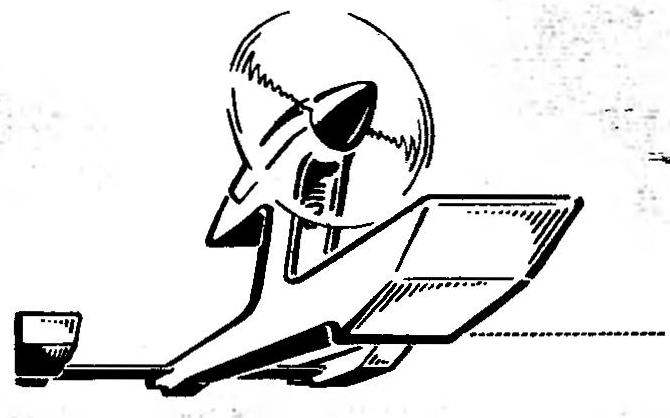
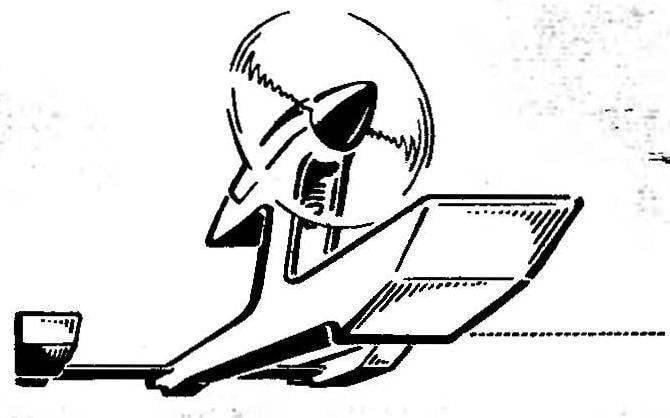
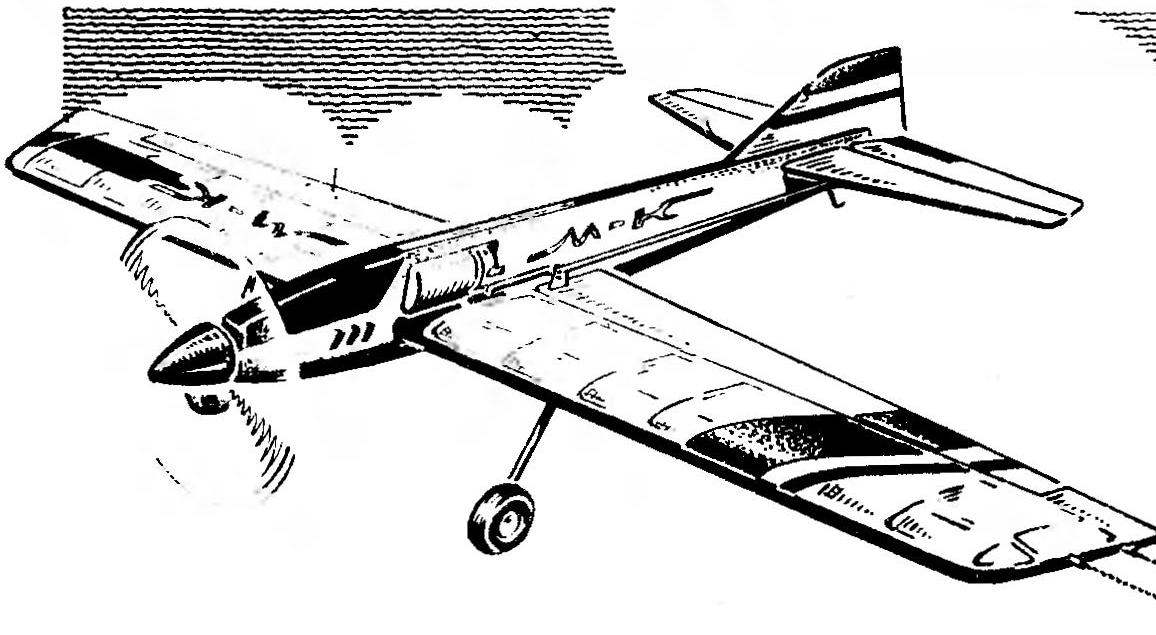
 Today we offer young modelers rather unusual development of high-speed cord models apropriada. Novelty design in unusual approach to design. Perhaps this is an approach based on the full (but competent at the same time, taking into account all the important factors) simplification, truly perfect. For good reason, among these designers, there is a widespread saying: “a Difficult decision can find any, and to solve the task a minimum number of simple parts and assemblies — only genius.”
WITH AEROBRIGADA – SPEED CORD
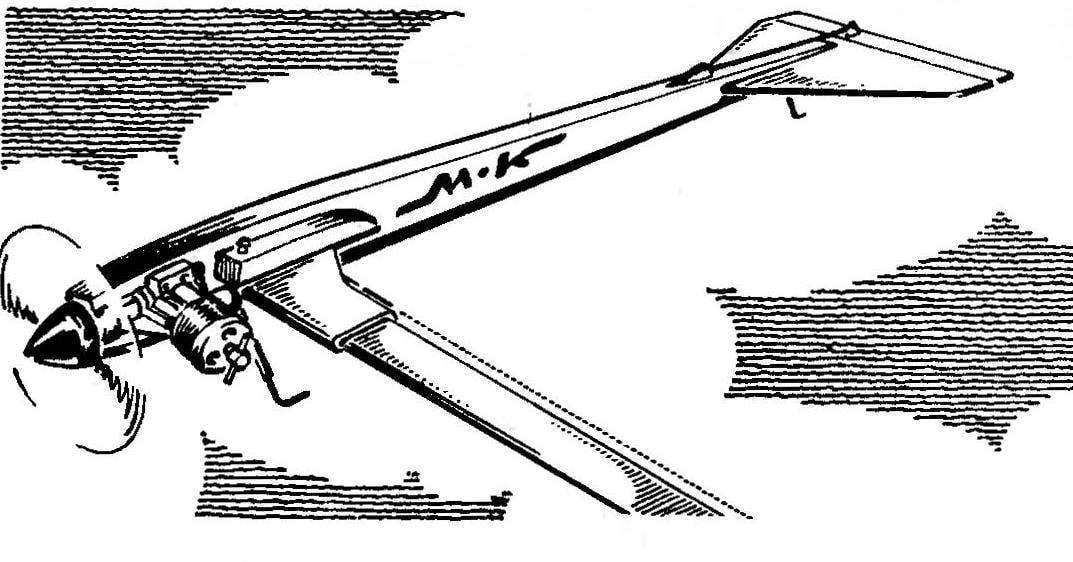
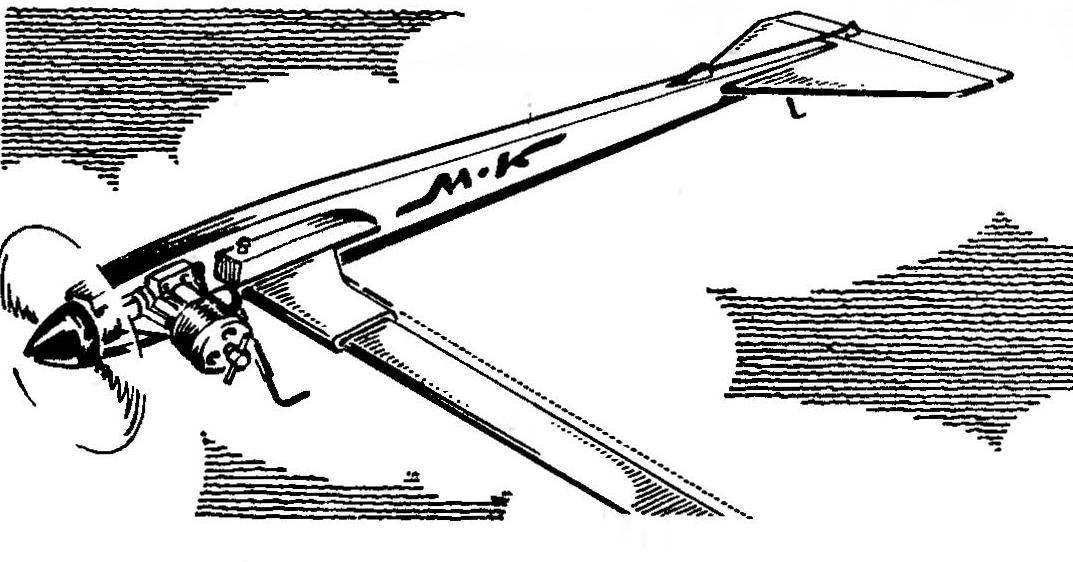 Currently a subclass of “school” high-speed cord does not Shine sport results. The competition clearly shows the separation of equipment into two groups. First, as a rule, are simplified “veneroida” contour type, which, if a young athlete is able to cope with the management, you can show only average speed, and even then with a good engine. The second group consists of devices created exactly according to the samples of a champion techniques (if not outright borrowing occurs). Do note that the gap between the two groups as the quality of the models and their flying capabilities, and initially decide the issues is very high. Poluchennye contoured speed are likely only tasks “to designate” the presence of this class at the event.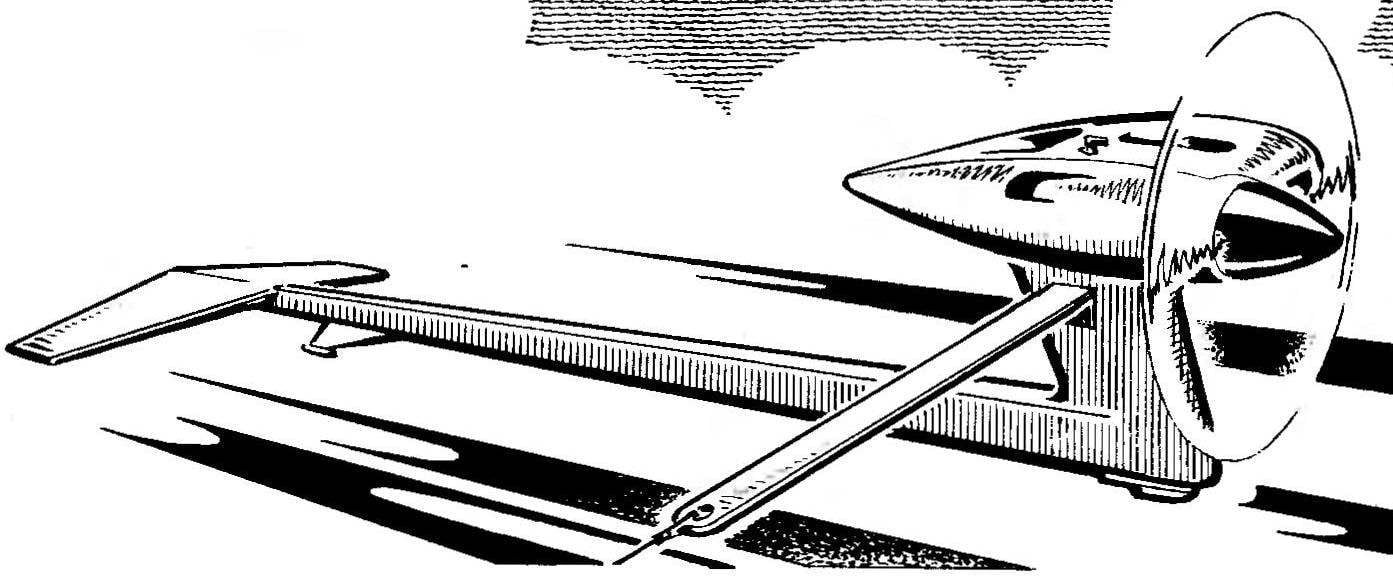
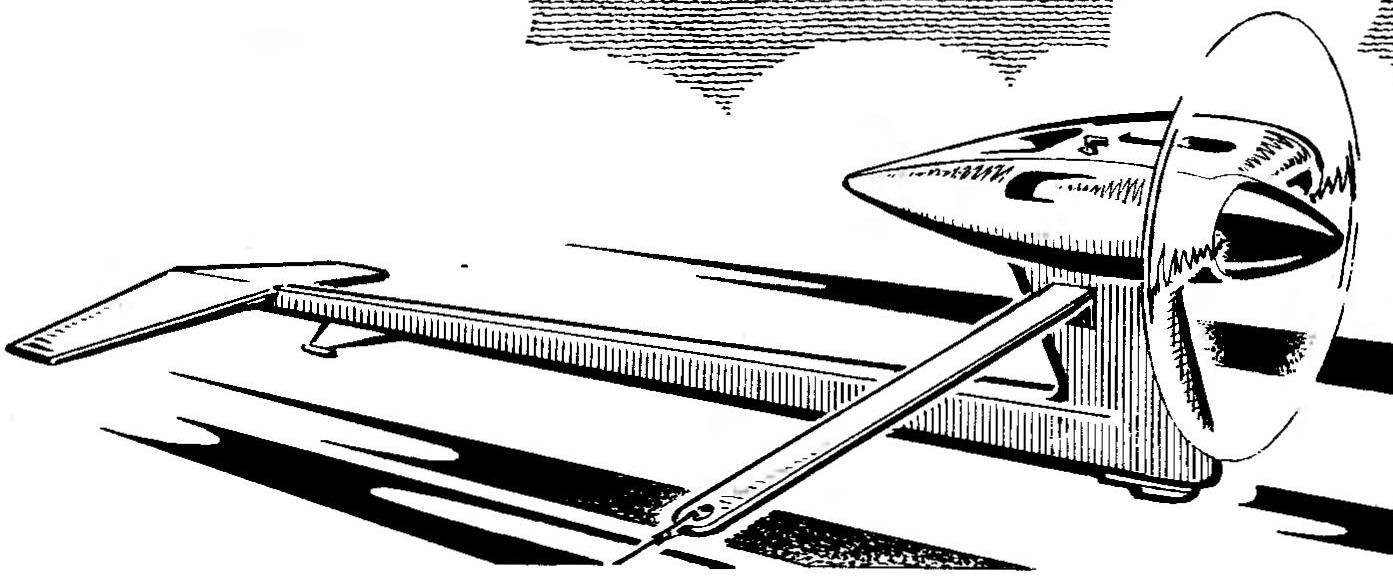 Published in “M-K” № 9, 1993 fundamentally new scheme of auromodele immediately liked by our members. Attracted her not only a win-win for aerodynamic resistance and stability in the race, but… the strangeness of the forms, which allowed to finally make something new after wandering from year to year, the classical variant “Bertoli”.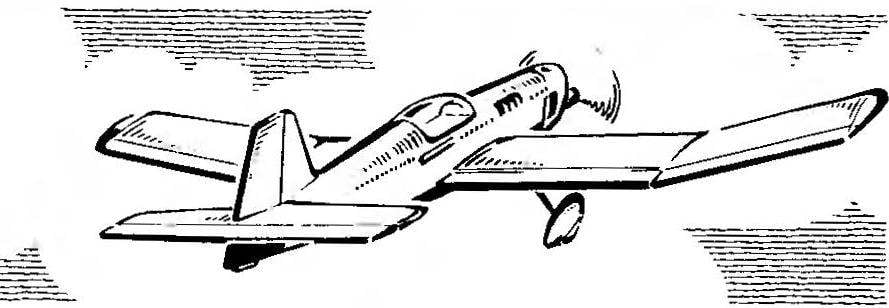
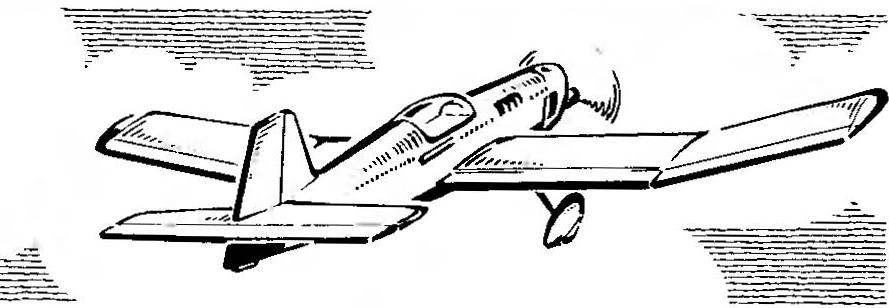 Now all over the world modelistica there is a clear trend of withdrawal from the limited rules of the canons of sports equipment. Appear constantly and steadily there are model subclasses: for example, microplane, or, conversely, models of the giants; in several countries, along with other, an official Championships held with the technique created by drawing almost half a century ago.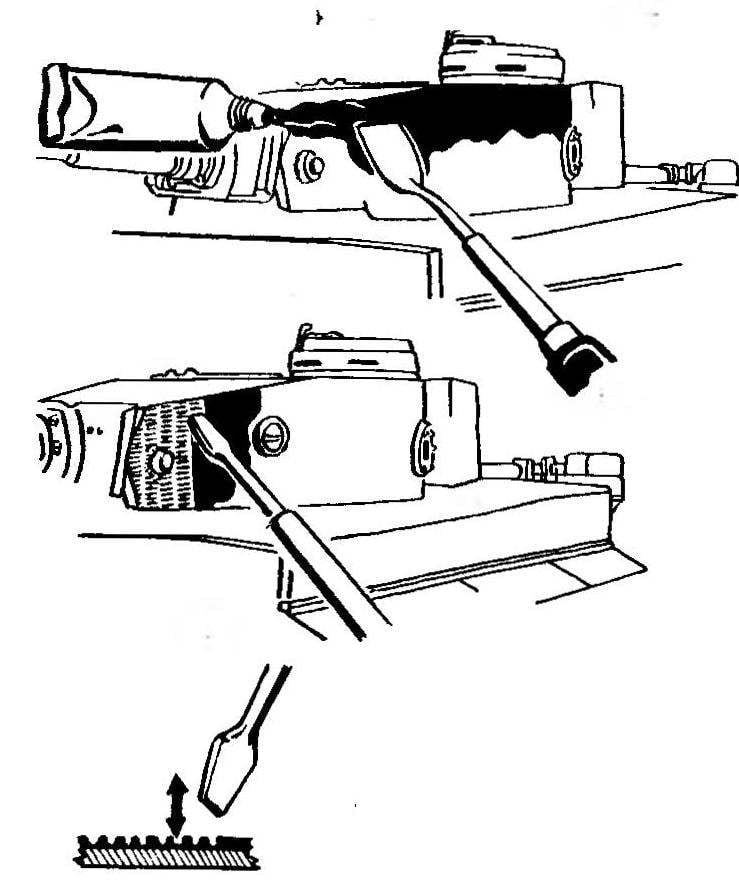
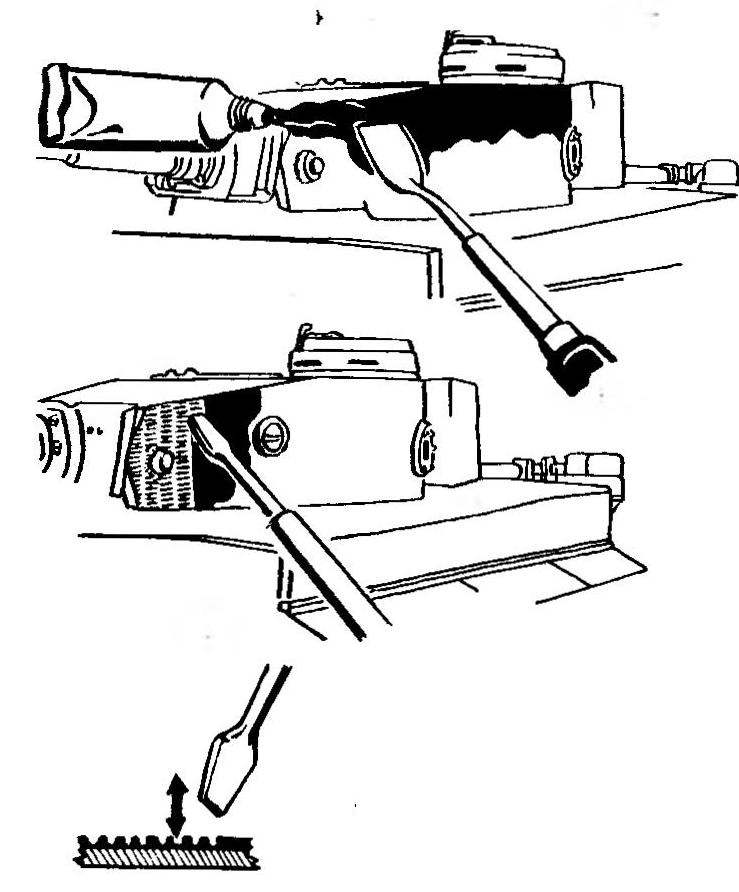 Anyone interested in the history of armored vehicles is well known that highly characteristic feature of the external appearance of the German tanks since 1943 was an anti-magnetic coating of armor — so-called “zimmerit”. Originally this coating was intended only for the Eastern front, but soon became an integral part of all tanks of the Wehrmacht. “Zimmerit” with a rather complex chemical composition, in simplified form, is represented as a mixture of latex with cement. The idea of such a coating is rather controversial, since the magnetic mines were used only by guerrillas, and after application the tank was still “clean” place (rollers, tracks, etc.). In the end mine was “to stick” and to railway platform, and downhill equally flew echelon with tanks, as with the “Cimmeria”, and without it. But nevertheless, the Germans did it quite costly.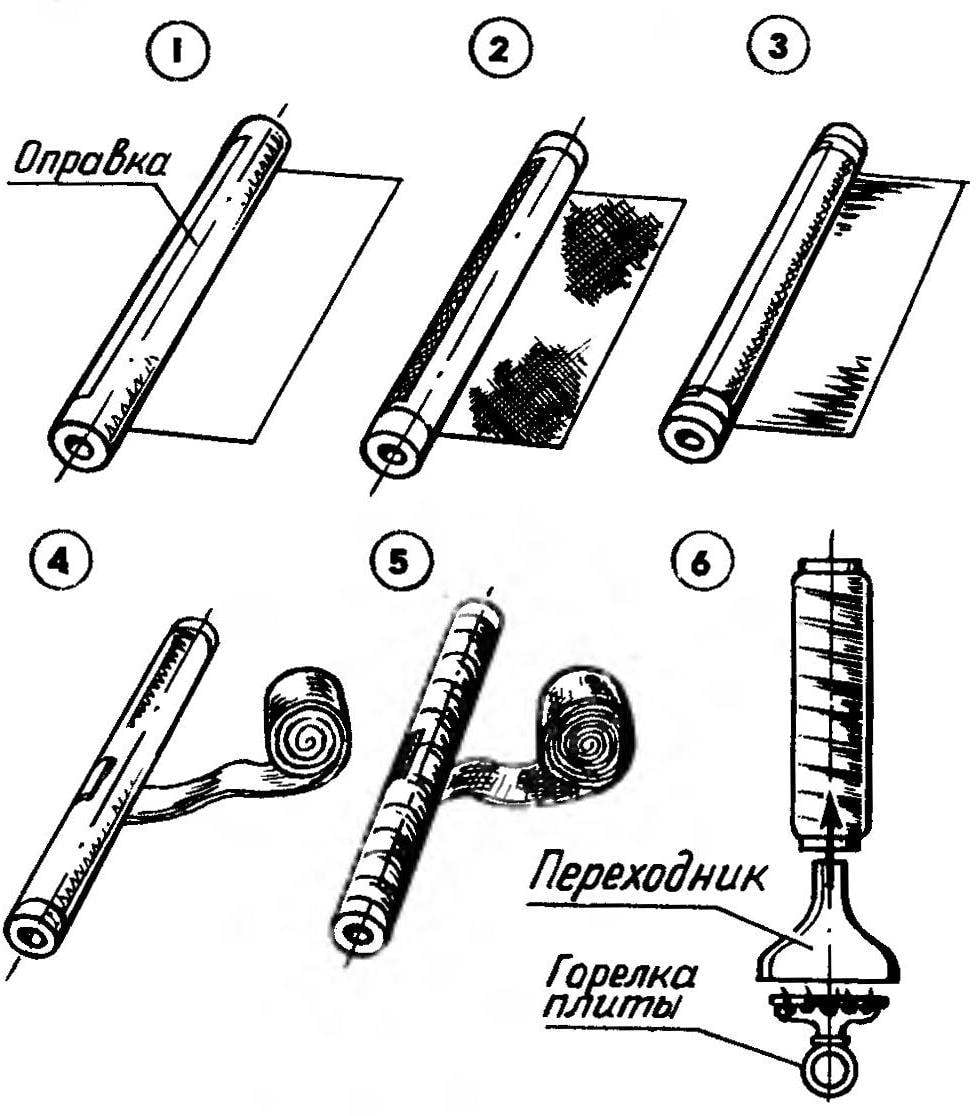
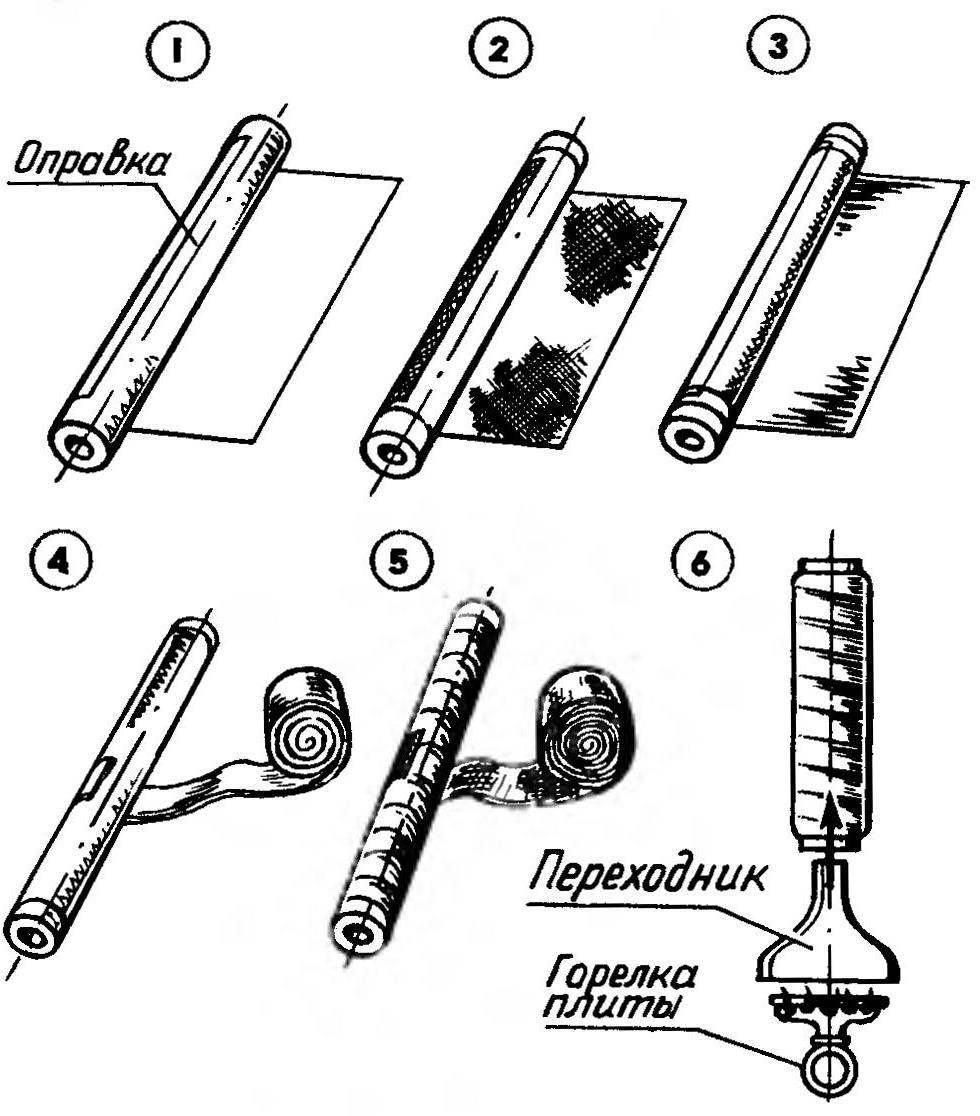 With all the advantages of fiberglass hulls for model rockets the traditional process of production is highly labor-intensive and unsound. Meanwhile, the conversion gave the modelers a new and very interesting material is heat resistant fiberglass gasket STP-4. It is used widely and, having a small official shelf life, often charged and often goes to the shops “Junior technician” or “Do it yourself”.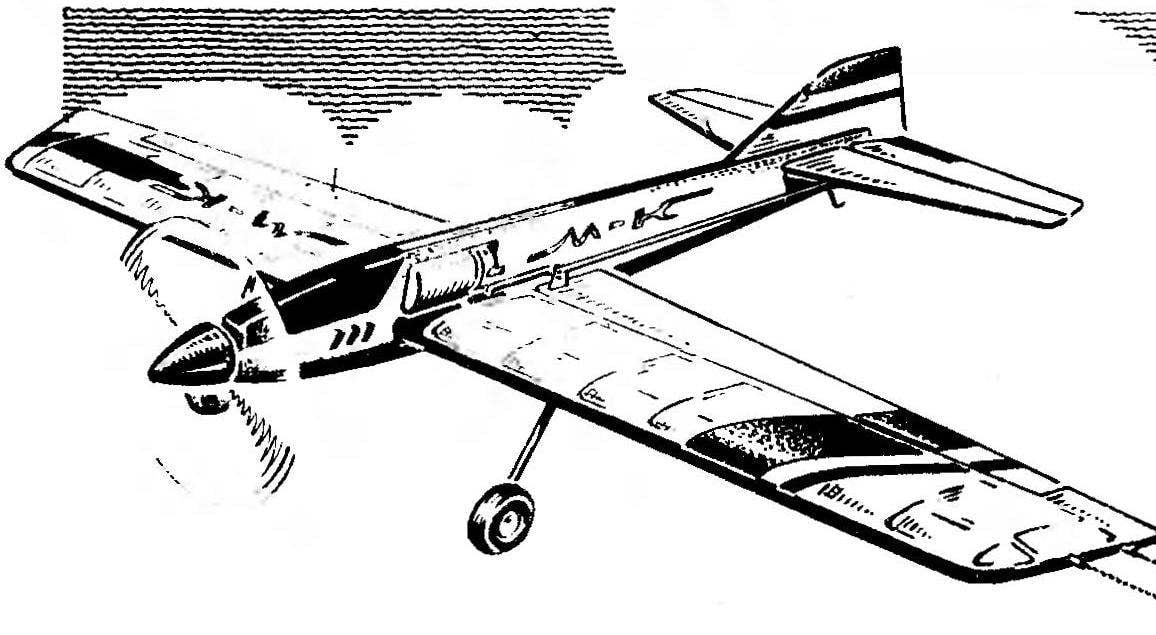
 Developed in the circle of aircraft modeling

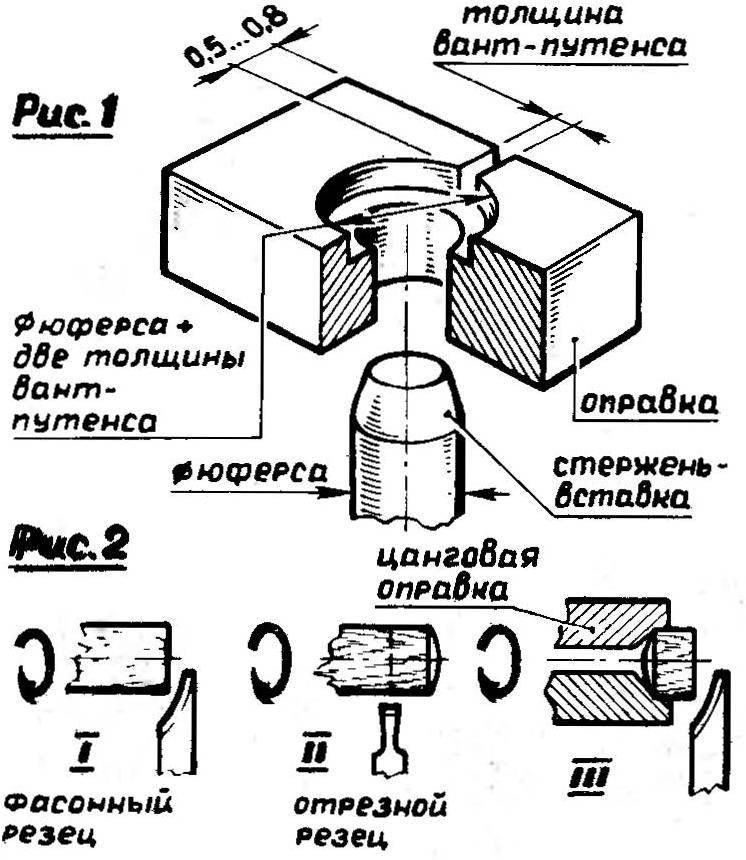 In the manufacture of sailboats on a small scale a lot of work goes into the production of the most likely guys-putenkov. A method of simplified simulate these parts and nosing integral from a single piece of metal. The use of a special mandrel (Fig. 1) allows to achieve good results both in accuracy and in appearance.